
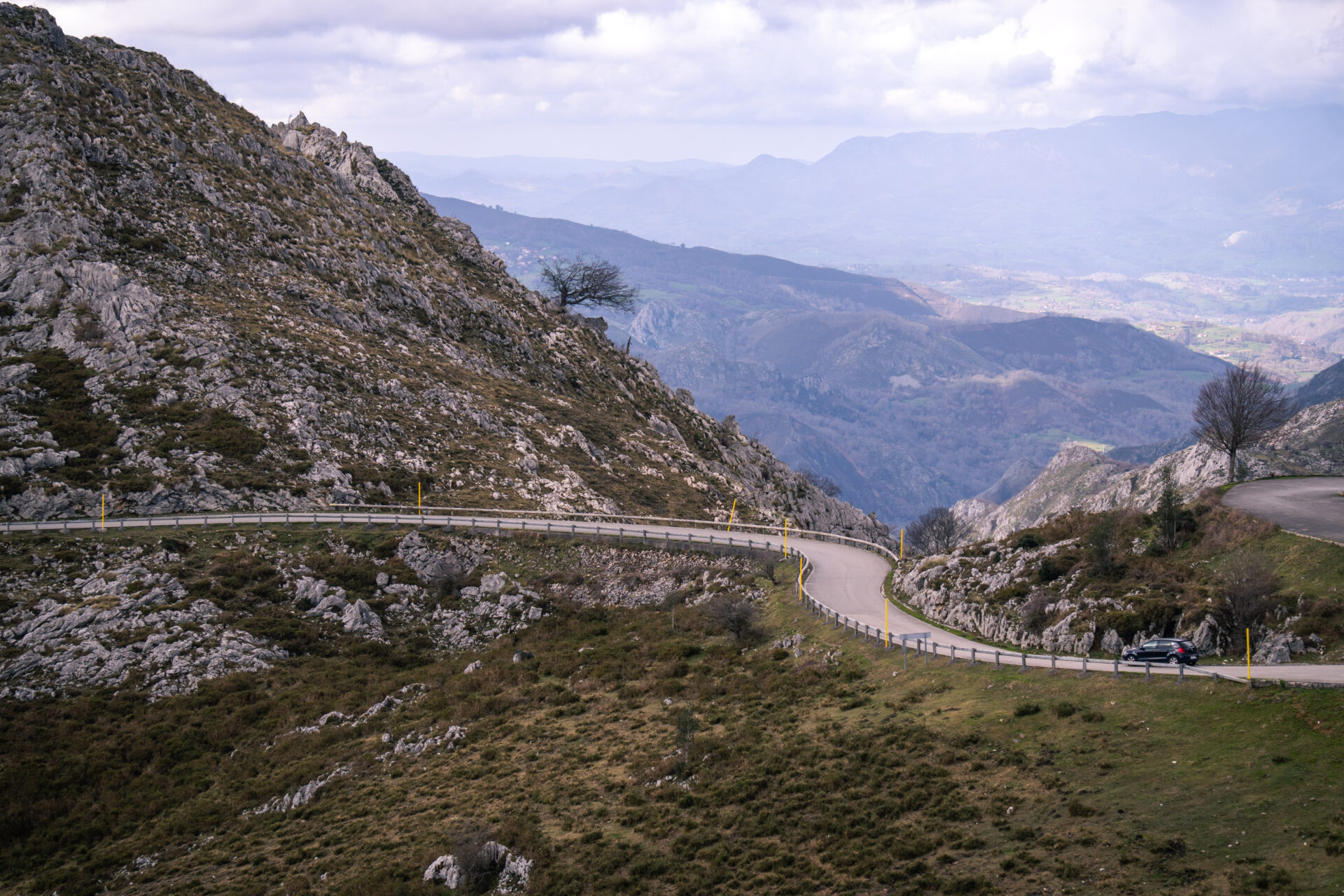
It's a cold, grim Saturday morning in February. The moment when you would actually love to be inside warm. Even as a cyclist. But when you're at the bottom one of the most beautiful climbs in Spain You know that it consists of only one thing: cycling. The climb to Lagos de Covadonga is special, not only because of the beautiful mountain lakes at the summit, or because of the regular return to the Tour de España. What not every non-Spanish person knows, however, is that this climb leads you through a mountain region where perhaps one of the most important events in Spanish history took place.
Text: Maks Groeneveld | Photography: Maks Groeneveld, Jeffrey Wiese & AdobeStock
Climbing Lagos de Covadonga: first the statistics
The climb to the top (it’s a round trip) is 19 kilometers long – or 13 if you take the village of Covadonga as a starting point. 19 kilometers over the bridge you reach 1130 meters of altitude. The average gradient is just under 6%. But make no mistake about it. After 6 kilometers, in Covadonga, the real work begins. It is then 11 kilometers of hiking with an average gradient of well over 8%. That is due to a number of really steep sections. Just look back at the Vuelta and you will see that even the pros have a tough time on the sections above 16%. The most challenging part of the climb, the La Huesera segment, is located seven kilometers before the finish and has a average gradient of 15% over a distance of 800 meters. Oh no! The last kilometers are much flatter. There’s even a descent leading to the official summit.
An ascent with history
Quite a lot has happened on and around this climb. But first, let’s go all the way back in history. In the year 722, the Battle of Covadonga place, where the Christian troops under the leadership of Pelagius of Asturias (Pelayo) the Moorish troops defeated the Moors. The Moors were driven out of the mountain landscape and died there. This was the first reconquest of an area occupied by the Moors, and because of this the area is now seen as the place where the Reconquista It all started once. That makes the climb and the rugged landscape even more special, right?
Lagos de Covadonga in the Tour of Spain
The climb to Lagos de Covadonga is one of the most iconic climbs in the world. Vuelta a España. Since the first ascent in 1983, the climb has been included in the course 24 times (until 2024). It is a climb that is often Determining the ranking. That's how I won Primoz Roglič In 2021, here was the 17th stage after an exciting duel with Egan Bernal. Roglič not only won the stage, but also recaptured the red leader jersey and secured his third consecutive Vuelta victory.
19 miserable, but terribly beautiful kilometers up
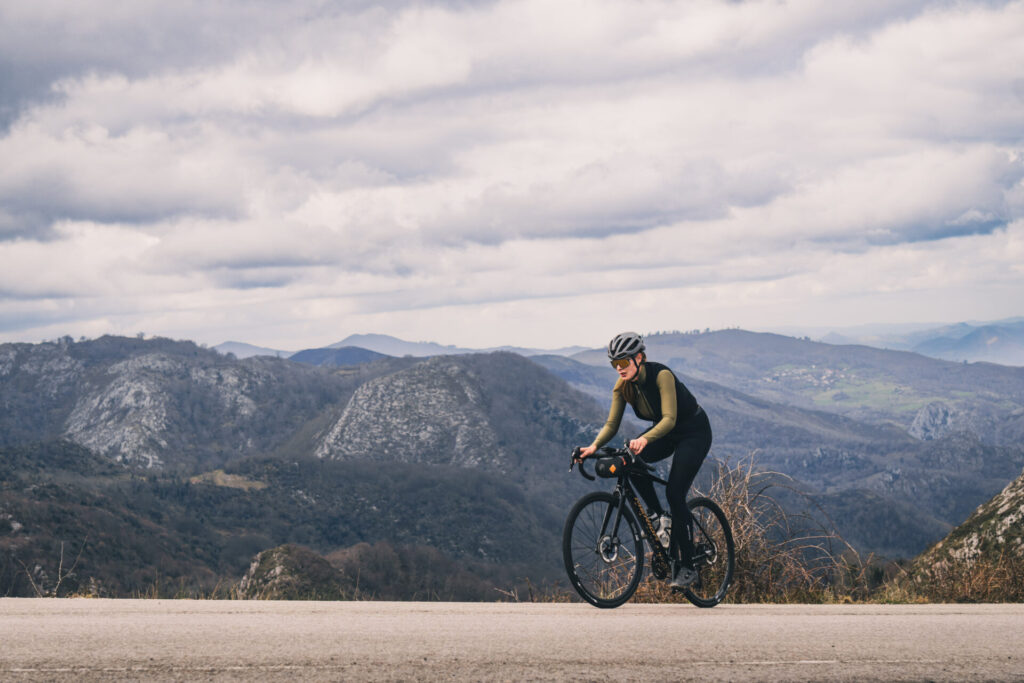
To get ahead of the facts for a moment: this climb was terrible. Terrifyingly miserable. Terrifyingly cold in February. But also terribly beautiful. With terribly rugged, stunning views. And how I would really like to do it again with slightly warmer temperatures.
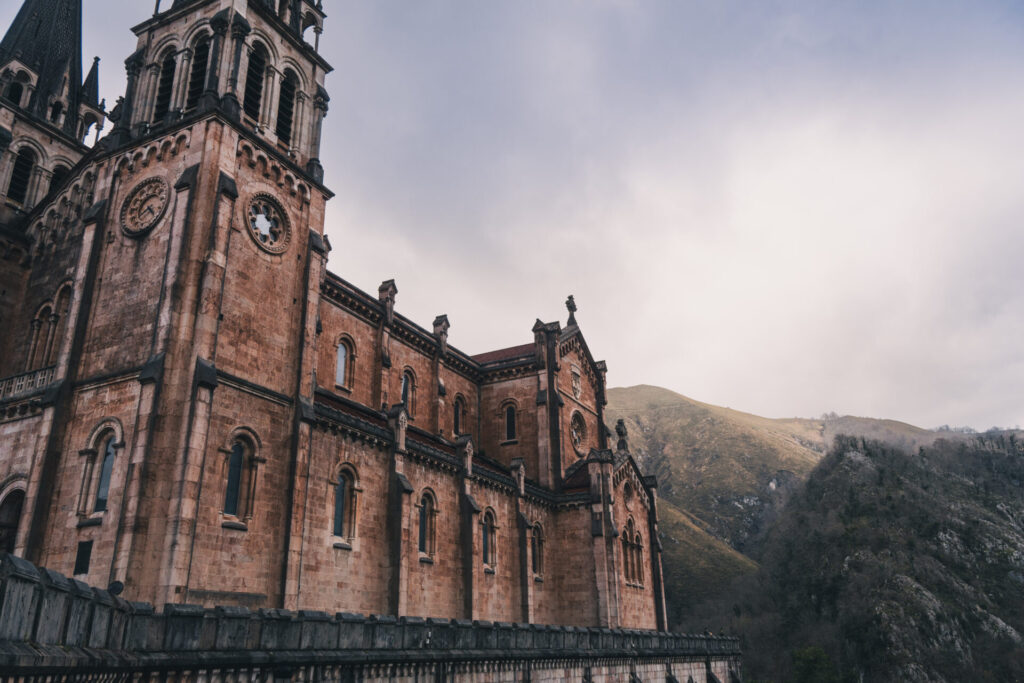
The first stretch is easy enough. Until the village of Covadonga, the road descends sharply. Gradually you see the Basilica of Covadonga Getting closer. This basilica is dedicated to The Virgin of Covadonga, the patron saint of Asturias. It is an important pilgrimage site and a symbol of the Reconquista. Many religious cyclists make a cross here before the real climb – almost immediately after the basilica – begins. Will the Colombian Nairo Quintana Did they help you achieve his victory in 2016?
After the basilica, the climb through the forest begins. Here and there a bit of a steep climb… It goes quite well that way. But it’s not really very beautiful yet. Perhaps that’s also because the trees are not blooming yet at this time. After about four kilometers, the surroundings begin to change. The road winds past vast mountain pastures and abandoned huts that seem to come from another time.
La Huesera Segment: The Bone Breaker
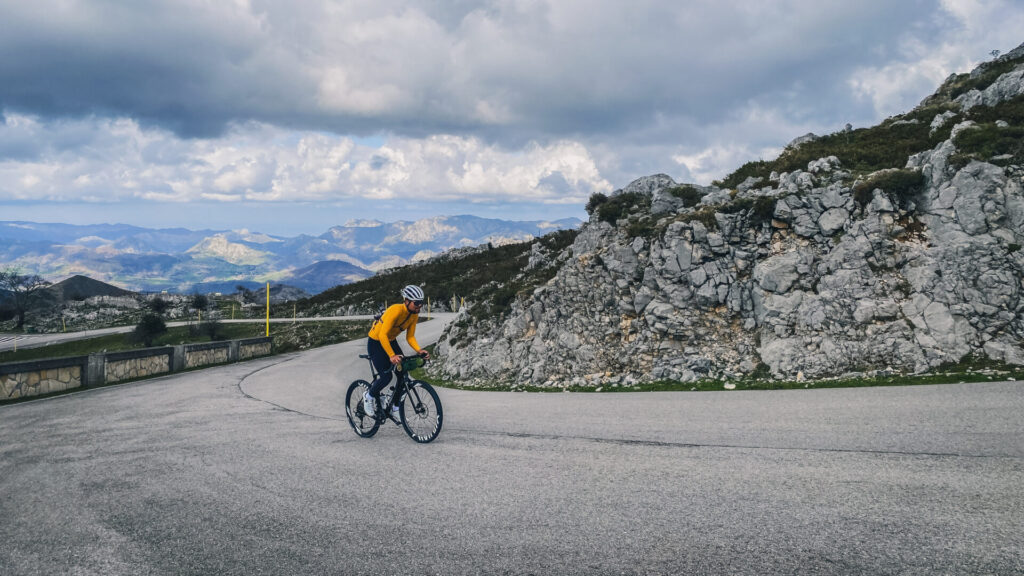
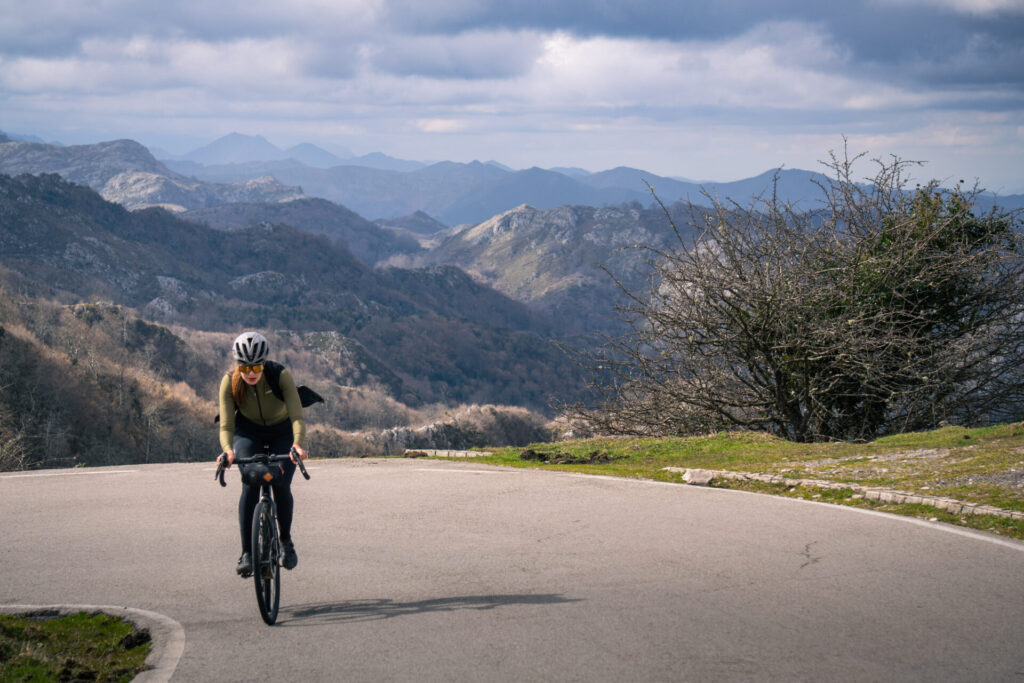
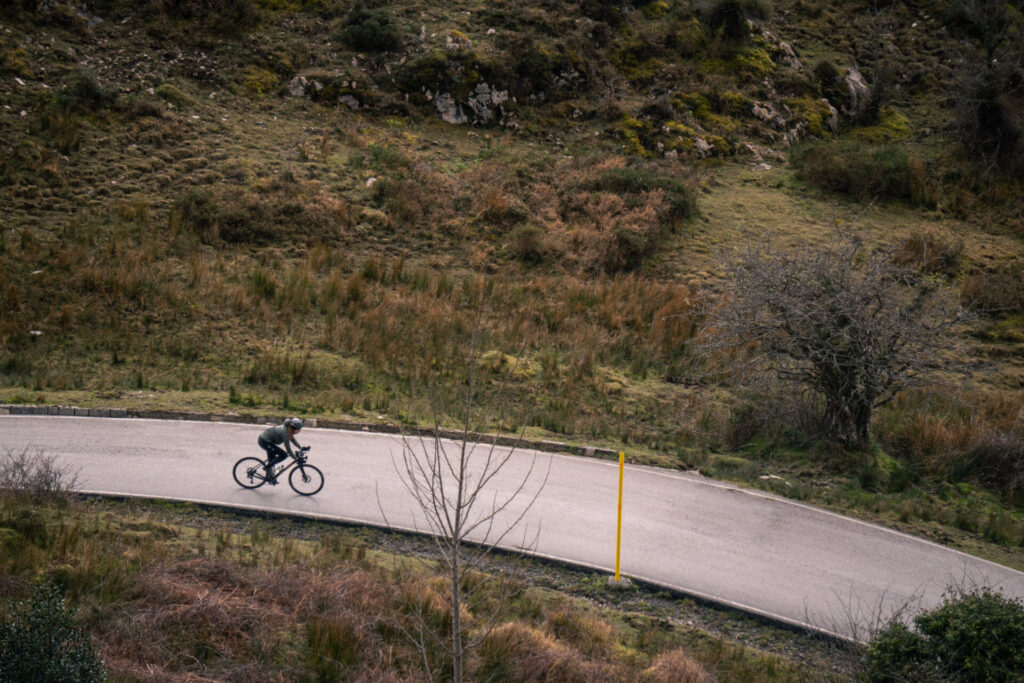
Then suddenly there is the first beautiful view. And fortunately so, because you can use a little distraction quite well from now on. This is also where the ‘La Huesera’ segment starts. The name of the segment literally means ‘The Bone Breaker‘Does that say enough? 800 meters with a average inclination of 15%. It is the segment on which the professional riders break during the Grand Tour. of They squeeze out their last energy to attack. I find that impressive. Because this segment is really tough. Fortunately, I am the one who is in charge of this segment. Bone breaker I finished too quickly, and I still have some energy in my legs for the rest of the climb.
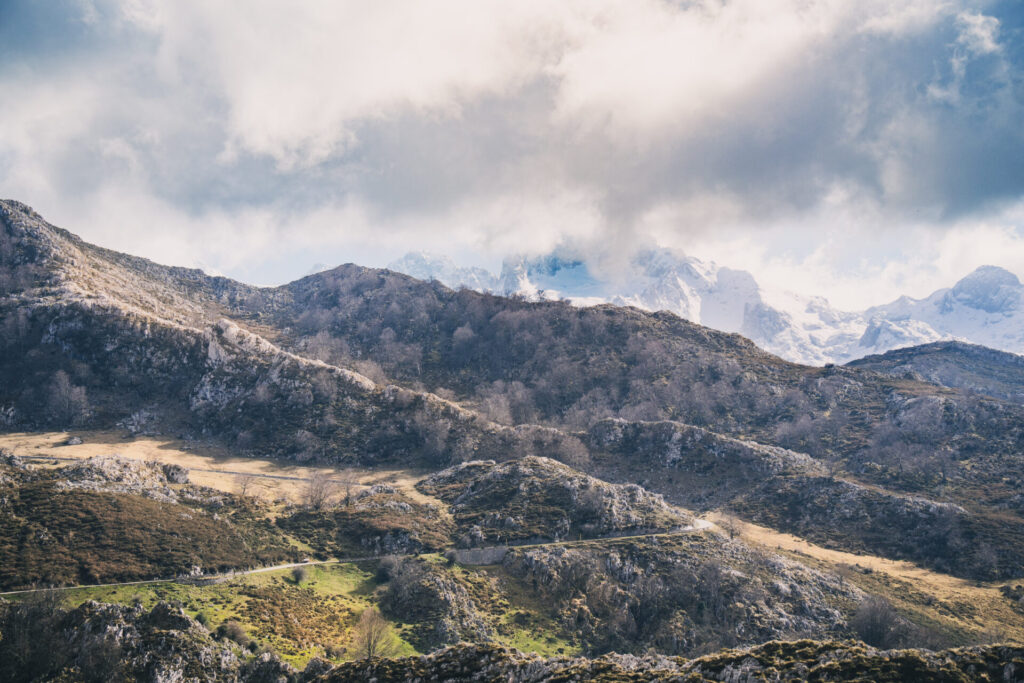
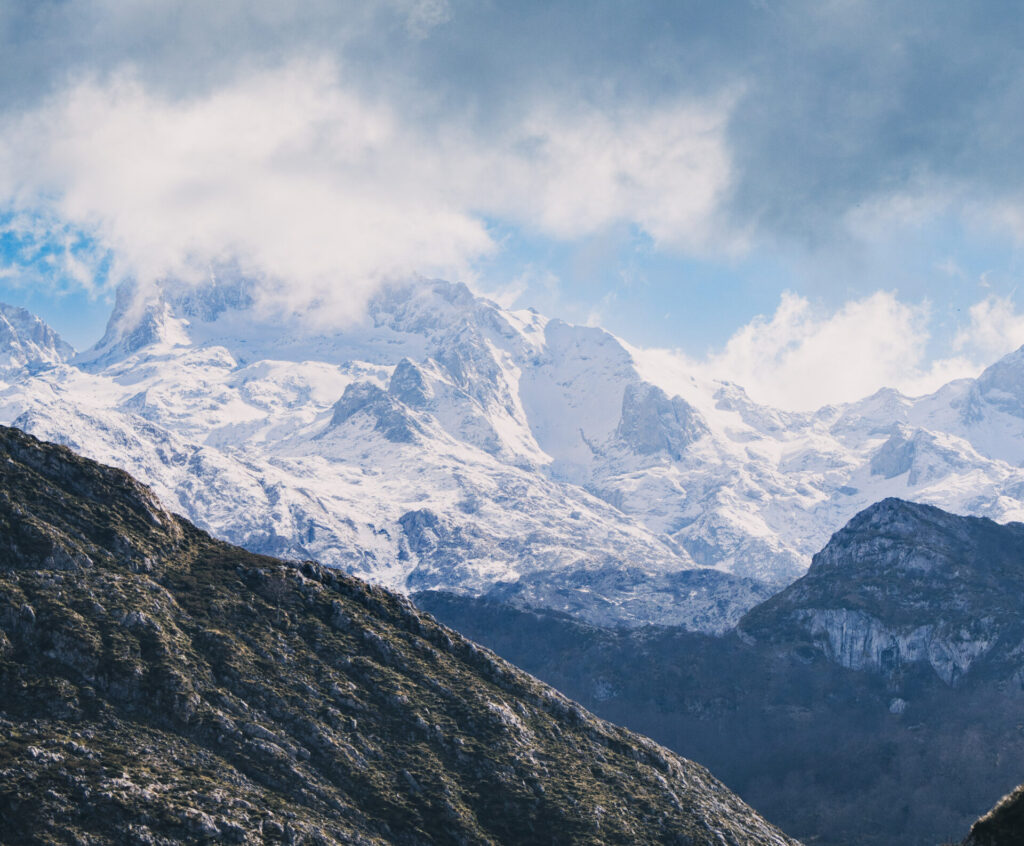
After La Huesera, you can take a moment to catch your breath. Then there is still two times a venomous piece waiting for you. But fortunately, the views are getting better and better too. After a hairpin bend, suddenly the snow-covered peaks of the Picos de Europa It’s in sight. It may be cold in February, but what a beautiful sight it is to see so much snow on the mountains at this time of year. It feels like a reward, even though we haven’t even reached the top yet. Fortunately, you’ll also see snow on the peaks in spring and autumn. And with a little luck, you can even enjoy this view in the summer.
And then the top. Or not quite?
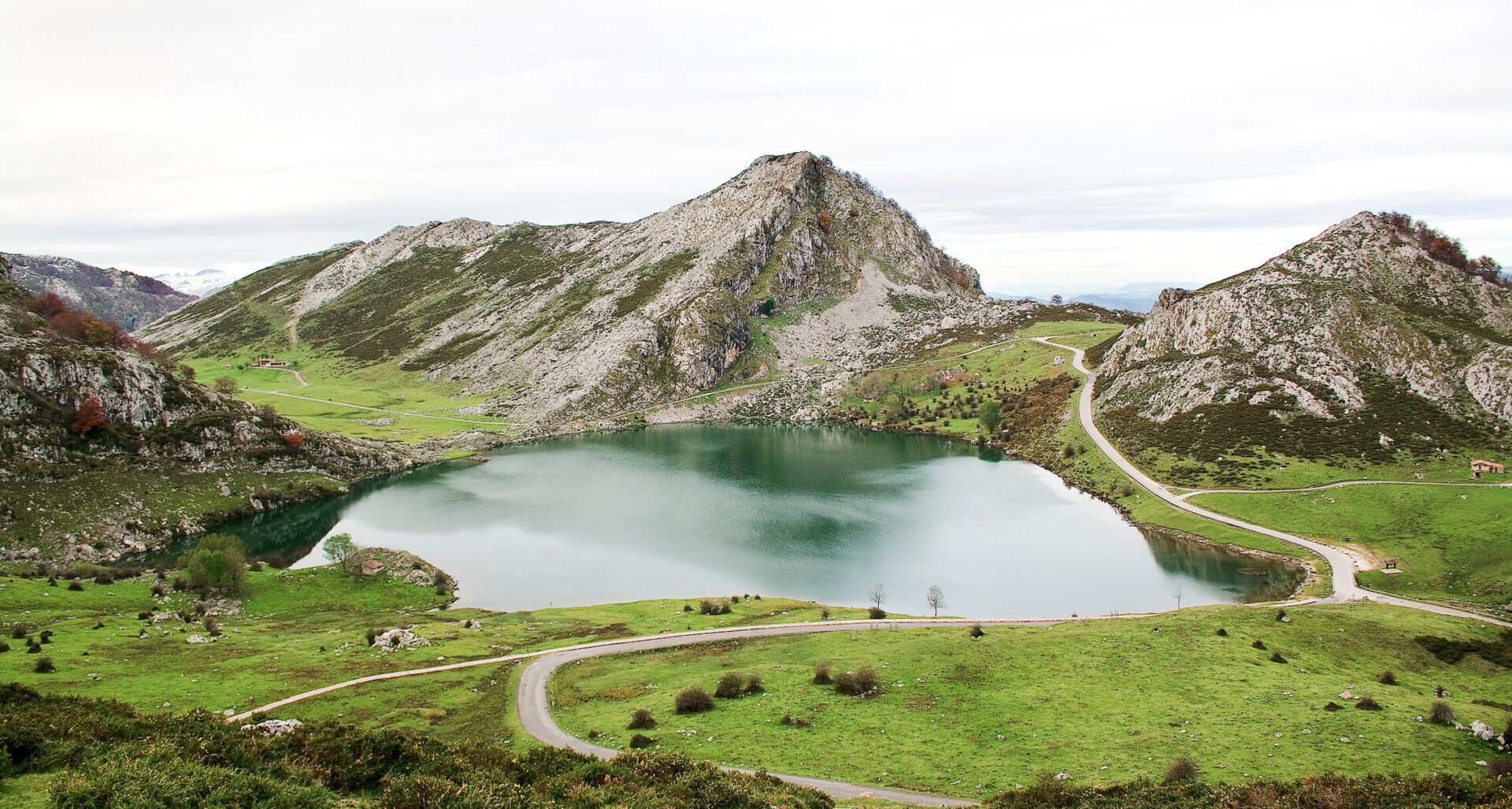
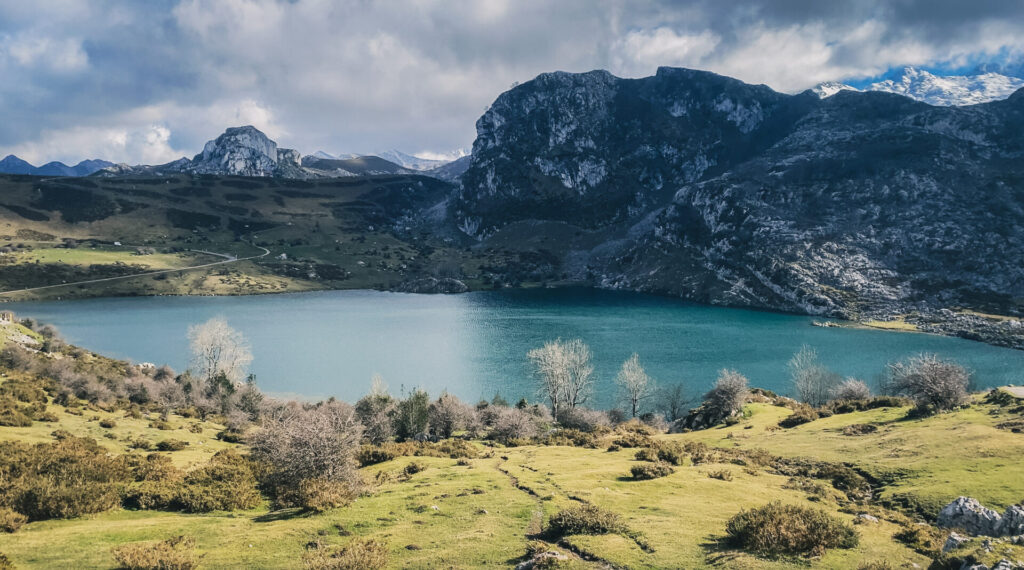
And then, just before the summit… the light starts to snow. The risk of cycling in the mountains in February: the weather can change at any moment. We continue cycling steadily. Without seeing the first lake of Covadonga at least, the climb doesn’t feel successful. After climbing another 3 kilometers, we stop there. It feels like a certain peak, because from here you descend a small kilometer to the second lake, then climb another kilometer to the Official finish. But the fact that we are at the top – as if we were standing on top of a hill – feels good. It is beautiful.
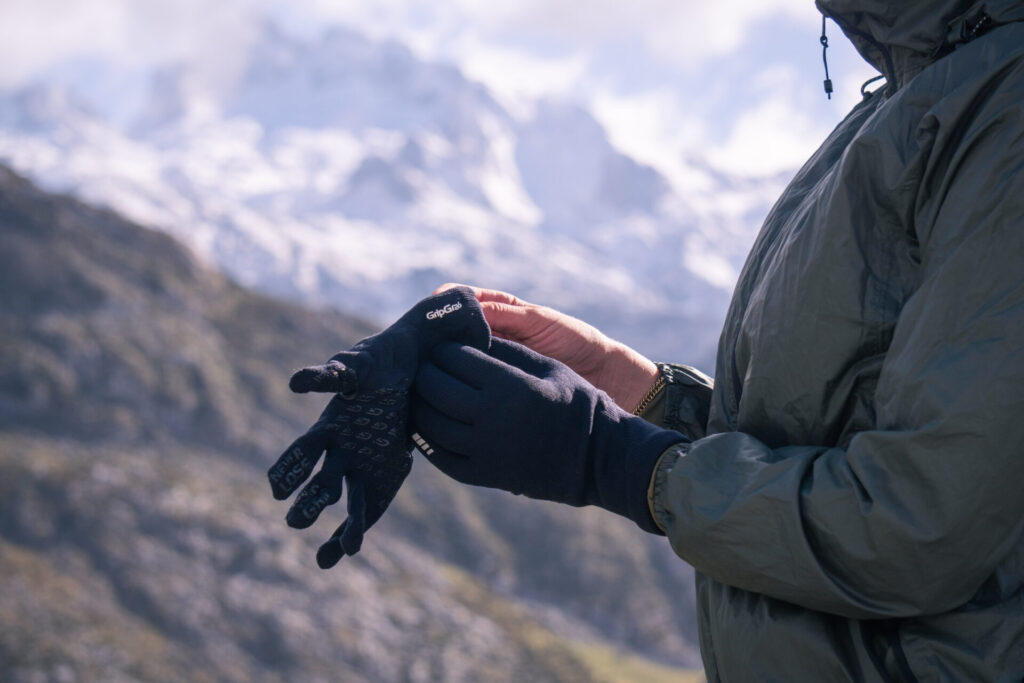
For a brief moment we look out over the lake and the beautiful snow-capped peaks. Then it’s time to put on gloves and a windbreaker. Although the snowfall has stopped now, we don’t want to risk it getting slippery on the descent.
Cycling yourself?
Climbing to Lagos de Covadonga should definitely be on your must-do list of climbs. Just like these other tough climbs of the Vuelta, by the way. The best time to visit this area is between spring and autumn. Then you can be sure that this and all the other beautiful climbs in the region are snow-free. There is indeed plenty to discover in northern Spain and the surrounding regions. Picos de Europa. Save the route to the beautiful lakes of Covadonga here in advance. My final tip? Don’t forget to take time to appreciate the history in this area. Both the stories of the Battle of Covadonga and the heroic duels that are still fought here today in the Vuelta make this climb extra special.
Questions & tips
Do you have any questions about this route, or have you been there yourself? Share them here. We read everything and usually respond within a few days.