
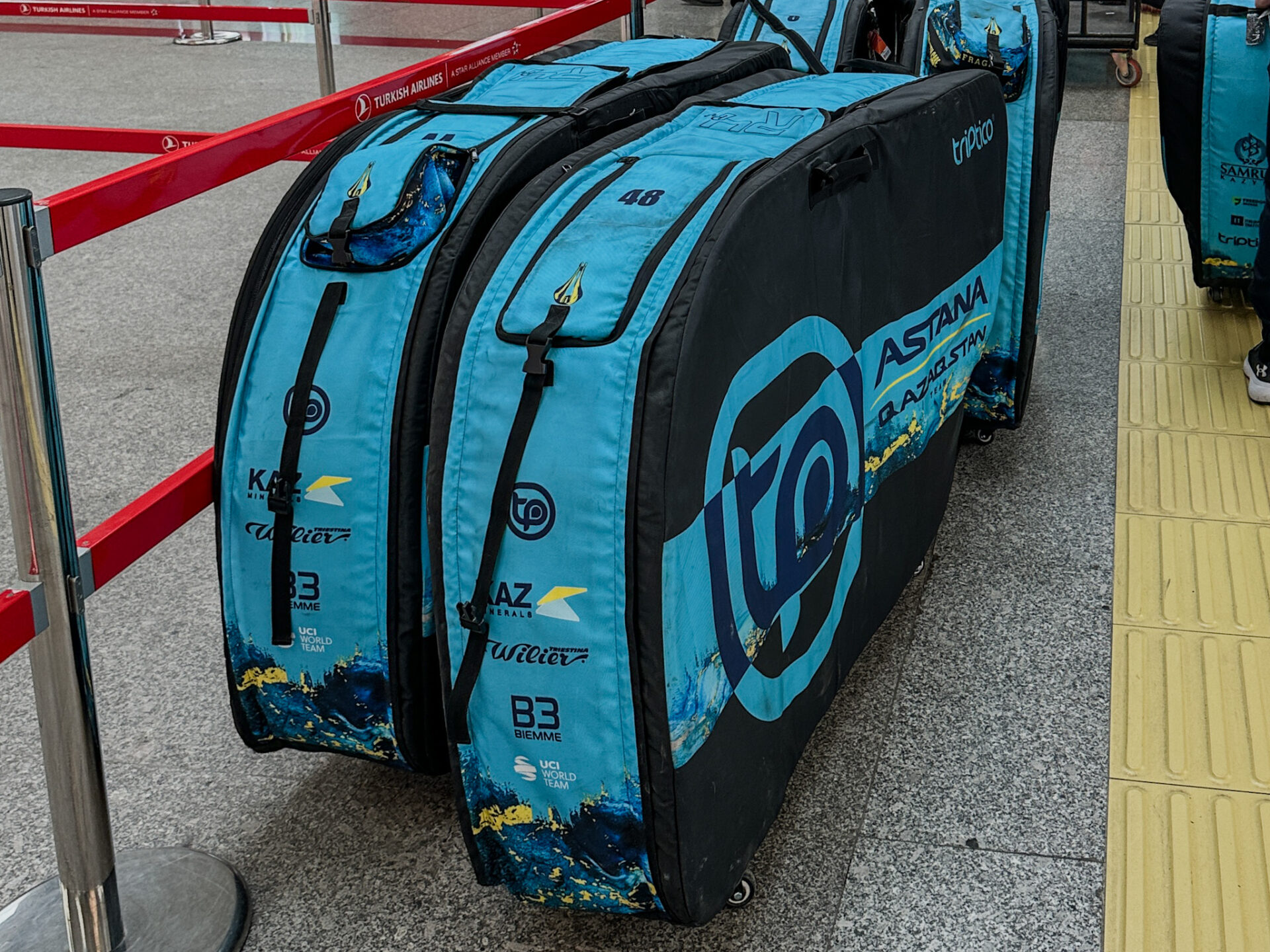
Not every cycling destination is within a comfortable driving distance. For those who want to travel from the Netherlands to Girona, Mallorca, Tuscany, or the Sierra Nevada, there is often only one option. The train is in many cases the best and most sustainable alternative, and increasingly more accessible within Europe. But the reality is also that many cyclists still take the plane. Simply because it is faster, because some regions are difficult to reach by rail, or because it fits better within the available time. And when you fly, you usually want to bring your own bike. Not only because it is perfectly adjusted, but also because renting one on site rarely has the same feel. Flying with your bike has therefore become a fixed part of many cyclists’ spring trips. Whether it’s a training week in Spain, a gran fondo in Italy, or an exploration of the Alps. That’s why we have created a number of tips and a guide to flying with your bike.
This guide will help you make the right choice regarding the airline and how much you can bring with you. You will also find a handy search tool that allows you to see which airline suits your adventure.
The two magic numbers: 23 kg and 32 kg
The main tips when flying with your bike are actually about the weight of your luggage and your total baggage. Almost all European airlines work with the same two limits:
- 23 kg — standard baggage limit in economy class
- 32 kg — absolute safety limit for baggage handling
If you weigh under 23 kg, your bike will simply be carried as normal luggage on many traditional airlines. If you weigh over that, the fees will quickly start to add up.
In practice, this means: a modern race bike in a soft case usually weighs between 15 and 19 kg. That leaves room for shoes, a helmet, and some spare parts. But a heavier bike, a hard case, or extra wheels quickly puts you in danger. Weight is everything.
The best airlines in Europe for cyclists
Within Europe, the differences are significant. The choice of airline often determines more than just your route.
Best overall choice: KLM
For European cyclists, KLM is one of the most practical options, especially from Schiphol. Their policy is clear: a bicycle can be carried as sports luggage, provided it is registered in advance.
The costs are usually between:
- €70 – €125 per single trip within Europe
The advantage lies in reliability. KLM is used to cyclists. Girona, Nice, Mallorca and Calpe are regular destinations with dozens of bike bags per flight.
Important detail: with some ticket types and routes you can bring a bicycle 32 kg roads without extreme fees. That provides flexibility for longer trips.
Best value: British Airways
British Airways has one of the most bike-friendly policies in Europe.
If your ticket includes a carry-on item, you can often bring your bike as standard luggage, without paying an extra sports fee. The condition is that you stay under 23 kg and the dimensions fall within the limits.
For trips to classic training areas like Malaga, Nice or Tuscany, this is often the cheapest option.
The pitfall: Basic tickets sometimes don’t include extra baggage. Then you have to add it in first.
Strong alternatives: Iberia and SAS
Iberia usually charges a fixed bicycle fee of approximately:
- €45 – €60 per single trip
That makes Iberia interesting for trips to popular cycling destinations such as:
Scandinavian Airlines (SAS) often treats bicycles as normal luggage, as long as you stay within the weight limit. Especially interesting for trips to Norway or Sweden.
Low-cost airlines: cheap ticket, expensive bike
Ryanair, easyJet and Transavia offer cheap flights, but charge fixed bicycle fees. The average rates per airline are as follows:
- Ryanair: ± €60 per flight
- easyJet: ± €60 per flight
- Transavia: ± €50 – €70 per flight
The advantage is that these airlines often allow a higher weight limit, usually up to 30–32 kg.
The disadvantage is that the costs quickly add up. A return flight automatically means an extra €120. Add in transfers, and it gets even more expensive.
Flight search tool with your bike airline companies
Do you want to find the best option for yourself? Then use our handy tool, which we have created together with Velora. It will give you the best tips and airlines when you fly with your bike.
This feature was created in collaboration with Velora Cycling
European cycling routes where flying with your bike makes sense
Within Europe, there are a few destinations where flying with your own bike has almost become standard:
- Girona (Spain)
- Mallorca (Spain)
- Calpe and Denia (Spain)
- Nice (France)
- Tuscany (Italy)
- Sicilie (Italy)
- Sardinia (Italy)
- Peloponnese and the Greek Islands (Greece)
- Cyprus
- Turkey
- Malaga and Sierra Nevada (Spain)
- Corsica (France)
- Croatia / Bosnia / Romania / Bulgaria / Albania
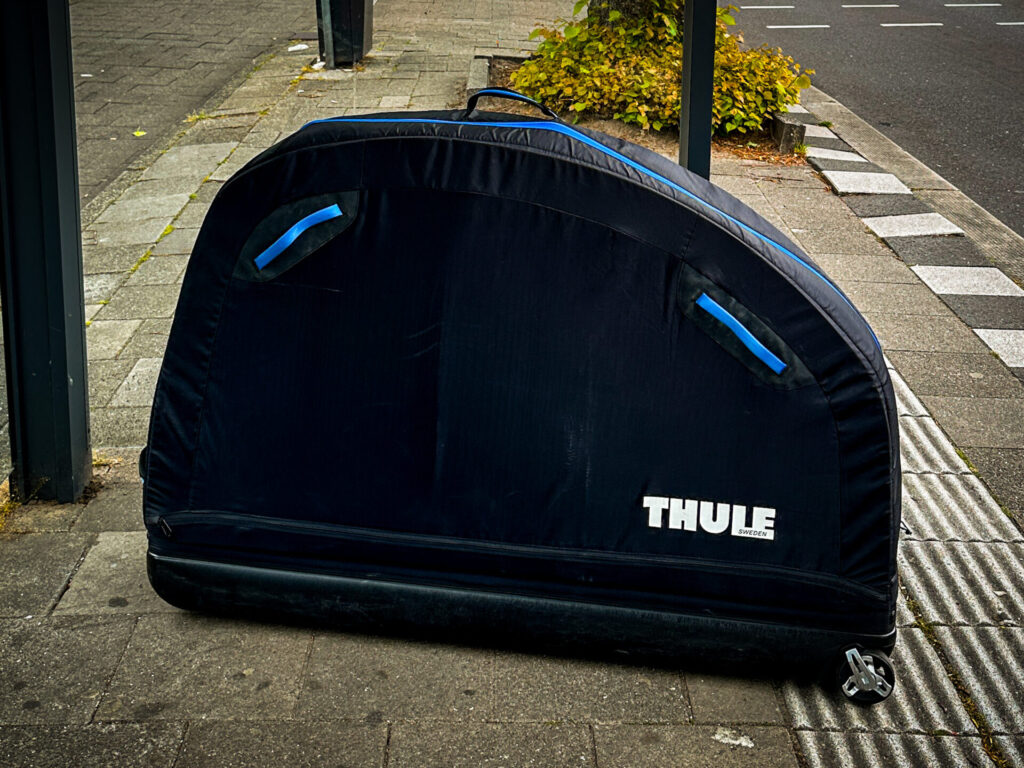
Softcase or hardcase makes a difference
A soft case has clear advantages:
- Lichter
- Greater chance of staying under 23 kg
- Easier to transport
Hard cases offer more protection, but often weigh 10–15 kg empty. That significantly limits your margin of error.
For European trips, a soft case with inserts is usually the best choice. A little extra padding and you’re safe. Unless you have a fully integrated cockpit that you’d rather not take apart. Then your brake levers are really exposed, and you’d rather not have that.
When a traditional airline is cheaper than a budget airline
This is the most common misconception. Budget airlines may seem cheaper, but they often aren’t when you bring a bike along.
Example:
- Budget airline ticket: €80 + €60 bike = €140
- KLM ticket: €140 including bike
Same price, but better service and less hassle. Especially for return flights within Europe, it pays to compare this well.
Practical checklist for flying with your bike in Europe
These are the steps that make a difference:
- Weigh your bike in the luggage compartment before booking
- Stay under 23 kg if you can
- Book your bike directly with your ticket
- Use a compact bicycle bag
- Check if checked baggage is included
The biggest mistakes end up happening during the packing and check-in process, not during booking.

Questions & tips
Do you have any questions about this route, or have you been there yourself? Share them here. We read everything and usually respond within a few days.