Part of Germany
Saxony lies in the east of Germany, bordering Poland and the Czech Republic. It combines cities like Dresden and Leipzig with two remarkable cycling areas: Saxon Switzerland and the Ore Mountains. Look beyond the well-known Alps and the Eifel and you'll find sandstone rocks above the Elbe, long climbs to over 1,000 metres and roads where you barely see a car all morning.
Why cycle in Saxony?
- Saxon Switzerland, with sandstone rocks and table mountains above the Elbe valley.
- The Ore Mountains with the Fichtelberg (1,215 metres) and long climbs on the Czech border.
- The Elberadweg, one of Germany's most popular cycle routes, with Dresden and Meissen along the way.
- Culture after the ride: baroque old towns, vineyards along the Elbe and cheap, hearty meals.
The most beautiful cycling areas
Saxon Switzerland and the Elbe
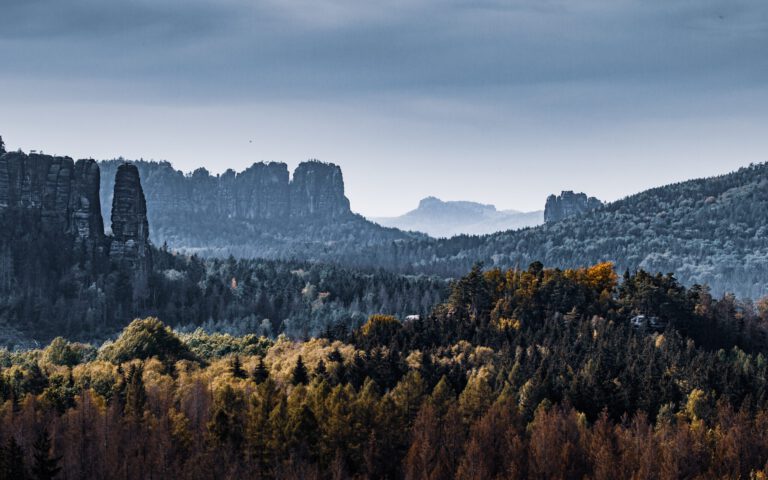
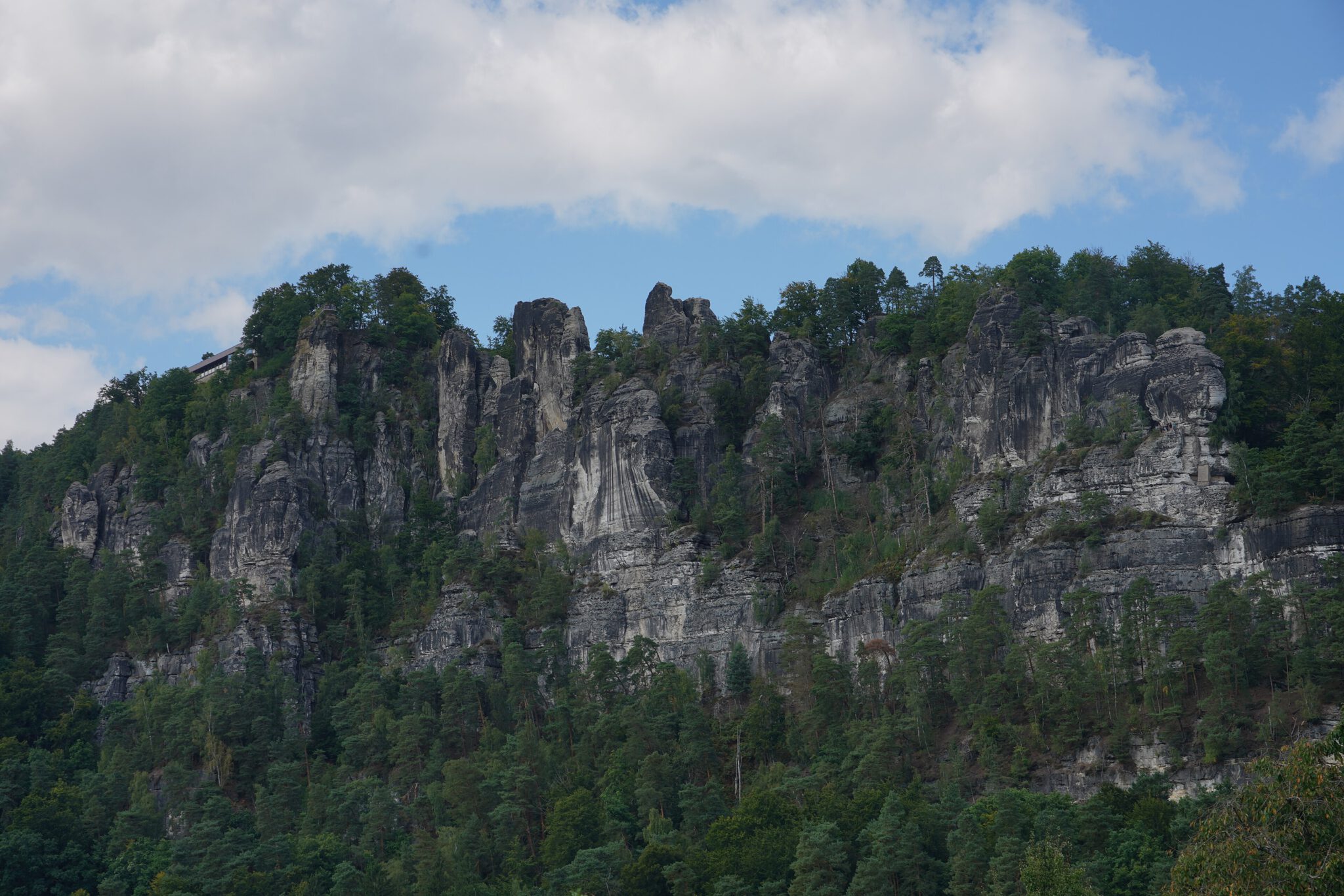
South-east of Dresden, the Elbe winds through a landscape of steep rock faces, table mountains and deep valleys. The Bastei, a rock ridge with a stone bridge, is the best-known viewpoint. Along the river you ride the flat Elberadweg; as soon as you climb out of the valley, it gets tough. Short, steep slopes take you up to the plateau around Hohnstein, Rathen and Bad Schandau, where you ride quiet roads between the rocks. A small ferry takes you across the Elbe, and over the border you carry on into Bohemian Switzerland in the Czech Republic.
The Ore Mountains
The Ore Mountains (Erzgebirge) are Saxony's serious climbing area. The range runs for some 150 kilometres along the Czech border and rises gradually on the German side, with long, steady climbs through forests and old mining villages. The highest point is the Fichtelberg (1,215 metres) near Oberwiesenthal; on the Czech side lies the slightly higher Klínovec. In winter it's a ski area, in summer a quiet, cool climbing paradise.
Around Dresden and Meissen
Between Dresden and Meissen, vineyards cover the slopes along the Elbe, one of the northernmost wine regions in Europe. North of Dresden you'll find forests and lakes around Moritzburg Castle, with flat roads and lots of gravel. Ideal for an easy day between two climbing days.
Gravel and road cycling in Saxony
Saxony has routes for every level: winding roads through vineyards along the Elbe, gravel in the low mountain ranges and hard climbs in the Ore Mountains.
- The Stoneman Miriquidi Road: 290 kilometres and 4,900 metres of climbing over the summits of the Ore Mountains, on both sides of the Czech border. Finish it and you get a trophy.
- RockHead: a 320-kilometre gravel adventure with 4,660 metres of climbing through Saxon Switzerland and Upper Lusatia, past rock formations, forests and heathland. With a tent or hotels, at your own pace.
- The Blockline: a cycling and gravel route through the Ore Mountains.
- Three gravel loops in the Dresden Elbland, such as through the Friedewald to Moritzburg Castle (73 km) and a panoramic loop from Meissen to Zabeltitz.
You'll find more routes at the Saxony tourist board (sachsen-tourismus.de).
The Elberadweg
The Elberadweg follows the river from the Czech border at Schmilka through Saxon Switzerland, Dresden and Meissen to the north, and on all the way to the North Sea at Cuxhaven. The Saxon section is the most beautiful part: flat, well signposted and a terrace every few kilometres. A wonderful multi-day tour for touring cyclists, and a nice warm-up or way back after a climb out of the valley for road cyclists.
Who is Saxony for?
Saxony is for cyclists looking for something new who don't mind the journey. Climbers find long slopes without crowds in the Ore Mountains, gravel riders have endless forest tracks, and touring cyclists ride along the Elbe. Because it's a long drive from the Netherlands and Belgium, Saxony is best suited to a week, possibly combined with the Czech Republic.
Rest day in Saxony
- Walk across the Bastei Bridge and look out over the Elbe.
- Visit the Frauenkirche and the Zwinger in Dresden.
- Taste wine at a Weingut in Radebeul or Meissen.
- Take the steam train from Oberwiesenthal through the Ore Mountains.
Food and drink
Saxon food is hearty: Sauerbraten with red cabbage and Klöße, Kartoffelsuppe and of course cake, such as the Dresdner Eierschecke. Along the Elbe you drink white wine from the region, otherwise mostly beer from local breweries. Prices are lower than in the west and south of Germany.
Your cycling base
Dresden is ideal for the Elbe and Saxon Switzerland, with plenty of hotels and good train connections. Bad Schandau lies in the middle of Saxon Switzerland. Oberwiesenthal is the best base for the climbs in the Ore Mountains.
See places to stay in: Dresden · Bad Schandau · Oberwiesenthal
When are you leaving?
May to September. In the Ore Mountains it can still be chilly in April and October, and there's snow on the summits in winter. June and September are the best: long days and few crowds.
How do you get there?
By car it's about seven to eight hours, so a week rather than a weekend. By train you travel via Berlin or Leipzig to Dresden. You can fly to Dresden or Leipzig/Halle.
This is how we calculate: We calculate distances and travel times starting from Utrecht. Our flights always depart from Schiphol, Rotterdam The Hague Airport or Eindhoven Airport. Want to know how to travel from your place of residence the best way? Let us know, we're happy to help. After all, we're building this site together.
Are you flying? Read our guide Flying with your bike: Which airline, what the cost is and how to pack your bike.