Part of Portugal
Cycling in the Algarve
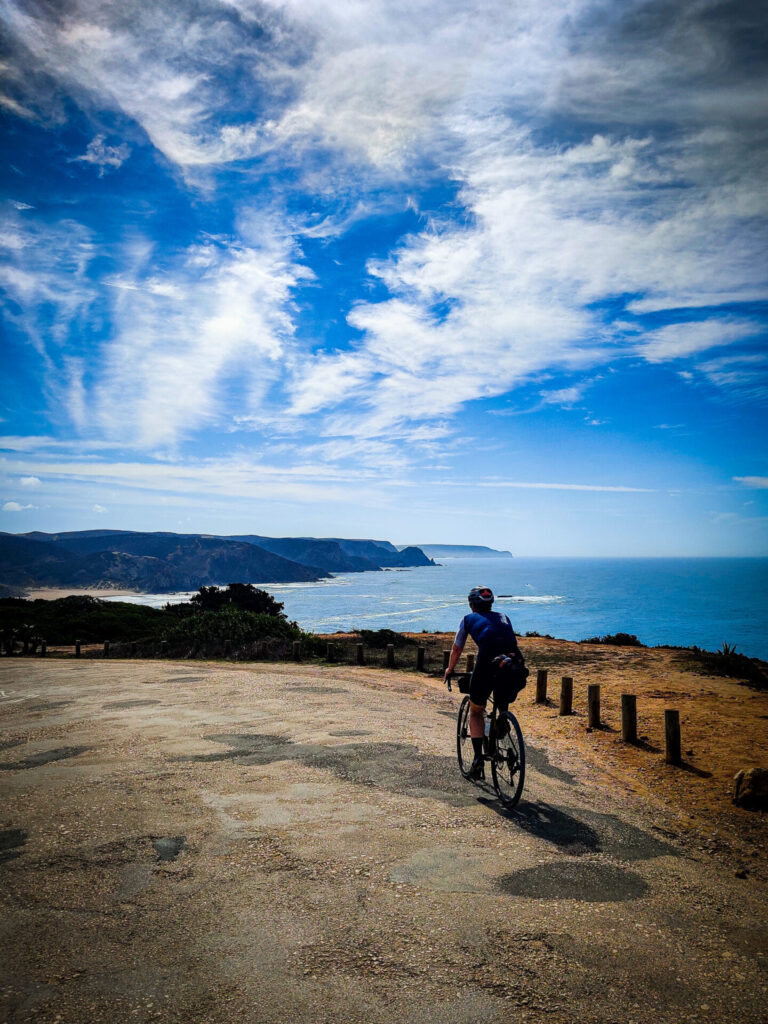
The Algarve is Portugal’s southernmost region and borders the Alentejo region in the north. To the south and west, the region is surrounded by the Atlantic Ocean, while the eastern border coincides with Spain. The coastline is one of the Algarve’s most iconic features: in the west and middle of the coastline you find rugged cliffs and hidden coves with seawater that is crystal clear.
Although the Algarve is often associated with tourism and seaside resorts like Albufeira, the region has much more to offer. The interior is surprisingly peaceful and authentic, with rolling hills and small villages where time seems to stand still.
For cyclists, the Algarve is a fantastic destination, whether you want to cycle or prefer to explore unpaved trails. The landscape is varied: from the long, rolling roads in the east to the steep climbs in Serra de Monchique, located on the west side of the Algarve. The climb to Foia, the region's highest point at 902 meters, is a popular challenge among cyclists.
It can be very busy around popular seaside resorts in the summer months. Fortunately, the Algarve is a great destination for cyclists in the spring or early autumn, when it is a bit quieter. The temperature is very pleasant for longer rides.
The Algarve is enormously diverse. In the interior you find rugged, green nature and rolling hills. Beautiful cliffs form a spectacular coastline; the highlight of the Algarve. On a bike you see the most beautiful places of the Algarve and discover the real authentic Portugal during stops in the small villages where there is still little tourism.
This is also a fantastic destination if, in addition to cycling, you also want to enjoy the sun and sea. Come just before or after the summer to avoid the biggest crowds and enjoy the best of the region.
Anyone who thinks of the Algarve immediately thinks of the region's beautiful coastline. Not surprisingly, because just type the region's name into Google and the most beautiful images of idyllic coves and rugged cliffs appear. But the Algarve has much more to offer.
In the east you’ll find the Serra do Caldeirão, a more rugged, drier mountain range with winding roads and long gravel tracks. A pure, untouched atmosphere reigns here, far from mass tourism.
In the west rises the Serra de Monchique, the highest mountain range in southern Portugal. The climb to Foia (902 m) is a classic among cyclists: a long, steady climb with beautiful views. The green valleys and eucalyptus forests create a completely different atmosphere than the rest of the Algarve. Gravel bikers can also enjoy themselves here with challenging tracks through the hills and valleys.
Of course, a visit to the coast cannot be missed. Ponta da Piedade is considered one of the most beautiful places on the coast. However, around Sagres, at the southwest tip of the region, you will find many more beautiful cliffs and bays. However, the roads there are often not well maintained and sometimes even unpaved. Therefore, it is best to come by gravel or mountain bike.
Generally speaking, the coastal towns are more touristy than the inland areas. If you want to combine your bike trip with relaxation on the beach, you’re in luck. There are plenty of options for fine hotels and good restaurants. If you’re looking for authentic Portugal, stay in the mountain regions or the inland areas. There you’ll find many more beautiful smaller towns and villages where time seems to have stood still.
Along the coast of the Algarve, a moderate Mediterranean climate prevails, with mild winters and long, sunny summers. The interior, especially in the hills of the Serra de Monchique and Serra do Caldeirão, experiences slightly larger temperature differences, with warmer summers and colder winters.
Spring (March – May)
Spring in the Algarve is a wonderful time to cycle. The temperatures are between 13°C and 25°C, and nature is in full bloom. In March and April there may still be a few rainy days (4-10 per month), but from May onwards it becomes increasingly sunny. The roads are mostly dry and the landscape is lush green.
Summer (June – August)
The summers are hot and dry, especially inland. Along the coast the temperatures remain pleasant thanks to the sea breezes, between 22°C and 32°C, while inland it often reaches above 35°C, sometimes rising to 40°C. Rain is rare (0-3 rainy days per month). Cycling is most pleasant in the early morning or afternoon to avoid overheating. The Atlantic wind along the west coast provides some relief, making this region the most ideal for summer cycling trips. But honestly, it’s just too hot for strenuous rides during this period.
Autumn (September – November)
Autumn begins warm, with temperatures around 25°C to 30°C in September. From October, it gets a little cooler and the rainy days increase (4-9 per month). Nature turns gold and red, and the temperatures are perfect for long rides. This is an ideal time to explore the Algarve by bike, without the heat of summer.
Winter (December – February)
The winter in the Algarve is mild, especially along the coast. Temperatures range between 9°C and 18°C, while in the hills it can cool down at night to just above freezing. Most of the rain falls during this period (6-12 rainy days per month), but there are also many sunny days.
The most famous climbs
- Fóia (902 m): The highest point of the Algarve, in the Serra de Monchique, about 25 kilometers from Portimão. The classic route is the Volta ao Algarve race from Portimão.
- Picota (774 m): The neighbor of the Fóia, also in the Serra de Monchique. A climb of over 11 kilometers.
- Malhão3 kilometers with an average of 12% and sections up to 20%. Often the final climb of a stage in the Volta ao Algarve. Combine it with the Wall of Alte.
- Alcaria do Cume10.6 kilometers with an average of 3% in the hills above Tavira. Long and regular.
Roads, traffic and wind
The asphalt is good almost everywhere. Along the coast it is busy: that is where most people live and the seaside resorts are located. If you drive north of the N125 and the A22, you have the roads almost to yourself. The west is windier due to the Atlantic Ocean, the east around Tavira is quieter. In winter it is rarely colder than 10 degrees and often 15 to 20 degrees.
Your Cycling base
The Algarve is over 150 kilometers long. These are the best starting points:
- LagosIn the west, with the climb to the Fóia in the Serra de Monchique and the rugged west coast.
- Albufeira: central, with many hotels and bike rental, and known for the Volta ao Algarve.
- TaviraIn the east, quieter, with the Serra do Caldeirão in the hinterland.
- Monchique: right in the hills, for those who want to climb right away.
Travel tips
- Best destination: It’s the most fun to explore this region by car or on a bike. That way you’ll see the most of the Algarve! Still staying in one place? Lagos is a good base when you want to explore the Serra de Monchique. The highest peak, Foía, is reachable from there. Afterwards, take a refreshing dip in the sea. A little more inland lies Silves, an old Moorish city. Silves is less touristy than the coastal towns. From here, you can enjoy beautiful cycling in the mountainous interior. The climb to Foía is also easy to reach.
- Traffic information: The popular roads are well maintained, but be prepared that it may be different when you plan your own routes and take roads that are less well-known.
- Culinary: The Algarve cuisine is simple but full of flavor, with a strong influence from the sea. In Lagos and Faro, Cataplana de Marisco is a must-try: a fragrant stew with seafood, prepared in a copper pan. Another traditional dish is Frango Piri-Piri, grilled chicken marinated in spicy piri-piri sauce, especially popular in Guia. For those who enjoy fish, Sardinhas Assadas is a classic: fresh sardines, simply grilled and served with bread and a salad. For dessert, Dom Rodrigo is a sweet dessert of egg yolk, almonds, and sugar, typical of the region. All of this tastes even better with a glass of Vinho Verde or a local white wine from Lagoa.
Sources
- Epic Road Rides – routes and climbing in the Algarve
- Velo Algarve – cycling routes in the Algarve
When are you leaving?
How do you get there?
- Flying: Fly to Faro. Bring your own bike; book a place for your bike box in time.
- By train: Convenient stations: Faro · Lagos · Tavira.
- By car: From Utrecht you are in about 24 hours AlgarvePlan an overnight stop along the way, or drive in two days.
This is how we calculate: We calculate distances and travel times starting from Utrecht. Our flights always depart from Schiphol, Rotterdam The Hague Airport or Eindhoven Airport. Want to know how to travel from your place of residence the best way? Let us know, We are happy to help you. After all, we built this site together.
Are you flying? Read our guide Flying with your bike: Which airline, what the cost is and how to pack your bike.