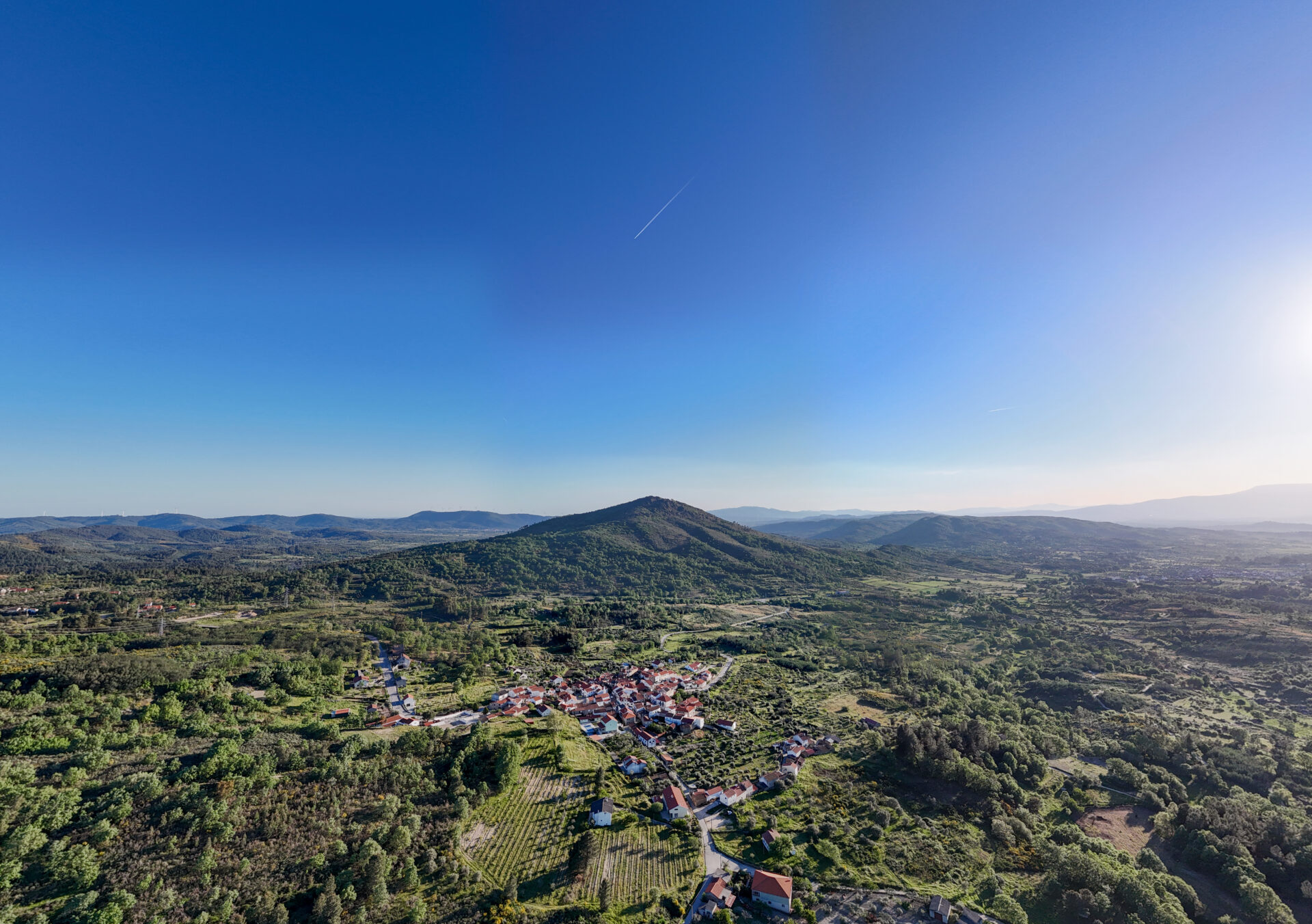
Part of Portugal
With the largest mountain range in Portugal – where you’ll find fantastic climbs – Central Portugal is a fantastic destination for cyclists who want to rack up a lot of elevation meters. In the ‘Serra da Estrela‘, as the mountain range is called, lies the highest peak of (the mainland) Portugal: the top of the Torre is 1993 meters high. You can cycle all the way to the top from different starting points. The Torre is often included in the Tour of Portugal, and is the most famous climb in Portugal
But enough about the Serra da Estrela. Northern Portugal has even more to offer! The region borders Northern Portugal in the north, Spain in the east, and Alentejo in the south. The major cities of Porto and Lisbon are located just outside the area. The west is of course made up of coastal areas, with special places like Aveiro, known as the ‘Venice of Portugal’. Although the most difficult and popular climb takes place in the Serra da Estrela, climbers can also venture to many other peaks. For example, the climb across the Serra de Lousã is very beautiful.
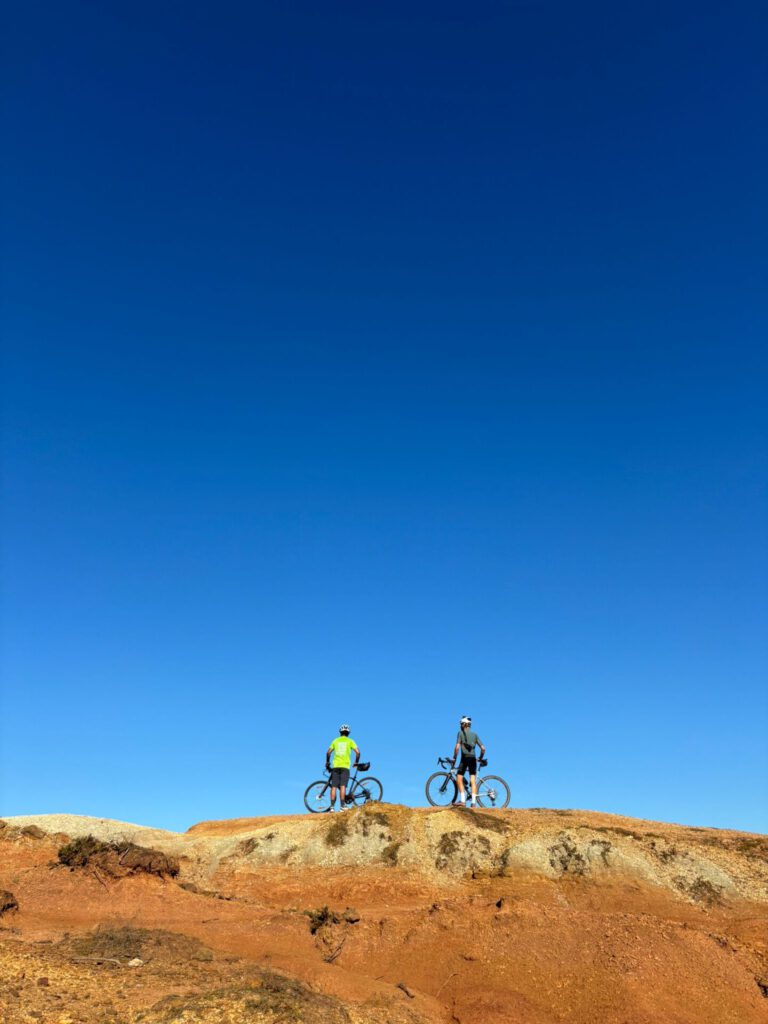
Offroad enthusiasts, pay attention: this region boasts numerous beautiful gravel roads and challenging MTB trails! Numerous beautiful, wide stretches meander through the landscape. For the most beautiful gravel trails, you absolutely have to head to Serra de Lousã, Serra da Estrela, and the entire area in between!
Central Portugal is a somewhat underrated cycling destination for cycling enthusiasts who have nearby popular destinations like the Alps or the Pyrenees. But for those looking for unique climbs, authentic villages, and routes along the coast, this region is ideal. There is little tourism. Along the coast, you will mostly encounter Portuguese, Spanish, and French people. Further inland, you really feel the authenticity of Portugal. The roads are relatively quiet, especially when you stay away from cities. There, you will mostly share the beautiful landscape with shepherds and sheep.
This region is fantastic to explore on a gravel bike. There are numerous beautiful, wide gravel paths that lead you through picturesque villages and over barren mountains. There is plenty to discover in Central Portugal!
The climate is also favorable, especially in late spring and early autumn, making this a pleasant destination.
In the north of central Portugal you will find mainly vineyards. Here lies the – beloved by wine lovers – Dão region; one of the oldest wine regions in the country. Country roads, wineries and vineyards define the landscape here. A little further south you will find the Mondego Valley, where the agricultural land is mainly used for other crops, such as olive trees, citrus fruits and grain fields. The Mondego River winds through the landscape, giving the region a green appearance.
Ten to the east of the Mondego valley lies the Serra da Estrela. The landscape gradually becomes increasingly mountainous. The Serra da Estrela is also known as the ‘Roof of Portugal’ thanks to the Torre; the highest peak in the country.
Serre de Lousã is located further inland. This is perhaps one of the most beautiful and authentic areas of Portugal. You will find beautiful roads here for both cyclists and gravel or mountain bike enthusiasts. Scattered throughout the Serra de Lousã are the Aldeias do Xisto, beautiful traditional villages that are often abandoned because many residents have been drawn to the cities. Some villages have now been restored and offer a unique glimpse into old Portuguese life.
The Costa de Prata, or Silver Coast, stretches along the entire coastline of Central Portugal. The coast is flat in the north, with wide sandy beaches. Towards the south, the coastal area gradually becomes more mountainous.
Along the coast, a moderate marine climate prevails, with mild winters and pleasant summers. The interior, on the other hand, has a continental climate, where summers can be hot and winters cold.
Spring (March – May) The temperatures in spring range between 13°C and 23°C. In March and April there is still regular rain (8-14 rainy days per month), but from May on the days become increasingly drier. In the Serra da Estrela, the last snow melts during this period, and the roads are once again passable.
Summer (June – August) The temperatures along the coast range between 22°C and 29°C, while inland temperatures can reach above 35°C. Higher up in the mountains it remains cooler. Rainfall is rare (2-6 rainy days per month).
Autumn (September – November) In September, the average temperature is still around 24°C; after that it cools down. The vineyards get beautiful autumn colors. The rainfall increases (7-12 rainy days per month), but September and October are still dry enough for good cycling conditions.
Winter (December – February) Along the coast, it remains mild, with temperatures between 6°C and 16°C. In the interior and the Serra da Estrela, it can freeze and snow, which makes cycling there difficult. The rainfall is highest (10-18 rainy days per month), but in the lower-lying areas cycling is possible on dry days.
Travel tips
- Best destination: It’s great to rent a car in this region. That way you can see the most of the surroundings. That gives you the opportunity to do the most beautiful climbs. Climb the Torre from Seia and stay in Lousã to explore the most beautiful routes of the Serra da Lousã. Although the two regions are not far from each other, the roads between them are very curvy, making the journey to the beautiful parts difficult to reach. And in fact, you should visit both regions if you’re a cyclist going to Central Portugal!
- Traffic information: The roads are generally well maintained. In the interior, the roads are quiet, but be aware that some Portuguese people like to drive fast. As for the gravel roads; there are many wide stretches where even traffic sometimes drives on them. Because of this, these stretches are relatively tight and well maintained. A big plus, therefore!
- Culinary: In central Portugal, a glass of Dão wine is a must. The region is known for traditional dishes such as Leitão à Bairrada (roasted pork) and Chanfana (goat meat stewed in red wine). Along the coast, you can enjoy fresh fish and seafood, such as Arroz de Marisco (rice with shellfish). Local cheeses, such as Queijo da Serra da Estrela, are also famous. For dessert, Pastel de Tentúgal is a specialty: a crispy puff pastry filled with creamy egg yolk cream.
When are you leaving?
How do you get there?
- Flying: Fly to Lisbon · Porto. Bring your own bike; book a place for your bike box in time.
- By train: Convenient stations: Coimbra.
- By car: From Utrecht you are there in about 20 hours. Central PortugalPlan an overnight stop along the way, or drive in two days.
This is how we calculate: We calculate distances and travel times starting from Utrecht. Our flights always depart from Schiphol, Rotterdam The Hague Airport or Eindhoven Airport. Want to know how to travel from your place of residence the best way? Let us know, We are happy to help you. After all, we built this site together.
Are you flying? Read our guide Flying with your bike: Which airline, what the cost is and how to pack your bike.