Part of Portugal
Cycling in Lisbon (region)
Did you know that Lisbon is not only the capital of Portugal, but that the region around the capital also bears this name? Besides Lisbon city, the Lisbon region also includes the surrounding areas of Sintra, Cascais, Estoril and Setúbal – all of which are known for their own culture, nature and history. Sintra is known for its beautiful palaces, such as the colorful Pena Palace, but also for the Sintra Mountains (part of the Parque Natural Sintra-Cascais nature park), where beautiful roads wind through the coastal landscape.
You can already hear it; this area is not just fun for ‘city trippers’. Cyclists can also enjoy themselves here. Ideal, because this region is naturally well-connected thanks to the airport in Lisbon.
Lisbon is of course known for its characteristic yellow trams, colorful tiles, and the historic Alfama district with its narrow streets and fado music. It is a beautiful, lively city for both cyclists and non-cyclists. Although it is nice to cycle through the city once in a while (just leave a good average time behind), as a cyclist you would prefer to avoid the city’s crowds. Then go sit a little to the north-west to be near the beautiful coastal paths. The north side of Lisbon also has beautiful roads. The landscape is rolling and hilly, with usually fairly short – but steep – climbs.
The southern side of Lisbon city, on the other side of the Tag River, is a bit flatter. But where it can be a bit busier on the northern side, with numerous winding roads and many villages, the north and east sides are also a lot quieter and more spacious.
Although Lisbon is easily accessible and has a beautiful environment, not many cyclists will think of this region as a cycling destination. That’s a shame! Because there are plenty of reasons why a cycling holiday in Lisbon is worth considering.
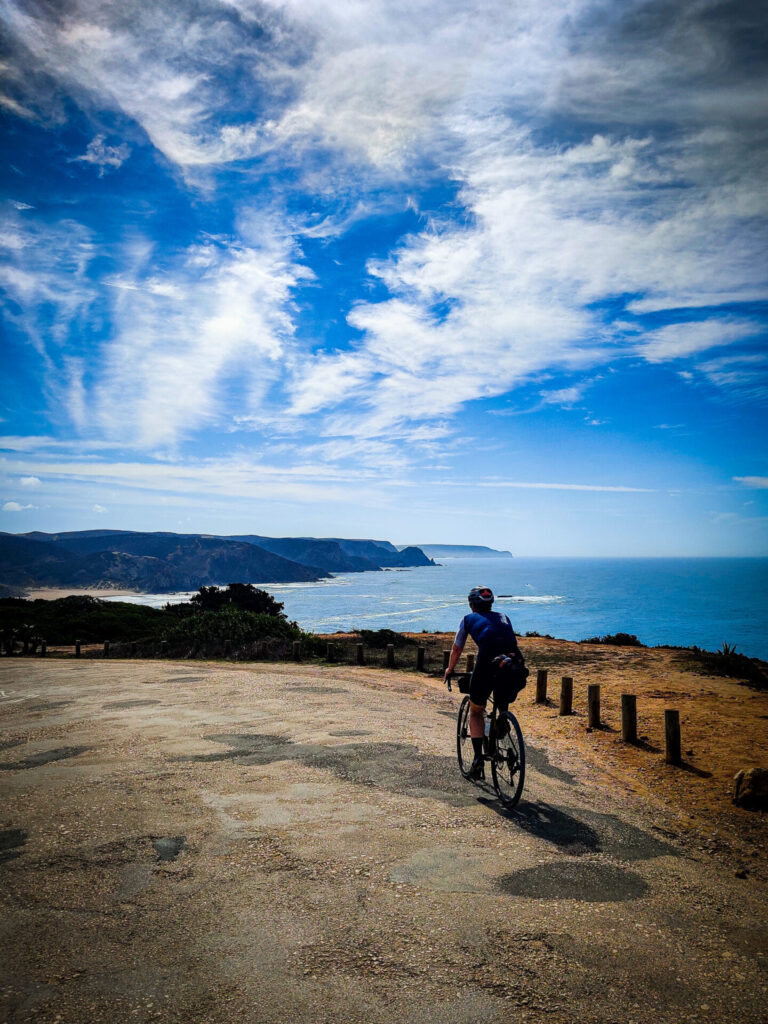
First of all, the region is extremely diverse. The roads around Lisbon range from tight asphalt to beautiful gravel sections. There are areas with hills and steep climbs, almost flat areas… Coastal roads and winding roads through the hills.
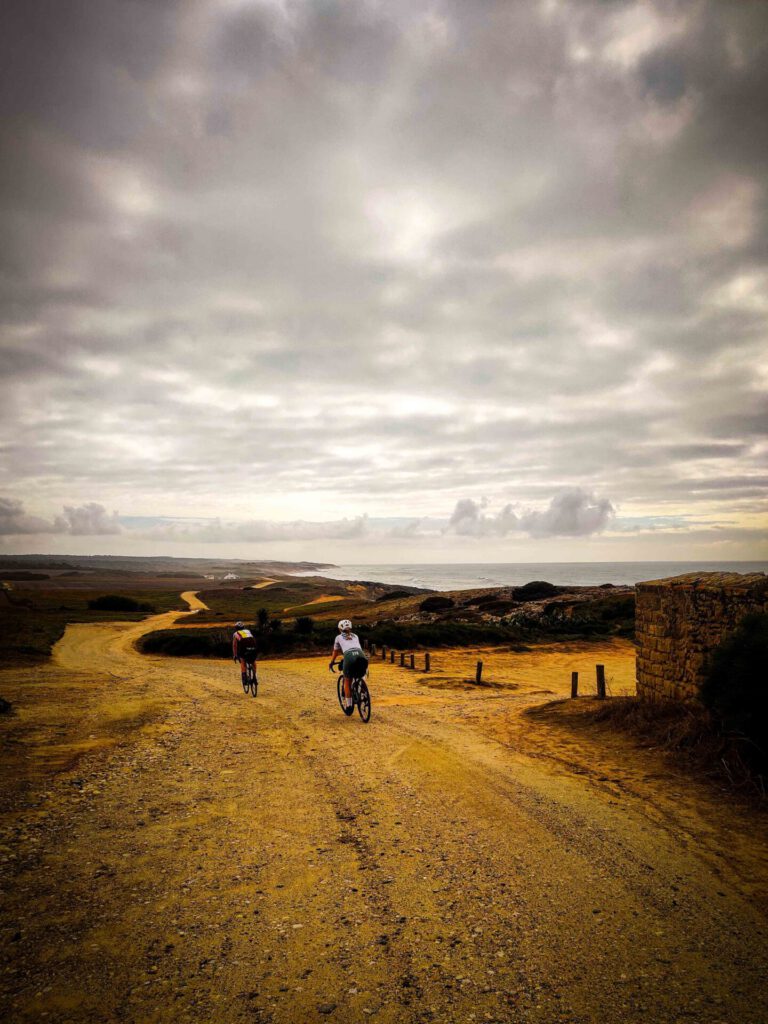
With a gravel bike you can explore the many wide gravel paths through the forests. Especially on the northwest side of Lisbon city there are many beautiful unpaved paths.
Just north of the city lie the wine regions of Alenquer and Arruda dos Vinhos, where rolling hills are covered with vineyards and traditional quintas (wine farms). This is the heart of the Lisbon wine region, known for both red and white wines. The roads are quiet and meander through the green countryside, past old windmills and small villages. This area is ideal for those who enjoy longer rides without much traffic.
Further north lies Torres Vedras, a historic town with a mix of vineyards and agricultural land. This area was once the scene of the Linhas de Torres, a defensive line against Napoleon, and today you cycle past ancient forts and beautiful valleys.
Ten west of Lisbon lies the Serra de Sintra, a hilly natural area that feels like a fairytale landscape. Dense forests and colorful palaces make this one of Portugal’s most extraordinary places. Cyclists can enjoy the steep climbs here, such as the one to the extraordinary palace Palácio da Pena. A special gravel climb in this region is the one to the Anta de Adrenunes, a historic granite formation. From the top you have a magnificent view of the ocean.
On the eastern side of the region flows the Tagus River (Rio Tejo), which gives the landscape a completely different character. Here you find open plains with agricultural land, vast fields and orange groves. The region around Vila Franca de Xira is known for its bullfighting culture and traditional farms (herdades).
Further upstream, towards Azambuja, the landscape becomes increasingly flat. Here you can feel the influence of the neighboring region of Alentejo: a warm, dry landscape with endless vistas.
The Lisbon region has a moderate Mediterranean climate with mild winters and warm summers. Along the coast, the Atlantic Ocean provides a cooling effect, while inland temperatures can heat up significantly in the summer.
Spring (March – May)
In spring, temperatures range between 12°C and 22°C. March and April may still have some rainy days (6-12 rainy days per month), but from May onwards it becomes increasingly drier. This is one of the best periods to cycle, with fresh mornings and pleasant afternoons. The hills around Sintra and the Tagus Valley are beautifully green and the flowers are in bloom.
Summer (June – August)
Temperatures at the coast range between 20°C and 28°C, while inland – as in the vineyards around Alenquer – can reach above 35°C. In Sintra and Cascais, the sea breeze can provide some relief, but on some days the nortada, a strong north wind, can make cycling conditions challenging. Rain is rare (1-4 rainy days per month), making this a dry but warm period to explore the region.
Autumn (September – November)
In September it is still warm, around 24°C, but then it cools down slowly. The vineyards and forests around Sintra turn red and orange, providing a beautiful backdrop for bike tours. The rainfall increases (7-12 rainy days per month), especially in November, but September and October often remain dry enough for pleasant cycling days.
Winter (December – February)
Along the coast, temperatures remain mild, between 8°C and 16°C, but in the hills it can become cooler. Rainfall is heaviest during this period (9-16 rainy days per month), which can make some roads slippery. Although the region does not experience snow, the higher-lying areas around Sintra and Mafra can be foggy and misty. However, cycling remains feasible on dry days, especially along the coast.
Travel tips
- Best destination: Although you can cycle directly from the city, it is often more pleasant to stay in a quieter area, closer to the best climbs and roads without cars. Sintra is a great base if you enjoy challenging climbs and the alternation between wooded roads and rugged coastal landscapes. From the village, you can head straight to the Serra de Sintra, a hilly area with steep climbs and narrow roads winding through dense forests. Cascais is also a great base on the coast. Setúbal, south of Lisbon, is the perfect base for those who want to discover the beautiful Parque Natural da Arrábida. This nature reserve offers car-free roads with steep climbs and stunning ocean views. The climbs here are shorter than in Sintra, but certainly challenging, and the tranquility and Mediterranean landscape make it a unique cycling destination.
- Traffic information: The roads in the Lisbon region are generally well maintained. Along the coast and in the hilly areas around Sintra and Arrábida, the roads can be narrower and busier, especially on weekends and during holiday periods. In the interior and outside the major tourist areas, things are quieter. Please note that some Portuguese drivers drive very aggressively. For gravel bikers, there are numerous wide gravel lanes, often well maintained and shared with light vehicular traffic.
- Culinary: In the hills of Sintra and in the surrounding villages you can enjoy delicious sweets such as Travesseiros (fluffy, thin puff pastry filled with almond cream) and Queijadas (small, creamy cheese cakes). Along the coast, fresh fish and seafood are the specialties, with dishes such as Bacalhau à Brás (mackerel with egg and potato chips) and Amêijoas à Bulhão Pato (venison mussels in garlic and coriander). In the wine regions north of Lisbon, such as Alenquer and Torres Vedras, you can taste local wines. A glass of Vinho Verde or a red wine from the region is the perfect finish after a long cycling day.
When are you leaving?
How do you get there?
- Flying: Fly to Lisbon. Bring your own bike; book a place for your bike luggage in time.
- By train: Convenient stations: Lisbon · Sintra · Cascais.
- By car: From Utrecht you are in about 21 hours Lisbon and its surroundingsPlan an overnight stop along the way, or drive in two days.
This is how we calculate: We calculate distances and travel times starting from Utrecht. Our flights always depart from Schiphol, Rotterdam The Hague Airport or Eindhoven Airport. Want to know how to travel from your place of residence the best way? Let us know, We are happy to help you. After all, we built this site together.
Are you flying? Read our guide Flying with your bike: Which airline, what the cost is and how to pack your bike.