
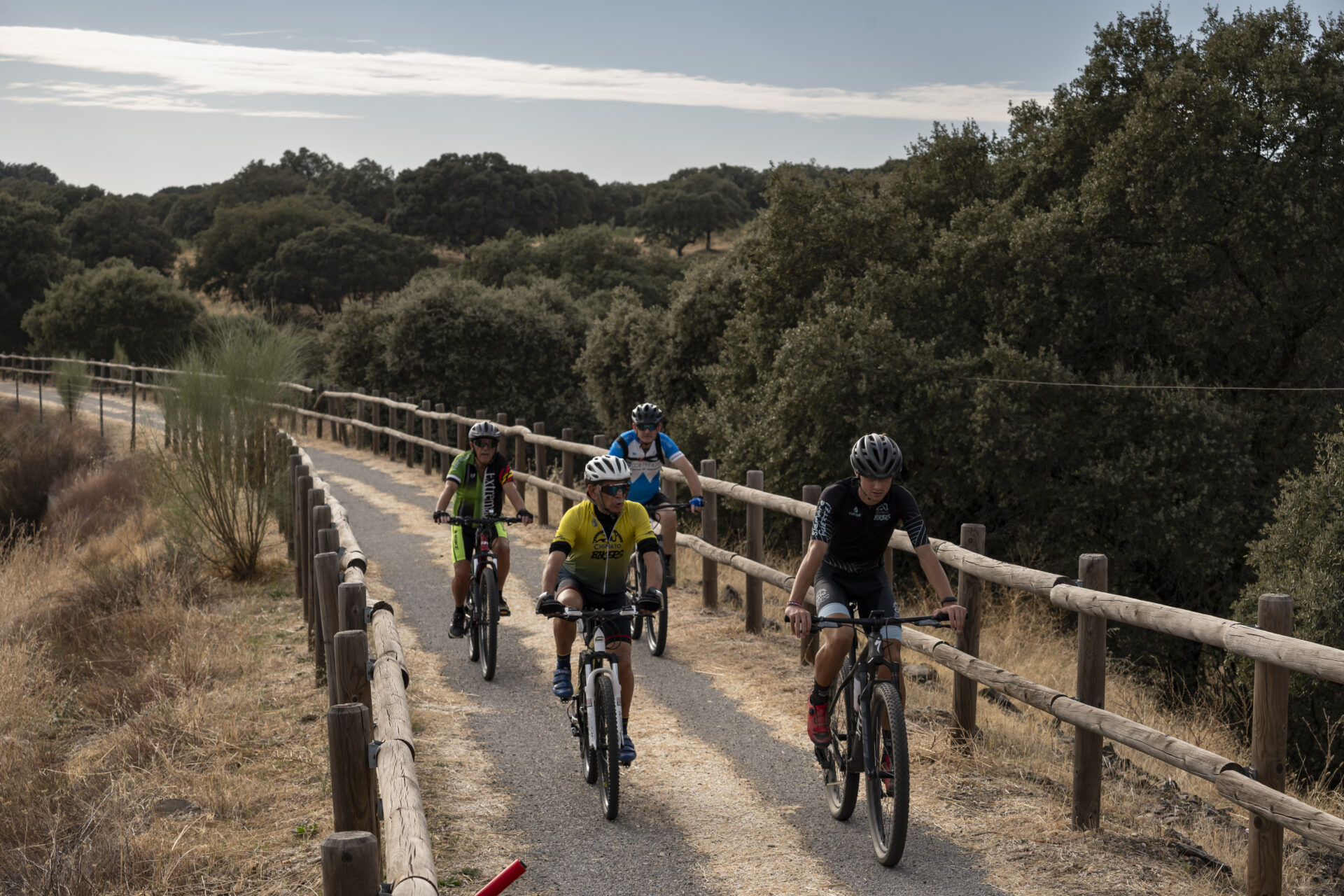

Anyone considering a cycling holiday in Spain will soon encounter the well-known regions. Usually just across the border around Girona, in the Basque Country or further down along the coast of the Costa Blanca. But those who look beyond the well-known names will see regions that stand out for their unique range of cycling opportunities. One of these regions is Extremadura.
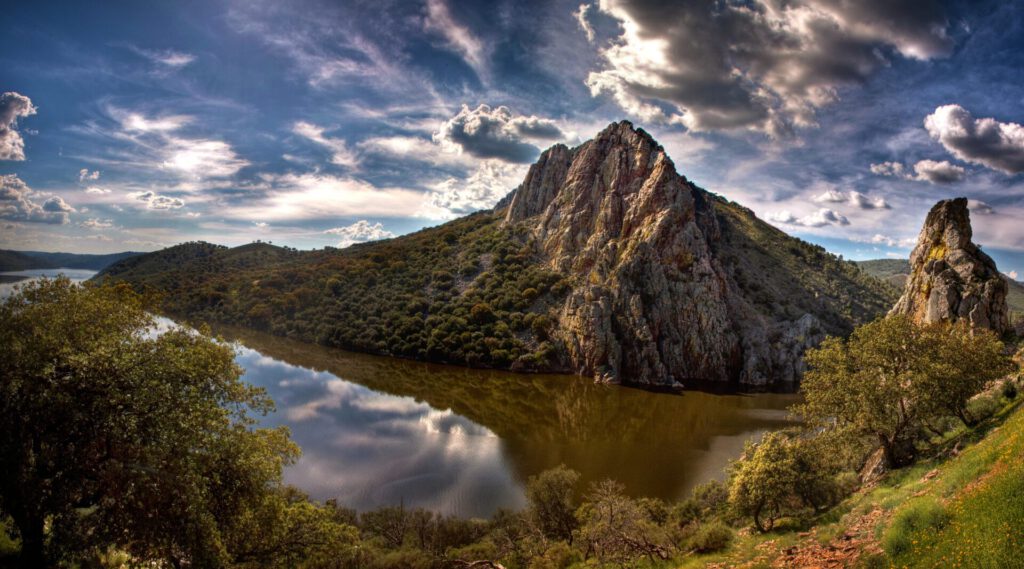
In this relatively unknown region you’ll find some gems. Gems that will make you say: I have to go there! We’ll take you through the highlights of Extremadura. For those who don’t know what region we’re talking about, let’s have a quick look at the map.
On the west side of Spain, near the border with Portugal, just above Andalusia, we find Extremadura. The region is relatively sparsely populated and is known for its capital Mérida, where you can find a lot of Roman history. Outside the cities, you can find, among other things, the National Park Monfragüe as the absolute highlight.
Green Gravel Ways – Green Roads
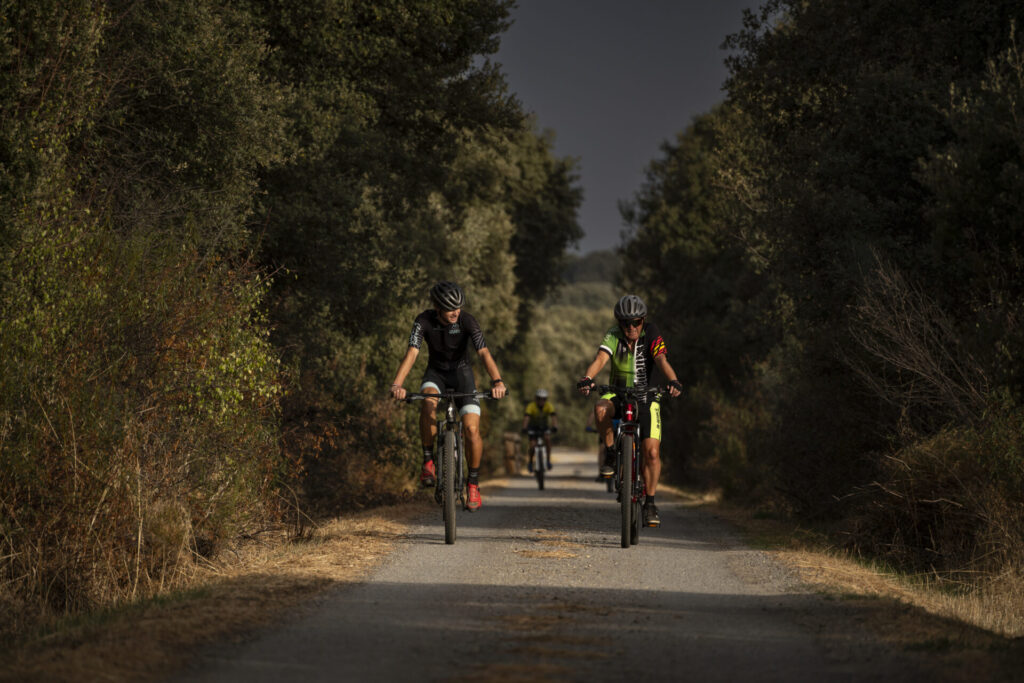
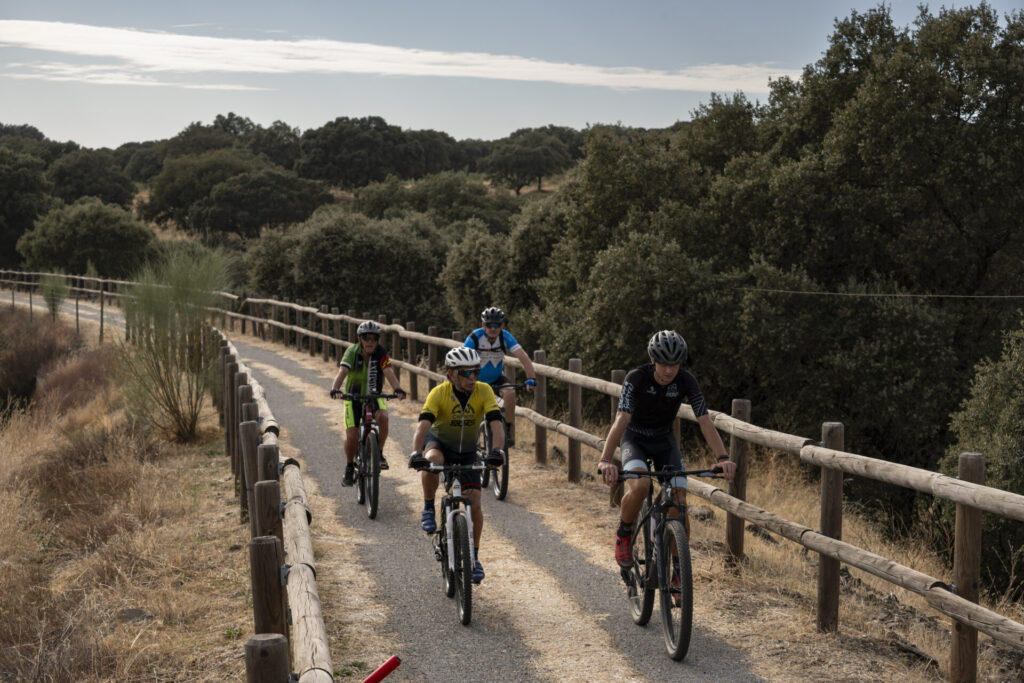
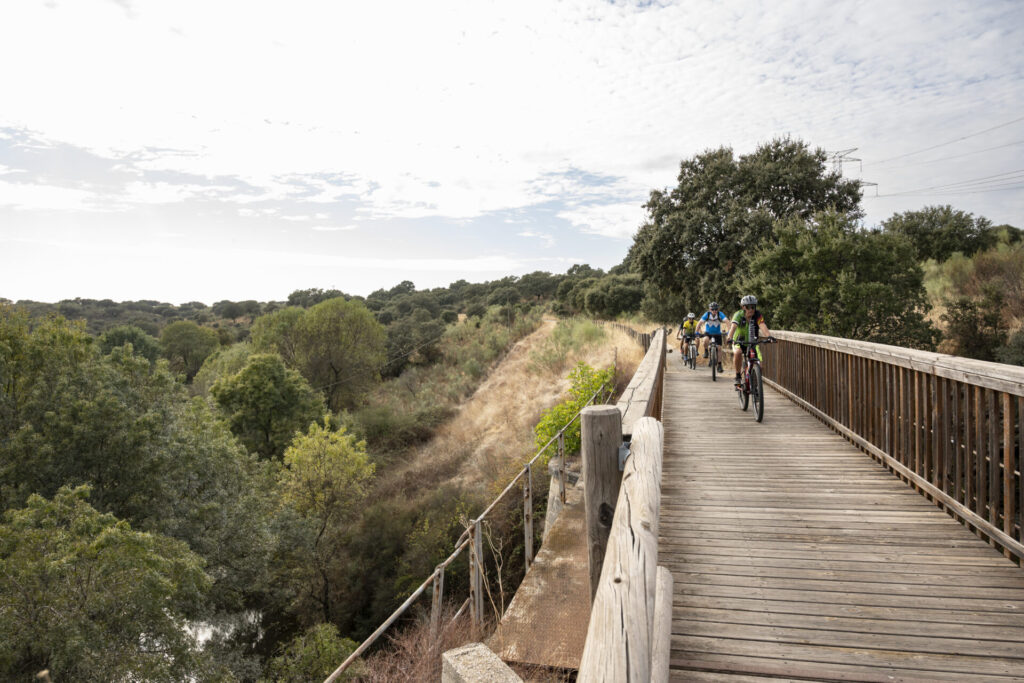
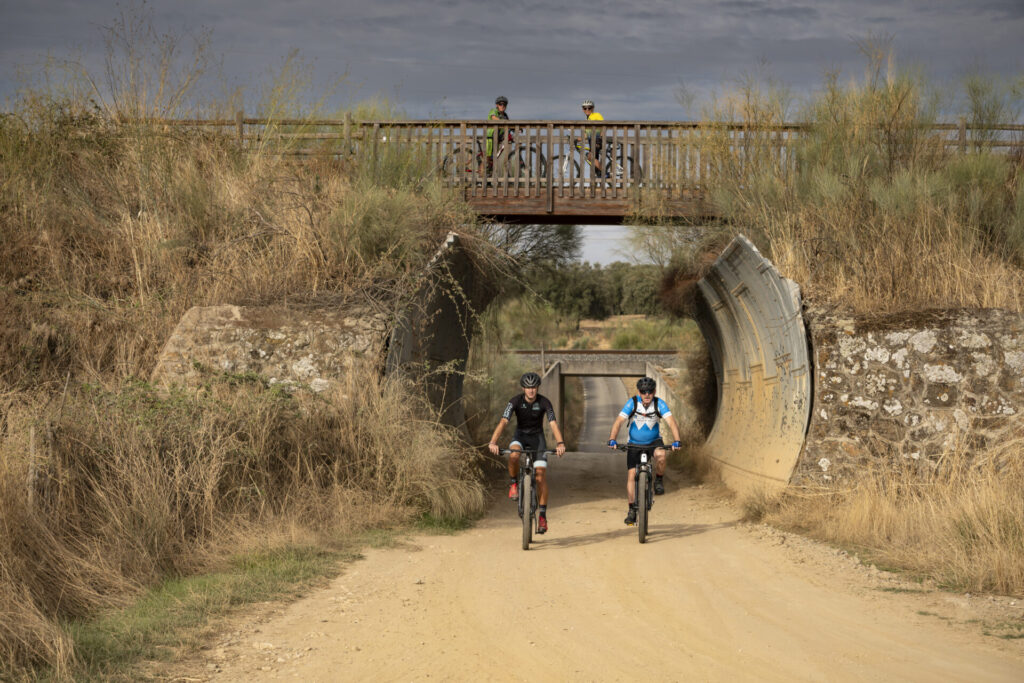
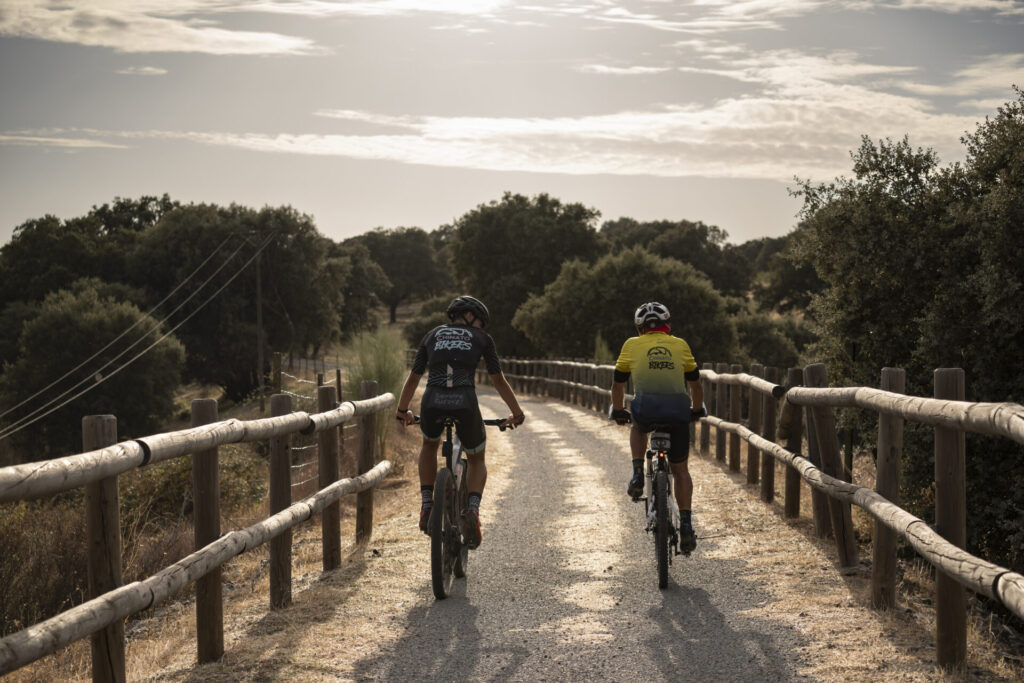
If you really want to explore the region, it’s perfect via the various ‘Green Ways’ that run through it. The Vias Verdes are all old railway lines that have fallen into disuse over time. They have now been converted into cycle and hiking paths that are suitable for everyone. But they’re especially great for gravel biking! In total, there are 170km of Vias Verdes in Extremadura to explore, divided into four routes. They provide a great insight into the region.
Ruta de La Plata
In the north of the region you will find ‘La Plata’. This Via Verde runs from Baños de Montemayor to Plasencia. This is only part of the Via Verde, because the entire ‘Ruta de La Plata’ runs through Extremadura from north to south (or vice versa). This is the famous ‘Silver Route’ that connects the north with the south.
Because of the appeal that Santiago de Compostela has, many people travel to it. Silver Route From south to north. That may also have to do with the fact that you can start and end in the sun, depending on how long you want to spend there. This Via Verde is therefore perfect for combining with a longer trip, or if you just want to ride the Silver Route for a while. Go for a nice day on the gravel bike, or do it on a weekend bikepacking trip, where you take a different route back and forth. Or go for a wellness bikepacking and visit the spa in Baños de Montemayor and/or Salugral (Hervas).
The entire silver route through Extremadura is 339km, the stretch between Plasencia and Baños is only 49km. Keep in mind the altitude differences, almost 700 in total. Nearby you can find the Mirador La Garganta and the Corral de los Lobos. Just across the border with Castilla y León you’ll find the Navamuño reservoir and the associated dam. Always impressive. And don’t forget this year of Gaudí: the tree house ‘Casita del Árbol y Fantasia de Gaudí’. It’s located a short bike ride from Baños.
Monfragüe
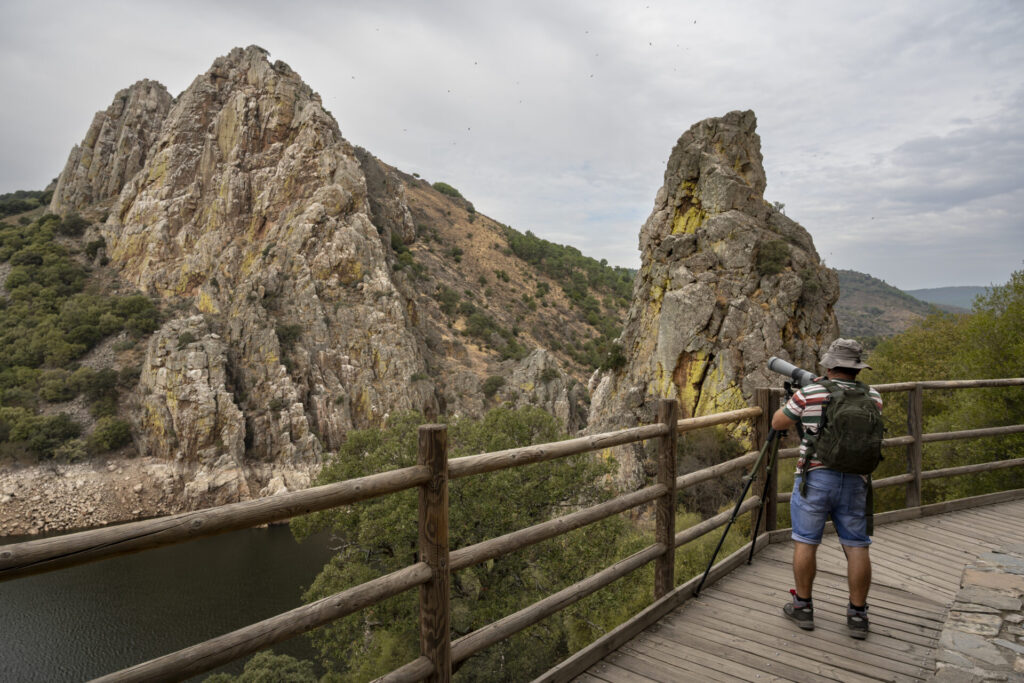
The National Park of Extremadura is Monfragüe. If you go off-road biking (gravel or MTB) or if you ever go biking in the region, this is a must-do. The Via Verde follows the old railway line between the city of Cáceres and Madrid. The route in the Monfragüe park is only 17.8km long, but we’d like to explain it here because of its beauty. You ride right along the railway and in the route we’ve included, you also go further into the park. In the park you’ll find a multitude of bird species and you can also take a closer look at the biodiversity in this nature park. Beautiful rock formations in all colors, an old castle, and several beautiful viewpoints.
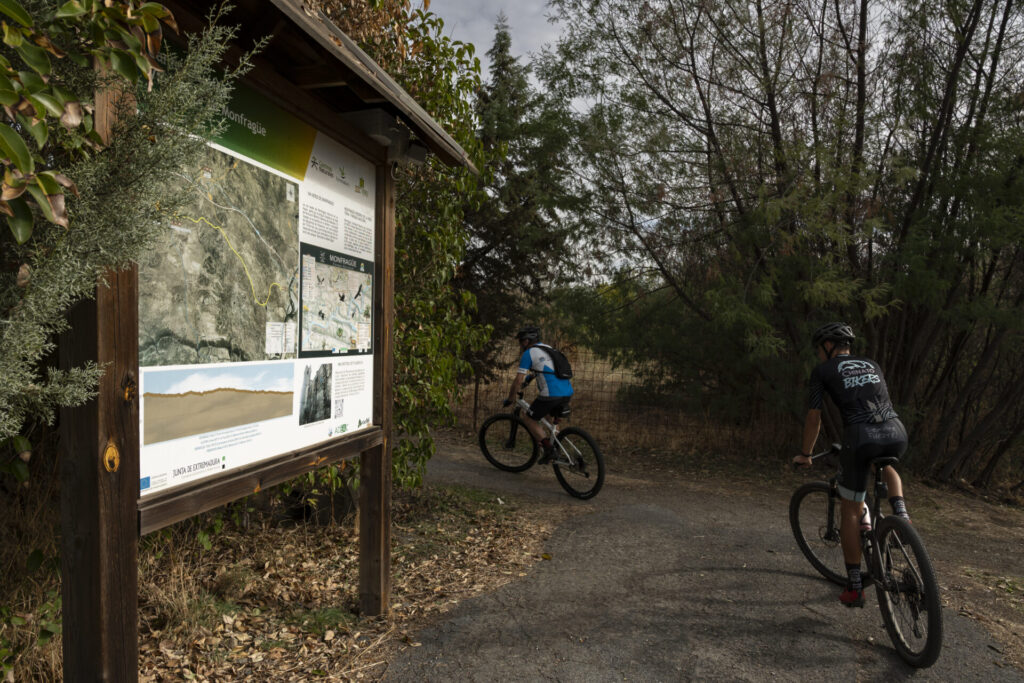
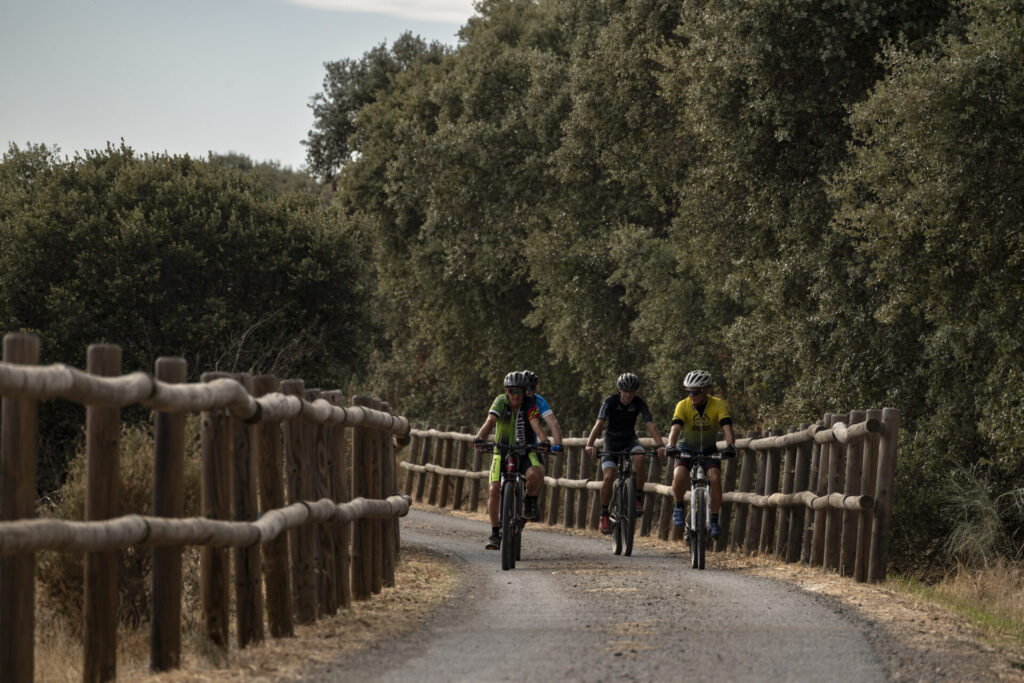
The route is a total of 55km and you could possibly take the train to Monfragüe and then continue cycling. In the route you also ride over the Tiétar Dam, near the river of the same name.
Vegas del Guadiana
This is a beautiful ‘three-in-one route’. You follow the old railway from Talavera de la Reina to Villanueva de la Serena here. What’s in a name? Talavera is in Castilla-La Mancha, so the route runs from Villanueva to Logrosán. In total, this is a 57km one-way journey. This route really revolves around the region’s mining history.
Not only will you be moving from the province of Cáceres to Badajoz here. You will be presented with the beautiful fields here. Additionally, you will drive through the ‘Dehesa’, which can best be described as a kind of savanna area with cork trees where it is ideal to keep, among other things, Iberian pigs (and eventually slaughter them). Although the latter sounds a bit harsh, it is nevertheless an area that strikes a balance between economic exploitation and nature conservation.
The mountains, which were formed by an ocean that lay there millions of years ago, also make it a unique area.
The route offers a few extra features: it is the perfect winter retreat for migratory birds such as the cranes, which seek the warmth of Spain in contrast to the cold of Northern Europe. You will also find the beautiful dam at the Sierra Brava.
This route is easy to extend with the Camino Natural de Guadiana in the south or the Camino Natural de Villuercas (in the north).
La Jayona
Between Fuente del Arco and Peñarroyo (in the province of Córdoba) there used to be a railway line that supported the mining industry. If you want to take this route, you go south of Extremadura. The origin of this Via Verde lies at the La Jayona my, The , a former iron mine that contributed to the importance of this route. You can also visit the mine and it is one of Extremadura’s National Monuments (and therefore a must do. Just make sure you have good shoes). Additionally, along this 30km route you will also come across the ‘Sixtine Chapel of Extremadura’, the Hermitage of the Ara, No, I agree. Be sure to stop here, just for the beautiful paintings.
Other options to discover the region by bike
There are a number of other routes you can try out. In the Geoparque Villuercas-Ibores-Jara you can travel from north to south or from south to north. The total distance of 66km is perfect for a day trip, starting in Bohonal de Ibor or in Guadalupe. Please note that this route has quite a bit of elevation difference. Depending on your starting point, it is between 1300 and 1500 meters above sea level. So you will need some time for this. It’s not necessarily very technical.
Hotel tips
One of the best places to stay in Spain if you’re on a cycling holiday is in a bike-friendly hotel. You’ll find bike-friendly hotels in a ‘parador’. A parador is an old stately building, such as castles, palaces, monasteries, and country houses, that offers a truly unique sleeping environment. In Extremadura you have several ‘paradores’, including Placensia where it is located in an old monastery.
In Jarandilla de la Vera, in the north, you will also find several beautiful options, including: Hotel Ruta Hotel Ruta Imperial.
How do I get there?
This region in Spain is perhaps less well known because it does not have an international airport. For direct international connections, you will have to rely on Seville (about a 3-hour drive) or Madrid. From both airports, you will then travel by train or by rental car.
If you want to land close to the airport, you can also take a connecting flight to Airport Badajoz travel. There is an airport with several domestic flights per day, including to Madrid
TrainAnother option is the public transport system, where you will travel via the hub in Madrid. Expect a day of travel to Madrid via Bayonne, followed by a short trip to Mérida or Cáceres.
CarBy car, it’s a two-day trip and maybe even a three-day one. It’s 2,100 km from Utrecht to Mérida. Then you stop somewhere between Bordeaux and Bayonne, or if you split it into three parts, you stop between Paris and Bordeaux and then in Burgos or Valladolid.
Best time to travel
The best time to visit Extremadura is between March and June and in the autumn, between September and November.
The best temperatures are found in March-April and September-November. It is located slightly inland, compared to neighboring Andalusia, so keep in mind colder temperatures in winter. That said, it’s still lovely there, even in autumn and winter.
Want to know more about traveling to Extremadura? Check the website for more info and the latest news. Tourism of Extremadura
Questions & tips
Do you have any questions about this route, or have you been there yourself? Share them here. We read everything and usually respond within a few days.