
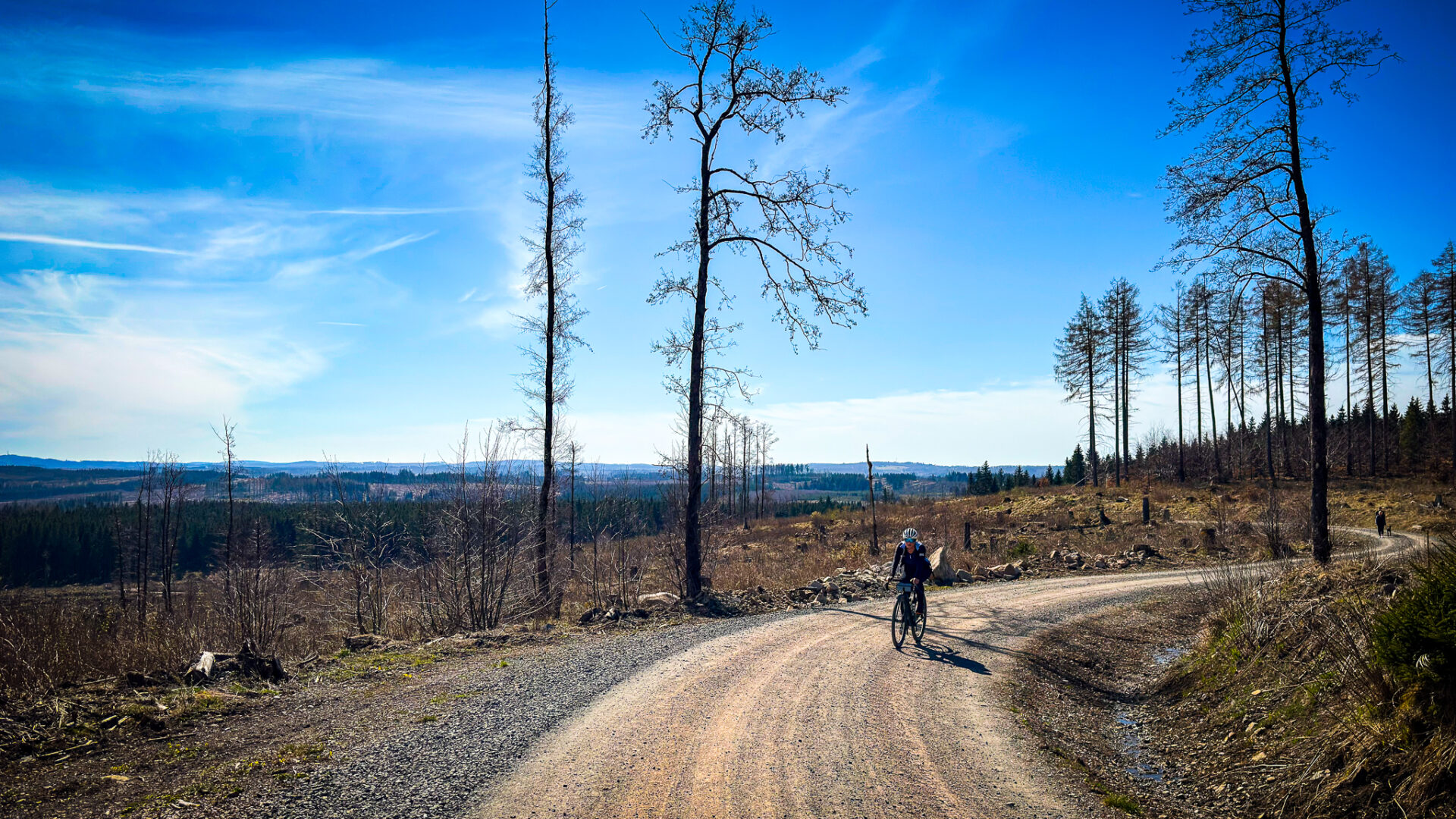
Say Germany, When you say gravel in Germany, you can’t really avoid the beautiful Harz region. About an hour and a half’s drive from Utrecht you find an extensive natural area where your mouth is open. It’s as if you’re driving through different countries in one day, as if you’re going up and down constantly and as if you sometimes go back in time. Do you want to know why you should go gravel biking in the Harz, in Saxony-Anhalt and Lower Saxony on the border with former East and West Germany? Then read on for more tips on gravel biking in the Harz
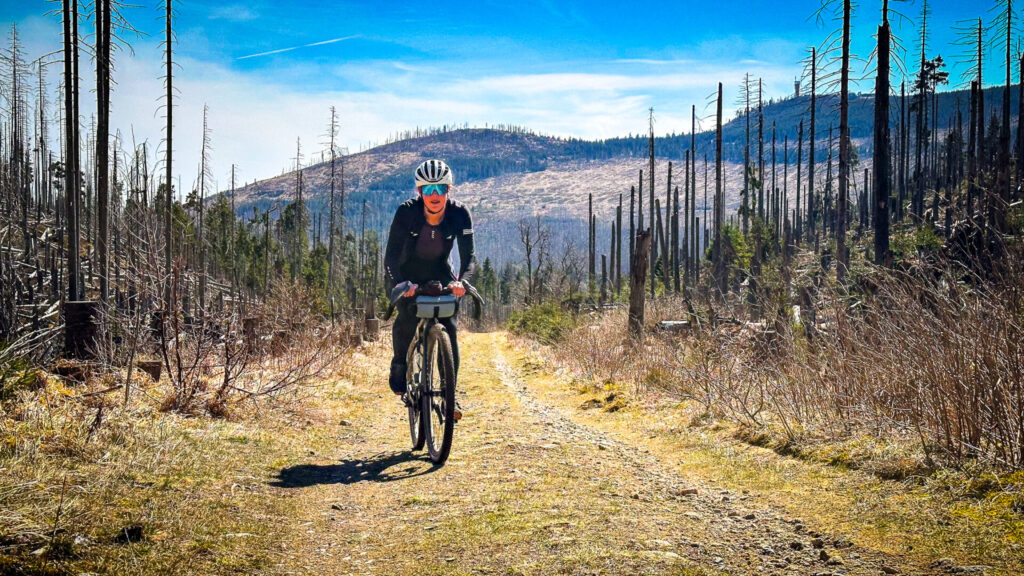
The first spring days are approaching in the Netherlands as I drive the car to the station in the early morning. It is the signal to pick up my travel partner, load the bike and go on the trip to the region of Saxony-Anhalt. Our final destination is Benneckenstein, a village deep in the Harz, just a stone’s throw from the former Iron Curtain. That history intrigues me enormously. It is a history that you can hardly imagine in the present time. We travel almost barrier-free all over the world. But until just under forty years ago there was a literal wall between the east and the west of Europe. In Berlin it was very visible, but also in Harz, In a mountainous region that extends over several German states, you can still see and experience the history.
During our preparations, we spotted the old border post that later forms part of one of our routes. It’s such a classic watchtower, surrounded by a kind of open space. It’s ideal for spotting intruders. It’s a tangible reminder of a conflict. An absolute must-visit for us.
Brocken is everywhere
Along the way, you hardly notice any conflict; it’s a great trip to get to the heart of Germany. Through cities like Hannover and Braunschweig, we slowly descend into the Harz In. You can already see the mountain range from a distance, with the Brocken, the highest point, bathed in sunlight. That peak is also included in our routes, literally and figuratively.
Explore the Harz
But we are on our way to Benneckenstein, to Pim and Carla. Two fifties who, during the COVID period, suddenly saw their quest for more peace and space take a turn they might not have expected. The result was, in any case, a house in Sachsen-Anhalt, which is now a b&b, Explore the Harz Pim is a passionate cyclist and knows the best routes in the region; the accommodation is perfect for fully immersing yourself in the region.
Once we arrive, we are warmly welcomed. Pim is still busy working, because the week after that is an important weekend with many guests. A B&B is never finished, but when you suddenly have a shower wall in 1000 pieces while working too, well, never a dull moment.
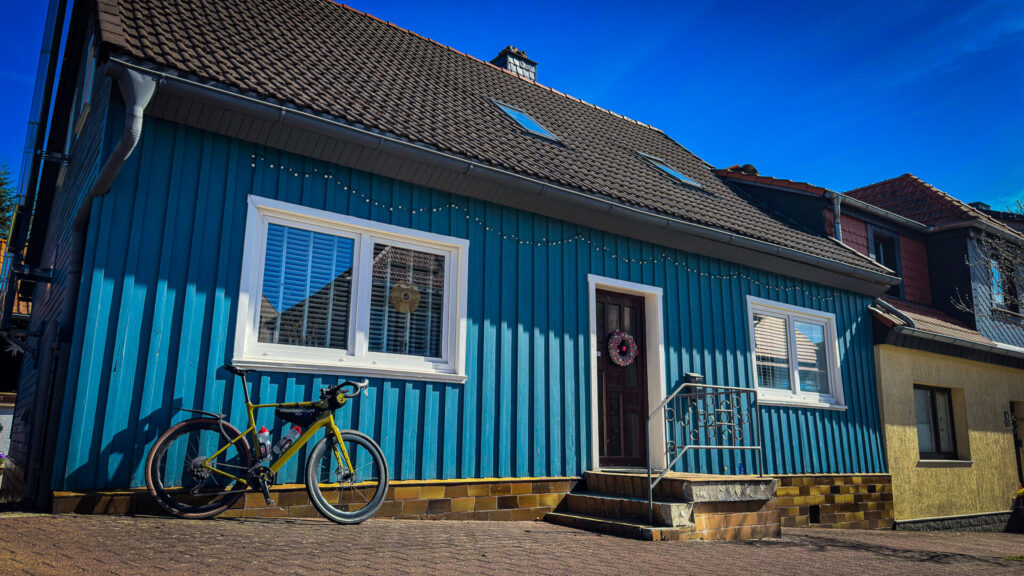
We get out of the car, have some coffee and quickly get ready for our first meeting. Pim had already created four routes in advance, each with its own theme. Highlights? A piece of DDR history, the Brocken, the Rappbodetallsperre and the Josephskreuz. We can’t wait.
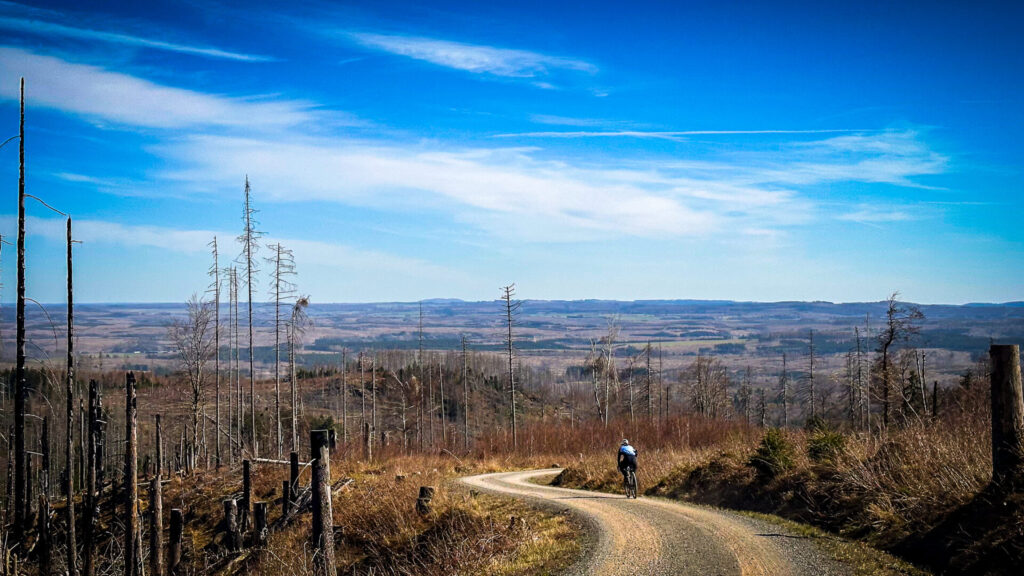
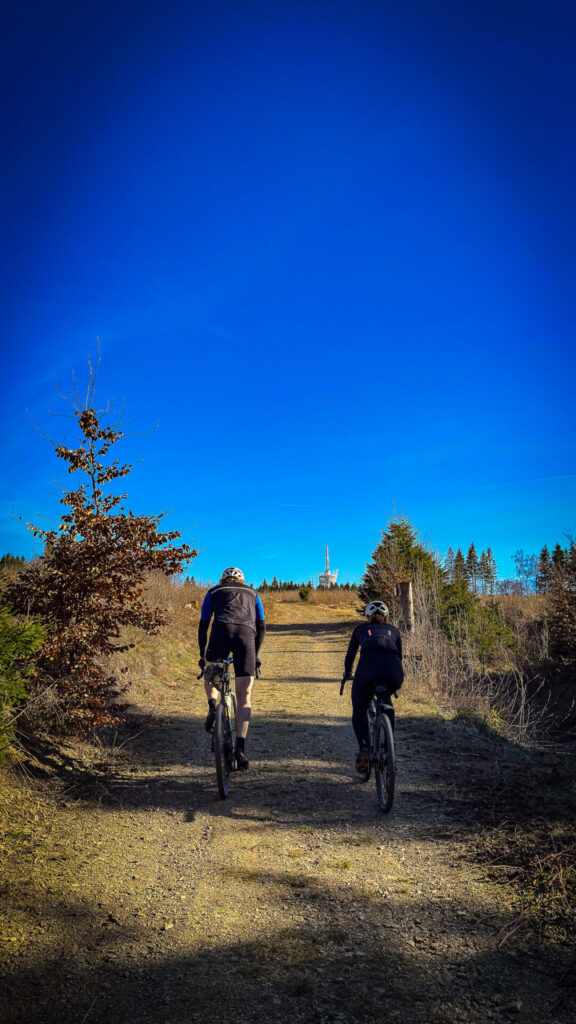
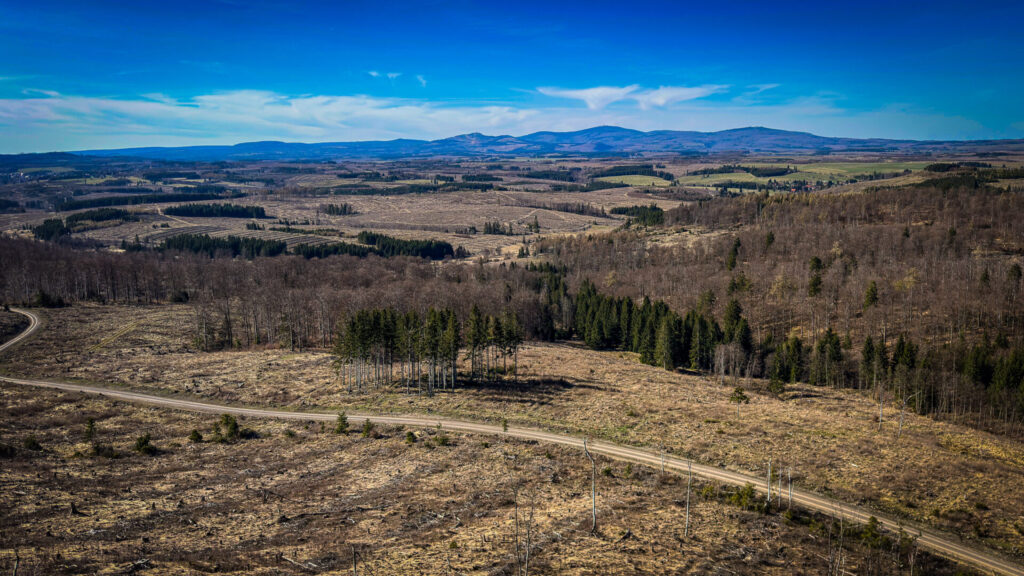
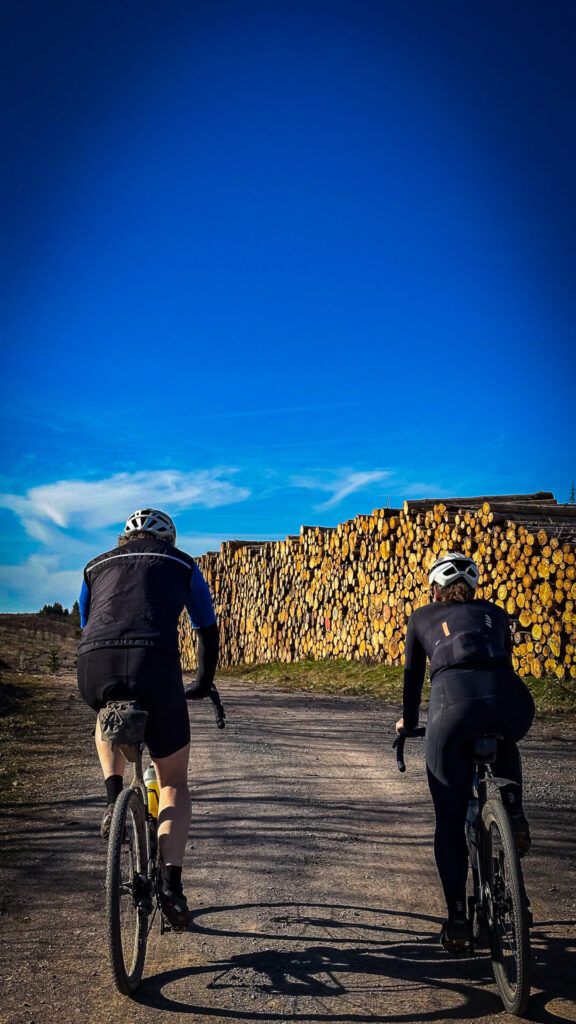
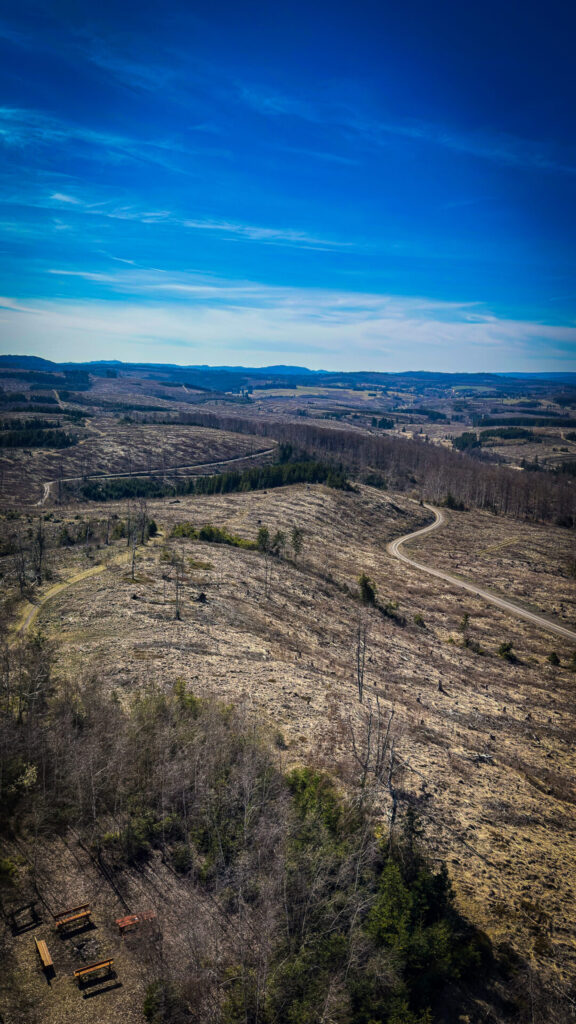
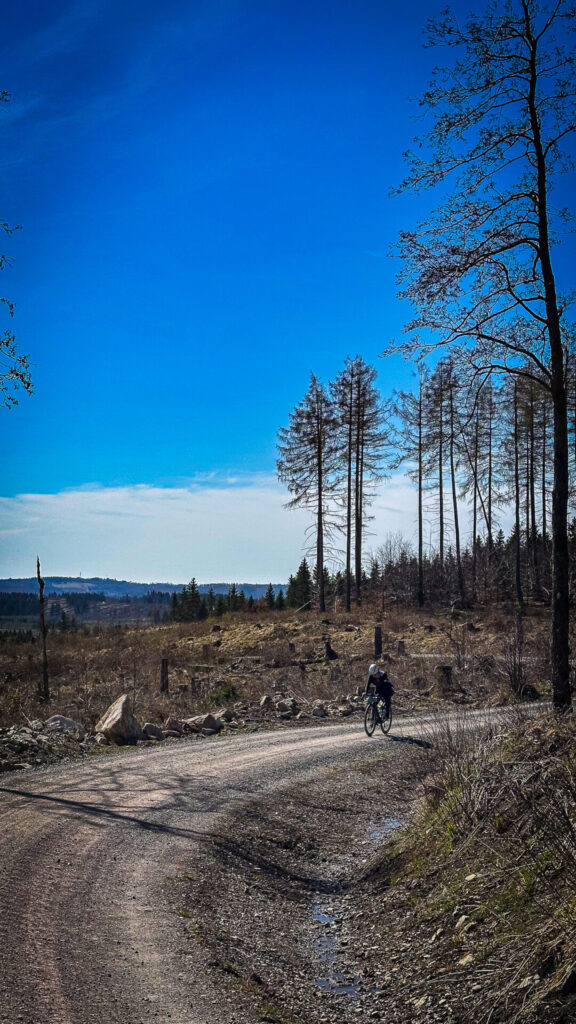
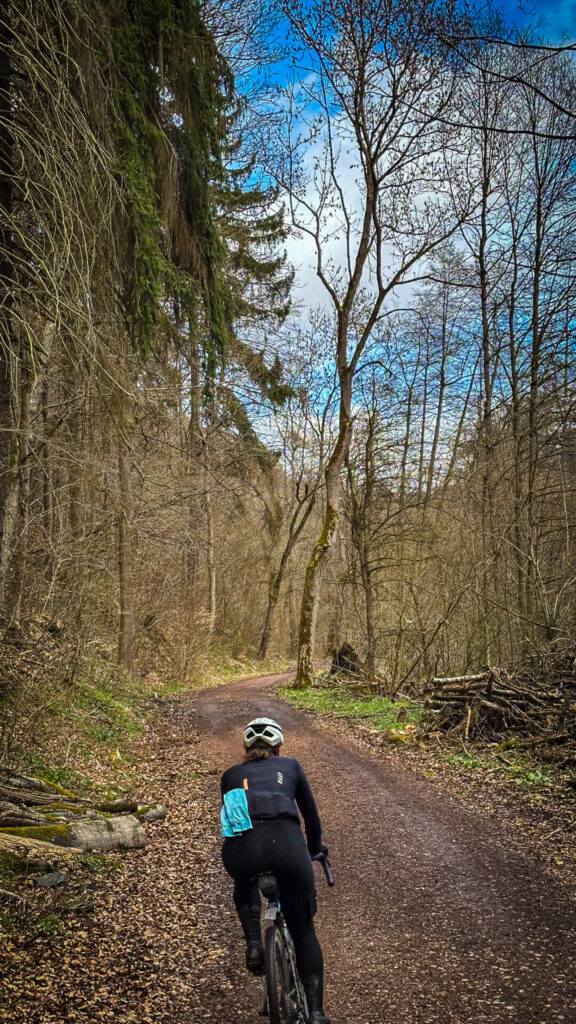
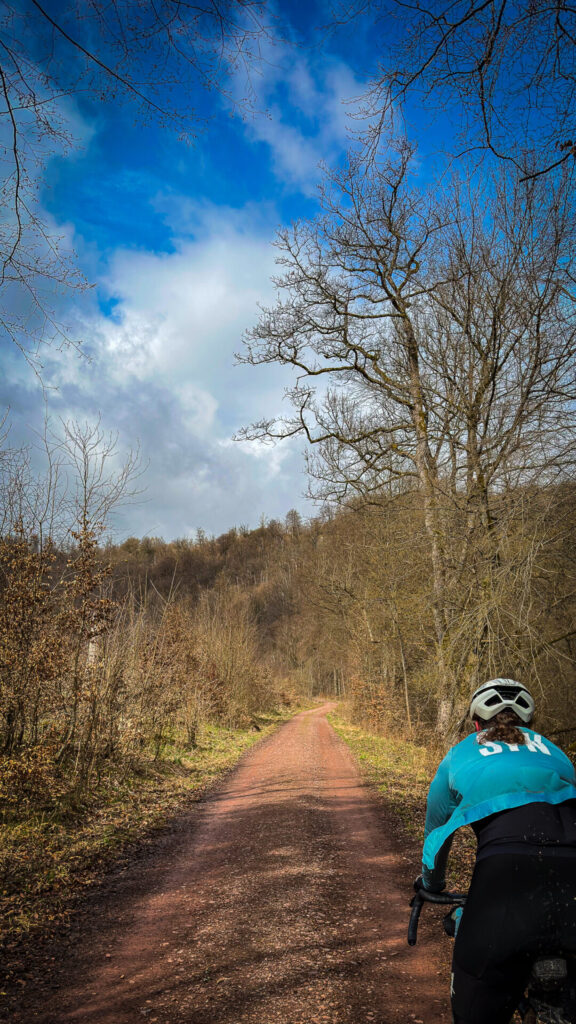
Our first route is a loop of about 35 kilometers with start and finish in Benneckenstein. What stands out is that within a kilometer we are already on gravel Sitting there. And what kind of gravel. Champagne, crinkly, delicious, beautiful gravel. And then there’s the surroundings. We drive around hills that are flanked by trees that have been cut down in half. It sometimes seems as if you’re in an old mining environment. If you forget that you’re in Germany, it could also be the interior of the USA: Colorado, Utah, Arizona. Probably Winnetou and Old Shatterhand weren’t created in Elspe, but here.
Tower high
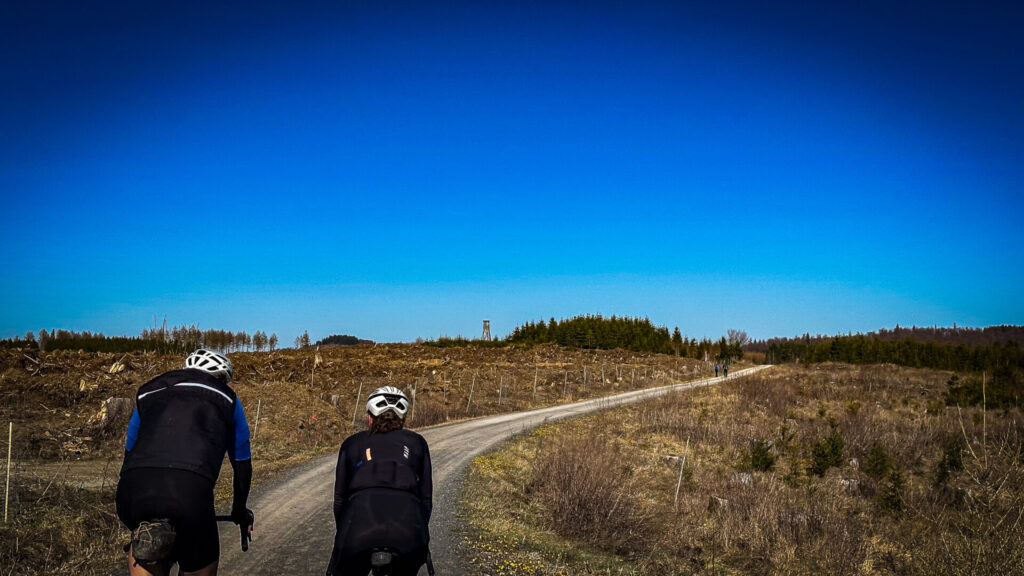
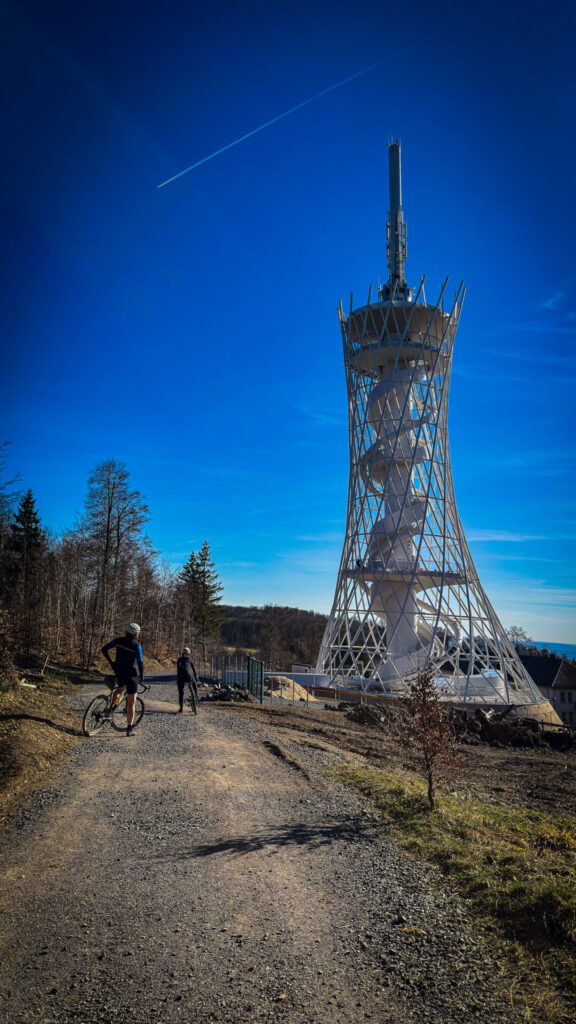
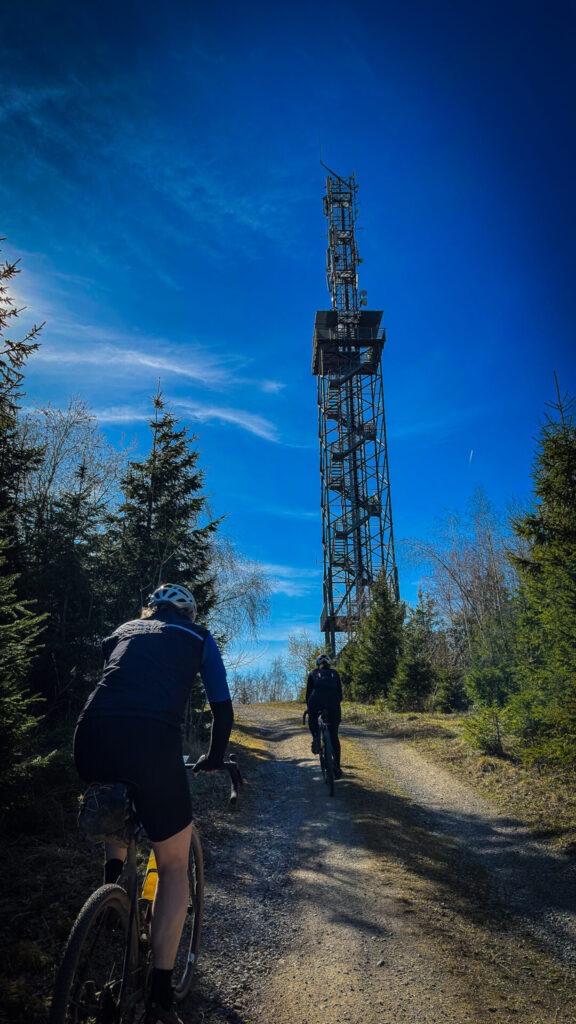
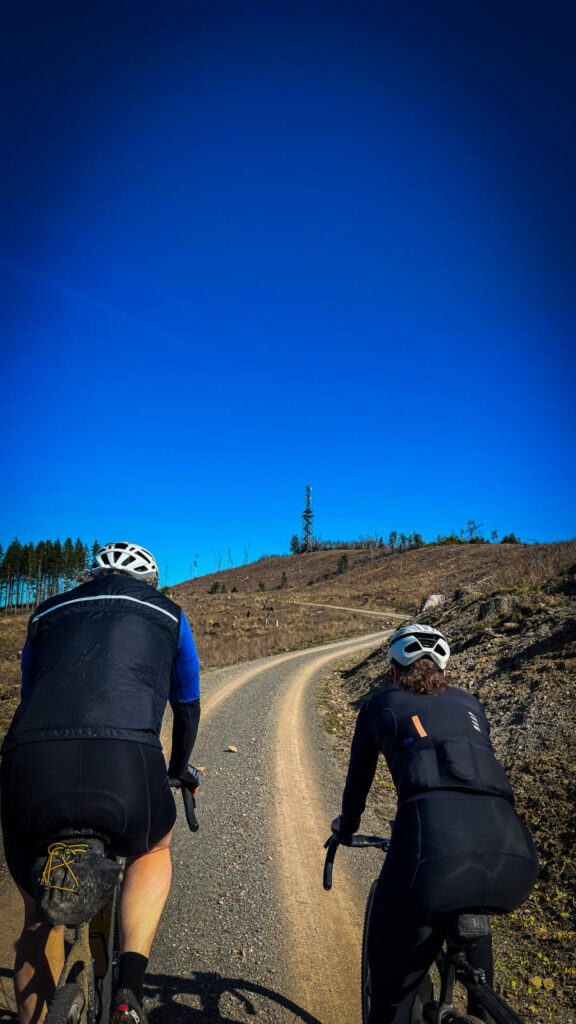
We are driving towards the Carlshausturm, a large observation tower, of which there are quite a few in this region. On the one hand, they are tourist attractions, but some also have a more strategic purpose (had). These Carlshausturm In addition to being a viewing platform, it also serves as a telephone pole. It was once built in 1901 as a telephone tower for the local narrow-gauge railway company. Now it is, since 1998, also a viewing platform. You can easily get up there in gravel shoes and the view is stunning. The road to get there was already beautiful, so we got off to a good start. Our route then goes in the direction of the Hexenbesen, Just across the border with neighboring state Thüringen. This special lookout tower even has two slides! And we see the witch theme here very much present. Upon arrival, we’ll be treated to a nice local drink and some snacks. Perfect.
In the evening we eat a little further away at the Waldhaus Wolfsbachmühle. A restaurant run by a Dutch couple. With some Dutch dishes, but of course also the well-known German food of high quality. The Delft blue earthwork on the wall brings a smile to your face. Just like the view into the underground old cellar. Top.
East meets west
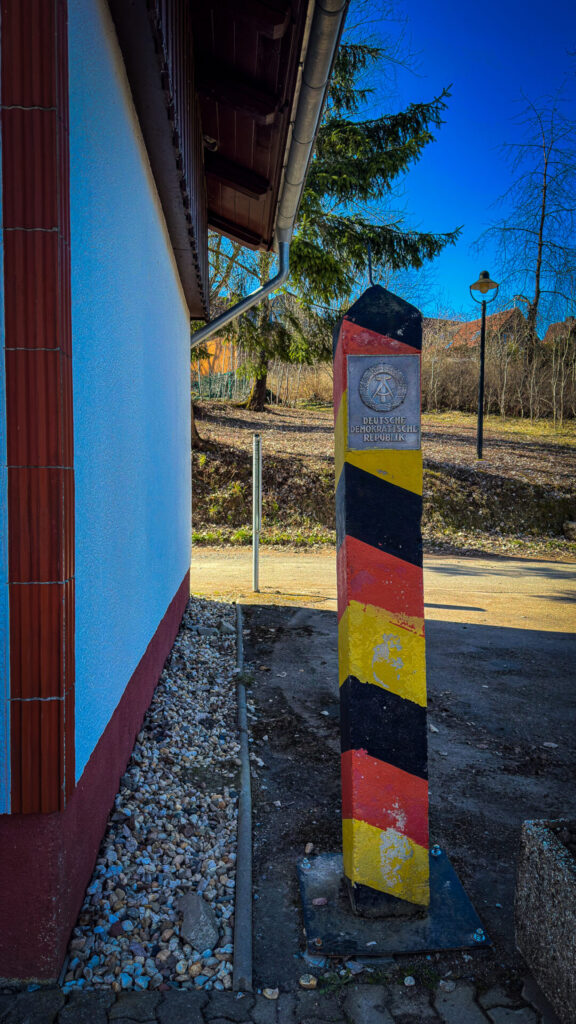
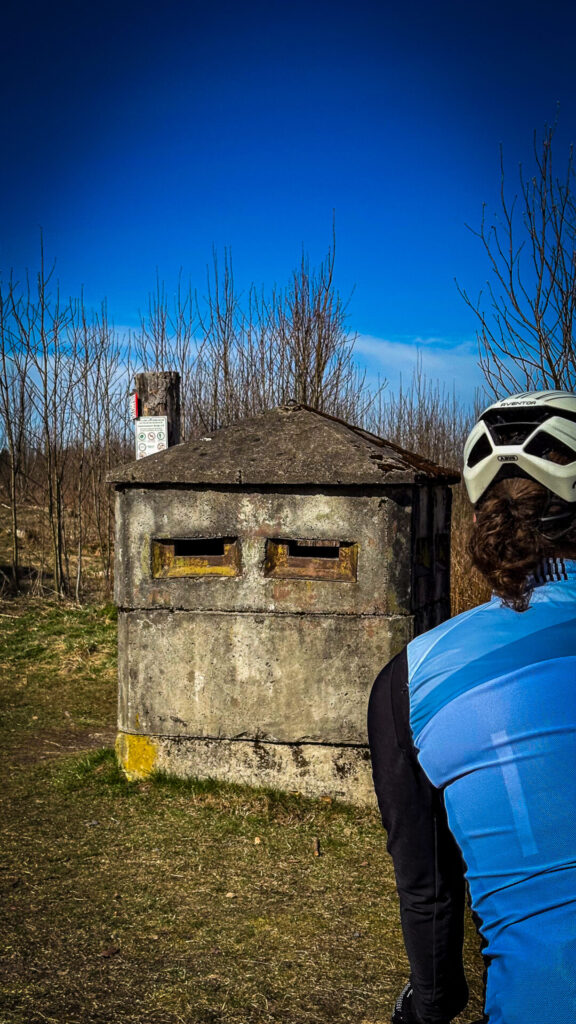
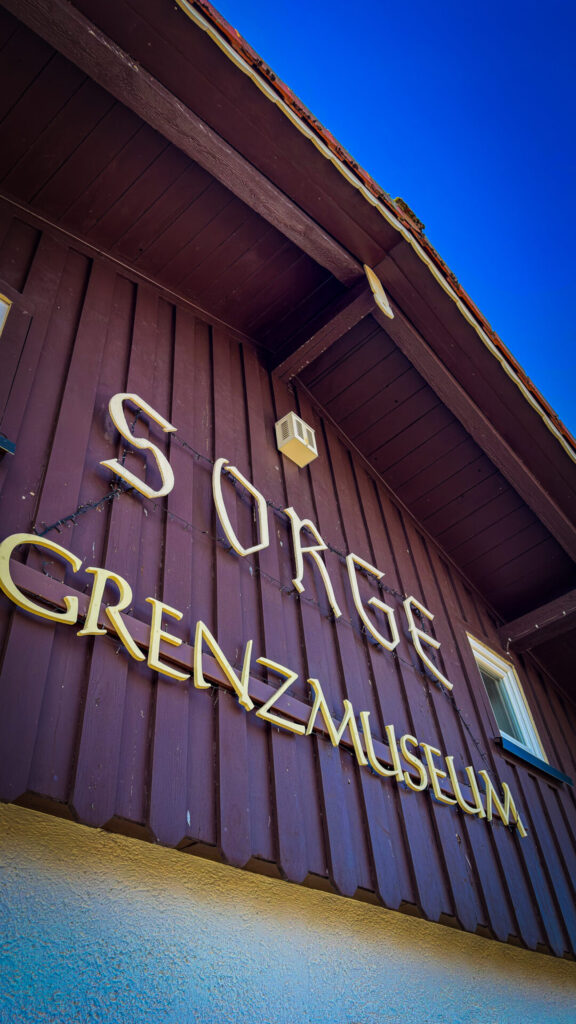
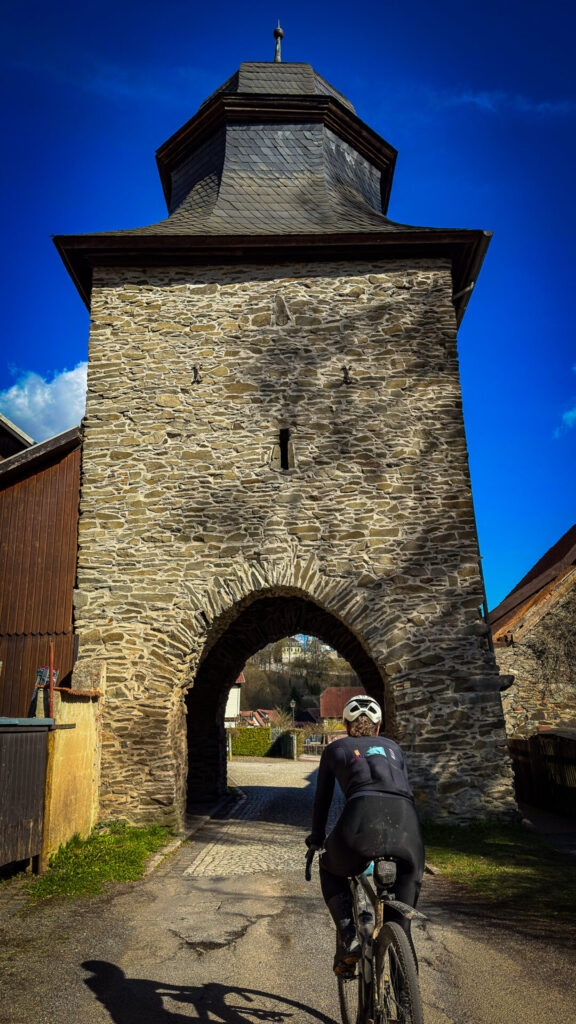
Sorge is a hamlet of nothing. On a weekday, you only see elderly people sweeping their street. Nothing on the street makes you think of the geographical importance of this place. It has a station where the steam train stops. But more importantly: it was the last village before the border between east and west. In the village, you see that at the station where the border museum It is located. For the real visual impression, you have to be about two kilometers outside the village. There still stands the border guard tower and you can still see the fences.
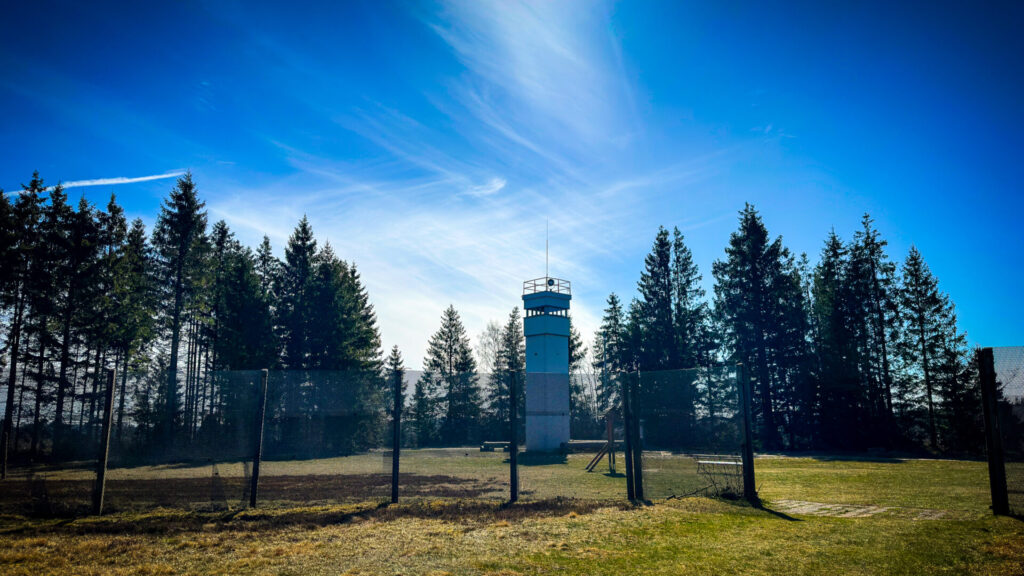
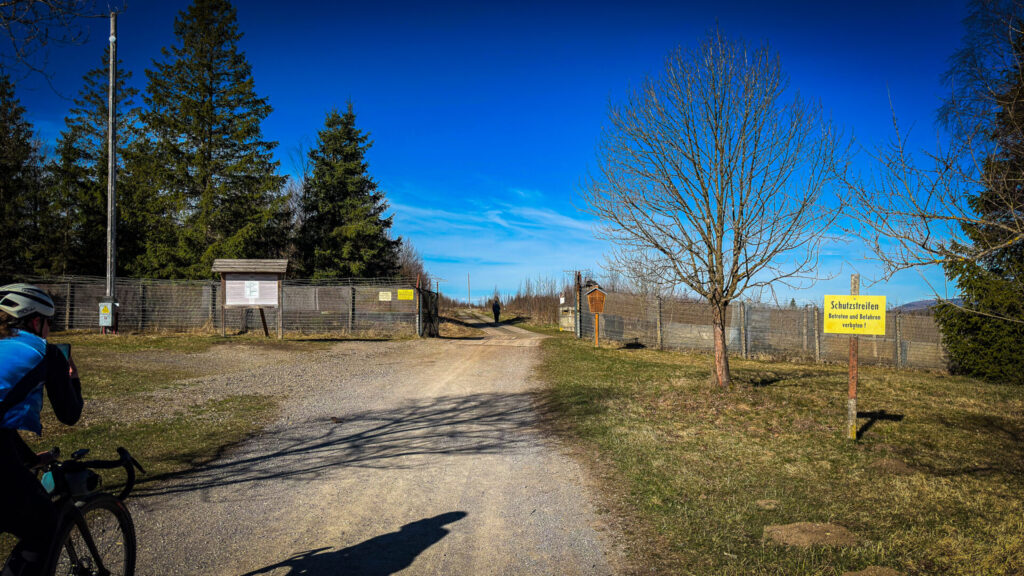
We are welcomed by the former mayor. She also lived here during the Cold War. The stories she tells linger long after. About her move to Sorge, about the special permit she needed. About the dark history. Just like the climb up the former watchtower and the visible border. The memorial plaques to the airmen who fell here make the rest. It leaves a deep impression. It is a prelude to a special day.
Kever
Do you know that expression “If you think you are too small to make a difference, try sleeping with a mosquito”? The equivalent in the Harz Mountains is the Schorskever, or bastkever, a creature only 5 millimeters long. A luficerkopje. However, this beetle has a huge influence on the landscape in the Harz. A monoculture of coniferous trees, planted as part of reparations after the war and climate change provide the ideal breeding ground.
Smoke plumes occasionally rise above the mountain peak. It looks like a moving campfire. The source of these smoke plumes? A steam train. The region is home to a real steam train, which is also jokingly called ‘Hogwarth’. It runs on the narrow gauge railway, you can see it from a distance and if you stand next to it you can hear it too. It is mainly a tourist attraction, which apparently costs a lot of money. It does, however, make for a good story. The train actually travels this route with us, because the final station is the Brocken.
Observation towers on the Brocken
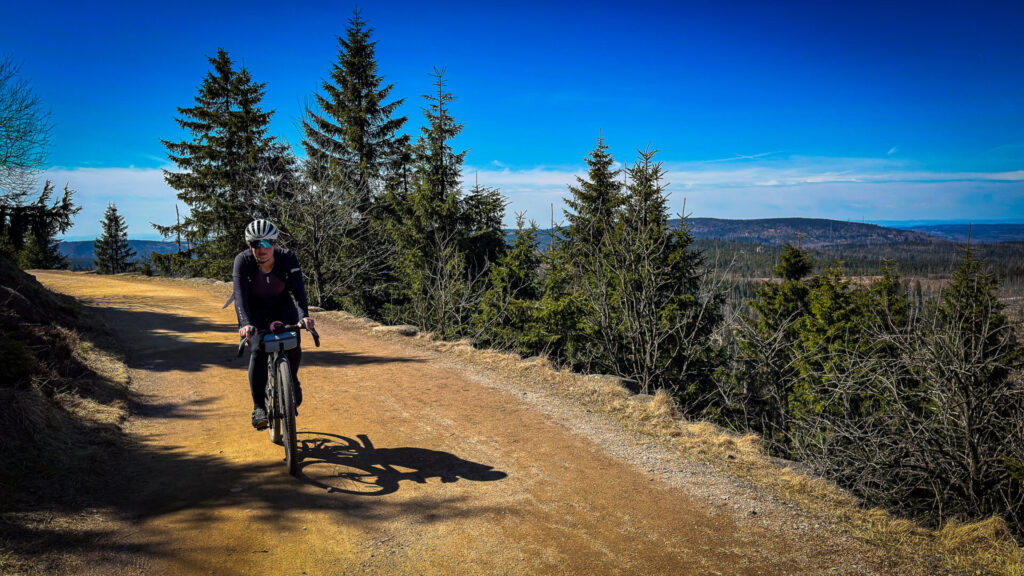
The top of the Brocken. It’s not the most beautiful mountain in the world. The climb up there, through the forests or whatever remains of them, at some point connects with the narrow gauge railway. A photo with ‘Hogwarth’ is then almost inevitable. What’s also unavoidable in April: a few flakes of snow. Although the sun shines brightly, the temperature here still drops to zero at night. And so there’s still snow in the shade. The road to the Brocken is again that lovely gravel. Champagne, but the German version. Probably a sparkling wine. We’re more than happy with that.
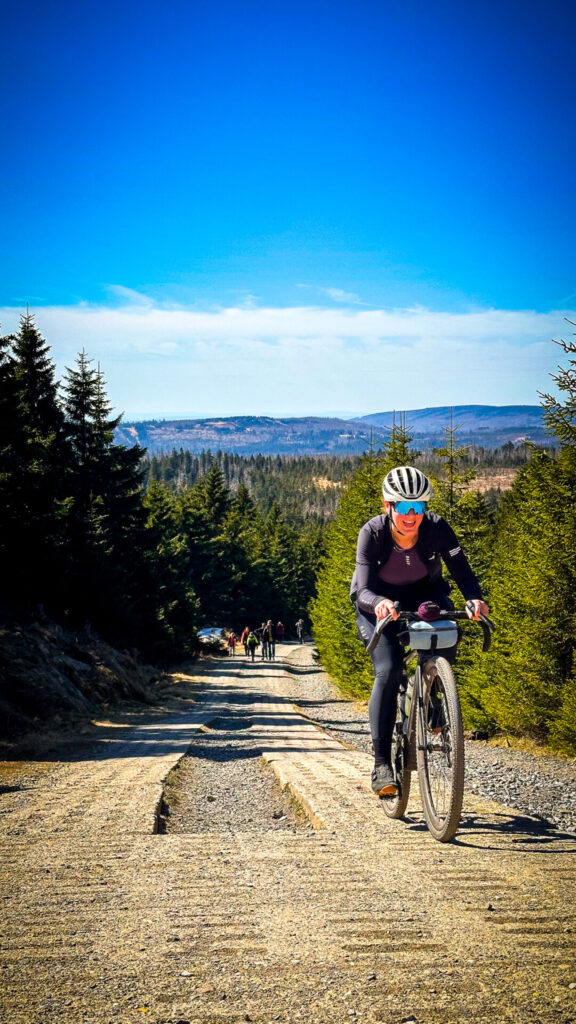
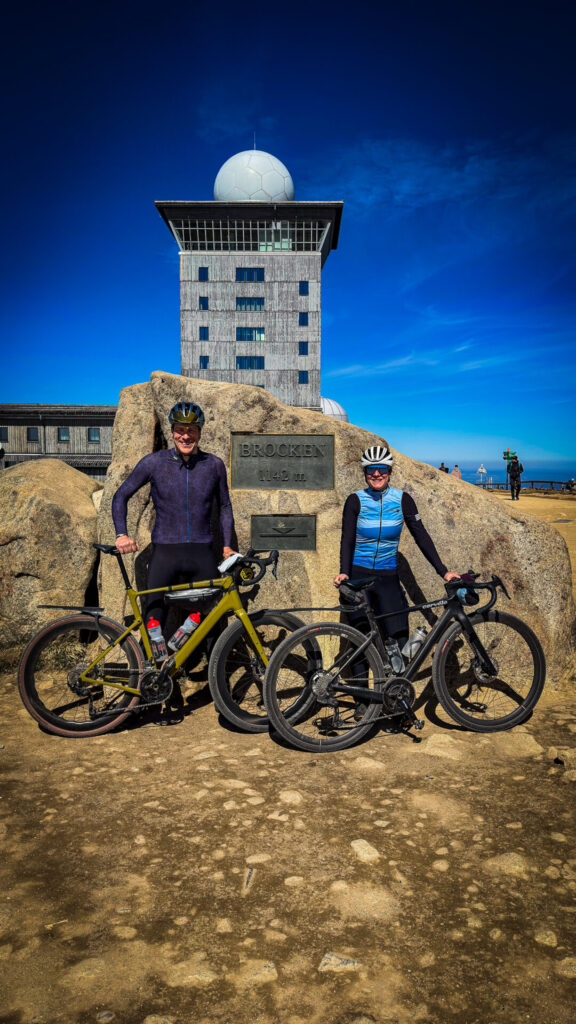
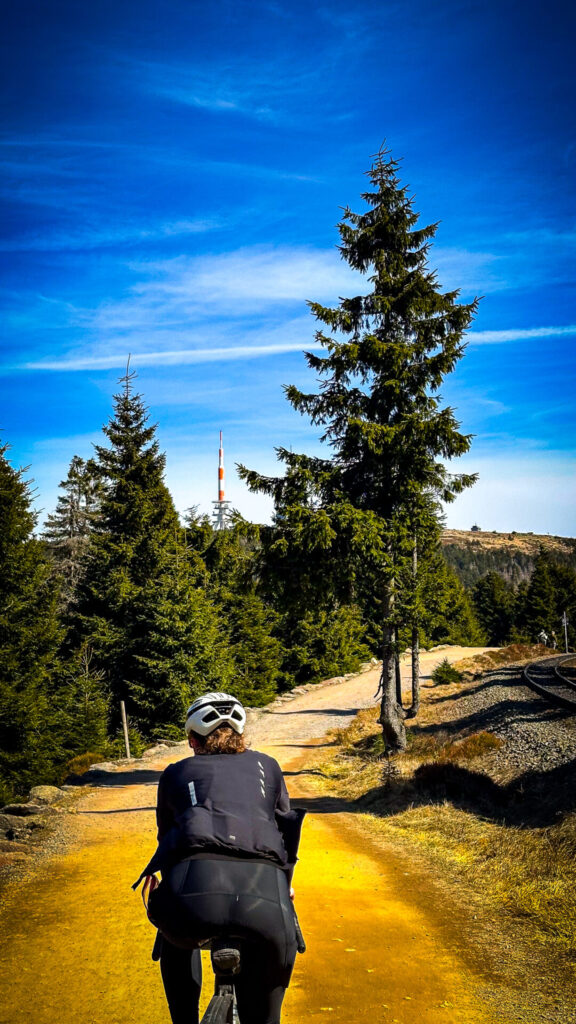
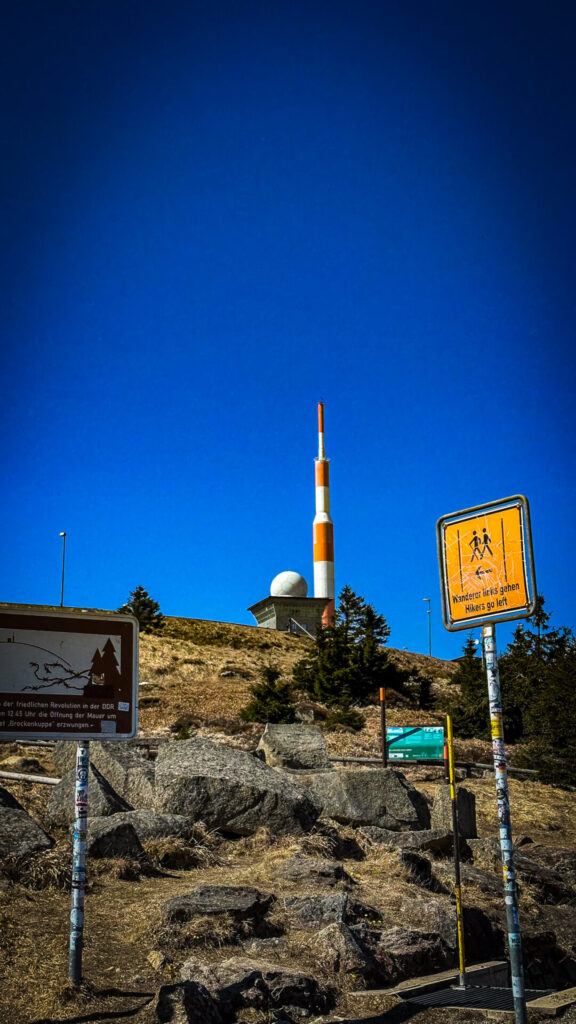
The final stretch to the top is paved and, as mentioned, quite touristy. Everyone wants to take a photo with the highest point in the region. The observatory, Brockenhaus, The top of the hill is beautiful to visit and in the many wars it served as a communications center. During the Cold War, the Stasi also had its headquarters here. It is worth a visit. We skipped the soup from the canteen, but that was a local specialty.
Moon landing
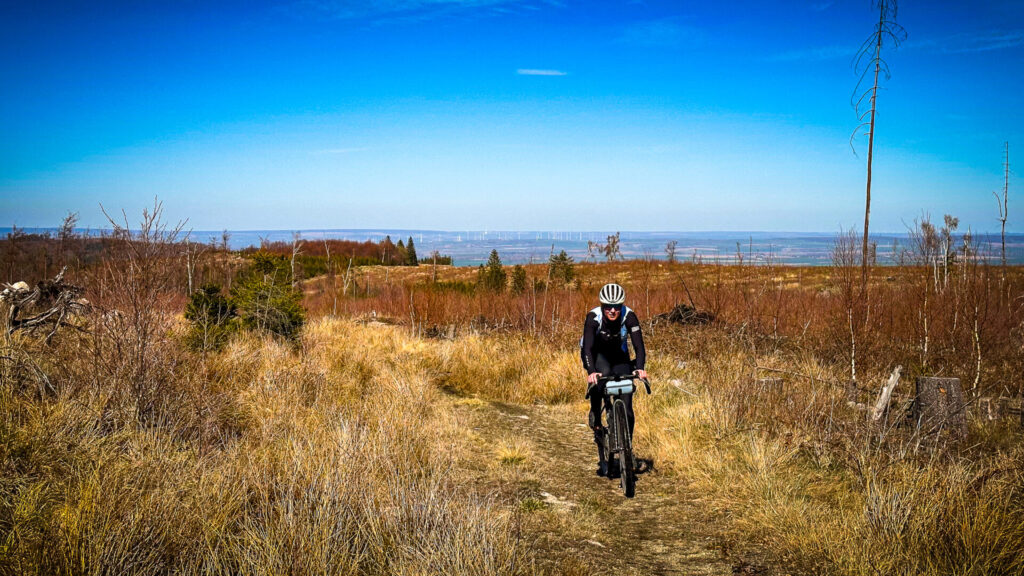
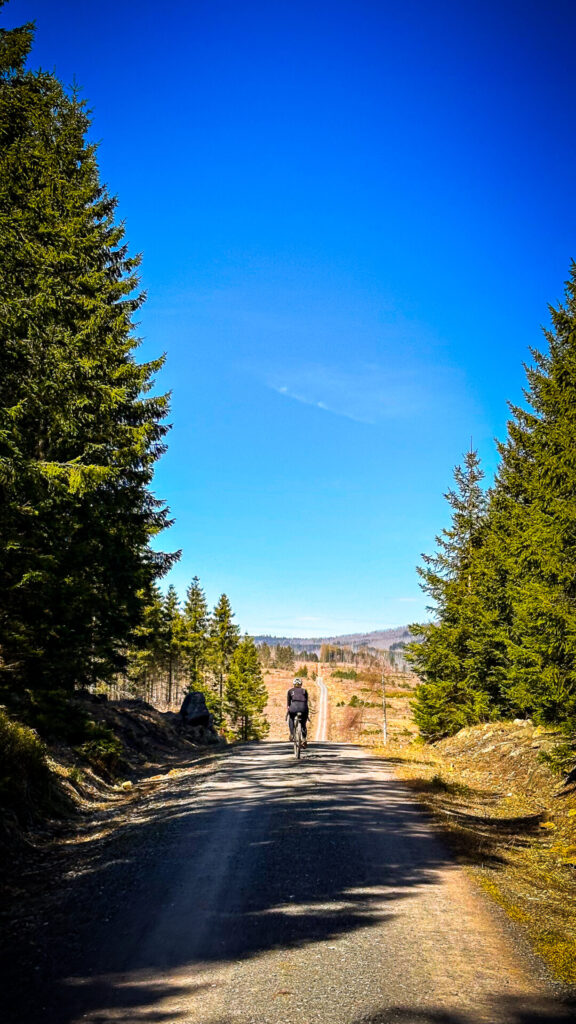
We continue driving through that almost bizarre lunar landscape. What stands out, aside from the special environment, is the tranquility. We hardly encounter anyone. Outside the climb of the Brocken, where it is more touristy, you don’t see a single person. A lost hiker, two cyclists. Nothing else. Moreover, you almost don’t encounter any cafes or villages. You really have to plan that in advance. The descents and the roads are sometimes a bit challenging, but often beautiful and rolling. This nature park actually offers everything you want as a gravel rider.
After a long journey, we head back to Benneckenstein. There we will enjoy the fire and the excellent care provided by Pim and Carla. The dinner will be served later, at a decent German restaurant. Twelve-footed in Schierke. The wheat and the schnitzel go well together.
On to the water
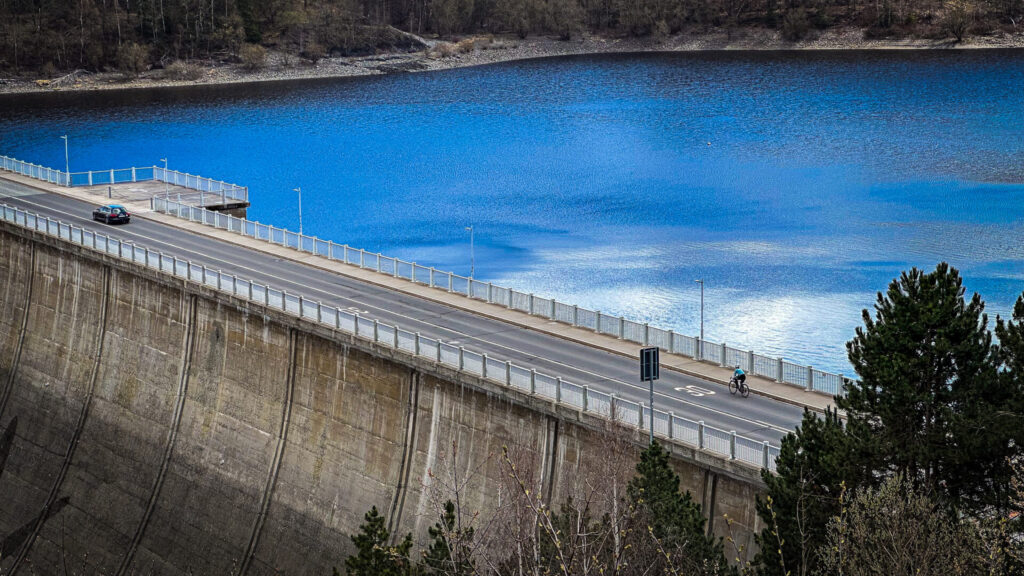
Germany is synonymous with me. dam reservoirs. A ‘stausee’, that always remains something beautiful. In the Harz region you will find several large lakes with associated dams. The most beautiful and impressive of all is the Rappbodetalsperre, the big goal of today.
Iron cross
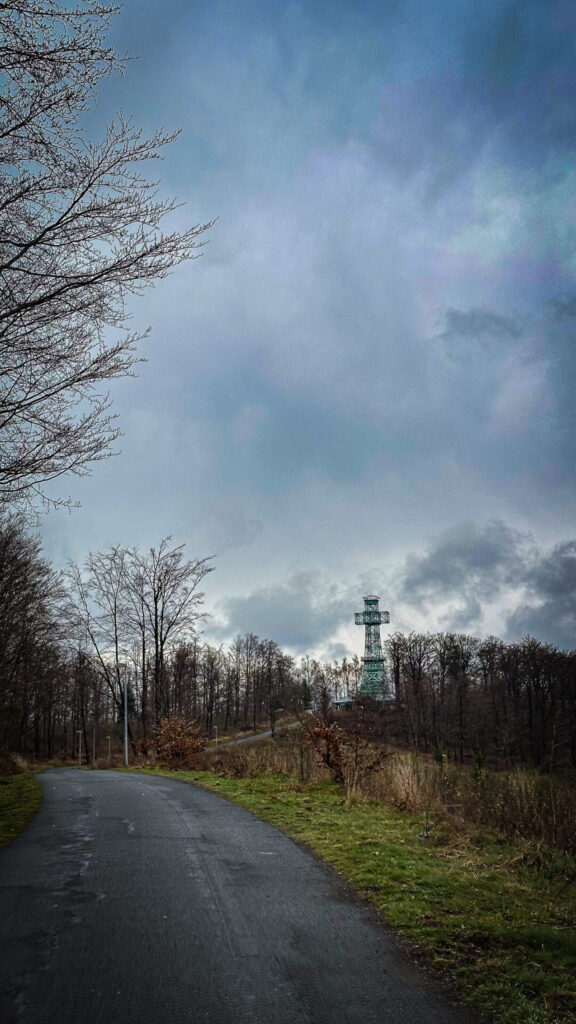
For our route we have to drive a short distance by car. Due to the weather, we drive a little further so that we can avoid the predicted rain. As a result, we start at the bottom of the climb to the Josephskreuz, an attraction in the region.
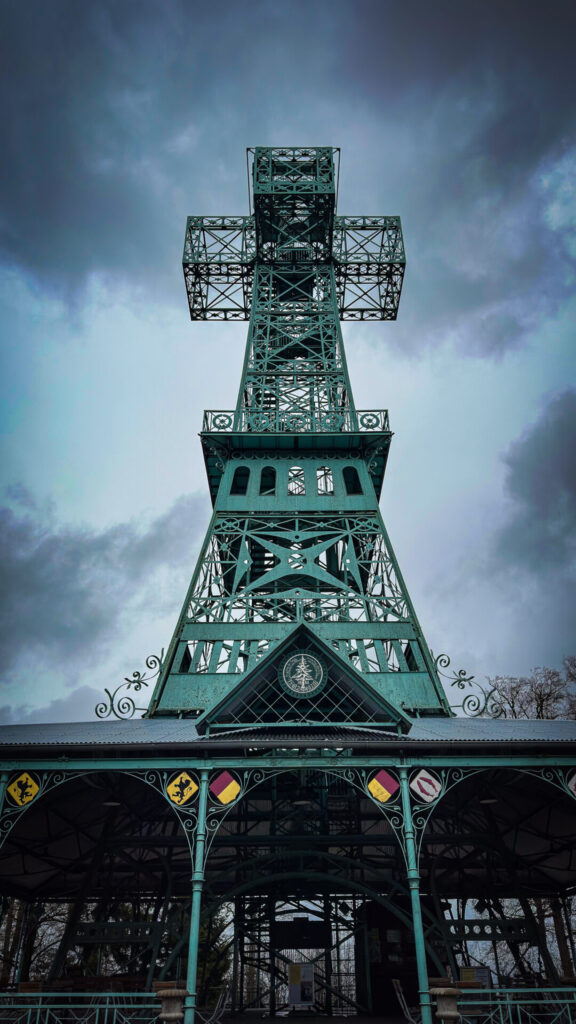
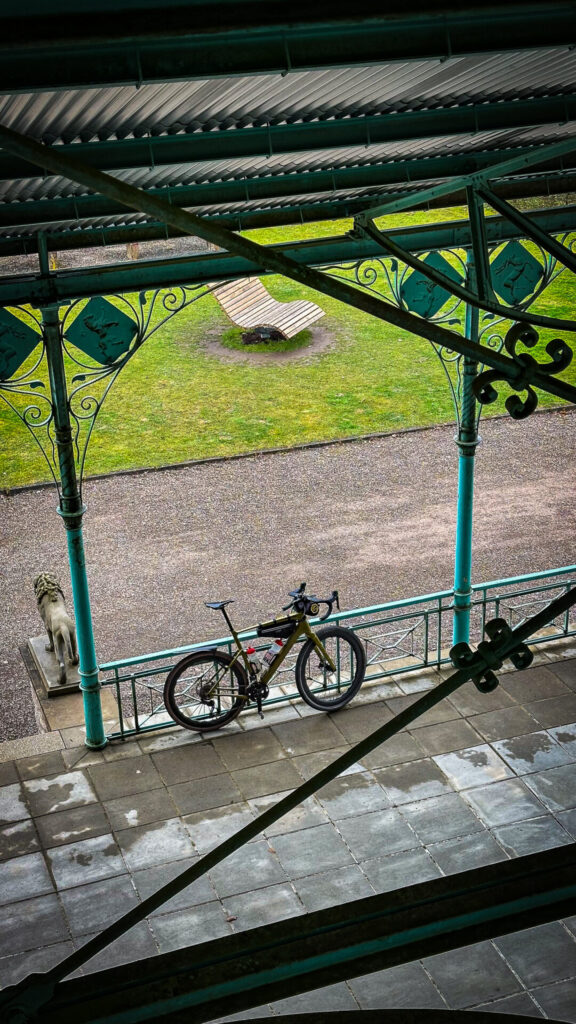
The Josephskreuz is a special construction. It stands somewhere on a mountain in the south-east corner of the Harz. It is a piece of engineering from 1896. Steel, sturdy, extraordinary. It is the successor to the wooden Josephskreuz that was erected here in 1850 (and was struck by lightning and destroyed). In terms of design, it most closely resembles the Eiffel Tower, which was also taken as a model. However, it will likely make more noise than its famous French counterpart. The view from the top is spectacular, though. The only downside? It blows quite hard. With gravel shoes, climbing the stairs is also an adventure. I’m not afraid of heights, but I find the 100 steps up quite a feat. Fortunately, we are the only ones who want to climb up in this wind and fresh temperatures. Spotted a little doll. Closed the box.
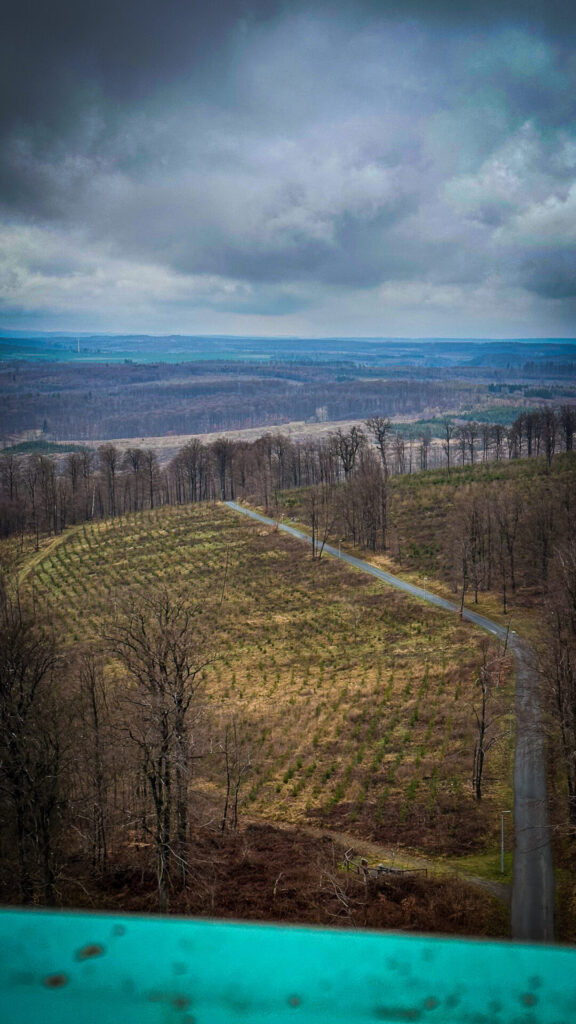
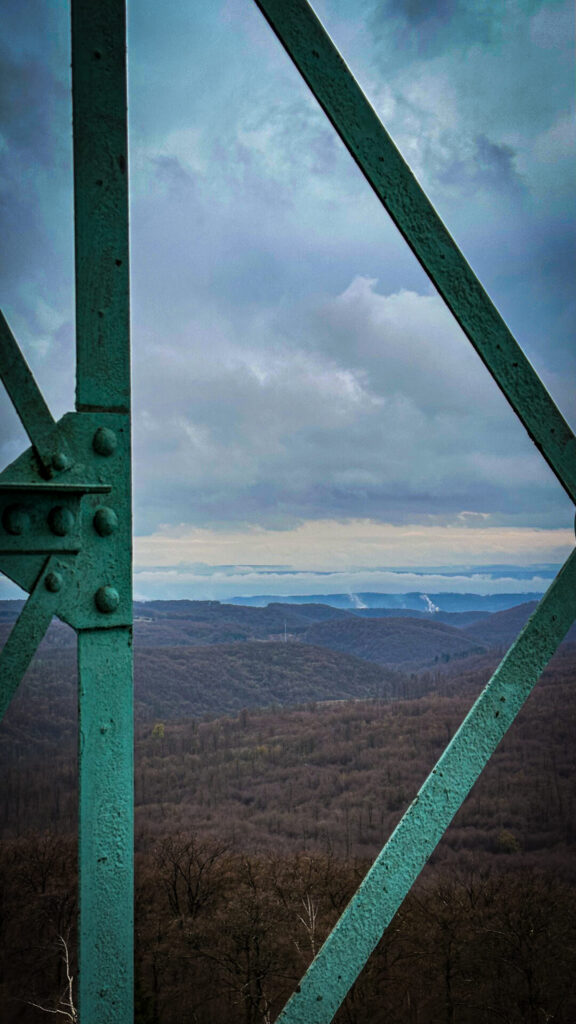
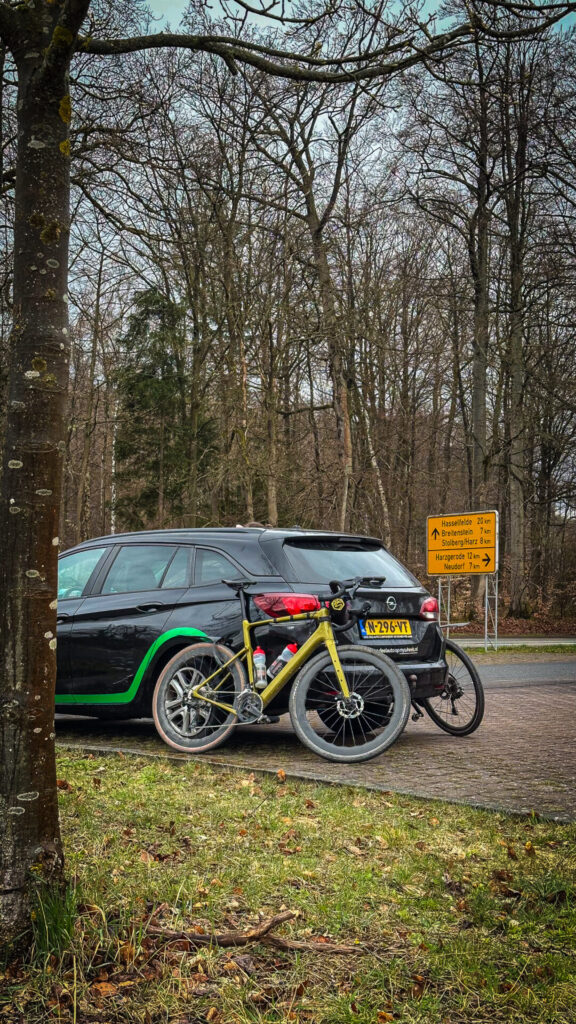
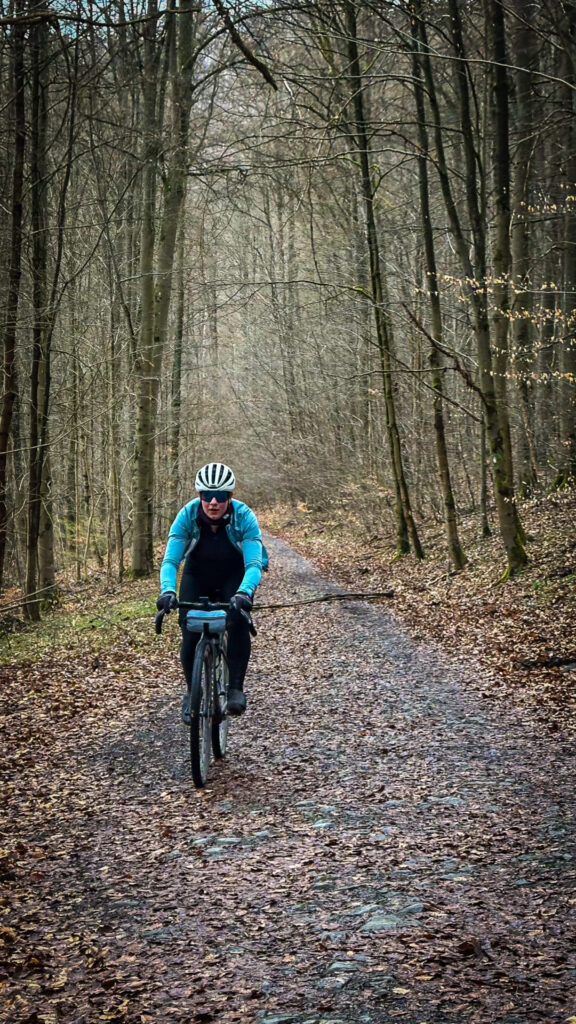
From there it's downhill and then towards the Rappbodesee. For that we have to drive a long way north-east. Here we alternate more standard gravel paths with forest, but also some asphalt in a ravine we drive through. Still quite nice, but again different from the pine trees and the vastness of the two days before. We're going to have another kind of vastness at the dam later on. To get there we have to climb up a steep hill at last, which goes right through the forest and where you literally end up at the dam. The view? AMAZING!
Rappbodetalsperre
The Rappbodetalsperre is a solid piece of German engineering. It is the highest dam in Germany, with a total height of 106 meters. The dam was built between 1952 and 1959 and holds back about 113 million cubic meters of water in the adjacent lake. As an attraction, a suspension bridge was recently added, which you can walk over, where you can bungee jump from, but there is also a zipline. For the real daredevils. I find the suspension bridge and the associated observation tower more than adequate. I’m a bit of a daredevil when it comes to socks. Or, rather, gravel shoes. At the ticket office, there is also a small facility where you can eat something. The sweet potato fries are delicious.
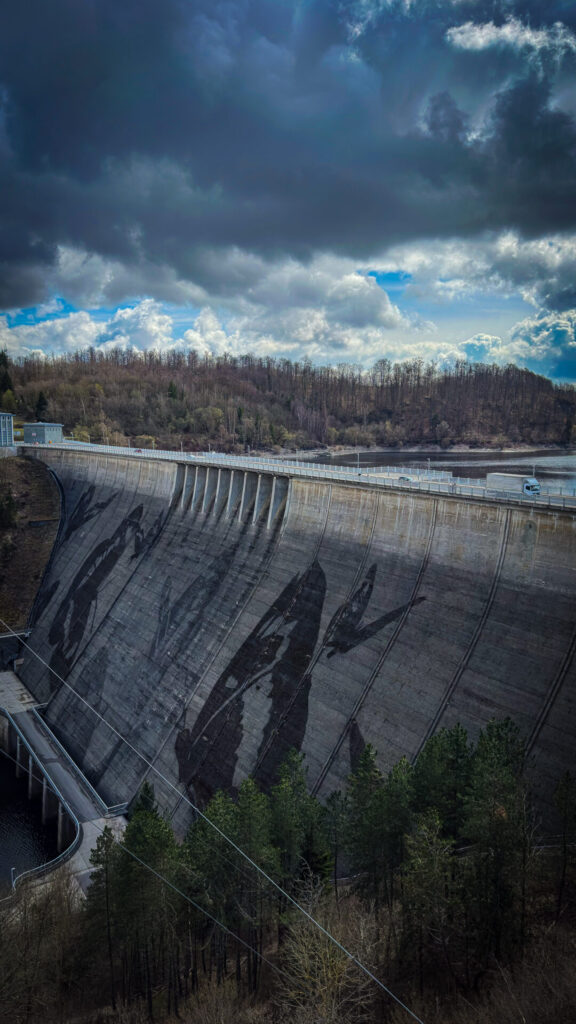
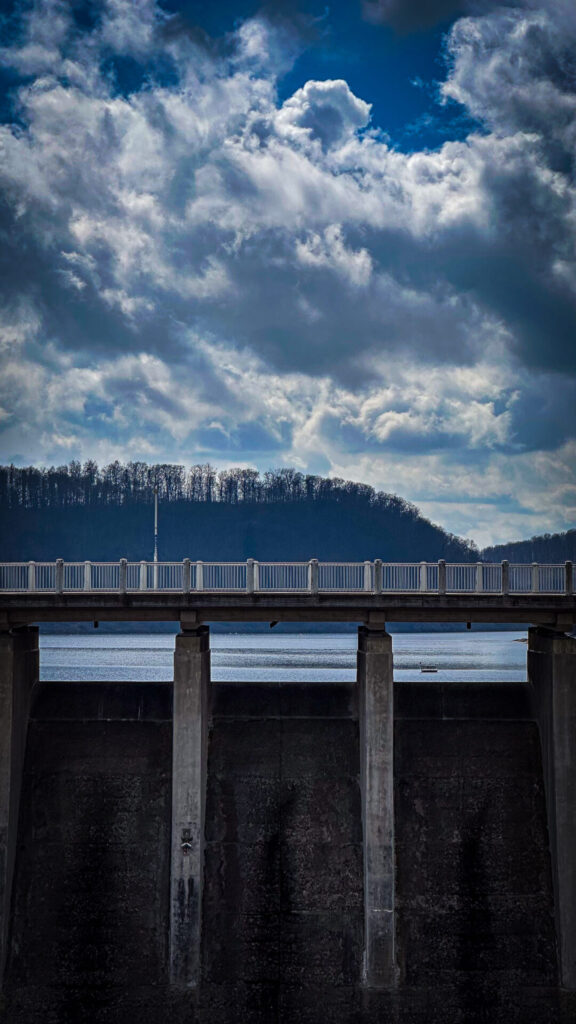
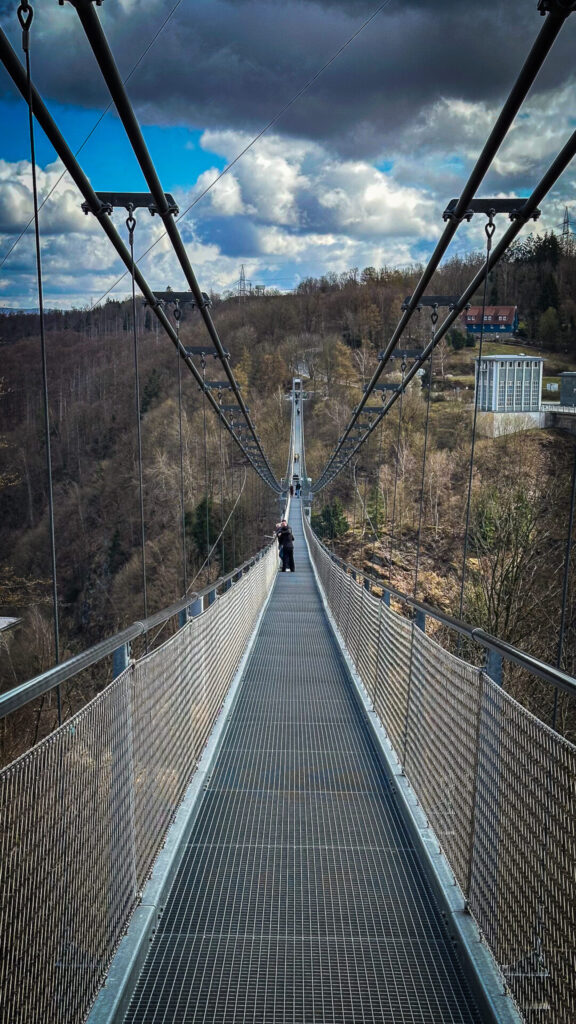
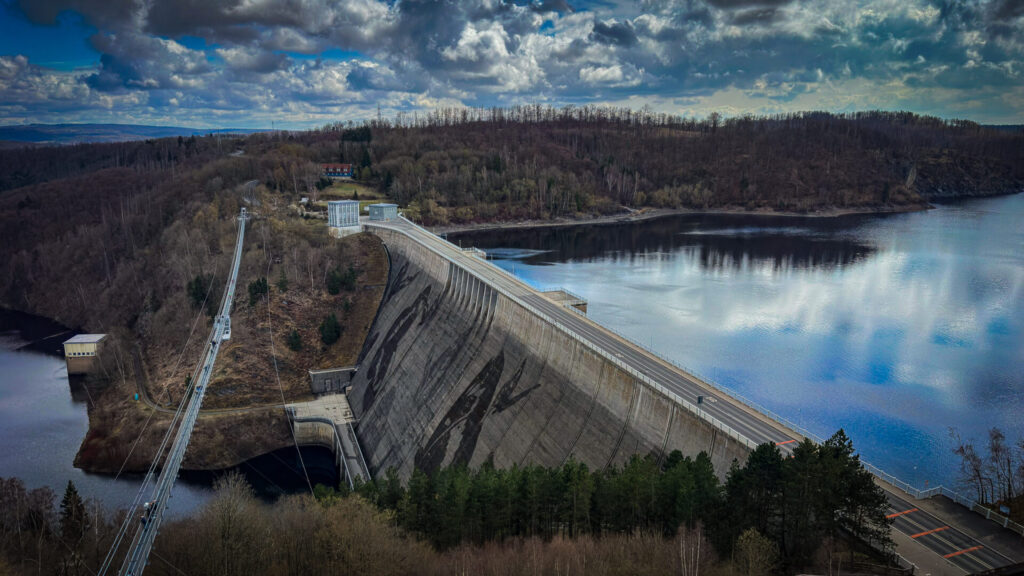
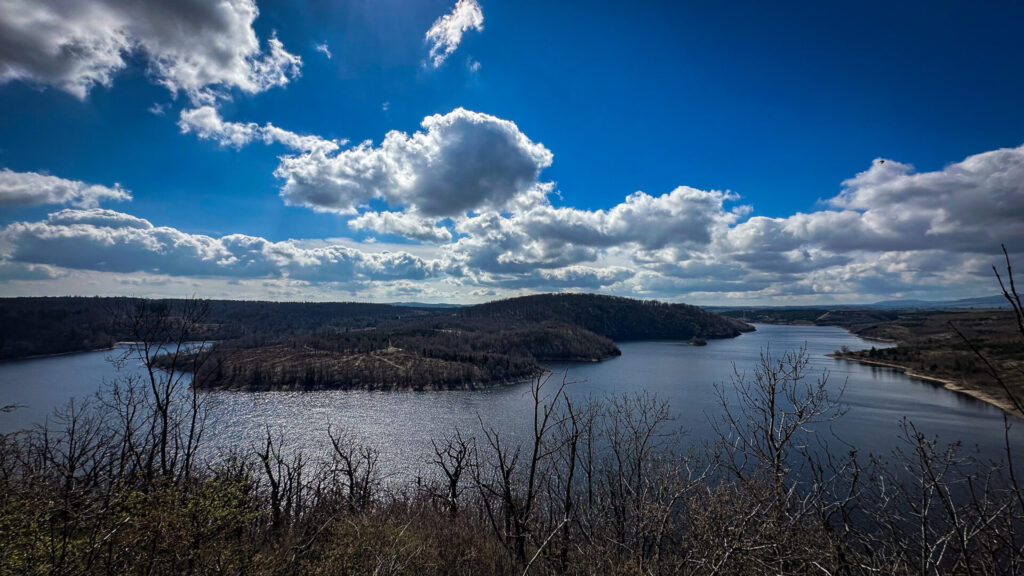
After the suspension bridge and some photos, we continue on and follow the shape of the lake. A beautiful vantage point presents itself to us, resulting in even more photos. After that, we turn off towards Stiege, where we actually should have started to continue on via Stolberg towards the Josephskreuz. Stolberg, known from Juliana of Stolberg, is in fact a charming town with a beautiful castle.
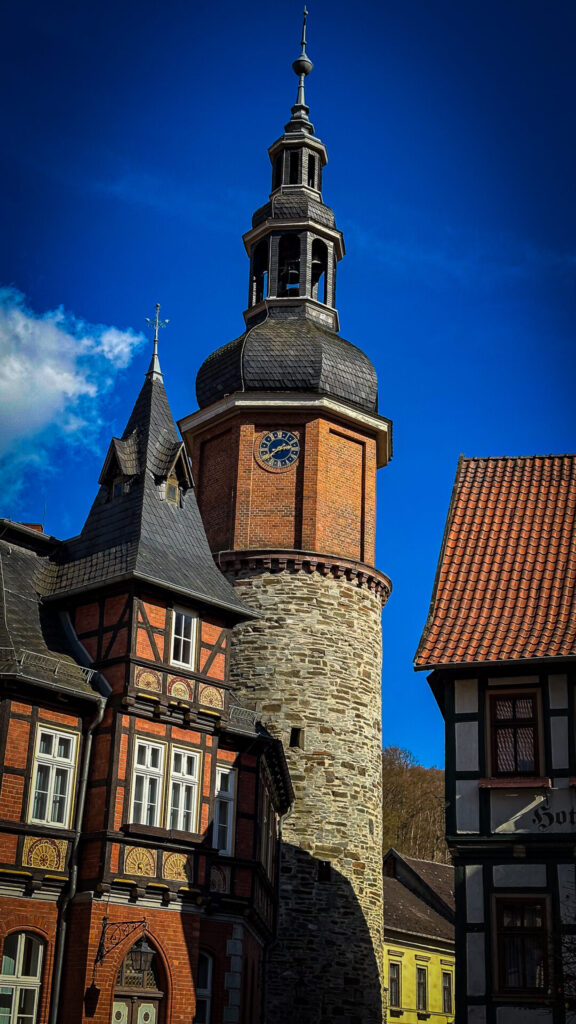
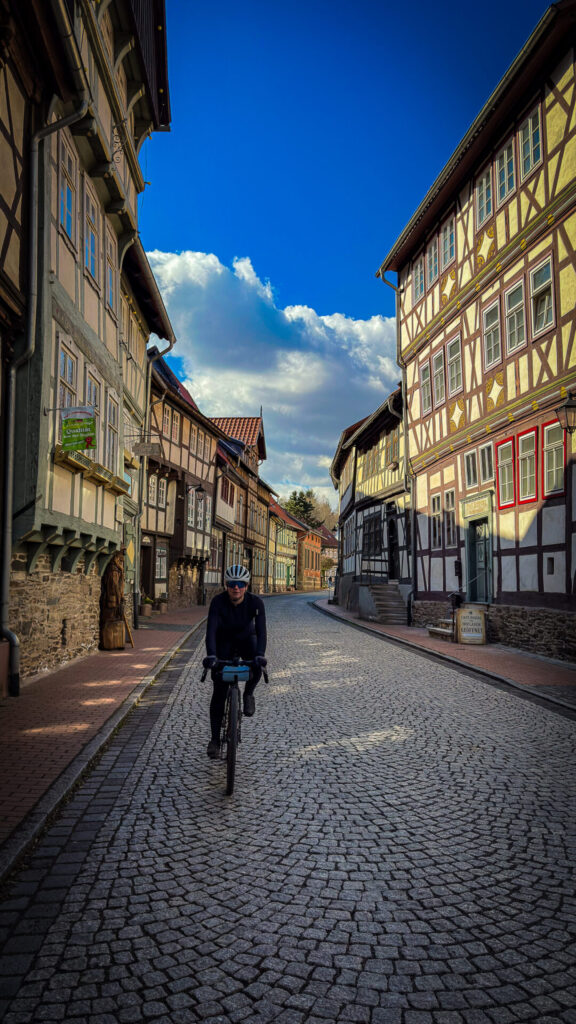
It’s nice to stop off, but we really needed the warmth of the car. If we end the day at the recommended restaurant, that’s still quite funny: it’s a butcher shop with a restaurant area, Brockenbauer. My traveling companion eats vegetarian food. And the delicious steak I had my eye on should have been ordered a day earlier. Well, sometimes it works out well; sometimes it doesn’t.
Quedlinburg
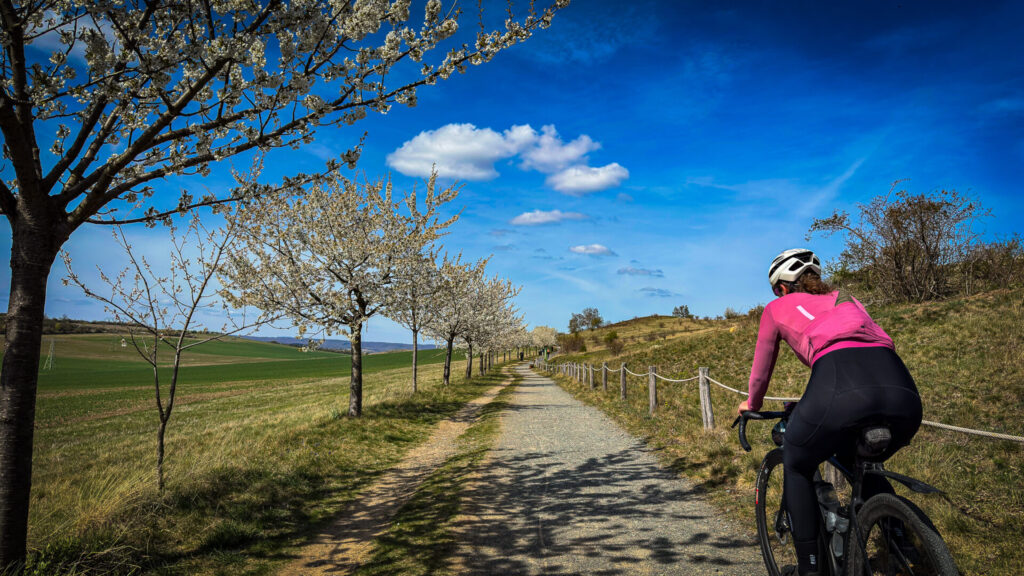
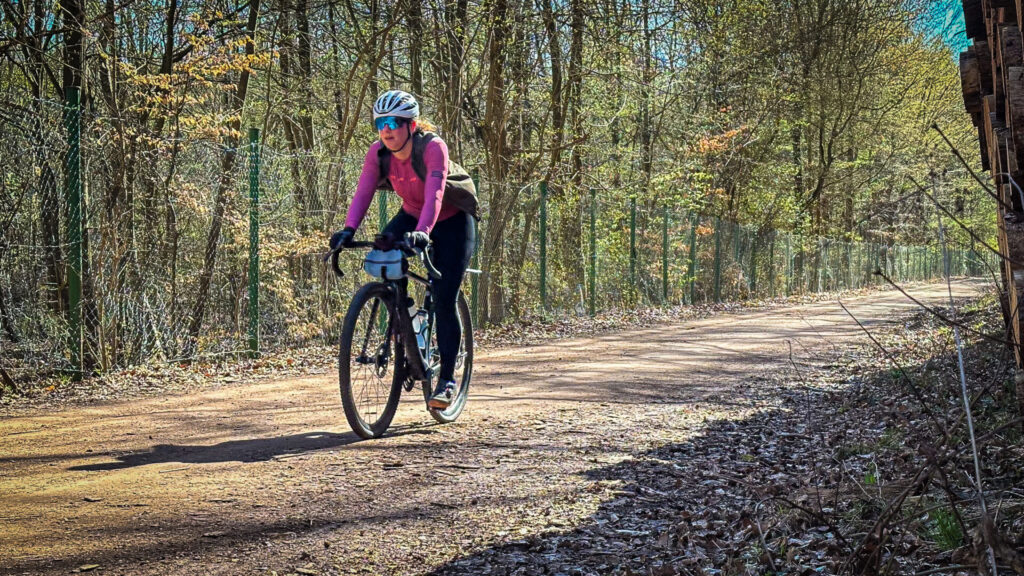
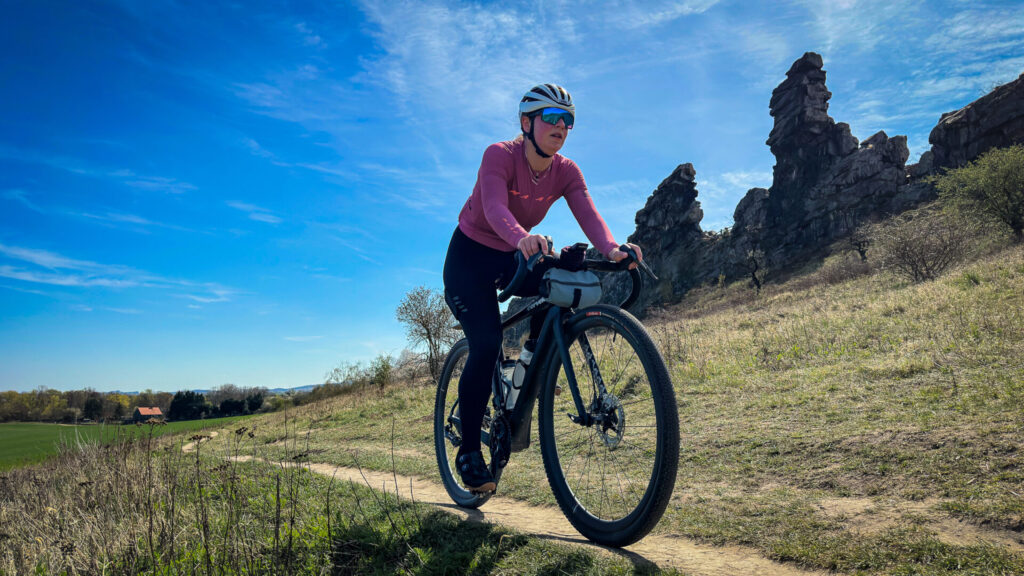
On our last day we travel a little bit towards home and start a short tour in and around Quedlinburg; the start is in Thale, another beautiful village. We drive past the DDR Museum, Here we see the inseparable Trabant. This cart is fantastic to drive (it can still be found in Berlin!), but it is especially the image that fits the DDR. Further on we find another beautiful gorge that we follow to then turn back for a stretch through the forest, on our way to the Teufelsmauer. Before that we pass by Quedlinburg, where we also visit the castle and the beautiful half-timbered town. Not bad.
Teufelsmauer
When you're close by, you mostly see a lot of stone, which is standing upright. But from a distance, the large boulders together form a wall. The blocks seem to have been thrown randomly, which is probably why they were named after the Devil. Who would do this, or how could that be? It makes it quite crowded here with hikers, day-trippers and other tourists, like us. But it's worth the detour.
Horror theme
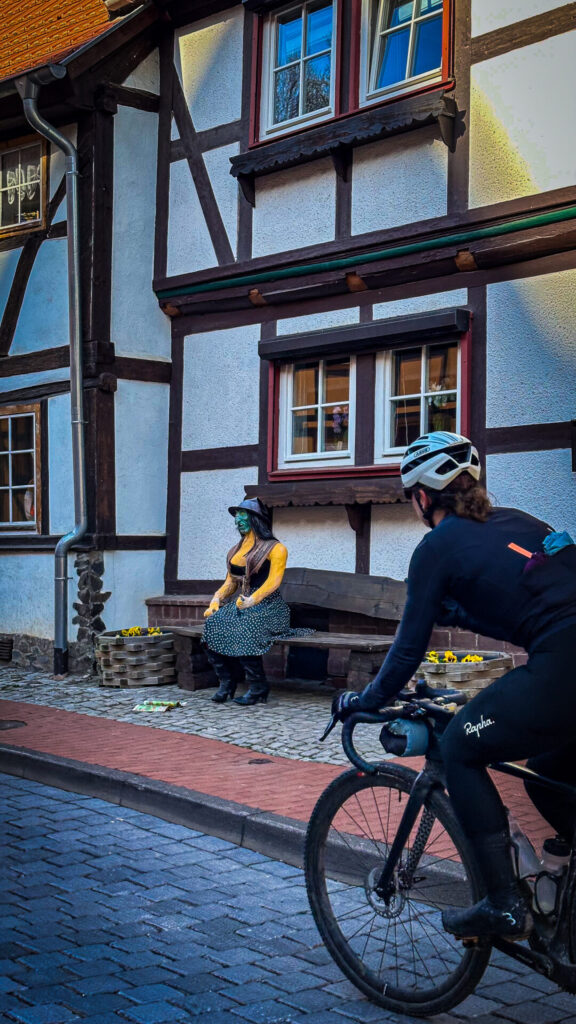
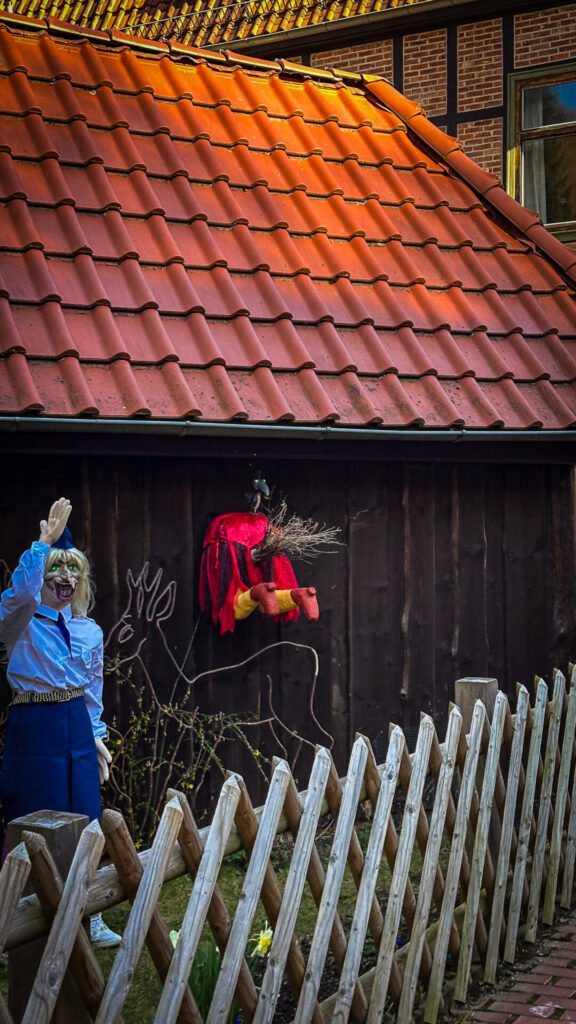
There is one thing we haven’t mentioned yet. In this region, a lot of things revolve around ‘witchcraft’. Don’t be afraid; you definitely won’t be attacked by witches at night. But according to mythology, this region is where the witches danced before they went to the Brocken. That’s why you can find the ‘Hexentanzplatz’ in Thale and you’ll find a lot of references to witches in the region. Especially in the run-up to Walpurgisnacht (April 30 to May 1), witches are everywhere in the villages and towns. And no, I’m not talking about the annoying neighbor, but more about all kinds of dolls and other nonsense. It creates a fun and sometimes kitschy atmosphere.
Explore the Harz: a home away from home
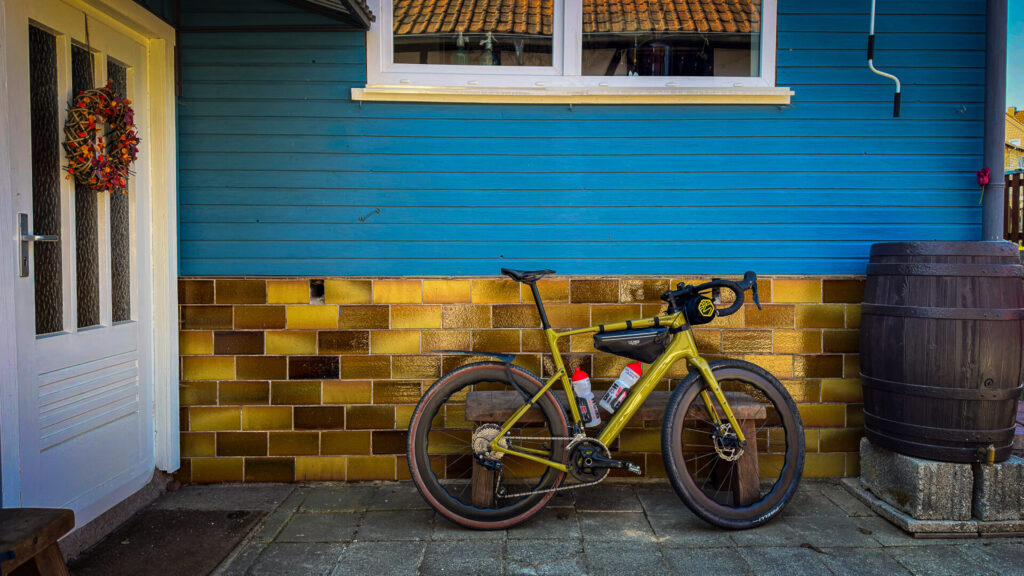
During our trip, we stayed with Carla and Pim, who were together. Explore the Harz running. Their B&B in Benneckenstein was literally a home away from home. Homely is the right word. A fireplace, a place to store your bike. A drink on your return home. A nice room with a good bed. Tips and tricks for the region. If we had wanted to, we could have also joined the schnapps tasting, but after long days of cycling schnapps was a step too far.
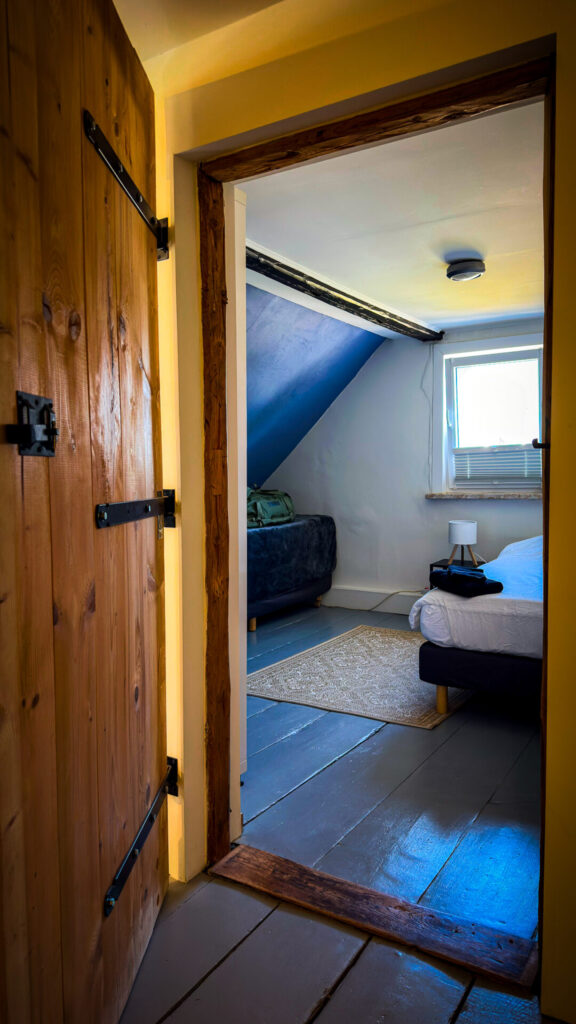
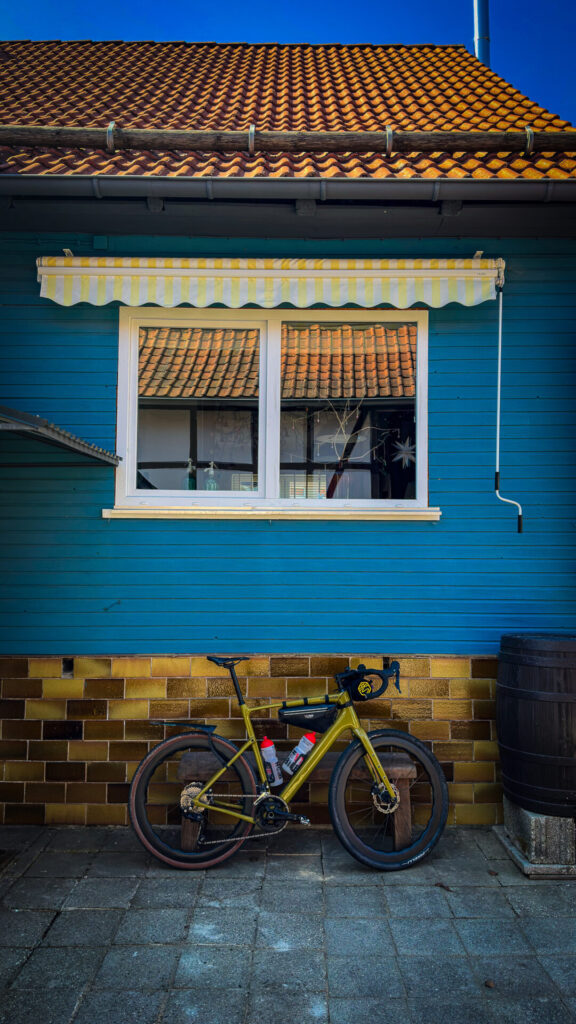
But what also stands out: domestic warmth also means a good conversation. That sounds cliché, but that’s exactly what it was. It was about life, work, family, as if you’ve known each other for a while. And that wasn’t the case, because Pim and Carla were strangers until this weekend. We had only phoned once and chatted a little to prepare for this trip.
I find that kind of thing a quality. The ability to make someone you don't know feel at home. The ability to land them after a day out without feeling forced to do anything. That's why I wholeheartedly recommend it, not because they hosted us for three nights. No, because it's the right thing to do.
Routes of the Harz Mountains
More information and useful links
- If you want to go to the Titan, you need tickets, which you can get from the ticket office. order here or buy at the counter
- On the website of Harzer Tourism Association find all the information about other highlights in the region, including the Brocken, the Josephskreuz and more.
- You can also find more Harz tips in our other articles: like this one Enjoying the best: cycling in the National Park Harz
This trip was made possible in part by Sachsen-Anhalt Tourismus.
Questions & tips
Do you have any questions about this route, or have you been there yourself? Share them here. We read everything and usually respond within a few days.