Part of Germany
Lower Saxony borders the Dutch provinces of Groningen, Drenthe and Overijssel and, after Bavaria, is Germany's largest state. The landscape runs from the Wadden coast to the hills of the Weser Uplands and the western Harz. For many Dutch people it's the neighbour you drive through on the way east, but stop and you'll find heathland, half-timbered towns, quiet hills and one of the densest cycle route networks in Germany.
Why cycle in Lower Saxony?
- The Lüneburg Heath: heathland, forests and sandy tracks, with purple heather in August and September.
- The Weser Uplands, with hills along the Weser and half-timbered towns such as Hamelin.
- The western part of the Harz around Braunlage, Torfhaus and Goslar, with the longest climbs in northern Germany.
- Long rides along the Weser, the Ems or the East Frisian coast.
- Close by: from the east of the Netherlands you're there in about two hours.
The most beautiful cycling areas
The Lüneburg Heath
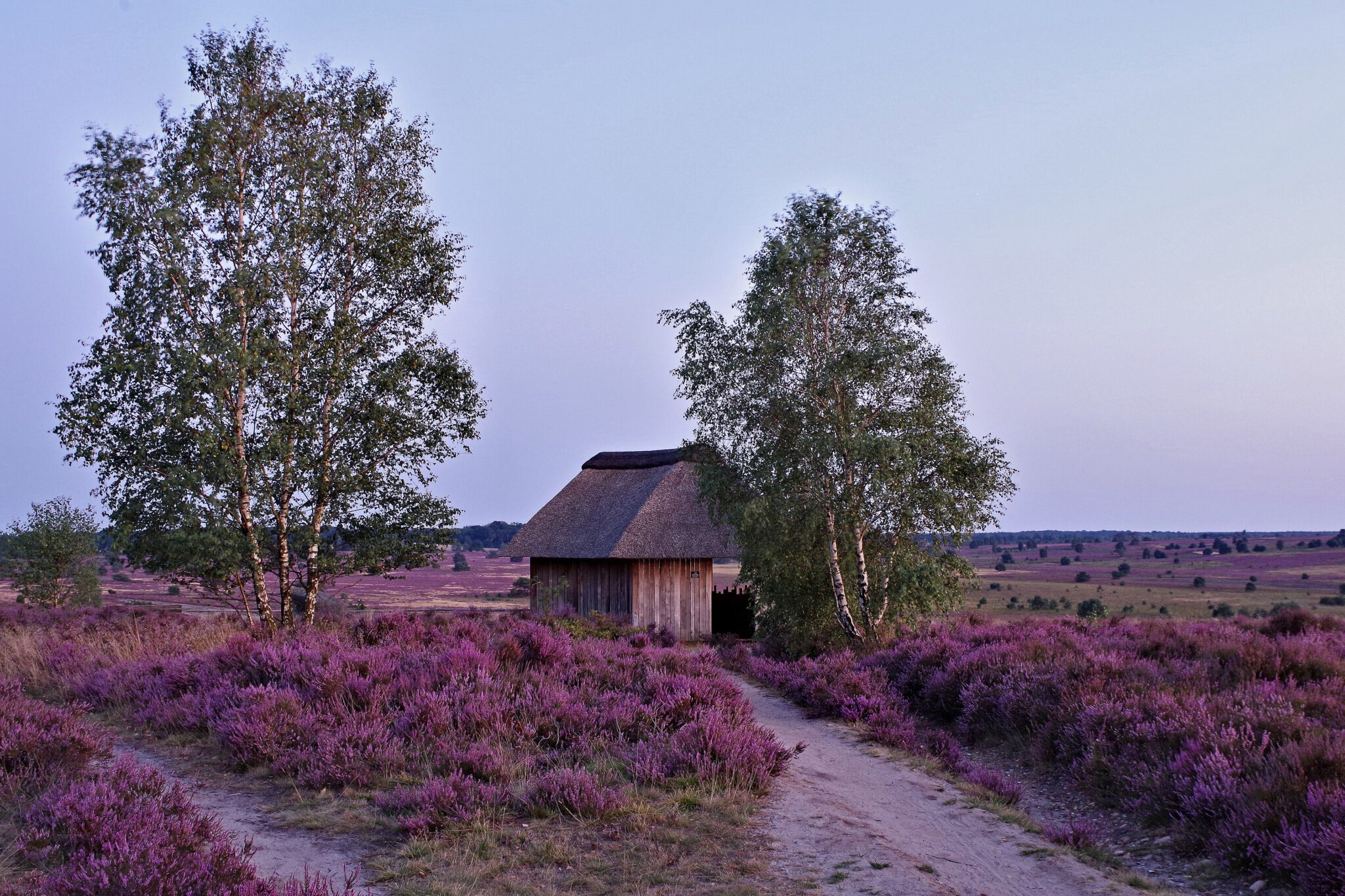
Between Hamburg and Hanover lies the Lüneburg Heath, one of Germany's oldest nature parks. Around Wilsede and Undeloh the area is almost car-free: you ride sand and gravel tracks between junipers, birches and sheepfolds. At 169 metres, the Wilseder Berg is the highest point. In August and early September the heather turns purple; that's when it's at its most beautiful, but also at its busiest. Ideal for gravel and for relaxed touring.
The Weser Uplands
Along the Weser between Hann. Münden and Minden lies a hilly landscape with wooded ridges such as the Solling, the Vogler and the Süntel. The roads climb short but steep out of the river valley, and down below you ride the flat Weserradweg. Along the way you pass half-timbered towns such as Hamelin, the town of the Pied Piper, and Bodenwerder, the town of Baron Münchhausen.
The western Harz
Most of the Harz lies in Saxony-Anhalt, but the western part belongs to Lower Saxony. From Bad Harzburg you climb to Torfhaus, with views of the Brocken; from Goslar and Braunlage there are more long climbs through the forests. It's the highest and toughest cycling area in northern Germany. Read more on our page about the Harz.
East Frisia and the coast
On the North Sea it's flat, open and often windy. You ride along dykes, past windmills and through villages with red-brick churches, and take the boat to islands such as Norderney and Juist. For those looking for long, relaxed kilometres.
Long routes
Lower Saxony is full of well-known cycle routes. The Weserradweg runs from Hann. Münden to Cuxhaven, over 500 kilometres. The Emsradweg follows the Ems along the Dutch border. The North Sea Cycle Route runs along the coast. And the stretch of the Elberadweg around Lüneburg is a nice addition.
Gravel and road cycling
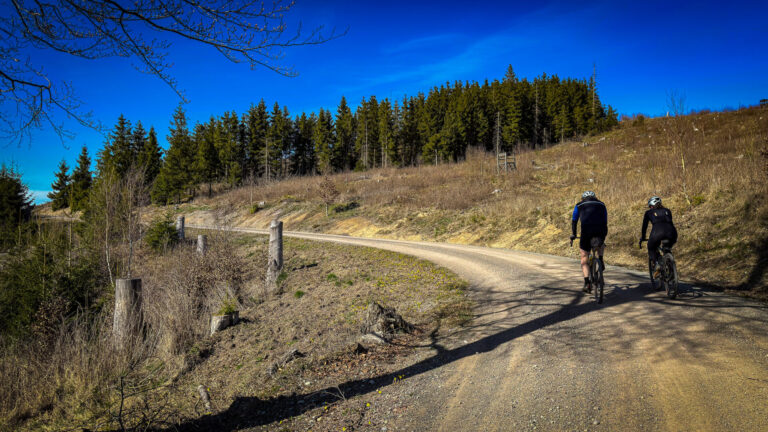
Gravel riders are in their element on the Lüneburg Heath and in the forests of the Solling and the Deister. Road cyclists head for the hills: the Weser Uplands and the Harz offer enough climbing for a training weekend. Around Osnabrück you'll also find the hills of the Teutoburg Forest.
Who is Lower Saxony for?
Lower Saxony is ideal for a long weekend close to home. Road cyclists ride in the Harz and the Weser Uplands, gravel riders on the Heath, and touring cyclists along the rivers and the coast. It's also a good choice for families and mixed groups: there are flat cycle paths everywhere and the distances are short.
Rest day in Lower Saxony
- Visit the old town and the mine of Goslar, a UNESCO World Heritage Site.
- Walk across the Heath near Wilsede, or tour it by horse-drawn carriage.
- Watch the Pied Piper play in Hamelin.
- Take the boat to one of the East Frisian islands.
Food and drink
On the Heath you eat Heidschnucke, lamb from the heath sheep, and in autumn game and mushrooms. On the coast, fish and Krabben (brown shrimp) are on the menu. East Frisia is also Germany's tea country: tea with rock sugar and cream is part of the deal.
Your cycling base
Lüneburg or Bispingen for the Heath. Hamelin or Bodenwerder for the Weser Uplands. Goslar or Bad Harzburg for the Harz. Norden or Greetsiel for the coast.
See places to stay in: Lüneburg · Hamelin · Goslar · Norden
When are you leaving?
April to October. For the heather in bloom, go in August or early September. In the Harz the summits can be chilly in spring and autumn.
How do you get there?
By car you're in the Weser Uplands, the Heath or the Harz in three to four hours from the centre of the Netherlands; East Frisia is even closer. By train you travel via Osnabrück to Hanover and on by regional train.
This is how we calculate: We calculate distances and travel times starting from Utrecht. Our flights always depart from Schiphol, Rotterdam The Hague Airport or Eindhoven Airport. Want to know how to travel from your place of residence the best way? Let us know, we're happy to help. After all, we're building this site together.
Are you flying? Read our guide Flying with your bike: Which airline, what the cost is and how to pack your bike.