Part of Germany
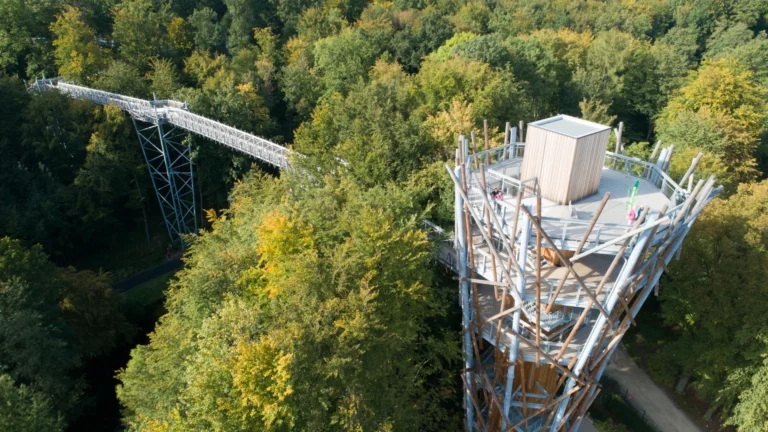
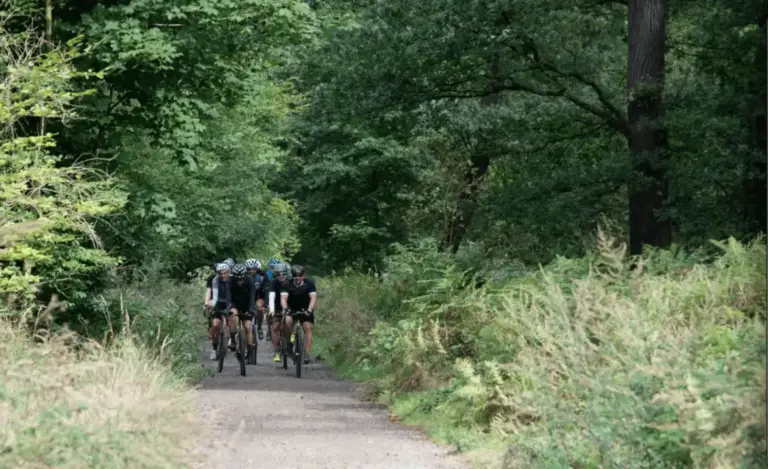
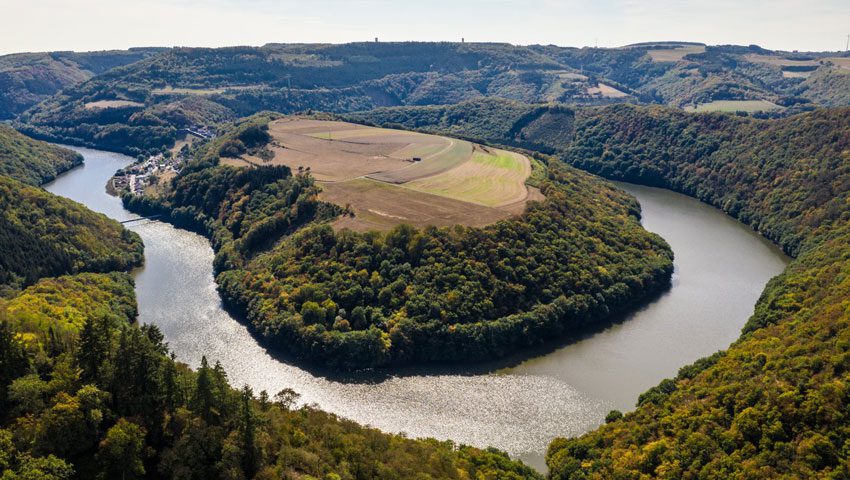
North Rhine-Westphalia is the most populous state of Germany and offers a surprisingly diverse landscape for both cyclists and gravel riders. The region, located in the west of Germany, borders on the Netherlands and Belgium and boasts a mix of challenging climbs, rolling roads, and expansive forests.
The Eifel is an absolute hotspot for cyclists who love high-altitude trails and stunning nature. With climbs like the Hohe Acht and the routes around the Rursee, this region offers a perfect combination of challenging terrain and stunning views. The roads are often quiet and offer a fantastic mix of steep climbs and fast descents. Gravel riders can let off steam on the countless unpaved paths through the volcanic landscapes and forests of the Eifel. Also read: Cycling in the Eifel: climbing just across the border
For those who prefer a quieter, rolling landscape, the Münsterland is a great choice. This region is known for its well-maintained roads, historic castles, and long, flat roads that are perfect for long rides. Here you can make endless kilometers without too many elevation changes, ideal for cyclists who want to train speed and endurance.
The Sauerland region offers a beautiful mix of long climbs and wooded gravel routes. With climbs like the Kahler Asten, the region's highest mountain, and gravel routes that run through the natural parks of the Sauerland, this is a top destination for cyclists looking for variety and challenge.
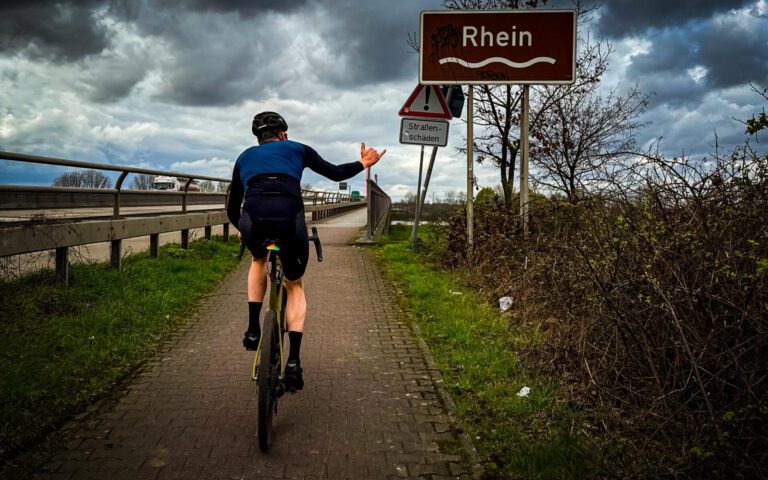
Even more urban areas like Cologne and Düsseldorf are surprisingly bike-friendly. From these cities, you can quickly reach car-free roads along the Rhine or in the Bergisches Land, a hilly area east of Cologne, perfect for short, challenging climbs.
Whether you’re looking for a weekend getaway just across the border or a longer cycling holiday, North Rhine-Westphalia has everything you need. From the steep climbs in the Eifel to the endless vistas of the Münsterland and the rugged gravel paths of the Sauerland, this region is a must-visit for any cyclist and gravel biker!
Why do you want to go on a cycling holiday in North Rhine-Westphalia?
North Rhine-Westphalia, located in the west of Germany, is a surprisingly versatile destination for cyclists and gravel riders. The region offers an impressive landscape with rolling hills, expansive forests, and challenging climbs such as the Hohe Acht in the Eifel and the steep slopes of the Bergisches Land. Whether you explore the fast, well-paved roads of the Münsterland or choose the rugged gravel paths in the Sauerland, North Rhine-Westphalia offers routes for every type of cyclist. The extensive network of cycling-friendly roads, excellent signage, and the presence of cycling-friendly accommodations make this state a worry-free place to explore by bike.
During your trip, you can enjoy regional specialties such as the famous Rheinischer Sauerbraten, a marinated beef stew, or a hearty Currywurst at a local Imbiss. Additionally, North Rhine-Westphalia is the beer region of Germany, with a rich brewing tradition in cities like Cologne (Kölsch) and Düsseldorf (Altbier) – a well-deserved reward after a long day on horseback.
The region also has a lot to offer in terms of culture. Historical cities like Aachen, with its famous cathedral, and Paderborn, known for its medieval castles, offer wonderful stops along the way. The German Vennbahn route, one of the longest car-free cycling routes in Europe, runs through the region and takes you past former railway lines and old industrial monuments. For those looking for an extra sporting challenge, there are various tours and competitions available, such as the legendary Rad am Ring on the Nürburgring circuit.
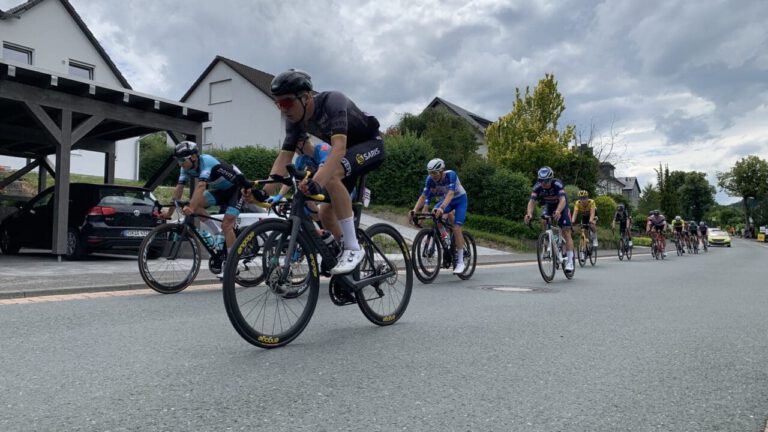
Want to relax after a long ride? Then you can head to the thermal baths in Bad Oeynhausen or Aachen, where you can let your tired muscles recover. North Rhine-Westphalia combines beautiful cycling routes with a mix of nature, culture, and culinary traditions. In our opinion, one of the most diverse cycling destinations in Germany – and with a little luck, you’ll also bike through the scenery of the Deutschland Tour!
Forget the Alps, discover the climbs in the Sauerland
Why should you always head to the Alps for serious climbs? The Sauerland, a few hours’ drive from the Netherlands, offers at least as much challenge – and that without mass tourism or endless car journeys. This German mid-mountain range, with its endless forests, winding roads, and steep climbs, is a haven for cyclists who love tough altitude meters and quiet roads.
The mountains of the Sauerland are not child-like hills. Kahler Asten (841 m) is the highest climb in the region and certainly doesn’t hold back in terms of challenge compared to well-known climbs elsewhere in Germany. The climb via Winterberg has an average ascent of 6% with sections above 10% – a tough test for the legs. The Hunau is also a climb not to be underestimated. With its long, regular gradient rates, it is an excellent place to work on your climbing legs.
Do you want a route full of highlights? Then take the Langenberg route, which takes you to the highest peak in North Rhine-Westphalia at 843 meters. The ascents are varied: from long, gradual climbs to short, steep walls that force you off the saddle. Especially the climb of Ochsenkopf is recommended, with its technical turns and beautiful panoramic views.
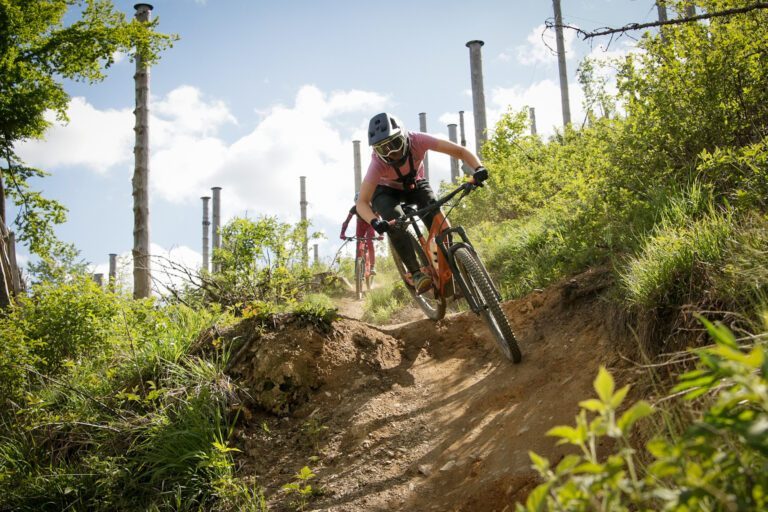
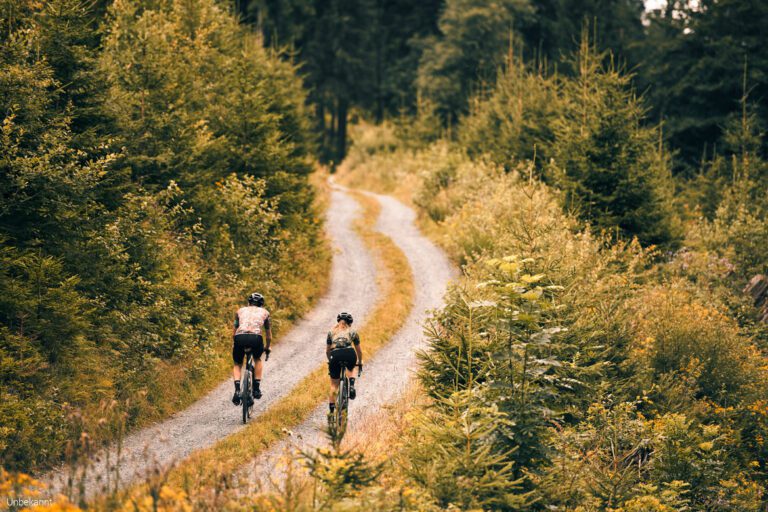
Gravel biking in the SauerlandThe Sauerland is also a paradise for gravel riders. The Rothaarsteig, a famous hiking trail, has some amazing gravel trails that are perfect for biking. Through dense forests and along rivers, a network of unpaved roads runs, ranging from wide and hilly to technical and challenging. Especially the routes around Schmallenberg and Brilon are ideal for those looking for gravel adventures.
Along the way, you cycle through authentic working-class villages where you can take a break with a hearty German lunch. Think of a plate of Bratkartoffeln or a piece of Apfelstrudel to replenish the calories you’ve burned.
Whether you’re a climber looking for serious elevation gain or a gravel rider who loves pristine nature, the Sauerland has it all. And all that in just a few hours from the border. Why would you take the plane to the Alps when this climbing paradise is so close?
Forget the Ardennes, discover the climbs in the Eifel
Why drive to the Ardennes when you have a more rugged, challenging, and often quieter cycling area just across the border? The Eifel, located in the west of Germany, offers a mix of steep climbs, breathtaking views, and perfect asphalt. This volcanic mid-mountain region is a dream destination for cyclists and gravel riders looking for challenging routes without mass tourism.
The Hohe Acht (747 m) is the highest and most notorious climb in the Eifel. With a gradient that regularly reaches 10%, this is one of the more arduous climbs just across the border. Another classic climb is the Rursee climb, where you test your legs with a long, arduous climb while enjoying the view over the reservoir.
Looking for a route full of variety? Choose the Vulkan Eifel Runde, a ride that takes you past ancient volcanic craters, mysterious lakes, and challenging climbs. The roads are perfectly maintained, and traffic is limited – ideal for a long, uninterrupted ride. The region around Gerolstein and Daun also offers numerous challenging climbs with long, regular ascents and breathtaking views.
Mountain biking in the Eifel
Cyclists find a playground of unpaved roads in the Eifel. The Eifelsteig, a famous hiking route, has a number of fantastic gravel paths that are excellent for a challenging ride. Routes around Monschau, a historic town with a medieval character, combine wide gravel paths with technical singletracks. The area around Blankenheim and the Nürburgring also offers adventurous gravel paths that lead you through forests and over rolling hills.
Don't forget the RurUfer Radweg, one of the most beautiful gravel routes in the region, which winds along the Rur River and takes you through untouched nature and picturesque villages.
Culture and gastronomy
Between the climbs, you can refuel with a hearty German lunch in one of the many Gasthof restaurants along the route. Try a plate of Schnitzel with Bratkartoffeln, a hearty Eifel Flammkuchen or a piece of Streuselkuchen with your coffee. And after your ride? A locally brewed Bitburger Pils as a well-deserved reward.
Why cycle in the Eifel?
The Eifel offers the best of Germany in terms of cycling: challenging climbs, well-maintained roads, endless gravel routes, and a mix of rugged nature and authentic villages. And all of this is just a few hours’ drive from the Netherlands. So why limit yourself to the Ardennes when the Eifel is just across the border, with even more beautiful and challenging climbs?
It seems the most logical thing to do is to bring your own bike to this region. Of course you can do that in the car, but you can also get there by train. You can of course just take the bus to Munster for the Munsterland or the ICE to Dusseldorf or Cologne and from there continue on.
Still want to rent a bike? Radsport Breuer in Adenau is a good place.
You can also rent mountain bikes at a lot of places.
We have personally tried out a number of hotels, but we have also looked at and researched some other options. Here are some tips for a great cycling stay in the Baden-Württemberg region:
Located in the heart of the Eifel, Im Eifel HÉT Wielersport Hotel offers an all-inclusive experience especially for cyclists, gravel bikers and mountain bikers. The hotel features a secure bike storage area, laundry facilities for cycling gear and offers meals tailored to athletes. In addition, GPX-format routes are available and support is provided along the way if needed. The beautiful surroundings of the Eifel Volcano, Moselle and Hunsrück offer varied routes for every level. Gasthotel im Eifel
This luxury hotel in Euskirchen is located near the Eifel National Park, a paradise for cyclists who enjoy hilly routes and natural beauty. The hotel offers comfortable rooms and a wellness center for relaxing after a day of cycling. In addition, a secure bicycle storage area is available.Parkhotel Euskirchen
Located in Kalkar, this hotel is known for its cyclist-friendly facilities. It offers spacious rooms and a secure bike storage area. The surroundings are perfect for peaceful bike tours through the Niederrhein region. There is also a spa and a restaurant, and you can also rent a bike for a day trip. Landhaus Beckmann
This hotel in Lüdinghausen is ideal for cyclists who want to explore the Münsterland. The hotel offers bike rental and has secure parking. The area is known for its castles and picturesque landscapes, perfect for both race cyclists and gravel bikers. The ‘bratkartoffeln’ in the Münsterland are an absolute culinary surprise! Steverbett Hotel
- Incidentally, you can find many accommodation options through Bett&Bike where you can always stay for a night, where you can leave your bike and where you are welcome as a cyclist.
Top 5 climbs in NORTHERN-WESTFALEN
North Rhine-Westphalia might not be the first region you think of for serious climbs, but make no mistake: this mid-mountain range houses some tough challenges. From long, arduous climbs to short, steep trials—these five climbs should be on your list.
1. Hohe Acht (Eifel)
Length: 6.9 km
Average rate of increase: 6,2%
Starting point: Adenau
The Hohe Acht is the highest mountain in the Eifel and one of the toughest climbs in North Rhine-Westphalia. The climb starts gently, but once you enter the forest, you encounter steeper sections that leave your legs burning. Above, a spectacular view of the Eifel Mountains awaits, and on clear days, even the Hunsrück and Ardennes.
2. Rurberg – Hirschrott (Eifel)
Length: 4.5 km
Average rate of increase: 7,4%
Starting point: Rurberg
This climb takes you from the picturesque Rurberg through the Rursee up through dense forests. The gradient is steep, with several sections above 10%, making it a nice test for climbers. The climb ends in the hamlet of Hirschrott, where you can take a break before continuing through the Eifel.
3. Kahler Asten (Sauerland)
Length: 7.3 km
Average rate of increase: 6,8%
Starting point: Winterberg
The Kahler Asten, with 841 meters the highest climb in the Sauerland, is a great climb for cyclists who want to train for longer ascents. The climb gradually rises, with a few tricky sections, and ends at the iconic viewing platform of the Kahler Asten. Especially in winter, this is a popular ski resort, but in the summer it is a paradise for cyclists.
4. Ochsenkopf (Sauerland)
Length: 5.6 km
Average rate of increase: 6,5%
Starting point: Olsberg
The Ochsenkopf is a hidden gem in the Sauerland and a tough climb with constant elevation and a few treacherous hairpin turns. The route mostly runs through the forest, which provides a nice shade on warm days. Above that lies an open landscape with stunning views of the surrounding area.
5. Monschau – Höfen (Eifel)
Length: 5.3 km
Average rate of increase: 6,1%
Starting point: Monschau
The climb from the picturesque town of Monschau to Höfen is a real classic in the Eifel. The ascent starts right from the center and leads past traditional buildings and the Rur River up to the high plateaus of the Eifel. The slopes vary from 6% to 10%, but thanks to the constant incline you can get into a good rhythm in no time.
Cycling in North Rhine-Westphalia
North Rhine-Westphalia has about 30,000 kilometers of cycling routes: over old railway lines without slopes, along rivers from source to estuary, and through the hills of the middle mountains.
- Sportive: the Sauerland, the Bergisches Land and the Teutoburger Wald for altitude meters on the race bike and gravel bike, and the mountain bike routes of the Sauerland.
- Fast and flat: the Münsterland, perfect for long, fast kilometers.
- On old railway lines: flat, car-free and ideal for gravel bikes.
- The Rheinradweg: along the Rhine through the whole country.
More inspiration on nrw-tourismus.de.
The Münsterland
The Münsterland, just across the border near Twente and the Achterhoek, has more than 4,500 kilometers of cycling paths and signposted themed routes.
- The 100 Castles Route: a long route with four circuits along more than one hundred castles and water castles, such as Schloss Raesfeld.
- The Peace Route: 163 kilometers between the peace cities of Münster and Osnabrück.
- The Ems Radweg: 375 kilometers along the Ems, from the Senne to the North Sea.
- The Europaradweg R1, which also runs through the Münsterland.
Many routes are also listed on Komoot. More on muensterland.com. Read also our story about the Border route Teuto-Ems.
Travel tips
- Best Travel Time: From early April to late September, it’s a good time to travel. In the summer, it’s advisable to cycle early in the morning or later in the evening to avoid the heat. In the NRW region, it can also get hot, although a climb will be slightly cooler. October can still be nice, but the chance of rain increases significantly. January-March is really pleasant. Similar to the Netherlands, then.
- Traffic information: Germany is bike-friendly and has more and more bike lanes, but especially outside the city you often share the road with cars. Germany is still ‘first the car’, so be prepared for sometimes unfriendly drivers.
- Bike rental: There are numerous bike rental companies that offer high-quality racing bikes. Reservations are recommended, especially during the high season.
- Hydration: Bring enough water with you, especially during longer rides, and fill your water bottles in the villages you pass through.
- Bring your own bike, or rent one from a quality provider so you can be sure you’re comfortable on your bike. You can read more tips on this here.
More stories about North Rhine-Westphalia
When are you leaving?
Events in North Rhine-Westphalia
20273RIDES Winterberg Gravel Stage RaceWinterberg, Germany · 287, 198 kmgravel11 July
2027Rembike Festival Sauerland GravelOlsberg - Bruchhausen, Germany · 120, 80, 40 kmgravel17 July
20273RIDES Winterberg Gravel RidesWinterberg, Germany · 200, 150, 100 kmgravel18 July
20273RIDES UCI Gravel RaceWinterberg, Germany · 147, 98 kmgravel
Areas
Areas in North Rhine-Westphalia
How do you get there?
- Flying: Fly to Düsseldorf · Cologne/Bonn. If you are bringing your own bike, book a place for your bike rack in time.
- By train: Easy to get to. Convenient stations: Cologne · Aachen · Düsseldorf.
- By car: From Utrecht you are in about 2.5 hours North Rhine-Westphalia.
This is how we calculate: We calculate distances and travel times starting from Utrecht. Our flights always depart from Schiphol, Rotterdam The Hague Airport or Eindhoven Airport. Want to know how to travel from your place of residence the best way? Let us know, We are happy to help you. After all, we built this site together.
Are you flying? Read our guide Flying with your bike: Which airline, what the cost is and how to pack your bike.