Part of Germany › Rhineland-Palatinate
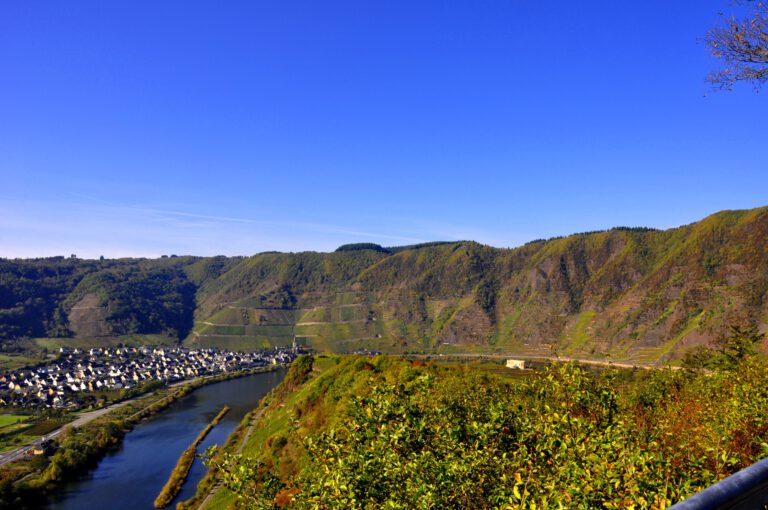
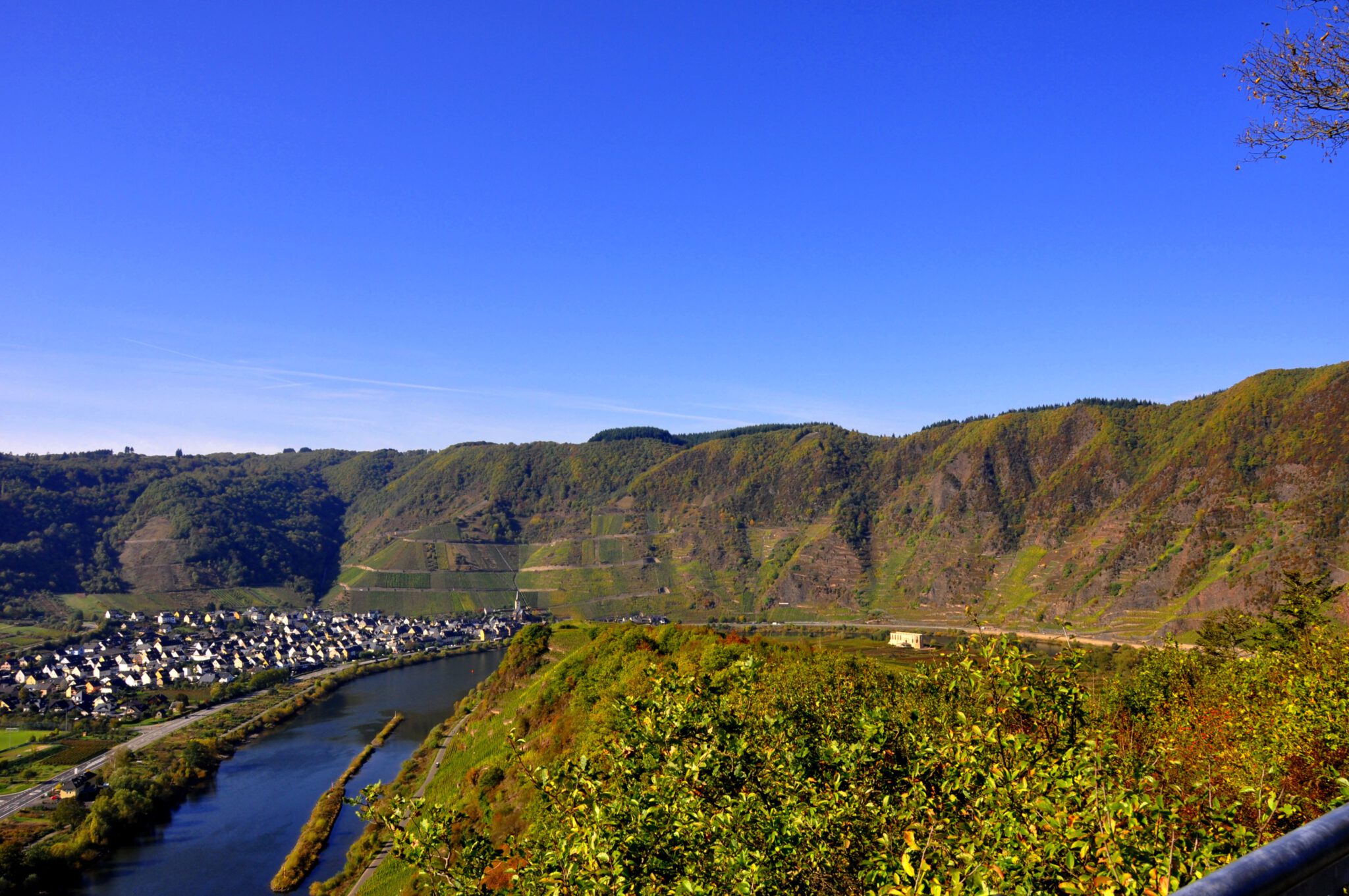
The Moselle winds its way from France via Luxembourg to Koblenz, where it flows into the Rhine. The German part between Trier and Koblenz is one of the most beautiful river valleys in Europe: steep wine slopes, castles and wine towns every few kilometers. On the bottom of the valley you cycle right along the water; as soon as you climb out of the valley, you are in the Eifel or the Hunsrück and have enough elevation gain.
That makes the Moselle a destination for everyone: for a peaceful cycling holiday with luggage, for a sporty weekend with climbing, or for a mix of both with a glass of riesling every evening.
Why cycle along the Moselle?
- The Moselle cycling route: a flat bike path along the river, ideal for a multi-day tour.
- Climbing out of the valleyAnyone looking for altitude meters climbs from the valley into the Hunsrück or the Eifel.
- Wine towns as Bernkastel-Kues, Traben-Trarbach, Zell and Cochem.
- Train and boat along the river: handy if you don't want to cycle back.
The Moselle cycling route
The Moselle Cycle Path follows the river for about 248 kilometers from the tripoint near Perl to the Deutsches Eck in Koblenz. It is almost completely flat, mostly on asphalt, and since 2024 it has been awarded the quality label of the German cycling association ADFC as a four-star quality route. Those who want to go further start in Metz or Thionville in France; then the entire route is over 300 kilometers long.
A good itinerary is Trier – Koblenz in four or five days, with stages of fifty to sixty kilometers each. That way you have time for a wine tasting, a visit to the Reichsburg in Cochem, and an afternoon in Bernkastel-Kues. Trains run along the river, and in season there are also boats that take you by bike.
Race bike: the slopes uphill
For race cyclists, the Moezel is primarily a starting point. From almost every village, a winding road winds through the vineyards up to the plateau: to the Hunsrück on the south side, to the Eifel on the north side. The climbs are usually three to six kilometers long and regular, with a beautiful view back to the river every time. Near Bremm is the Calmont, one of the steepest wine slopes in Europe; you don’t mind climbing up, but the view from the other side is spectacular.
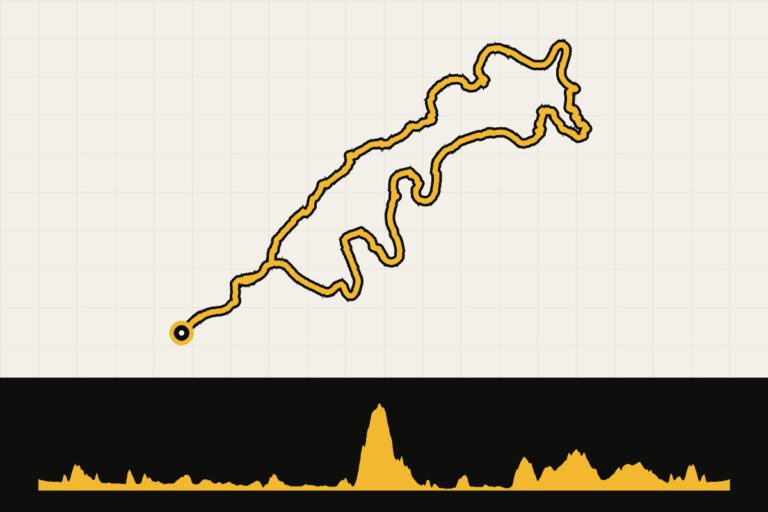
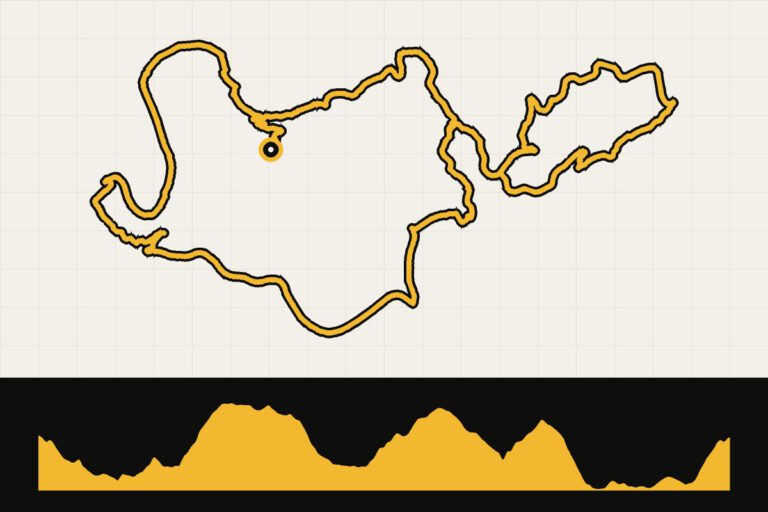
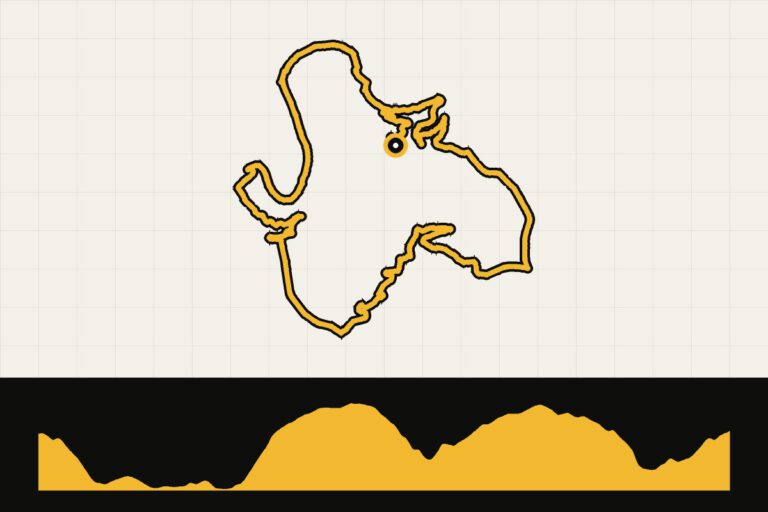
A beautiful day is a round trip from Traben-Trarbach: up the Hunsrück, over the plateau and back down to the river via another valley. Combine this with the Eifel for a week full of elevation gains; see also our page about the Eifel.
Gravel and green paths
Around the Moselle there are a few beautiful cycling paths over old railway lines. The Maare-Mosel-Radweg comes from the Vulkaneifel to Bernkastel-Kues, and the Ruwer-Hochwald-Radweg from Trier goes into the Hunsrück. On the plateaus you will find many agricultural and forest roads, ideal for the gravel bike. In the vineyards themselves there are narrow concrete paths; beautiful, but steep and during the harvest busy with tractors.
Three rides to get you started
- Trier – Bernkastel-Kues (about 60 km): the classic first stage along the river, flat and full of wine villages. Return by train or boat.
- Tour of the Hunsrück from Traben-Trarbach (about 70 km): up through the vineyards, over the plateau and back to the valley.
- Cochem – Koblenz (about 55 km): the final stretch, along the fortress of Eltz (a short detour) to the confluence with the Rhine.
For whom is the Moselle?
The Moselle is ideal for a first cycling holiday with luggage, for couples and families who want to cycle leisurely, and for those who want to combine cycling with wine and culture. Sporty cyclists make it an active week by combining the flat valley with climbing in the Eifel and the Hunsrück. You don’t have to choose: one cycles along the river, the other climbs to the plateau, and in the evening you sit together at the Riesling.
Rest day on the Moselle
- Visit the Eltz fortress, one of the most beautiful castles in Germany, hidden in a valley.
- Walk through the Roman city of Trier, with the Porta Nigra and the imperial baths.
- Take a boat trip on the river between Bernkastel-Kues and Traben-Trarbach.
- Try some wine at one of the many wineries; in the autumn there are wine festivals everywhere.
What to bring?
- One final tip: at wineries and castles, you often have to leave your bike behind for a while.
- Bicycle bags or bikepacking bags for a multi-day trip.
- Sunburn: the valley can be warm and sunny in the summer.
Food and drink
The Moselle revolves around riesling. Almost every village has winegrowers with a tasting room, and in the summer and autumn you open a Straußwirtschaft: a temporary wine café at the farmer’s home, with simple food and their own wine. Also try Flammkuchen, onion cake with Federweißer (young, fermented wine) in the autumn, and trout from the side valleys.
If you’re cycling in a group, plan the wine tasting at the end of the day, not halfway up a climb.
When are you leaving?
April to October. In the spring the trees bloom in the valley; in September and October it is harvest time and the grapes hang from the branches. Then there are also wine festivals everywhere. In the summer it can be hot in the valley and the bike path is busy.
How do you get there?
By car, you can drive from Utrecht in about four hours to Cochem or Trier. By train, you travel via Cologne and Koblenz to Cochem, Traben-Trarbach or Trier. From Luxembourg, it is just a short bike ride to the German Moselle.
This is how we calculate: We calculate distances and travel times starting from Utrecht. Our flights always depart from Schiphol, Rotterdam The Hague Airport or Eindhoven Airport. Want to know how to travel from your place of residence the best way? Let us know, We are happy to help you. After all, we built this site together.
Are you flying? Read our guide Flying with your bike: Which airline, what the cost is and how to pack your bike.
Where to stay?
Trier is a nice starting point, with Roman monuments and a good train station. Bernkastel-Kues and Traben-Trarbach are central and ideal if you want to drive around for a few days. Cochem is lively and is close to Koblenz. Along the river, many hotels, guest houses and wine producers have the Bett+Bike label.
See places to stay in: Trier · Bernkastel-Kues · Traben-Trarbach · Cochem
Sources
- Mosel cycling route: length and stages – 248 km from Perl to Koblenz, ADFC quality route
- Photo: H.Peierl via Wikimedia Commons (CC BY 3.0) – main photo