Part of Spain
Cycling in the Picos de Europa National Park
The Picos de Europa is a national park that extends over the regions of Asturias, Cantabria, and Castile and León – in the north of Spain. The area is known for its pristine, green nature and beautiful rock formations. One of the most characteristic features is the Naranjo de Bulnes, a mountain peak that stands out for its unique shape. But also the various green high plains, mountain lakes, and authentic villages make the Picos de Europa special. Unlike the Pyrenees or the Alps, the Picos de Europa are less well known, which keeps them feeling untouched. And that brings beautiful things with it; here you can still find a great diversity of flora and fauna. You share the area with wolves, lynxes, wild boars, and even bears! You do need to be very lucky to spot these beautiful animals; they are afraid of humans and usually arrive at you (and your bike) from a distance.
As a cyclist, you can get your heart racing on various challenging climbs here, including the Lagos de Covadonga. This is perhaps one of the most beautiful climbs in the region. The view of the beautiful lakes of Covadonga provides a pleasant diversion in any case. This is also a classic in the Vuelta a España. Incidentally, there is more to experience for cyclists here – aside from conquering challenging climbs. A must-do is, for example, cycling through the Desfiladero de la Hermida, the longest canyon in Spain.
And whether you prefer to cycle on the road or prefer gravel or mountain bikes; cycling in Picos de Europa is a must for every cyclist.
Spring (March to May): In spring, temperatures in the Picos de Europa range between 10°C and 18°C. Nature becomes greener again and the snow on the higher peaks starts to melt. There is an average of 10 to 15 days of precipitation per month and there are 7 to 10 sunny days.
Summer (June to August): It rarely gets extremely hot in this area. On average, temperatures remain around 18°C to 25°C in the lower regions. In the mountains, it remains slightly cooler. Rainfall is less frequent, averaging 5 to 8 rainy days per month. There are 15 to 20 sunny days, making this period popular for cyclists. However, the beautiful weather also brings more tourists. But; it is still a lot less touristy here than in the Pyrenees and Alps.
Autumn (September to November): In autumn, it is around 12°C and 20°C. There is more precipitation, with 10 to 14 rainy days per month. But with an average of 7 completely sunny days per month and beautiful autumn colors, a cycling holiday in this region in the autumn is definitely recommended!
Winter (December to February): Winter temperatures range from 4°C to 12°C in the valleys. Frost and snowfall are common in the mountains. Precipitation reaches a peak, with 15 to 20 rainy days per month. There are 4 to 6 sunny days per month. Although it can be cold, you can enjoy beautiful cycling in the lower regions with views of the snow-covered peaks. Mountain bikers and gravel bikers can enjoy beautiful cycling on unpaved trails on the snowline.
You can't miss this during your cycling trip in the Picos de Europa
(Gravel)climbing: Salto de la Cabra
Length: 10 kilometers
Altitude meters: just over 1000 meters
Average rate of increase: 10,4%.
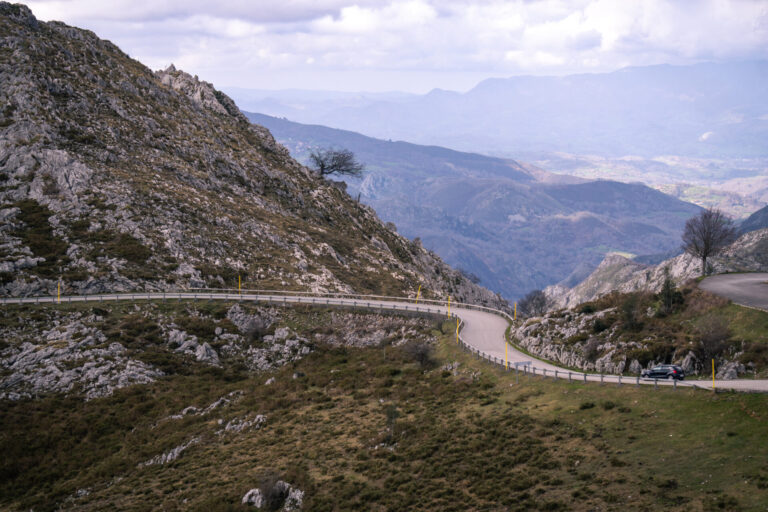
Description: The climb to Salto de la Cabra is definitely a tough one! Since the asphalt is not in the best condition – and in some places even more like gravel – it’s best to climb this route on a gravel bike. It’s a fantastic climb for gravel enthusiasts who want to get off the ‘well-traveled paths’. The views over the ‘Picos’ are fantastic.
Ascent: Lagos de Covadonga
Length: 14 kilometers
Altitude meters: 1040 meters
Average rate of increase: 7,3%
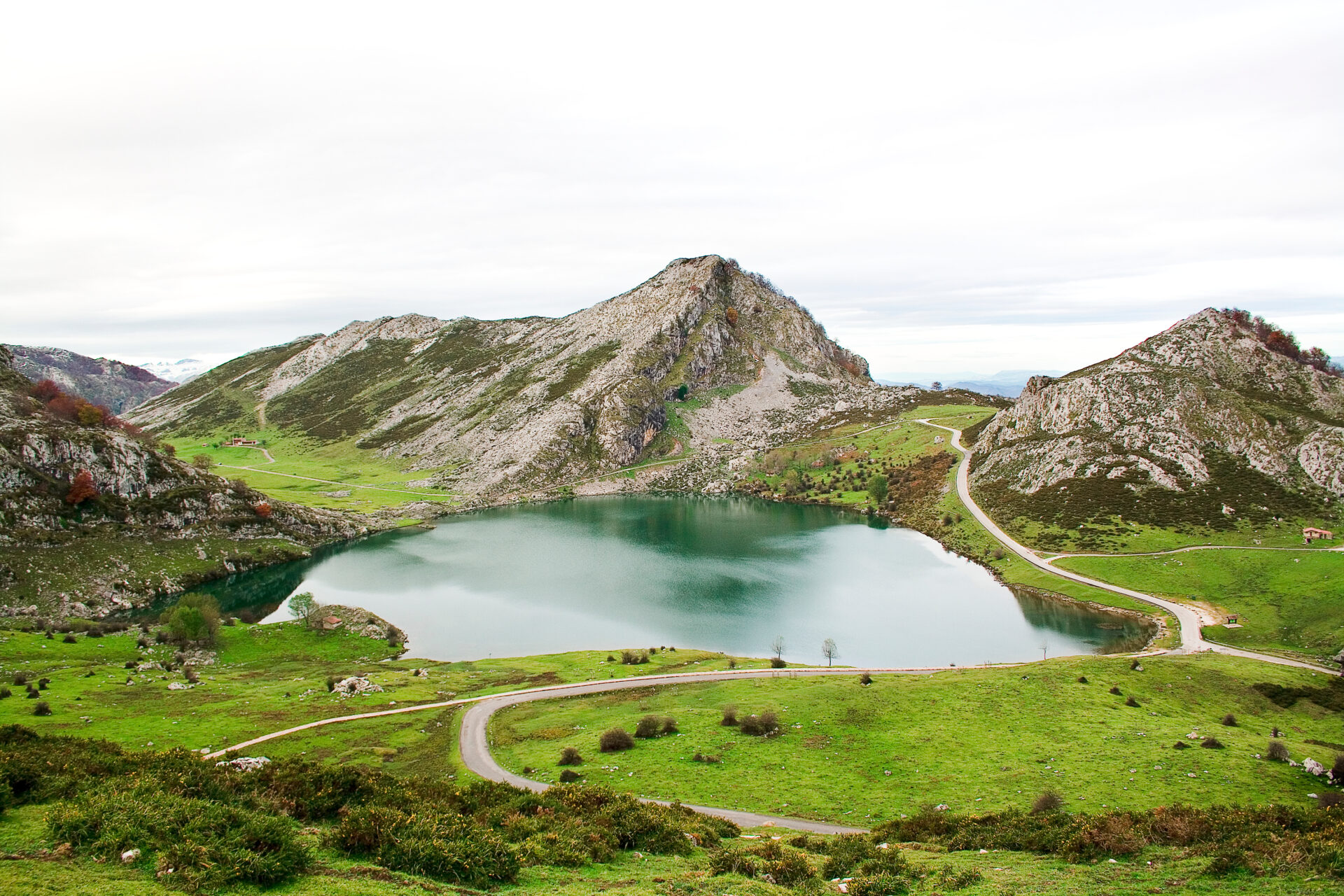
Description: This must be one of the most beautiful ascents in the region. The mountain lakes of Covadonga provide a good distraction during the final kilometers. This climb has occurred more often in the Tour de Spain; that also makes this climb an absolute must-do!
Travel tips
- Best destination: Stay in Potes – ‘the Gateway to the Picos’ – or Arenas de Cabrales (near the lakes of Covadonga) or the more southerly, beautiful Riaño to explore the southern side of the area.
- Traffic information: In general, drivers will treat you respectfully. Especially in the summer months, you will encounter more cyclists, and other road users are prepared for this. Check your routes thoroughly beforehand; with the more well-known climbs, you are always in good shape, but if you go on an ‘adventure’ the road surface could suddenly become worse or the last kilometers of a climb could be unpaved. Not unimportant; there is a lot of wildlife in the area, and you will also regularly encounter cows. Pay attention to this when descending.
When are you leaving?
How do you get there?
This is how we calculate: We calculate distances and travel times starting from Utrecht. Our flights always depart from Schiphol, Rotterdam The Hague Airport or Eindhoven Airport. Want to know how to travel from your place of residence the best way? Let us know, We are happy to help you. After all, we built this site together.