Cycling on the Costa Dorado
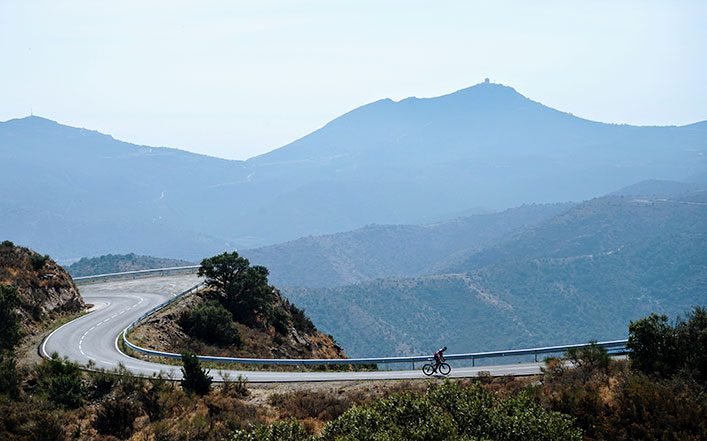
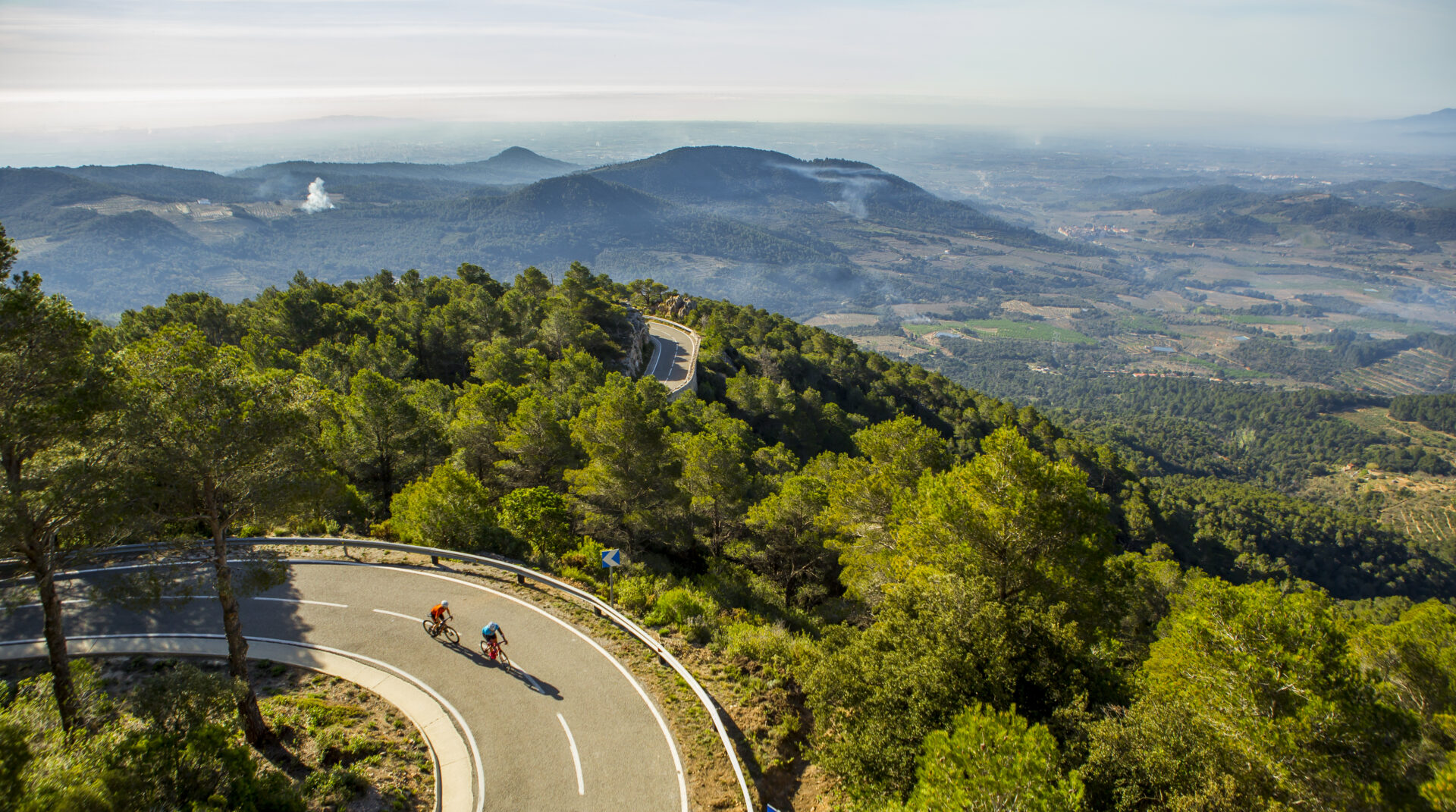
Not for nothing is this region in Catalonia called ‘the Golden Coast’; the sandy beaches on the Costa Daurada are beautiful and the sea is a brilliant blue. Cyclists visit this region for the favorable climate and the beautiful cycling routes in the Prades mountain range and the Montsant mountain range, which is located slightly further inland. Special rock formations, vineyards and charming villages shape the landscape here. The roads are quieter than in other popular training destinations on the Spanish coast, but at least just as beautiful. That is why many cyclists choose a cycling holiday or training camp in this area.
The Costa Dorada is, like the Costa Blanca and the Costa Brava, a great training location, especially in the winter months. There are coastal roads where you can cycle flat, but there are also mountains where you can find numerous beautiful climbs. The road network is extensive, allowing you to create endless routes.
The advantage of the Costa Daurada is that this destination is somewhat less popular than the other Costa beaches. As a result, you’ll really be able to mingle with the locals and other cyclists here, who, like you, prefer a quieter destination.
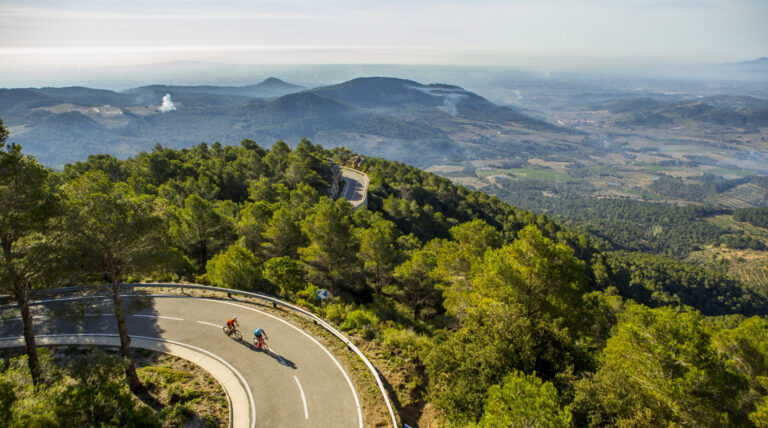
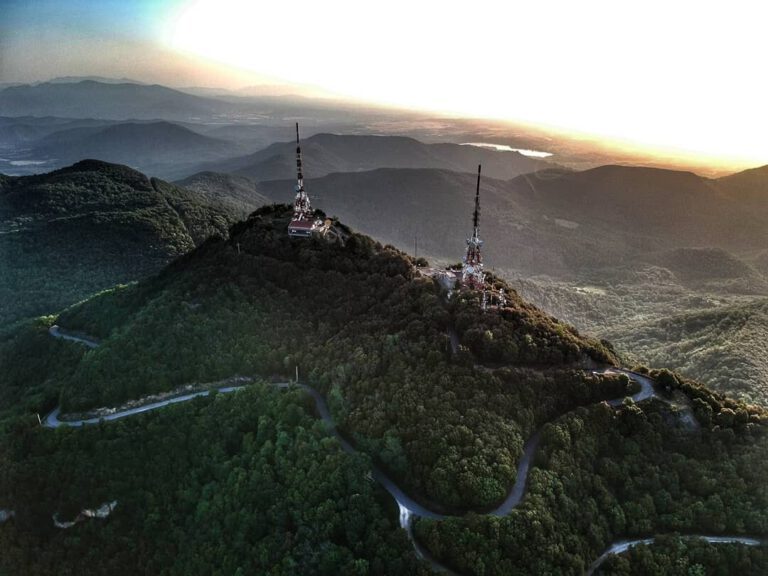
Climbs like La Mussara (16 kilometers with 782 meters of elevation gain) and Montsant (11 kilometers with 749 meters of elevation gain) are literally and figuratively the highlights of the region.
The mild Mediterranean climate on the Costa Daurada ensures mild winters. With day temperatures between 12 and 16 degrees on the coast and only 5 rainy days per month, the weather is fantastic for training for the upcoming cycling season. In the mountains it is slightly cooler.
In late spring and early autumn, it is sunny and warm enough for a refreshing swim in the sea or the beautiful Siurana reservoir, which is located in the middle of the Prades Mountains.
In the summer, it can get very hot on the Costa Daurada, but in the mountains you can still cycle well; especially if you leave early in the morning.
Popular climbs on the costa daurada
The coastal landscape on the Costa Daurada is flat, but it’s not far by bike from there to the popular climbs. This way, you can perfectly combine a beach holiday and a cycling holiday. The roads leading into the interior are often paved with straw, which makes for a great warm-up for the real climbing.
These are the climbs that you shouldn't miss when you go cycling on the Costa Daurada:
La Mussara / Coll de les Llebres – 16 kilometers with 782 meters of elevation gain
A beautiful route with a special destination; that is the climb to the ghost village of La Mussara. The village has been officially abandoned since 1959. Yet it still attracts visitors; the route to La Mussara is popular with cyclists. Ride the climb as a round trip, or take a tour via Vilaplana and Alforja.
Siurana from Cornudella de Montsant – 6.7 kilometers with 314 meters of elevation gain
This climb isn't very long, but it's very beautiful.
Rojals from Montblanc – 11 kilometers with 635 meters of elevation gain
Montblanc is a beautiful medieval village that you should definitely visit when you are in the area. Combine that with the hairpin climb to Rojals. This climb is a round trip unless you ride up on a gravel bike; from the top, the smooth asphalt turns into a gravel road that eventually leads you back to a paved highway.
Curious about more beautiful climbs and routes? Take a look at the Cycling Cambrils website for GPX files for various disciplines from Cambrils.
Costa Dorada in winter
On the coast near Cambrils and Salou, it is usually 13 to 16 degrees during the day in winter. In the interior, in the mountains of Prades and Montsant, and in the Priorat, it is cooler, but the roads are quiet and the climbs are long and even. The region is less well known than the Costa Blanca or Mallorca, and you can feel it: on a weekday, you often have the hairpin bends to La Mussara or Siurana to yourself.
Starting point: Cambrils
Cambrils is a quiet seaside resort with bike-friendly hotels and a port full of restaurants. From Cambrils, you can drive in half an hour to the first climb towards Prades. Salou, a little further away, is busier and more focused on beach tourism, but is just as close to the mountains. In winter, many hotels there are closed; so check in advance whether your hotel is open.
When are you leaving?
How do you get there?
Fly to Barcelona, which is about an hour’s drive away, or in the summer season to Reus, which is a quarter of an hour from Cambrils. By train, you can travel from Barcelona to Cambrils or Salou.
This is how we calculate: We calculate distances and travel times starting from Utrecht. Our flights always depart from Schiphol, Rotterdam The Hague Airport or Eindhoven Airport. Want to know how to travel from your place of residence the best way? Let us know, We are happy to help you. After all, we built this site together.
Are you flying? Read our guide Flying with your bike: Which airline, what the cost is and how to pack your bike.
Travel tips on the Costa Dorada
Bike Friendly accommodations
Between the end of March and the beginning of October, many cyclists choose accommodation by the sea; you can then perfectly combine cycling with relaxing moments of rest by the sea. The first climbs are located about 20 kilometers (flat terrain) away from the coastline. Cambrils is a perfect base for your cycling and beach holiday on the Costa Daurada. In this coastal town you will find various bicycle-friendly hotels, such as Hotel Monica, where you can even rent bicycles.
Are you going cycling or hiking in the Prades Mountains and don't necessarily want to stay by the coast? Then stay at Park Prades in your own tent or camper, or in a cozy bungalow. From here you can really go anywhere!
Costa Dorada: more than just cycling…
Culture
During your bike trips on the Costa Dorada you will encounter beautiful, centuries-old villages. Due to the isolated life in the mountains and the still relatively limited tourism, many of these places have hardly been affected by modernization. Narrow streets, stone squares and centuries-old churches give you a glimpse of authentic Catalonia. Culture enthusiasts should definitely visit Tarragona; this city was once one of the most important Roman cities in Spain. Today you can still see much of the history in the city, such as the city wall that has been well preserved.
Culinary
After a sporting day on the bike, the local cuisine tastes extra delicious. Try the “pa amb tomàquet”, a simple but delicious toast with tomato, olive oil and garlic. Enjoy esqueixada, a fresh salad with salted cod, and try fideuà, a paella variant with noodles and seafood. Don’t forget to save room for crema catalana, a dessert with a crispy layer of caramelized sugar. Combine all this with a glass of wine from the Priorat region, which you may have already discovered while driving through the Montsant mountain range.