Part of Switzerland
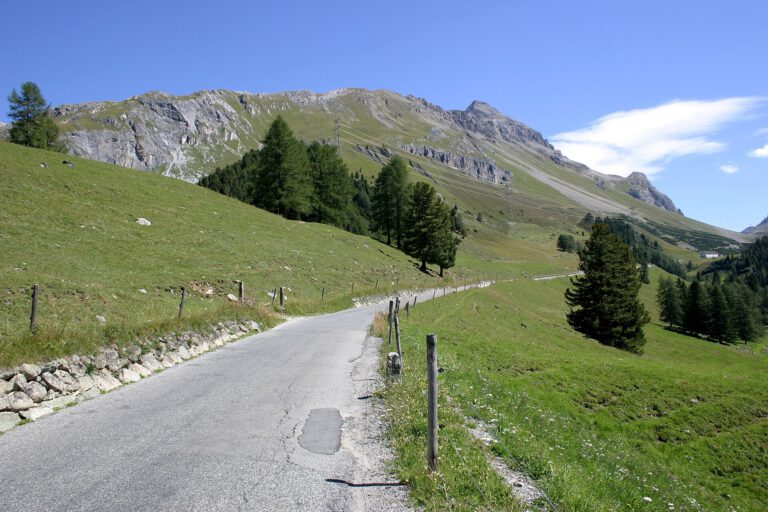
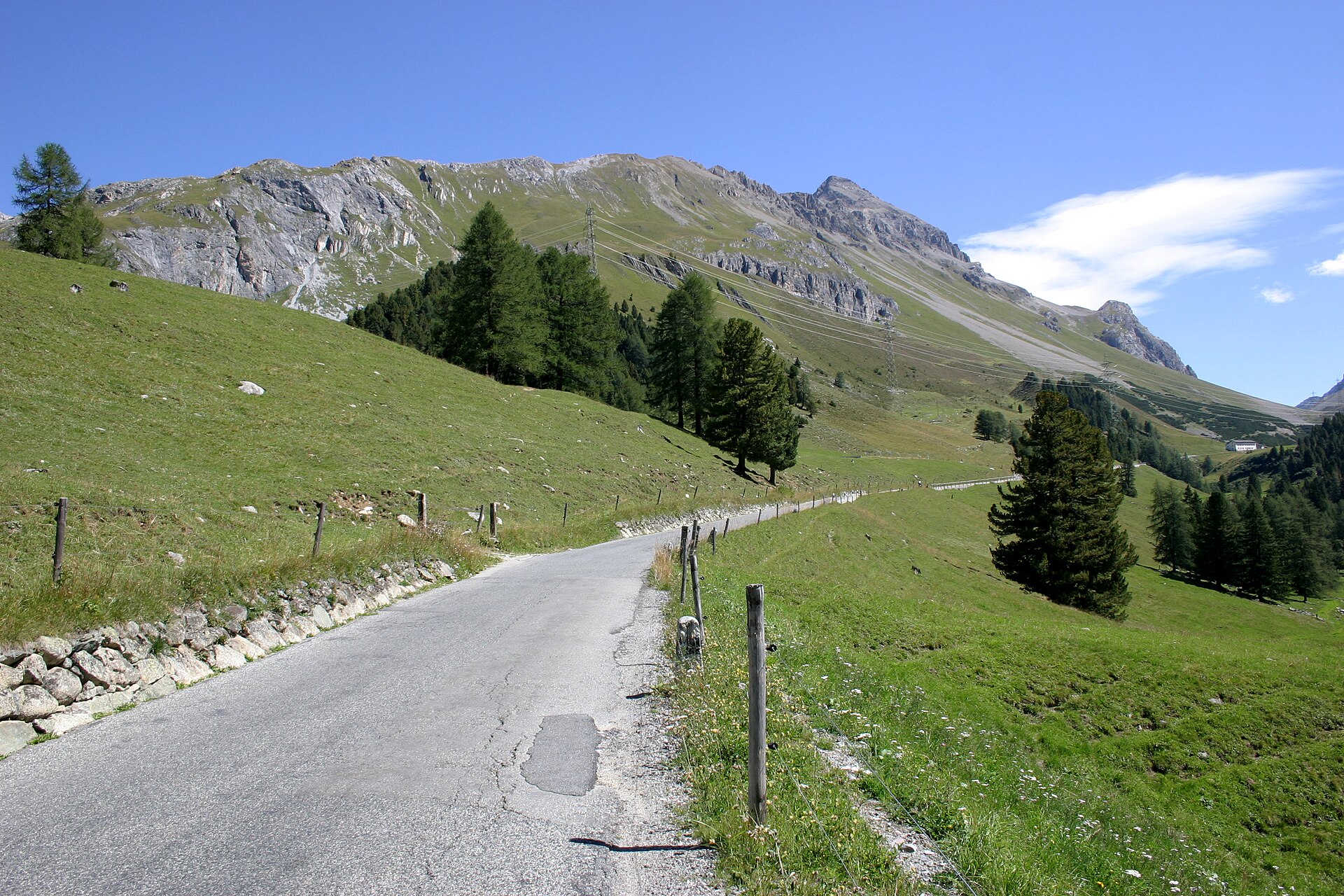
Graubünden is the largest canton of Switzerland and perhaps the most beautiful for cyclists. There are more than ten high mountain passes, connected by valleys with quiet roads and villages with painted houses. You cycle through the Engadin with its lakes, over the Albula and the Flüela, and via the Umbrail you even reach the top of the Stelvio.
The great advantage of Graubünden is the Rhätische Bahn. The rail network runs through almost all valleys and takes bicycles along with it. This way you can climb a pass on one side and return by train, or shorten a round if your legs are tired.
Why cycle in Graubünden?
- Suitable above 2,000 metersAlbula, Flüela, Julier, Bernina, Ofen, Umbrail and Splügen, all within a few hours' drive of each other.
- The Umbrail Pass (2,501 m): the highest paved road in Switzerland, with the border with Italy at the top, a few kilometers below the Stelvio.
- The Engadin: a high valley with lakes around St. Moritz and Silvaplana, with flat stretches between the climbs.
- Ride the trainThe Rhätische Bahn, with the Albula and Berninaline railway as UNESCO World Heritage Sites, makes it easy to get from A to B.
The most beautiful passes
- Albulapass (2,312 m): from Bergün, a beautiful climb along the railway line with its viaducts and tunnels; on the other side you descend to La Punt in the Engadin.
- Fluelapass (2,383 m): from Davos to Susch in the Unterengadin, a steady climb with views of two mountain lakes.
- Julierpass (2,284 m): the wide road between Bivio and Silvaplana, often with wind in the back towards the Engadin.
- Bernina Pass (2,328 m): from Pontresina to the Italian-speaking village of Puschlav, overlooking the glaciers of the Bernina.
- Ofenpass and UmbrailFrom Zernez through the Swiss National Park to Val Müstair, and then the Umbrail towards the Stelvio.
Three rides to get you started
- Julier and Albula from St. Moritz: the classic round of over 100 kilometers over two passes.
- Flüela and Albula from Davos: a tough round of almost 120 kilometers through three valleys.
- Ofenpass and Umbrail from Zernez: Through the National Park to Val Müstair and then the Umbrail to the Stelvio Pass. We haven't yet included this route in the database; plan it yourself or ask us for tips.
GPX routes are listed at the bottom of this page.
When are you leaving?
The high passes are usually open from June to October; some, like the Albula, close in winter. In the Engadine everything is above 1,700 meters, so even in summer it can be chilly in the morning. July and August are the warmest months; in September it is quiet and often very clear.
How do you get there?
By car, you can drive from Utrecht in about nine hours to Chur, the capital of Graubünden. By train, you travel via Basel and Zurich to Chur and from there take the Rhätische Bahn to continue into the canton; your bike can go along. Flying can be done to Zurich, which is two hours' drive from Chur.
This is how we calculate: We calculate distances and travel times starting from Utrecht. Our flights always depart from Schiphol, Rotterdam The Hague Airport or Eindhoven Airport. Want to know how to travel from your place of residence the best way? Let us know, We are happy to help you. After all, we built this site together.
Are you flying? Read our guide Flying with your bike: Which airline, what the cost is and how to pack your bike.
Where to stay?
St. Moritz, Silvaplana and Pontresina are convenient for the Julier, the Albula and the Bernina. Davos is located at the foot of the Flüela and close to the Albula. For the Ofenpass and the Umbrail, choose Zernez or a village in Val Müstair. Switzerland is expensive; in the Unterengadin and the side valleys you often find cheaper hotels than in St. Moritz.
Who is Graubünden for?
For climbers looking for long, beautiful ascents without the crowds of the French Alps or the Dolomites. The climbs are often less steep than in France or Italy, but because of the altitude you can still feel them. With the train as a support, Graubünden is also suitable for cyclists who want to build up their skills step by step.