
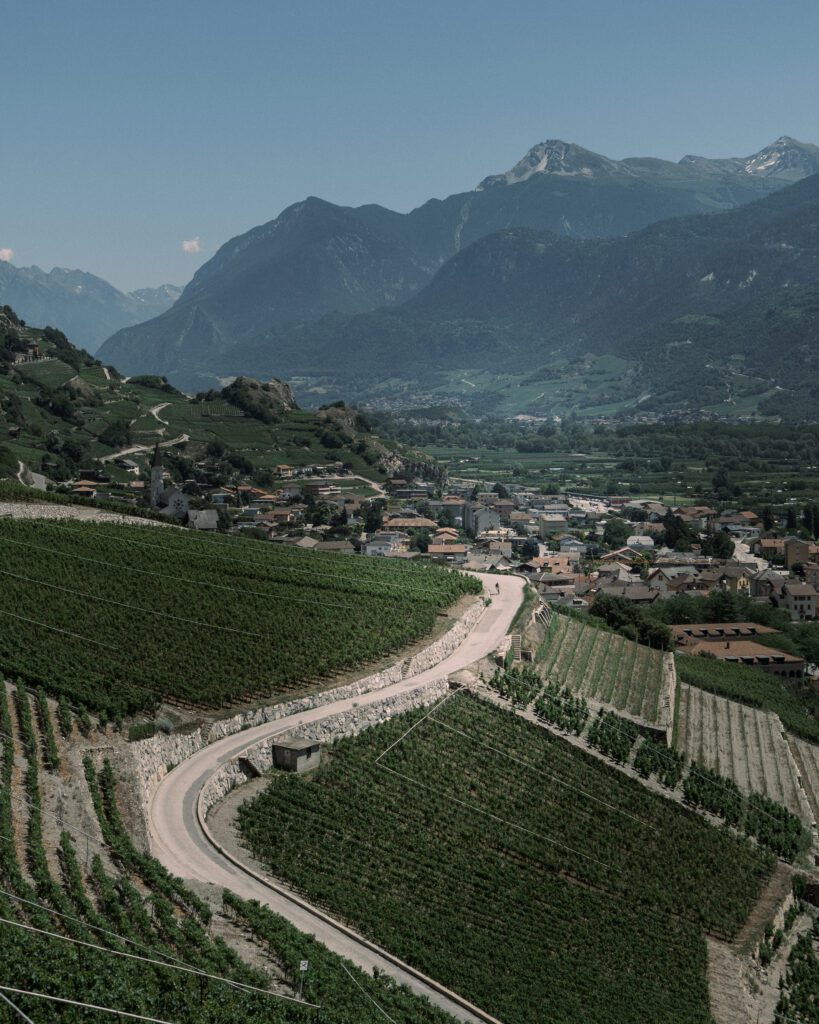
As I joyfully start climbing the hill towards Lac de Tseuzier, I see a large Christ statue on my right hand, on a hill further down. Not as big as Christ the Redeemer in Rio de Janeiro, But it’s also not so small that you can’t see it from a distance. A few hundred meters to the left of it, you can see a striking church. It’s a beautiful image, which becomes even more impressive thanks to the impressive mountain panorama behind it. I can’t even begin to imagine how often I’ll keep thinking about this image throughout the day. Let it be a beautiful backdrop for cycling in Crans-Montana. Where we start with a total of four men tackling beautiful climbs and especially fighting against the heat.

Nice meeting
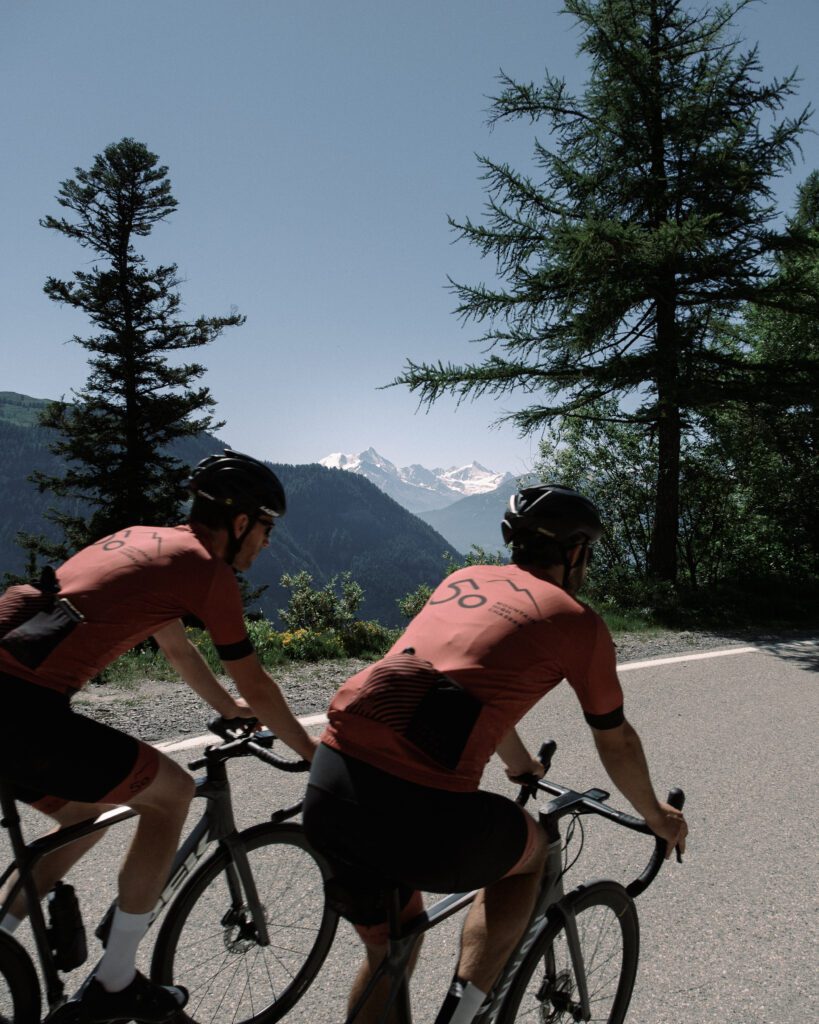
Just over half a year ago, the Mountain High Chasers, Erwin & Erwin, came to strengthen us with their inspiring content. What’s very funny: we’ve only spoken to each other by email and phone until now. Today we meet at the bottom of the climb to Tseuzier. What stays with me: it’s as if we’ve known each other for years. Smooth conversations, where the bike often serves as the connection. Beautiful stories about climbs, adventures, and in the meantime, the writer’s bad jokes are also taken out of the closet. It’s a good start, so to speak.
The dam region
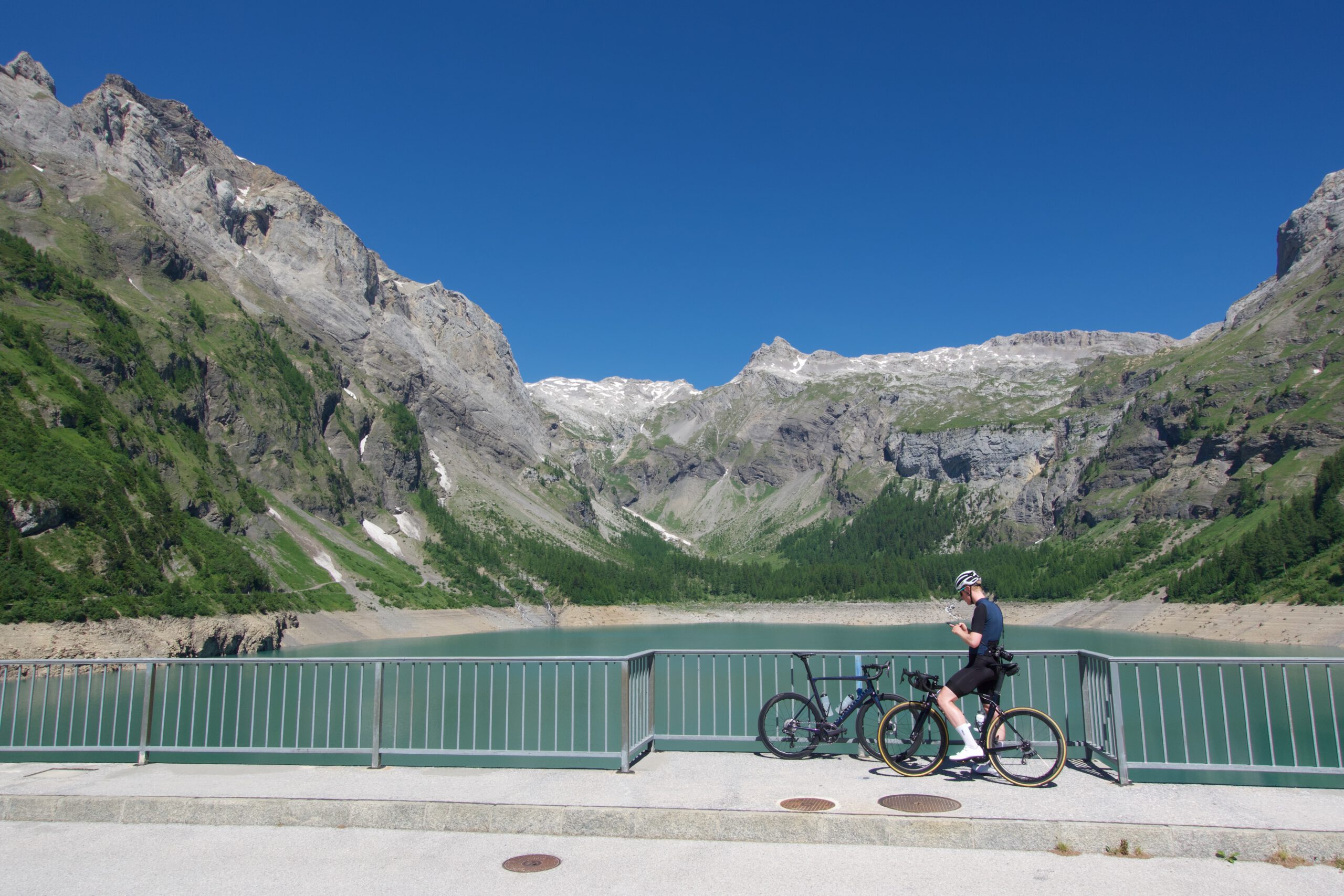
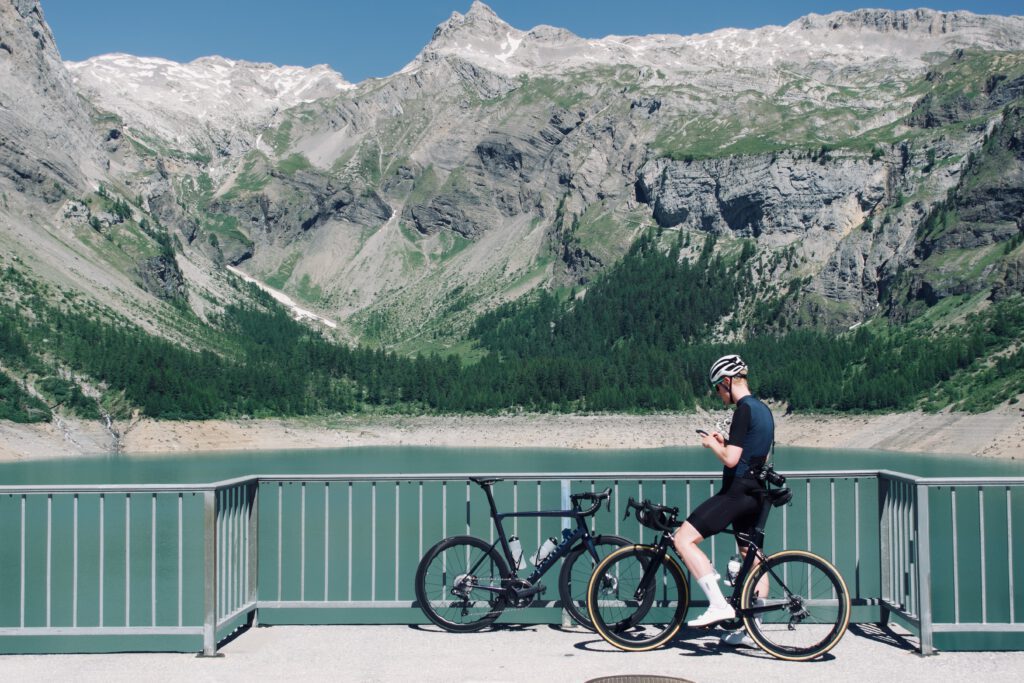
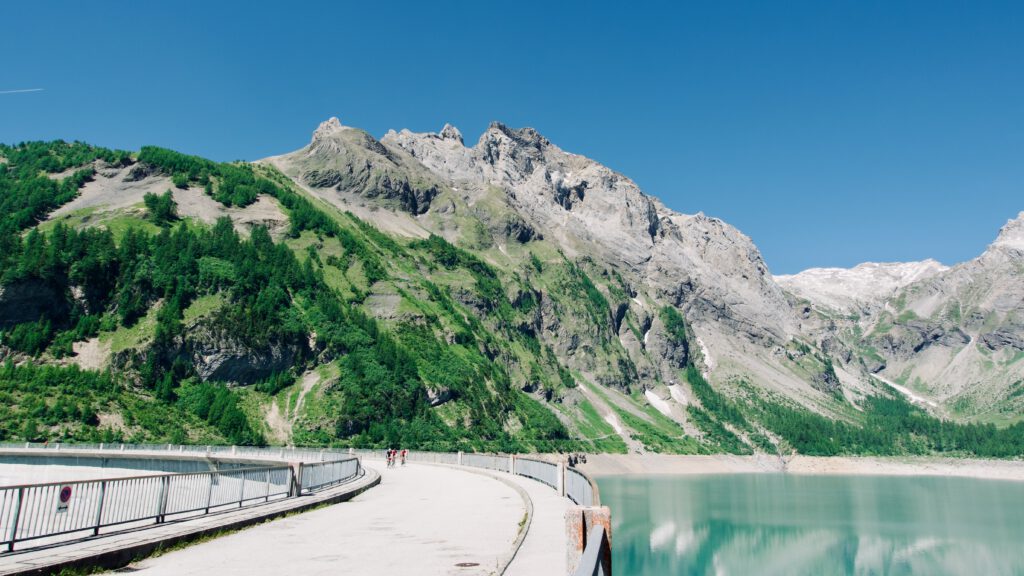
The Valais region is known for its beautiful amount of mountains. Here you find most of the 4,000-meter peaks in all of Switzerland. An additional feature is the water reservoirs (and thus the dam). From Crans-Montana alone, you can reach many lakes. Among them are Lac de Moiry, Lac des Dix, and, our destination for this morning, Lac de Tseuzier. Each lake has its own unique character, but you can bet that you won’t be disappointed when you arrive. Lac de Tseuzier was built in 1957. The clear blue water is held by a huge, long dam, one of the longest in Switzerland. It is part of the electricity supply system, but it is also a storage reservoir in case of emergency.
Steep up and down
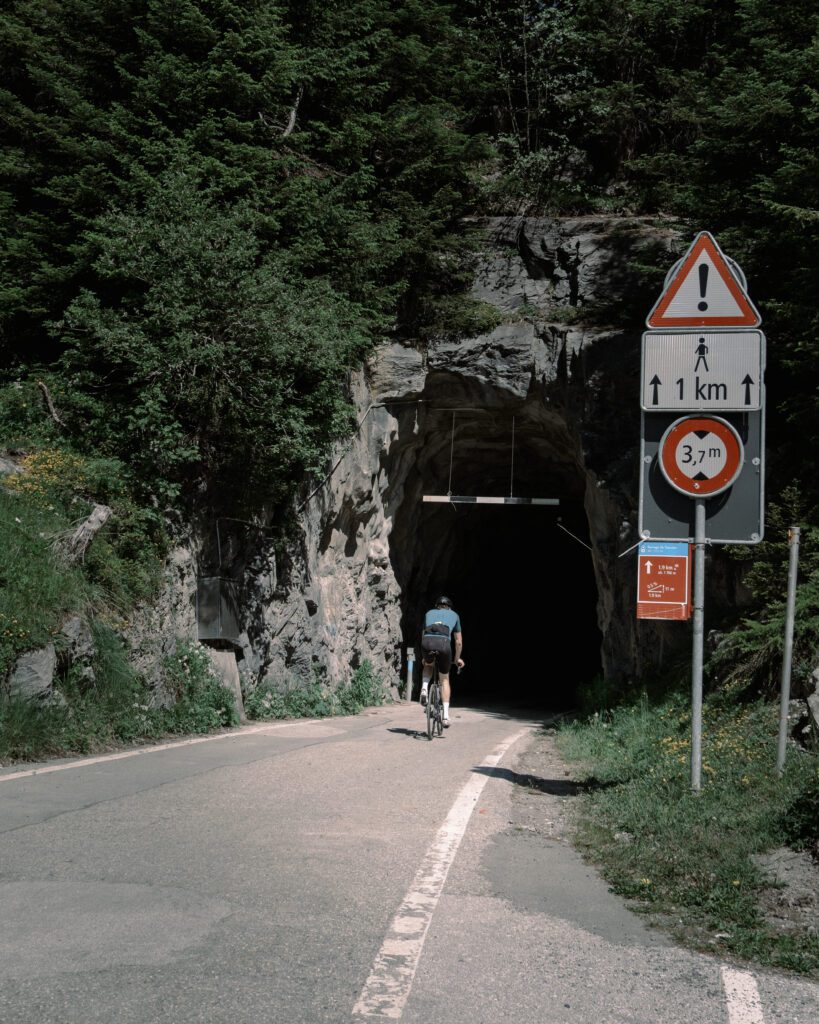
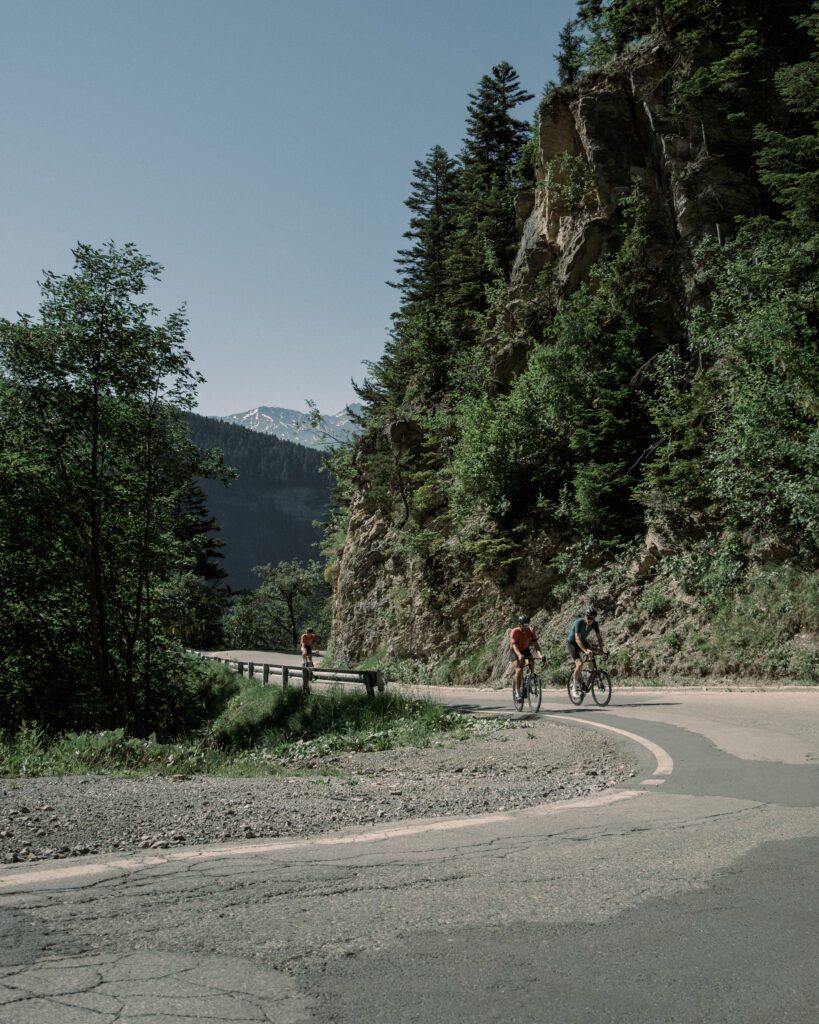
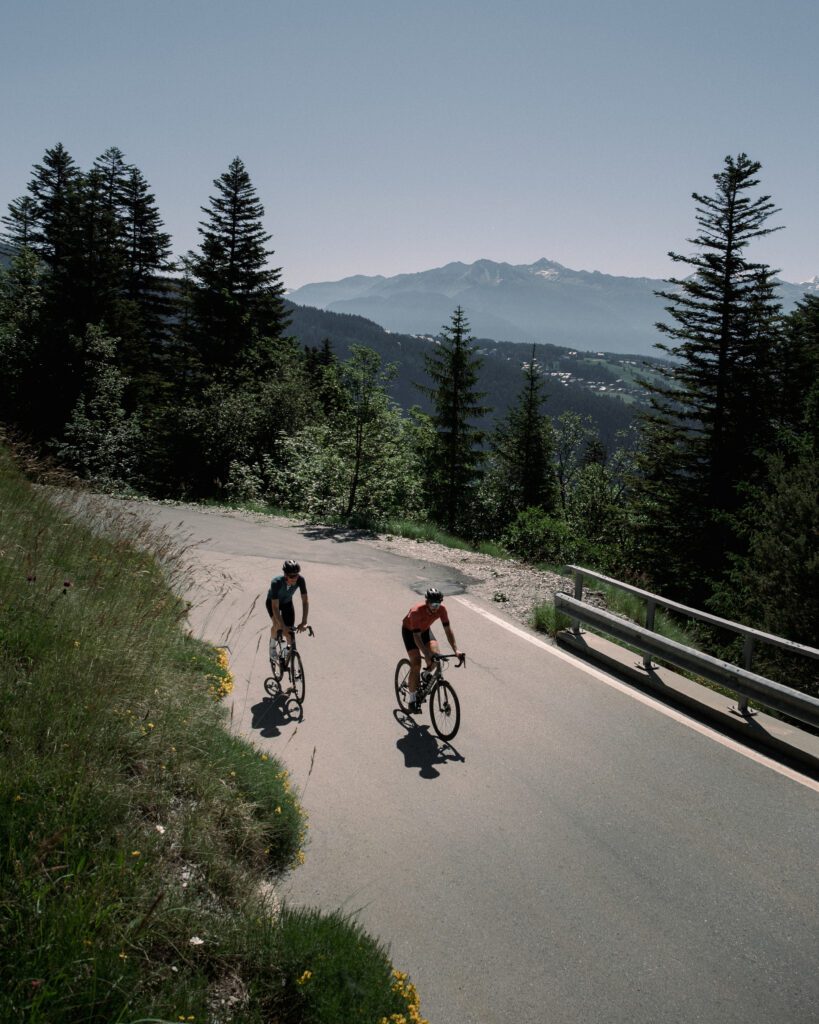
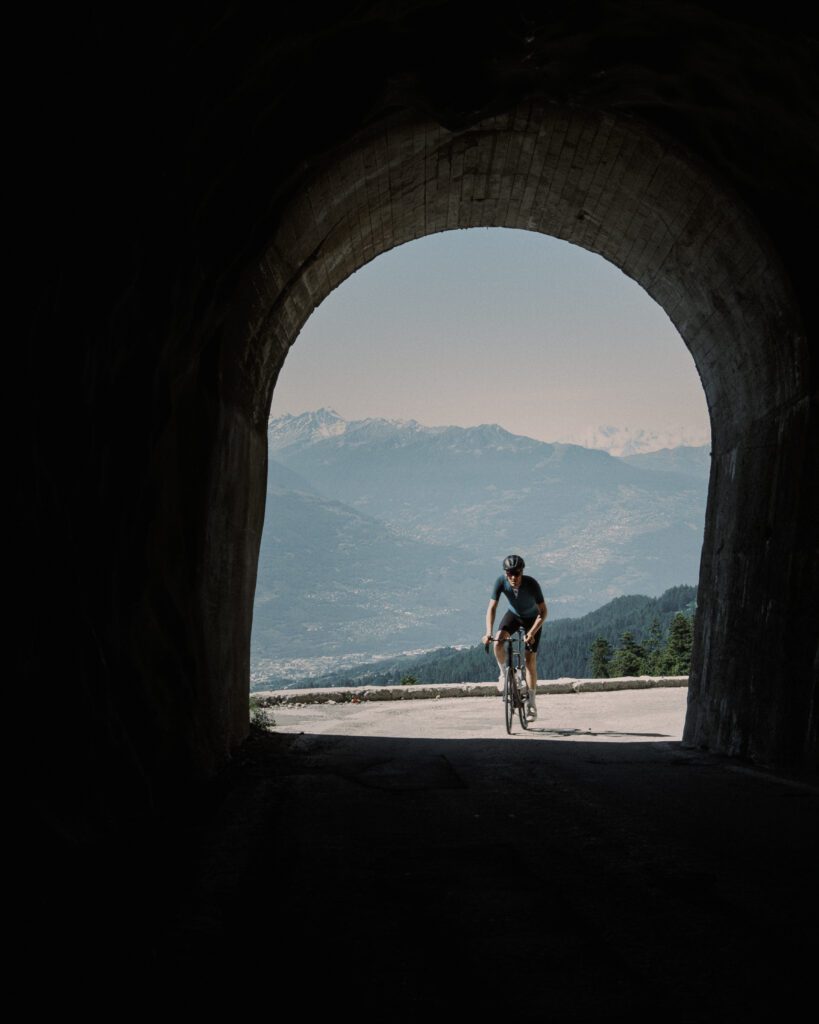
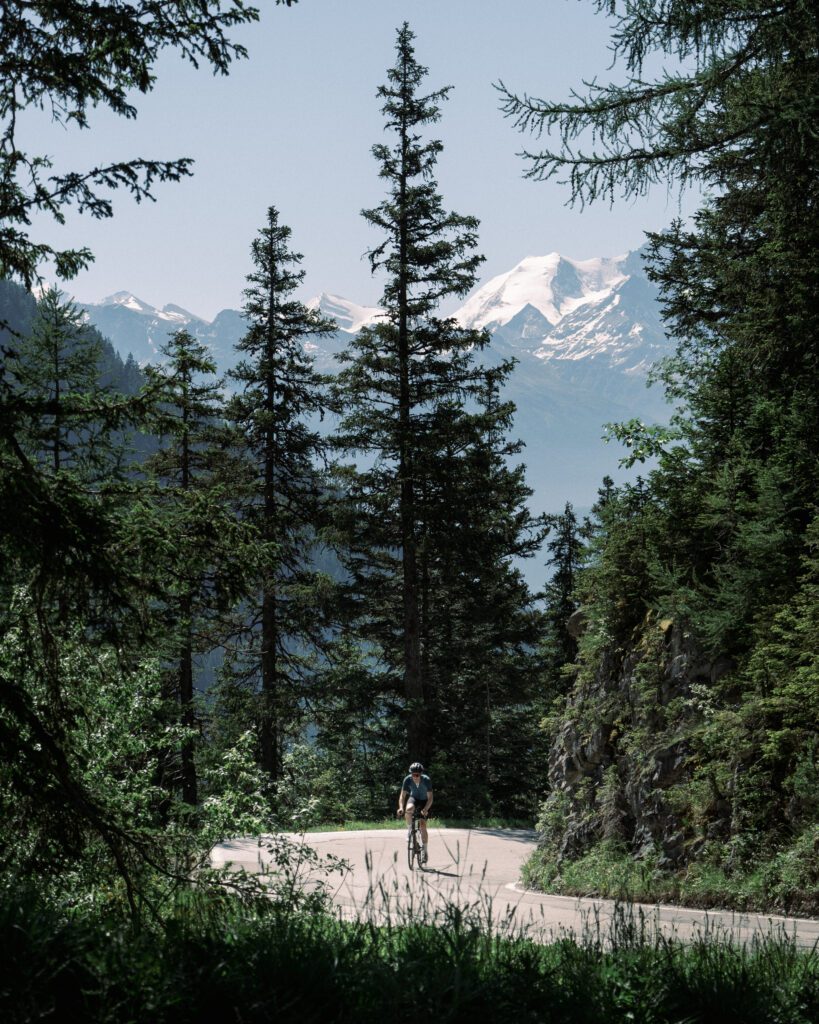
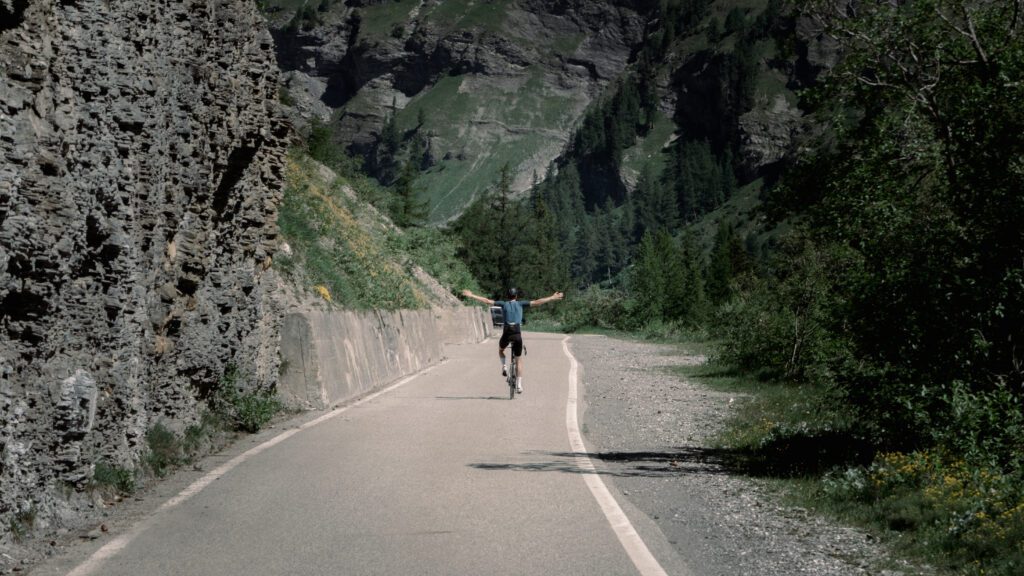
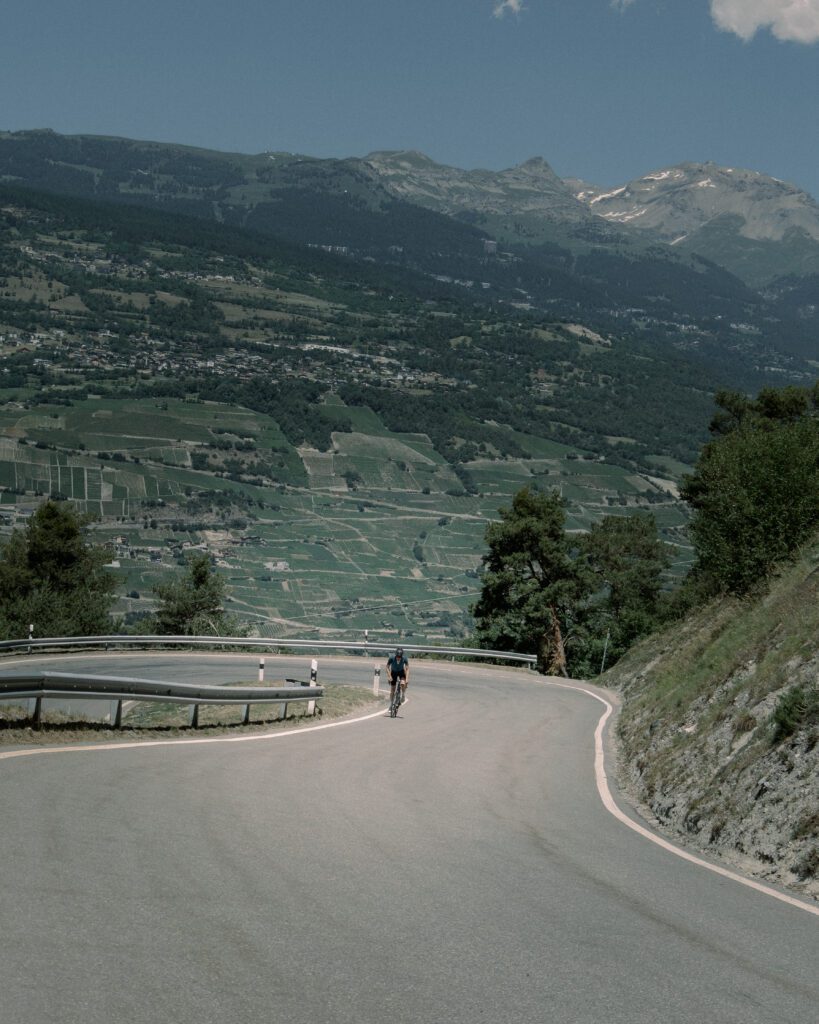
Cycling in Switzerland and specifically cycling in the Valais region is different from the usual Alpine climbs or Dolomite descents. It is relatively narrow, very steep, and because of its location at the foot of a valley, you get amazing views. The climb to Lac de Tseuzier is no exception to this. It is characterized by irregularity and at least you face a slope of about one percent or seven to eight. Often the meter goes to double digits. The road winds up and is sometimes just wide enough for a car and a bicycle. Towards the top you encounter a number of tunnels, sometimes with a blind bend. It is also worth remembering for the descent.
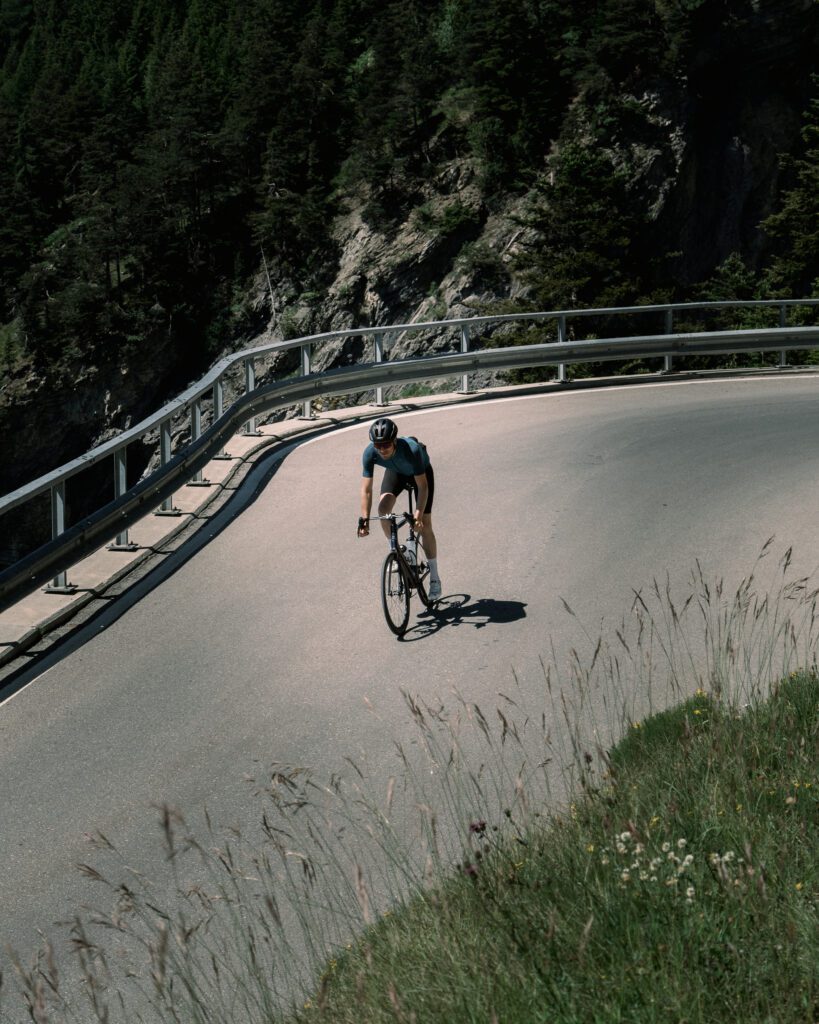
Open mouth
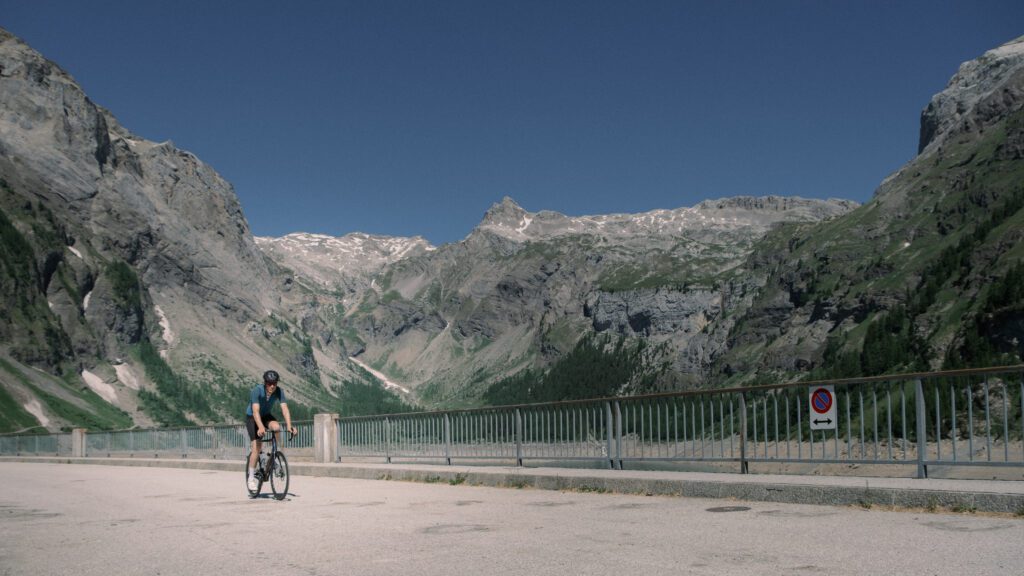
After a climb of just under 13 kilometers, we reach the dam. During the ride, we already looked with open mouths at the view, but on top it gets even more breathtaking. Driving on such a dam always has something impressive about it. The combination of the blue water, the mountains in the background, and the deep valley on the other side makes your eyes ache. In the ranking of beautiful dam climbs, it is just below Barrage d’Emosson, but for me it’s a beautiful second place.
Coffee lunch
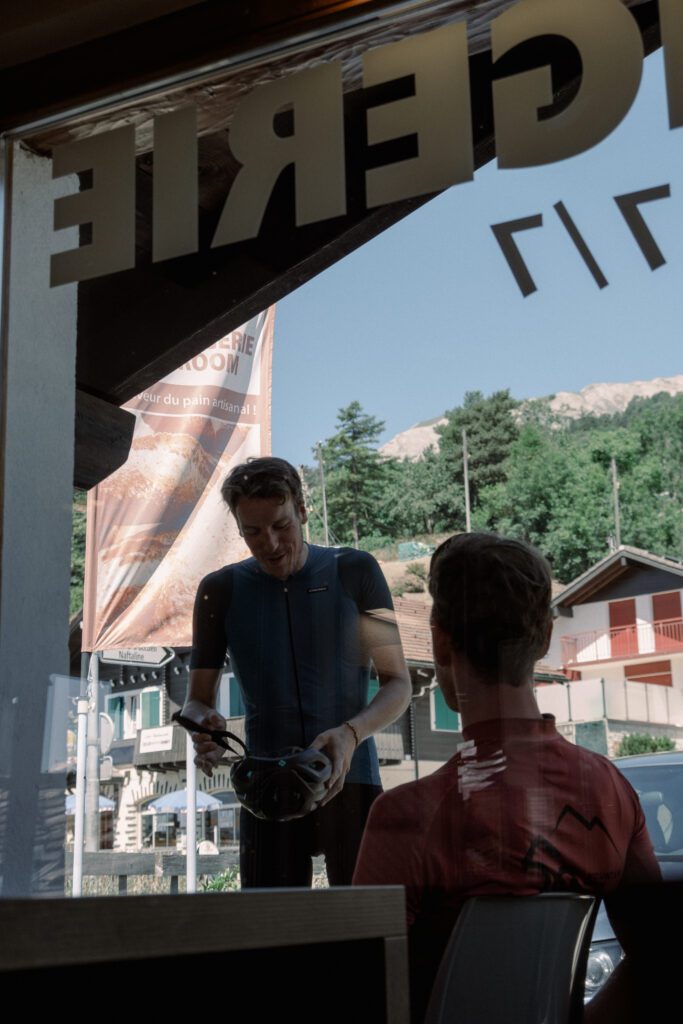
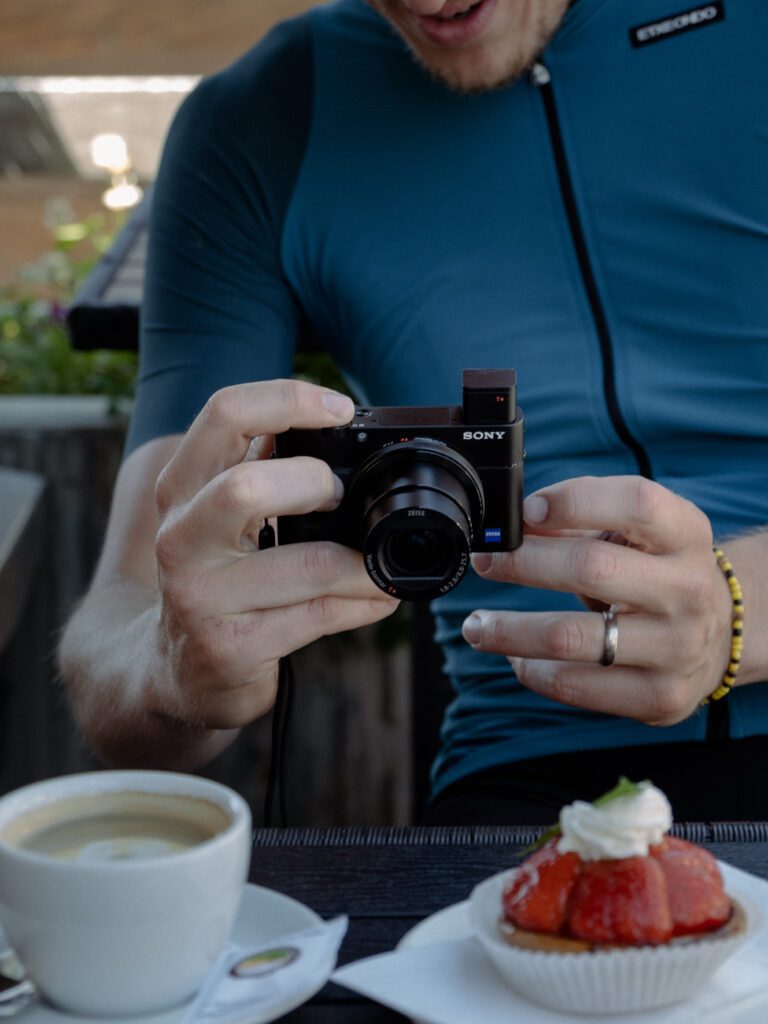
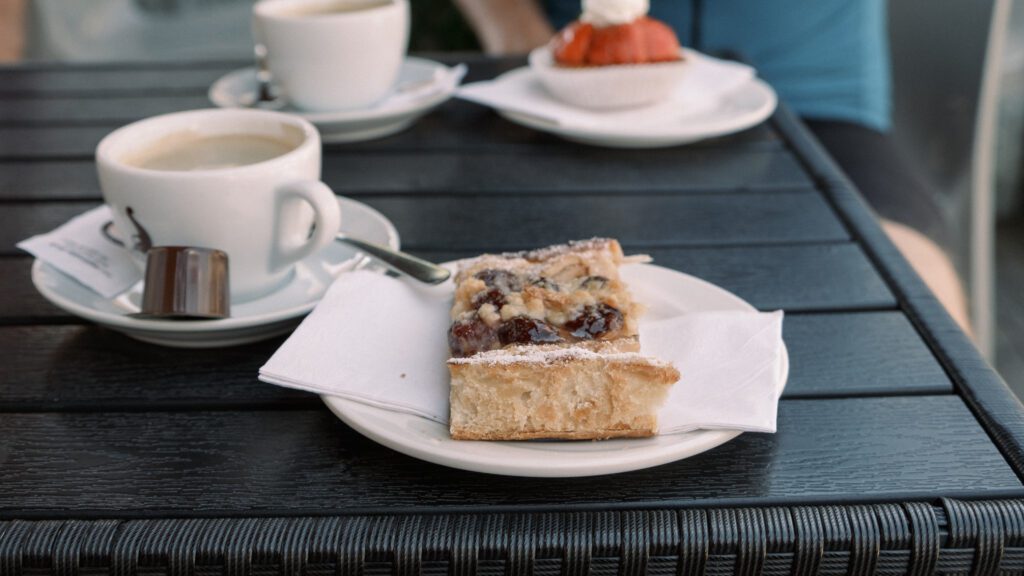
Above Lac de Tseuzier is a typical Swiss mountain hut. One with a nice raclette or a typical ‘valais cheese board’ as a meal. Interestingly, today we are closed due to a lack of water. We descend towards the village and after some searching we arrive at a tearoom/boulangerie in Ayent. The guests are already on the wine front, but we are treated to good coffee and local delicacies. The company of Erwin & Erwin makes us feel good. What a great start to the day! After we have properly sponsored the local restaurants, our paths separate. The Sanetschpas I have already done before; that is on the program for the Mountain High Chachers. For us, there is a crossing to the other side of the valley on the agenda. We descend towards Vercorin and Lac de Moiry.
Swiss climbs
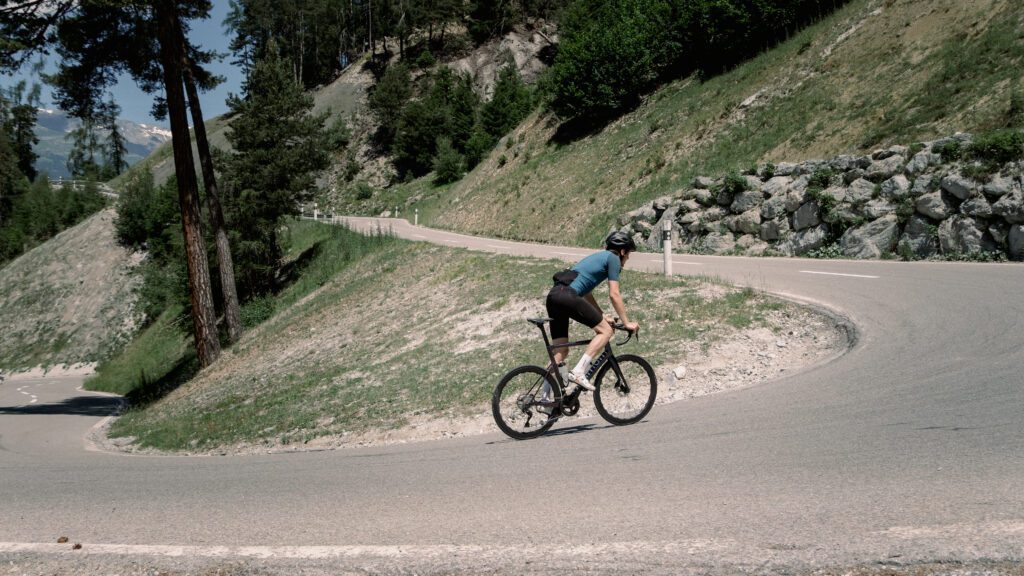
If you want to describe a characteristic climb in Switzerland, it is probably steep. That is apart from all the side roads in the villages where there is a sign that says 20%, 25% or even 27%. On this day we also started with such a nice warm-up. For the longer climbs you see that they usually have an irregular gradient. It goes from flat to fifteen and back again. You never really get into a rhythm properly. For an anti-climber like me, that is no fun. Our afternoon program actually has two climbs in it: first we have to move up to Vercorin. A lovely Swiss village where there is little activity outside of the season. After an 8-kilometer climb at an average of eight percent, a longer descent awaits that leads to the foot of the real climb to Lac de Moiry. That is thirteen kilometers that goes up increasingly steeper. Painful.
On the grill
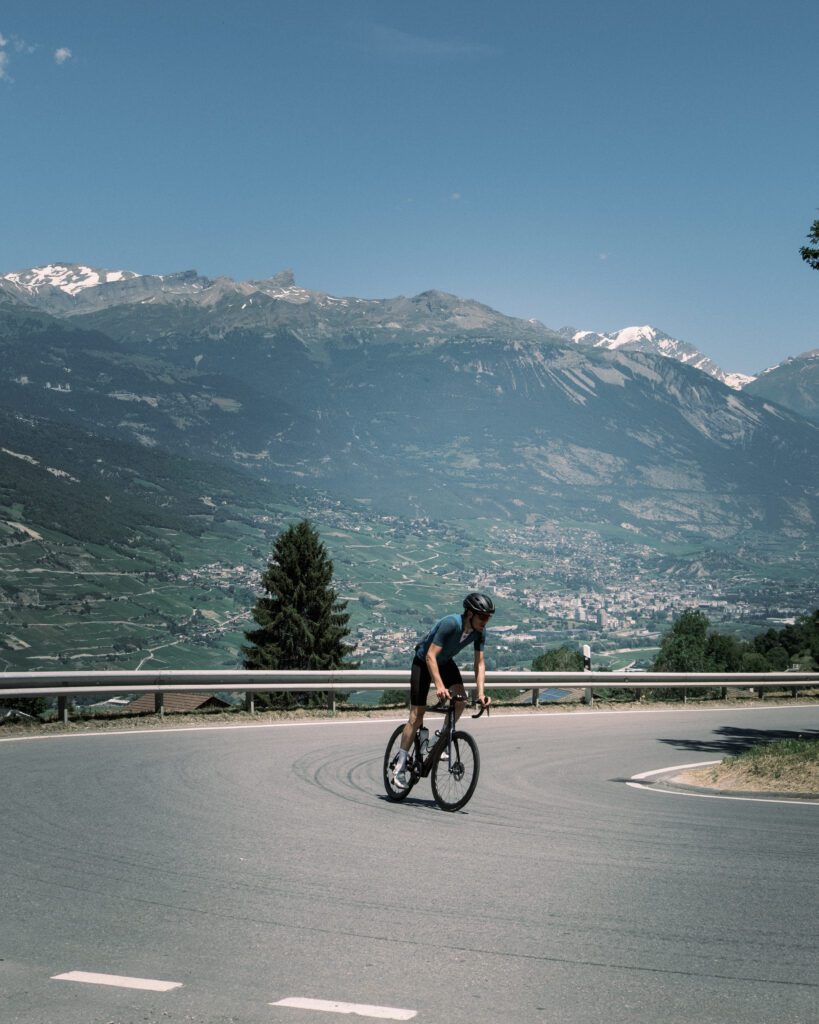
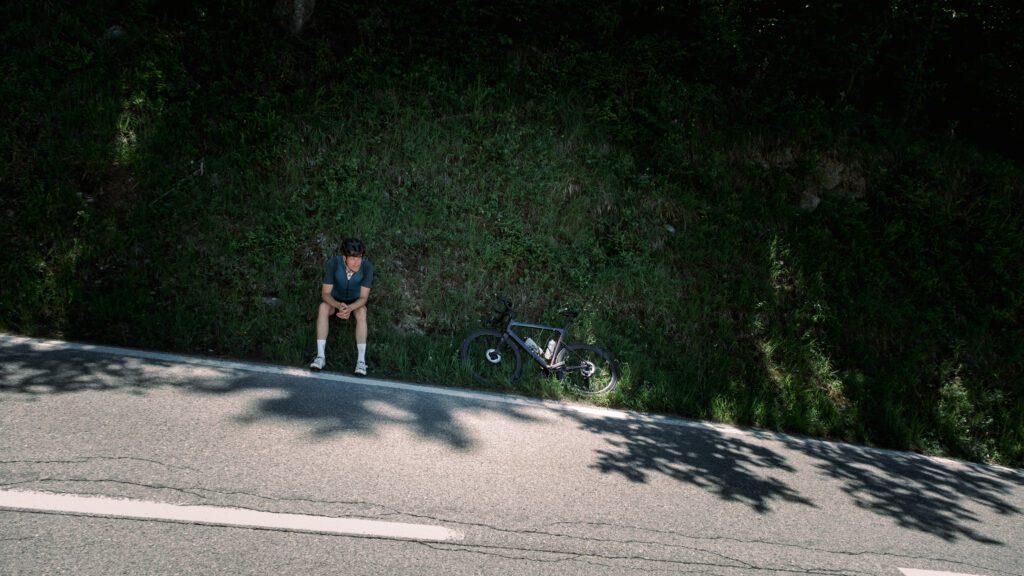
It’s June in Valais, but it feels like summer. The sun is high in the blue sky and has plenty of room on the roads of the southern canton. Christ the Redeemer shines in the sun as we cross the valley. I secretly ask him for some good legs. For some energy for the next part of the climb. The crossing of the valley goes quite smoothly and as we’re nearing the bottom of the climb towards Vercorin everything feels pleasant. Only the sun is starting to get warm. The meter now shows 33 degrees. The beginning of the climb has some shade along the side of the road. The further up we go, the more often I look to the left, at my big friend across the valley. How long is it still? I feel completely lost. In the middle it gets too much and I stop in the shade. To cool off for a while.
Good choice
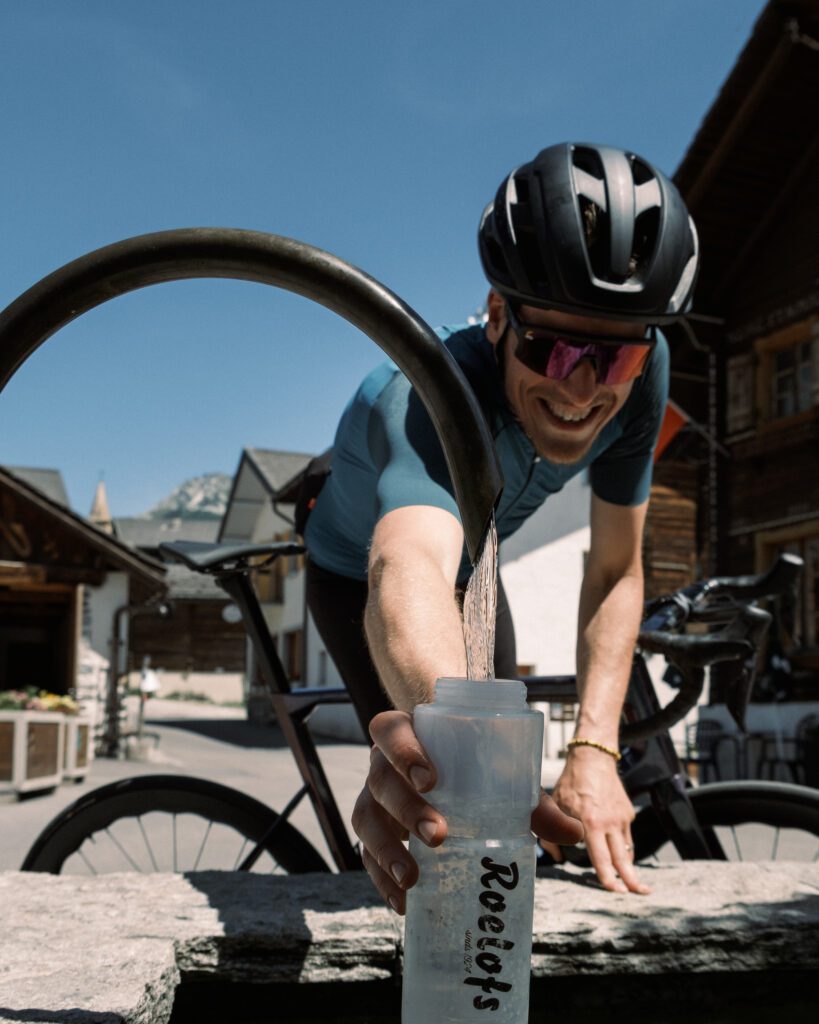
Actually, I had already decided not to drive all the way to Lac de Moiry at that moment. That adds up to a total of 1000 meters of elevation gain, and in this stifling heat that’s costing me dearly. In retrospect, a very good decision. The second part towards Vercorin keeps climbing above eight percent, with spikes towards twelve and thirteen. The Wahoo shows red spikes. Fortunately, there’s sometimes some shade to escape the scorching sun. Pooh. I didn’t expect this. The meter is reaching 36 (!) degrees. Perhaps that’s the sun on the computer, but it’s a good indicator. Let that fried egg come. We make a stop in Vercorin and after a refreshing drink we take some photos before we start descending.
Downhill greatness
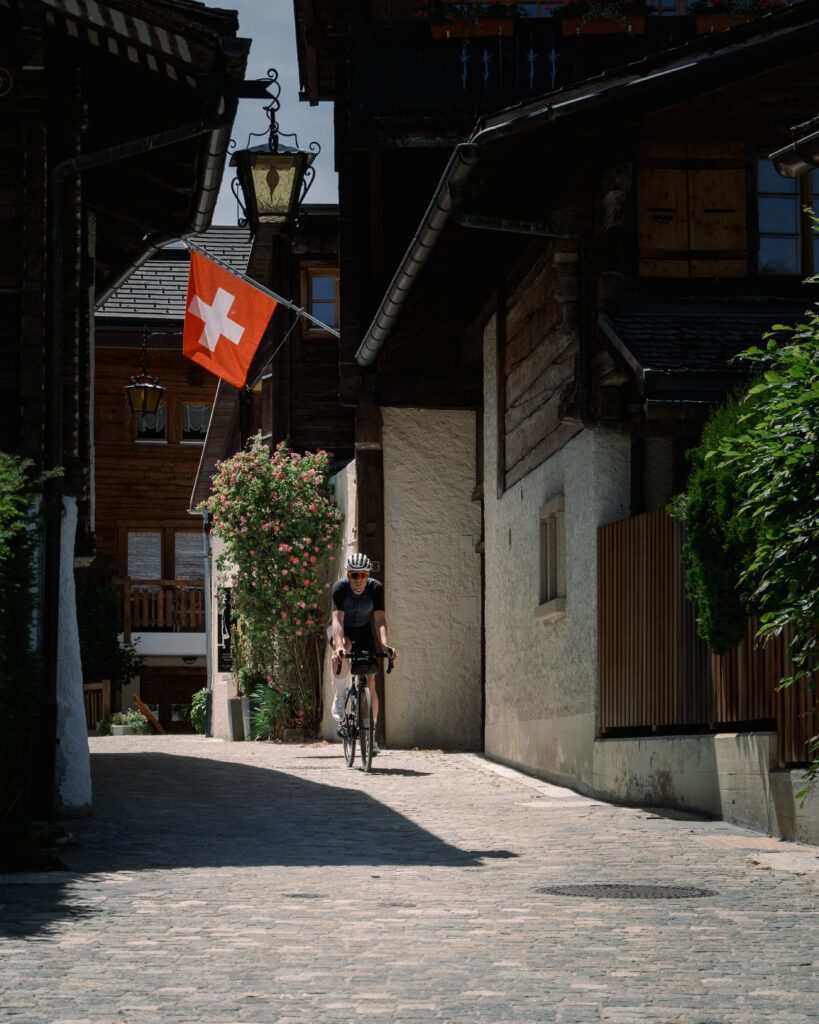
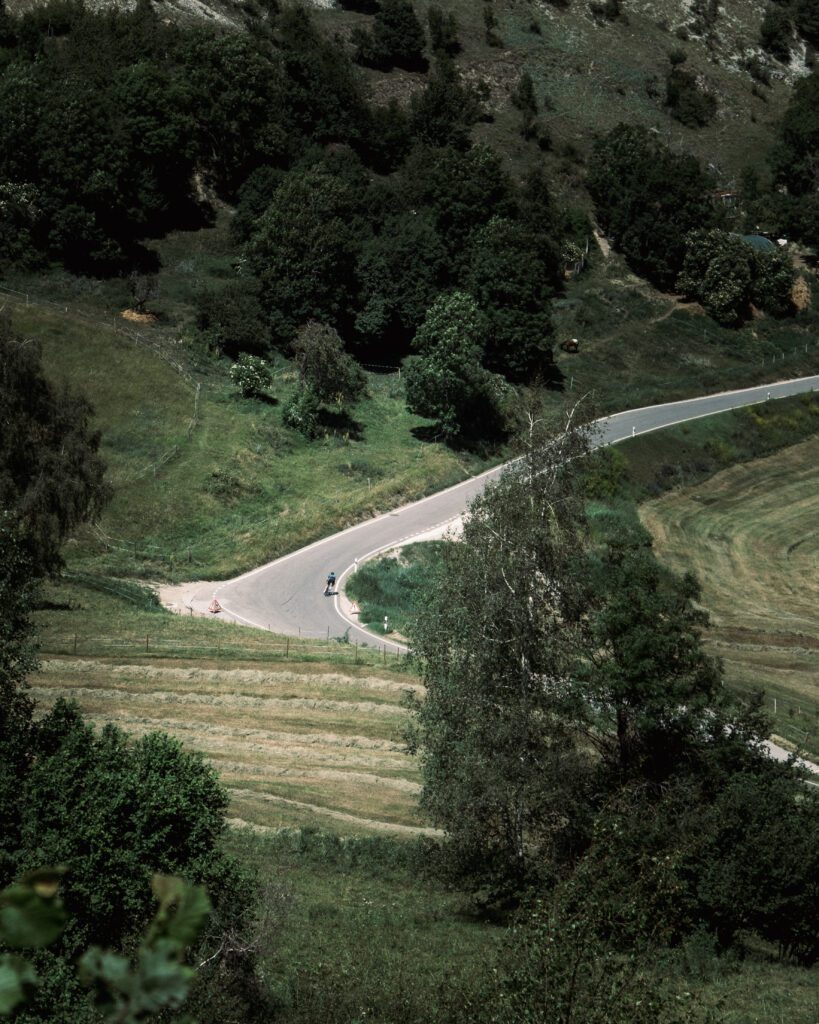
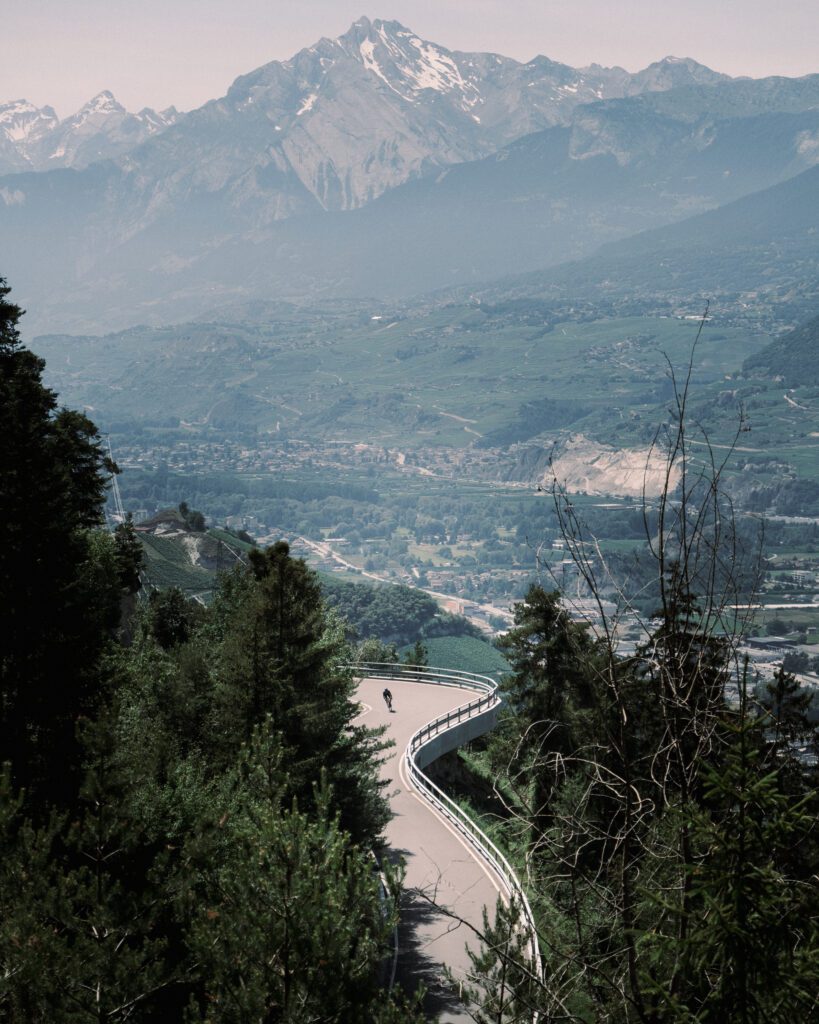
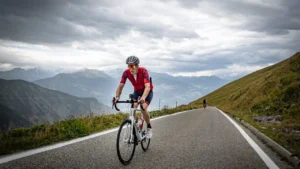
Bergop is a nightmare. Downhill is pure enjoyment in Switzerland. The descents are quite technical, sometimes a bit cluttered, but you can really spin, turn and zoom down. Be careful of the stones on the road, as there are sometimes pieces of rock on the asphalt. Stay alert, after all, it’s not the Tour de Suisse or the Tour de France. Another added benefit: you can shoot some beautiful shots on the descent. See for yourself!
Dragging up between the trucks
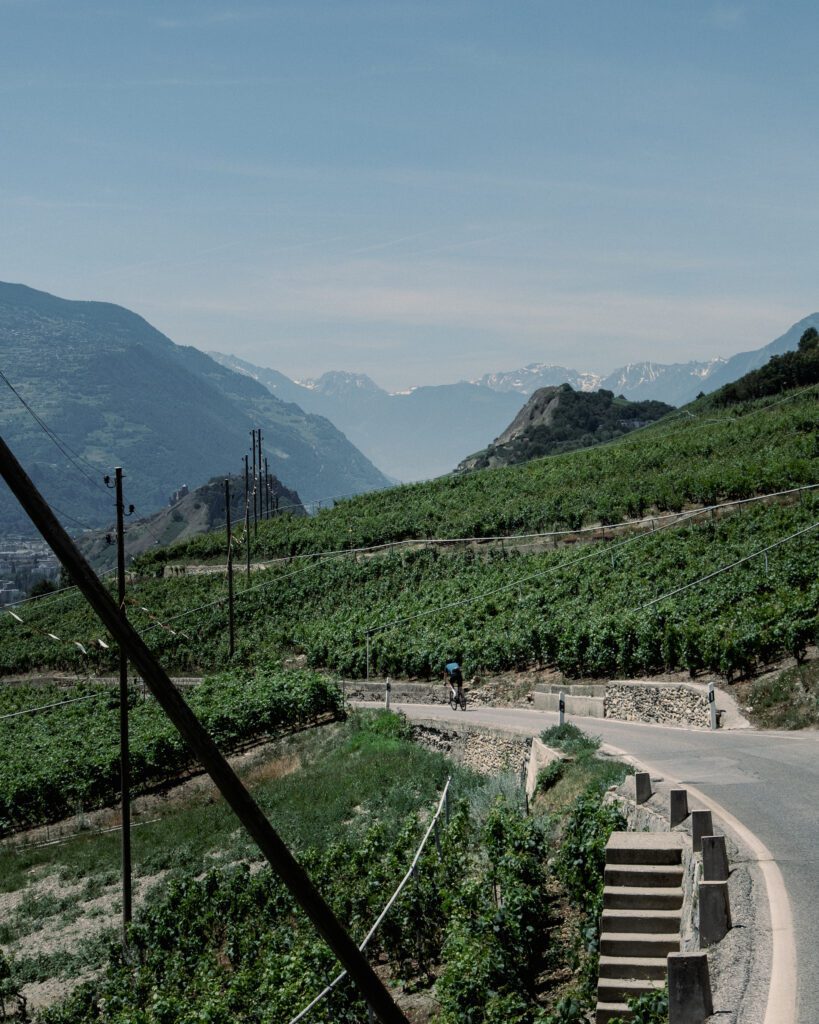
After a quick and beautiful descent, it’s another 10 kilometers uphill to our hotel in Crans-Montana. It’s part of the Crans-Montana experience. You almost always have to go uphill to get home. The cable car (funicular) is temporarily out of service. You can normally bring your bike along, but the cable system from 1911 (!) was in need of replacement. So it’s uphill. The first few kilometers we still drive through the vineyards, but then we come to the main road. Route planning mistake. In the end, we drive uphill between the trucks and some unfriendly road users in the scorching heat. In the middle, I’m completely exhausted and we make another stop to cool off. I just put the ice tea in my neck, it’s that hot. When I look up again, I see that image of my friend. Jesus the Savior.
Cold and broken
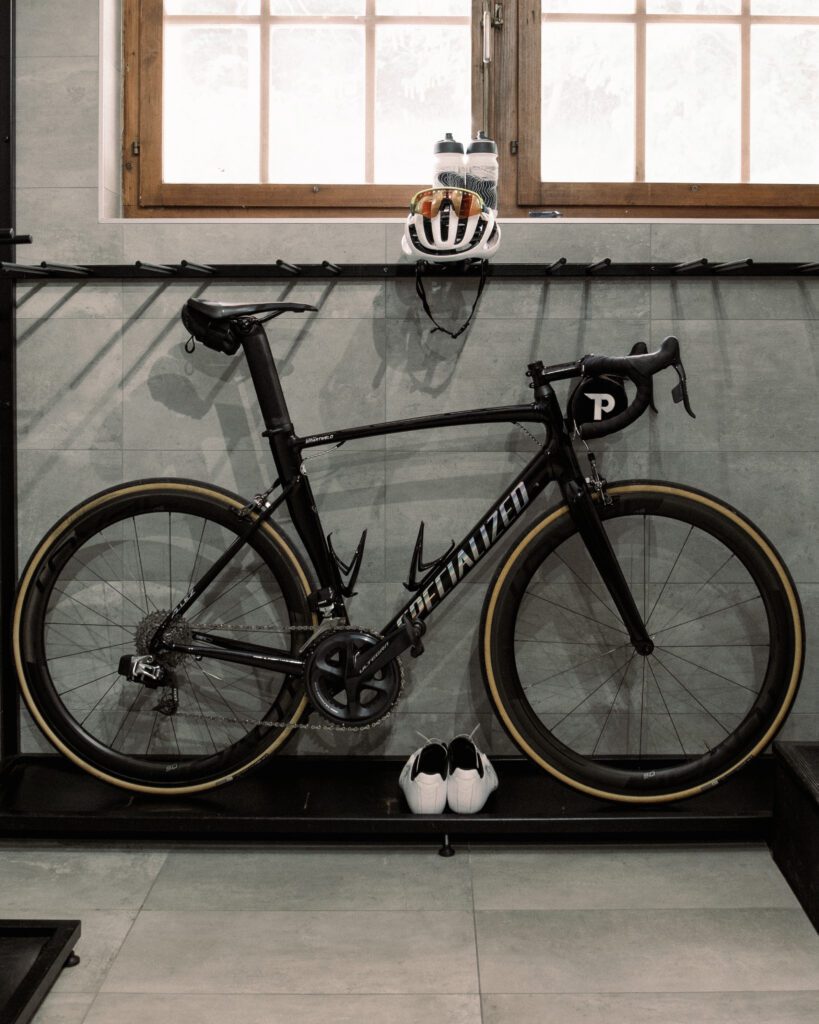
We’re completely chilled out when we finally get up there. It’s a bizarre experience to go through it like that. I won’t really score high on the Strava leaderboards. Anyway, that’s not what we’re here for. We park the bike at the hotel and I really have to catch my breath. It was a warm, beautiful day. One I won’t soon forget. Several times I thought: this isn’t going to work. But it did. We’ve earned some drinks now!
Questions & tips
Do you have any questions about this route, or have you been there yourself? Share them here. We read everything and usually respond within a few days.