
In the early morning, the Consistorial plaza in Pamplona is still deserted. Two municipal officials empty the trash cans and sweep the street. In the coffee shop annex bakery Ogi Berri, one lady runs the whole thing. The speed with which she sells caffe con leche, espressos and sandwiches is unparalleled. As I stand in line, two police officers come in. They greet the lady and before I know it, they are already standing with two coffees further down. This is how it goes here. Let’s call it respect. The program for today is clear: climb from the city and then over the plain towards Castejón. We have the wind at our back and we have an unexpected guest. This is the diary of Basque Country part 4. You can read the other parts here here, here en here. Enjoy!
Text by Sander Kolsloot, Photos by Lander Andonegi
Miguelón – La Locomotora of Villava
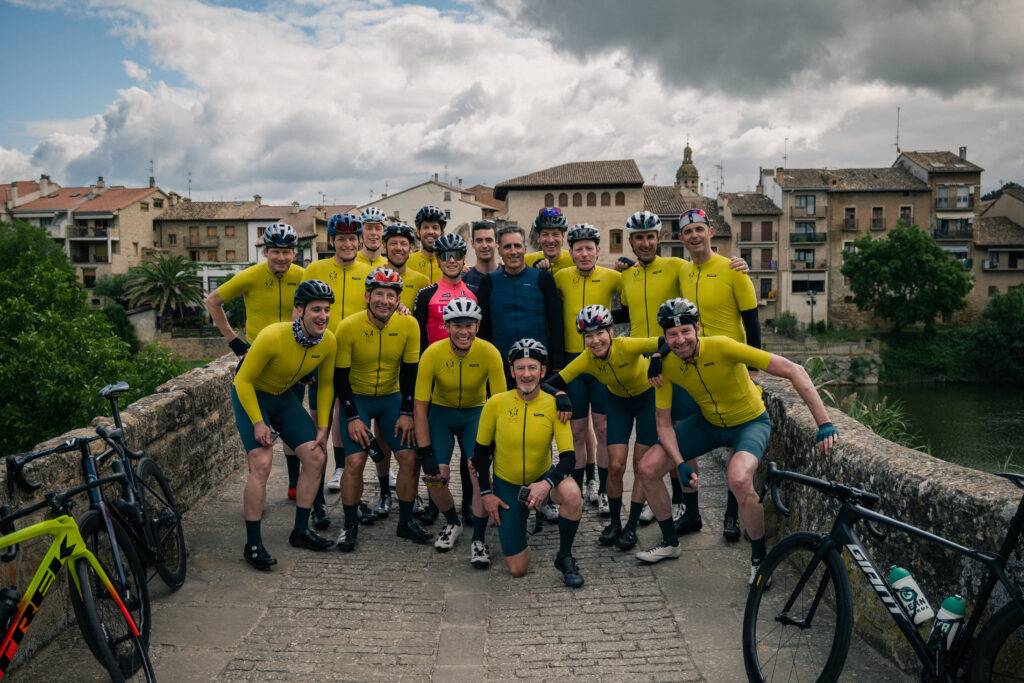
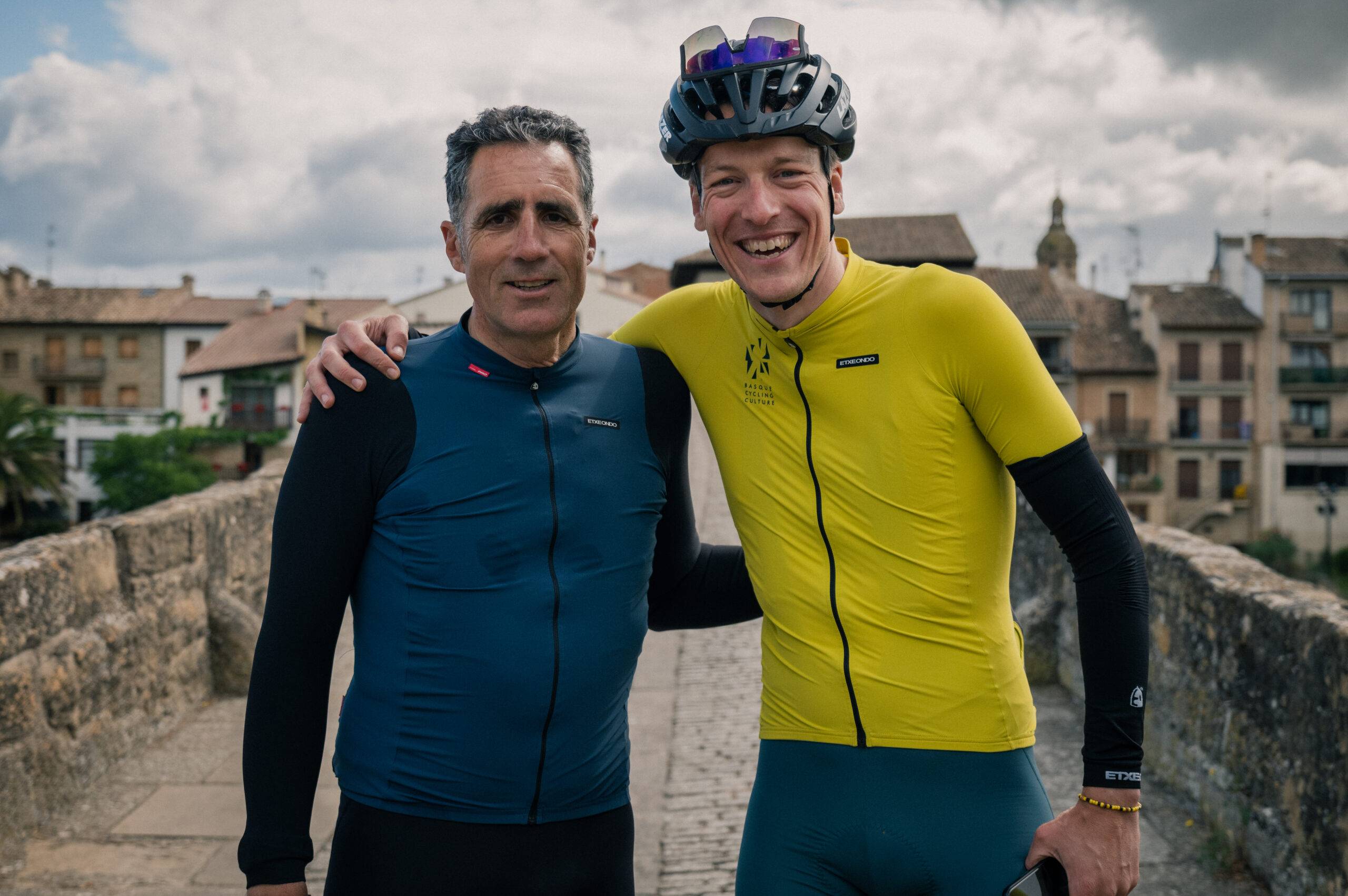
As I walk out of the hotel lobby, I almost fall over from the dark figure in front of me. The man in question starts enthusiastically shaking my hand. I’m a bit perplexed, but I have Miguel Indurain’s hand. ‘Big Mig’ is very closely associated with the city. Although he was born in Villava, a suburb or village that is attached to the city, ‘Miguelón’ is always mentioned in the same breath with Pamplona. The rugged Indurain is a legend. Not only are people on the street willing to take a photo with him. Even Haimar Zubeldia, also not a bad rider, takes a photo with the multiple round-the-world winner (Indurain also won the Giro twice). The locomotive of Villava won his rounds in the Etxeondo jersey and he is still associated with the brand. What a guy.
Out of the city – into the mountains
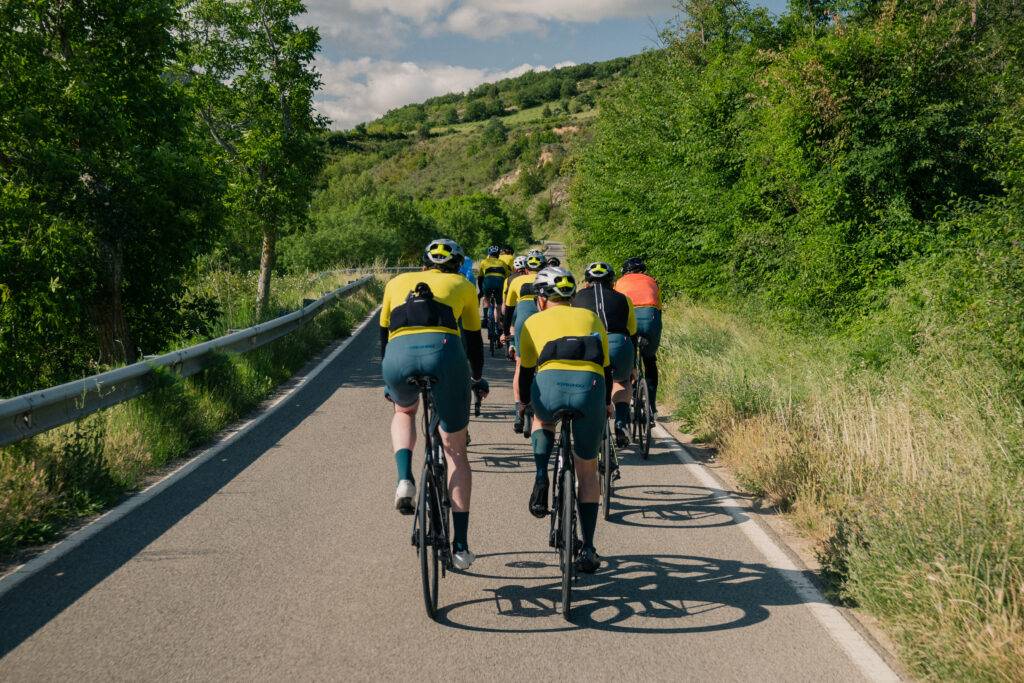
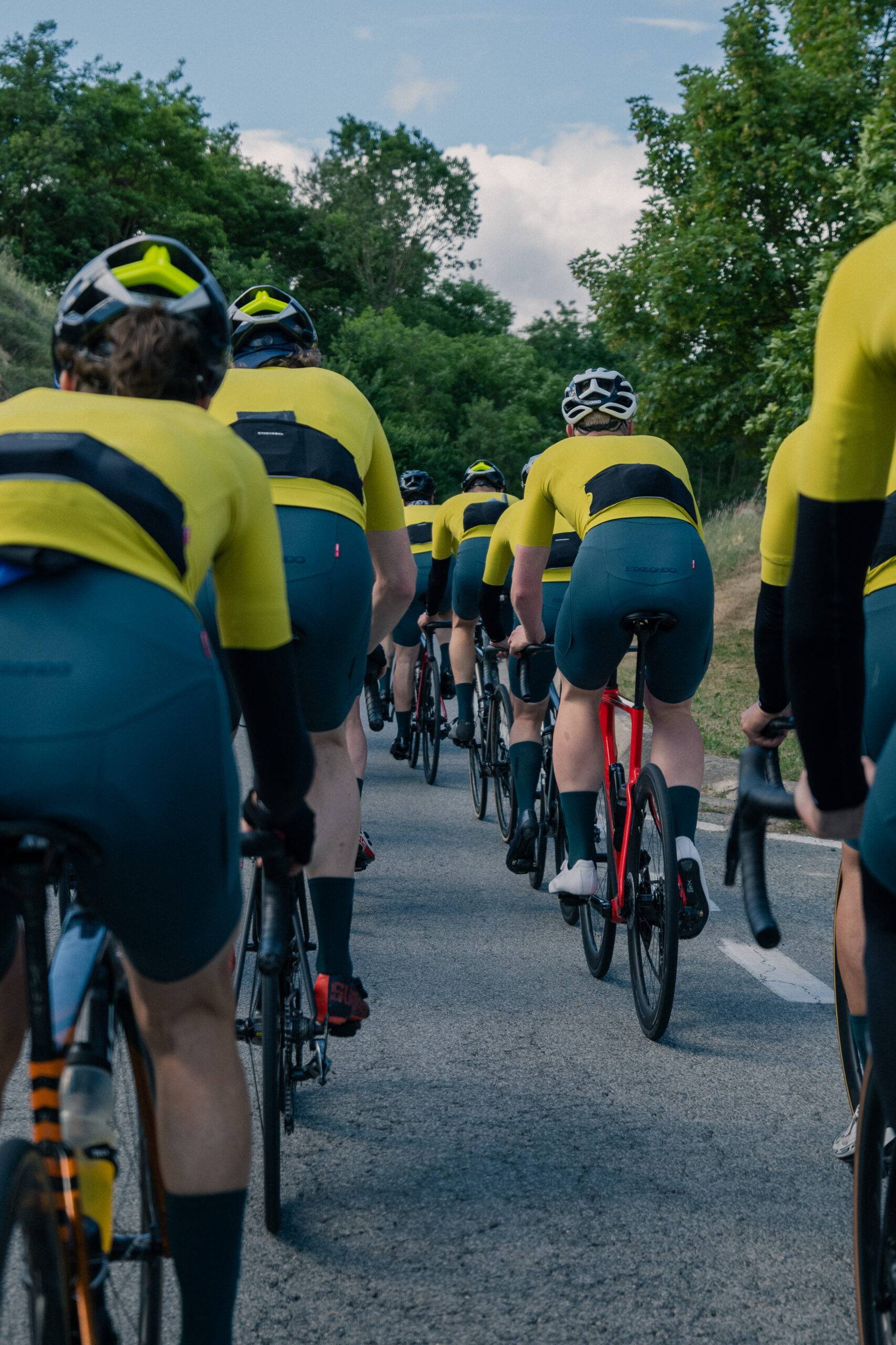
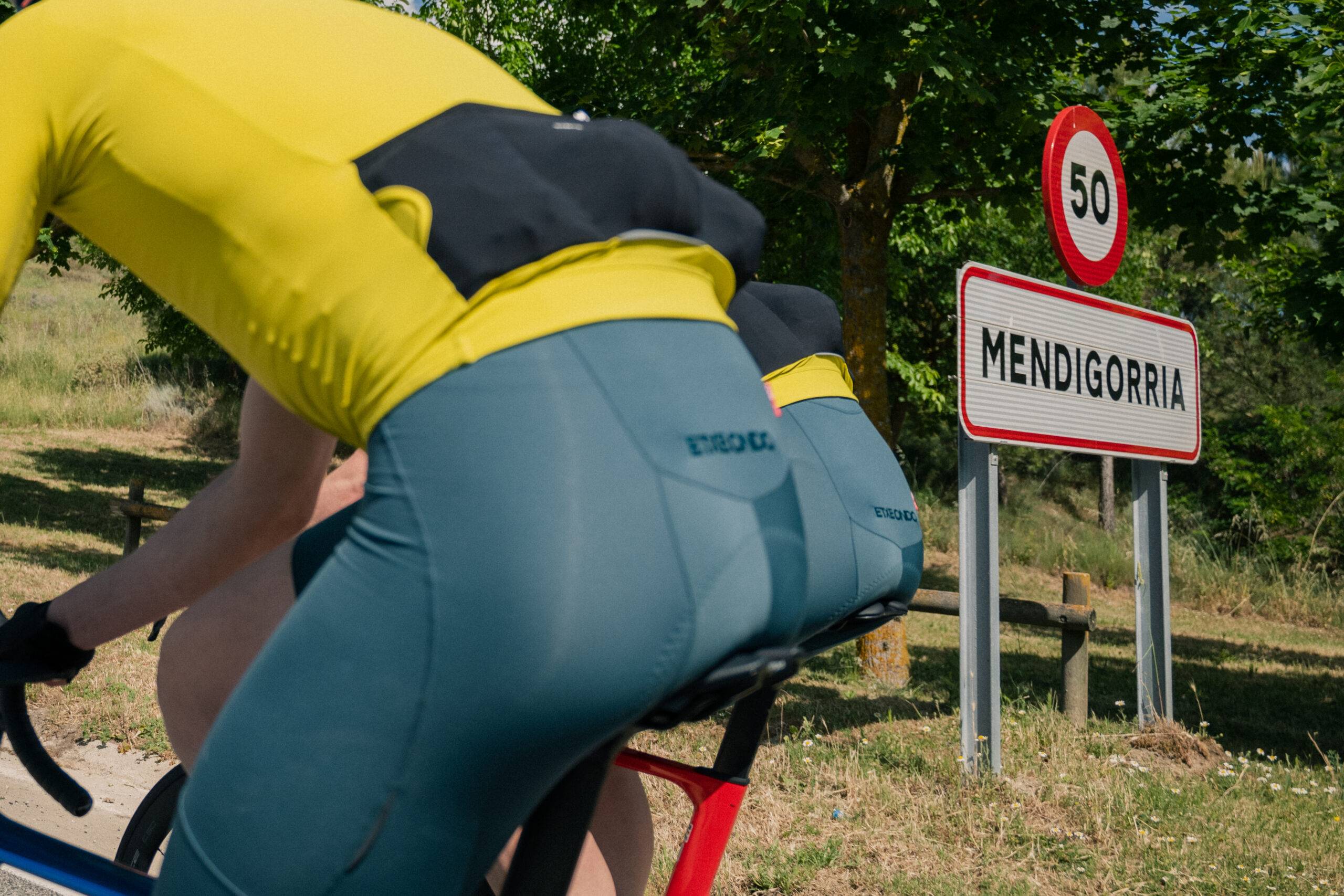
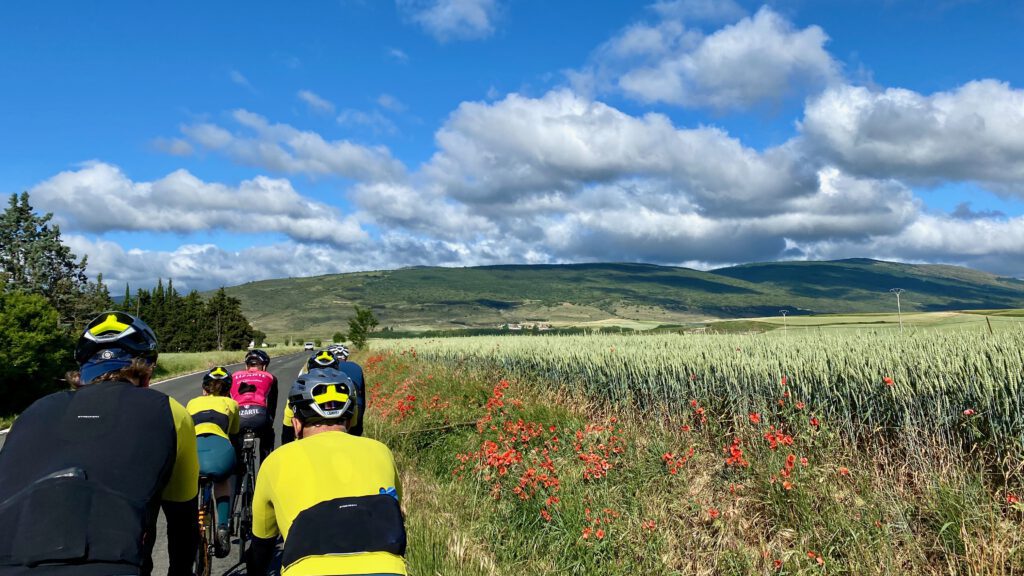
It’s not often that I find myself in a peloton led by two former professionals. Miguel and Haimar are calmly driving through the city. The traffic seems to take them into account as well. Would they recognize the great stature of Indurain? I don’t know, but we keep going around as if we were here. We go around the hills before reaching the plains. We follow the Arga River and it goes up and down here. The landscape changes every minute. Are we in South America now, with the vegetation and the water? Or just in the Navarre region? It’s wonderfully quiet here. A single car and a group of motorcyclists have also found this beautiful road. The Cruce Guirguillano is a painful ordeal, which you have to twist your neck in 2.5 kilometers. Puffing, I get to the top. Enjoying has multiple faces.
Pilgrimage
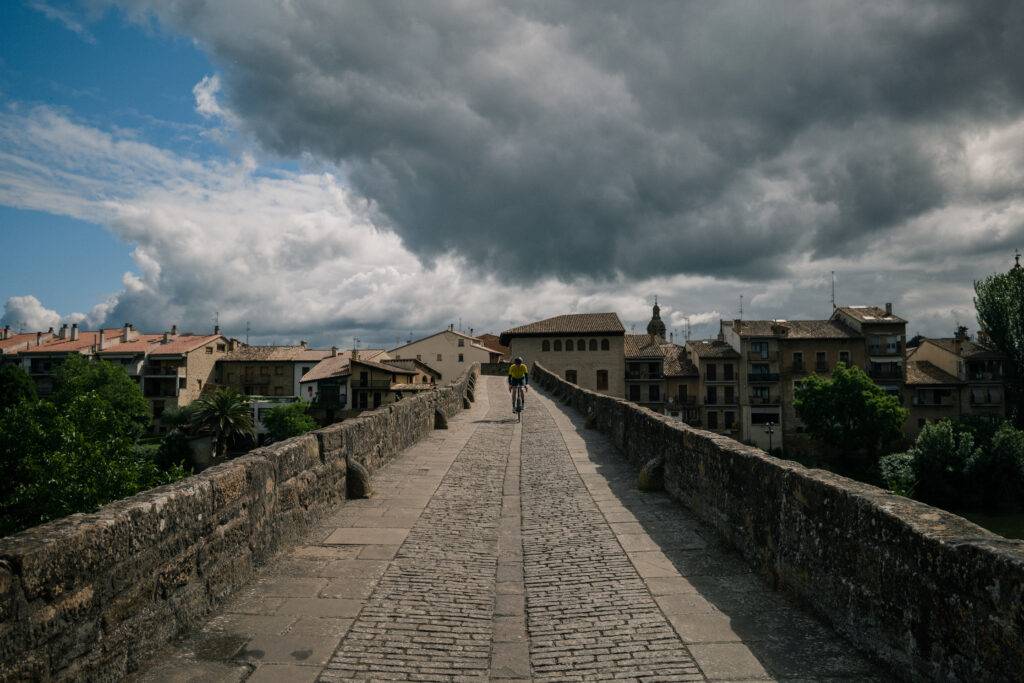
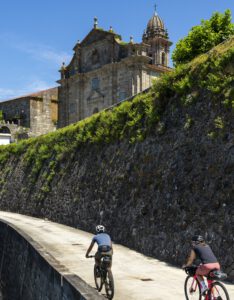
Puenta La Reina is a village on the famous pilgrimage route to Santiago de Compostela. The old Roman bridge over the river to the village is magnificent. It forms a beautiful backdrop for a group photo shoot. The bridge (and the village) owe their name to Queen Muniadona, the wife of King Sancho, who in the 11th century had this bridge built to support the pilgrims on the Camino de Santiago. In any season of the year you will find hikers here who are (partly) walking the Camino. For us it is just a photo stop, where we can have a photo with almost a saint. For others this place has a deeper meaning. It is beautiful that these worlds come together here.
Areas that are not flat
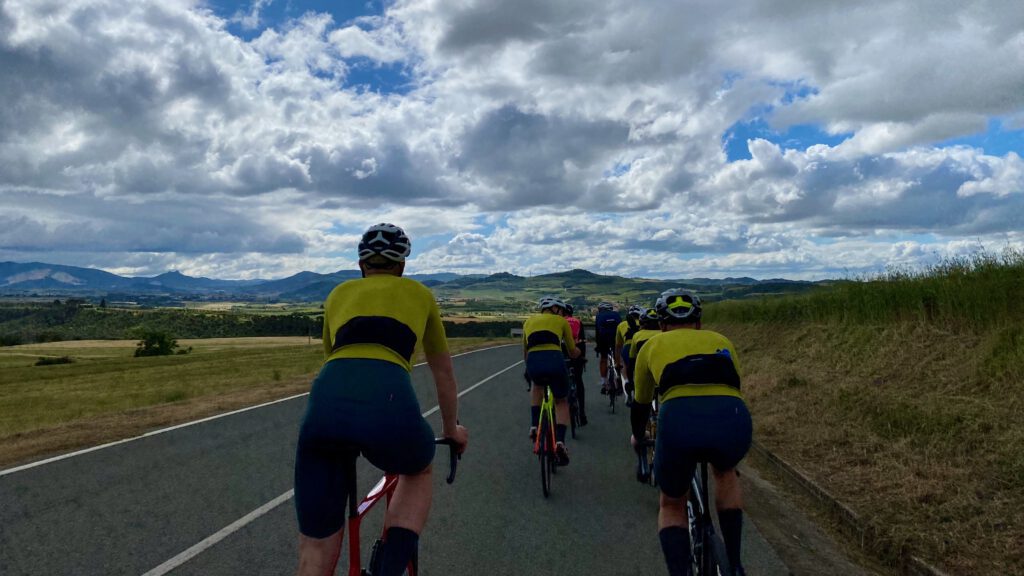
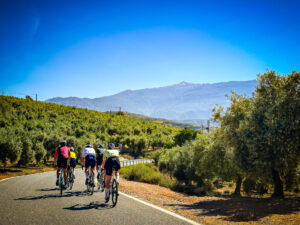
After Puenta La Reina we continue towards Castejón. Miguel has now returned to Pamplona and in the grupetto things are going smoothly. When I look to the right I only see windmills planted on small hilltops. That means only one thing: the wind has free reign here and everyone is trying to make the best of it. For us, today is a benefit. We have wind force 4 at our back and we are going like crazy. The speed is regularly at 45 kilometers per hour or higher. The speed only drops when we approach a roundabout or when we briefly take a short climb to a village. Because the plains of Spain, and especially those of Navarre, are never really flat.
Train station Castejón
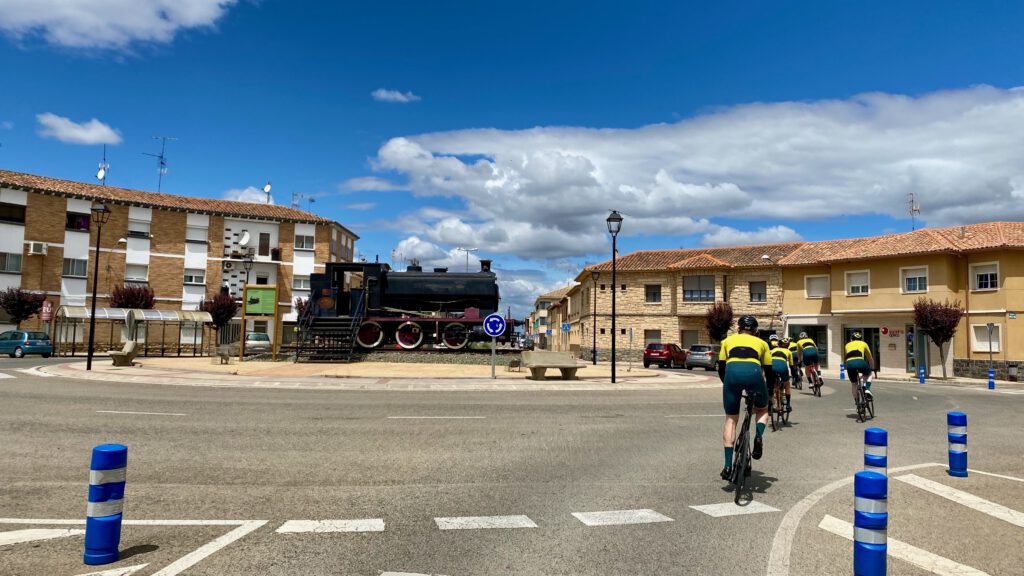
In the center of Castejón there is a roundabout. Pontifically, a train locomotive has been placed on this roundabout. Not surprisingly, considering that the city was chosen in the 19th century as a hub for the railways. Now it is still an important point for the infrastructure, because the high-speed line also runs through it and in the region of Navarra almost all trains pass through Castejón. Connection city is perhaps the right term. Although the energy city is also a good one. There is a mega-sized energy plant nearby. That creates a lot of jobs and provides the town and its surroundings with the much-needed energy.
Etxeondo in the city
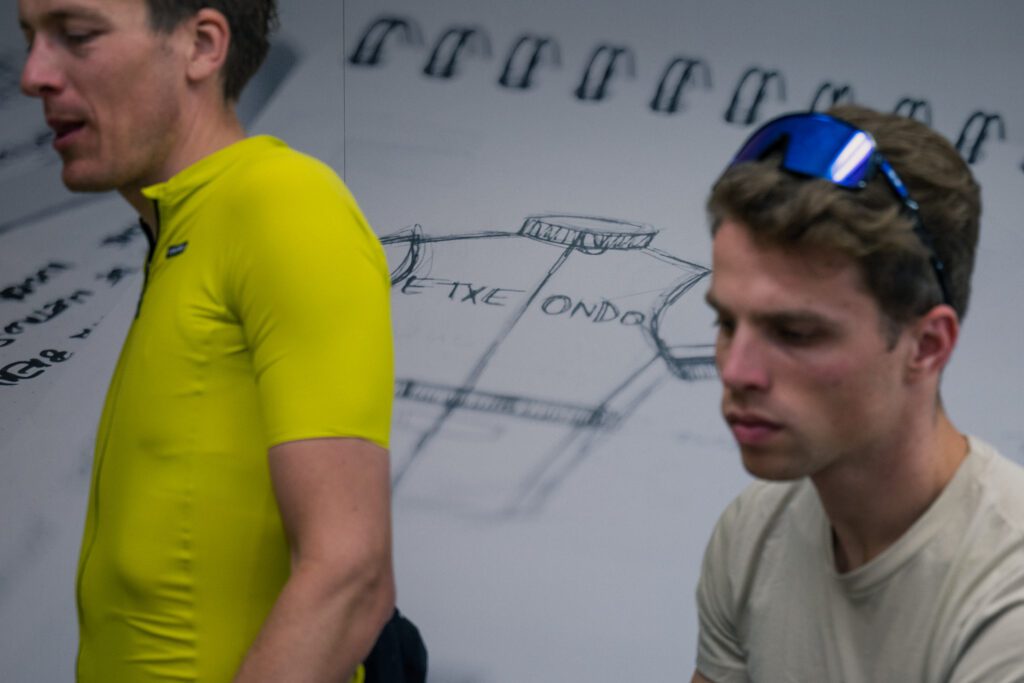
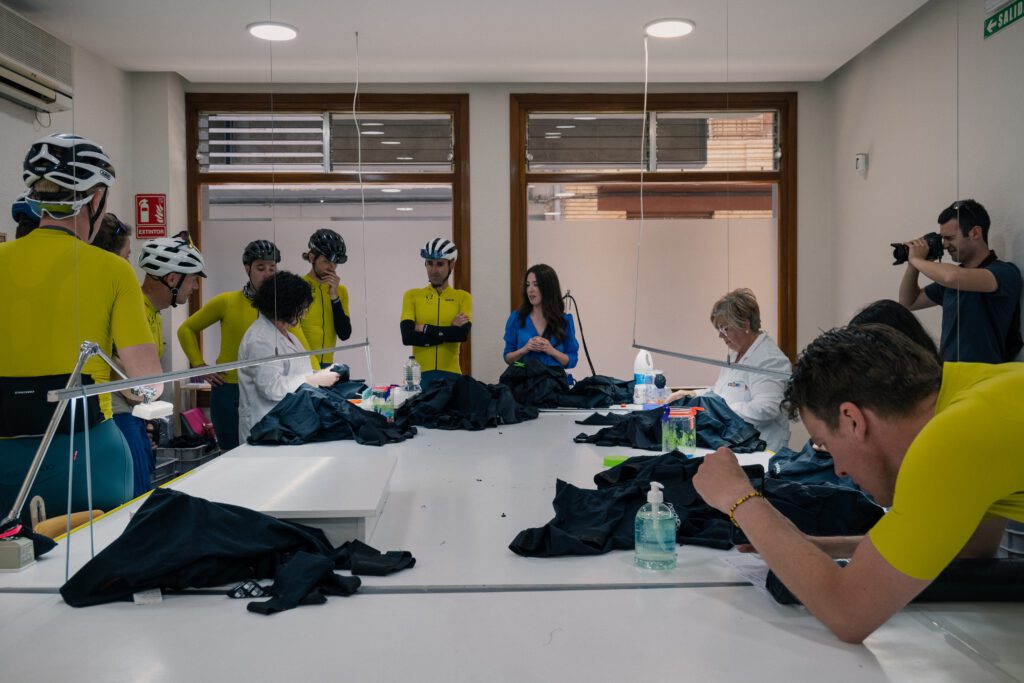
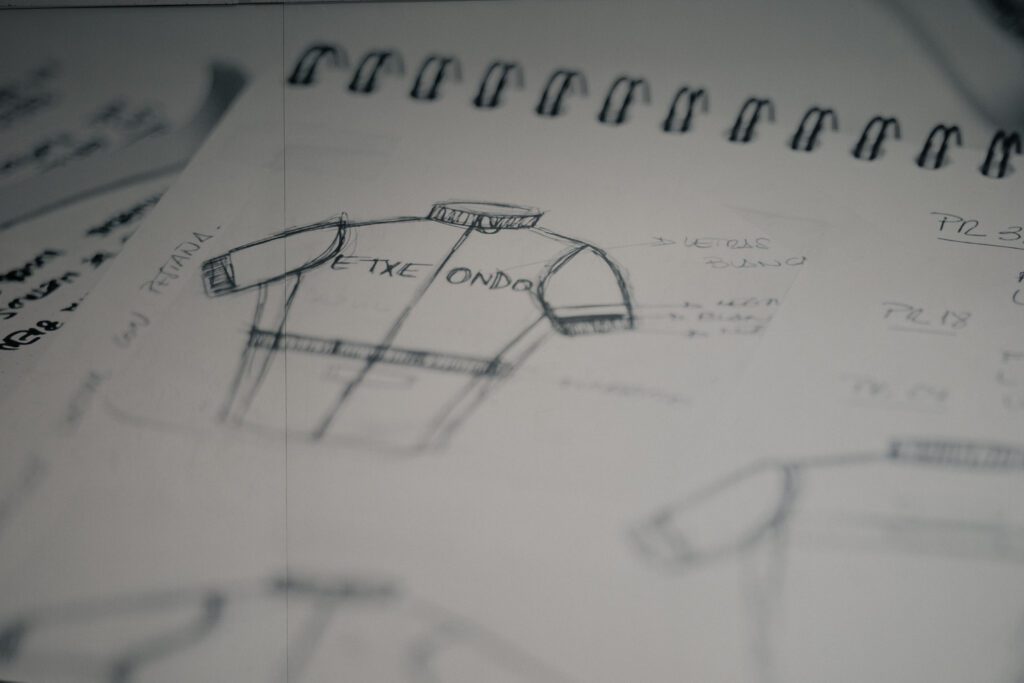
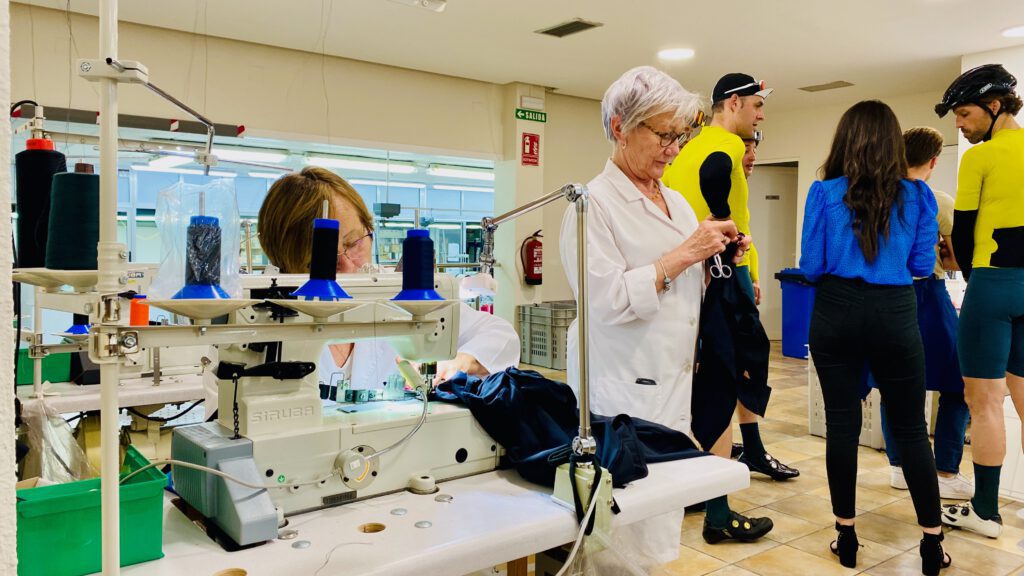
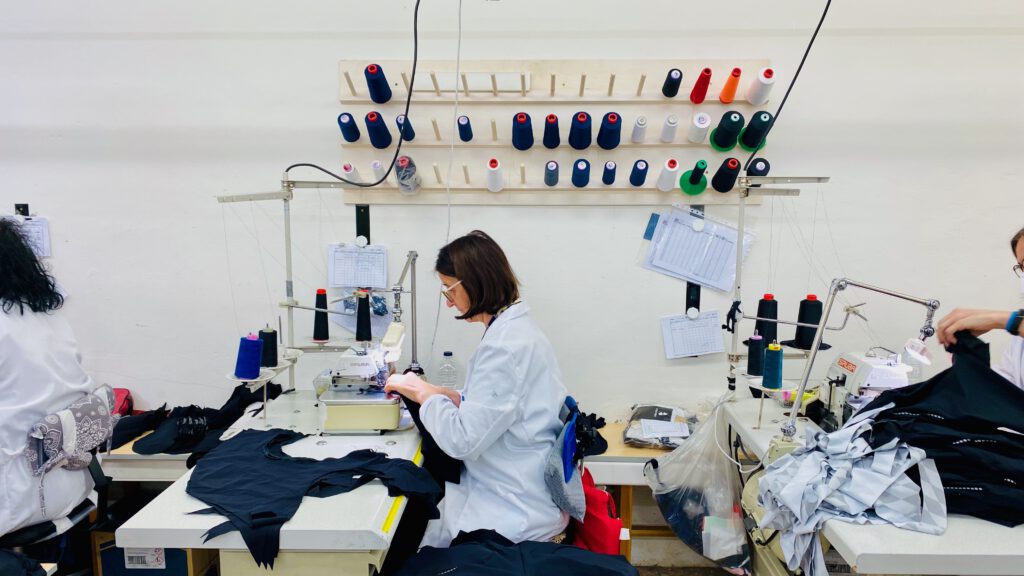
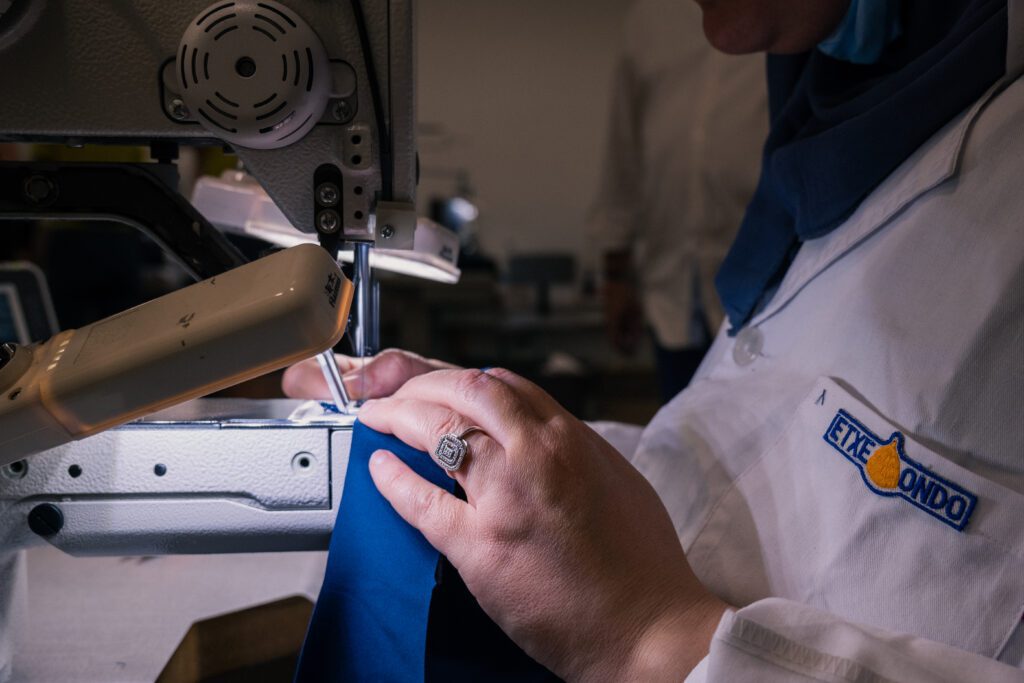
There isn’t much to do in the wider area of Castejón. In the middle of the town, Etxeondo also has a branch where part of the production takes place. The production facility is staffed almost entirely by women, and it’s a highly efficient process. On multiple machines, the Basque brand’s bib shorts are being worked on. It’s nice to see that every tiny component of the shorts has its own ‘station’, where it is being processed. From the shorts to the ties to the labels. Every detail is important, and the women take their work very seriously. Pride is the most important word here. When one of the women asks if I want to try the work myself, I really have to fit in. My rough hands aren’t made for this meticulous work. I’m impressed.
Las Bardenas
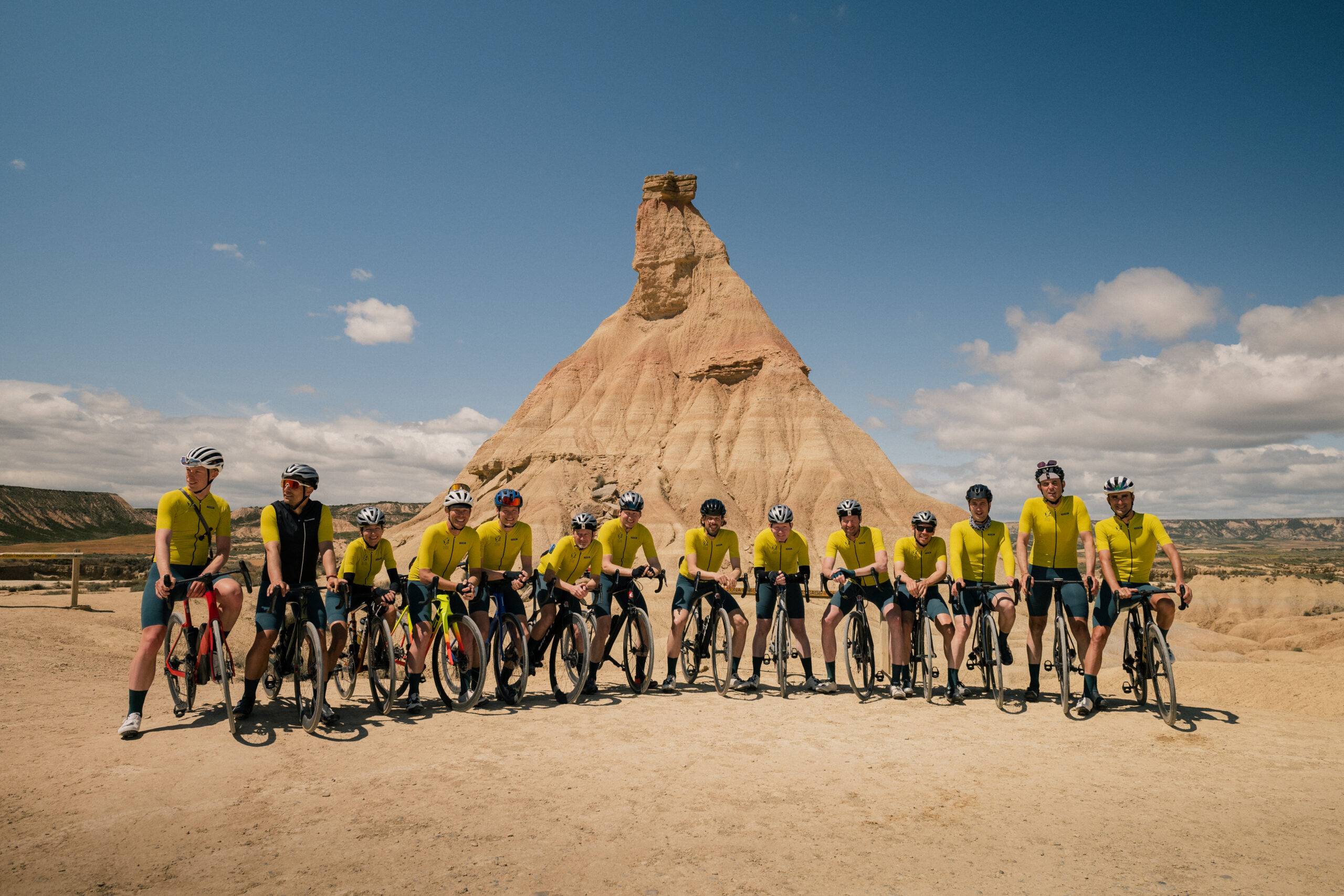
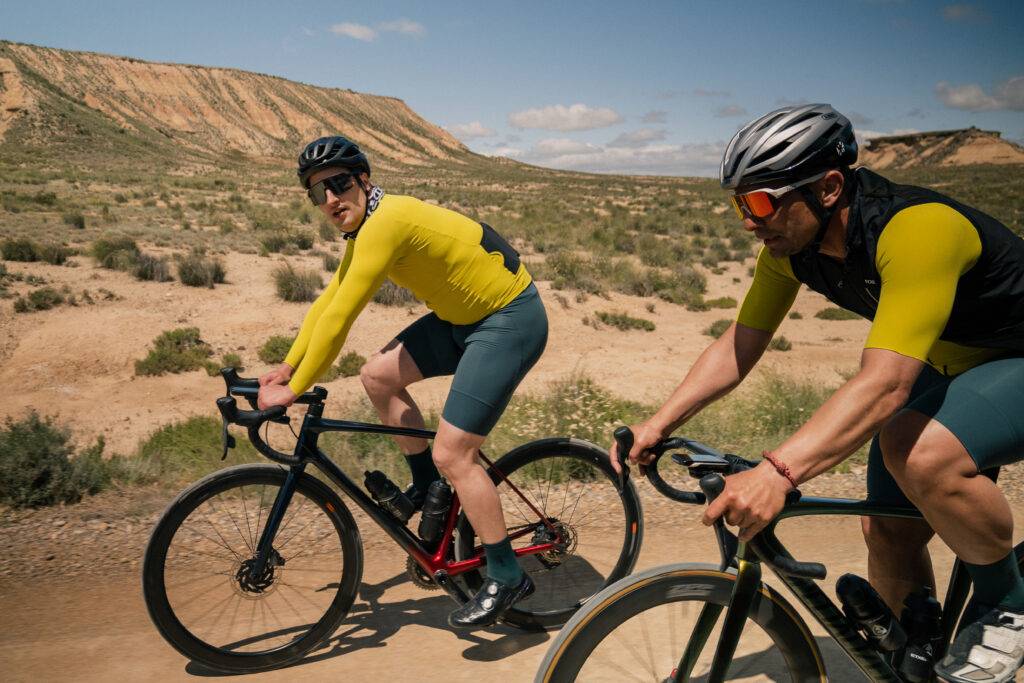
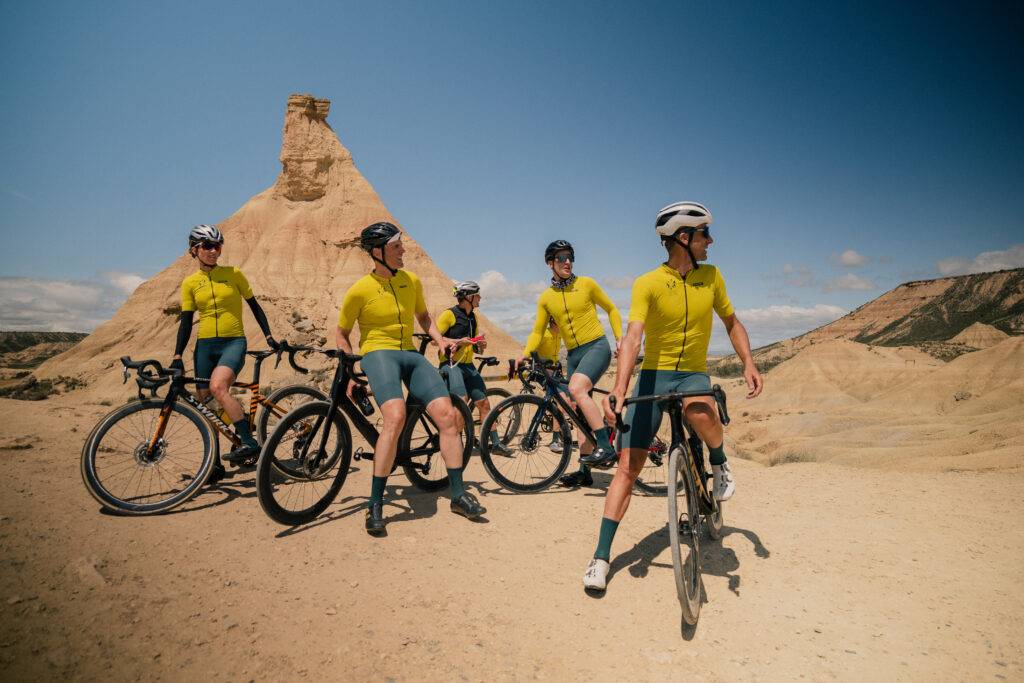
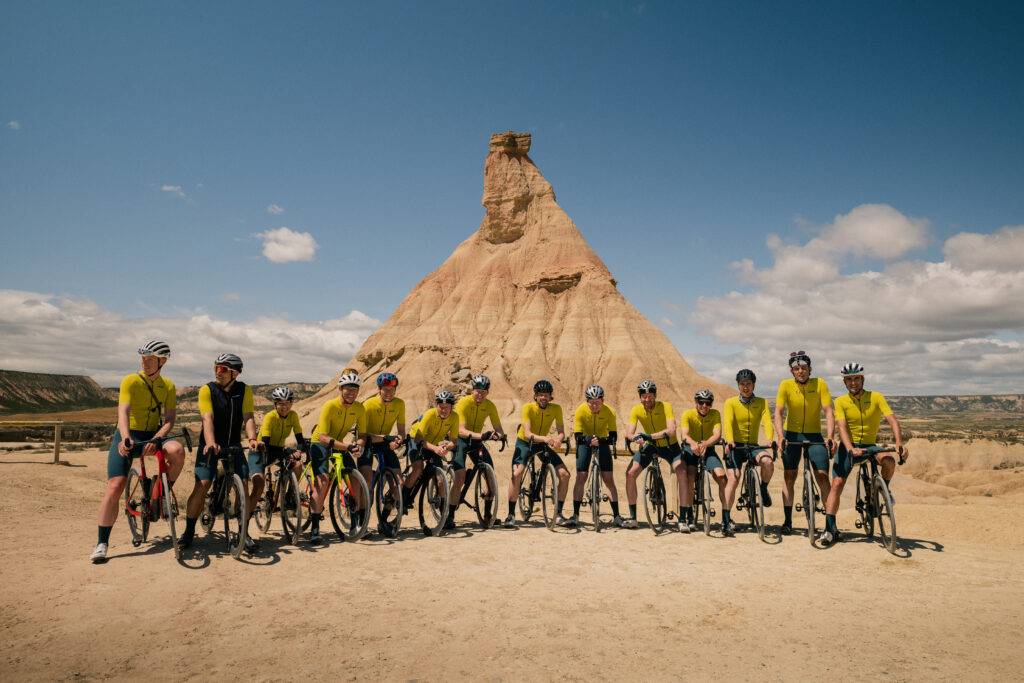
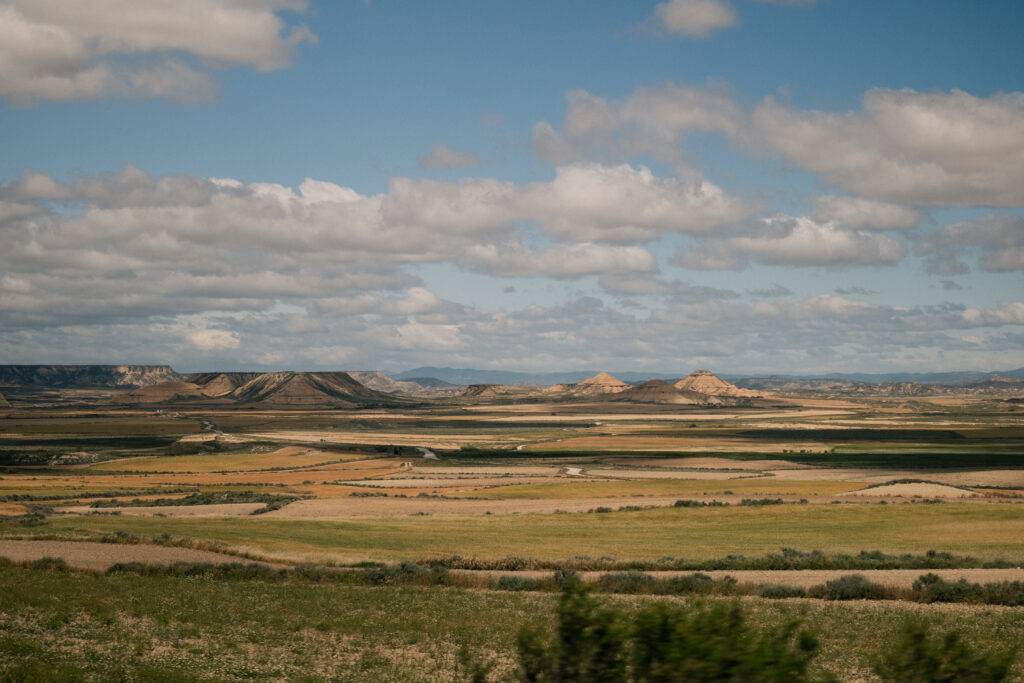
After this visit, I get on the bus and head to the hotel. The whole group continues towards Las Bardeneras, a beautiful piece of nature just outside Castejón. The route there leads over a somewhat rough gravel path and eventually you reach rock formations that are both green and red. Green from the vegetation and red from the stones. It most closely resembles the canyons of Arizona, Colorado and New Mexico. A beautiful palette of colors with a particularly spectacular view.
Questions & tips
Do you have any questions about this route, or have you been there yourself? Share them here. We read everything and usually respond within a few days.