
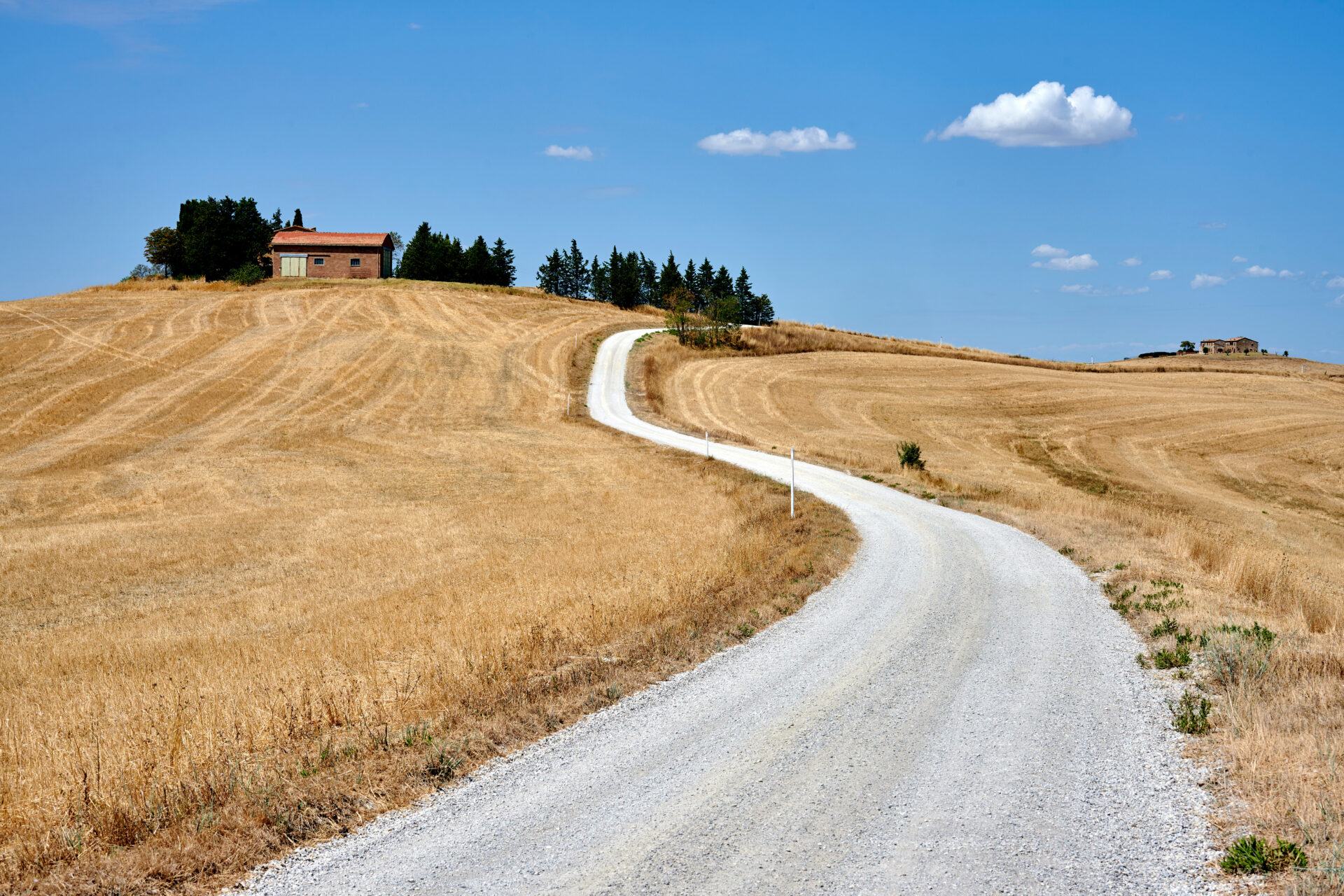
It is perhaps one of the most legendary cycling races in the world: the Strade Bianche. A classic that is often mentioned in the same breath as the Tour of Flanders and other icons. And that’s despite the history of the Strade Bianche going back a very long way. The first edition took place only in 2007. Now it has grown into a unique spring classic that is beloved and feared by the pros alike. And that’s not for nothing, of course. The men ride a 213-kilometer course, with no less than 16 dusty gravel sections that together account for 80 kilometers of unpaved descent. The women also take to the course. They ride 50 kilometers over gravel, divided into 13 challenging sections.
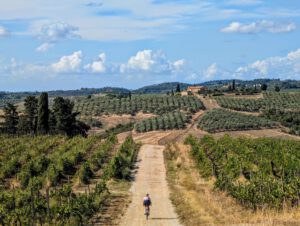
The name Strade Bianche Literally means ‘white roads’ in Italian. This reference stems from the characteristic gravel sections of the Tuscany, These roads are typical of the region and form an important part of the landscape. In this article, we’ve compiled the most beautiful and iconic Strade Bianche gravel roads. Ideal for learning more about this special race, but also for inspiration to go on a cycling holiday yourself in the beautiful region of the Strade Bianche!
Photos: Adobe Stock
1. Monte Sante Marie (11.5 km)
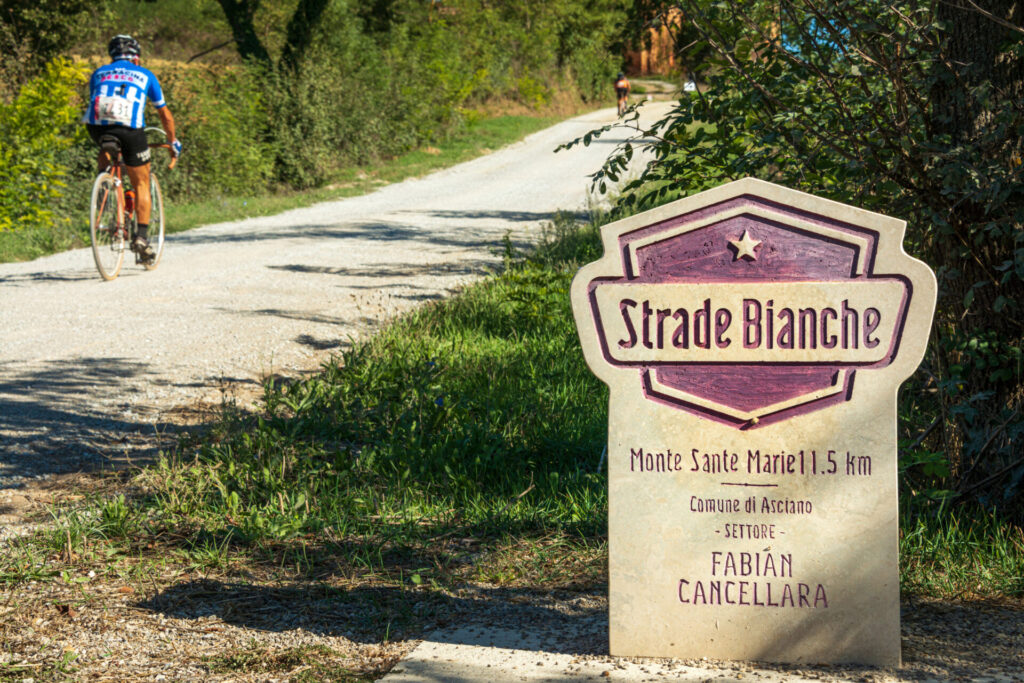
This sector is perhaps the most famous and toughest of the entire race. With a length of 11.5 kilometers and steep climbs of up to 15%, the Monte Sante Marie is a decisive stretch. This is where the first attacks are often launched. In 2016, this sector became famous when Fabian Cancellara launched his decisive attack here and rode solo to victory in impressive style. Since then, his name has adorned the Strade Bianche nameplate at the start of the stretch.
In dry weather, there are 11 kilometers of dust here. The riders have hardly any visibility because of the dust clouds that blow in under the onslaught of the peloton that races across the strip.
2. Colle Pinzuto (2.4 km)
Colle Pinzuto lies deep in the final of the race and is a short but particularly difficult sector. The stretch is 2.4 kilometers long and includes a notorious climb with an average gradient of 10%, with peaks reaching up to 15%. This is a stretch where attackers often try to make their decisive move. It is a crucial point in the race. This is often where the final reserves of energy are depleted, and it is not uncommon for riders to stall on this stretch after a hard race. The gravel here is rougher than on other stretches, which reduces grip and requires extra effort from the riders.
3. Le Tolfe (1.1 km)
Le Tolfe may be short, but absolutely not to be underestimated. The stretch begins with a steep descent and ends with a brutal climb towards the end. The climb on Le Tolfe reaches gradients of up to 18% and is one of the last chances for attackers to make a difference.
This sector lies just before the finish line, meaning every second won or lost here can be decisive for the final result. Le Tolfe has built up a special reputation as one of the most exciting sections, where the final attacks often take place. The climb at the end of the sector takes the riders back onto the asphalt, after which they prepare for the final in Siena.
4. San Martino in Grania (9.5 km)
San Martino in Grania is a beautiful, but long and challenging 9.5-kilometer sector located right in the middle of the course. This stretch is especially notorious for its constant up-and-down character: there are hardly any flat sections, which means the riders never get a moment of rest. This sector is a classic example of what makes the Strade Bianche so tough: a combination of climbs and descents on a surface that offers little grip. Often, there is also strong wind here, which makes the challenge even greater.
5. Pieve a Salti (8 km)
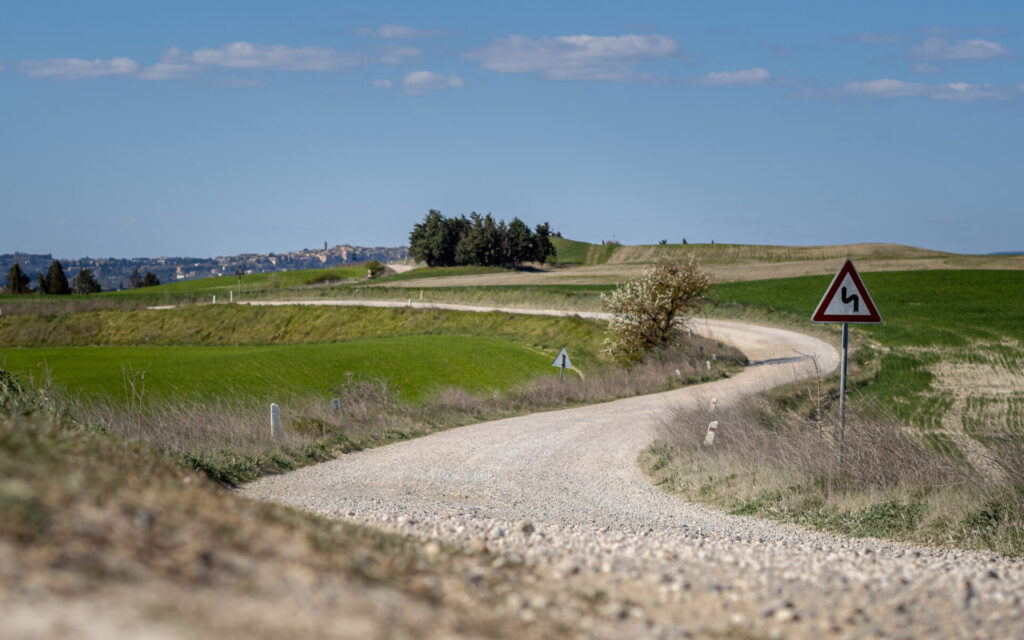
Pieve a Salti is a picturesque but merciless stretch. This sector is 8 kilometers long and offers stunning views over the Tuscan landscape. But while spectators enjoy the view, the riders face a technical and physically demanding stretch.
The sector contains a mix of short climbs and technical descents, which means riders have to be constantly on their guard. In the early editions of the Strade Bianche, these were often the first serious attack attempts, and it is still a sector where the race can break open.
Arrival in Siena
After all those tough gravel sections, the iconic finish on Via Santa Caterina in Siena awaits. This final climb through the historic city center is short but steep, with gradients of up to 16%. Here, the race is often decided, after which the winner finishes on the beautiful Piazza del Campo.
One Response