
From Porto to Foz do Arelho – steps through culture, salty sea air and history
The coast of central Portugal is not a place for haste. It’s not about altitude records or segment records; it’s about the rhythm of the sea, the scent of resin, and the stories of the people who live there. In three days, we cycle from Porto to Foz do Arelho, guided by guide Ruben – always smiling, full of knowledge and love for his country. He knows every bend, every bridge, and every story. Along the way, he points out details that we would otherwise overlook: the scent of pine trees, the tracks of fishermen, the rhythm of the waves.
More about Portugal can be found here
Day 1 – From azulejos to Arte Xávega
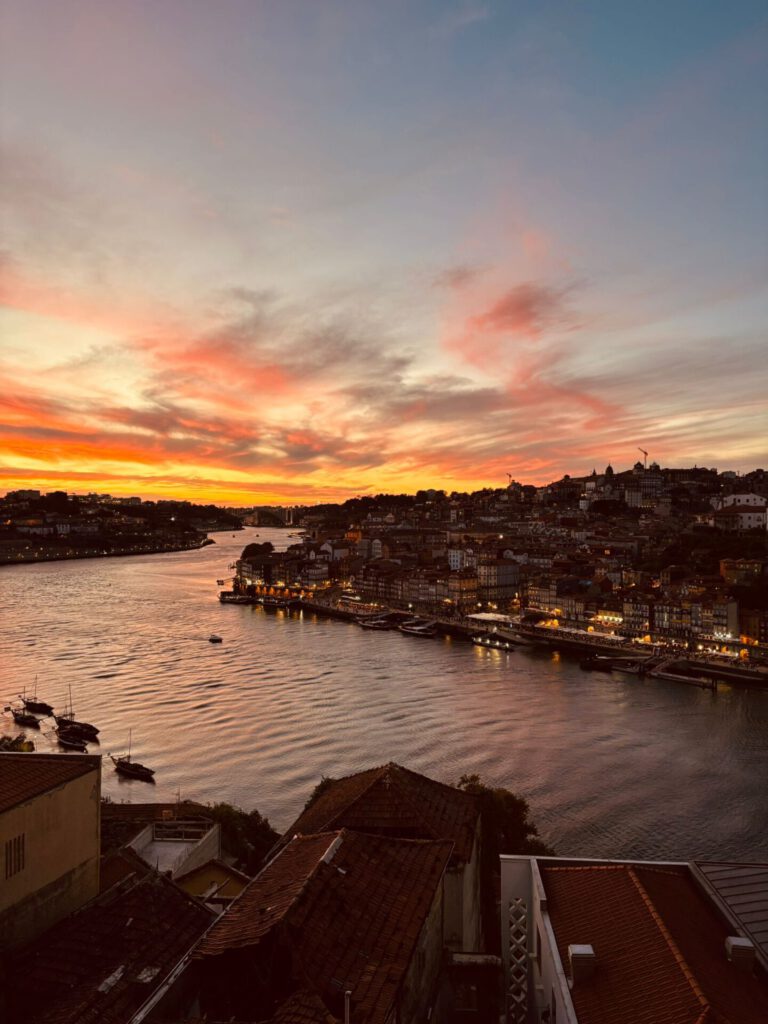
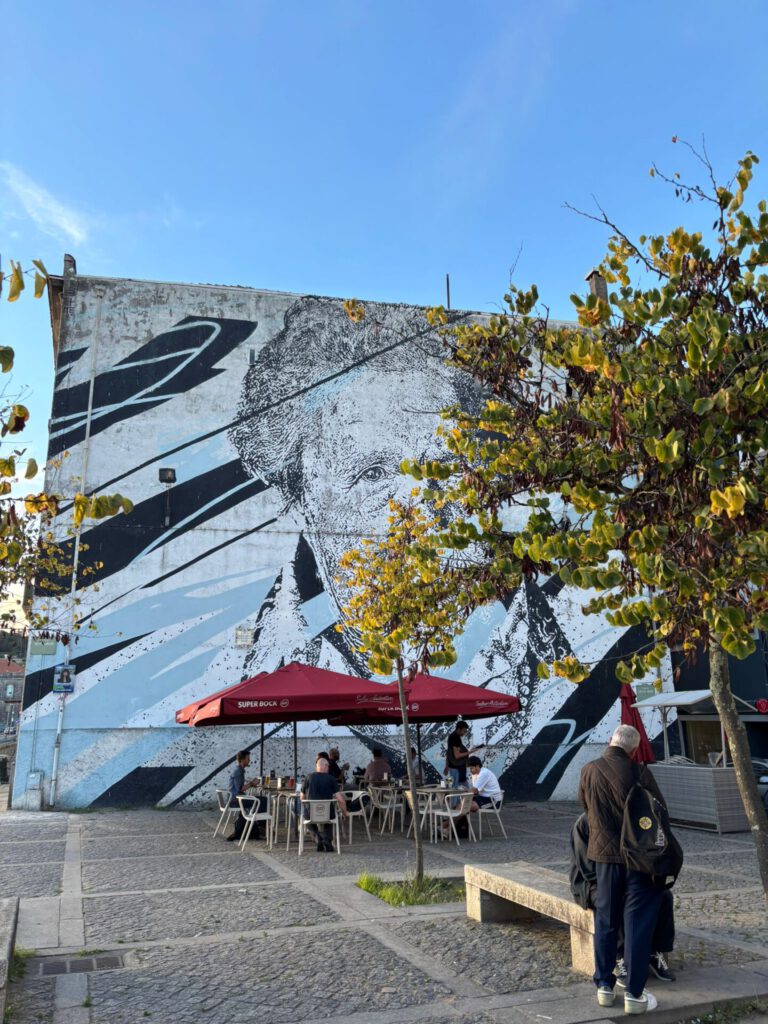
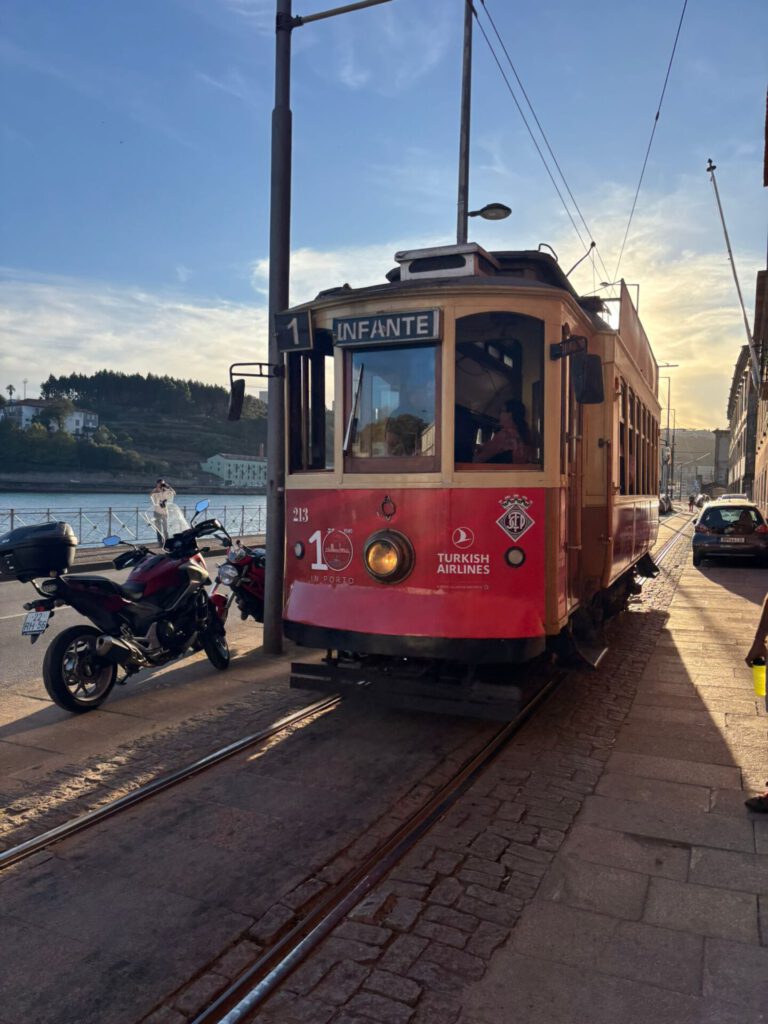
The journey begins in Porto, under the arches of the iron Ponte Luís I, where the Douro glitters in the morning sun. We drive through narrow streets lined with tiles, descending towards the river and feeling the vibrations of the city’s cobbled roads in our steering wheel: ‘They call this a Portuguese massage!’ Ruben tells us that the port wine sold here does not come from the city itself: the grapes grow in the Douro Valley, the wine ripens across the river – in Gaia. And the arch bridge we drive over? That would have honored Porto’s king once, but when Dom Luís did not show up at the opening, the inhabitants decided to remove the ‘Dom’ from the name. “Typical Porto,” grins Ruben. “Proud, direct and a bit headstrong.”
Short stop
We stop briefly at São Bento Station, where thousands of blue tiles – azulejos – tell stories of battles and farmers“ markets. Ruben points out two incorrectly placed pieces. ”They put 22,000 of them there, by hand. A puzzle of porcelain.” And just a little later, on the edge of the city, the ocean appears at Miramar, where the Capela do Senhor da Pedra Standing on a rock in the surf. “Every winter the waves crash over it,” says Ruben. “And yet they rebuild the chapel every time. Because faith is stronger here than water. And for fishermen it’s important that they can call on their God close to the sea.”
Wind
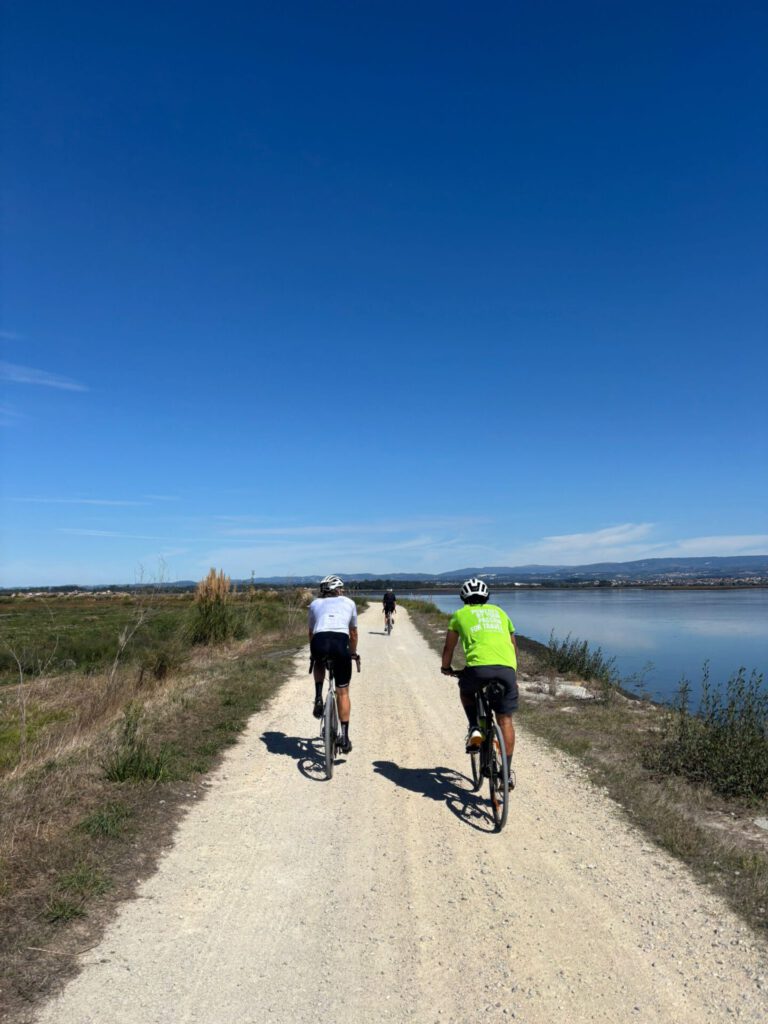
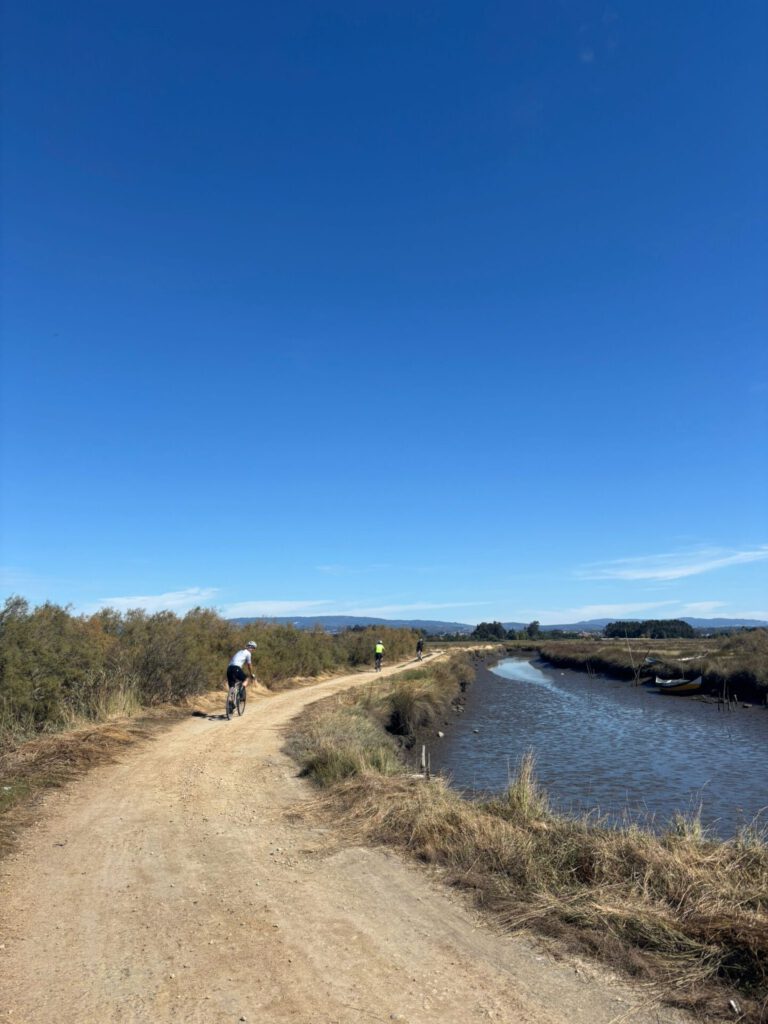
The wind is blowing strongly along the coast. We leave the planned route and choose a gravel variant along the 65-kilometer-long lagoon of Aveiro and the Canal da Murtosa – dirtier, but quieter. Between pine trees and sandy paths, it smells of sea and pine. Salt and sweet meet here. In some places, moliceiros bob around in the water. Boats painted with saints, declarations of love and mischievous scenes. Ruben laughs: “After the dictatorship, we could finally laugh again, even on a boat.” In Costa Nova Then we set off on our way. Here, the striped houses – palheiros in red, blue, and yellow – shine in the sunlight. “These were once sheds for fishing nets,” says Ruben. “With the brightly colored stripes, the fishermen protected the walls from the salt of the sea. The colors come from leftover paint from painting boats.”
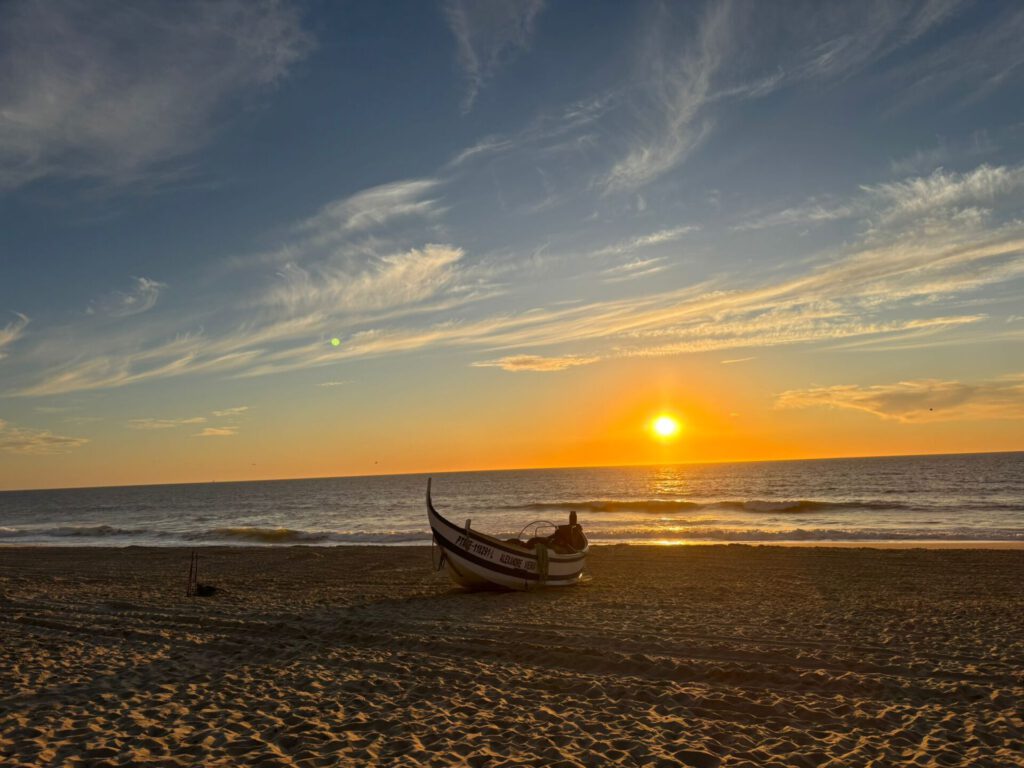
We end up in Mira Beach, Where the sea is not only admired but also tamed. Ruben tells about Arte Xávega, the traditional fishing where men used to row and now tractors are sent to the beach to haul in nets. “The fish was immediately sold from the boats,” he says, “right from the sea to the pan.” A ritual that smells of salt, gasoline and history.
Day 2 – From forests to waves
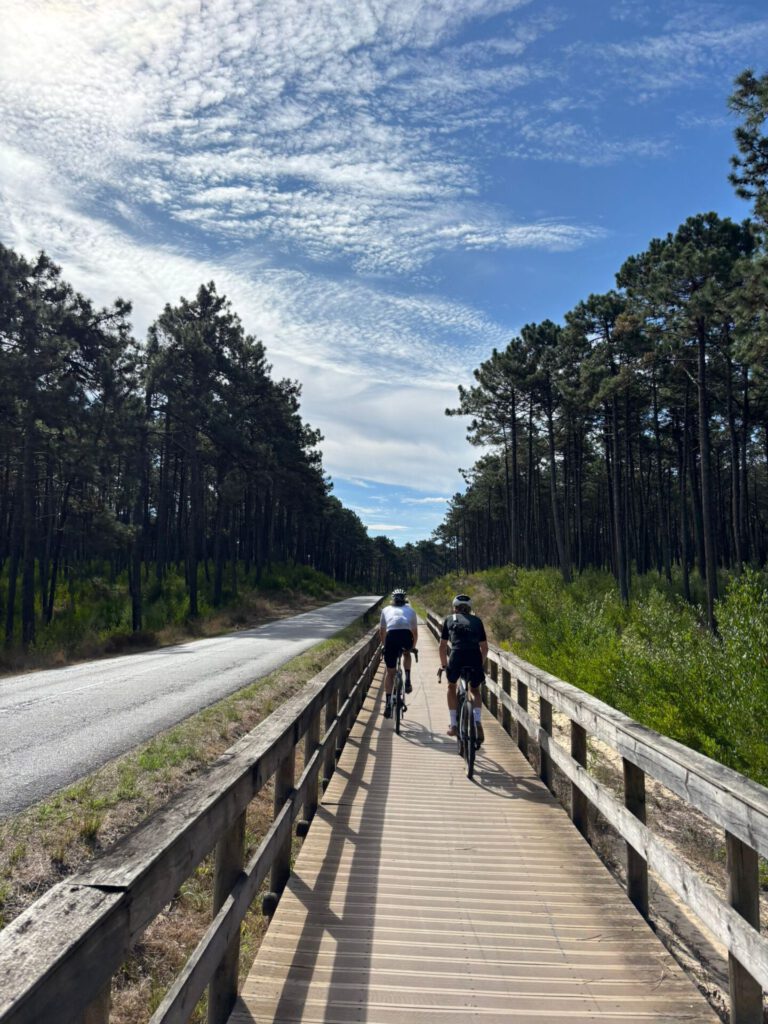
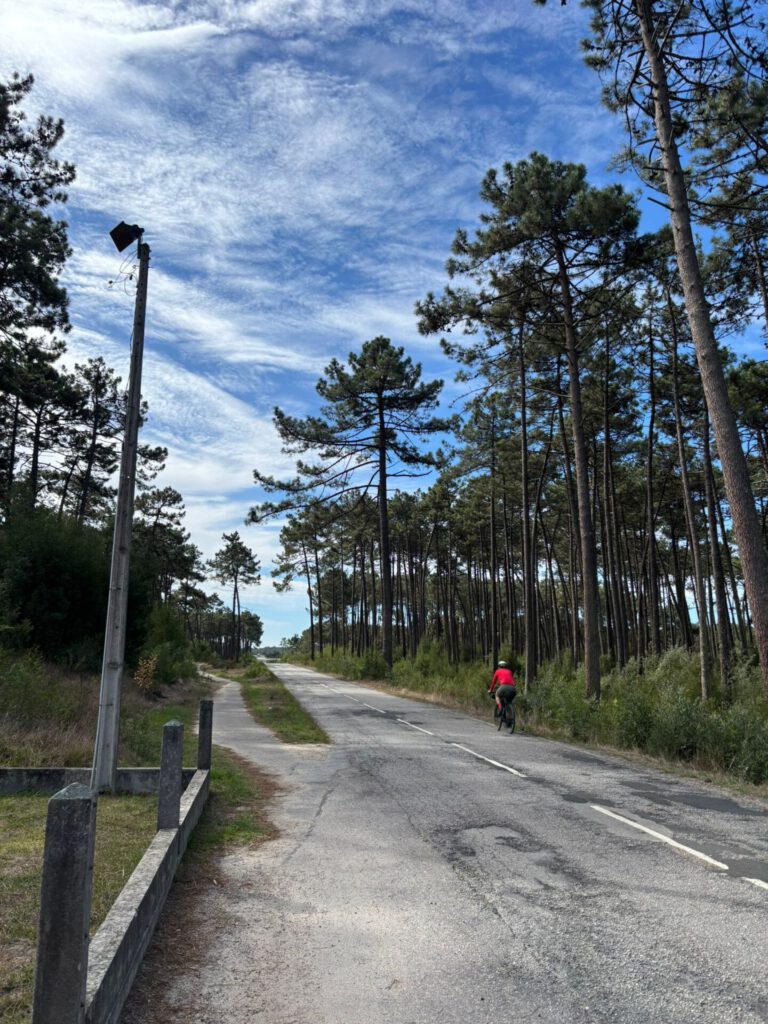
The second day takes us further south, along a coast that feels both wild and organized at the same time. The wind is strong, the air full of resin. We drive through the pine forests that were once planted by humans to protect the dunes and protect the interior from erosion. “Without these trees,” says Ruben, “the sea would win a piece of land every year.”
In Figueira da Foz He points to the rows of watchtowers along the coast and the long piers that keep the estuary open. “We negotiate with the sea here,” says Ruben. “Never won, never lost – but we keep going.” Then follow quiet kilometers through small villages until the climb to Nazaré begin.
Pilgrim's Site
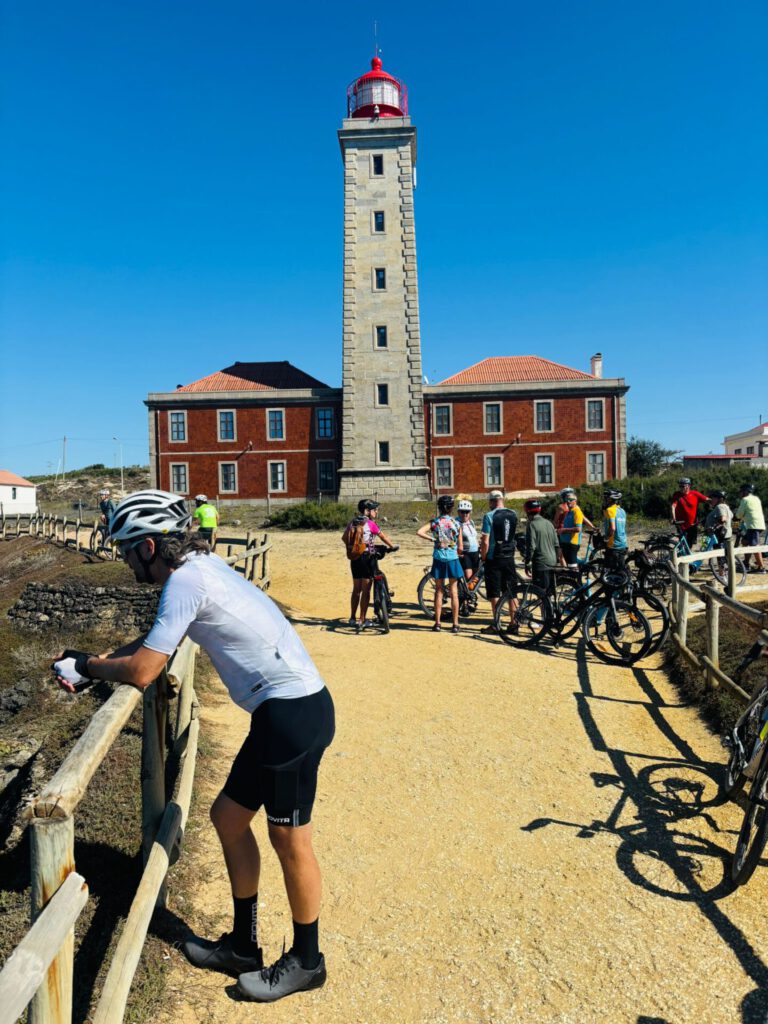
For centuries this was a place of pilgrimage. Above the cliff of Sítio Ruben tells the legend of Dom Fuas, the knight who, while hunting in the mist, almost drove himself into the abyss. At the last moment, Our Lady of Nazaré appeared and saved him from the fall. “That’s why this chapel stands here,” says Ruben, “right on the spot where his horse stopped just in time.” In the village square, women still wear skirts with seven layers in stalls – a tribute to the seven waves of the ocean. Nowadays, Nazaré is famous for surfers who brave thirty-meter waves, but the echo of faith still resonates in the surf.
We spend the night in Nazaré, where the evening air smells of salt and sunshine, and the sun slowly sets behind the horizon. Fish is drying on wooden racks: dried fish, Mackerel and sardines, glistening in the last light. “That’s how they used to do it all,” says Ruben. “Sun, salt and patience – they didn’t need anything else.”
Day 3 – Gravel and sparkling lagoons
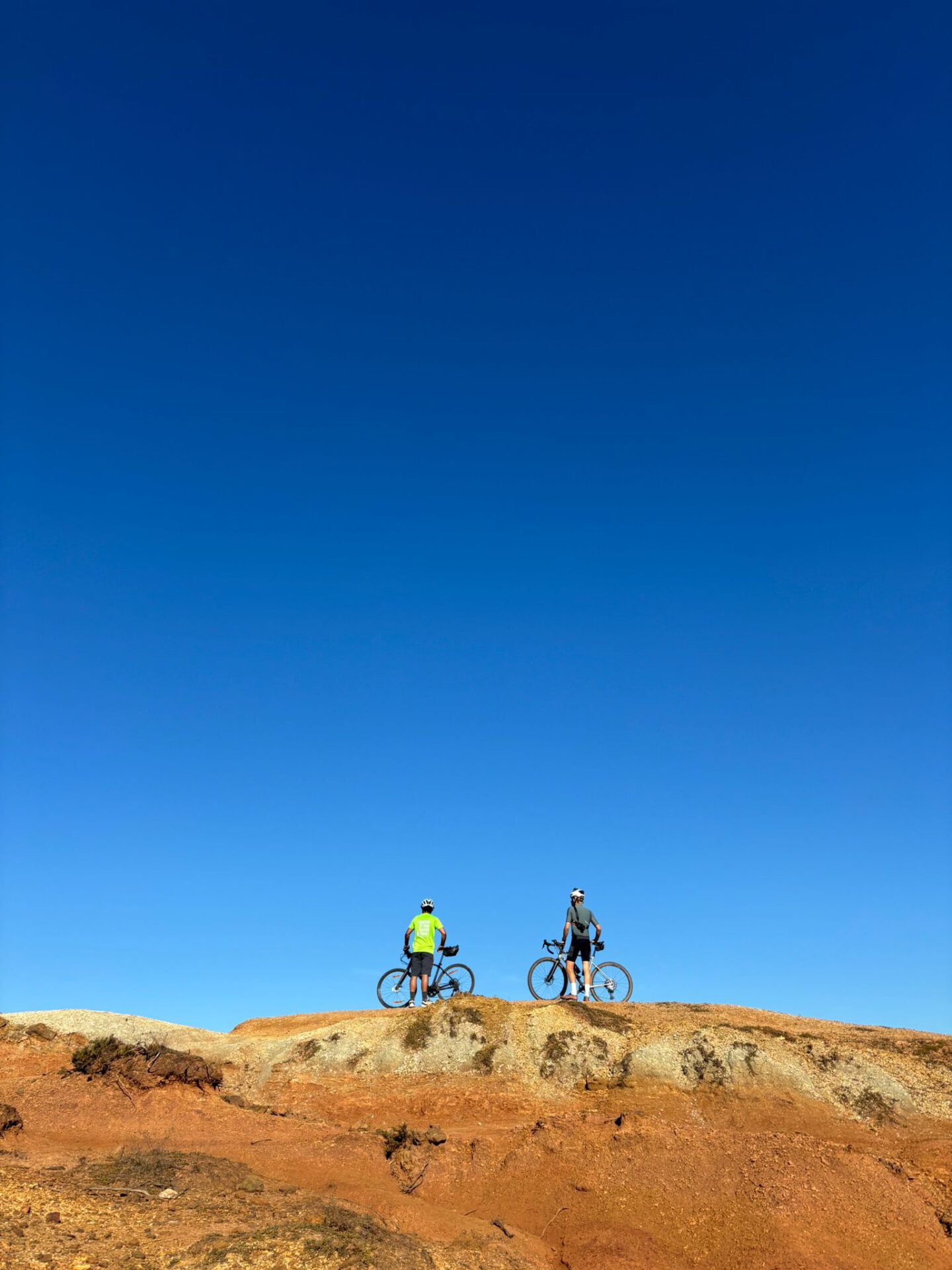
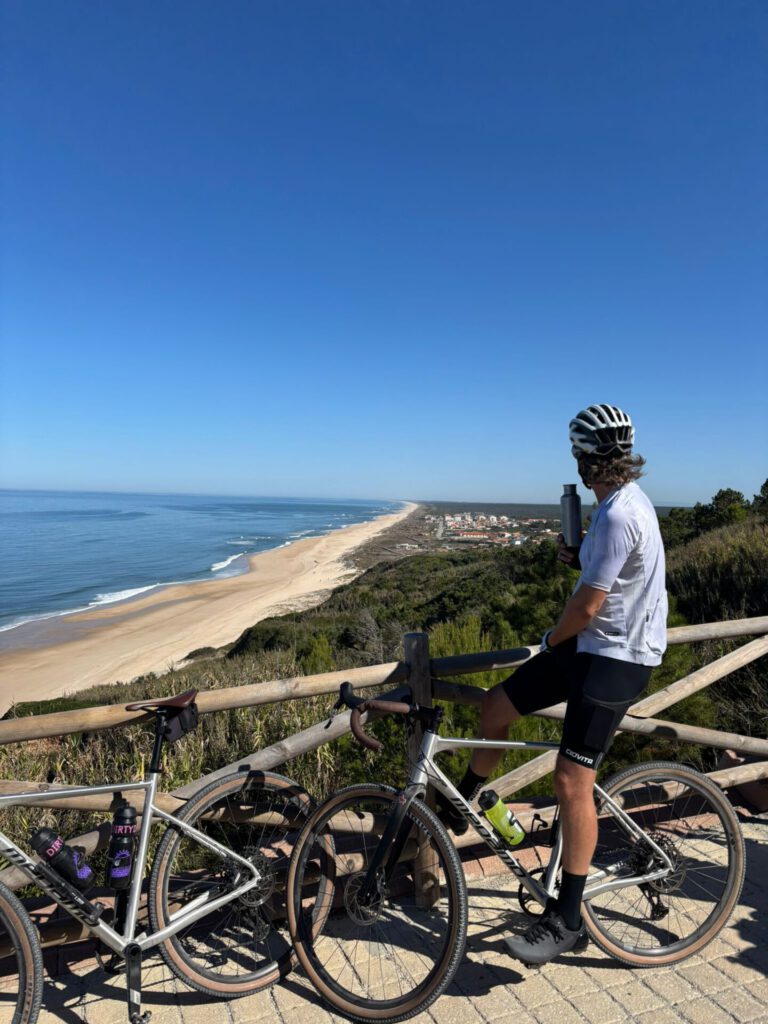
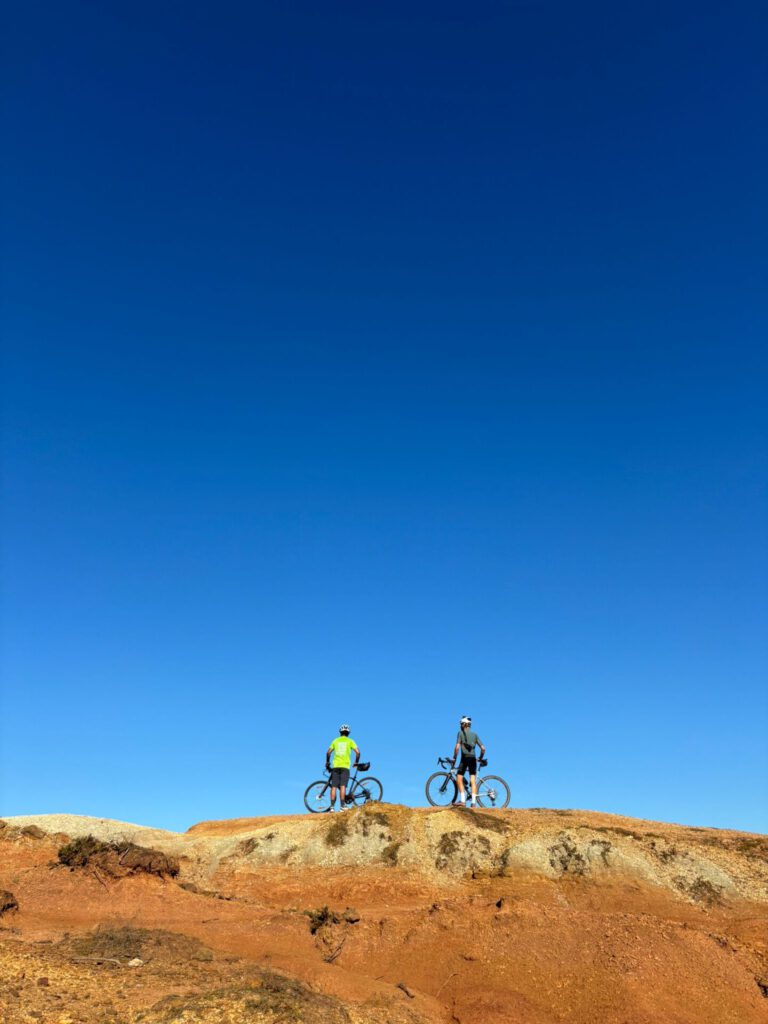
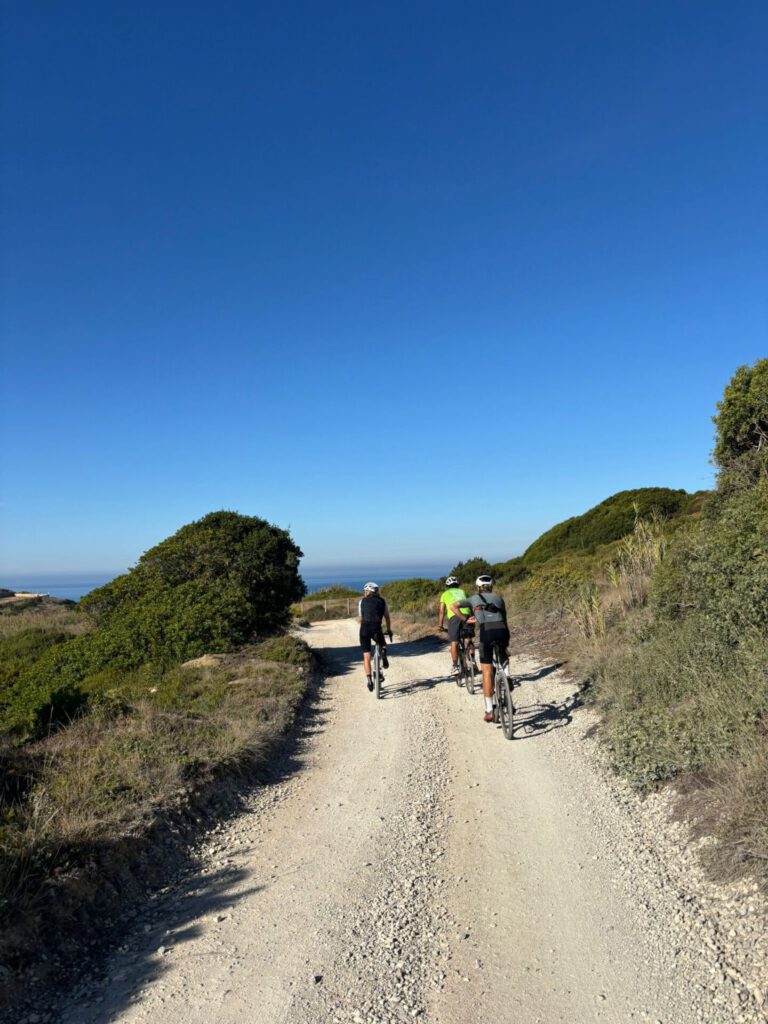
We leave early, the ocean still in our ears. The climb out of Nazaré is tough, and shortly thereafter follows a steep climb to Pescarias, Where the legs burn but the view over the sea makes up for it all. Then we deviate from the main route and follow a gravel path through reddish-brown earth. It feels as if we are driving through a painting – earth, air, sea and silence. Ruben calls it “the real Portugal”: rugged, simple, full of color.
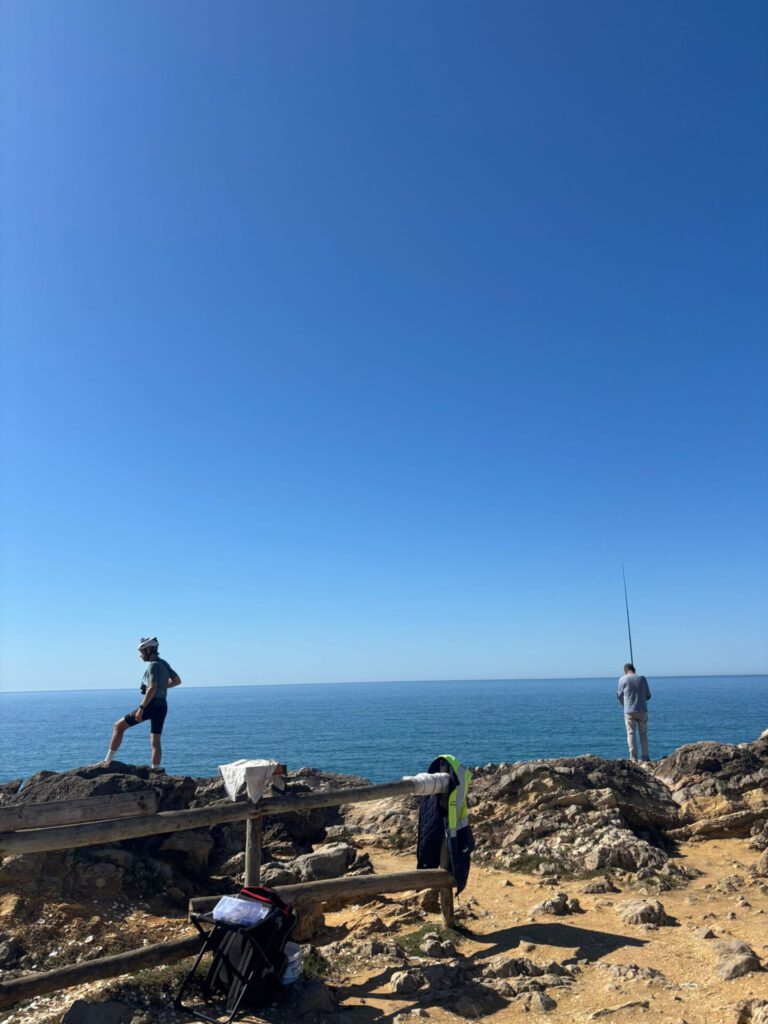
In São Martinho do Porto The road descends into a bay that sits like a shell in the coast. The shape is no coincidence: Ruben explains that the ocean has been shifting sand and rocks here for centuries to form a natural harbor. Protection and open sea meet in one arc. We cycle through a natural passage in the rocks and look in awe at the waves crashing against the coast.
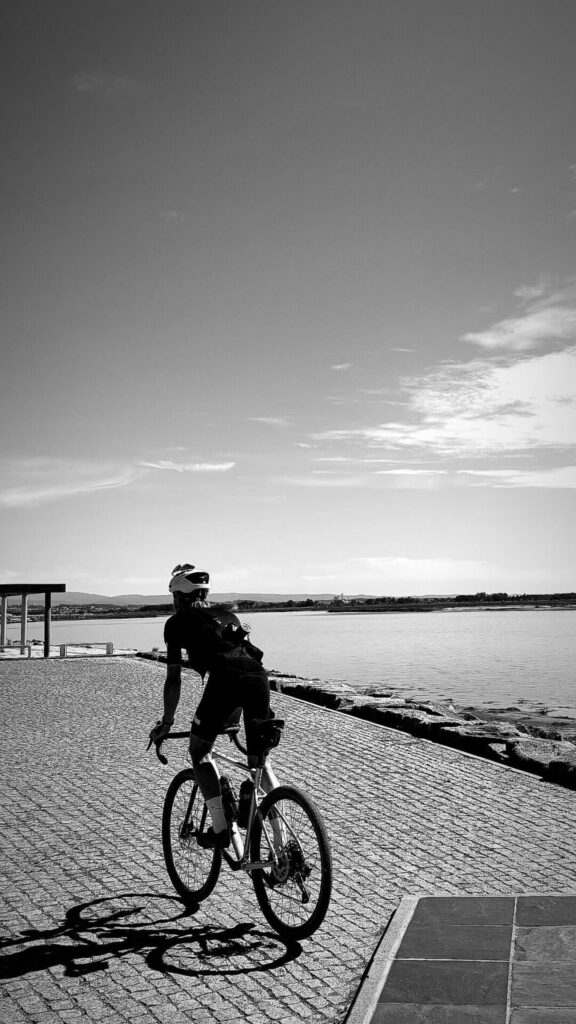
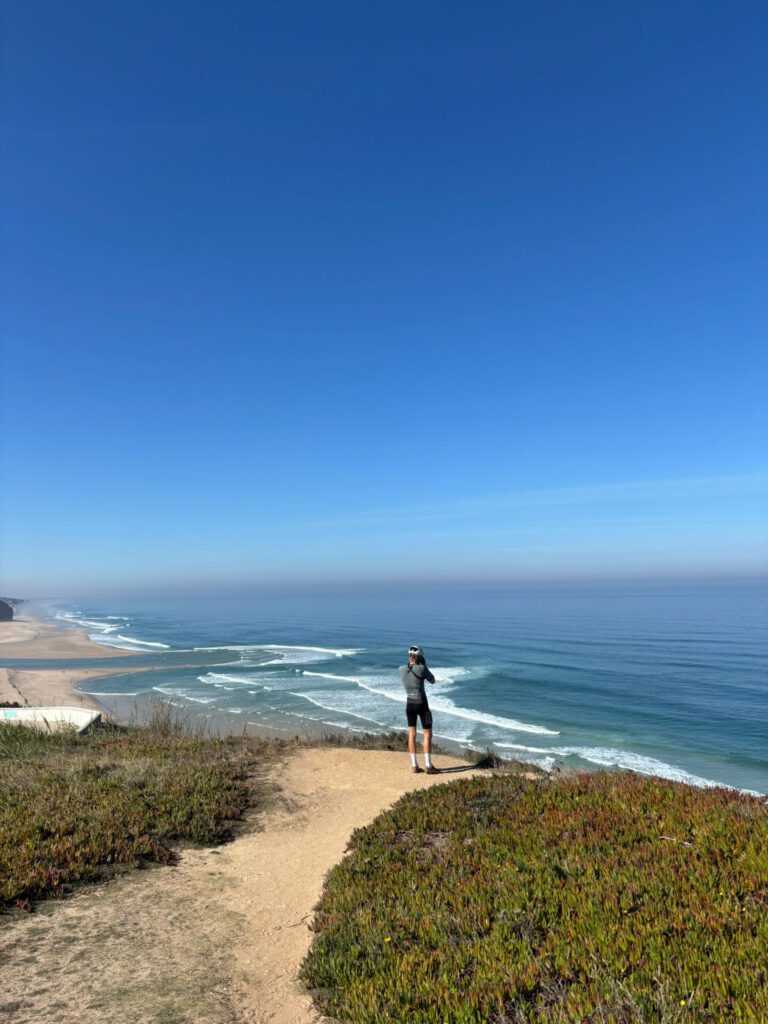
The final stretch to Foz do Arelho We drive over rolling roads. First the last stretch along the ocean, then right along the Óbidos lagoon. Boats bob gently along the shore, the wind drawing ripples on the water. We put down the bikes and watch as sweet and salty meet each other. A logical end point after three days in which the bike was primarily a key to exploring – the landscape, people, and stories.
Eating on the go – the sea, sugar and tradition
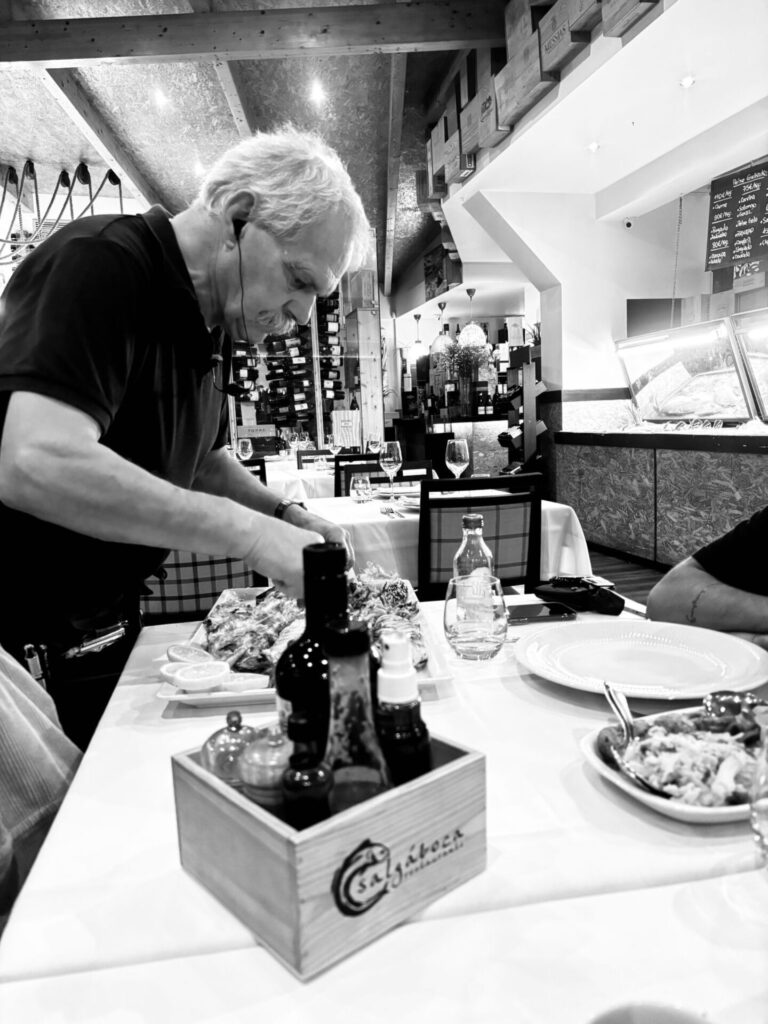
Cycling along the coast without eating fish is almost impossible. Every port town has its own grill or marisqueira, where sardines and sea bass come straight from the grill and are served on the table. In Mira Beach we are moving closer to Salgaboca Restaurant, an atmospheric fish restaurant by the sea where all the fish are caught with a fishing rod. The smell of charcoal and lemon hangs in the air. The waiter with his impressive mustache first shows the fresh fish to the table, before carefully removing the bones after grilling. Outside, you can hear the waves breaking as the plates still steam. The fish is so fresh that it still smells of salt; simplicity is the secret of Portuguese cuisine. A plate of grilled dourada, some lemon, and a glass of Vinho Verde – that’s all the day needs.
Sweetness can be found in every bakery, but the most famous temptation remains the Pastel de nataWarm, crispy and filled with soft custard. Ruben says that this love of eggs and sugar comes from the monasteries. Centuries ago, monks and nuns used the egg whites to paint walls or stiffen clothing; they made desserts from the remaining yolks. That’s why Portuguese delicacies taste of sunshine, sugar and history.
Slot – The bicycle as the key to Portugal
The Atlantic coast of Portugal does not demand speed, but attention. We do not drive here to perform, but to watch. To hear how the sea breathes, to feel how the sand shifts, to listen to the stories of a guide who knows the land like his own hand.
Ruben calls Portugal an open-air museum – from forests holding sand dunes to villages that live off the sea. And he is right. Cycling along this coast, we discover a land that is as hard as it is soft, shaped by wind, water, and willpower. Portugal is art, says the tourism agency’s campaign. But those who cycle along the coast discover: Portugal is also rhythm. And breath. And the scent of resin and the sea.
Practical
The best time of year to visit this region is: April – June or September – November.
In the summer months, it can be too hot along the coast to cycle comfortably.
The stages are straightforward: 50–65 km per day, 200–500 meters of elevation gain.
Routes in Central Portugal
For those who want to cycle along the Atlantic coast of central Portugal: below you will find both the original route planning and the stages that we actually cycled, including some gravel sections and detours that make the landscape even more spectacular.
Original route planning:
- Route 1: Porto → Praia de Mira
- Route 2: Praia de Mira → São Pedro de Moel
- Route 3: São Pedro de Moel → Foz do Arelho
Routes we drove:
Day 1:
Day 2:
Day 3:

Questions & tips
Do you have any questions about this route, or have you been there yourself? Share them here. We read everything and usually respond within a few days.