
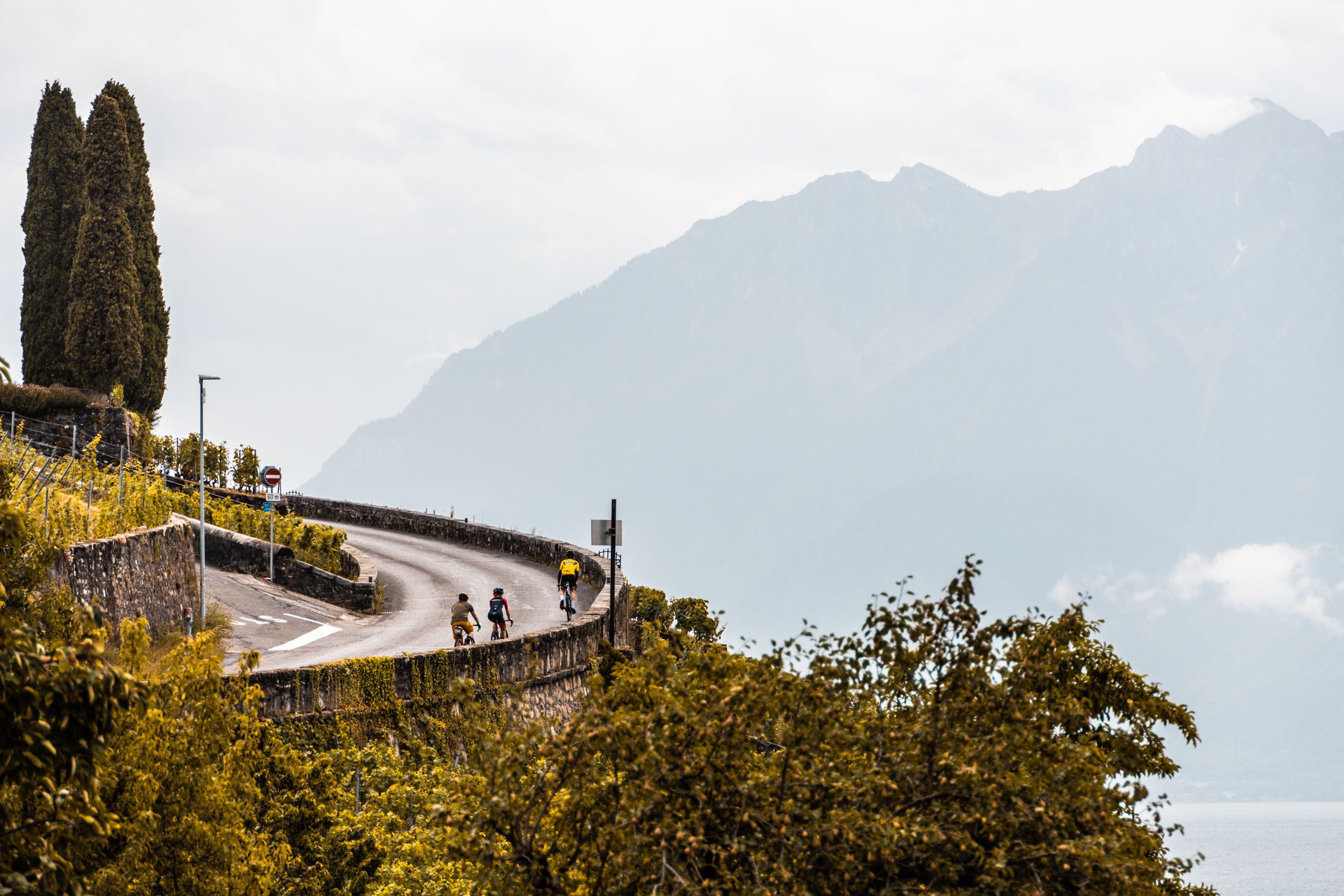
The beautiful village of Villars-sur-Ollon, halfway between Col de la Croix, is the perfect base if you want to cycle in the Swiss Alps Vaudoises. In winter it is a real winter sports village, but in summer you can, in addition to cycling, also enjoy beautiful gravel biking or mountain biking: something for everyone. The various climbs and mountain passes that are just around the corner ensure that you won’t be bored of the surroundings quickly, and with the Spa of Les Bains de Villars right around the corner, recovery is also no problem. Cycling in Vaud is truly a feast. The Tour de France in Les Alpes Vaudoises. What could possibly go wrong?
The Tour de France is therefore passing this beautiful village this year for a reason. The ninth stage starts from Aigle towards Lausanne, then through the beautiful green vineyards towards the Col des Mosses, and then over the Col de la Croix. In the subsequent descent, the pros whiz through Villars, before heading via Aigle to the final climb to Châtel les Portes Soleil in France. Our local guide Alain Rumpf takes us on a tour.
Four cols
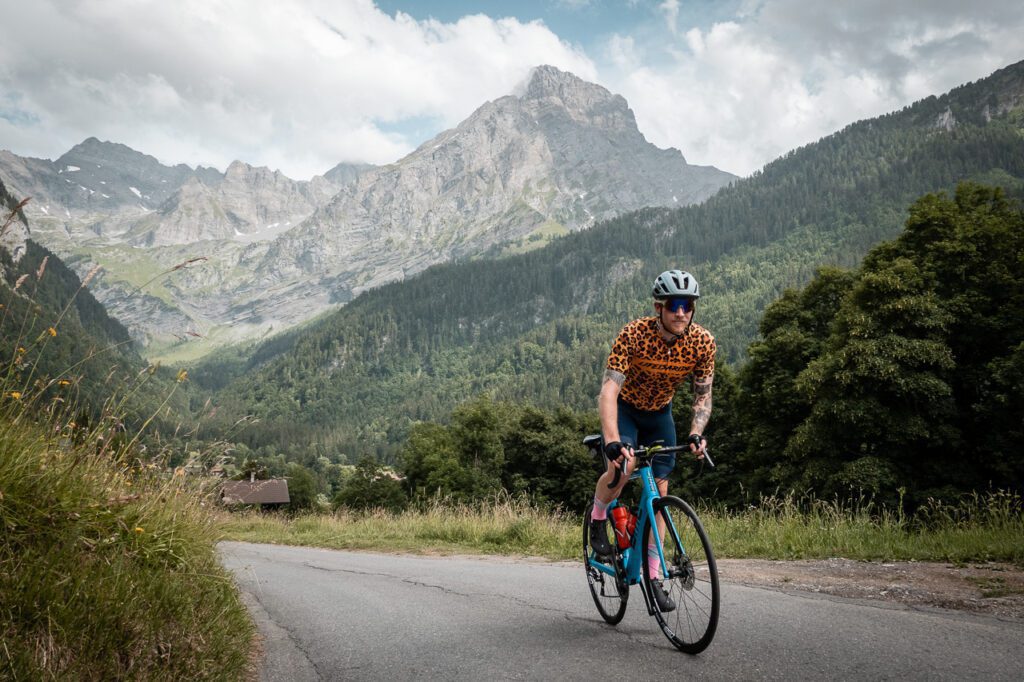
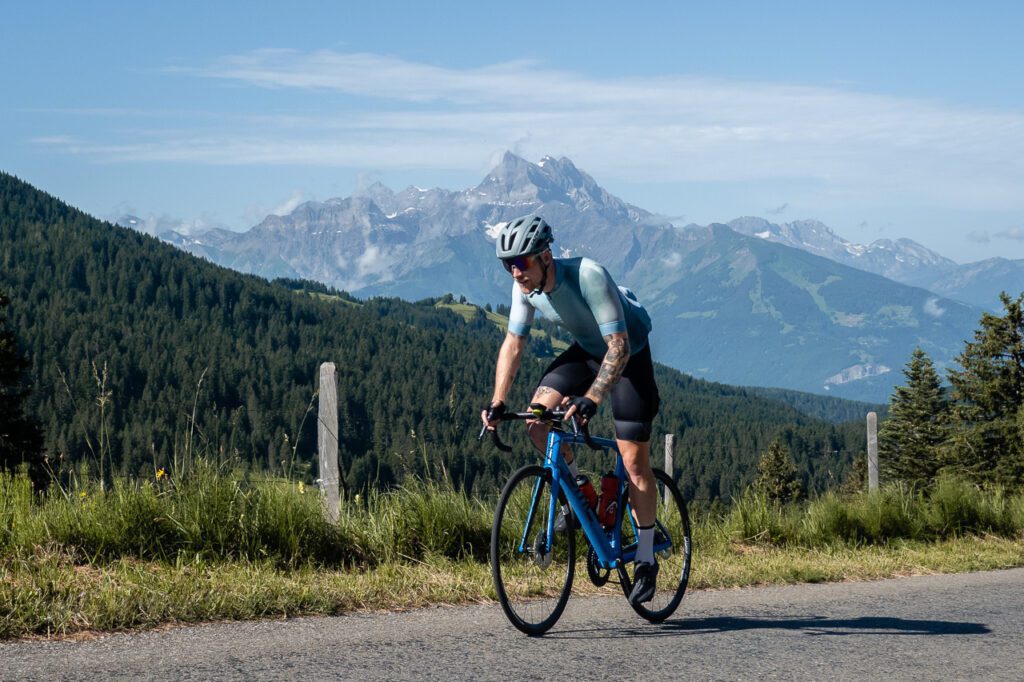
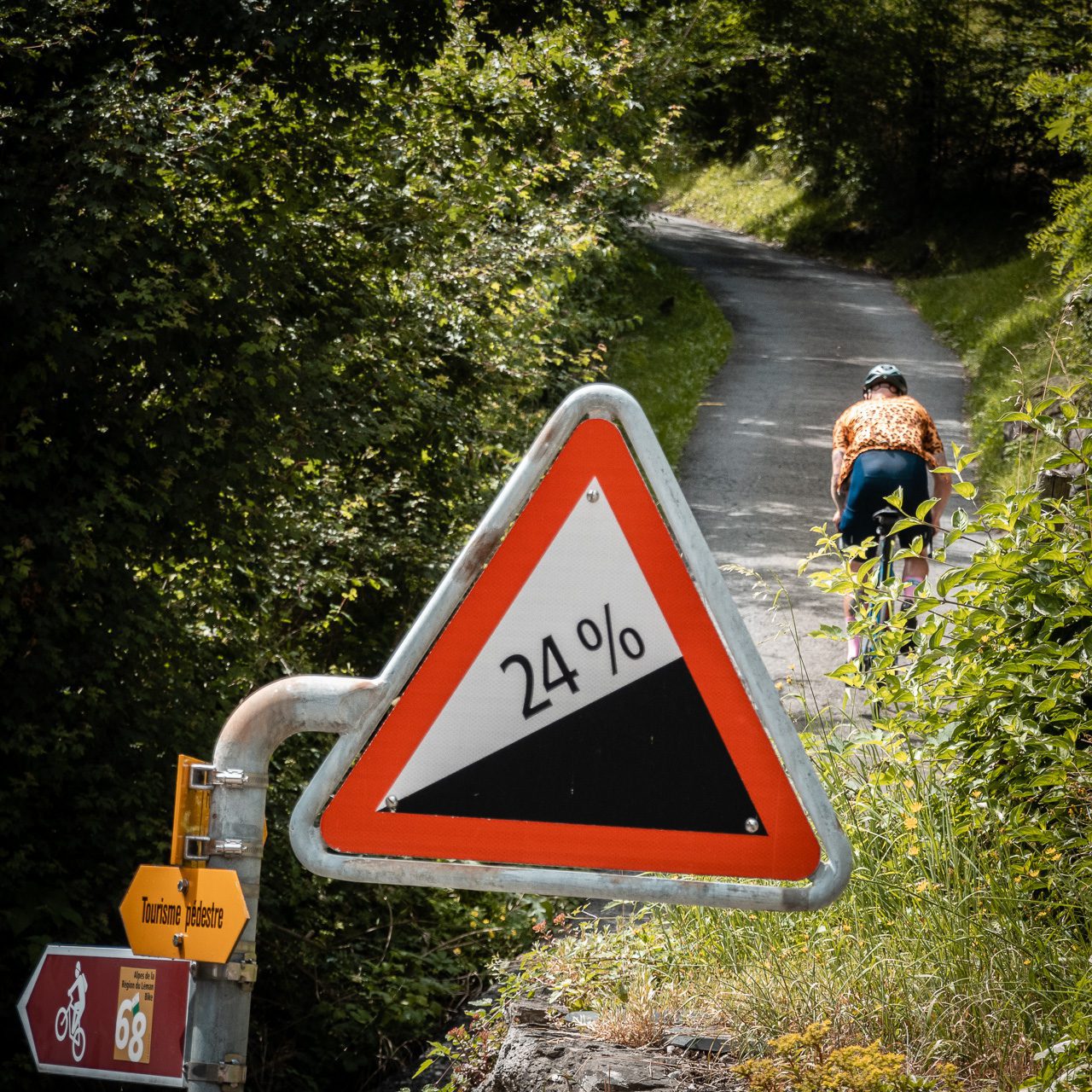
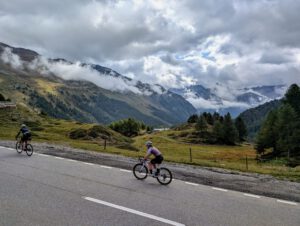
We set off with a nice morning sun from the Villars Mountain Lodge, a simple but good hotel in the middle of Villars. The route of just under a hundred kilometers takes us over four passes: the Col de la Croix, the Col du Pillon, the Col des Mosses, and the Col de la Croix from the other side. A tough route with over two thousand meters of elevation gain, and a whole section of the ninth stage of the Tour de France. From the hotel it starts off nicely: the first few hundred meters go up ten percent immediately, so there’s no time to slow down. That’s not a problem: the views from the Col de la Croix are breathtaking. The open landscape offers space for the high and rocky peaks of the Alpes Vaudoises, where in some places the snow is still visible. The rugged landscape makes us feel insignificant at times, so impressive it is.
Just a quick clean-up
Because of the Tour de France passing by, they are also busy repairing the road surface here. Bad spots in the asphalt are being repaired, and in some places entire sections of the road are being renewed. On the uphill sections this is not a problem given the slow speed, but they are of course working on both sides of the pass so caution is advised on the descent. Although the climb will certainly be much better after the work is done on both sides!
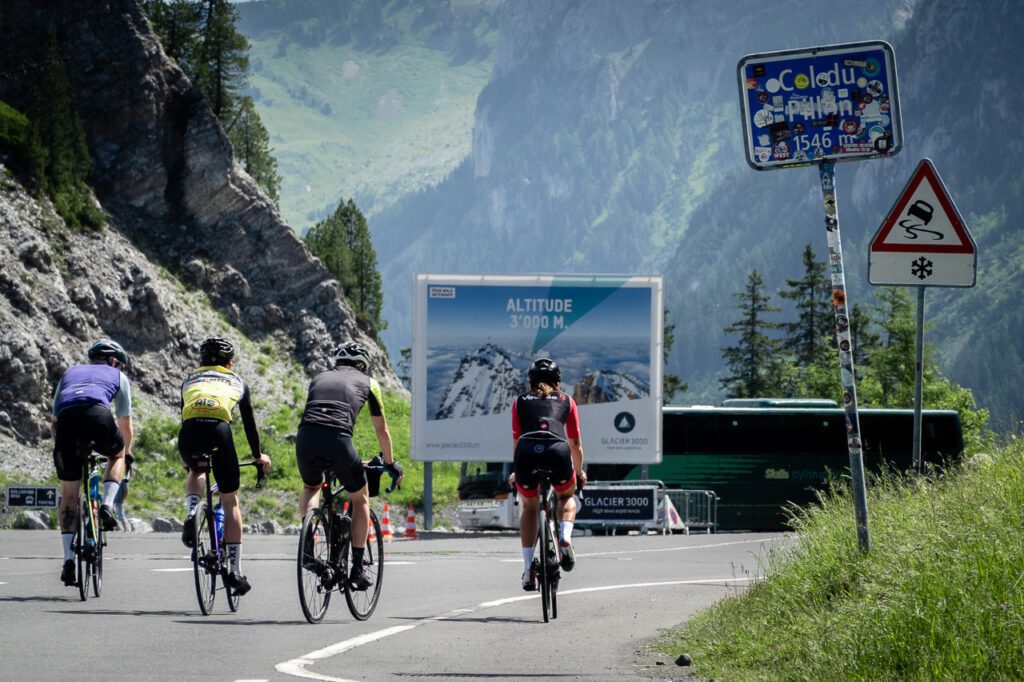
After the descent of the Col de la Croix we arrive in Les Diablerets, a typical winter sports village that is wonderfully quiet in the summer. The wind stops immediately because from this village it is quickly windy again: the Col du Pillon is the next pass we have to cross. From Les Diablerets, the shortest climb of the day is only five kilometers long, and here too the views are magnificent. Just before the top, a huge waterfall appears to the right of us, flowing down in several stages from the high peaks towards the valley. An impressive sight. The top of the Col du Pillon is at an altitude of 1547 meters, but via a ski lift here you can go up twice as high. You then go up via a long ski lift to the mountain peak Scex Rouge, at a whopping 2971 meters!
Bordjessprint
After the Col du Pillon comes a long descent. The first part is steep, but after about five kilometers it becomes flat down a wide road. This is perfect for us to drive at full speed together. We drive head-on through the valley at a brisk pace of about fifty kilometers per hour. Meanwhile, we try to outrun each other at every signpost with our sprints. Despite Alain, our guide, being a true climber, he surprisingly manages to win a lot of time. You see: prior knowledge is not entirely unimportant on the sometimes winding roads.
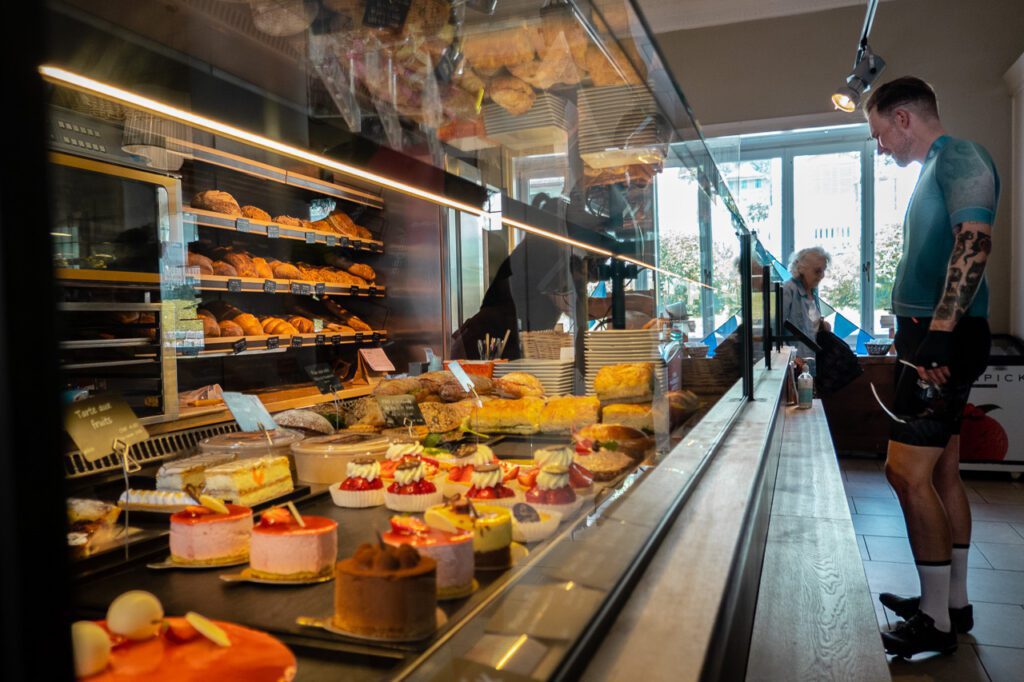
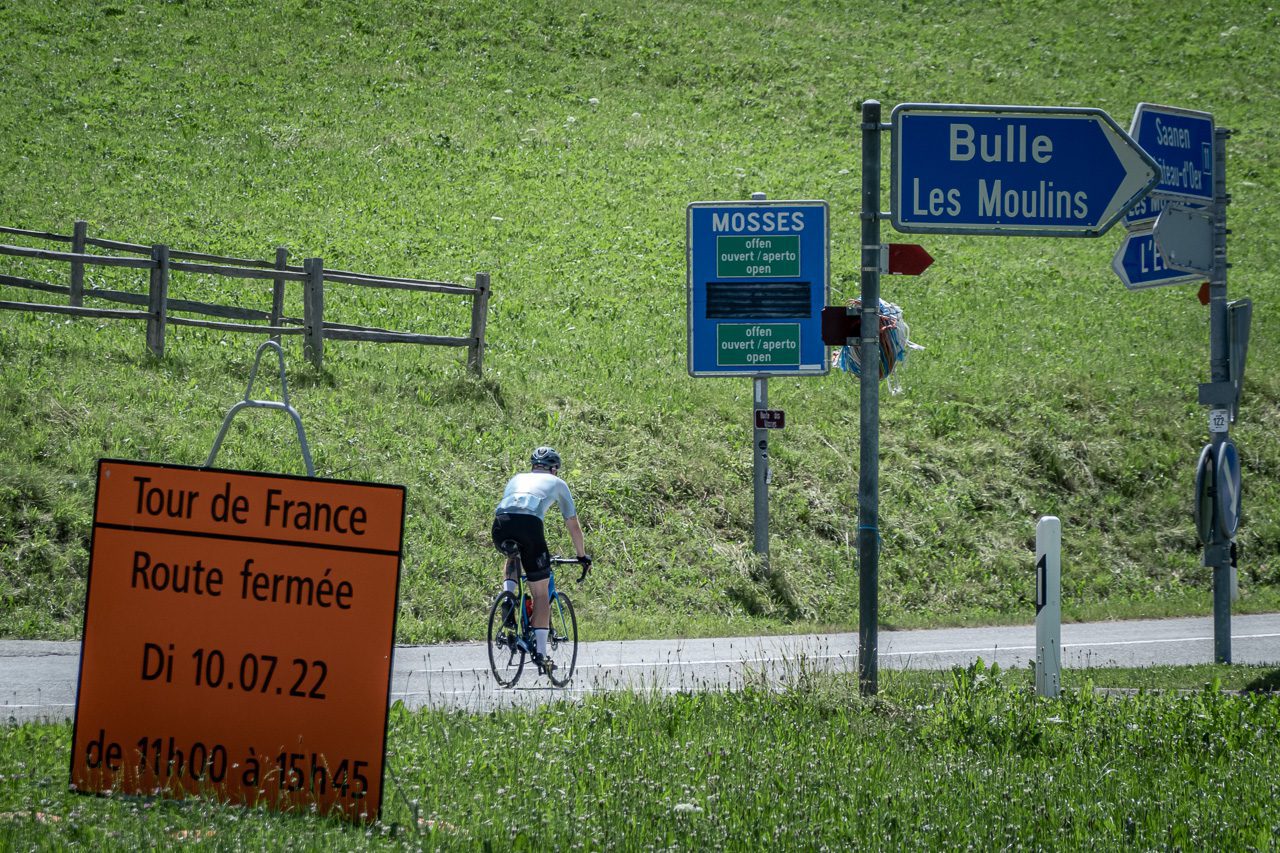
After a long descent and a delicious lunch at a local bakery, we start the third climb of the day, the Col des Mosses. Once again, it’s one of those climbs that are also included in the ninth stage of the Tour de France. With 13.5 kilometers, it’s quite long, but the average percentage is only 4.3 percent with few real highlights. In practice, the Col des Mosses is a lovely climb with some flat stretches and descents in it. You can keep the pace quite high. There are already signs along the side to point out that the Tour de France is coming. From 11:00 a.m. on July 10 until 2:30 p.m. this is the Tour territory.
Fatigue
Meanwhile, the fatigue is starting to creep in more and more. On the long mountain passes the difference in altitude becomes even more apparent. We see the lightweights leaving us behind earlier and earlier. Our legs are increasingly struggling to turn around. When we have to cycle over the Col de la Croix again, we strain our teeth to get up the hill. Fortunately, it is a nice, steady climb that allows us to enjoy the beautiful Swiss landscape at a steady pace.
World Cycling Centre
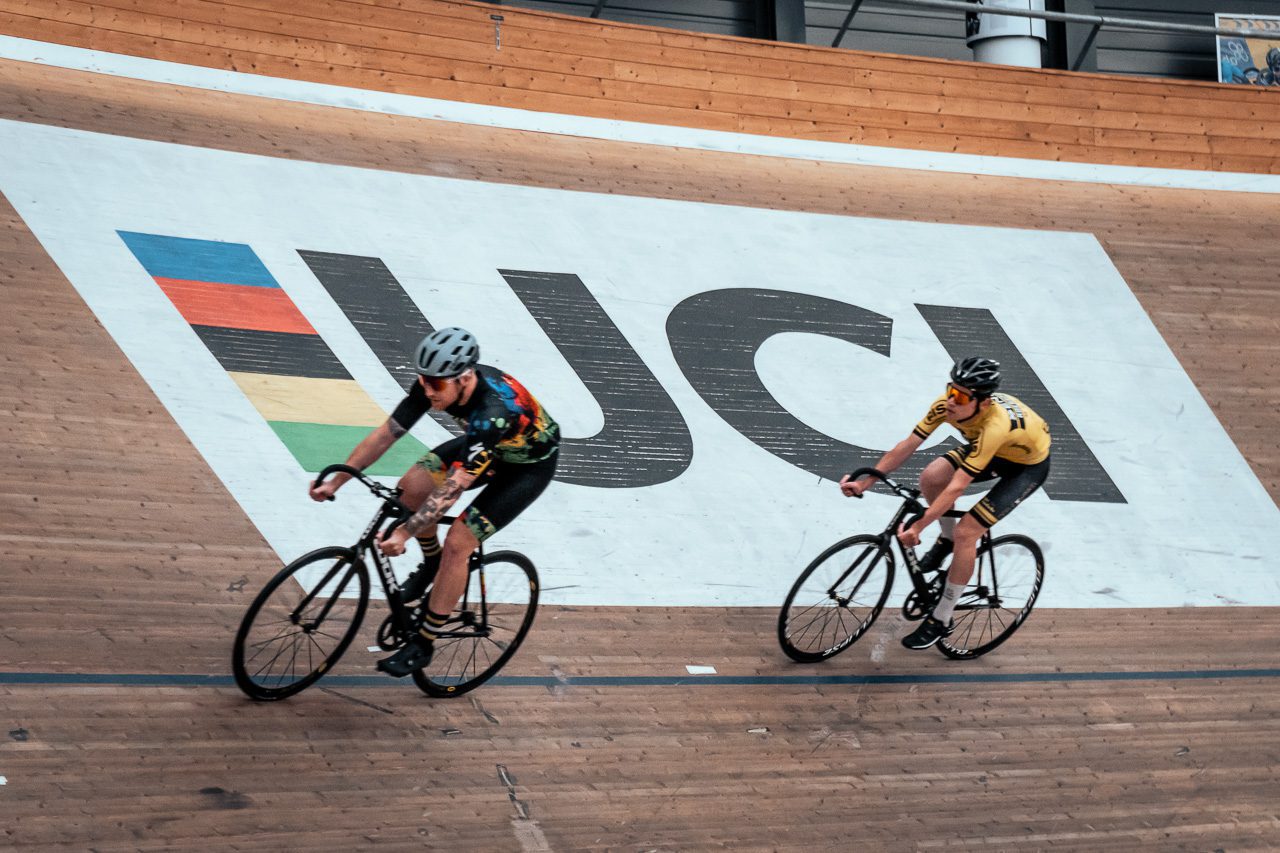
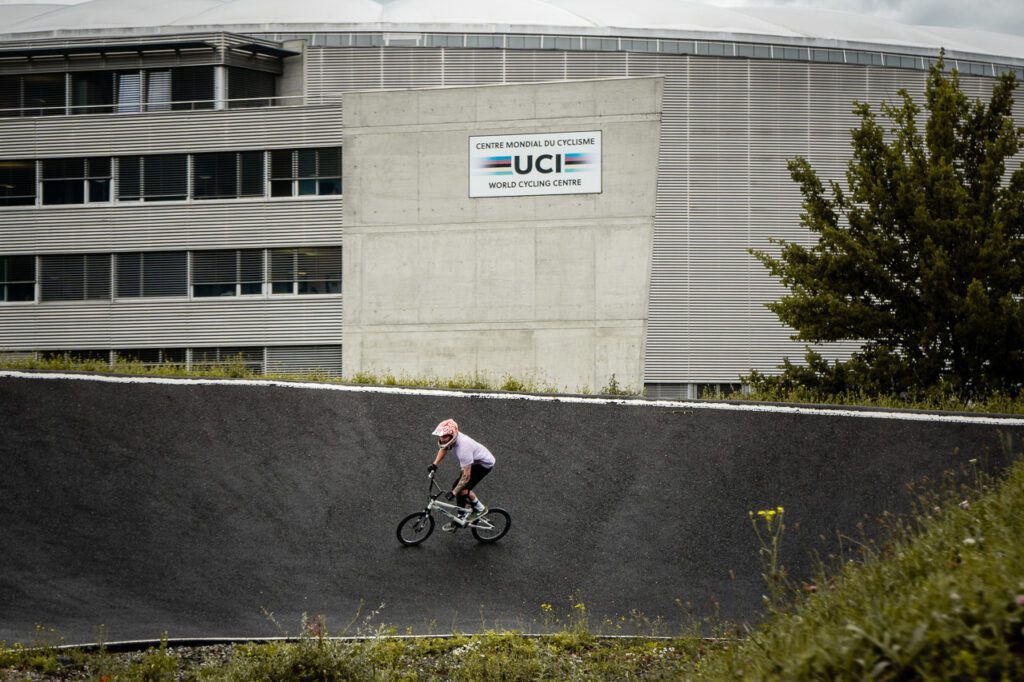
The ninth stage of the Tour is not only about beautiful mountain passes but also through Aigle, the headquarters of the UCI. In fact, the official start will take place right in front of the headquarters, where they have built not only offices but also a whole sports complex. World Cycling Centre. There is a beautiful velodrome, a complete crash course, and also a large BMX track.
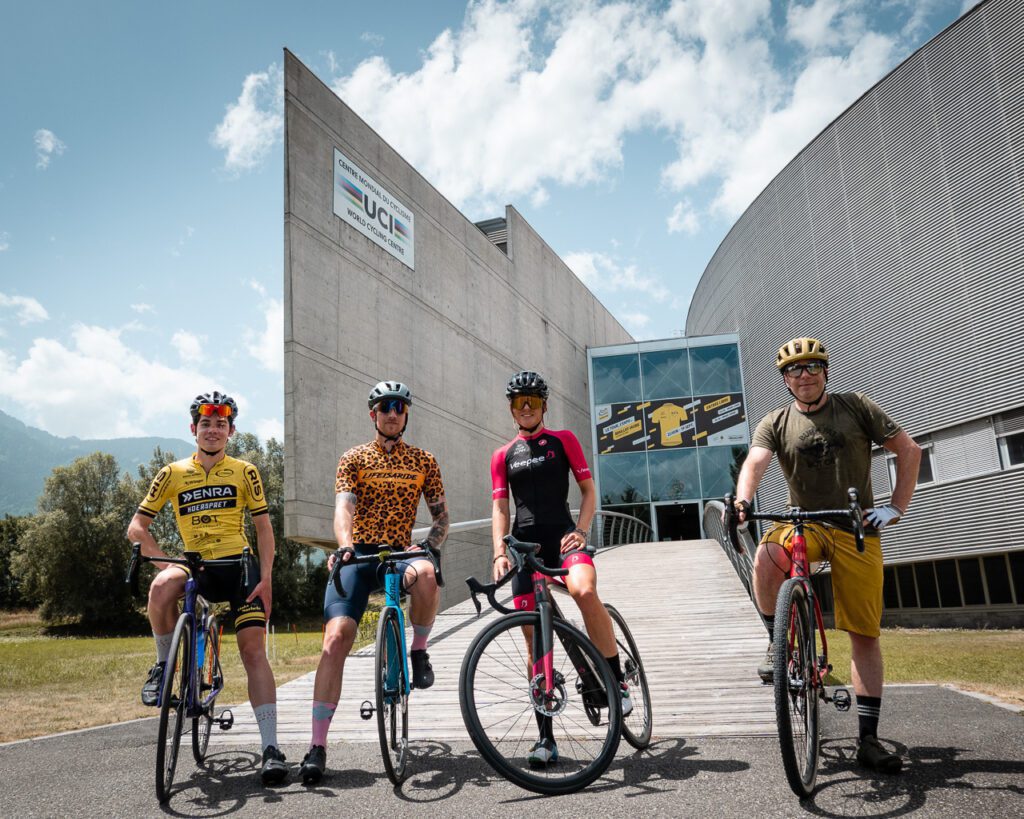
The idea behind this center is to give athletes from all over the world the opportunity to develop further in their sport. Of course, not everyone is eligible for this. It’s mainly athletes who in their own country don’t have the opportunity to develop well, due to, for example, the lack of a cycling track. There are athletes from different countries who train together here in three disciplines: cycling, track cycling and BMX. When we encounter some athletes in the competition area, we are still quite impressed. For example, world record holder in the 200 meters, Nicholas Paul, lifts 170 kilograms with one leg on the leg press.
Just round and round
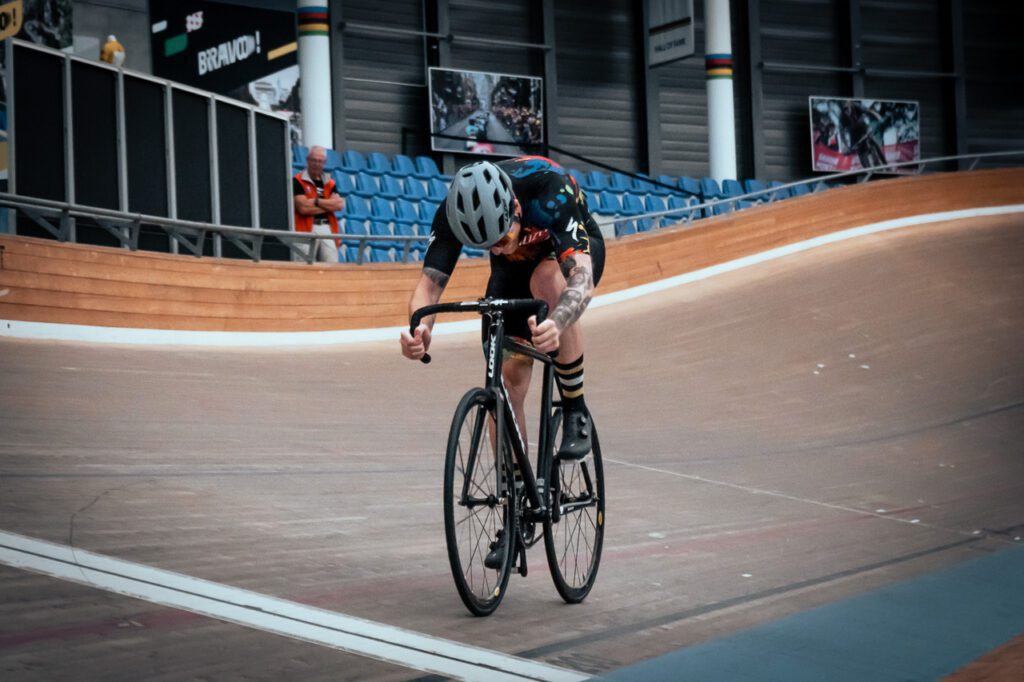
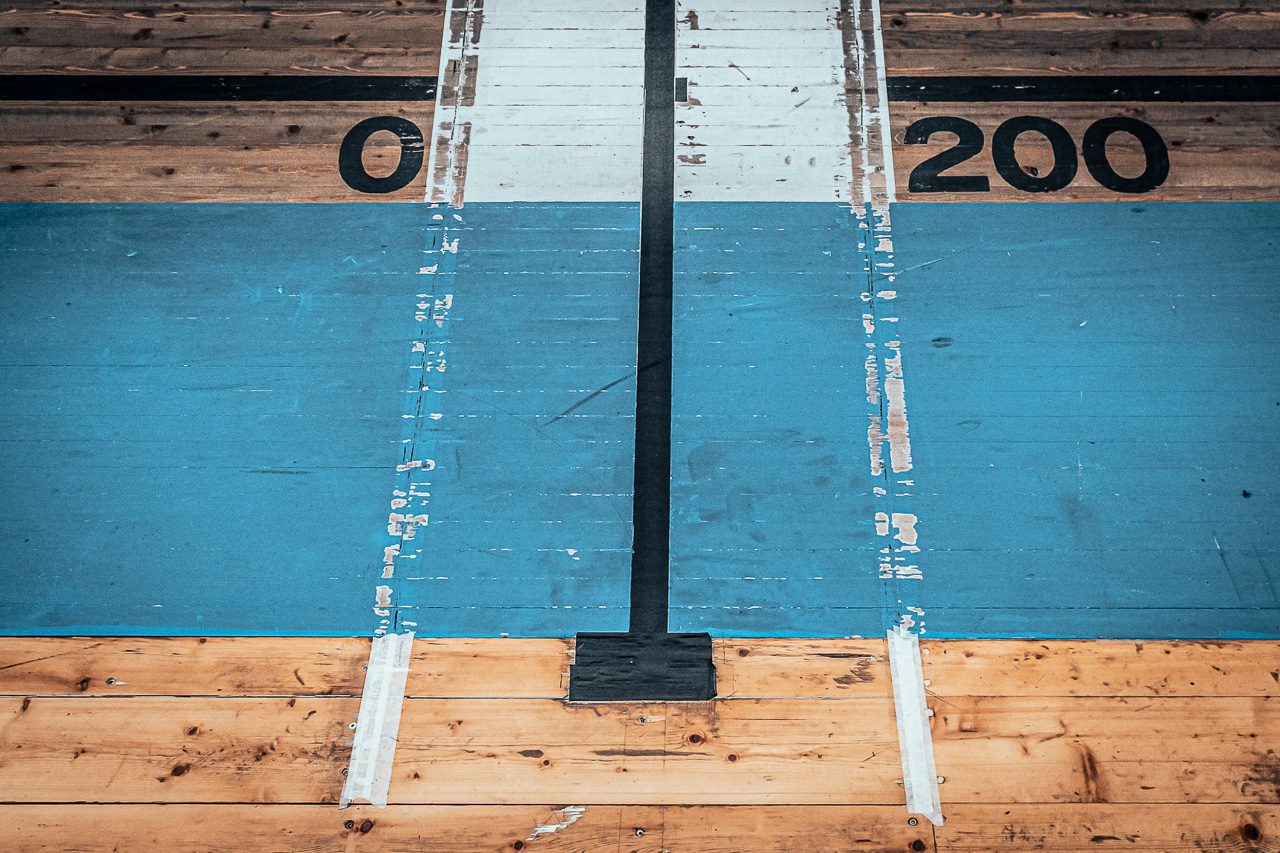
We can also get on the track on our own. Under the guidance of Mathieu, an experienced track cyclist and good teacher, we get on the track bike. After a short explanation, we click in and soon we ride around the track at about forty kilometers per hour. Although the first time through such a steep bend feels exciting, the adrenaline quickly takes over; it’s really a kick! At higher speeds you are really pushed into the curve, which rises steeply at 47 degrees. To finish off, we are also allowed to do a ‘flying 200 meters’, or one lap full throttle. From the top of the last bend, we dive down to get over the start at as high a speed as possible and then keep firing for a round. Mathieu is impressed by the times: the fastest time is 13.97 seconds, which is good enough for a whopping 55 km/h on average over 200 meters.
BMX
In the afternoon we have another unique clinic: BMX. Bicycle Moto Cross, as this branch of the sport is officially called, is extremely explosive, spectacular, and also a little bit dangerous. On a small bike, the pros go over a course of about 500 meters full of jumps, curves, and ledges at a speed of fifty per hour. We start ourselves on a pumptrack, A kind of mini variant of a BMX track where you can practice well. In this sport, you don’t maintain your speed by pedaling, but by pumping. By pumping, you lift your whole body, including the bike, when you ride a hill. When you go downhill, you push your whole body down. It’s a way of riding where you use your whole body, which makes it heavier than you expect.
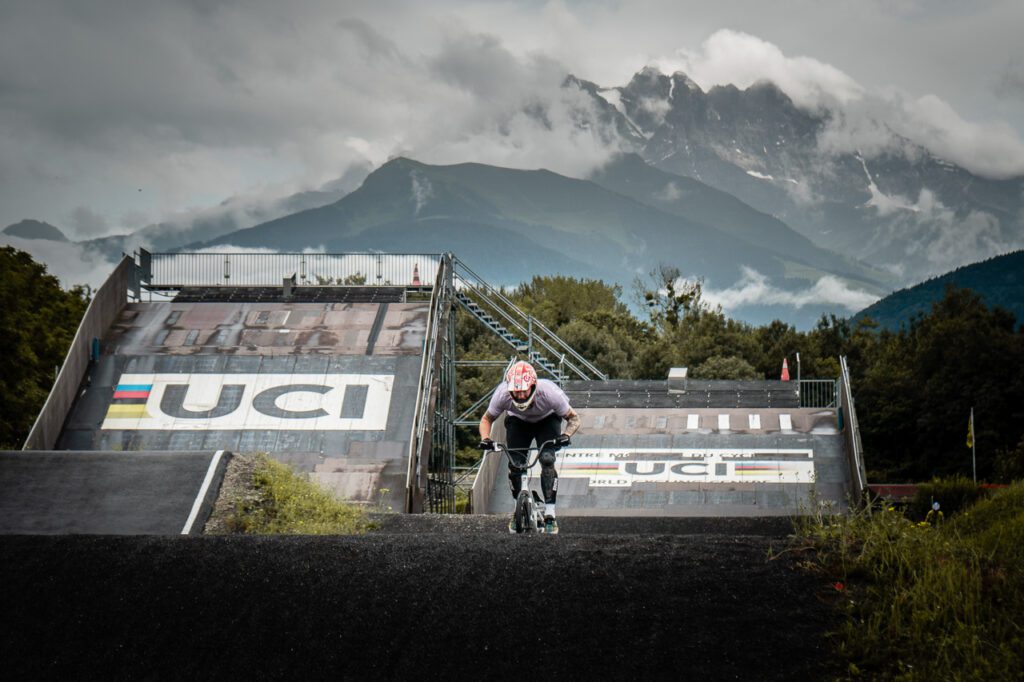
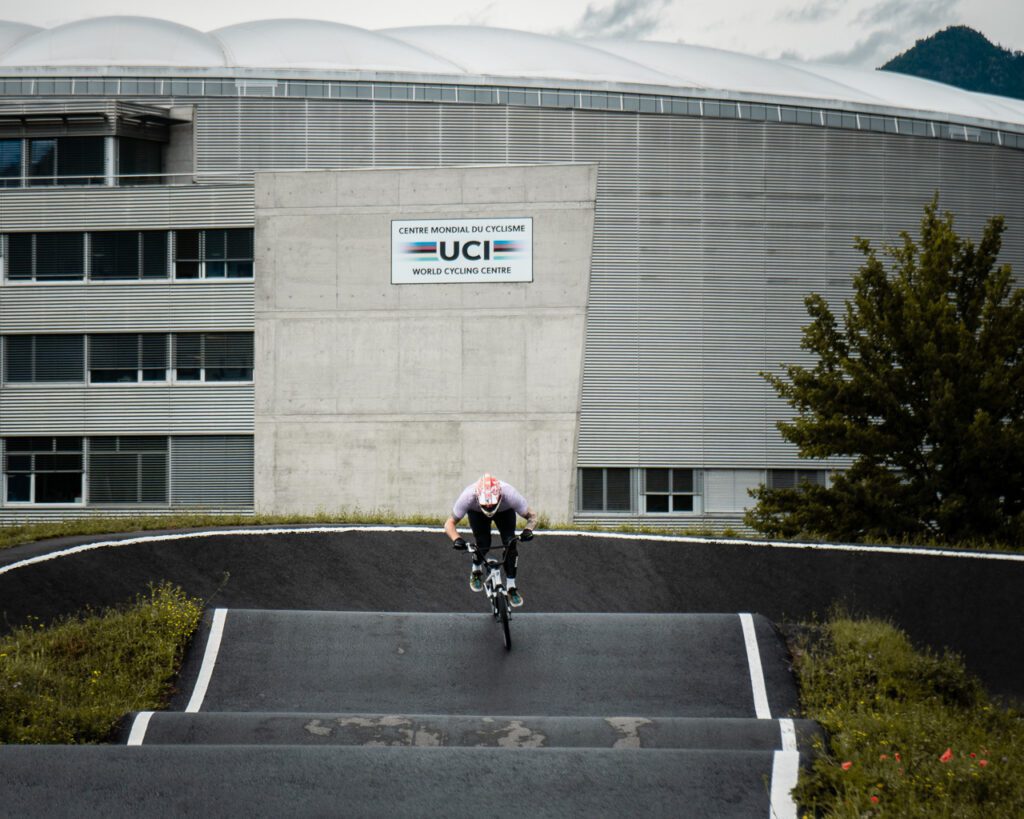
When we get to the bigger BMX track after some training, it really gets exciting. From the big start hill we quickly start off at a pretty high speed on the first bumps. We even make a few small jumps from time to time! The speed combined with the technique gives a huge kick. We didn't expect to find this so awesome! Tired but satisfied, we set off after a few tough runs Take off our helmets. This was perhaps the most fun part of the whole trip.
Versatile Vaud
The Swiss canton Vaud It has taken us by surprise. From idyllic mountain lakes to beautiful old towns and a real cycling track; cycling in Vaud offers variety! You won’t find that anywhere else. We enjoyed fast descents, steep climbs, beautiful winding roads through the vineyards and flat Dutch roads through the valley. And the gastronomy shouldn’t be forgotten: the food and drinks are delicious! Especially the Swiss wine, which we hardly know in the Netherlands, is something we enjoyed almost every night. If it’s up to us, we’ll come back every year. Vaud. Together with the Tour de France Of course!
Questions & tips
Do you have any questions about this route, or have you been there yourself? Share them here. We read everything and usually respond within a few days.