Part of Austria
Carinthia is the southernmost state of Austria, bordering Italy and Slovenia. It is the sunny side of the Alps: the mountains are just as high as in Tyrol, but the valleys are wider, the climate milder and the lakes warm enough to swim in. After a day of hiking, you jump into the Wörthersee, the Millstätter See or the Weissensee. And because Italy and Slovenia are just around the corner, you can easily eat pasta like Kärntner Kasnudeln in the evening.
For cyclists, Carinthia has everything: famous alpine roads like the Großglockner and the Nockalmstraße, long cycling paths along the Drau and the lakes, and the Alpe-Adria Cycle Path that takes you from Salzburg to the sea in a week.
Why cycle in Carinthia?
- Alpenstraten: the southern side of the Großglockner Hochalpenstraße, the Nockalmstraße and the Villacher Alpenstraße to Dobratsch.
- Warm lakes: hundreds of lakes, the largest of which often reach temperatures above 24 degrees in the summer.
- The Alpine-Adriatic Cycling RouteFrom Salzburg via the Alps to Grado on the Adriatic Sea.
- Three countries: Within an hour you can be in Italy or Slovenia by bike.
Race bike: the big climbs
- Großglockner High Alpine RoadFrom Heiligenblut you climb to the Hochtor at over 2,500 meters, with the Großglockner, the highest mountain in Austria, right in front of you. One of the most beautiful and toughest climbs in the Alps. It is a toll road; cyclists pay nothing or a small fee, depending on the season.
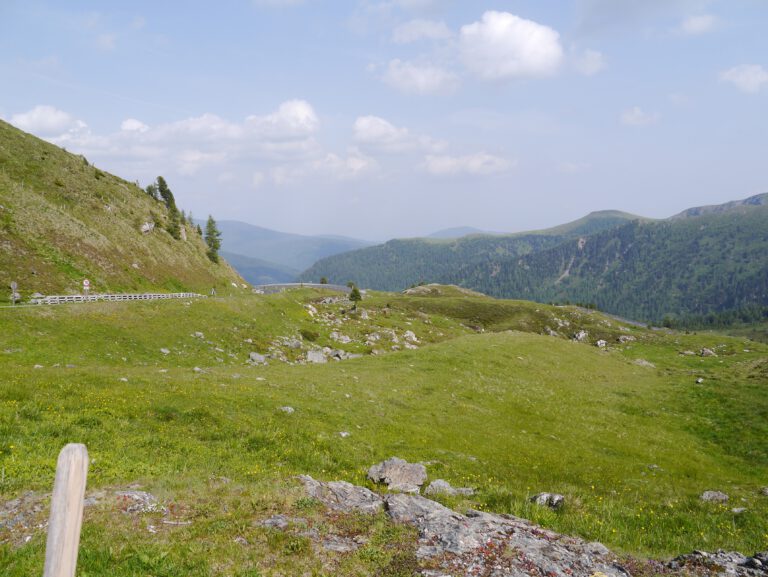
- Nockalmstraße: a panoramic road through the Nockberge National Park, between Innerkrems and Ebene Reichenau, with dozens of hairpin bends and two passes above 2,000 meters. Quiet, green and close to Bad Kleinkirchheim.
- Villacher AlpenstraßeFrom Villach to Dobratsch, with a view over three countries. A regular climb of over sixteen kilometers.
- Wurzenpass and Loiblpass: Short, steep mountain climbing to Slovenia, which you combine in a round trip with the lakes.
Cycling: the Alpe-Adria Cycle Path and the lakes
According to Austria Info, the Alpe-Adria Cycle Path runs for about 410 kilometers from Salzburg to Grado. It crosses the Alps without really steep climbs: by taking the Tauerntunnel you go by train, and in Italy you ride over an old railway with bridges and more than twenty tunnels. The highest point is around 1,200 meters near Mallnitz. The Karinthian part goes past Spittal an der Drau and Villach; most cyclists take a week to complete it.
In addition, there are the Drauradweg along the river and the circular routes around the large lakes. A round trip on the Wörthersee is about fifty kilometers, flat and with places to swim or have a coffee. Ideal for a relaxing day or for those traveling with mixed company.
Gravel and mountain bike
In the Nockberge and around Bad Kleinkirchheim there are hundreds of kilometers of forest and alpine trails, perfect for gravel and mountain biking. Bad Kleinkirchheim is also known for its bikepark and the mountain biking trails in the national park. Read our story Go cycling in Carinthia at Landal Bad Kleinkirchheim. In the south, around the Petzen and the Lavant Valley, you’ll find quieter mountains and a cross-border mountain biking area with Slovenia.
Three rides to get you started
- Heiligenblut – Hochtor and back (about 50 km, 1,400 meters altitude): the southern side of the Großglockner. Start early, before the traffic and the wind.
- Nockalmstraße from Bad Kleinkirchheim (about 90 km): along the scenic road and back via Radenthein and the Millstätter See.
- Three-country ride from Villach (about 100 km): over the Wurzenpass to Kranjska Gora in Slovenia, via Tarvisio in Italy and back along the Faaker See.
Practical tips
- Motorways: The major Alpine roads are toll roads. Cyclists can usually use them for free or at a low cost, but check the opening hours: they only open at the end of May or in June.
- ThunderstormIn the summer, thunderstorms often form in the afternoon. Plan the long climbs for the morning.
- Kärnten CardWith the guest card of many accommodations, you get discounts or free admission to mountain railways, toll roads and boats.
- CombineFriuli in Italy and the Julian Alps in Slovenia are an hour's drive away.
Food and drink
The Karinthian cuisine is a mix of Austria, Italy and Slovenia. The most famous specialty is Kärntner Kasnudeln: dough balls filled with quark, potatoes and spicy mint. At the alpine huts you eat speck, cheese and bread with hut hut, and at the lakes you eat fish from the lake. After a long climb, a Kaiserschmarrn at a mountain hut is the best reward. And thanks to the neighbors, you can just as easily have an espresso as a white beer here.
A week in Carinthia
A beautiful week begins in Bad Kleinkirchheim with the Nockalmstraße and a few laps through the Nockberge. In the middle, you move on to Villach or the Faaker See for the Dobratsch and the Three-Country Ride. End the week in Heiligenblut with the Großglockner, Austria’s royal ride. In between, you ride a leisurely tour of the Wörthersee to tire out your legs. In seven days, you’ll have seen three very different sides of Carinthia.
When are you leaving?
May to September. The high alpine roads are usually open from June to October. In July and August the lakes are crowded and hot; June and September are ideal. In the lower valleys you can already cycle well in May and October.
How do you get there?
By car, you can drive from Utrecht in about eleven hours to Villach or Bad Kleinkirchheim. By train, you can travel via Munich or with the night train to Austria, and then continue to Villach or Klagenfurt. You can also fly to Klagenfurt, Ljubljana, or Salzburg.
This is how we calculate: We calculate distances and travel times starting from Utrecht. Our flights always depart from Schiphol, Rotterdam The Hague Airport or Eindhoven Airport. Want to know how to travel from your place of residence the best way? Let us know, We are happy to help you. After all, we built this site together.
Are you flying? Read our guide Flying with your bike: Which airline, what the cost is and how to pack your bike.
Where to stay?
Bad Kleinkirchheim is a good base for the Nockberge and the Nockalmstraße. Villach and the Faaker See are central for the lakes and the mountain passes. Heiligenblut is ideal for the Großglockner. Along the lakes you will find many hotels with bicycle facilities; many accommodations carry a label for cyclists with storage and workshop facilities.
For whom is Carinthia?
Kärnten is for race cyclists who want to combine the great Alpine climbs with sun and swimming, and for touring cyclists who want to cycle across the Alps to the sea for a change. Gravel riders and mountain bikers will find peaceful mountains there. And for those traveling with a family or friends who don’t all cycle, everything is at hand at the lakes.
Sources
- Austria Info: Alpine-Adriatic Cycle Path – Salzburg – Grado, 410 km
- ÖAMTC: Alpine-Adriatic Cycle Path – stages, tunnels and highest point
- Photo: Zairon via Wikimedia Commons (CC BY-SA 3.0) – main photo