
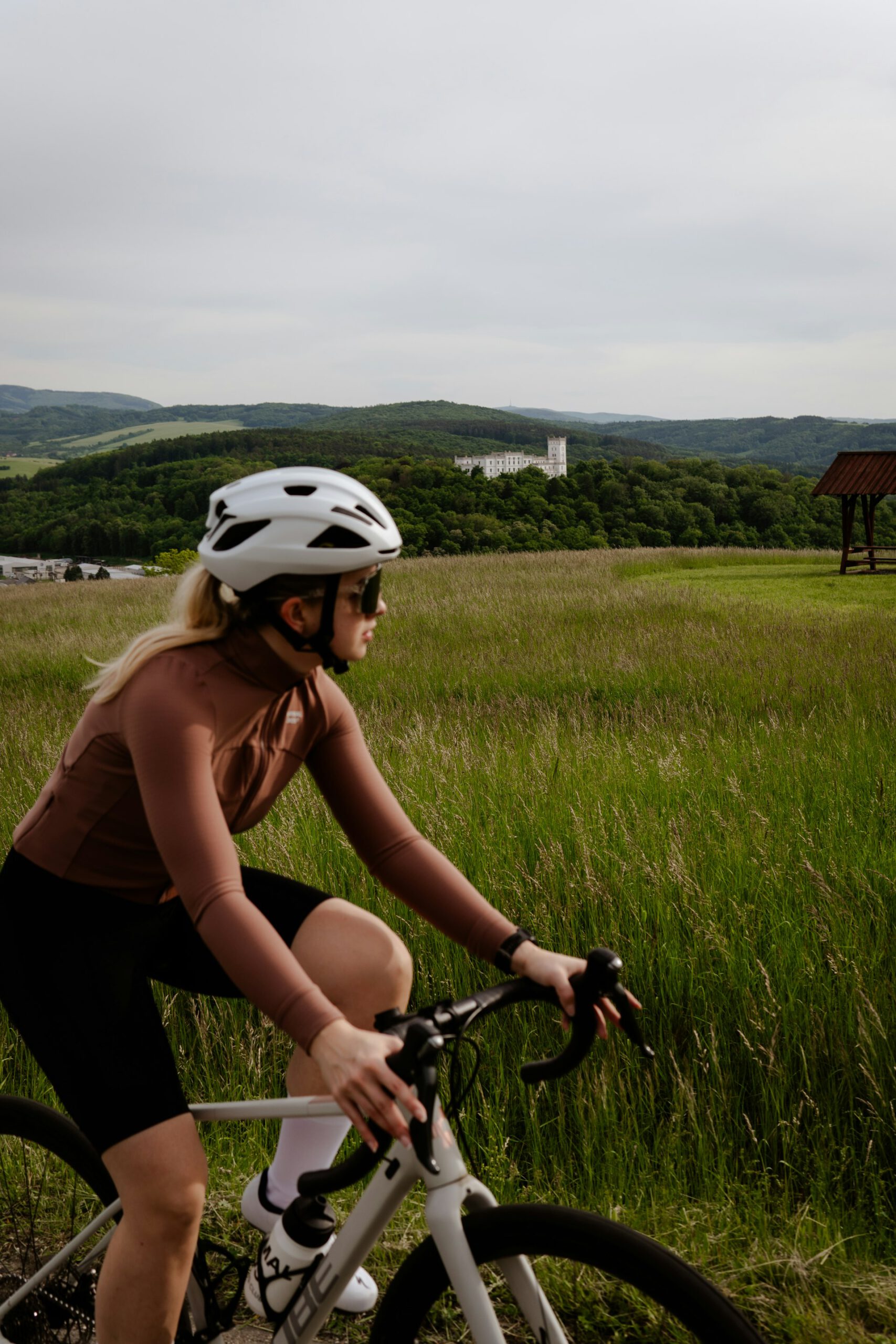
On a gravel bike you ride slower than on the road, but you fall differently: in loose ground, on rocks and roots, often sideways or backwards. And on a bikepacking trip you wear your helmet sometimes ten hours a day, for days on end. That requires a slightly different helmet than for the race bike. For this guide we assume gravel and bikepacking together: the requirements are largely the same.
What to look for in any helmet
- Certification mark: in Europe a bike helmet must meet the EN 1078 standard. Every helmet sold in a Dutch shop does, so a cheaper helmet is not automatically unsafe.
- Fit: measure your head circumference just above your eyebrows. A helmet fits well if it doesn’t move when you shake your head, with the adjustment system not yet fully closed. It should sit level on your head, with the front about two fingers above your eyebrows.
- Ribbons: the straps form a V just below your ears, and one or two fingers fit between the chin strap and your chin.
- Protection against rotational forces: in a crash you often land at an angle. Systems such as MIPS, KinetiCore and Koroyd reduce the rotation and the impact. More on this in our article on MIPS, KinetiCore, Koroyd and other helmet technologies.
- Replacement: after every crash in which your helmet hit the ground, even if you can’t see any damage. Manufacturers also often advise replacing your helmet after about five years, because the material ages.
Torn between models? Look at the independent helmet tests by Virginia Tech. They test helmets on angled impacts, something the EN standard does not do.
What is different than with a racing bike helmet?
- More protection at the back and on the sides: gravel helmets often extend further over the back of the head and the temples, like a lightweight mountain bike helmet.
- Ventilation at low speedOn a steep gravel climb you drive at 8 km per hour. Then you have little to no wind resistance and a helmet should have large air vents and good channels.
- Button: useful against low sunlight and rain in the forest. Some helmets have a removable flap.
- Anti-mosquito meshIn the summer, forests and meadows are not an unnecessary luxury.
For beginners
If you’re starting out on gravel bikes, a good all-round race bike helmet is perfect for quiet rides on bike paths and wide gravel roads. If you want a separate helmet, please note:
- A helmet that sits low on the back of the head.
- Good ventilation and an adjustment system that can be operated with gloves.
- MIPS or similar: when falling on loose ground, you often land on your side.
- A bright color or reflection: gravel trails often run over country roads where you can trip over them in the twilight.
Looking for your first route? Check out our gravel routes in the Netherlands.
For advanced riders and bikepackers
- Comfort on long days: A helmet should fit comfortably for hours. Look for thick, removable and washable pads and a adjustment system that does not press down.
- LightOn a multi-day trip, you sometimes have to drive in the dark. A helmet with an integrated rear light or a holder for a light is useful. A headlamp on the helmet shines where you look, ideal for technical sections.
- Weight and volumeYou can't pack a helmet. So you wear it all day, even when you're stopping for coffee.
- Heat and coldIn the summer, ventilation is essential; in the spring and autumn, a thin cap or a rain cover for your helmet is handy. Choose a helmet that fits such a cap.
- Technical fieldIf you ride a lot of singletrack or bikepacking routes with technical descents, then look for a lightweight trail or XC helmet from the mountain biking world.
Planning a multi-day trip? Read also this is how to plan a bikepacking trip in a foreign country.
In short
Beginner: A good all-round helmet is enough, preferably with MIPS and a low fit at the back. Advanced and bikepacking: Choose comfort for long days, ventilation at low speeds, extra protection at the back and a solution for light.
Questions & tips
Do you have any questions about this route, or have you been there yourself? Share them here. We read everything and usually respond within a few days.