
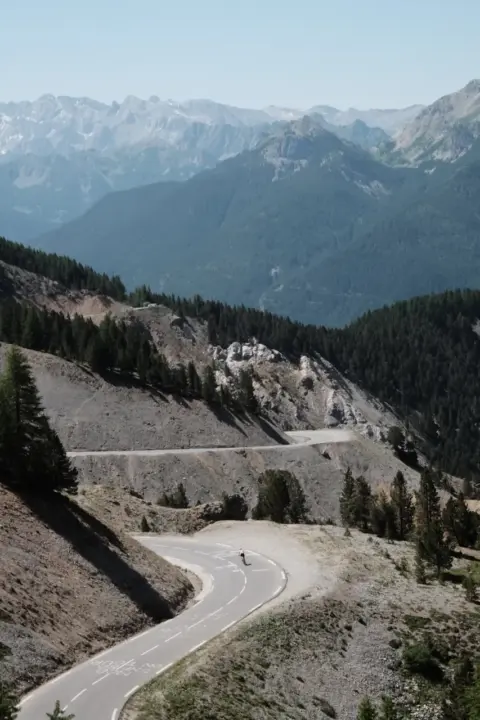
If something appeals to the imagination, it’s the Tour de France. Almost everyone of my generation (Sander, 1984) was captivated by cycling because of ‘the Tour’. I could watch mountain stages for hours, preferably from start to finish. Rousing names like Glandon, Iseran, Galibier. I could really dream about them. Many of my generation have spent all their summer holidays in their 20s ticking off just those climbs from the Tour. The most beautiful ones we’ve put together. Just because it’s fun. And to inspire you for your next cycling holiday in France.
Alpe d'Huez
This is perhaps the The most famous mountain From the Tour. It’s also the Dutch mountain, with the famous bend 7 for the Dutch. The 21 hairpin bends are an inspiration for many bike brands. It’s also always nice for TV, and although not the most beautiful and not the hardest, the 9% is on average pretty intense. There are so many stories on the flanks of this col. That’s almost enough for a separate article.
Every year many Dutch and Belgian people go camping in Bourg d’Oisans at the foot of the Alps. The 21 hairpin bends are an unforgettable cycling experience that every cyclist should have experienced. For the real connoisseurs: there is also a ‘back side’ that you can climb, but it is less popular because of the lack of hairpin bends and, as a result, the lack of heroics.
Read also: Riding the dream: a day before the peloton rides out on the Alpe d’Huez

Mont Ventoux
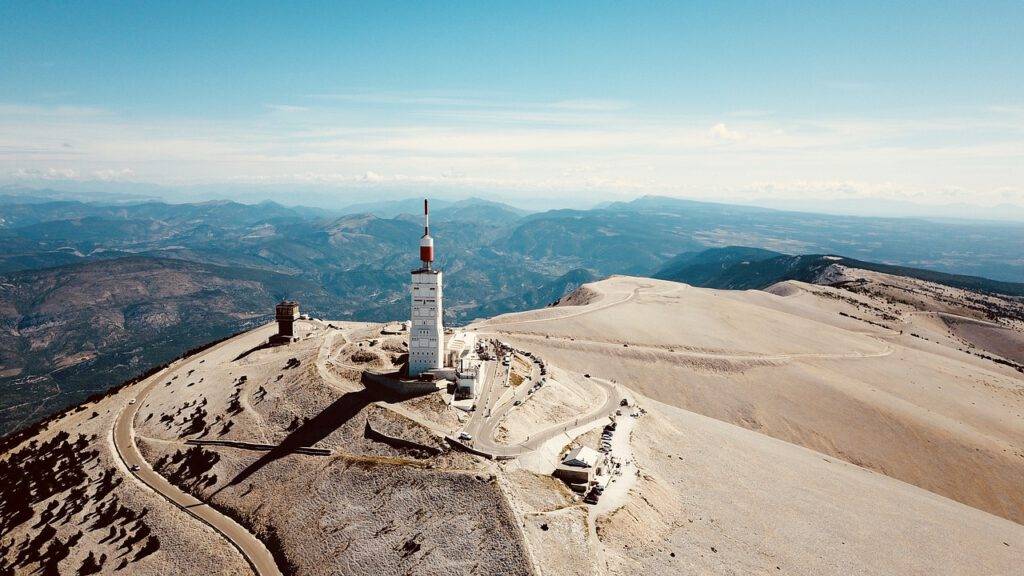
With a nickname like ‘the giant of Provence’, Mont Ventoux no longer needs to prove itself. The Tour de France has passed over the Mont Ventoux 15 times, and the finish of a tour stage has been on the summit of the mountain 9 times. The bare mountain. The Tour de France has a crazy penchant for the climb to the top via Bedoin (14 times), while the climb to Malaucene is at least as tough! Perhaps a tip for the tour organization!
Col d’Aubisque
Like the Tourmalet, the Aubisque is a true classic Pyrenean mountain. A whopping 48 times it was climbed during the Tour de France; the first time it was climbed was in 1910. François Lafourcade was the first rider to climb the Col d’Aubisque on a bicycle during the Tour de France. Later, not only thousands of professional cyclists would follow him, but also millions of amateur cyclists took the trouble to cycle to the top. The climb itself is not particularly difficult, but it is very long indeed.
Col du Télégraphe
The north side of the Col du Télégraphe is a Siamese twin with the Galibier. This climb is often considered part of the (higher) Galibier. It usually does not count towards the overall points tally. Of the more than 30 times the mountain has been featured in the Tour de France, the mountain counted only 18 points. But if you have to cycle up it, it’s still steep!
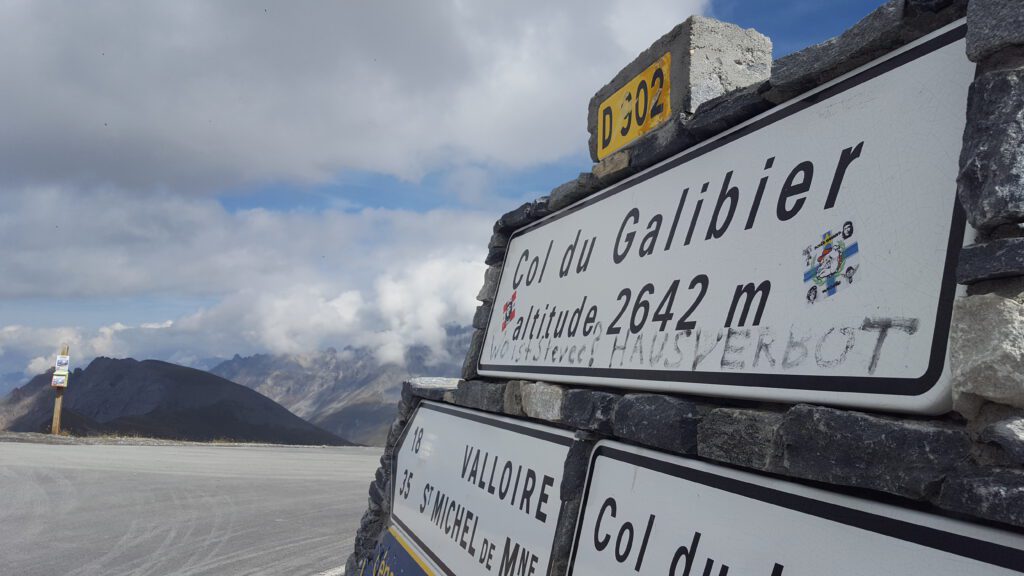
Col du Galibier
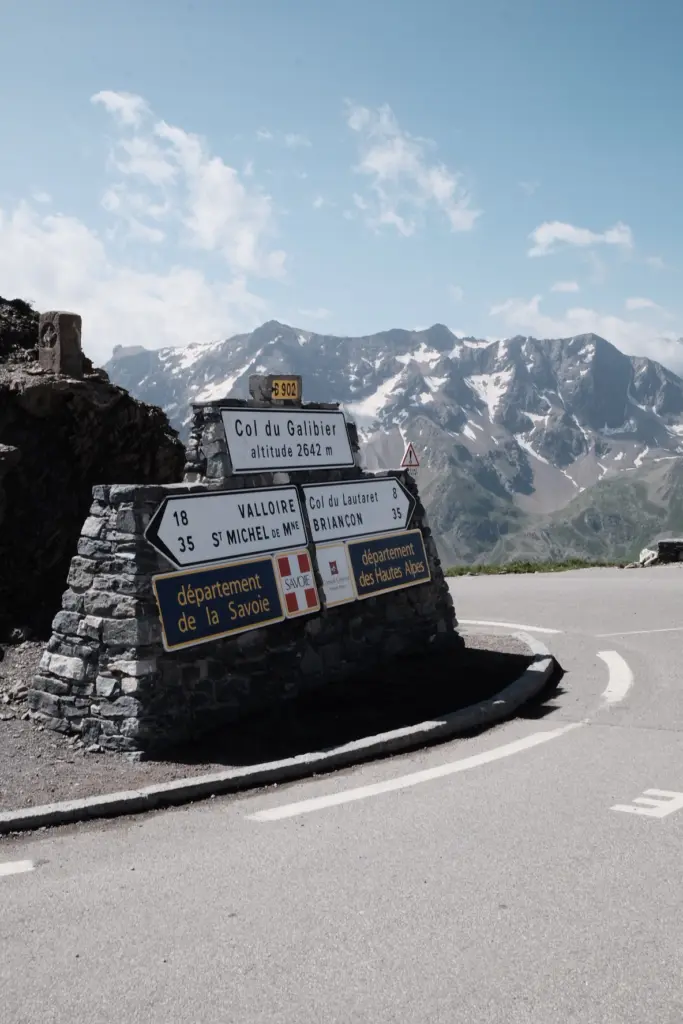
The Galibier is truly a Classic RideIt was the favorite climb of the creator of the Tour de France, Henri Desgrange. A monument stands in memory of him on the southern side of the mountain. In 2011, the finish of the stage was at the Col du Galibier. Andy Schleck won this memorable stage after a 60-kilometer solo race that marked the highest finish ever in the Tour de France!
Col de la Madeleine
The Col de la Madeleine, famous from the Tour de France, connects two Alpine valleys and is often the steepest section of the race. This mountain pass, which has formed a stage 24 times since 1969, with the last time in 2013, is characterized by its challenging climb. Thierry Claveyrolat, for example, dominated here in 1990 during a warm day to win. Although the Madeleine officially does not reach 2000 meters, there is a sign on the top that indicates ‘2000m’. A mistake, because the pass measures 1993 meters. Climbing this col is a real challenge; the steepest kilometer has an incline of 11%, and the longest route from Feissons-sur-Isère is over 20 kilometers with an average incline of 6.2%. So think carefully before starting this hellish journey!
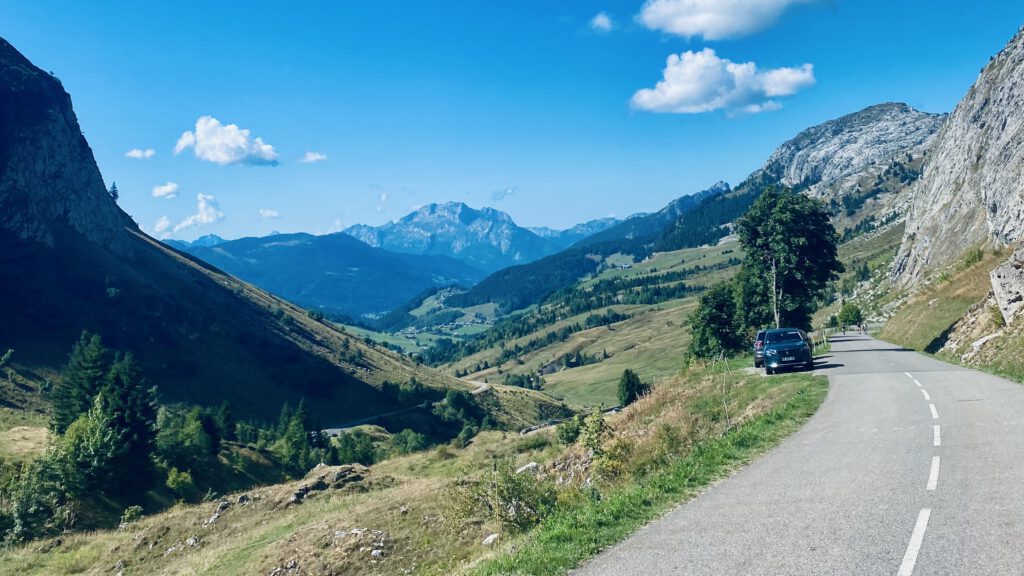
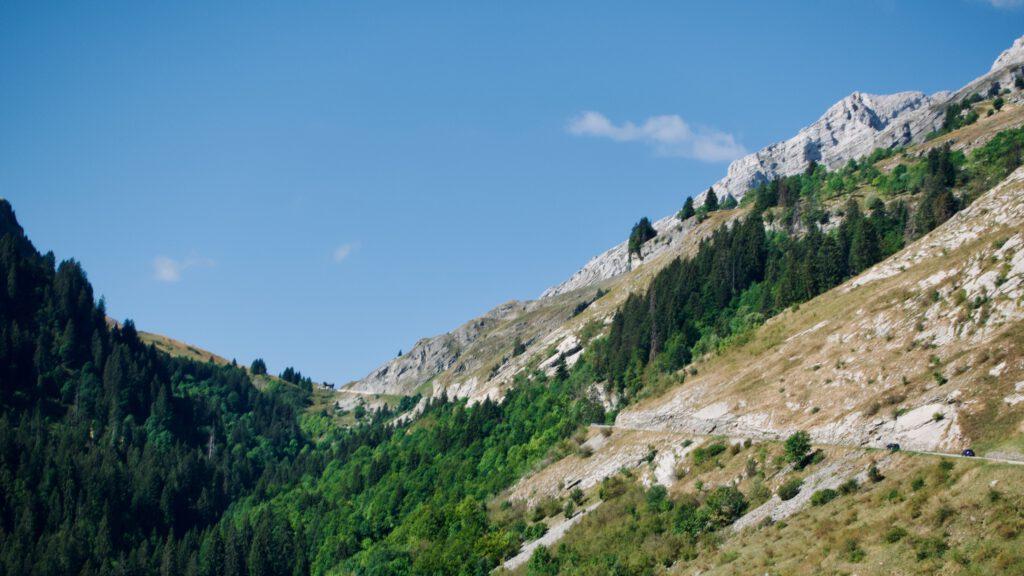
Col de la Colombière
In the Tour de France, this climb is often used as a transition pass. The final kilometer is ideal for attacking to start the descent with a lead. Although this climb is not very high, it is technically difficult to climb. In particular, the northern side of the climb, from Scionzier, is a continuous climb that gradually gets steeper. The trick of this climb lies in the last 5 kilometers, where the average percentage does not fall below 9%. The last kilometer is the steepest part with over 10%, so it is important to properly plan this climb.
Read also: Col de la Colombiere
Col de Peyresourde
Climbing the Peyresourde is a true challenge in the Tour de France. This climb in the Pyrenees has been on the race map 45 times already, with the first edition in 1947. Especially memorable was the 10th stage in 1998, where Rodolfo Massi, also known as the ‘Pharmacist’, had a big influence and seventeen riders did not reach the finish. Despite the fact that the Peyresourde is considered a first category climb due to its relatively limited altitude and gradient, it still offers a serious challenge. You can approach this climb from two sides: a short ascent from Armenteule of 8 kilometers with an elevation gain of 7.6%, and a longer route from Bagnères-de-Luchon of 15 kilometers with an elevation gain of 6.1%. Both sides are feasible for a trained cyclist and offer a pleasant climbing experience without excessively steep segments. Ideal for climbing enthusiasts who are not looking for huge elevation gains.
Col de Peyresourde, Armenteule, France
• Distance: 8.3 km, Elevation gain: 610 m, Average grade: 7.2 %
Col d’Aspin
In the 1950 Tour de France, there was quite a bit of consternation at this pass during the stages from Pau to Saint-Gaudens. The French supporters who had gathered on the climb were quite aggressive towards the foreign riders. In particular, the Italian riders had to endure it; stones and bottles were thrown at them, and the road was obstructed. At the end of the stage, the entire Italian team therefore boarded the train back home; in this way, the Tour de France lost one of its great contenders that year, Gino Bartali. Over the years, the Tour de France caravan has passed over the Aspin Pass more than 70 times; this makes it one of the most climbed passes in the Tour. The Col d’Aspin is famous for the legend of Eugène Christophe’s fork.
Col d’ Aspin, Arreau, France
• Distance: 11.6 km, Elevation gain: 749 m, Average grade: 6.5 %
Want to climb this mountain yourself? Then you can choose between an easy and a difficult route. The easy route starts from Sainte-Marie-de-Campan and is a good training climb with 13 kilometers and 5 percent elevation gain. The harder route starts in Arreau and only takes 12 kilometers to reach the same elevation. That makes an average of 6.5% kilometers. However, these climbs are a breeze compared to the other climbs nearby, such as the Tourmalet and the Peyresourde.
Cormet de Roselend
The Cormet de Roselend is more than just a mountain pass; it is a spectacle in the heart of the French Alps, known from the Tour de France. This climb, which was only part of the Tour ten times, nevertheless deserves special mention due to its breathtaking scenery including alpine meadows, a beautiful reservoir, and challenging hairpin bends. With gradient rates that sometimes exceed 11%, it is not only the ascent that tests cyclists, but especially the notorious descent that requires extra attention. This is narrow and features treacherous turns where even experienced cyclists like Johan Bruyneel struggled in 1996. He survived a fall in a ravine and completed the stage against all expectations. If you want to conquer this col yourself, be especially careful during the descent and enjoy the impressive views and the challenge that the Cormet de Roselend offers.
Cormet de Roselend, Beaufort, France
• Distance: 20.1 km, Elevation gain: 1226 m, Average grade: 6.2 %
Col du Tourmalet
The Tourmalet is the mountain that has been climbed the most during the Tour de France, with a total of 84 times (including arrivals at La Mongie). This pass is an important route to get through the Pyrenees and is therefore included in the tour route almost every year. If you want to climb this mountain during your cycling holiday, you will encounter a lot of traffic. So be careful when descending!
Col du Tourmalet, Luz Saint Sauveur, France
• Distance: 18.4 km, Elevation gain: 1385 m, Average grade: 7.6 %
Col de Portet-d’Aspet
The Portet-d’Aspet is not a spectacular climb. It is also not regularly featured in the Tour. The main reason for including it in this list is the tragic tour in 1995. The Italian Fabio Casartelli lost his life here. It is described in too much detail. The monument along the route leaves you speechless. The image of that rider, lifeless on the ground, is etched in the memory of many.
It is an easy climb that becomes increasingly difficult over time. The last 3 kilometers of the climb are the hardest, with averages above 10%. The climb from Audressein is 18 kilometers at an average of 3.1%, and the climb from Aspet is 14 kilometers long with an average of 4%.
Col de Portet d’Aspet, La Henne-Morte, France
• Distance: 4.5 km, Elevation gain: 433 m, Average grade: 9.6 %
Puy de Dôme
The Puy de Dôme, a volcano near Clermont Ferrand, was the scene of a legendary duel in the 1964 Tour de France between Jacques Anquetil and Raymond Poulidor. Anquetil, a multiple Tour winner, had a 56-second lead on Poulidor, his biggest rival at the start. On the steep climb to the summit, Poulidor raced hard, while Anquetil remained tactically behind without making eye contact. In the final kilometer, Poulidor managed to leave Anquetil behind and gain a 42-second lead, which made the final day exciting. Despite this effort, Anquetil ultimately won the Tour with a lead of 55 seconds. On his deathbed, Anquetil likened his battle against cancer to climbing the Puy de Dôme, a reflection of his challenging yet influential career.
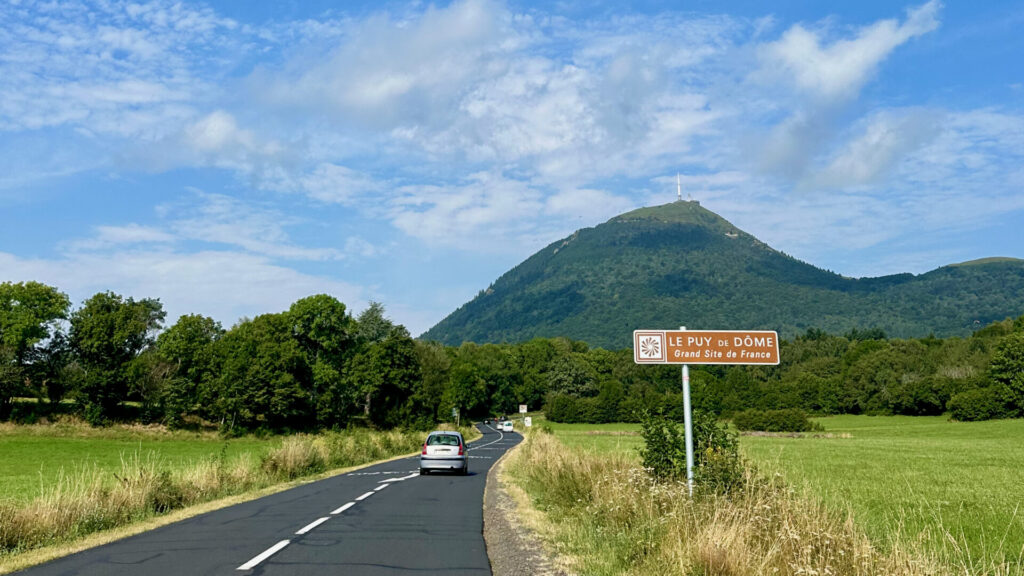
The Puy-de-Dôme is only sporadically included in the Tour and for the ordinary tourist there is only exceptionally the possibility to cycle up. Hiking is possible, and of course with the train as well. But the mythical climb will remain a myth for many.
Plateau de Beille
The climb to Plateau de Beille is one of the horrors of the Pyrenees. As the name suggests, it is not a mountain peak, but a plateau. It is a pasture, populated by skiers in the winter. The Tour caravan stops for 24 hours on the plateau, and the cycling fans have been camping on the slopes for days. In 1998, this mountain was featured in the Tour for the first time. At barely 30 years old, it is still a relatively new mountain. The arrival at this mountain has already been decisive several times for the victory in the Tour de France. Both Marco Pantani and Lance Armstrong laid the foundations for their Tour victories here (although the latter lost the victory officially).
Plateau de Beille, Les Cabannes, France
• Distance: 15.5 km, Elevation gain: 1208 m, Average grade: 7.7 %
For amateurs, this mountain is a horror. In 16 kilometers, you overcome 1255 meters of elevation gain; the average gradient is 7.9%. The climb is very even and is constantly above 7%, which means there is little room to recover; only in the last kilometer can you finally switch gears and accelerate if you still need to do so.
Col d’Izoard
The Izoard is a true legend; since the start of the Tour de France, this mountain pass has been included in the Tour course 33 times. In the 1950s, duels were fought on the slopes of this mountain that were broadcast via radio and the newspaper. Names like Fausto Coppi and Louison Bobbet were the heroes who were followed and worshiped from all over Europe. Later, the winners of the Izoard were other great riders like Merckx, Bahamontes, van Impe, and Chiapuchi. The finish line at the top of this mountain has never been located; the tour caravan always makes its way there. On the way to other places where the heroes finish and are celebrated. However, their sweat remains forever on the Izoard’s asphalt.
The D902 is the connecting road between Briancon and Guillestre. From these two towns, you can then climb this mountain. The north side (from Briancon) is the hardest to climb, here you can recover the least. The south side (from Guillestre) is a bit longer, but a few kilometers before the top the road flattens out so that you can recover well.
Col de la Croix de Fer
The Croix de Fer is a mountain that has been included in the Tour course sixteen times in total. The first time was in 1947, when the Italian Fermo Camellini was the first to reach the top. The Croix de Fer (Iron Cross pass) is one of the most beautiful climbs in the Alps. Famous for the fantastic views and the passage along the reservoir. The height of 2067 meters makes it already impressive. It is a mountain pass between the village of Allemont and the town of La Chambre. The Croix de Fer is located 2.5 kilometers from the top of the Glandon. This also makes it often combined with the Telegraphe and Galibier. So if you do both of these mountains in one go, it can easily be done by cycling a section. The Croix de la Fer can be climbed on two sides by bike, but also indirectly via the northern side of the Glandon (from La Chambre). If you want to climb the Croix de la Fer from the west side, you start in the village of Allemont. The climb on the east side starts in the village of Saint-Jean-de-Maurienne.
Col de la Croix de Fer, Saint Jean De Maurienne, France
• Distance: 28.6 km, Elevation gain: 1544 m, Average grade: 6.3 %
Port de Balès
The organizers of the Tour de France were looking for new routes in the Pyrenees in 2006. The already well-known routes were no longer enough to provide a predictable course. They needed something new, something that would surprise the riders. Through a tip, the creator of the Tour de France route ended up at the Port de Balès. An ideal climb that had never been climbed in a cycling race before. That was no surprise, because the last five kilometers of the climb were unpaved and almost impassable. No problem for the Tour organization, which, by all means, implemented a number of asphalt improvements that in a short time created a beautiful road for the riders. That is how a new climb was introduced in the 2007 Tour de France. Since then, it has become a popular climb that has been included in the tour schedule four times already.
Port de Balès, Bagnères De Luchon, France
• Distance: 18.8 km, Elevation gain: 1068 m, Average grade: 5.7 %
The climb itself is a real challenge. The road is long and the gradient varies greatly. At one point you are in a short descent, while a few hundred meters down the road you encounter sections of 10%. The secret to finding a good rhythm here is not easy. Of course, you could also see it another way. A climb with many steep sections interspersed with less steep sections to get yourself back up to speed.
Col du Lautaret
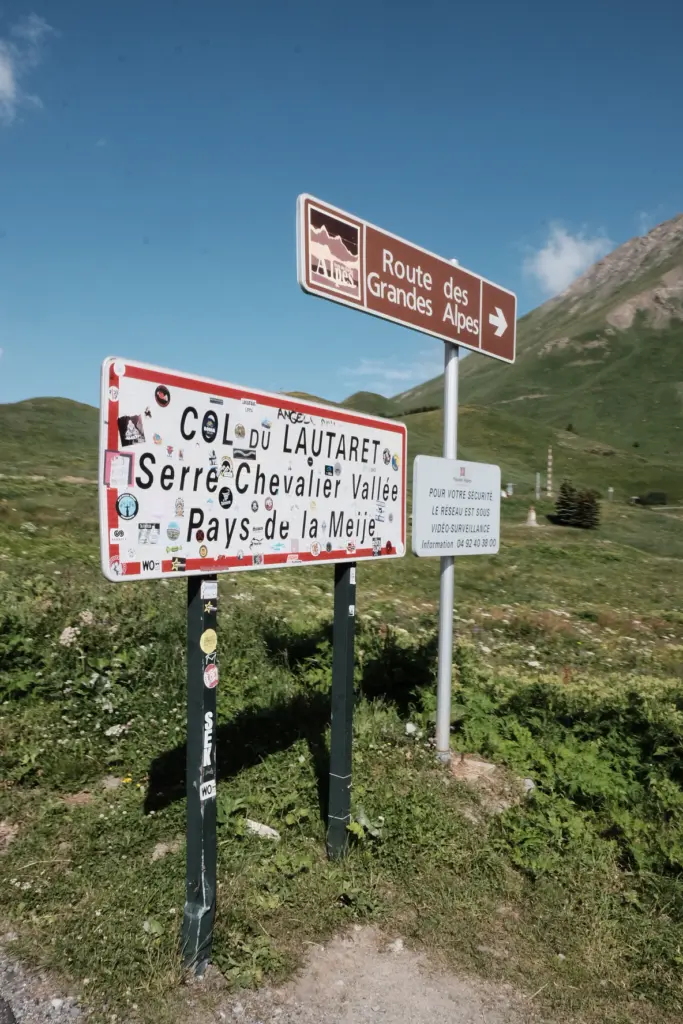
The Lauteret is the easiest way to get from Grenoble to Briancon or vice versa. If you need to get from one city to the other, you’ll definitely have to cross a mountain ridge, and the Col de Lauteret is located at the lowest point of this mountain ridge. That’s why the Tour de France regularly chooses this pass during a transition stage to get out of the Alps or as a warm-up for steeper cols deeper in the Alps.
The climb is mainly long (30+ km) on both sides, but the percentage of elevation gain is manageable. If you’re a real runner who just won’t stop, prepare for a long climb; after every bend there’s another long stretch of asphalt waiting for you! The provincial road is wide, has good asphalt, and is generally well-maintained. Be careful of other traffic, though; they don’t always drive with the same level of courtesy and don’t always take cyclists into account.
Col du Grand-Saint-Bernard
For a one-time trip, we are going to Switzerland. The St. Bernhard Pass It is the oldest pass in the western part of the Alps. The Romans and Napoleon used this pass centuries ago to conquer new territories. The pass is named after Bernhard of Menton, who founded a monastery here in the 11th century. The monks helped travelers in trouble who got lost in the dangerous area. To track them down, the famous Saint Bernard dogs were used. The Saint Bernard pass connects the Swiss Val d’Entremont with the Italian Valle d’Aosta. The mountain road is only passable from early June to late October; in the winter season it is closed due to heavy snowfall.
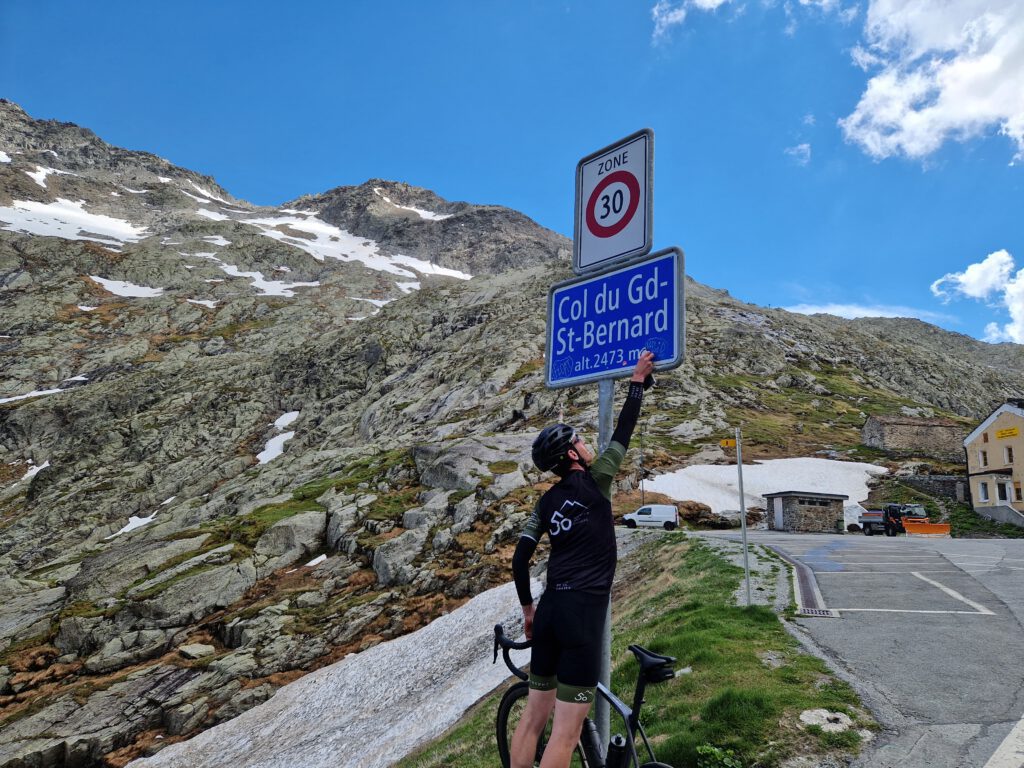
The Tour de France has passed over this pass a total of five times; the 2469-meter-high mountain was last climbed during the 2009 Tour. If you want to climb this climb yourself, take plenty of time for it; the climb is over 40 kilometers long! There are many Italian motorcycles (especially on weekends) that use the pass as a circuit, which creates many dangerous situations. The best time to climb this pass is therefore during the weekdays. What makes the climb unique is that you have the opportunity to cycle through the famous snow walls.
Col de la Bonette
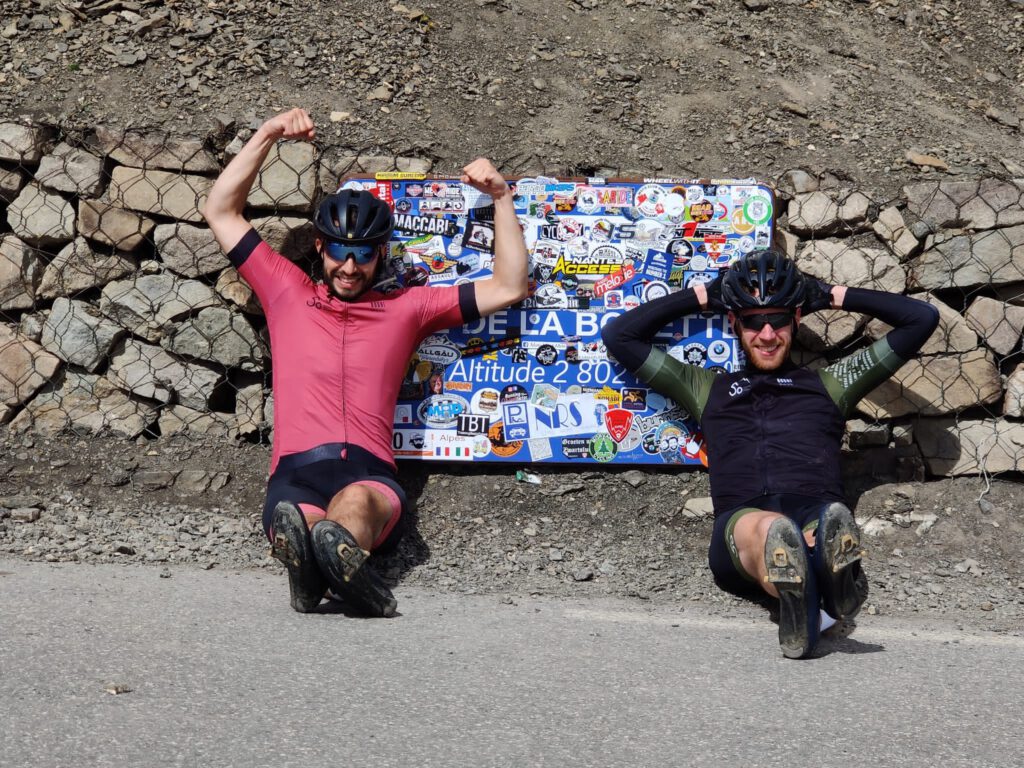
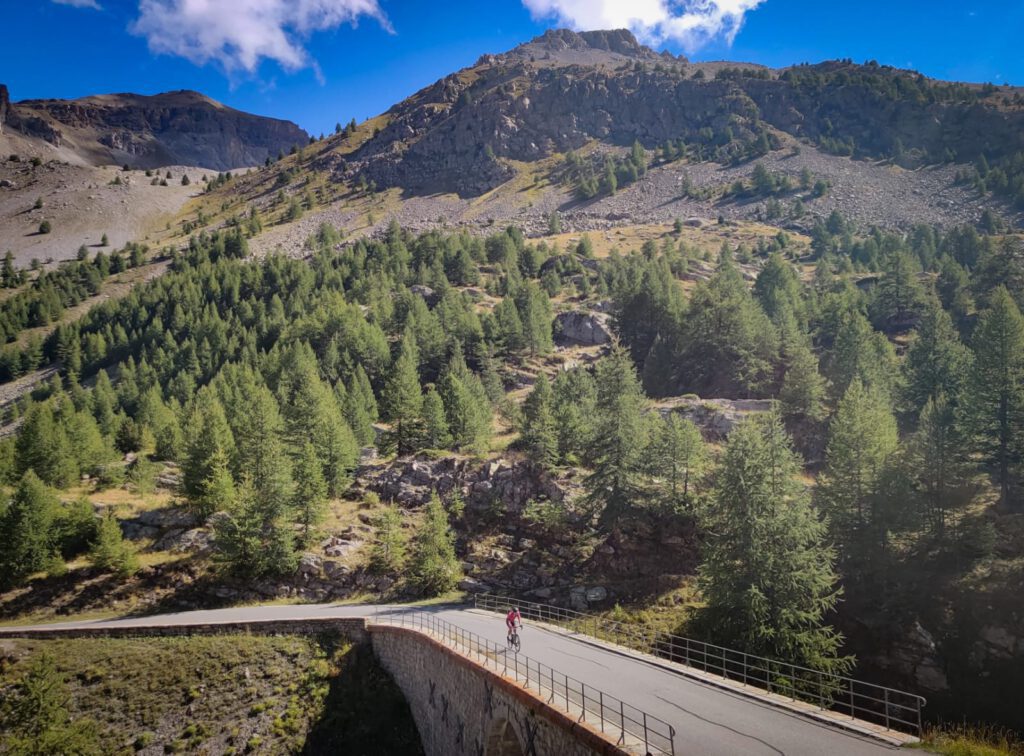
The Col de la Bonette, at an altitude of 2802 meters, is not only the highest point in the French Alps that can be climbed by bike, but also the highest point in all of Europe accessible by bike. It is known as the highest point the Tour de France has ever reached, with the race including this col four times in total. One of the most dramatic moments on the Bonette was during the 2008 Tour, when South African rider Jon-Lee Augustyn reached the top first. However, in the subsequent descent, he missed a bend and slid dozens of meters down into a ravine. Despite this setback, he climbed back on his bike, but the chance of a stage victory was gone. These stages over the Bonette are famous for their steep climbs and spectacular landscapes, and remain a symbol of challenge and perseverance in cycling.
Col du Glandon
The Col du Glandon has been included in the Tour de France course 13 times. Once a Dutchman was the first to reach the top: Steven Rooks passed the top in the stage from Morzine to Alpe d’Huez in 1988 as the first rider to do so. He also won the stage afterwards. The last time the Tour de France passed over the Glandon was in 2013, during a stage that ended at Le Grand-Bornand. Rui Costa managed to win that stage.
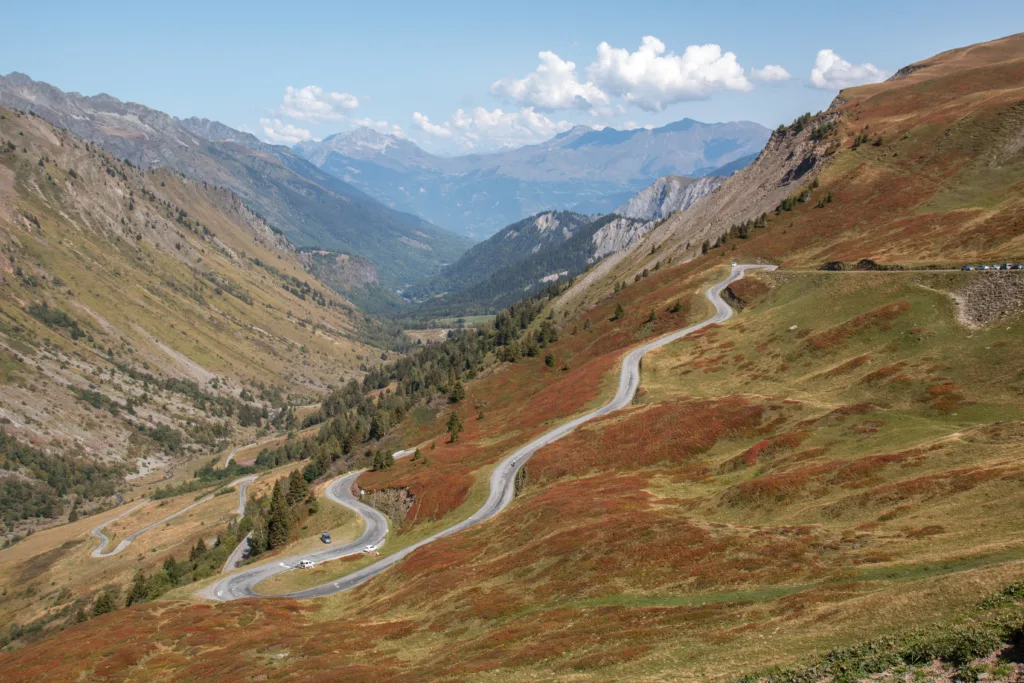
The Col du Glandon can be climbed from two sides, namely from Allemond (south side) and Saint-Étienne-de-Cuines (north side). When you climb the east side of the Col de la Croix-de-Fer from Saint-Jean-de-Maurienne, you can reach the top of the Col du Glandon after a short 2.5-kilometer descent on the right side. The road over the Glandon was opened in 1898 and is generally only accessible from June to October.
Col du Soulor
The Col du Soulor often forms a pair with the Col d’Aubisque in the Tour de France. The combination of these two climbs, which follow one after the other, makes a stage extra difficult. Because of this, the stages over the Soulor are often called the Queen’s Tour. Only once has there been no battle on the slopes of the Soulor. In 1995, Fabio Casartelli died during the descent of the Col de Portet-d’Aspet. The next day the Col du Soulor was climbed neutralized. The Tour awaits no one, but still has respect for the participants. With an asterisk, it did go off the rails the day before. Frenchs gonna be French.
La Ruchère-en-Chartreuse
This climb is not difficult, legendary, and doesn’t even have a good story. The climb was done once in the 1984 Tour de France. The only fact that makes this climb interesting for this list is that it is the lowest mountain that has been awarded in the outdoor category. The col is 1407 meters ‘low’, but has been awarded the outdoor category because the climb was included as an individual time trial. The time trial was won by Laurent Fignon, who laid the foundation for the final victory in Paris. Unfortunately, this climb is not possible for the ordinary cyclist
Col de l’Iseran
The Col de l’Iseran is the highest paved mountain pass in the Alps at 2770 m. The Cime de la Bonette is 32 meters higher at 2802 meters, but that’s not a pass. When we talk about the highest mountain pass that the Tour de France can climb, the Col d’Iseran is the ideal finisher of this list. The Col is named after the region of l’Iseran, which in turn is named after the river Isère. That river originates below this col in Val-d’Isère. The very first time the Tour de France was held was in 1939 on the slopes of the Col de l’Iseran. The start was in Bonneval-sur-Arc and the finish was in Bourg-Saint-Maurice; this time trial was won by the Belgian Sylvere Maes.
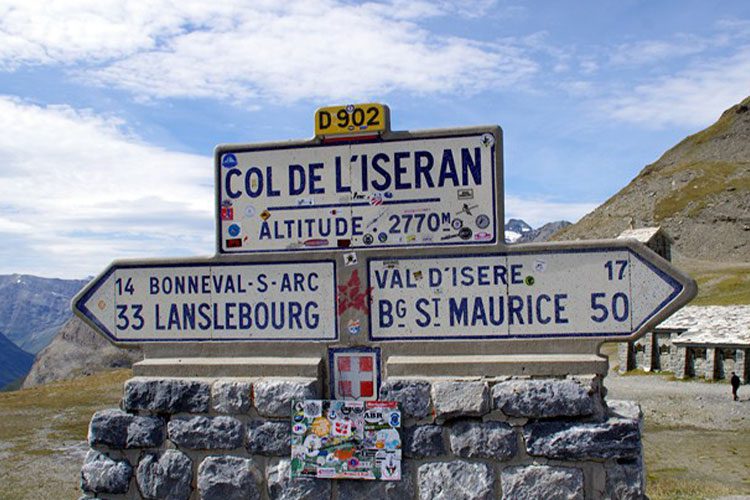
This climb is very long, almost 40 kilometers. Just like many other high climbs. With an average maximum elevation gain of 8.6%, it comes out to 4.3%. Please note: this climb is really high, so in the winter it is often closed (and extremely cold).
Questions & tips
Do you have any questions about this route, or have you been there yourself? Share them here. We read everything and usually respond within a few days.