
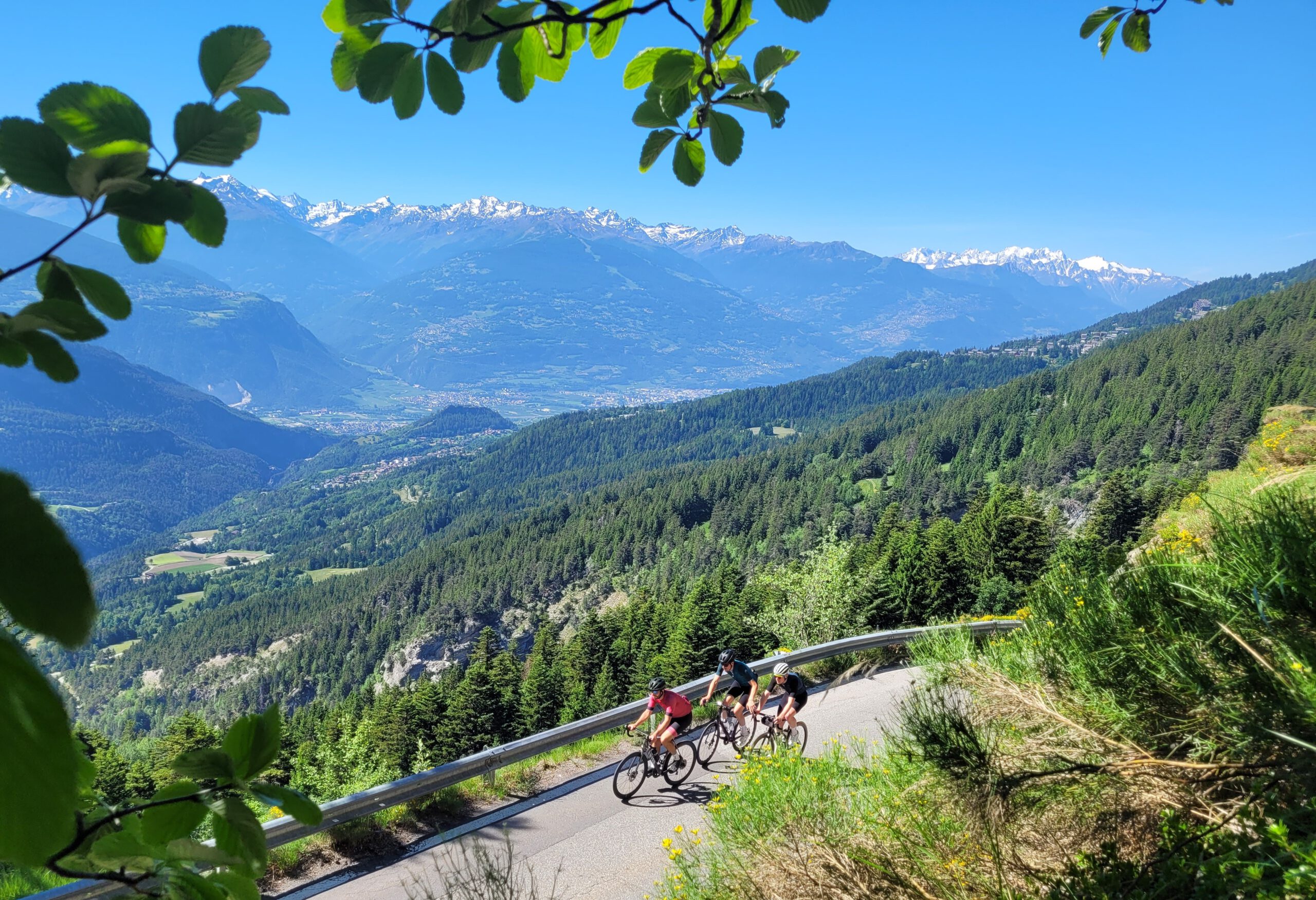
The desires of the vertical cyclist are amply met on a good 900 kilometers of asphalt from Utrecht. The region Valais bursts with cycling climbs, Located in a nearly painted mountain landscape. She stays there quietly, very quietly. Mostly on roads ending at a dam, but few people venture up the road to disturb that peace. Cycling in Valais: Anzère is something to look forward to sincerely.
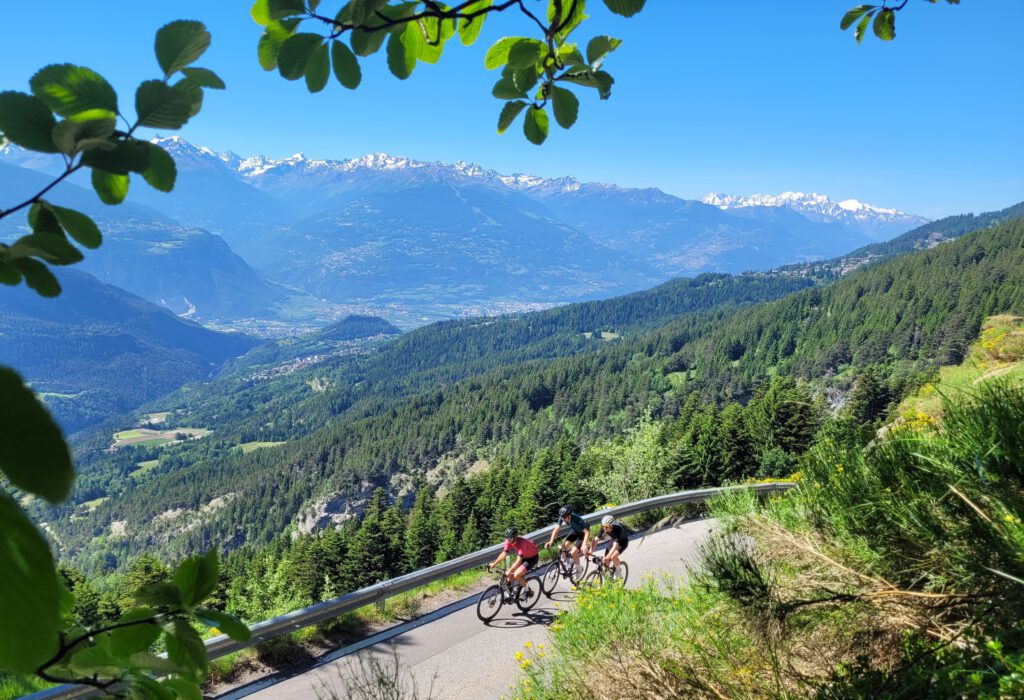
In collaboration with our partner Anzere Tourism The Mountain High Chasers Erwin and Erwin set off towards the Swiss mountain village in the Valais region. Read their wonderful report here. TEXT: Erwin Reijneveld PHOTOS: Erwin Visser, Erwin Reijneveld and Ruben Hoogland
Handsome neighbors
The light makes my eyes flutter. It comes from behind the curtain. I get out of bed and eagerly swing the curtain to the right. White mountain peaks shine against a starkly blue sky. The scent of fresh coffee greets me. Okay, I’ll make that up later. That scent is still two steps away from our coffee machine. But the tone has been set, and not by the weather apps that have been busy this week in order to keep expectations low.
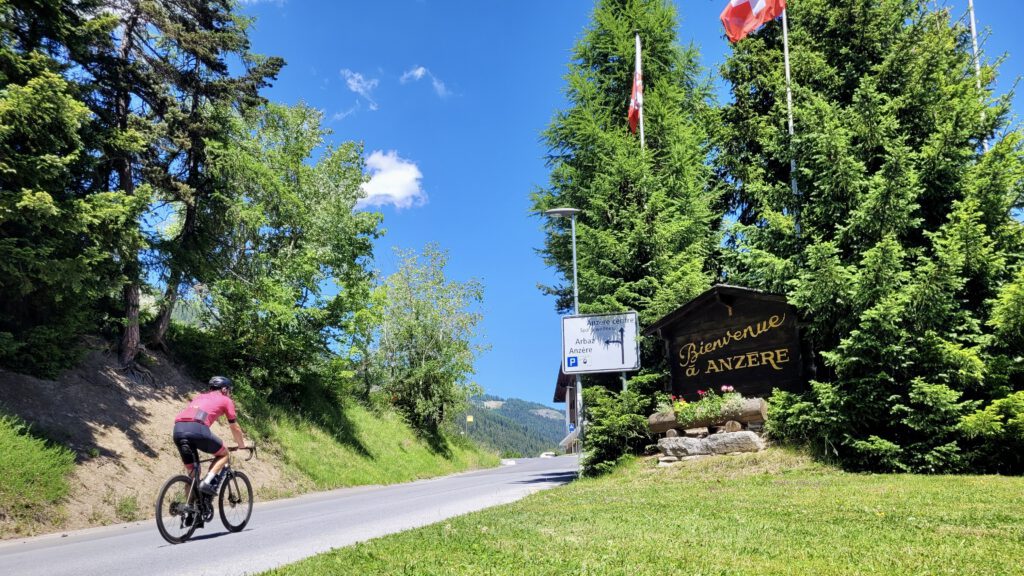
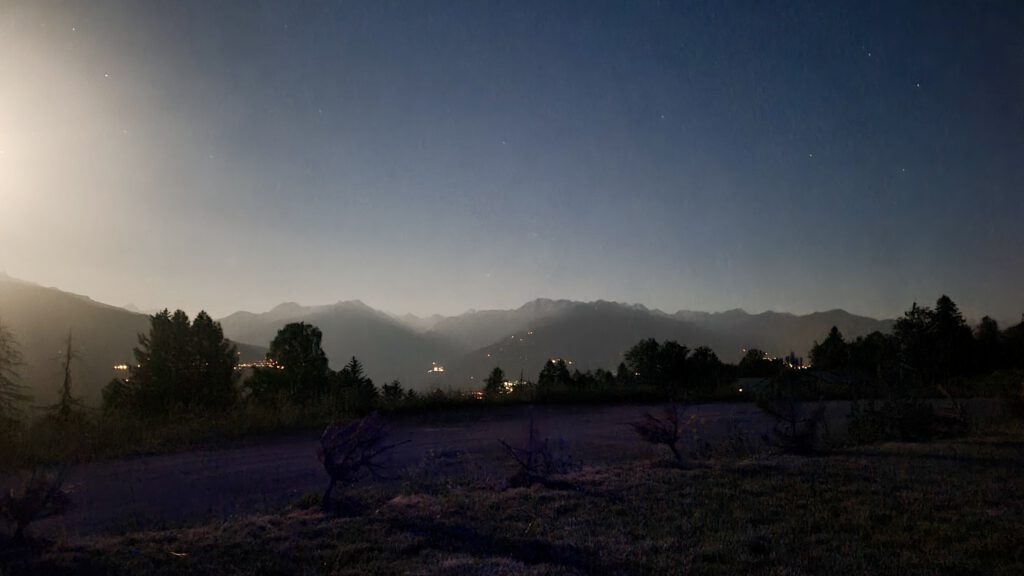
Lake of Tseuzier
Shortly thereafter, another important push button (with the familiar Garmin beep) rings out, signaling the start of the ride, and we descend, while turning our backs to Anzére. Chattering and pointing at each other’s beauty, we gain altitude. Our fingers are consistently aiming for the other side of the Rhone valley. A side that, through the forests, sometimes gives a wink, but truly comes into its own on the open slopes. A side that knows no equal. What pure beauty! Of course, the grass is always greener on the neighbors’ side. And that’s exactly the enormous advantage. No matter which side of Valais you climb, the neighbors always attract attention. Where white mountain peaks fill the horizon between roughly the Matterhorn and Mont Blanc.
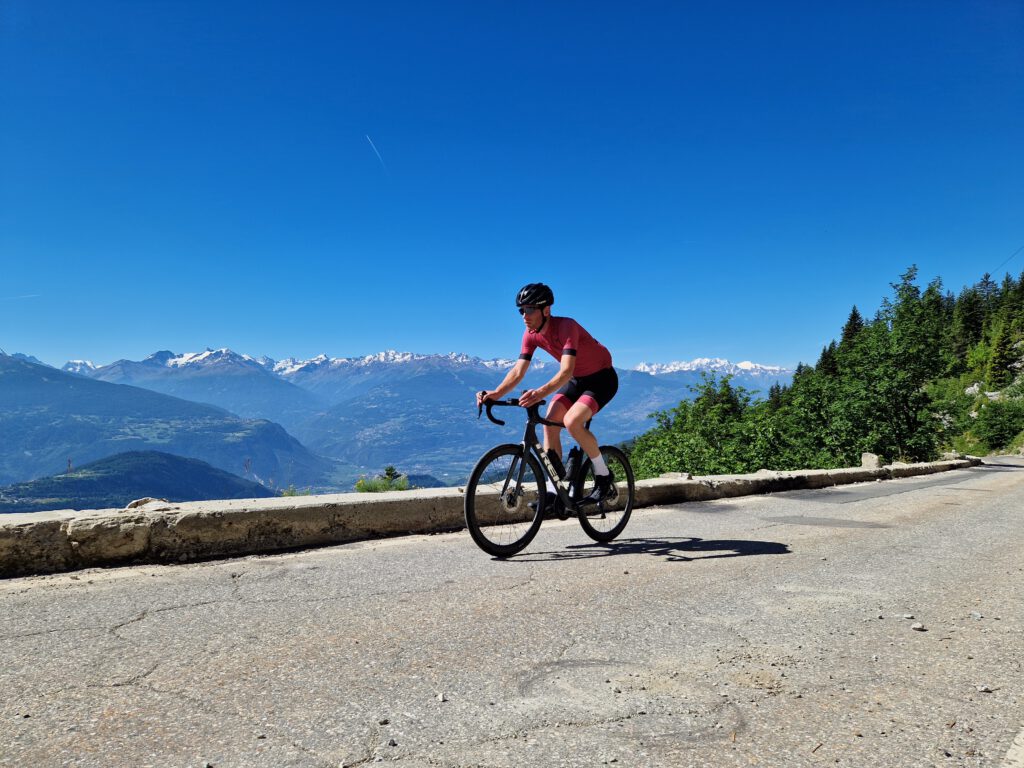
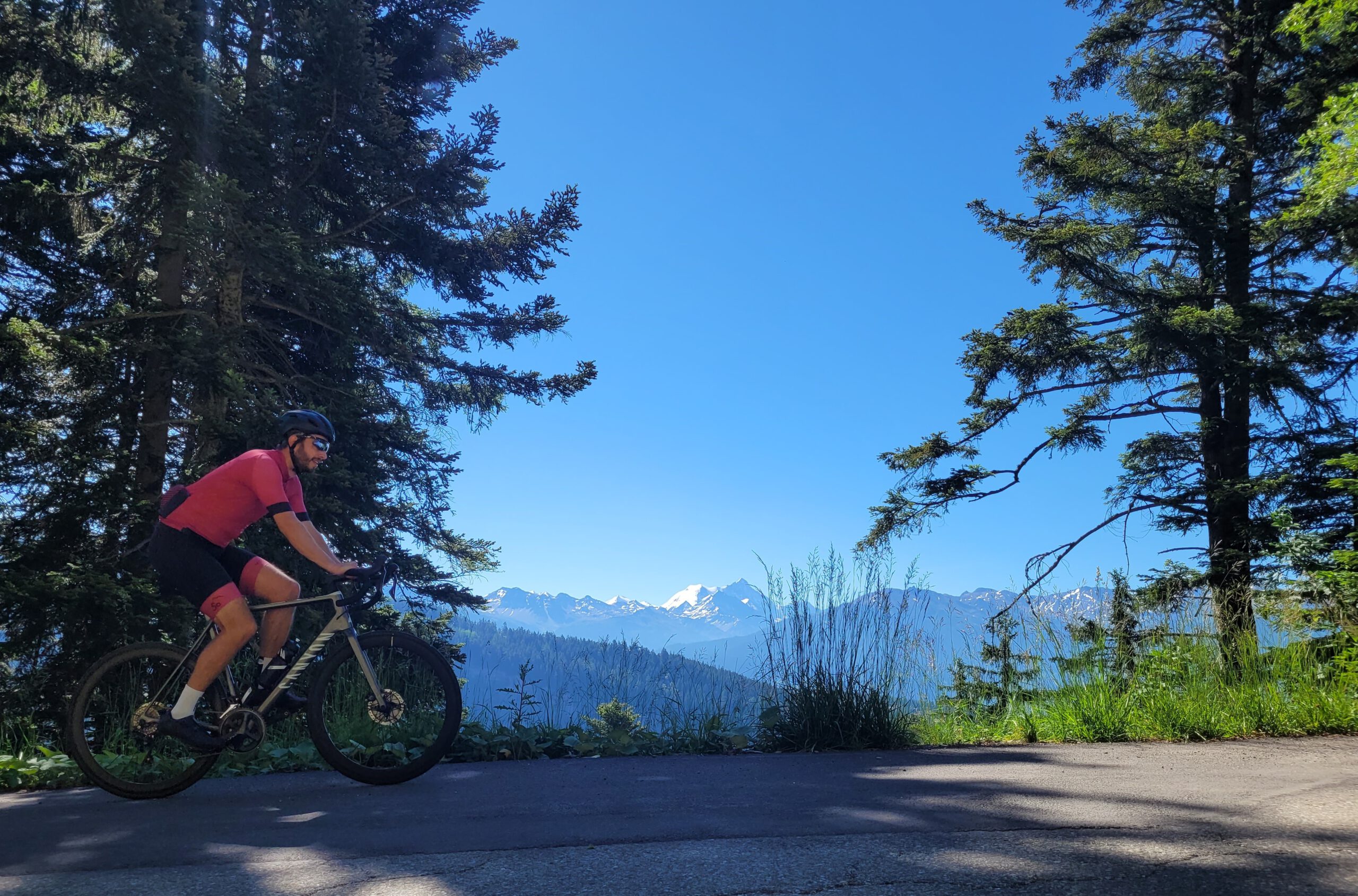
“No matter which climb you take on the north side of Valais, the neighbors always draw attention”
Before we know it, the climbing is done and our wheels roll smoothly across the dam. As a confirmation, the dam lies quietly beside it. The end of the dam becomes the beginning of the road back, but first a coffee. Ironically, the coffee we were looking forward to did not get served because the restaurant was closed. The reason for the closure? A ‘water problem’.
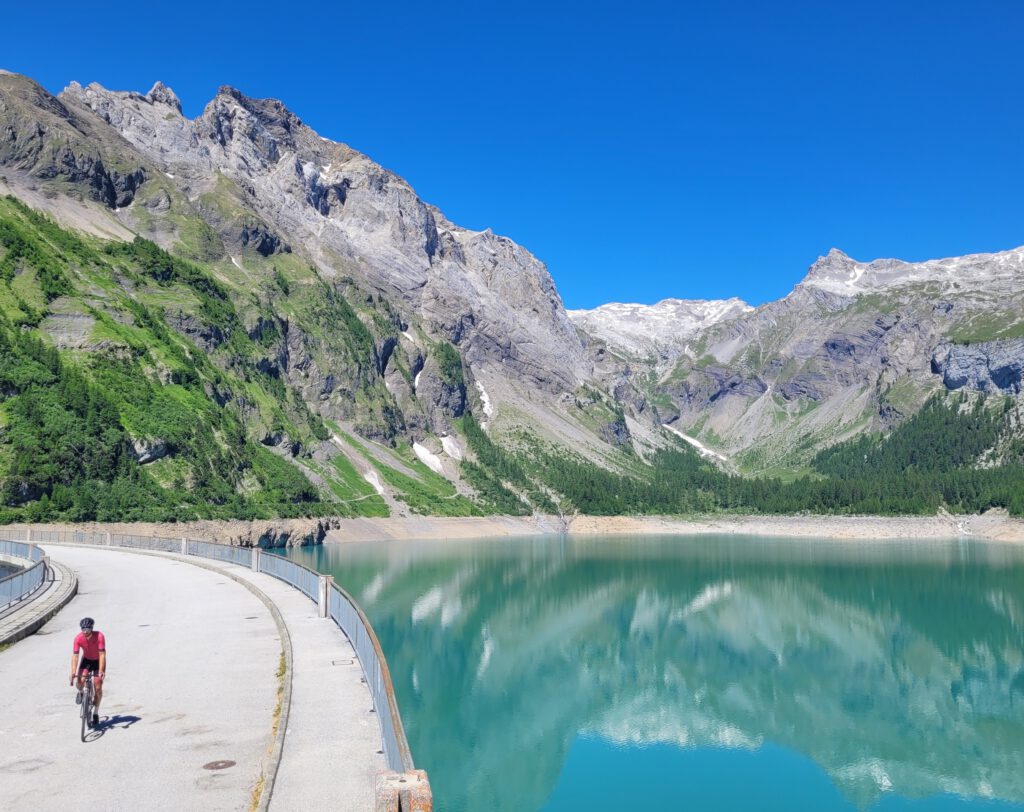
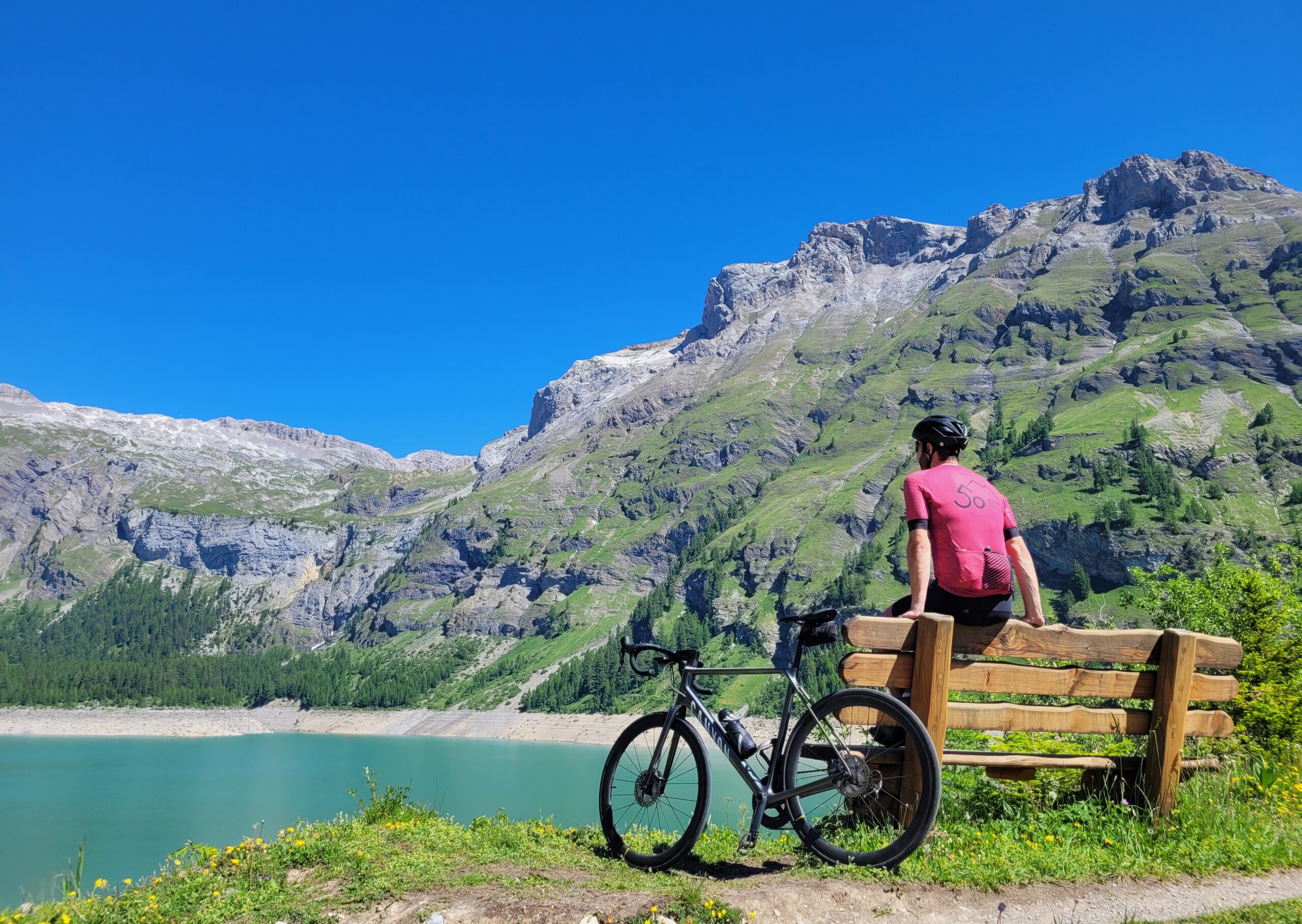
The road to nothing
Caffeine and calories are still found 767 meters lower in Ayent. After lunch we begin to realize the underestimation of this trip; however, that insight will have to wait a little longer. We head for the Col du Sanetsch. A tip that came to us, simply as tips are often packaged. In a few words, the messenger forces you to follow the tip; ‘you won’t regret it’ is the final push you often get.
The mercury rises on this scorching day no further if we start doing that. The next drop of sweat falls onto the screen in front of my steering wheel. Besides the drop, the screen also shows a signal that could be picked up; 18 kilometers climb, 1461 altitude meters to go. We bravely keep going. Eight percent increase. The next kilometer, the same angle. One eight follows the other. The mountain itself stands in stark contrast to our efforts. The familiar picture, but perfectly colored. The sound varies everywhere between babbling and roaring water. Supported by chirping birds with sometimes a hoarse call from the alpine meadows full of wild flowers. In this tranquility, the Sanetschhore (or Mont Brun in French) stands as a beacon in the distance.
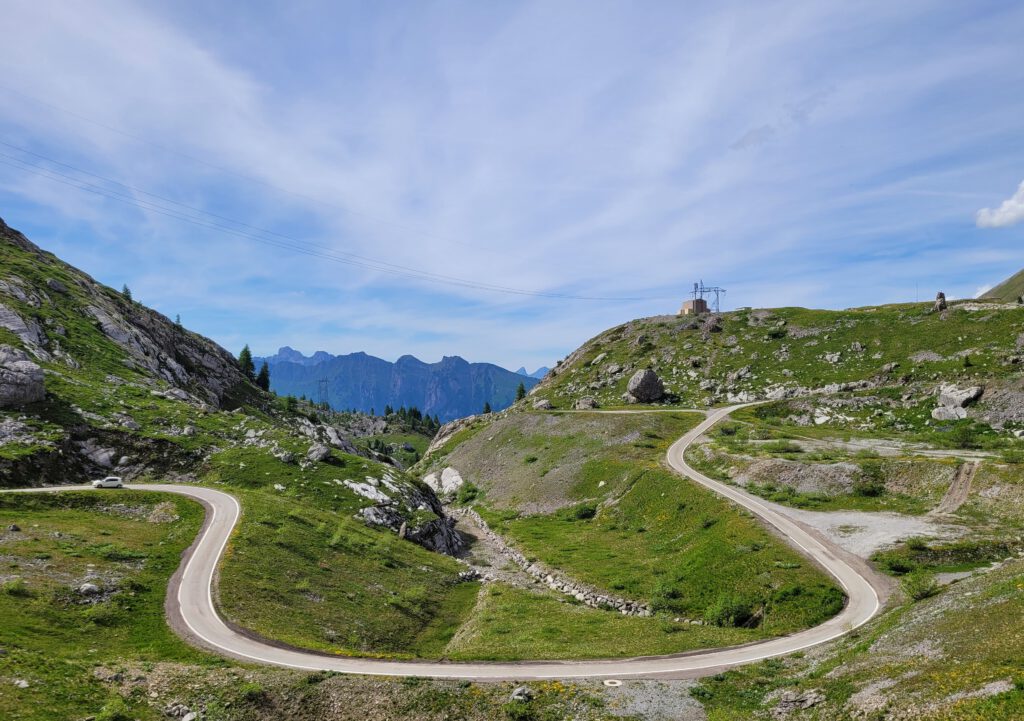
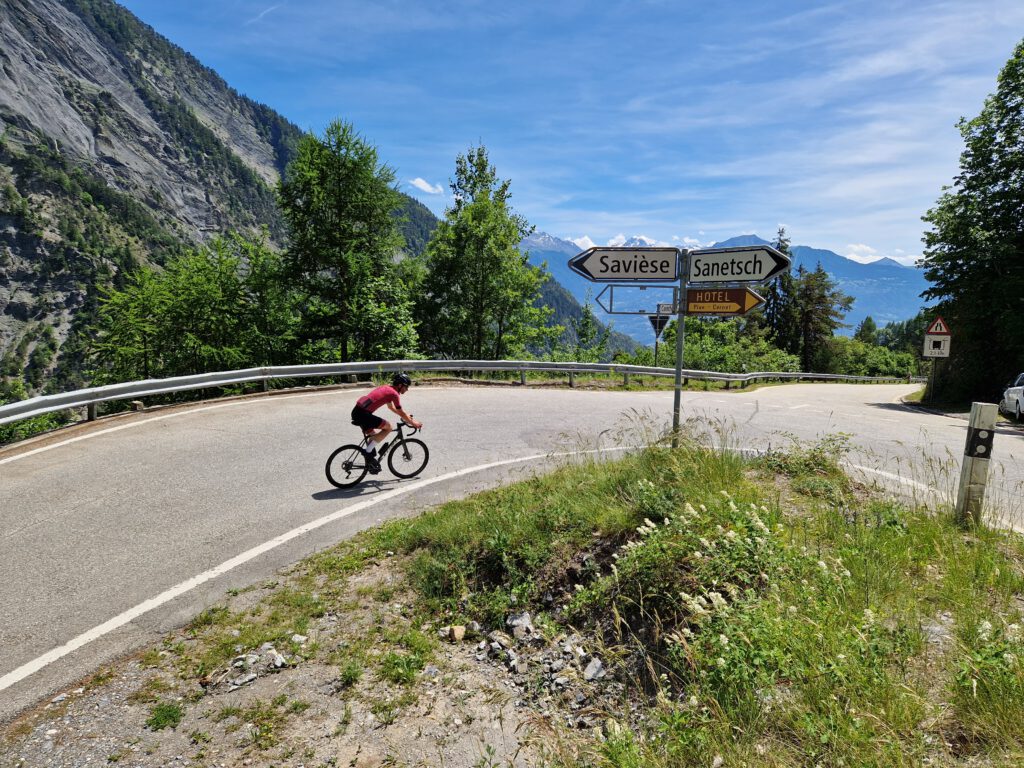
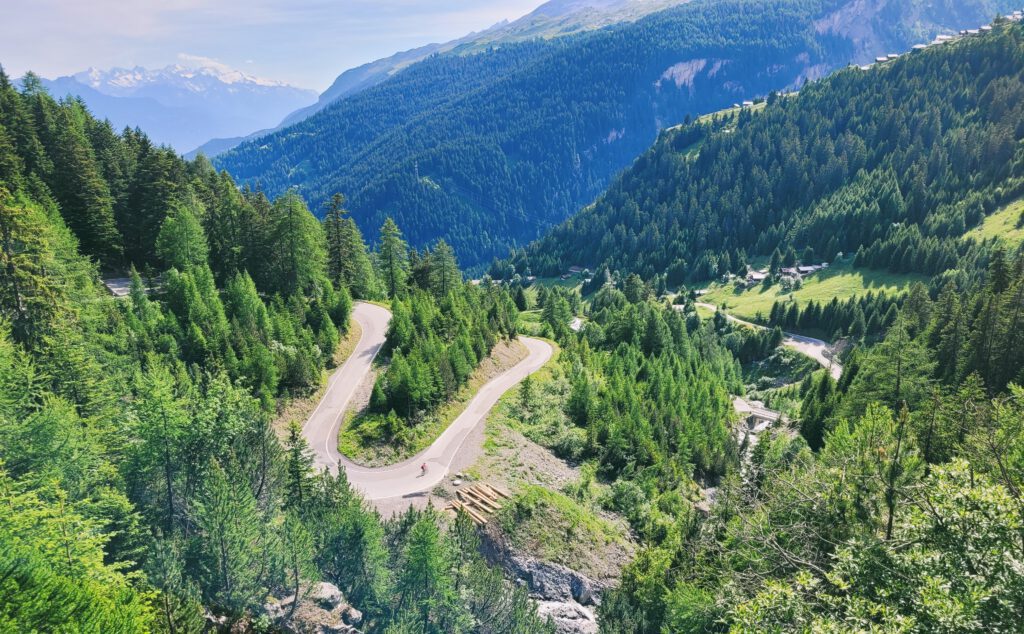
No signs along the roadside that count down the time or annoy us with gradient percentages. Not even cars that let us know with smelly brake discs that we are not alone in the fight against gravity. For pity’s sake, we must be alone with ourselves, and that is completely justified. The road winds its way over spaghetti curves and bridges, through tunnels and over cliffs, through sheer beauty to an access to the top. A road to nothing, nothing but the mountain itself. The eight percent is replaced by double digits, flattens out and becomes straight again. Abstention makes way for lasting awe and a hefty dash of euphoria. The tip has been confirmed and will be passed on.
Just one more down
Behind the top the road continues for a few kilometers, mostly downhill. After Lac de Sénin there is a short climb to the local inn. Where there is also a lift that goes towards Gsteig (though not exactly a road to nowhere), which you can even bring your bike on. Our day is almost over, but the lift makes it possible to make a nice round via Aigle and to make Martigny return to Sion.
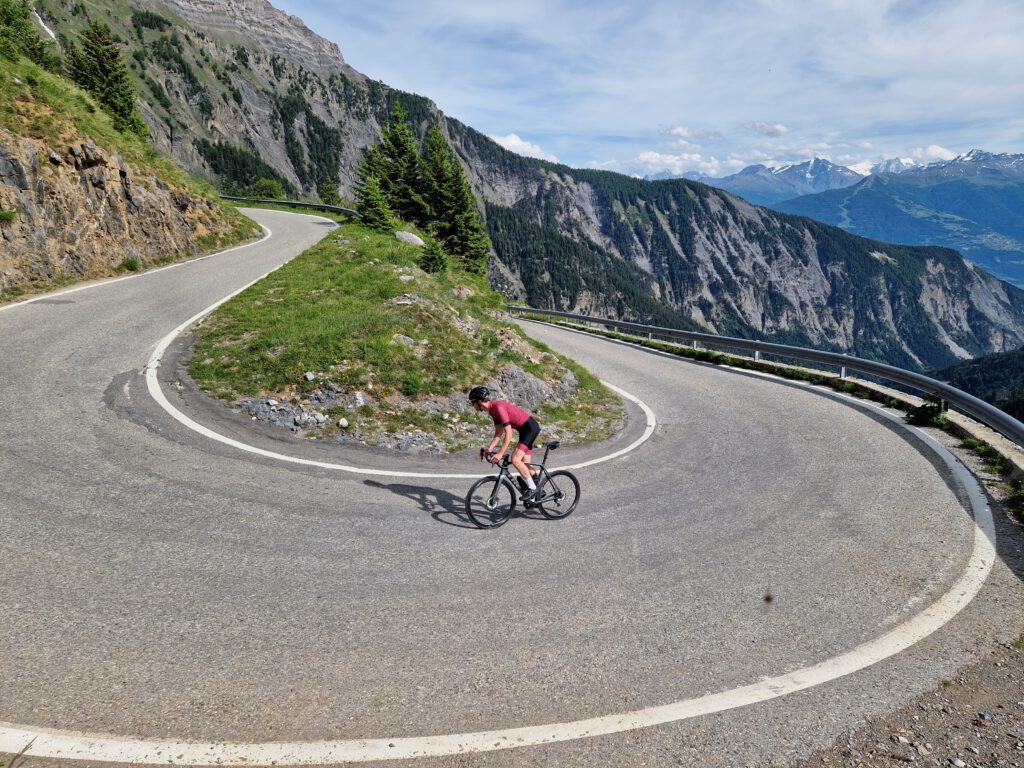
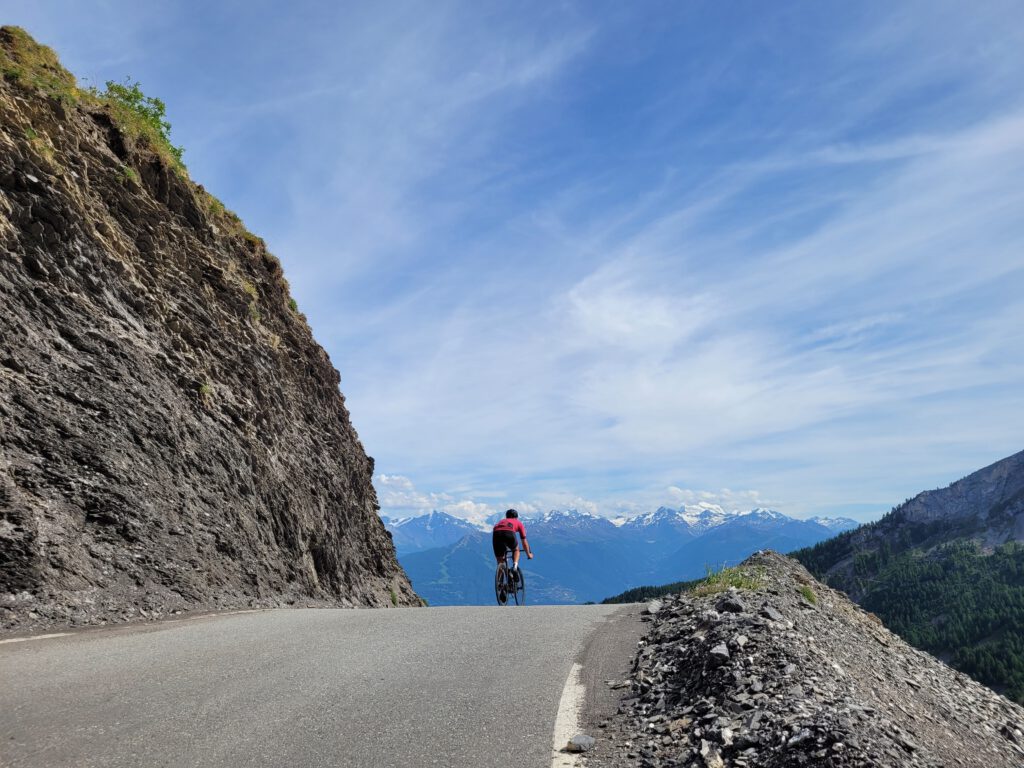
Col du Sanetsch
25.1 kilometers long, average of 6.9% with a maximum of 16%. You will cover a total of 1733 meters of elevation gain to finish at an altitude of 2247 meters above sea level.
From grapes to water for the wine
As soon as you enter Valais, the vineyards stand out. Especially on the northern flank of the Rhone, the mountains are covered in them. The fresh-green grape leaves are everywhere around you. Often growing on beautiful terraces. Only after 1100 meters above sea level do you encounter the beloved fruit; this makes this the highest wine region in Europe. If we have ever drunk a Swiss wine outside these borders, we wonder. That is a small chance.
Small exports
Only one percent of the wine is for export; the rest is enjoyed by locals. The grape does not only grow here so luxuriantly thanks to the many hours of sunshine, but it also needs the traditional ‘bisses’ – old irrigation systems made of wooden pipes and stone channels that were hand-made hundreds of years ago to bring water from the mountains to the fields. They are proud of this here. The ‘Grand Bisses d’Ayent’ (impertinent; a wooden gutter against a mountain wall) appears on the 100 Swiss franc banknote.
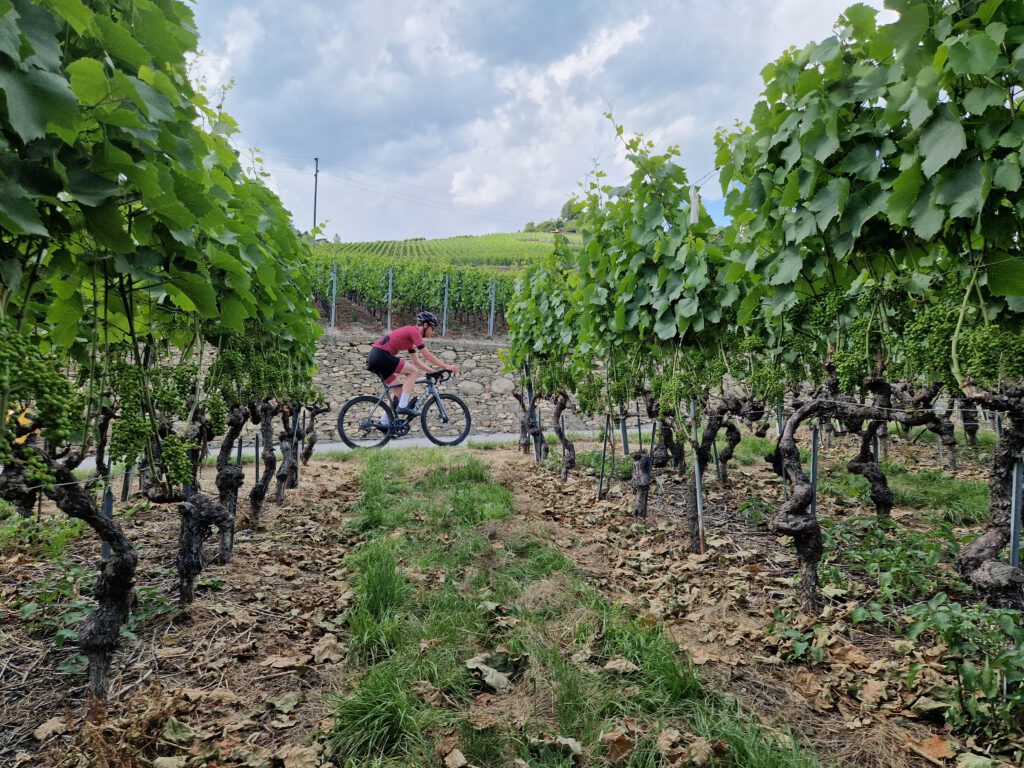
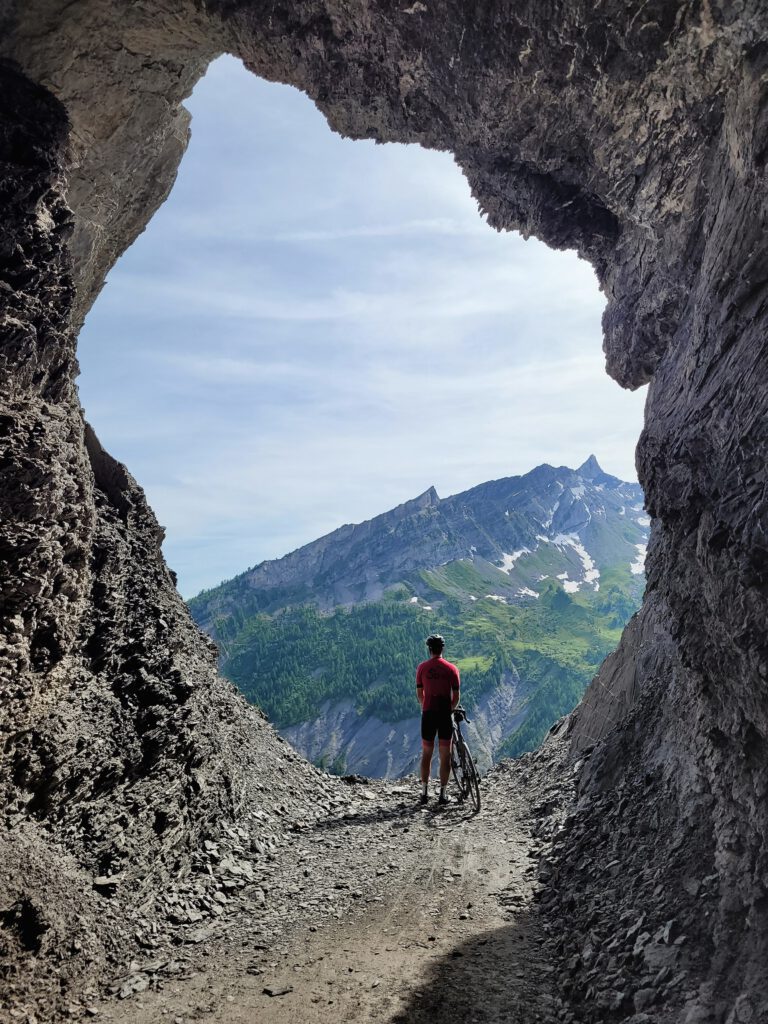
Because a cyclist usually wants to earn the alcohol by climbing first, before descending to have a local drink. In Valais, you often start between the vines to climb up to the water. Because many quiet roads end here at a (dam) lake. Water for the wine, of course. Incidentally, all that wine-growing still offers a benefit for the cyclist. Until the 1100 meters, it is a maze of country roads, which offers all the possibilities for a bike ride. Only when you really want to climb to great heights, you have to make a round trip in many cases.
Peace
After the steep climb, the trip is almost over. We climb back to our base camp in Anzère. Just before that, we let the friction between the spokes and the chain come to a standstill. Clicking a shoe off the pedal and letting it take its place on the ground. Taking a sip from the bottle and listening quietly to nothing. The city and the traffic artery of Sion are about ten kilometers below us, but one stone’s throw away. Yet it makes no sound whatsoever that extends to here. Living in a mountain higher up during a bike tour adds some climbing to the end of each ride, but the silence gives all of Valais the space to be admired.
Cycling in Valais: Anzère stay
Woodland Village Anzère
Our rides begin and end in the luxury and tranquility of Woodland Village, just below Anzère. After the last climb of the day, you can take in the beautiful view of the endless mountain peaks and look back on the small piece of land you conquered there. We are also treated to the very fine jacuzzi after the strenuous rides and the delicious breakfast in the morning to start the day with good energy.
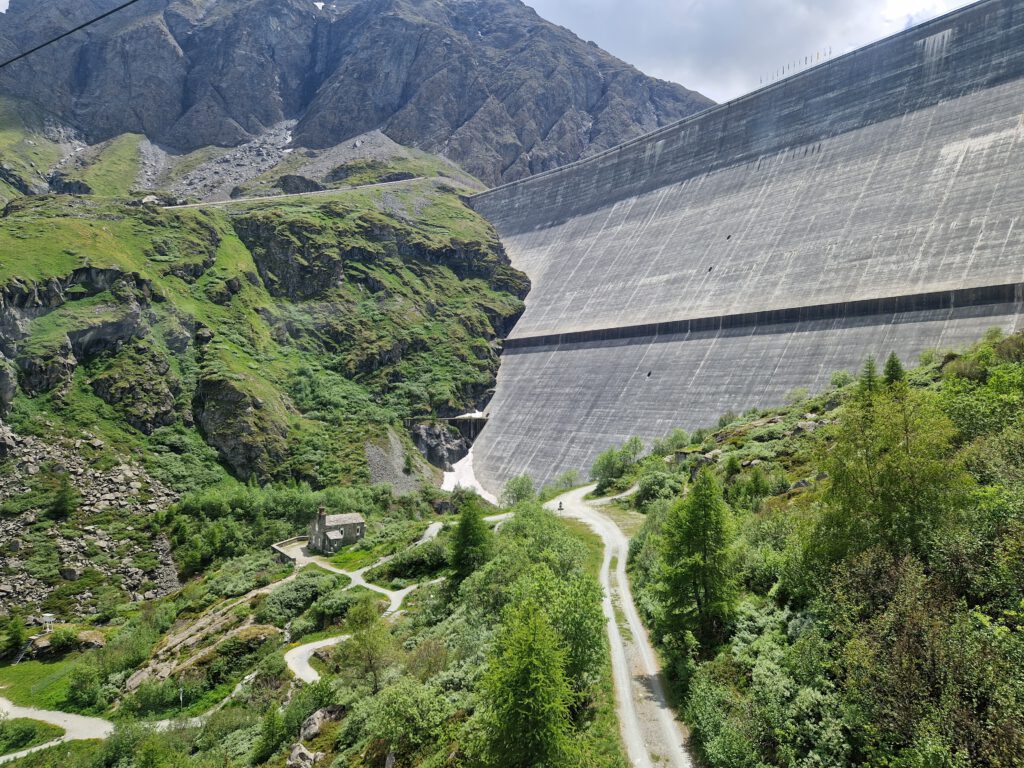
Barrage of the Grande Dixence
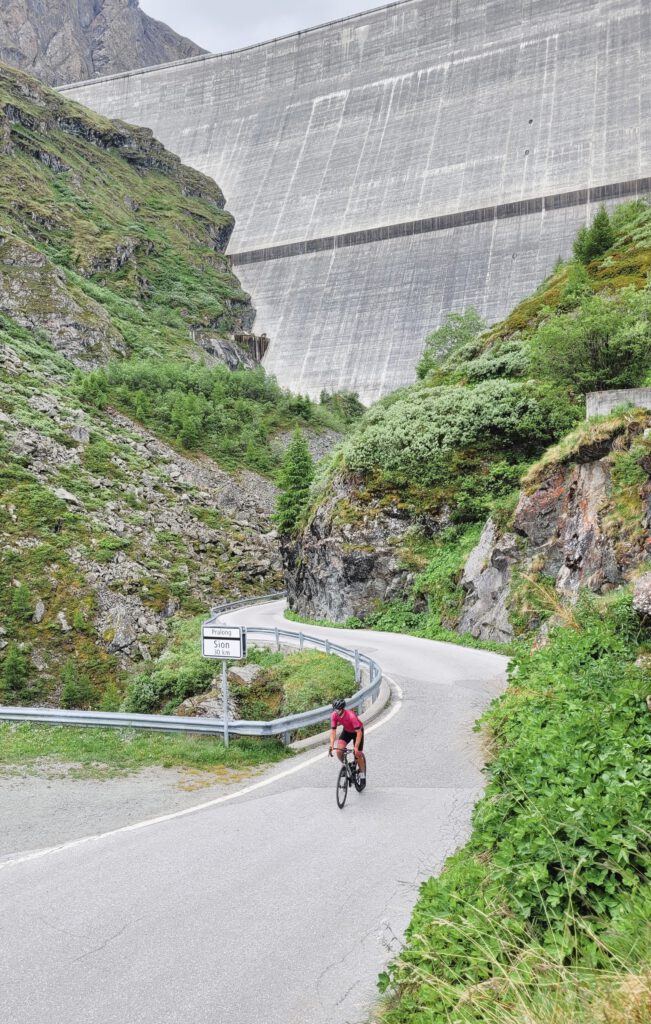
Climb from Zion to the highest dam in Europe. The last 8 kilometers take you over a quiet, steep, and stylish road to the foot of this gigantic concrete basin. From there, you can take a lift to get to the top of the dam and enjoy a breathtaking view that will leave you speechless.
Questions & tips
Do you have any questions about this route, or have you been there yourself? Share them here. We read everything and usually respond within a few days.