
When I ride the train towards Lake Lac de Joux in the middle of the Swiss Jura, I already have a fantastic view of the worn-down peaks that are so characteristic of this mountain range. Once I get to my destination, it gets even more beautiful: the lake, which lies above a thousand meters in altitude, glitters in the sun while it is surrounded by green forested mountains. Cycling Vaud, Beautifully diverse!
Photos and text: Merlijn Spenkelink, Alain Rumpf
Tour de France
No wonder the Tour de France will pass through here on July 9 for the eighth stage, which finishes in Lausanne, Switzerland. The first stage of the Swiss duo in the Tour this year. The start of this stage is still in France, but via a short passage through the Jura the route goes into Switzerland. From the beautiful mountain lake we explore the last fifty kilometers of this stage together with our Swiss guide Alain Rumpf.
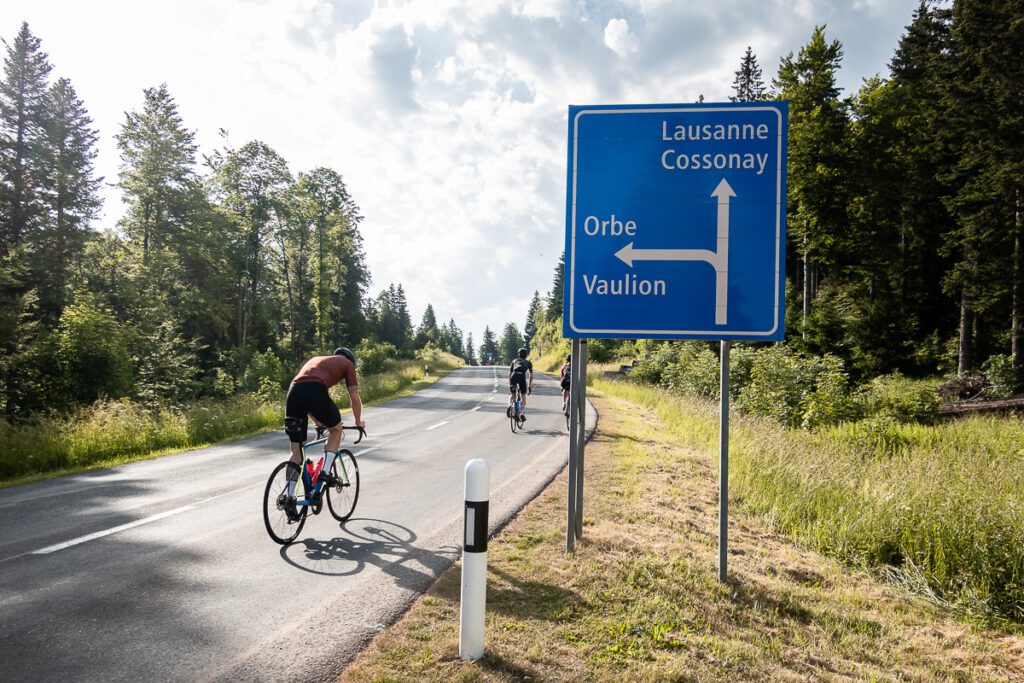

From Lac de Joux there is no time to warm up; we immediately start on the Col de Pétra Félix. Although it is a real col, it doesn’t offer much from this side: 6.7% for just two kilometers doesn’t really hurt the legs. From there, a long descent follows towards Lac Léman, the lake of Geneva, one of the largest lakes in Europe. The first stretch of the descent is quick, clear, and not technically demanding. Perfect to let go of the brakes and dive down at full speed. At the foot of the Jura, we make the transition to the Swiss plateau, where we continue to descend calmly through a beautiful undulating agricultural landscape. Fields full of golden-colored corn, small beautiful villages and old farms form the backdrop for the final part of this tour. The action here is bound to be a feast for the eyes!
Fresh asphalt
As you probably understand, it is important for the Tour that the roads are in good condition. Poor, bumpy asphalt may not be a problem if you are cycling alone, but in a large group it can be quite dangerous. In practice, this often means that large sections of the road are repaved, and that is also the case here. Especially in the many small villages we pass through, the recently laid asphalt is slippery, which is naturally delightful to drive on. And not only the Tour is happy about this: the local residents are often just as happy that the road is getting a major maintenance overhaul.
Lausanne
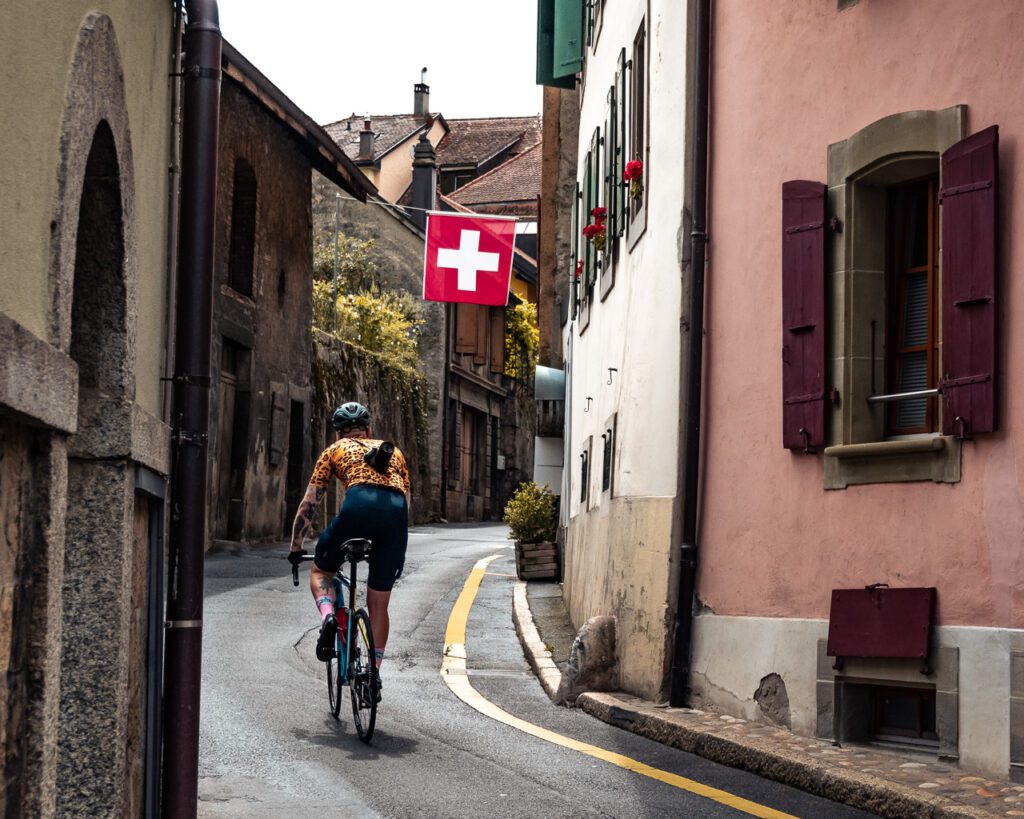
Once we reach Lac Léman, we follow a stretch of practically flat kilometers towards Lausanne. A beautiful hilly student city, where the International Olympic Committee is also based. We drive a short detour past the IOC headquarters, before starting the final climb. But not before we have refueled a bit in the form of a Carac: a typical Swiss pastry with a bright green color. The soft chocolate filling turns out to be the perfect fuel, because we fly up the final climb. We drive almost straight through the center up a wide road, sometimes weaving through cars and other traffic.
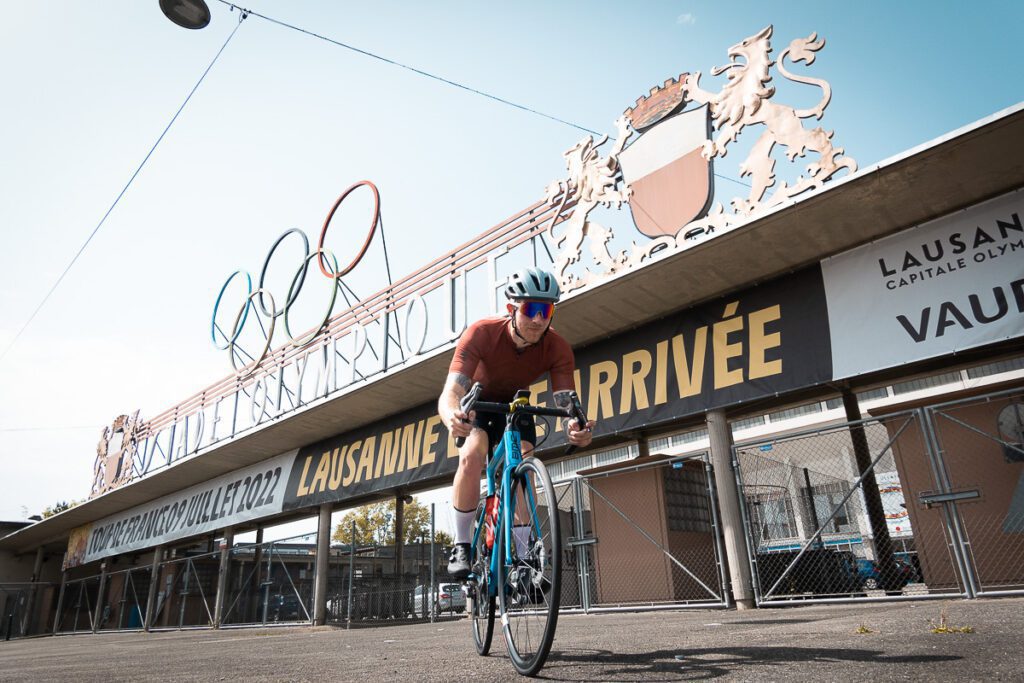
After a technical section with some tricky turns, we come to a short flat section where we can recover some speed to push for the last one and a half kilometers to the finish. At this point, the steepest stretch of the race is here: the road surface rises significantly above ten percent for a good while. Is this the place where the battle for the stage will be decided? After this, the climb gradually flattens out, and with the old Olympic stadium in the background, the finish is in a beautiful location. Will this be the ultimate battle between Mathieu van der Poel and Wout van Aert?
Olympic Museum
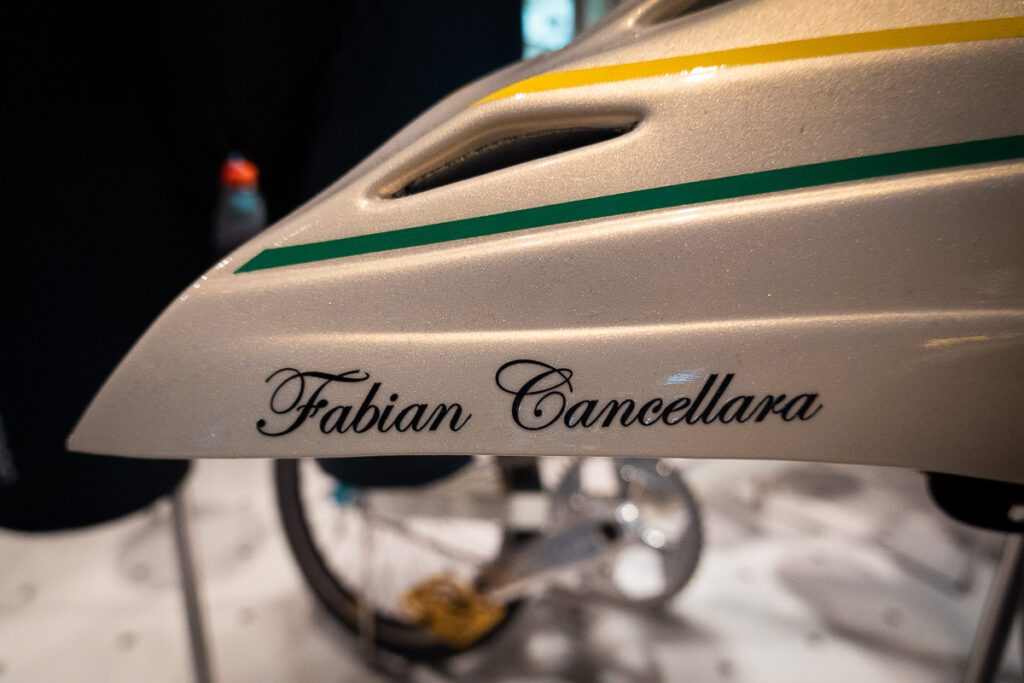
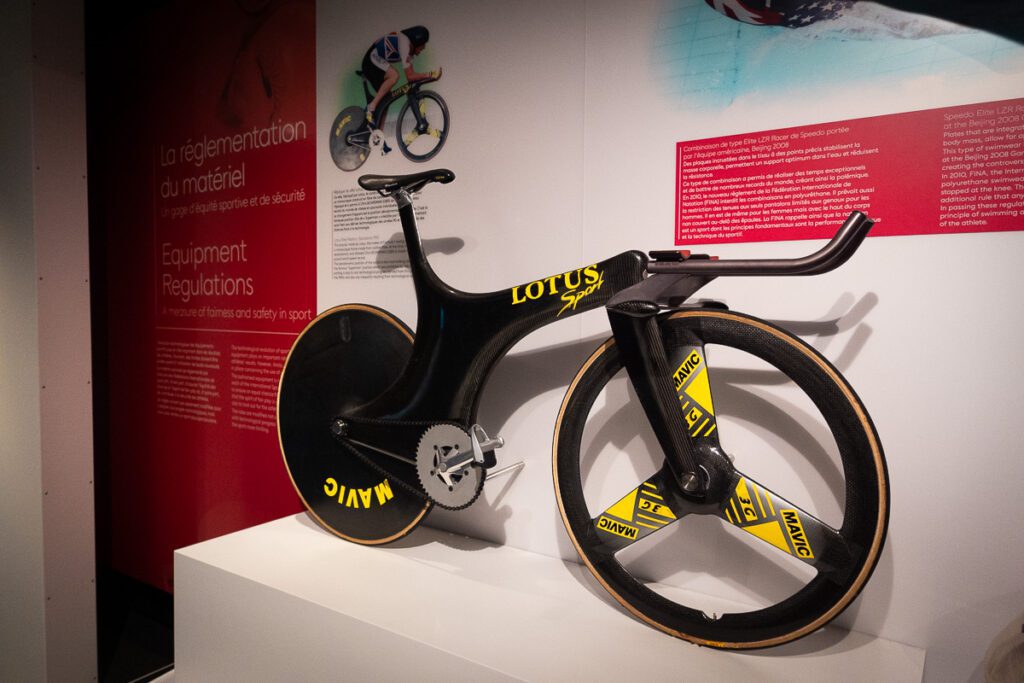
The International Olympic Committee is based in Lausanne. That is of course a good excuse to build a beautiful Olympic Museum, including a restaurant. After a delicious lunch from the terrace with a wide view over Lake Léman, we dive into the museum. Here you can really find everything about the Olympic Games. From the complete history to how the broadcasts work, and of course the many sports relics that the Games have produced. You can find there a hundred-year-old bobsled, but also the time helmet of Fabian Cancellara and the notorious Lotus time trial bike that Chris Boardman rode on.
Rain
When we wake up the next morning, the weather has completely changed. It’s gray, rainy, and a lot colder than before. We’re actually quite happy about it. The temperatures of over thirty degrees over the past few days were a bit too warm for us Dutch people. Instead, we’re taking our time for breakfast. When it starts to clear around half past eleven, we get on our bikes and set off for Villars-sur-Ollon, a small mountain village where the Tour will also pass through.
Montreux Riviera
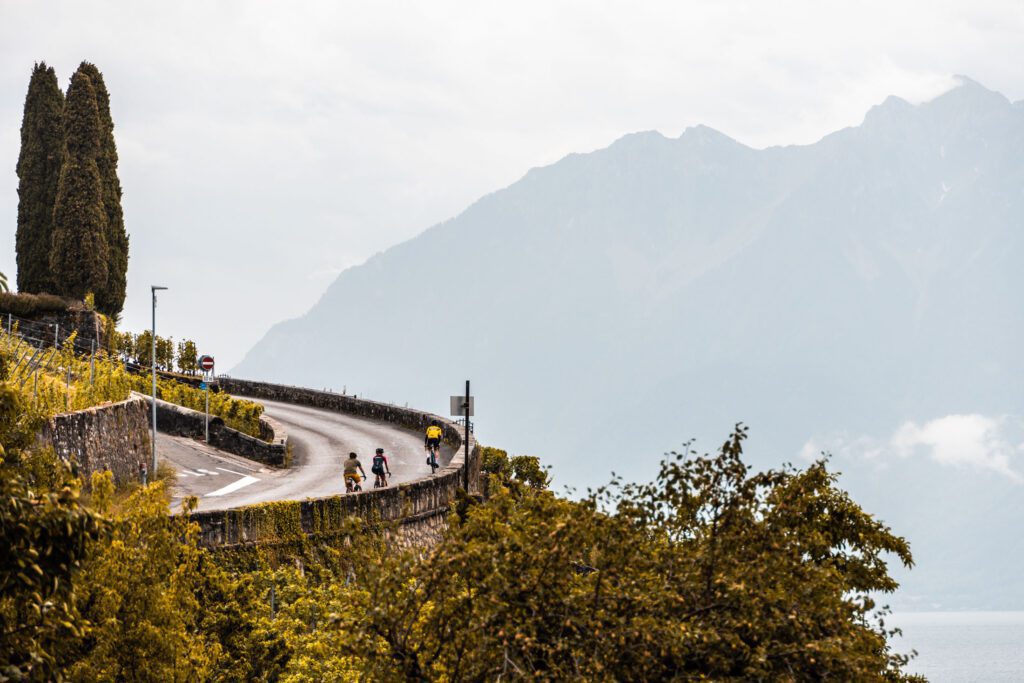
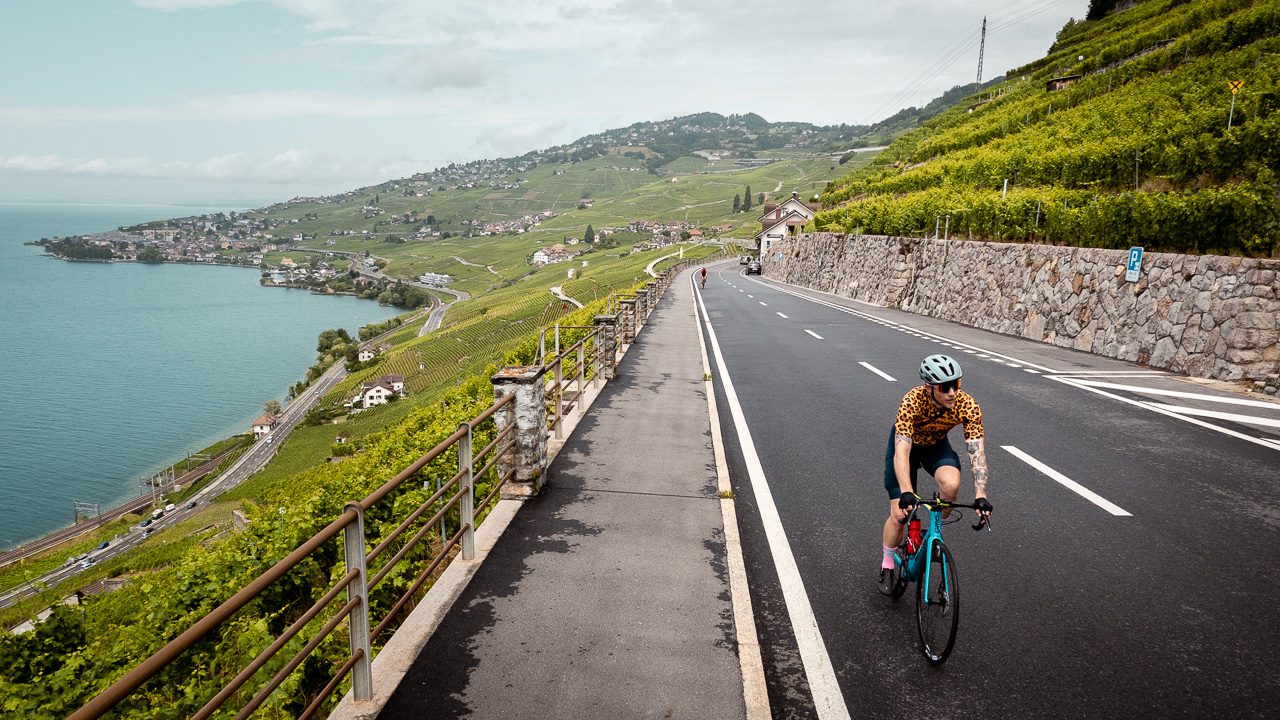
From Lausanne, we are quickly back on the Tour de France course. The road winds its way through the beautiful Swiss vineyards of the Montreux Riviera. We ride up the Côte de Bellevue, the first climb in this mountain stage. And what a climb it is! Along the beautiful green vineyards and through narrow streets in small villages we climb higher and higher. The Lac Léman is visible continuously to our right, with the French Alps behind it. Behind us, Lausanne slowly fades into the distance, while in front of us the Alpes Vaudoises are already emerging. As the tour course slowly heads north to climb the Col de Mosses, we drive south towards Aigle. Through the Rhône valley we ride to our final climb: Villars-sur-Ollon is located about 850 meters higher.
Cooling
But first, a little more cruising through the valley. The flat roads and the wind in the back make sure we can keep the pace high. With the side wind, we give our Swiss friends a short lesson in wanging. That’s something they don’t have much experience with in Switzerland.
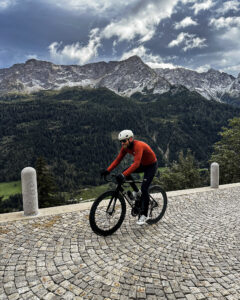
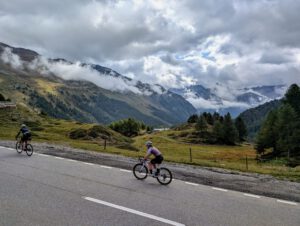
The mercury is rising again quickly today. We seek some respite in one of the many water fountains that you encounter everywhere in Switzerland. That’s also necessary before we start the climb. You can get to this mountain village via several routes, and one of them is the well-known Col de la Croix. Our guide Alain comes from this region and knows the roads inside out. He takes us over beautiful quiet paths. The first stretch of the climb we go up via a beautiful gorge. In this deep ravine, a small dirt road runs parallel to a river. Through narrow winding mountain paths we arrive in Gryon, home of guide Alain. From here, we continue via rolling roads with a few kilometers in Villars. The final stretch to the hotel still runs uphill on a rough section of asphalt. On this road, the Tour de France will descend towards Aigle, after the climb of the Col de la Croix from the north.
Can't you wait for the Tour de France to start either? Then read our article about the first three days in Denmark first. You can do that here here en here. More about the Tour 2022 and how you can be a part of it soon.
Tour route
The route that corresponds to this region and was devised by the organization ASO can be found in our collection about the Tour de France.
Questions & tips
Do you have any questions about this route, or have you been there yourself? Share them here. We read everything and usually respond within a few days.