
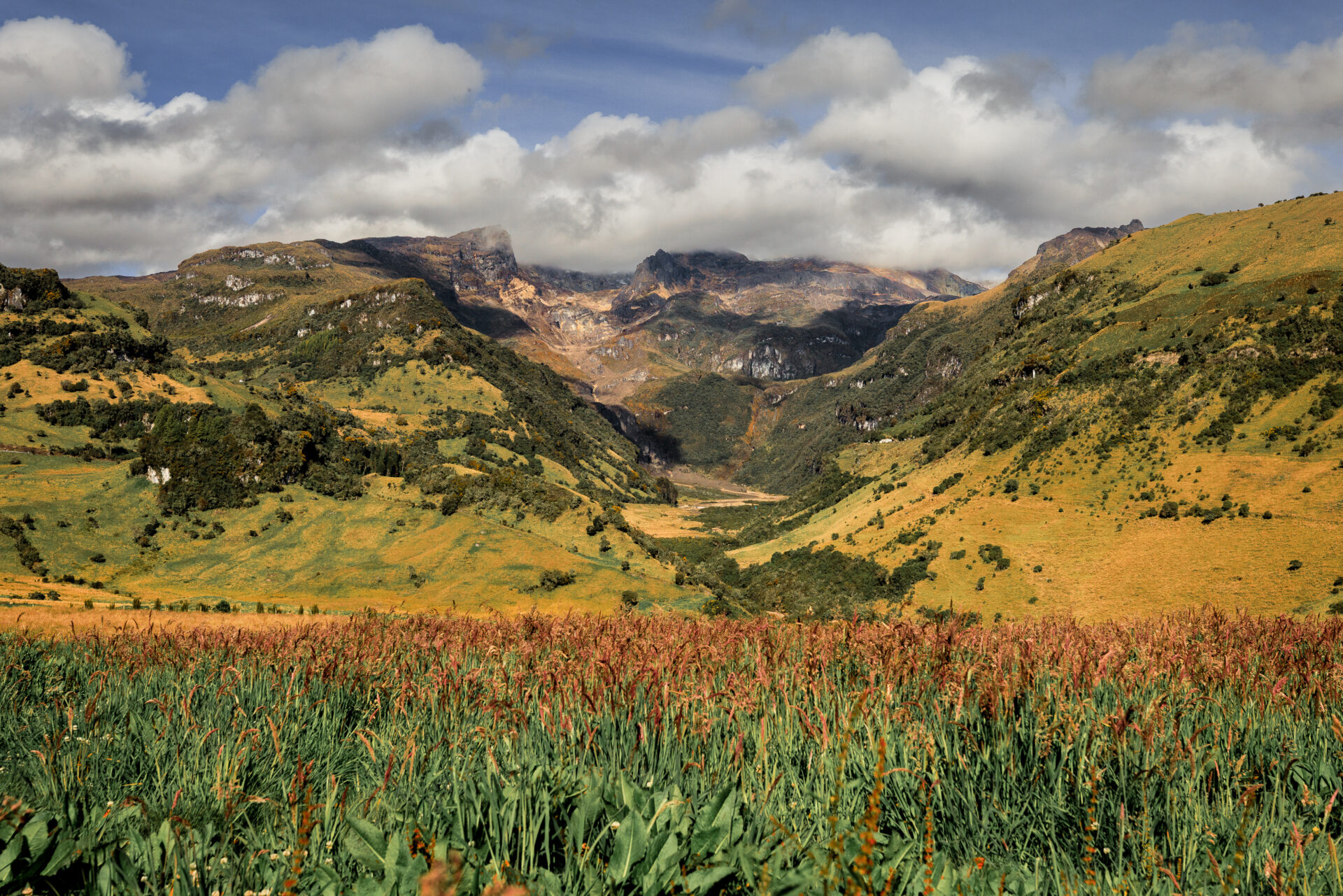
We call the Stelvio with its 2,758 meters ‘the roof of Italy’. And the Galibier? With its 2,642 meters, it is the highlight of many Tour editions. But let’s put those figures next to what is laid down in asphalt in South America and Hawaii. Recently, there has been tight asphalt up to 4,100 meters in Colombia. That is new.
Alto del Sifón, new paved climb
Of Alto del Sifón Climbs from the valley of the Magdalena River, at an altitude of about 350 meters, all the way to 4,149 meters on the slopes of the Nevado del Ruiz volcano. That’s over 100 kilometers up. Not a typical Alpine climb of an hour and a half, but eight to ten hours of non-stop climbing. This climb is, by the way, just a stone’s throw (big throw, small stone) from the more famous Alto de Letras, another monster in our top 10.
Alto El Sifón, Lérida, Colombia
• Distance: 87.9 km, Elevation difference: 3918 m, Average gradient: 4.8 %
You start in tropical heat, drive past coffee plantations where the smell hangs in your nostrils, and end up in the páramo: a barren, thin plateau where the temperature hovers around 2 to 3 degrees Celsius. The average ascent rate of 4.5% may sound friendly, but after 80 kilometers and with 40% less oxygen in the air, it’s strenuous. This is not a ‘coffee ride’ that you start your vacation with.
What do we count as?
Before we get into the lists: what do we actually mean by ‘highest paved climb’? Our criteria: the road must be completely paved and passable on a regular road bike. No gravel sections in the middle, no closed military roads. Roads that are seasonally closed (like Pico Veleta above 2,500 meters) count, as long as they are open to cyclists during the summer season.
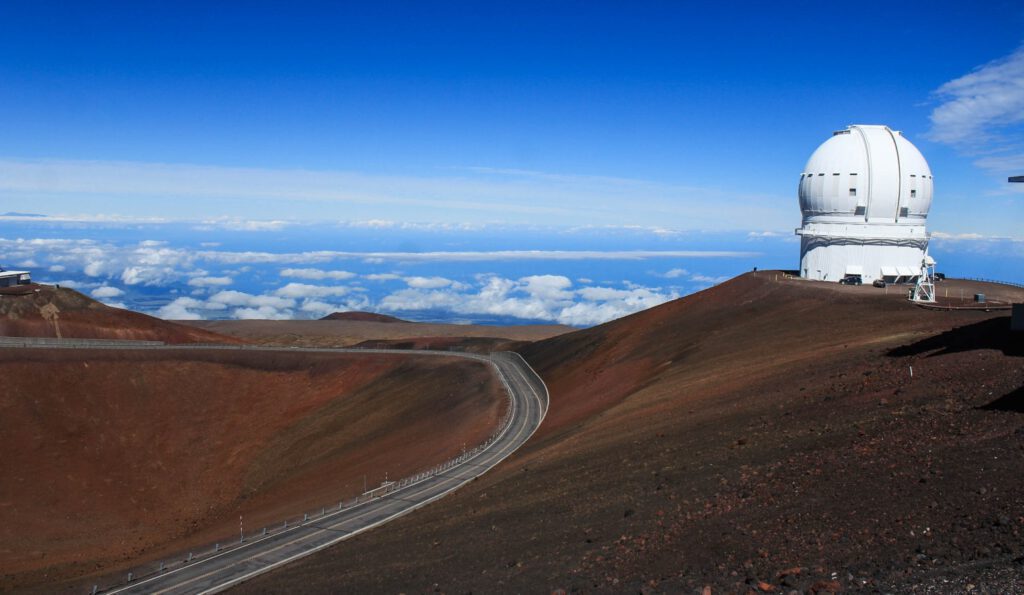
That immediately sparks discussion. Mauna Kea in Hawaii reaches over 4,200 meters, but has a sizeable gravel section in between. Mount Evans in Colorado is technically paved, but the road quality is questionable on some stretches. We take them on, with a note of caution.
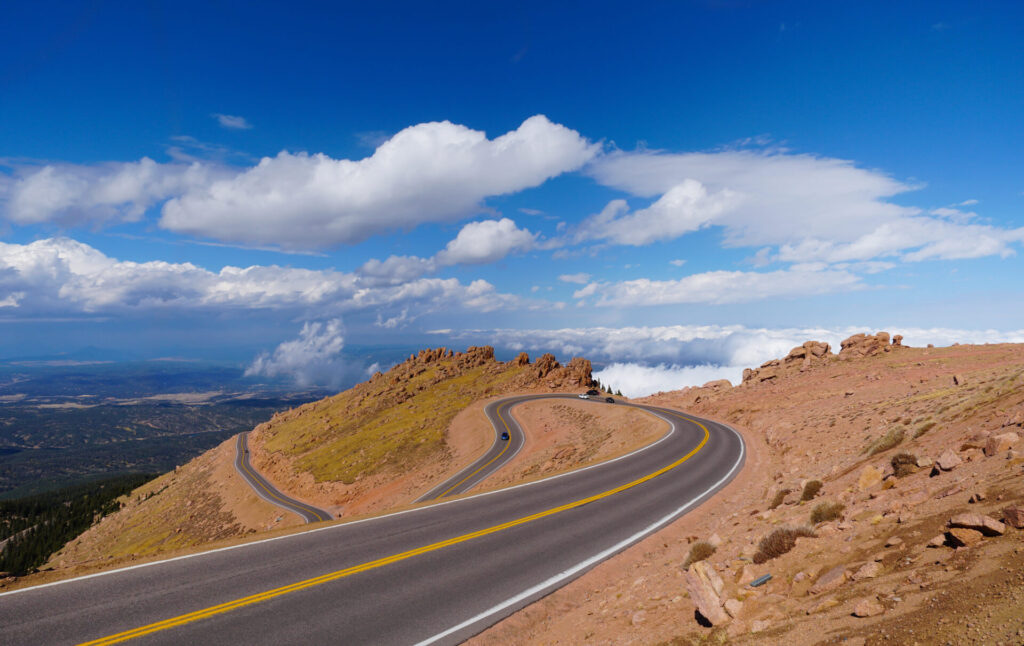
Top 10 highest paved climbs in the world
| Rank | Climate | Location | Height | Note |
|---|---|---|---|---|
| 1 | Punta Olimpica | Peru | 4,736 m | Highest paved Trans-Andean tunnel |
| 2 | Yanashalla Pass | Peru | 4,720 m | Remote, brutal wind |
| 3 | Mount Evans | Colorado, USA | 4,306 m | Highest paved road in North America |
| 4 | Pikes Peak | Colorado, USA | 4,302 m | Fully paved since 2011 |
| 5 | Mauna Kea | Hawaii, USA | 4,205 m | Partly gravel (7 km), rest asphalt |
| 6 | Alto del Sifón | Colombia | 4,149 m | Longest continuous climb in the world |
| 7 | Alto de Letras | Colombia | 3,677 m | Previous record holder in terms of length (80 km) |
| 8 | Mauna Loa | Hawaii, USA | 3,397 m | Endless shield volcano |
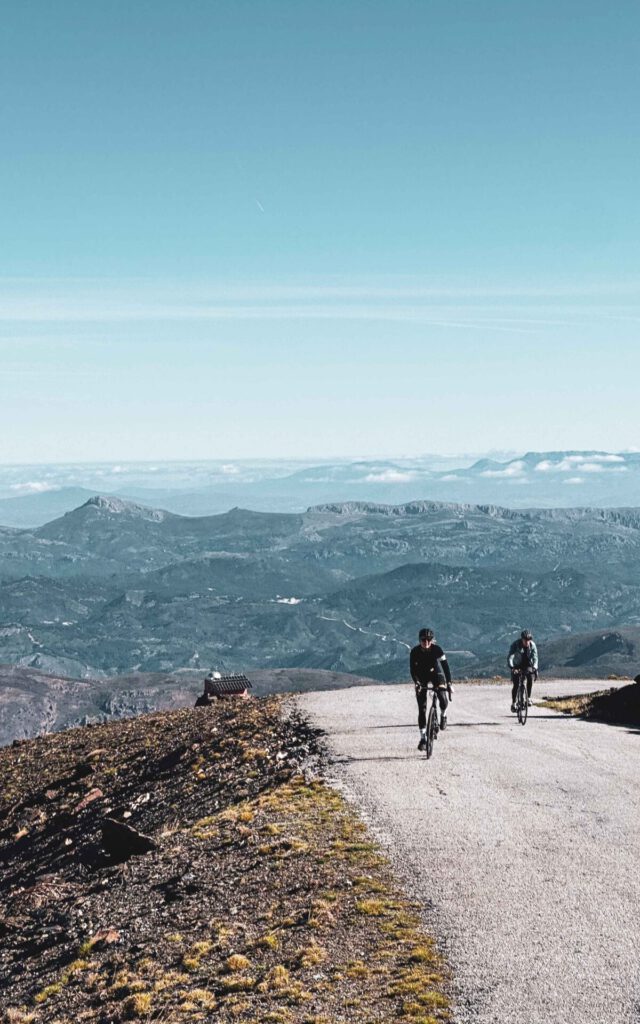
| 9 | Pico Veleta | Spain | 3,396 m | Highest paved road in Europe |
| 10 | Tiefenbachferner | Austria | 2,829 m | Highest paved road in the Alps |
What stands out: the Andes and the volcanoes of Hawaii dominate. Europe only appears in 9th place. That says something about our scale here.
For climbing in Peru and Colombia, the rule of thumb is: plan acclimatization in advance. Above 4,000 meters, your body can only generate about 60% of the power you generate at sea level. On the Yanashalla Pass, riders from the BikingMan Peloton cycle at 100 to 150 watts, where they normally do 250.
Top 10 highest paved climbs in Europe
Closer to home, and for most of us the actual field of action.
| Rank | Climate | Land | Height | Character |
|---|---|---|---|---|
| 1 | Pico Veleta | Spain | 3,396 m | Above 2,500 m, no cars allowed; lunar landscape |
| 2 | Tiefenbachferner | Austria | 2,829 m | Glacier road with the highest tunnel in Europe |
| 3 | Cime de la Bonette | France | 2,802 m | Special construction for the record at the top |
| 4 | Col de l’Iseran | France | 2,770 m | Highest paved mountain pass in the Alps |
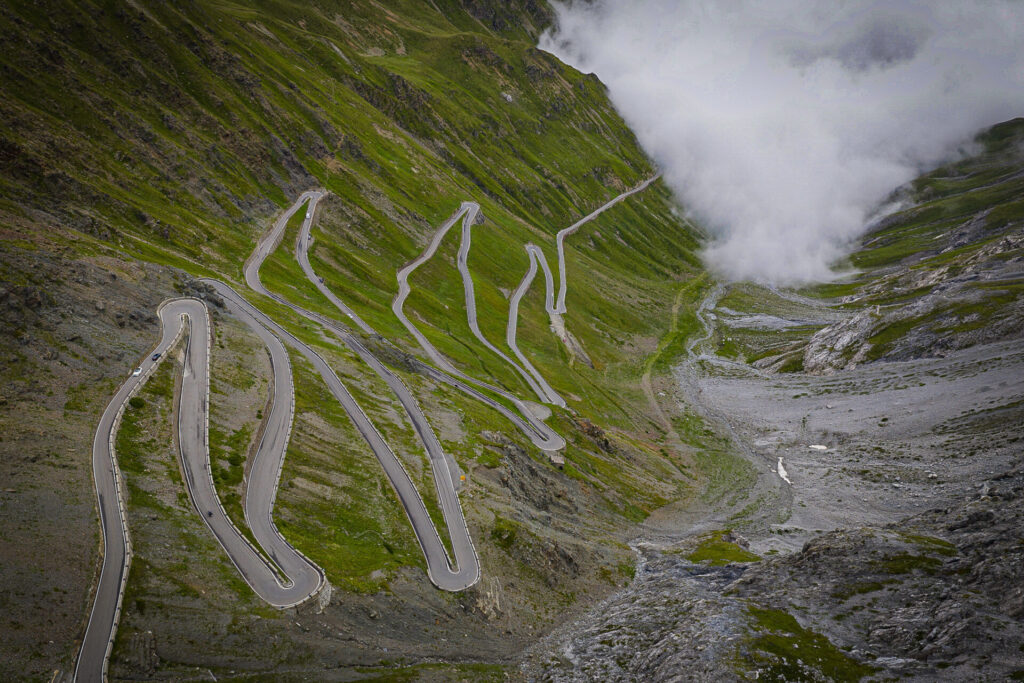
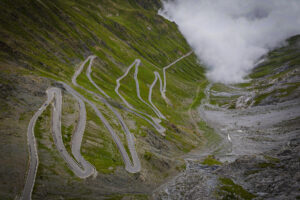
| 5 | Passo dello Stelvio | Italy | 2,758 m | 48 hairpin bends, iconic |
| 6 | Kaunertaler Glacier | Austria | 2,750 m | 29 turns, an average of 10% |
| 7 | Colle dell’Agnello | Italy/France | 2,744 m | Cross-border, brutal finale |
| 8 | Passo Gavia | Italy | 2,652 m | Narrow, rough, notorious Giro weather |
| 9 | Col du Galibier | France | 2,642 m | Queen of the Alps |
| 10 | Colle del Nivolet | Italy | 2,632 m | Gran Paradiso, to lick your fingers with |
Many of these roads are dead-end glacier paths or access roads to ski resorts. That makes them different from the continuous slopes: you cycle up, turn around, and descend the same path again.
Practical: three basecamp options
| Starting point | Target Climbers | Amenities | Best season |
|---|---|---|---|
| Granada (Spain) | Pico Veleta | Bike shops, tapas bars, guarded garages | April–June, September–October |
| Sölden (Austria) | Tiefenbachferner, Kaunertaler | Hotels with a biquick room, Kaiserschmarrn | June–September |
| Bormio (Italy) | Stelvio, Gavia | Pizza, thermal bath, compact old town | June–September |
For anything above 2,500 meters, bring warm gloves with you, even in July. And choose your gear wisely: a compact (50/34) with at least a 32-tooth rear. On the Kaunertaler with its average elevation of 10% meters, you need that.
The perspective
The Alto del Sifón is one of the top 10 highest paved climbs in the world. Not so much in terms of altitude, as Peru is still higher, but the combination of length (105 km), altitude (4,149 m) and perfectly new asphalt is unique. For us Europeans, Pico Veleta remains the most accessible way to cycle above 3,000 meters on paved roads.
Have you ever cycled above 3,000 meters, or do you know of a paved mountain road that we missed? We would love to hear from you.
Questions & tips
Do you have any questions about this route, or have you been there yourself? Share them here. We read everything and usually respond within a few days.