
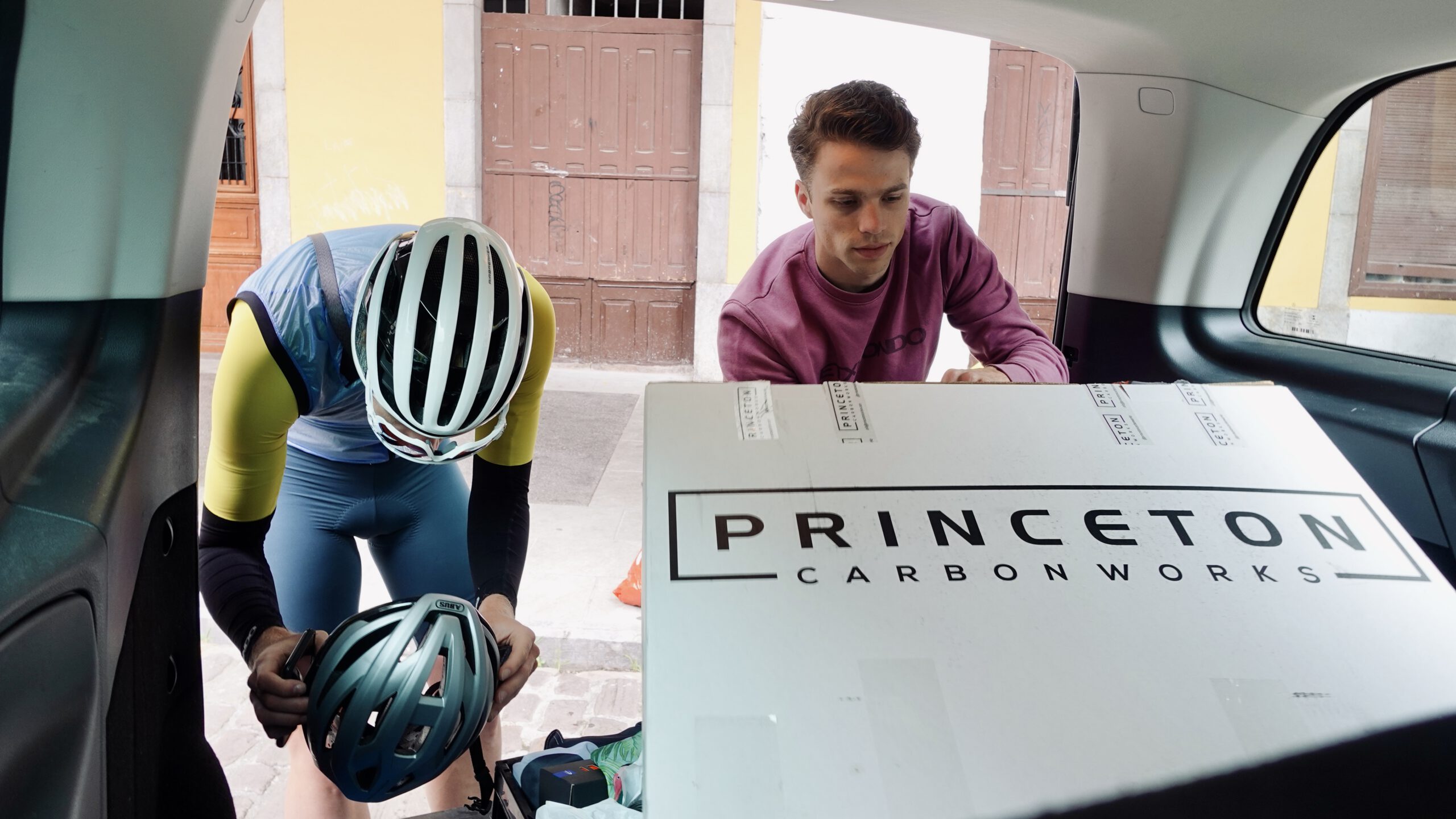
To be honest, there is no ideal packing list for a cycling holiday. One person wants to travel super light. The other person would like to take everything with them. But the area, the type of trip or tour, and the season also determine what you take with you and therefore the packing list. With our experience, we have developed a Basic packing list made for cycling holidays. This is suitable for campers, bikepackers, but also for those staying in an apartment, B&B or hotel.

Basic packing list for your cycling holiday
Gear
At the top of the packing list is, of course, your gear. Of course you’re taking the bike with you. But what else is on the packing list? Below you’ll find the most important items for fitting into the proverbial bag:
- Bike (not unimportant)
- Wheels suitable for your adventure (low rims if you’re going to the mountains)
- Mountain climbing for a climbing holiday – you don’t want to end up with 11-28 at the bottom Stelvio stand. So for example, you choose this one 105 cassette – 12 speed of Shimano or this one 12-speed Rival cassette from SRAM. That way you have enough gears to have fun in the mountains.
- Pedals (if you have a rental bike)
- Your own saddle (if you have a rental bike)
- Outside tire
- Inner tires (at least two (2), preferably three (3))
- Large bike pump
- Small bicycle pump
- CO2 patterns
- Bike computer + holder (if you have a rental bike)
- Chargers for electric switching
- Chargers for other bicycle electronics
- Brake pads (especially in the mountains)
- Additional steering wheel rim

Maintenance supplies
Maintenance supplies should also not be missing in yours. Packing list. Nothing is as annoying as having to quickly replace something and not having the right tools at hand. At a good hotel you can rely on the presence of a basic set of keys, but even then it’s nice to have your own tools on hand. Here’s your basic equipment:
- Pedal wrench – this should be on every packing list
- Socket wrench
- Tire reflectors
- Cleaning brush
- Cleaning agent
- Chain Whip
- Cassette player
- Chain degreaser (optional)
- Chain lubricant
- Cleaning cloth
- Multitool (useful for on the go)


Clothing
Clothing is always a challenge. Because you always feel like you have too little with you. Much depends on the location where you are going to cycle, but as a rule, you always have to take bad weather into account. Cycling in Tuscany In the summer, cycling is a bit different from cycling in the autumn. The Ardennes. The number of pieces of clothing depends on the presence of a washing machine/dryer. Especially if your clothes are already wet and you have to reuse them (think of a water-repellent/waterproof jacket), a dryer is very handy. The rule of thumb is that you should bring at least 3 sets on a longer trip. If you do use a set, you usually get it clean and dry in a day or two.
- Trousers, If there is a washing machine, you can wash two (2) pairs of pants. Otherwise at least 3. We like to travel with the Orhi bibshort by Etxeondo
- Adequate overshirts, At least 3 (if there is no washing machine: the same as the number of bike days). A nice shirt with short or long sleeves is fine. Alde shirt by Etxeondo.
- Thermo shirts, at least 3. Same as the top
- Sleeves
- Leg pieces
- Shoes
- Extra pair of shoes if you don't have a shoe dryer.
- Socks, at least 3 pairs.
- Overshoes, waterproof
- Long pants
- This depends on the season. In the summer, leg pieces are almost always sufficient.
- Waterproof jacket
- Winter jacket, like this model ’76’
- Turtle/vest
- Helmet
- Sunglasses with interchangeable lenses
- Buff/neck warmer
- Petje
- Gloves
- Winter gloves (depending on the season)


Nutrition
Nutrition is extremely important. After all, it is the fuel for your engine (your body). You can safely assume that your hotel provides a good breakfast. But for cycling in particular, it may be wise to bring some food with you. Sports nutrition is an option, but of course everyone makes their own choice. Below is a list of options for sports nutrition. The reference is between 60 and 90 grams of carbohydrates per hour. You can check this on the label:
- Energy bars. Here you have different types and sizes:
- Natural bars, without coating
- Bars with coating
- Fastbars (small, high amount of sugars)
- Gluten-free
- vegan
- Energy gels. Handy as your bike ride gets longer and also in cold weather. Gels don't freeze as quickly.
- Sports drink. There is a difference between isotonic and hypotonic. Check the difference here
- You can also buy the gels and drinks from Maurten take. Also called the rocketfuel among drinks.
So, think in advance about how much time you will be cycling for. If you plan to cycle for a total of 20 hours, you will need 1200 to 1800 grams of carbohydrates. You can also get these from a good pasta meal, but keep in mind that you will burn a lot of calories while cycling.
What is always on our packing list is Omega 3. We use the oil from Eqology.
Alternatives to sports nutrition
If you're not a big fan of sports nutrition, these are good alternatives.
- Bananas (about 25g carbohydrates)
- Nak’d bars (18 grams of carbohydrates)
- Muesli bars (around 15 grams of carbohydrates per bar, depending on the type)
- Quick Jelle/Koekrepen (45g per bar, depending on type)
- Bread (do not leave it in the back pocket for too long)
- Rice cakes (homemade)
- Nuts -> a mixed (unsalted) nut mix is perfect. Take a look here www.peanutpower.nl for a nice selection of nut mixes.

Other
- Tanks
- Camera
- Telephone
- Passports
- Cash -> very convenient especially in Germany, Austria and Italy
- Credit card
- GPS routes -> create them in advance komoot
- Sunburn (factor 50)
- Chamois cream
- Headphone for during the journey. Choose then this one from Sony, We are very fans of that!
If you are traveling with children, bring headphones for them too. This one from JBL, for example
Gravel and bikepacking: what is changing?
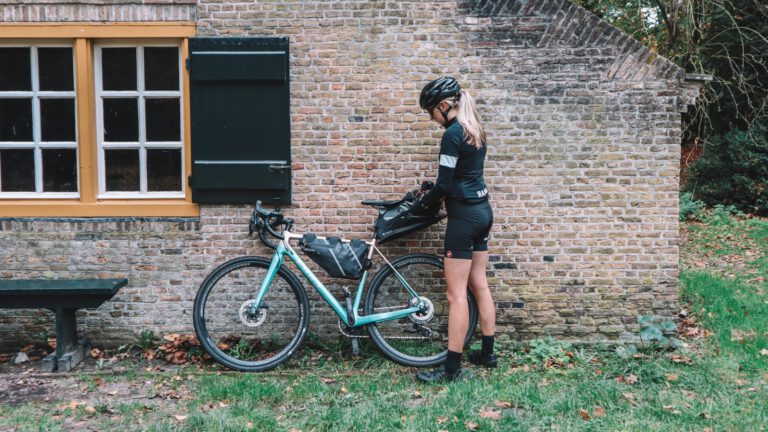
If you’re going mountain biking or spending a few days from hotel to hotel on a gravel bike, you won’t be carrying any luggage. Everything has to fit in the bags on your bike, and you’ll quickly realize how much space things take up. This addition to the basic packing list comes from our experience. Everything you want to know about bikepacking.
The bags
We travel with waterproof bags with a sealed zipper, so everything stays clean and dry. A bag with an air vent can be flattened after packing.
- Backpack: 13 to 16.5 liters, for clothing.
- Framebag: about 4 liters, for everything you need on the go.
- Shoulder bag: about 9 liters.
- A small bag on the upper tube (1 liter) for snacks and your phone.
In the saddle bag
- An extra set of cycling clothing: trousers, a shirt and cycling socks.
- Clothing for after the ride: a sports leggings or shorts, a thin sweater, a shirt, underwear and socks.
- A rain coat, under the elastic bands on the top of the bag, so you can grab it quickly.
In the framebag
- Chargers and cables for phone, bike computer and watch.
- A mini pump and a small saddle bag with a multitool, tire inflators and a spare inner tire.
- Light shoes with a flexible sole.
- A toiletry bag in mini size: roll-on deodorant, a mini tube of toothpaste or toothpaste tablets, a small hair brush.
- ID card, credit card and some cash.
- A water bottle. With a frame bag, your water bottles often no longer fit in the holders, so think ahead about where they will fit.
- A foldable cotton bag: at the hotel you put your belongings in it and leave the bags with the bike.
What do you leave at home?
Compared to the basic package list, a lot is missing:
- The large bike pump, the cassette remover, the chain whip and the extra handlebar strap.
- Three pairs of cycling clothes: one extra set is enough; you can wash them on the go.
- The second pair of cycling shoes, thick sweaters and a pair of jeans.
- Large bottles and tubes: use the travel size wherever possible.
Tips
- Adhesive tape (such as electrical tape) should be applied to the places where the bags are attached to prevent scratches.
- If you are staying in a hotel, ask if there is a locked bicycle storage area.
- Plan your route so that you arrive at the end of it past a car wash. Starting the next day with a clean bike is much more pleasant.
- Try it at home once. The first time it takes more time to apply the adhesive, assemble it and pack it up than you think.
In conclusion
Always check in advance where you’re going, what the weather is like and whether you’ll be above 1500 meters. Then the weather, even in the summer, can be really cold and wet. If you mainly stay ‘low’, a vest and arm warmers are fine in summer in terms of clothing. Also when it comes to nutrition, try it out. Check the app from EatMyRide, That can help you on your way to taking the right kind of food.
Questions & tips
Do you have any questions about this route, or have you been there yourself? Share them here. We read everything and usually respond within a few days.