Part of Italy
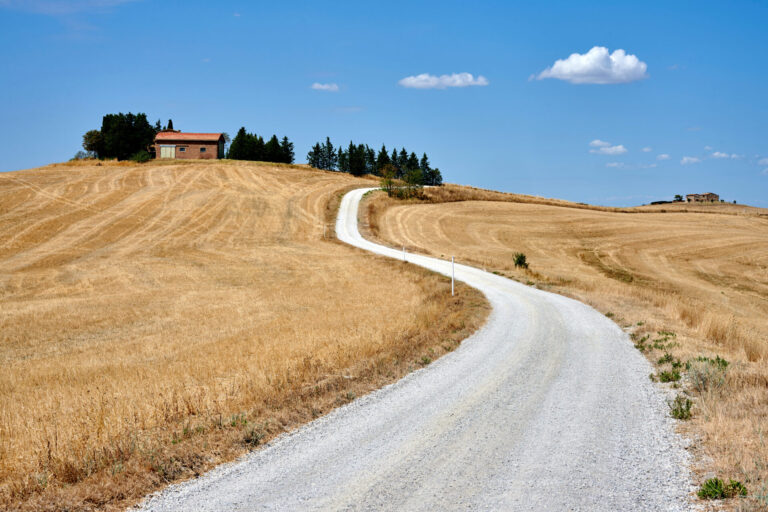
Many cyclists know Tuscany thanks to the iconic cycling race over the beautiful, rolling white gravel paths; the Strade Bianche. It is also a region known for these unpaved paths, which are not only ridden on gravel bikes here but also on race bikes. It is the region where around 5000 cyclists gather annually for l’Eroica, where they ride the famous cycling race on historic race bikes and in vintage clothing.
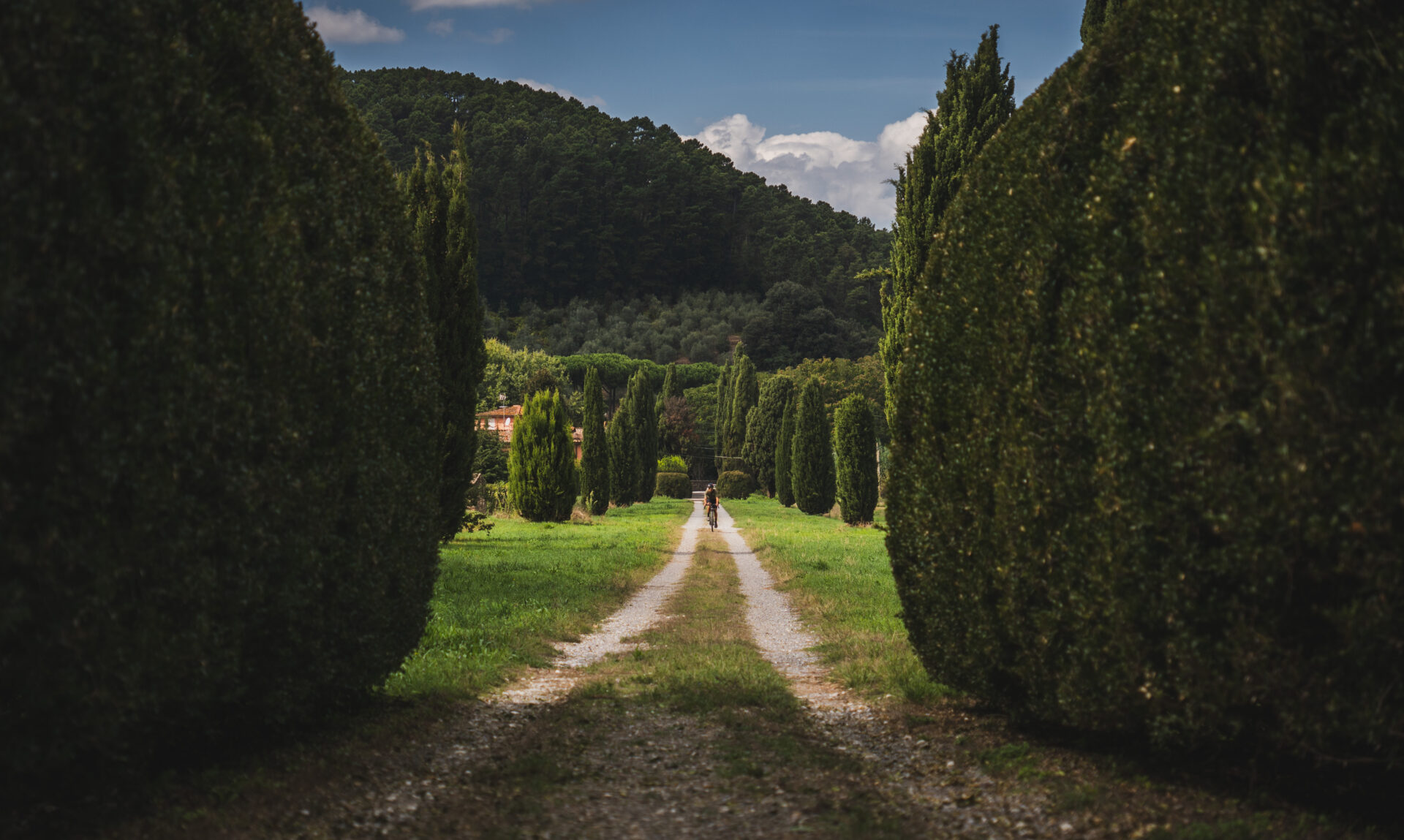
But; although Tuscany is known for the Strade Bianche, the rolling roads with cypress trees on both sides and the views of olive trees, this region has much more to offer. With an area of over 22,000 square kilometers, Tuscany offers an incredible diversity of landscapes.
Did you know about the Apuan Alps? This mountain region is located in the north of Tuscany, above the town of Lucca. With a peak at 1947 meters (Monte Pisanino), this is truly a rugged mountain landscape where you can cycle fantastic climbs on the race bike. Along the long coastline of Tuscany you find flatter landscapes and sandy beaches.
In the south, the coastline is strikingly rugged, with some of the most beautiful coastal areas that Tuscany has to offer. Moreover, you will find an abundance of challenging mountain bike trails and adventurous gravel paths here. It is a great location to combine challenging nature rides with a swim in the sea afterwards.
And don’t forget the culinary aspect! Tuscany is the perfect region to enjoy delicious pastas, pizzas, bruschettas and wines. And don’t forget to enjoy a delicious cooling ‘gelato’ on a hot day.
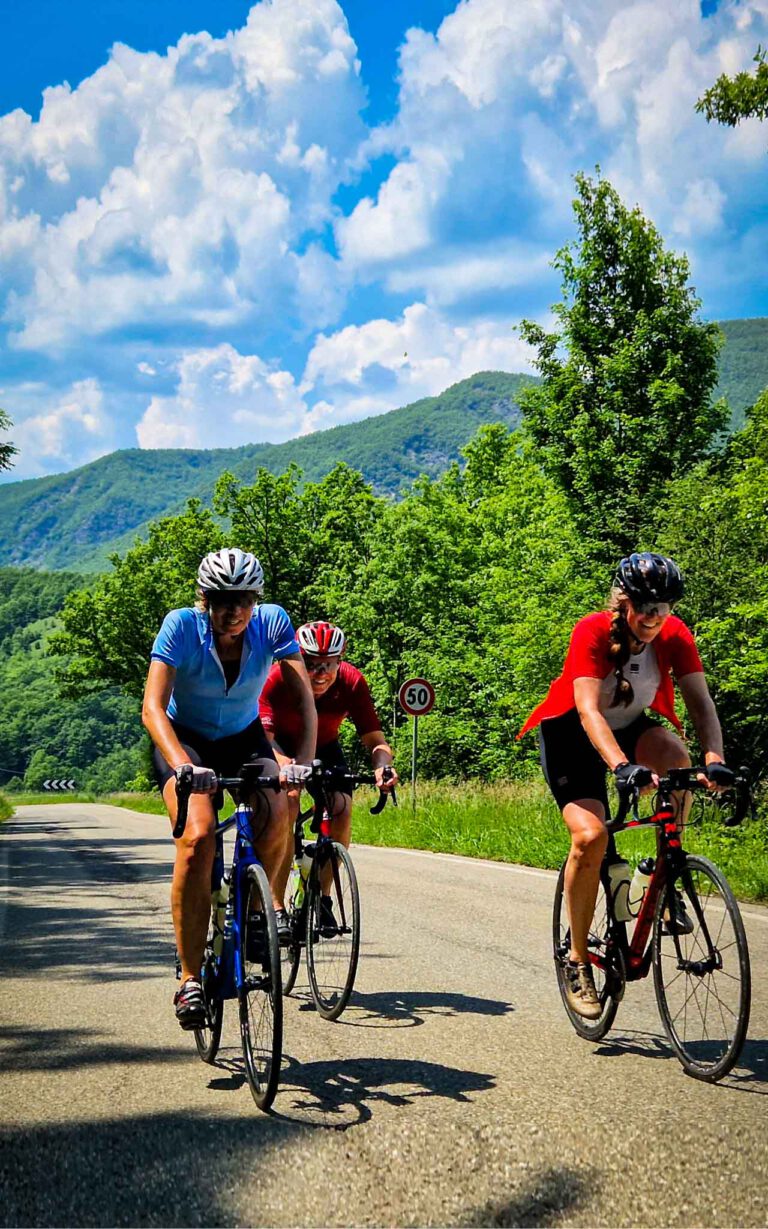
Tuscany is a fantastic region for cyclists, gravel bikers and mountain bikers. The region has a wide variety of landscapes, so there is an ideal destination for every cyclist. The famous Val d’Orcia (the typical Tuscan landscape) should definitely be visited, and of course cycling is the best means of transport to get around the area. The rolling roads offer plenty of challenges, but you can still cycle hard here without necessarily having to climb a lot. For those who really want to push themselves, there are beautiful routes in the north (Apuan Alps) or east (Tuscany borders the Appenines).
In Tuscany you’ll find a landscape full of contrasts, ideal for every cyclist. Especially in the north are the Apuan Alps, a rugged and spectacular area. The marble mountains of Carrara not only offer beautiful views but also challenging routes for climbers. Here you feel the ruggedness of nature, with steep slopes and narrow hairpin bends that are perfect for adventurous tours.
A little further south lies the Chianti region, the classic Tuscany as you know it from postcards. Here you cycle through rolling hills, past vineyards and charming villages like Radda and Greve. The quiet roads are ideal for trips where you enjoy the views along the way and maybe stop for a glass of local wine.
The Val d’Orcia, in the heart of Tuscany, is very different. The hills here are flatter, with endless fields and winding roads lined with cypress trees. Villages like Pienza and Montalcino are scattered throughout the landscape and offer a beautiful backdrop for a more leisurely bike ride.
The Maremma, on the southern coast of Tuscany, has a more rugged character. This area is perfect for those who enjoy adventure. In addition to quiet roads for cyclists, you’ll find a network of mountain biking trails and gravel routes that lead through Mediterranean forests, over cliffs, and along hidden beaches. It feels remote and pristine, ideal for escaping the hustle and bustle for a while.
In the southeast lies Monte Amiata, an ancient volcano that you should try if you enjoy climbing. The uphill path is challenging, but the shady forests and the view of the summit make it worth the effort.
Tuscany has it all: from rugged mountains and wine hills to quiet coastal areas and challenging climbs. Whether you prefer road cycling, gravel biking, or mountain biking, there is something for everyone here.
Spring (March-May)
Spring is one of the most popular times to visit Tuscany. Temperatures range between 15°C and 25°C, perfect for long drives without too much heat. Nature is in bloom, with green hills and colorful flowers along the roads. March can still be a bit chilly, and in April and May there is a chance of rain, averaging 8-10 days per month, but these are usually short bursts of rain.
Summer (June-August)
In the summer, the temperature rises significantly, often between 28°C and 35°C in the afternoon. However, the mornings and evenings are cooler, around 20°C, making early rides feasible. Rain is rare, with a maximum of a few days per month. Please note that Tuscany can be busier with tourists at this time, especially in popular regions like the Chianti and Val d’Orcia.
Autumn (September-November)
Autumn is a fantastic time to explore Tuscany by bike. In September, temperatures range from 20°C to 28°C, with cooler mornings and evenings. October is similar, but November gets colder, with temperatures around 15°C to 18°C. There is more rain, especially in October and November, but the colors of the vineyards and olive groves make this a magical season.
Winter (December-February)
The winter in Tuscany is mild, with temperatures ranging from 8°C to 15°C during the day. It can cool down at night to close to freezing point, especially in mountainous areas like the Apennines and near Monte Amiata. Rain is frequent, averaging 8-12 days per month, and in the mountains there is a chance of snow. This period is suitable for trips in lower-lying areas, but not ideal for those who really want to venture into the mountains.
There are plenty of bike-friendly accommodations to be found in Tuscany. Generally speaking, you can bring your bike to hotels, but always check this in advance of your booking.
Accommodations such as Hotel le Colline (north of Siena), Il Molinello (ideal for the Strade Bianche) or Lucca Cycling Holidays (from the hospitable Dutch couple Rien and Yvonne) are designed to welcome cyclists.
In larger cities like Siena (starting point of the Strade Bianche), Lucca or Florence, you can rent bicycles. In mountain bike areas there are always options to rent mountain bikes. In the Maremma, for example, you can rent a good mountain bike at the Punta Ala trail Centre.
A rental company we have had good experiences with is Gippo Bike. They have Specialized bikes and also deliver them to your accommodation.
You shouldn't miss these climbs in Tuscany
Monte Serra (northern Tuscany)
Length: 12 kilometers
Altitude meters: 873 meters
Average rate of increase: 7%.
Starting point: Calcium
Description: You absolutely have to do this climb when you are in the Pisa region. You start from the authentic town of Calci. After 12 kilometers of climbing over well-maintained roads, you reach the reward: a spectacular view of Pisa and the coast. At the top there is a restaurant.
Monte Amiata (south-east Tuscany)
Length: 9.5 kilometers
Altitude meters: 780 meters
Average rate of increase: 8,2%.
Starting point: Bagnolo
Description: You can climb Monte Amiata from several locations. Choose Seggiano as a starting point if you want to climb for longer. Regardless of how you go, take the time to enjoy the beautiful landscape at the top of this ancient volcano.
Passo del Lagadello (northern Tuscany)
Length: 18 kilometers
Altitude meters: 1366 meters
Average rate of increase: 7,7%.
Starting point: Pieve Fosciana
Description: This climb is long, with heavy final kilometers. Starting at 15 kilometers, even a gradient of 18% is no longer unusual. This is the perfect climb to challenge yourself! You can cycle up this climb via Chiozza (mentioned above) or cycle a bit around via Casone di Profecchia.
Climber map: the most important climbs
On this map you can see the most important ascents in the area. Click on a point for the altitude and the climb figures. The yellow points have a GPX route attached.
You can't miss these GRAVEL STROKES in Tuscany
Monte Santa Maria
Length: 1.2 kilometers
Altitude meters: 110 meters
Average rate of increase: 8.6%.
Starting point: Fosso Camerone
Description: This is the perfect gravel section from Strade Bianche. This section is also known as the ‘Strade Fabio Cancellara’ because of the dominance of the Swiss bear, which has done well here.
Torrenieri – Via Francigena
Length: 5 kilometers
Altitude meters: 100 meters
Average rate of increase: 5%.
Starting point: Torrenieri
Description: This gravel road in Val d’Orcia was also part of the Giro d’Italia in 2025. Five kilometers long and with beautiful views, it is perhaps the most beautiful thing you will find in Tuscany.
L’Eroica – Crete Senesi
Length: 10.5 kilometers
Altitude meters: 1366 meters
Average rate of increase: 7,7%.
Starting point: Colle Malamerenda
Description: If you can experience Tuscany somewhere, it’s on this stretch in the ‘Crete Senesi’, south of Siena.
Our gravel routes around Castelfalfi and Montaione
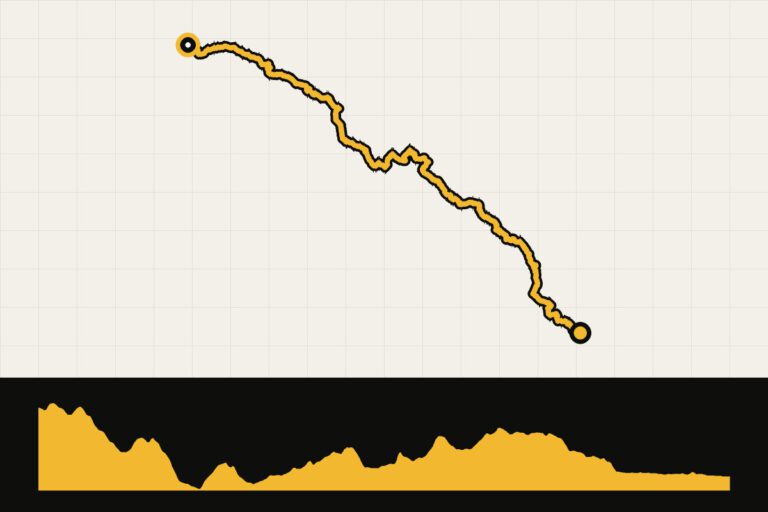
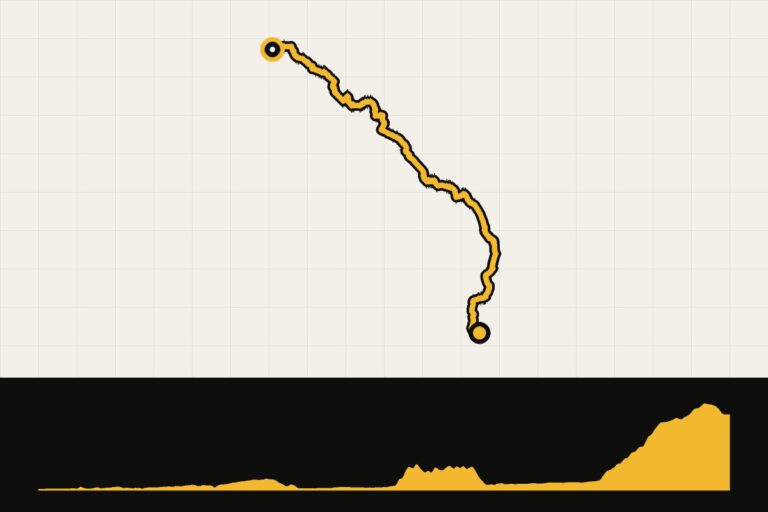
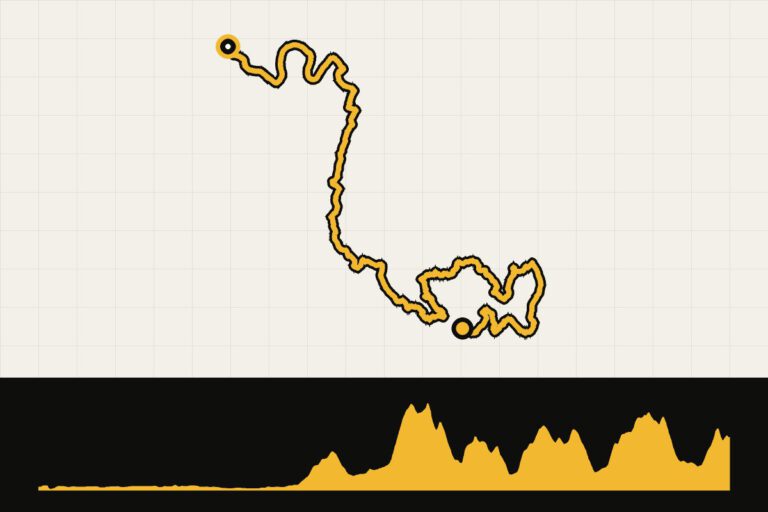
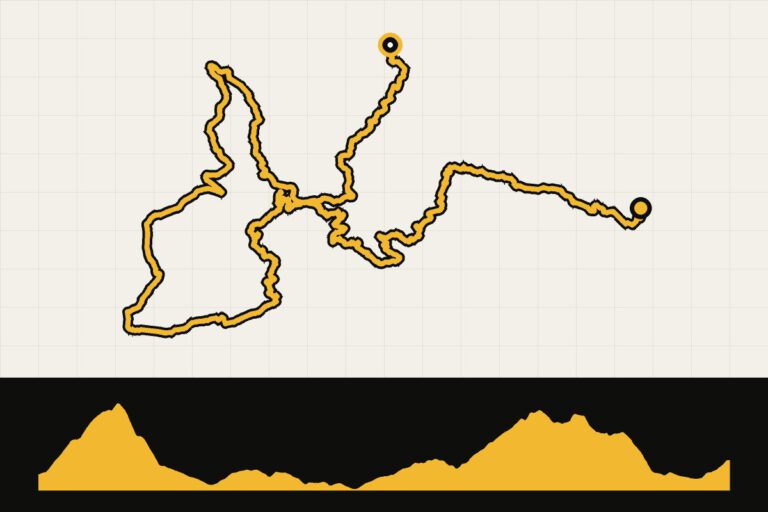
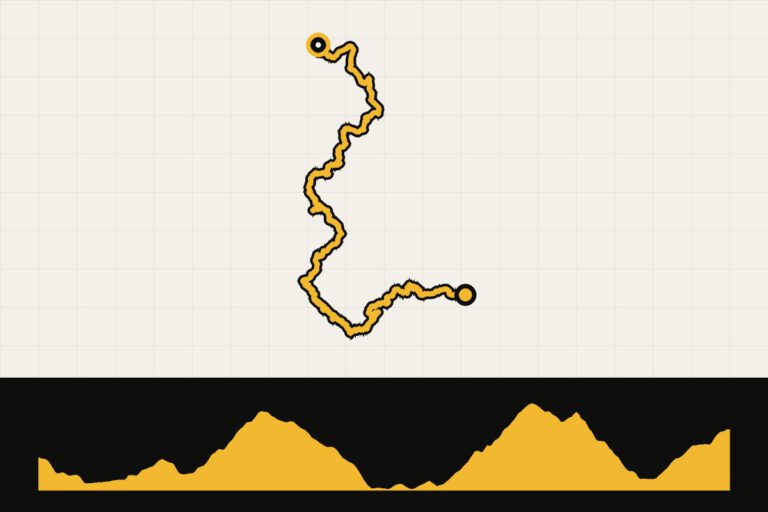
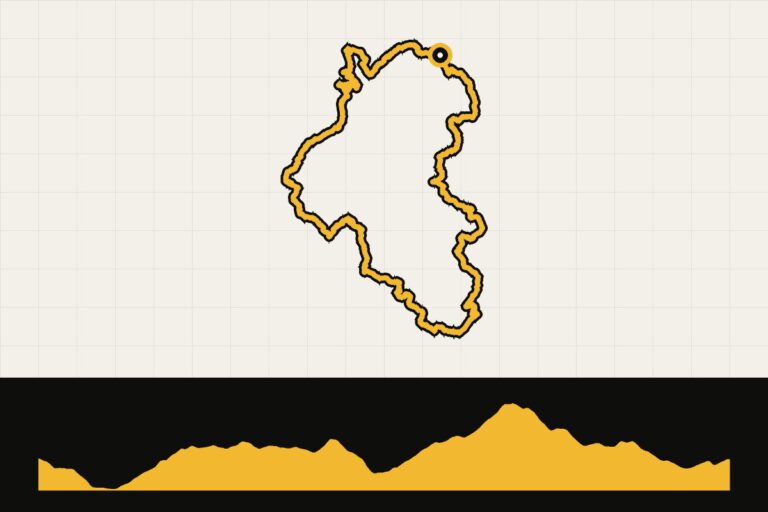
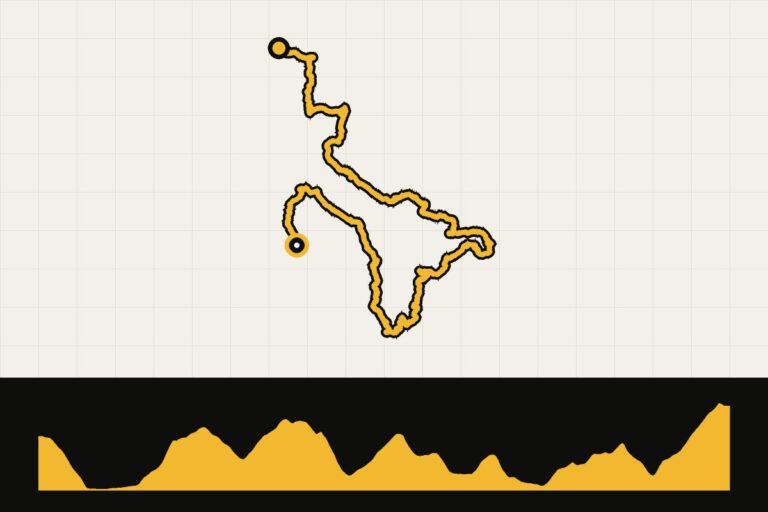
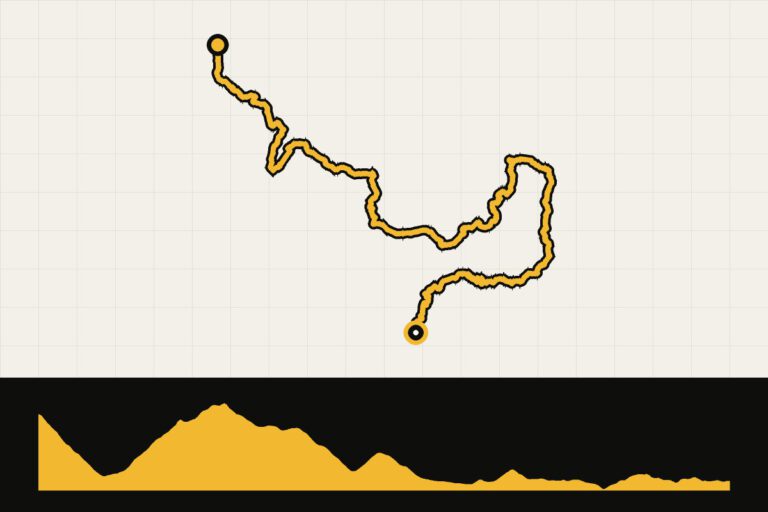
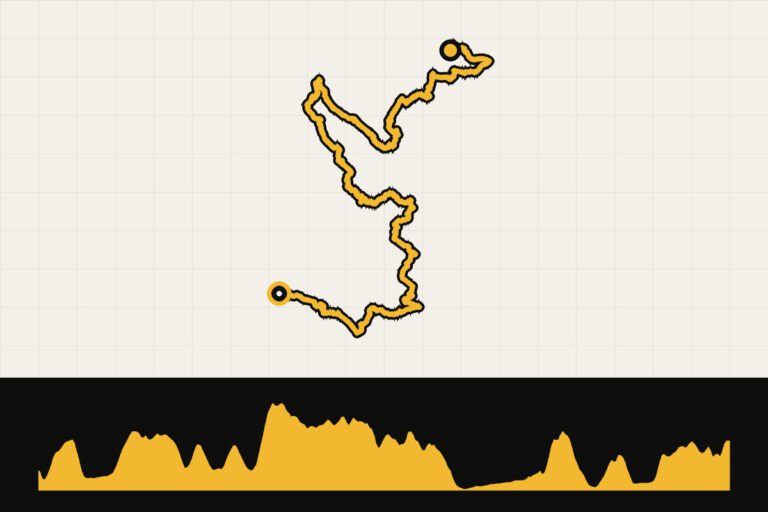
Five routes that we rode in the summer of 2025 from Corazzano and Castelfalfi, on the border of the Terre di Pisa and the Chianti: from a one-hour break to an alternative Strade Bianche to Siena.
Route collection · Gravel
Gravel around Castelfalfi
- 5routes
- 26–105km per ride
- 1.527max. altitude meters
- 270km in total
- 1
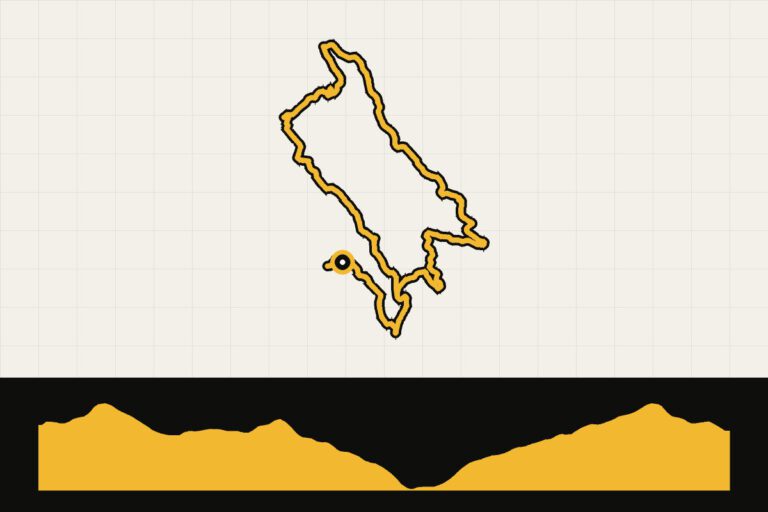 Route 1 · 26.1 km · 499 hmCastelfalfi: a little restA short run to catch up.Map, profile & GPX of route 1 →
 - 2
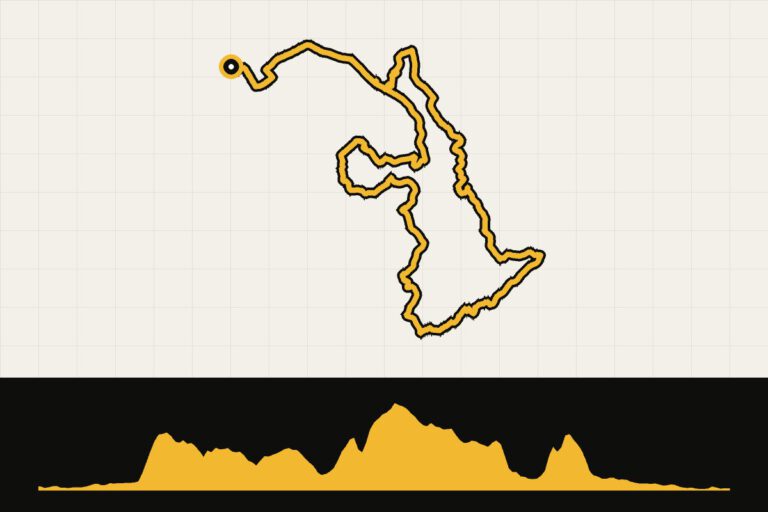 Route 2 · 34 km · 629 hmCastelfalfi: a stretch of the Via FrancigenaAbout the Via Francigena to Castelfiorentino.Map, profile & GPX of route 2 →
 - 3
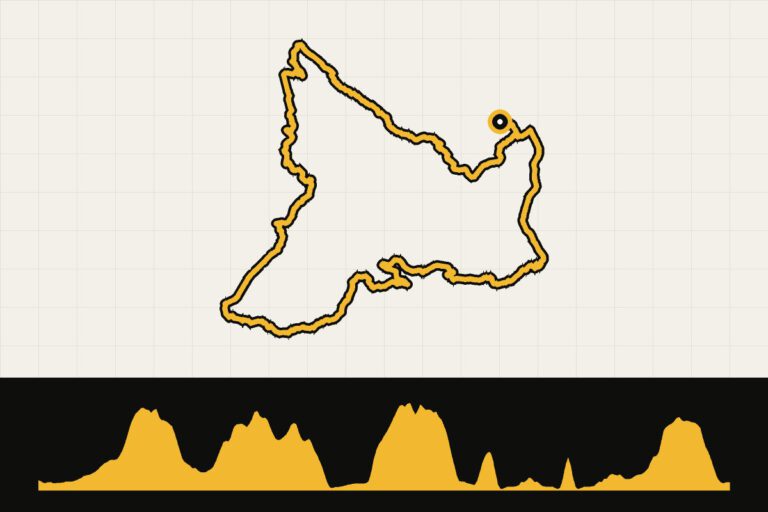 Route 3 · 53.4 km · 886 hmCastelfalfi: Green TriangleGravel through the green triangle.Map, profile & GPX of route 3 →
 - 4
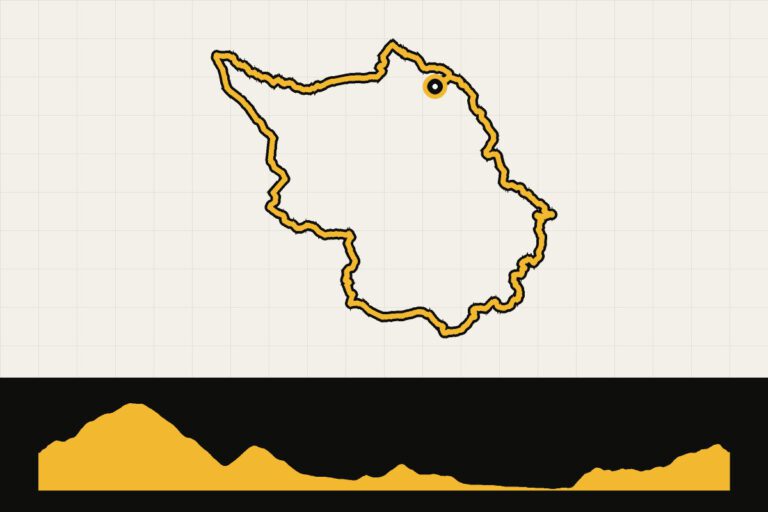 Route 4 · 51.3 km · 891 hmCastelfalfi: to VolterraFrom Montaione to Volterra.Map, profile & GPX of route 4 →
 - 5
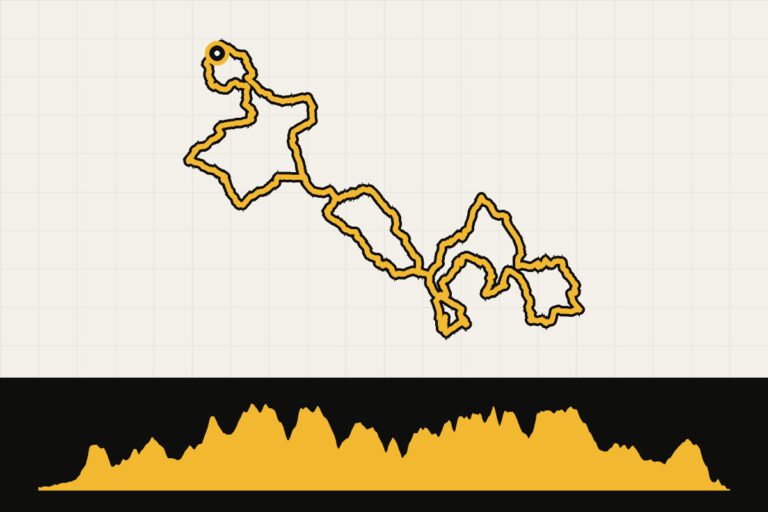 Route 5 · 105.2 km · 1.527 hmTuscany: an alternative to the Strade BiancheWhite roads to Siena, without the crowds.Map, profile & GPX of route 5 →
Travel tips
- Best destination: Siena is the best destination for gravel enthusiasts who want to discover the famous ‘white roads’ of the Strade Bianche. Lucca or Pisa are fantastic for cyclists or experienced gravel riders – the unpaved roads here are generally somewhat more technical, and intended for wider MTB tires. The coastal area around Punta Ala is a fantastic destination for gravel bikers and mountain bikers.
- Traffic information: The north-east and south of Tuscany are especially known as gravel regions. On a gravel bike you can really go anywhere in those areas, because many ‘normal’ roads are unpaved. Most of the paved roads are also good, but be prepared that Italians can drive a bit faster, and that in the more remote areas the state of the roads can be somewhat worse. But if you stay on more well-known routes, you can bike fantastically on well-maintained roads.
- Bike rental: You can rent bikes in the region. Be sure to book in time during the high season.
- Culinarily: And what should you really have eaten after your sporty day on the bike in Tuscany? For example, try pappa al pomodoro, a hearty bread soup with tomatoes, basil and olive oil. Enjoy ribollita, a traditional Tuscan bean soup packed with vegetables and aged bread. Also try pici cacio e pepe, a local pasta dish with thick, hand-rolled spaghetti, pecorino and black pepper. Don’t forget to save room for dessert; cantuccini with a glass of vin santo, a sweet dessert wine in which you dip the crispy almond biscuits. Of course, all this tastes delicious with a glass of Chianti or Brunello di Montalcino!
More stories about Tuscany
When are you leaving?
Events in Tuscany
2027Gran Fondo Strade BiancheSiena, Italy · 139, 87 kmrace bikeMay 19
2027Tuscany TrailCampiglia Marittima, Italy · approx. 460 km (5,900 hm), Newbie 160 kmgravel
Areas
Areas in Tuscany
How do you get there?
- Flying: Fly to Pisa · Florence. Bring your own bike; book a place for your bike box in time.
- By train: Convenient stations: Florence · Siena · Pisa.
- By car: From Utrecht you are in about 14 hours TuscanyPlan an overnight stop along the way, or drive in two days.
This is how we calculate: We calculate distances and travel times starting from Utrecht. Our flights always depart from Schiphol, Rotterdam The Hague Airport or Eindhoven Airport. Want to know how to travel from your place of residence the best way? Let us know, We are happy to help you. After all, we built this site together.
Are you flying? Read our guide Flying with your bike: Which airline, what the cost is and how to pack your bike.