Part of Spain
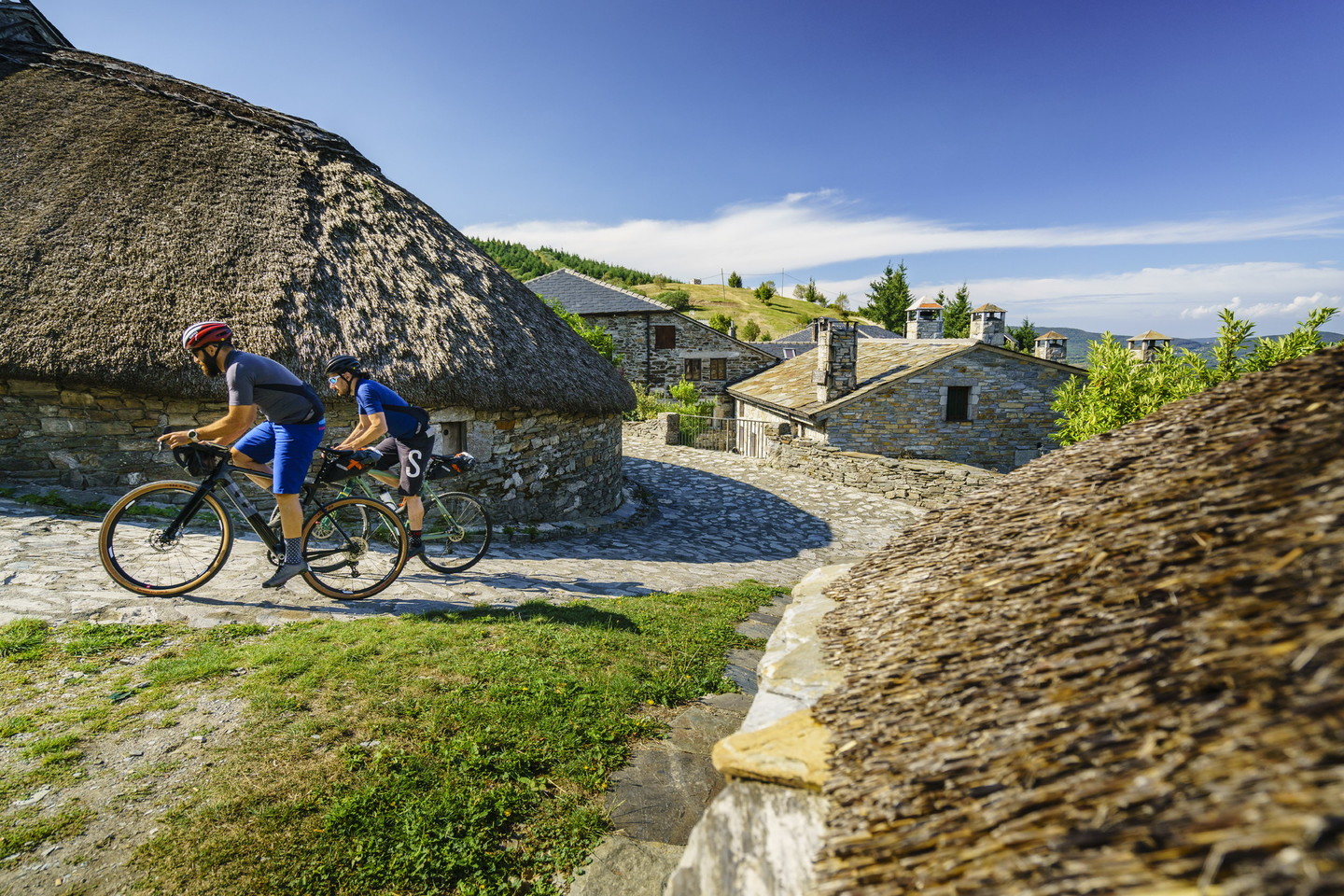
Galicia; the most northwestern point of Spain, above Portugal. It is a unique region, where you will not immediately think of Spain. Centuries-old traditions and customs have been preserved here thanks to its isolated location between the ocean and mountainous regions. Celtic influences have created a unique culture in Galicia; it is not uncommon to hear bagpipe music here, and many Celtic traditions are still maintained here. The approximately 1600 kilometers long coastline includes beautiful bays, picturesque coastal towns, and breathtaking beaches. It is the region where many Spaniards go on vacation to enjoy the sea and beautiful nature; Galicia is the greenest region in Spain! That is, of course, the result of the fact that there is more rainfall here than in other regions.
Thanks to the mild climate, even in the winter months, you can see cyclists on the road all year round. The summer months are the most popular, because it rains the least and it doesn’t get as hot as in other parts of Spain. The local population is generally respectful towards cyclists and there are many quiet, well-maintained roads.
Galicia’s rugged beauty attracts cyclists who are looking for lesser-known, yet challenging destinations. With its unique character, challenging routes, and welcoming culture, Galicia is a destination that every cyclist should discover at least once in their lifetime!
Galicia is a unique destination. Do you enjoy discovering new cultures, love green nature, coastal areas, and adventure? Then this is a fantastic destination for your cycling holiday. Galicia offers an unparalleled diversity of landscapes, ensuring there are always routes to suit your preferences. Choose one of the routes through rolling landscapes, seek adventure along the rugged coast, or take on the challenge of one of the popular climbs, such as the Alto de Ancares.
As for the weather, this is also a great destination. If you want to go on a cycling holiday in the summer, it can quickly get too hot in many areas. Galicia has a mild climate, which makes it great for cycling in the summer.
Along the Atlantic Ocean you will find beautiful cliffs. The Costa da Morte offers challenging routes with views of the ocean. Further south you will find the Rías Baixas, with rolling roads along fjord-like estuaries and beautiful beaches. In the interior of Galicia you will find more rugged nature, rivers and vineyards, especially in the Ribeira Sacra region. Here you can enjoy great cycling along the rivers ‘Sil’ and ‘Miño’, where the forests and mountains seem to rise out of the water. With these varied landscapes and the possibilities for both asphalt, gravel and technical trails, Galicia is an ideal destination for cyclists of all levels and for every discipline.
Spring (March to May): In the spring, temperatures in this region are around 12°C and 20°C. The flower fields and vineyards come to life during this period. On average, there are around 12 to 15 days of rain in this area each month, but there are also 7 to 10 completely sunny days, especially later in the season.
Summer (June to August): The summers in Galicia are milder than in the rest of Spain, with temperatures rarely exceeding 27°C. This makes it an ideal destination for summer cycling holidays. In the mountains, it is slightly cooler. Rain is less frequent during these months, with an average of 5 to 8 rainy days per month and 15 to 20 sunny days – perfect for long cycling trips!
Autumn (September to November): During autumn, Galicia turns a beautiful warm color, while temperatures remain between 15°C and 22°C. This season is ideal for cycling trips through the Ribeira Sacra, where the vineyards and canyons form a beautiful backdrop. The quieter tourist season gives you the freedom to explore the region at your own pace. The rain increases during this period, with 10 to 14 rainy days per month, but there are still 6 to 8 sunny days, especially in September and October.
Winter (December to February): The winter in Galicia is mild along the coast, with temperatures between 8°C and 14°C, but in the mountains it can be colder and sometimes even snow. However, in the low hills and valleys you can still make pleasant rides. The rainfall reaches its peak with an average of 15 to 20 rainy days per month, but it usually doesn’t rain for whole days. There are also about 4 to 6 sunny days per month during this period.
Cycling in Galicia: all the possibilities
EuroVelo 1: the Atlantic coast
Since April 28, 2026, EuroVelo 1 has been running through Galicia: 537 kilometers from Tui on the Portuguese border to Cape Finisterre, in ten one-day stages. The sea is almost visible throughout the entire route, over bike paths, quiet country roads, and stretches directly along the coast. Read our story Galicia: a cool summer coastal destination.
The Camino de Santiago by bike
All the pilgrim routes end in Santiago de Compostela, and you can cycle them all. The Camino Francés enters Galicia through O Cebreiro, a climb of about 1,300 meters high. The Camino Primitivo comes from Asturias via A Fonsagrada, and the Camino Portugués runs from Tui along the coast or through the interior. For a Compostela, you must cycle at least the last 200 kilometers. Those who want to go further can follow the EuroVelo 3 to Finisterre.
The Rías Baixas
In the southwest, the river mouths plunge deep into the land. Around Vigo, Baiona, Pontevedra and O Salnés, you drive along rolling roads along the rías, with beaches and vineyards of the albariño. A nice short ride is Nigrán – Baiona – A Guarda, partly along the Portuguese pilgrimage route.
Costa da Morte and Finisterre
The rugged coast of A Coruña, with cliffs, lighthouses and a lot of wind. Near Cee lies the Mirador de Ézaro, a short wall with sections that are over 20% meters high, which served as the starting point for the Vuelta several times.
Ribeira Sacra and the Sil Valley
In the interior, the Sil and the Miño flow through deep gorges with vineyards on terraces. Around Monforte de Lemos and Parada de Sil you climb steeply out of the gorges, with views like those from the lookout points of Bolmente.
Os Ancares and O Courel
In the east, facing León and Asturias, lie the mountains of Os Ancares and the Serra do Courel. The Alto de Ancares is one of the toughest climbs in Galicia and has featured several times in the Vuelta.
Gravel
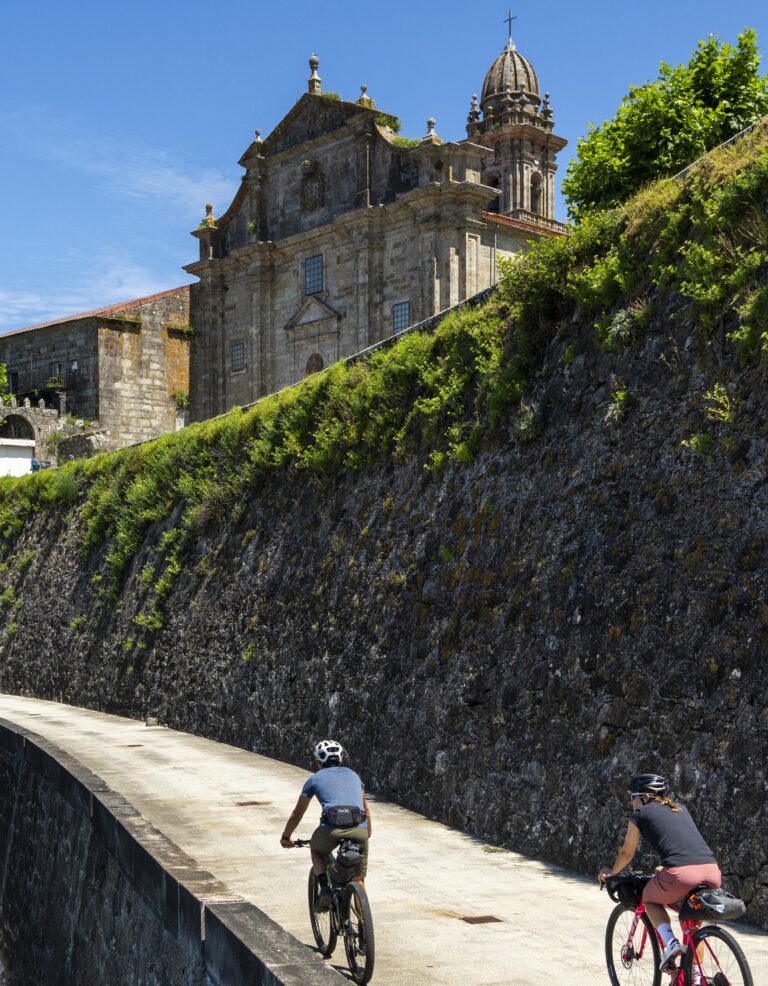
Galicia has countless unpaved roads leading to remote villages. A recommended route is the Water Route near Vigo: over 40 kilometers, almost entirely unpaved, along the route of the old canal. Around Lugo, follow the Miño through the Terras do Miño Biosphere Reserve to the Roman city wall.
Travel tips
- Best destination: Santiago de Compostela is the capital of Galicia. The city is located in the middle of the region and is a great base if you want to be close to a city and explore the interior. The city is world-famous as the final destination of the Camino de Santiago pilgrimage route. The historic center, which is on the UNESCO World Heritage List, has narrow streets, picturesque squares, and a rich cultural atmosphere. Want to explore the mountains? Then stay more to the east of the region. The entire coastline is hilly and offers numerous beautiful cycling routes.
- Traffic information: Galicia is known for its quiet roads that are generally well maintained. In addition, there are many unpaved roads leading to remote places, where you can enjoy fantastic hiking. Other road users generally treat cyclists with respect; it is a safe region to cycle in.
- Culinary: Galicia is considered the best place in Spain for seafood thanks to its rich coastline and the clean waters of the Atlantic Ocean. Think, for example, of octopus, mussels and cockles.
When are you leaving?
How do you get there?
- Flying: Fly to Santiago de Compostela · Vigo · A Coruña. Bring your own bike; then book a place for your bike box in time.
- By train: Convenient stations: Santiago de Compostela · Vigo.
- By car: From Utrecht you are in about 17 hours GaliciaPlan an overnight stop along the way, or drive in two days.
This is how we calculate: We calculate distances and travel times starting from Utrecht. Our flights always depart from Schiphol, Rotterdam The Hague Airport or Eindhoven Airport. Want to know how to travel from your place of residence the best way? Let us know, We are happy to help you. After all, we built this site together.
Are you flying? Read our guide Flying with your bike: Which airline, what the cost is and how to pack your bike.