
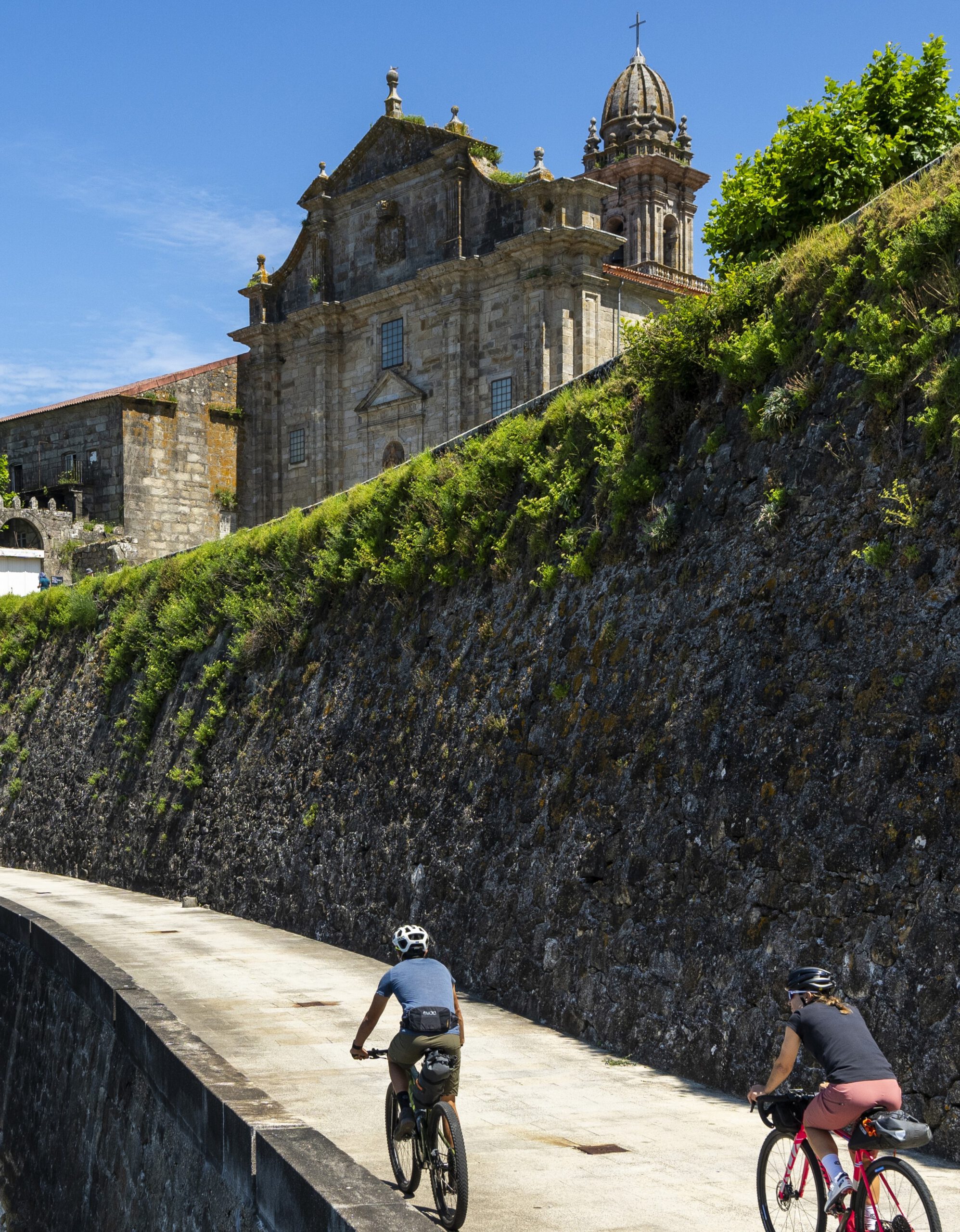
The end of the known world. That was how they called Cape Finisterre in Galicia for centuries. We were looking for a destination in Spain by the coast for next summer. A somewhat more rugged, unknown destination where you can do both a multi-day trip and a separate gravel race. Galicia, the most western region of the Iberian Peninsula, came top of the list.
They had to wait a while for that, but since April 28, 2026, it has been running. EuroVelo 1 – Atlantic Coast Route by Galicia. A new route of 537 km, from Tui to the Portuguese border Cape Finisterre, is now fully signposted. It is divided into ten parts that you can drive in a day. For the fanatic, you can do it in less time, but 10 is a nice number. With that, the final leg of an Atlantic route of more than 11,000 km is complete, starting at the North Cape. That’s a good reason to pack your bike.
Wild coast and the pilgrimage route – what makes Galicia different
Galicia is located in Spain, at the western tip of the peninsula. This location gives the region a different character from the well-known seaside resorts on the south and east coasts. The region is located on the Atlantic Ocean, with sea arms that plunge deep into the land. This makes for many fishing villages and a coastline where the wind has free rein. It is a chain of colorful villages, rolling roads and ever-changing landscapes. You will be surprised by the smell of food being prepared in the villages. Then you really want to be in the harbors to try all that local delicacies. Fish is anyway a very important ingredient in Galician cuisine. Think especially of Pulpo (octopus), mussels and scallops (perfect for the pilgrimage route). You can also find fish species such as pike, turbot and sardines here.
Pilgrims
What makes the region unique is the pilgrimage culture. If there is one city synonymous with Galicia, it is Santiago de Compostela, where the world-famous pilgrimage route begins. Camino It also is possible for cyclists to make a pilgrimage to Santiago de Compostela. Then you take the EuroVelo 3, also known as the Pilgrims Route This is a route of about 5,600 km all the way from Trondheim to Finisterre, which ultimately goes via Santiago. In Cee EuroVelo 1 and 3 come together and both routes follow the final stretch to the cape.
The interior of the country also offers plenty of opportunities for cyclists. Head in that direction. Sil-groove in the Ribeira Sacra, the biosphere reserve Terras do Miño around Lugo. The many dams and forests along the river also create a landscape that is perfect for a beautiful gravel bike ride.
Short rides for a summer day
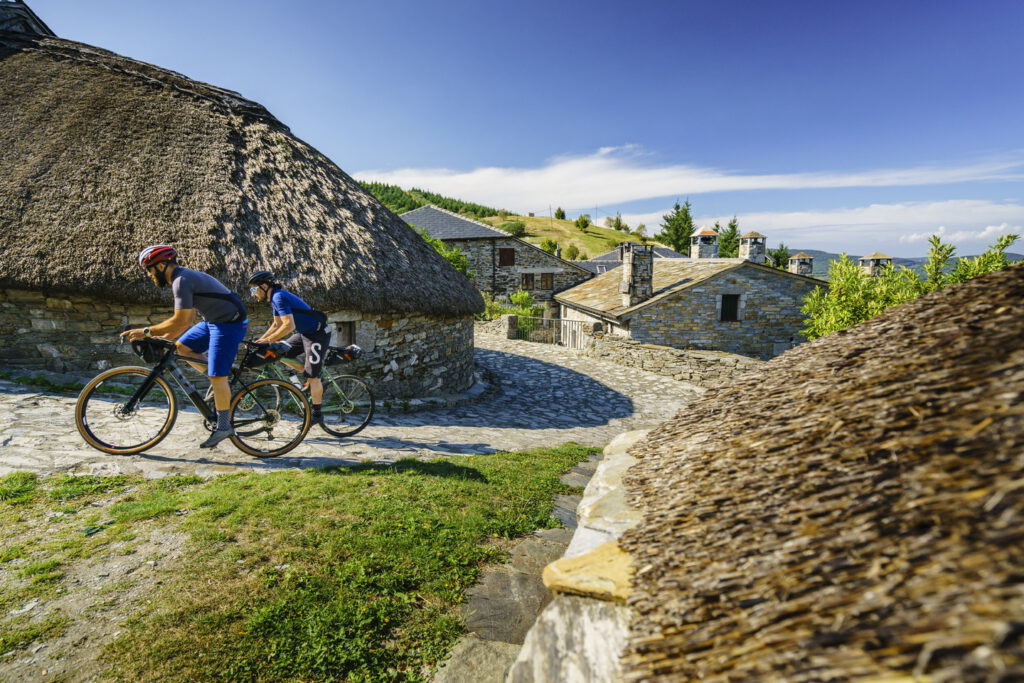
Turismo de Galicia launched a series Easy cycling routes in a row. We picked the most interesting ones for those who want to go cycling for a day without having to pack a bikepacking bag right away. They vary in length, with the longest one covering 80 km round trip (with relatively few elevation changes).
- O Burgo–CecebreThis is a 20 km round trip along the Mero River, starting from the promenade of the sea arm of O Burgo via a medieval bridge to the Cecebre Reservoir. Mostly flat and unpaved, perfect for a coffee ride.
- Nigrán–Baiona–A Guarda: The cycling path from A Ramallosa along the sea arm of the Miñor, through Baiona and from park A Palma towards Cabo Silleiro between road and sea. Those who continue to A Guarda make about 30 km of it, partly along the Portuguese pilgrimage route. Along the way you see grey herons in the sea arm.
- Route of Padre SarmientoNine stages around O Salnés, following the travel report that Padre Sarmiento wrote in 1745. The compact stretch from Cambados to Illa de Arousa, including a round trip around the island, is about 25 km.
- Waterway41.52 km from Rúa Cantabria in Vigo, along the route of the old canal from the Eiras reservoir. Almost entirely unpaved, with one short stretch of asphalt. It can be shortened to 13 km.
- Casa da Fervenza14.32 km along the Miño to the city center of Lugo, through the river forest of Terras do Miño, with the city wall of Lugo (World Heritage Site) as the final destination. A beautiful short route. Stop along the way for a cortado. Nothing wrong with that.
- Lookout points of BolmenteCircular, 14.29 km in the municipality of Sober, through the mountainous landscape of the Sil Valley. This short route is unpaved with some asphalt, there is little traffic, and along the way you have beautiful views at Cividade and O Boqueiriño.
The water route is special in that respect: over 40 km of almost completely unpaved terrain around the sea arm of Vigo. Check in person whether you are comfortable with 40 mm tires.
EuroVelo 1 – 537 km from Tui to Cape Finisterre
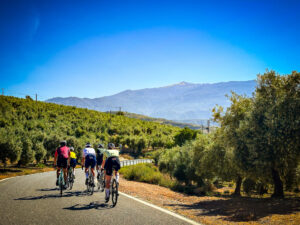
The new Galician extension follows the Atlantic coast through the provinces Pontevedra and A Coruña. According to EuroVelo, the sea is visible almost throughout the entire route. The route consists of open-air cycle paths, quiet country roads, and stretches that run directly along the coast.
The division into ten sections is practically foolproof. Each section is comfortably drivable in one day according to EuroVelo, and each starting and ending point is located in a place with accommodation, restaurants, a place to rinse off your bike and get bike repairs. All the route points are accessible by bus, four of them by train as well. So you can easily get off midway, skip a stage in bad weather, or return to your base camp after five days.
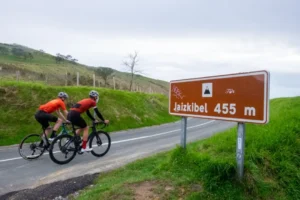
The signage is complete with EuroVelo 1 signs. On the shared sections with the Camino de Santiago, the Camino logo is incorporated into the EuroVelo signs, so you don't have to reach for your phone at every junction (although we do that anyway ;)).
Gravel or bikepacking – where EuroVelo 1 is suitable and where it is not
For gravel riders, it is good to know that EuroVelo 1 is not an off-road route. The terrain is predominantly asphalt or concrete, with interspersed sections of crushed gravel. For technical work or real gravel, other routes are more suitable. With a gravel bike and tires of 35 to 40 mm, you can get around easily in Galicia; on the unpaved sections, that bike is more comfortable than a race bike.
For bikepacking, the EV1 is an absolute must-have. You can cycle it in 10 parts (the route is divided into 10 day sections). The planner then provides you with a place to sleep and food every night, bike repair within reach, and public transport to possibly adjust your own plan. You can travel without a tent, but camping is also possible. And by connecting to EuroVelo 3 in Cee, you can extend or change the route via Santiago.
EuroVelo has official GPX tracks available, but always check last minute if there are any changes. Ultimately, everything is a matter of human effort. Following the signage and being careful in traffic remains your own responsibility. The same applies to the rest of Galicia: Spain by Bike more day-long routes, gravel and MTB trails and mountain passes are collected, with a planner that allows adding or reversing stages and outputs a GPX or PDF. For questions about the condition of the roads, you should contact the authority that promotes the route.
Basecamp and facilities – BTT Centers and the app
Galicia has something for mountain bikers BTT Centers in O Salnés, Portas de Galicia, O Xurés, The Ribeira Sacra and Allariz-Vilar de Santos. Such a centre has cycling facilities and more information about routes: think parking, showers, a bike wash, repair options and signposted routes with maps. That makes them perfect as a base after a day on the bike.
In addition, the app The landscape of Galicia from the bicycle 52 routes with difficulty levels, maps and overviews. Cycle paths have been created in several cities, and some municipalities offer bike rental or a shared bike like BiciCoruna. In Salvaterra do Miño there is even a free bike service on weekends, and from there you can easily cross the border to Portugal via R-Bike Río Minho to Monção.
Have you been to Galicia yet? Do you know a good place to stop after the ride, or have you already ridden a bit of the new EuroVelo 1? We would love to hear which stages we shouldn’t miss.
This article was made possible thanks to the Spanish Traffic Agency – Turespaña

Questions & tips
Do you have any questions about this route, or have you been there yourself? Share them here. We read everything and usually respond within a few days.