
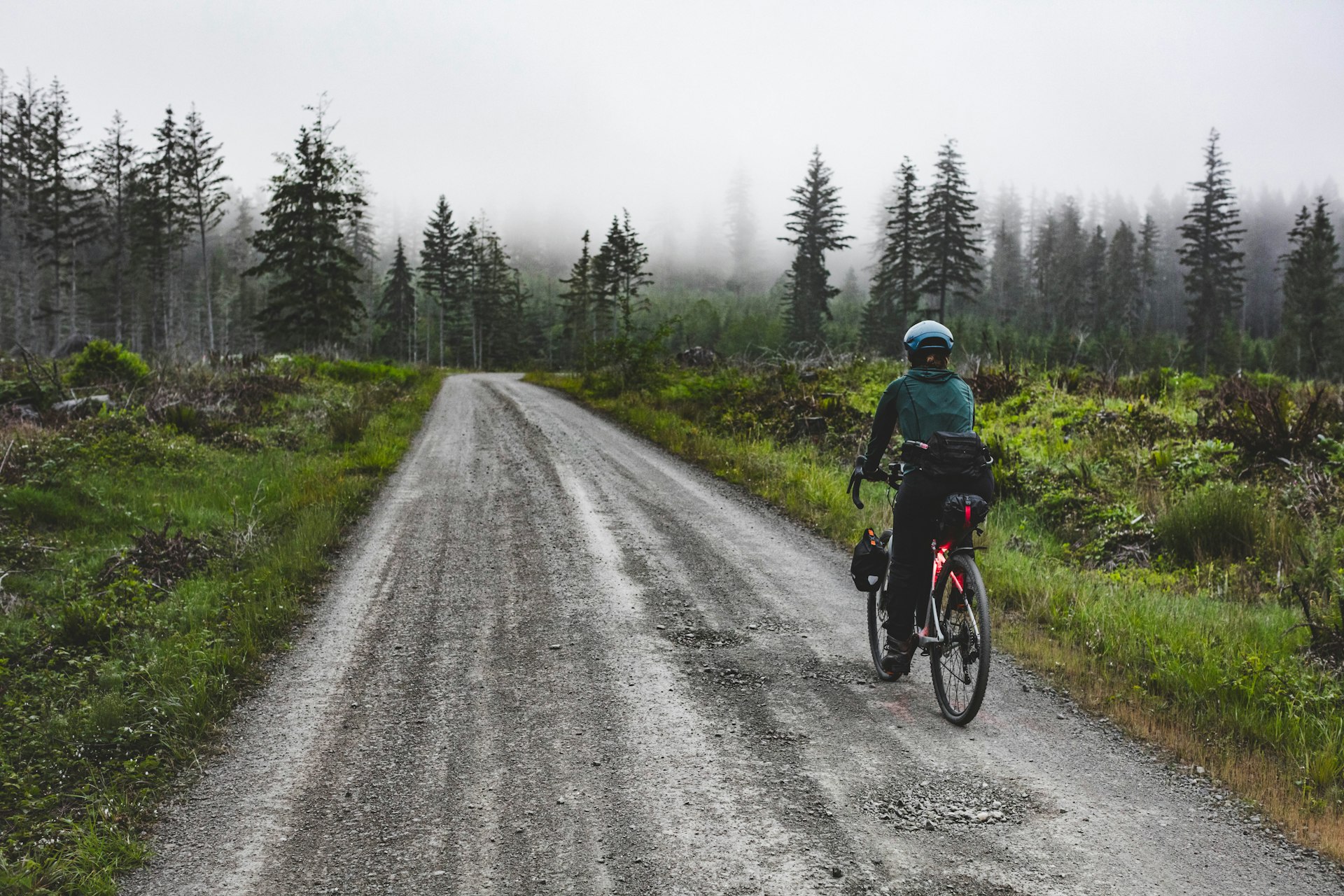
Bikepacking is cycling with your luggage on the bike and spending the night on the road. You can make it as adventurous as you like: from a night in a hotel after a sixty-kilometer ride to a week of camping in the mountains. The best way to start is with an overnight stay: one day of cycling, one night away, the next day back. In this guide you’ll learn how to do that. For more information about what bikepacking is, read Everything you want to know about bikepacking.
Step 1: choose a short, achievable route
Choose a distance that you normally drive easily for your first trip, and subtract a third from that: with luggage you’re slower and more tired faster. For most people, 50 to 80 kilometers per day is ideal. Choose a route with lots of quiet roads and unpaved paths, and with shops or cafes along the way. In our routedatabase You can find gravel routes with GPX, and many regions have signposted long-distance routes.
Step 2: arrange your accommodation
- Camping: the classic choice. Many campsites have camping pitches for cyclists and hikers, often without reservation.
- Nature camping grounds and camping with horsesIn the Netherlands and Belgium, there are places where you can set up a small tent, sometimes with limited facilities. Always check the rules beforehand.
- Hotel or B&BIf you want to keep it simple, you sleep inside. Then you only need clothes and toiletries.
- Wild campingIn the Netherlands, Belgium and Germany, it is usually not allowed. In Scandinavia, it is often allowed, under certain conditions.
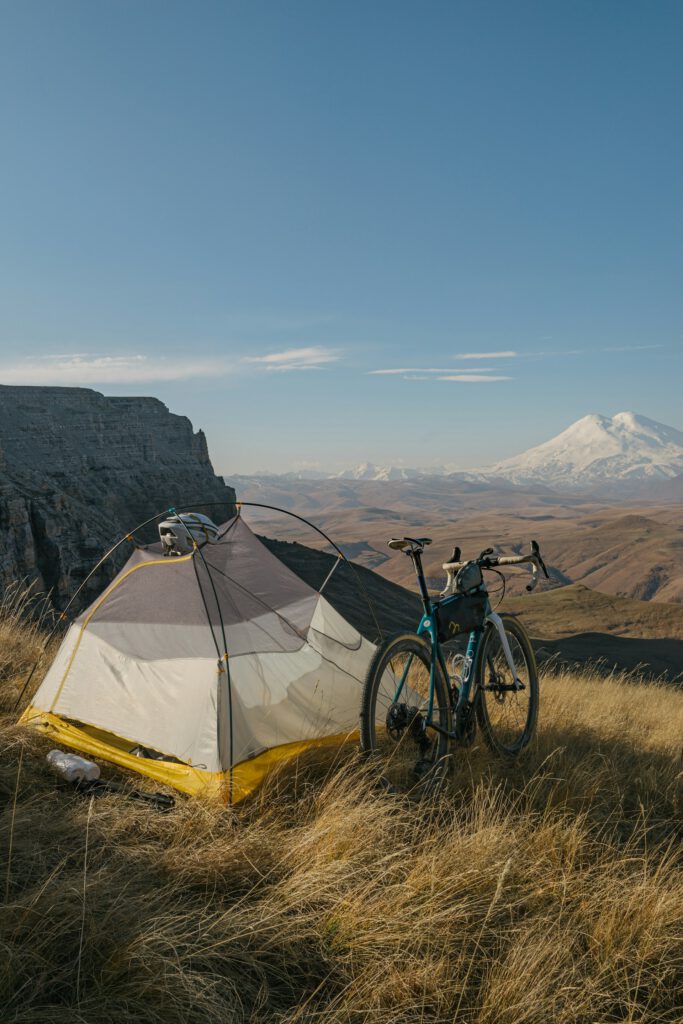
Step 3: bags on the bike
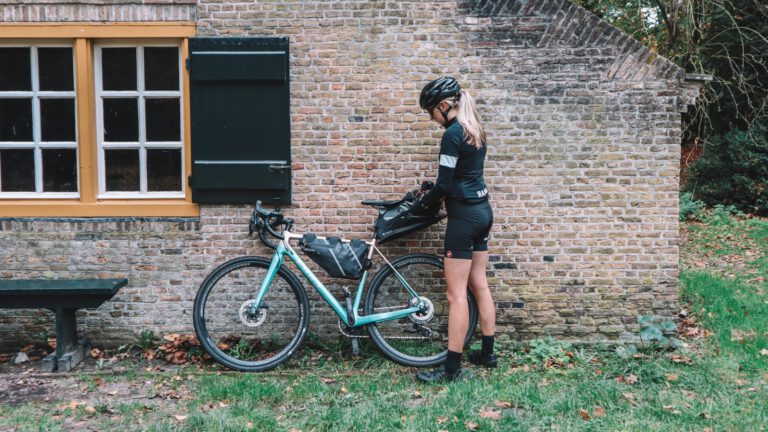
You don’t need an expensive set to get started. With a handlebar bag for your sleeping gear, a saddle bag for clothes and a frame bag or top tube bag for food and tools, you’re well on your way. If you have a luggage carrier, regular bike bags will also work. Be sure the bags are securely fastened and don’t get caught in your legs or straps. Before you leave, take a test ride with full bags.
Step 4: the packing list
- SleepingLight tent or sleeping bag, sleeping mat, sleeping bag (check the comfort temperature).
- Clothing: cycling clothing for the day, a warm layer and dry clothing for the evening, rain jacket.
- Food and drink: two canisters, snacks for on the go, possibly a small stove if you want to cook yourself.
- Tools: spare inner tire, tire reflectors, pump, multitool, chain lock.
- Electronics: phone, bike computer, powerbank and cables, lighting.
- OtherFirst aid kit, sunscreen, toiletries, ID, money.
A handy tip: put everything at home on the floor and ask yourself whether you really need it for each item. Most beginners bring too much with them.
Step 5: On the way
- Start early, so you have time for breaks and a relaxed arrival.
- Eat and drink regularly, even if you aren't hungry.
- Keep in mind the weather and have a plan B, such as a stop along the way.
- Let someone at home know where you are and when you will be back.
Ready for more?
If you’re up for more, you can join an organized bikepacking weekend, like the Grunnduro in Groningen, or a longer tour like the Tuscany Trail. You’ll find them in our event calendar and in 5 multi-day gravel events in the Netherlands.
Frequently asked questions
Do I need a special bike for bikepacking?
No. A gravel bike is ideal, but a race bike with slightly wider tires, a mountain bike, or a trekking bike can also be fine. What matters most is that your bike is reliable and that your luggage fits securely.
How many kilometers do I drive per day?
For a first trip, 50 to 80 kilometers is enough. Experienced bikepackers sometimes ride more than 150 kilometers per day, but that is not the goal itself.
Questions & tips
Do you have any questions about this route, or have you been there yourself? Share them here. We read everything and usually respond within a few days.