
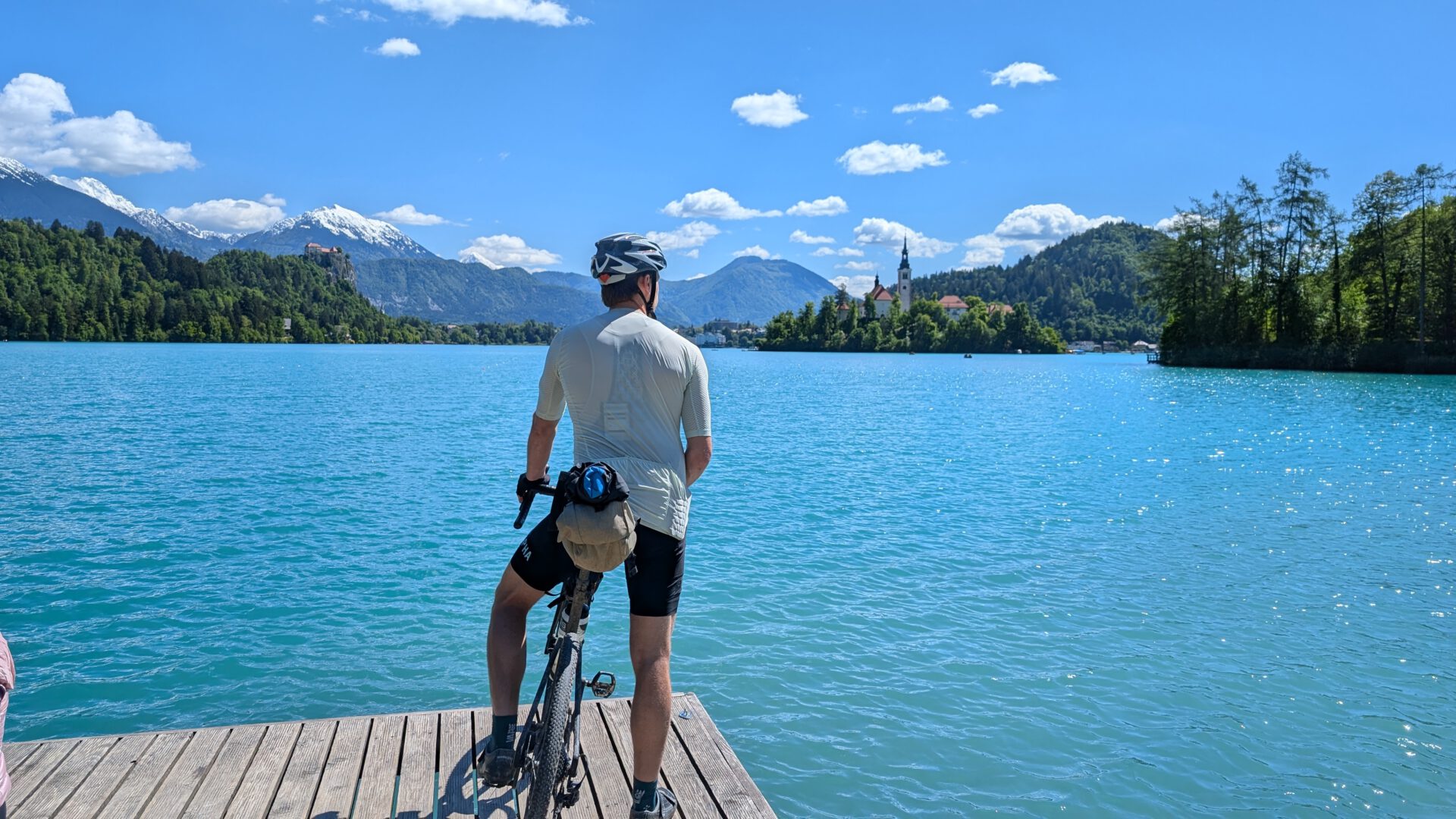
Slovenia: Where the stories were already written before I arrived
Six days of gravel in Slovenia: From a mountain pass my parents drove through in the 1970s to green-blue-colored lakes, wine villages, and the Vršič mountain.
Some places you encounter twice in your life.
First through the stories of people who were there for you, and only then when you go there yourself. I grew up with stories about ‘former Yugoslavia’, from my parents and grandparents. Summer holidays in the 1970s, a small car, no air conditioning, all the way from the Netherlands to Slovenia and the neighboring countries. Fruit stalls along the road. Singing loudly to make the hours fly by. Paper maps, routes that you heard from fellow travelers and neighbors, no screen in sight. The adventure began the moment you stepped outside.
So the moment Kees and I drive through the Wurzenpass in the evening and cross from Austria to Slovenia, it feels different than I expected. This is exactly the mountain pass my parents took on one of their very first trips together. The same road, another generation. I quickly send a message home. They remember the pass immediately. A good start.
The weather has other plans (in the first place)
What began as a long drive from Austria to Kranjska Gora, right at the corner where Austria, Italy and Slovenia meet, quickly became a typical Slovenian welcome.
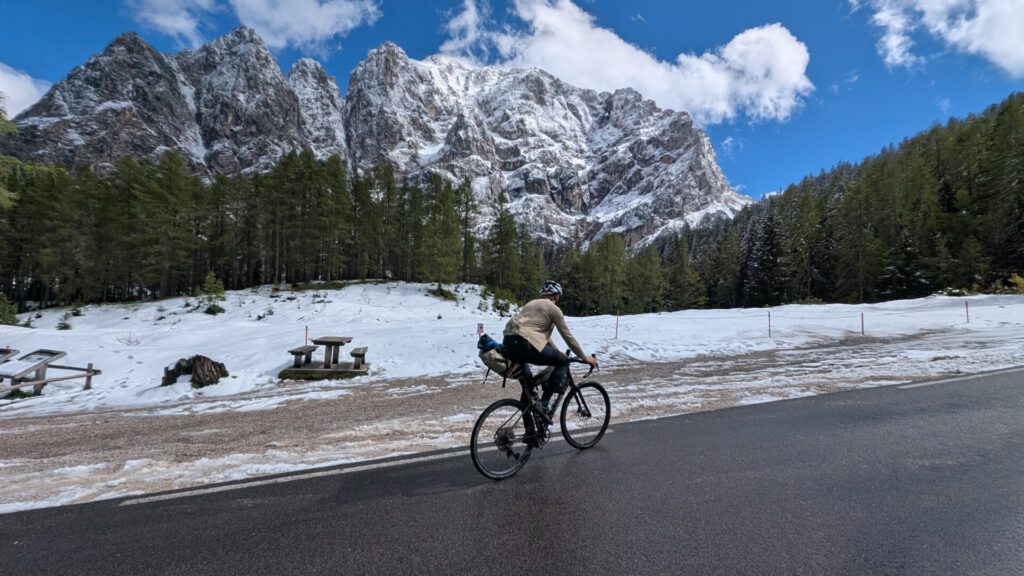
Day one: Heavy rain all morning. A slight snow shower in the early afternoon. The kind of weather that tests your perseverance before you even start.
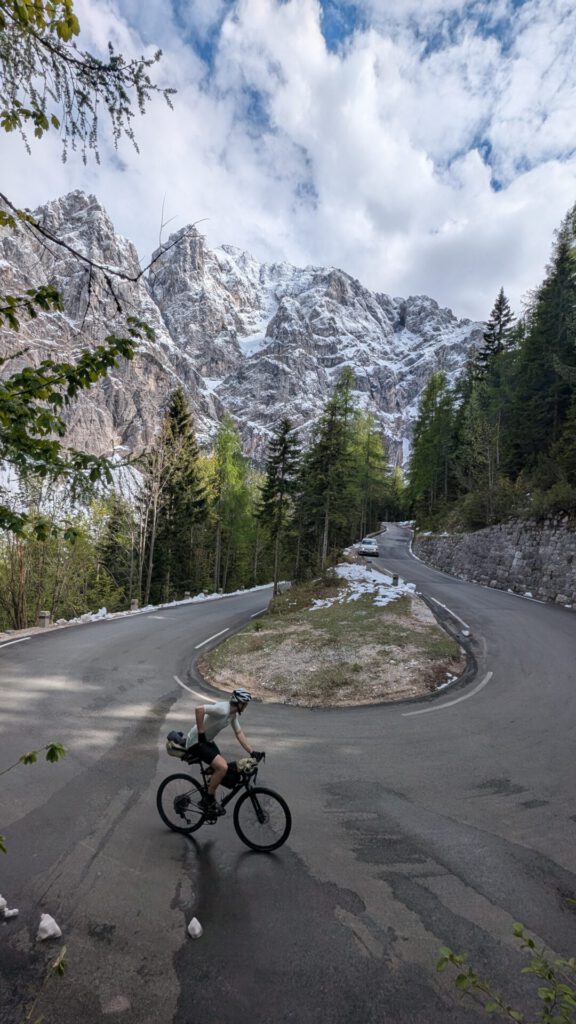
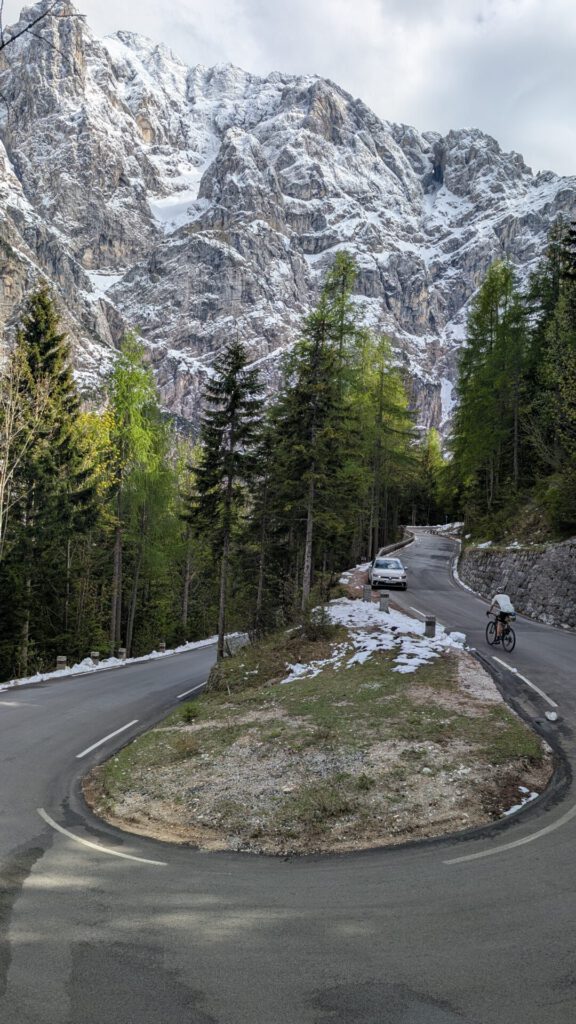
But we’ve heard: the sun will appear at 2 o’clock. And that’s what happened. Exactly on time. That afternoon, the golden light shines on the gravel, and it reminds me of something I always learn on such trips: flexibility is not a weakness. It’s the skill you develop through it. This also meant that some gravel sections had to be skipped, because they were covered in a 50-centimeter-thick white blanket. That’s the way it is, that’s life in the mountains. The good news: the alternative route has also been tested. This part of the gravel is for the snow-free days, while the asphalt is a very nice alternative.
How Slovenia really looks like
Ljubljana A large park right in the city center: on the gravel bike you can cycle right through the park and where you used to see a walker here and there, you can slowly feel the silence increase. Within a few kilometers, you feel like you are completely in nature. Not for nothing, the European Cycling Championships will be held in Ljubljana in 2026. We understand why.
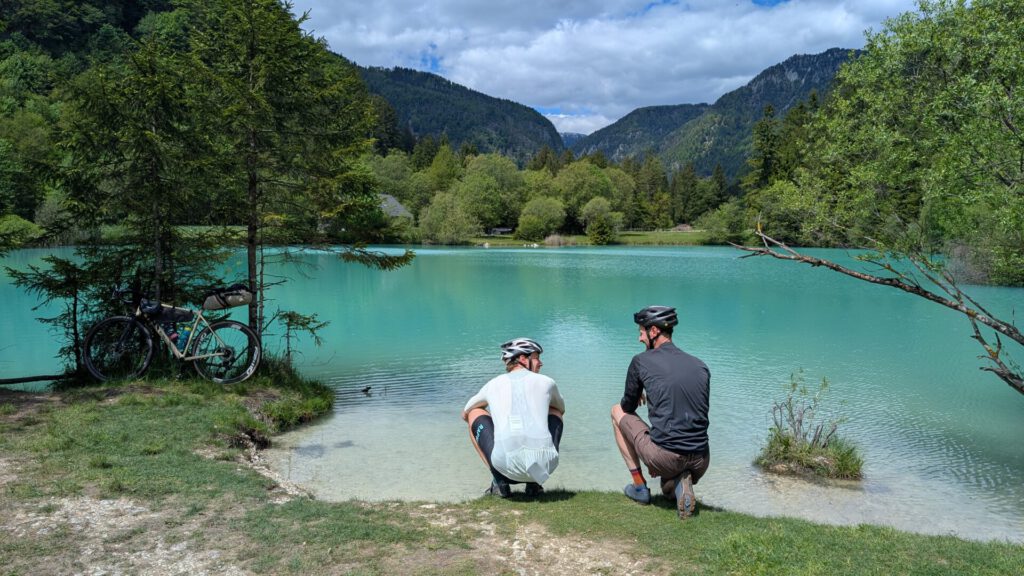
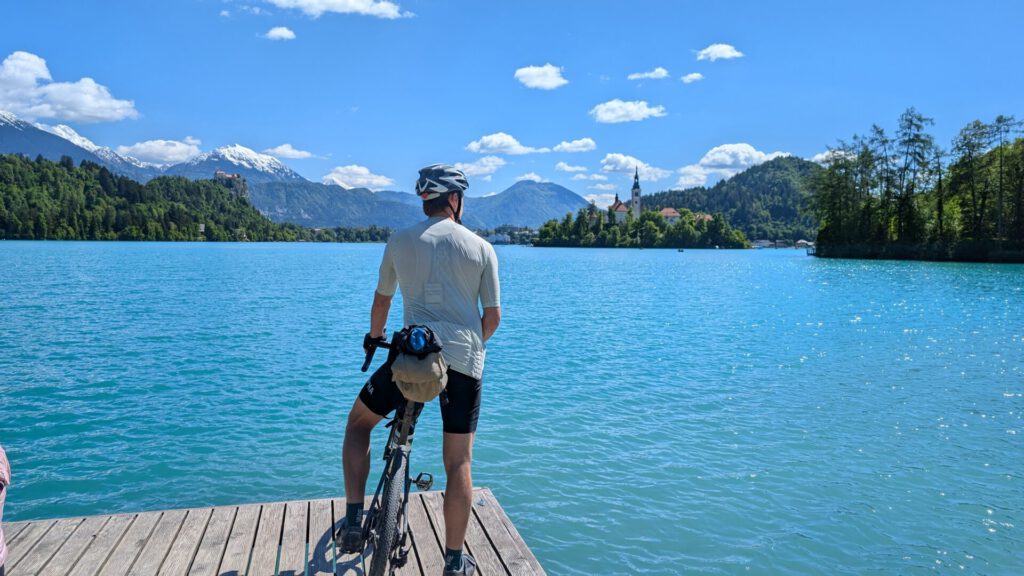
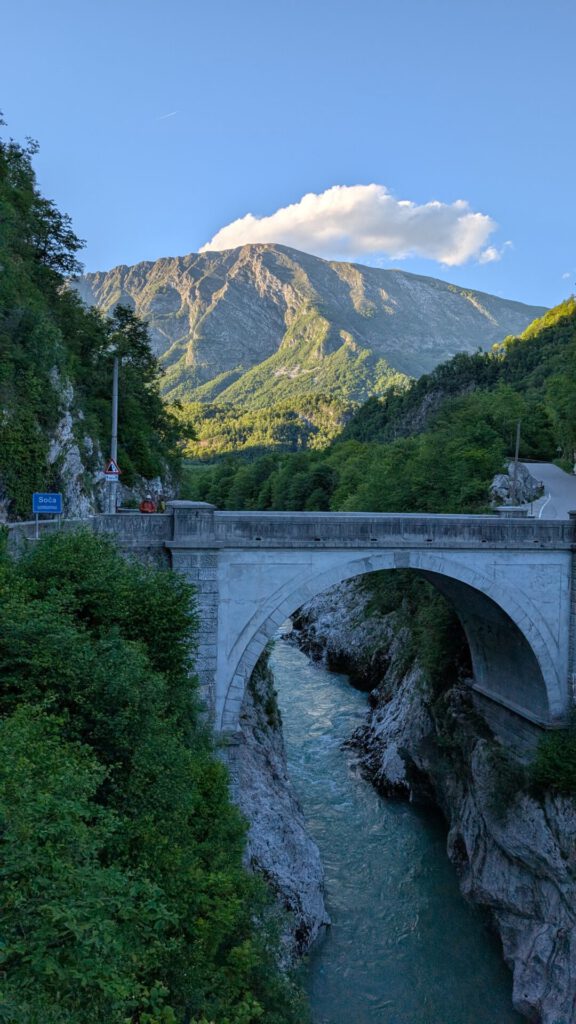
Slovenia has mythical wooded paths, single tracks between the pines, white gravel roads that lead along and over the green-blue rivers such as the Soca river. The rivers invite you to swim in or stare at them for a long time. Slovenia offers a fantastic contrast between on the one hand the Julian Alps and on the other the lower-lying wine regions where the wines are increasingly gaining an international appeal. The gravel is a mix of champagne-like gravel with sometimes a section that seems designed more for hikers than for cyclists.
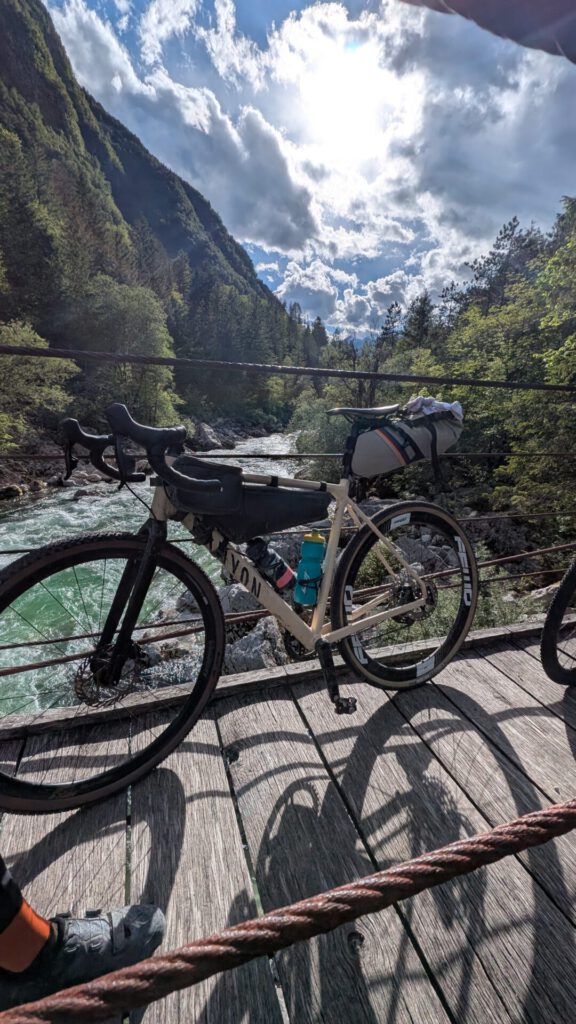
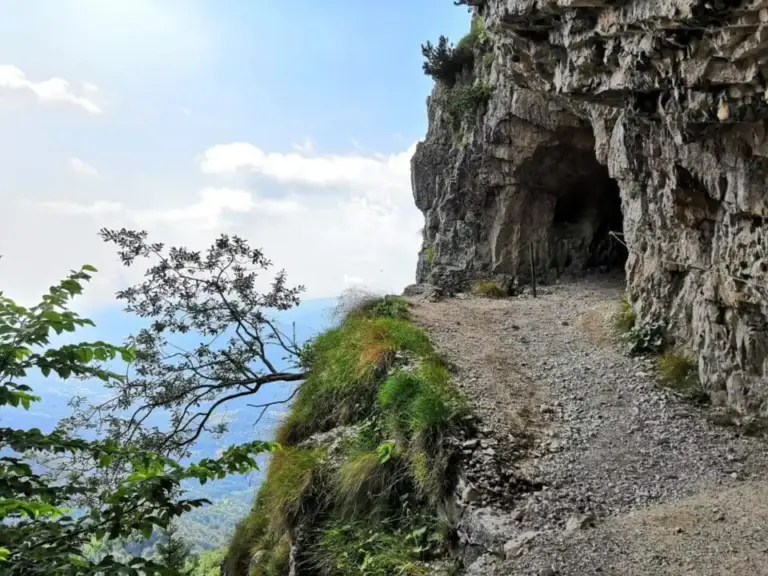
Of Vršič climb With a view of Slovenia’s highest mountain: Triglav. This climb starts right from Kranjska Gora and is one that gets etched into your memory. The climb can be done entirely on the road, but even more beautiful is climbing the first 5km through the forest, along the river, including a river crossing. The end of the climb can, as an alternative to the asphalt, be done via a narrow mountain path with bizarre views throughout the entire route. Once you reach the top, you see a beautiful valley on the other side, with a hefty dose of confidence as a bonus.
The people you don't expect
The routes are there. The roads are beautiful. But the memories that you really take home with you? Those come from somewhere else.
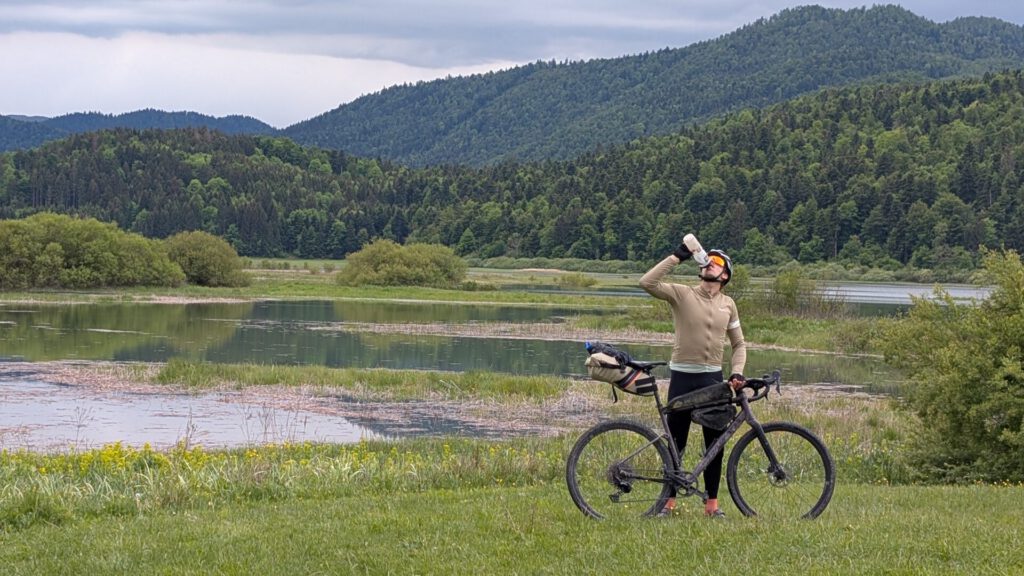
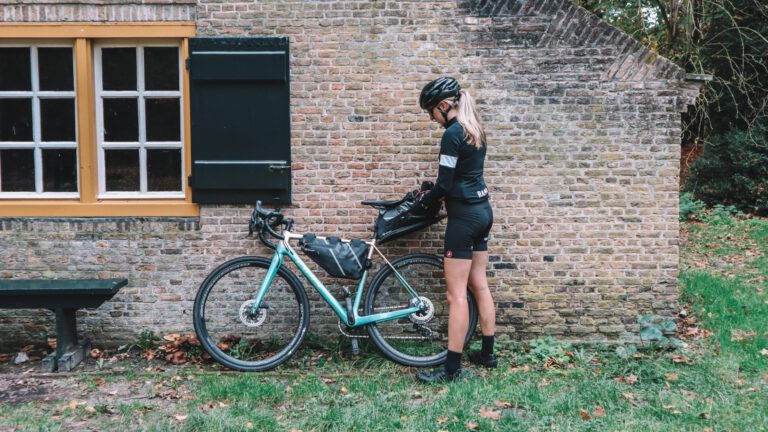
There is a certain type of local that you encounter when you ride a bicycle with bikepacking bags. Not a typical tourist, not the people passing through in a car. They are people who don’t work in the tourism sector or are tourists. Daniel was one of them.
He saw us driving, asked where we were going, and was genuinely enthusiastic. He knew paths we didn’t know, and offered to show them to us. He told local stories with the kind of enthusiasm that only someone who truly loves a place and rarely gets the chance to show it to someone who really appreciates it would have. So he took us to a nearly 700-year-old tree in the valley, which we have now added to our route. A place to sit and dream for a moment. Not only about what happened in that valley, but also about where your own future is headed.
Maybe you’ll find your own Daniel in Slovenia. Someone who gives you something you couldn’t have planned for.
Sleeping wonderfully
And then there’s the accommodation after a long day. Late arrival, tired legs, everything nearby already closed for dinner. We called twice. First to say we’d be a bit later. Then, in a slight panic, to find out how the food situation was. On the other end of the line, a short, friendly laugh. “Would you like pasta?”
It ends up being a three-course meal. Prepared with care, with creativity, purely because we were the ones who showed up late and hungry. One of the best meals of the trip. Impossible to achieve, impossible to plan. These are the kind of things that stick with you, even more so than the beautiful views.
Getting better at this
In Andalusia I looted the breakfast buffets at hotels for jampots. Bikepacker survival instinct, activated on day five.
In Slovenia I hardly have to think about it. The rhythm is there. The nutrition, the pace, knowing when to keep going and when to take a breather. Progress isn’t always spectacular. Sometimes you just notice it because something that used to take you a lot of effort now happens automatically.
More hours in the saddle. More kilometers that felt like a reward instead of survival. But this isn’t about going harder, further, and faster. It’s about getting to know your body, your own rhythm, and what gives you pleasure on the bike. About understanding yourself better during your trip. Something that not only helps you further on the bike, but also in your daily life.
Why Slovenia
A self-guided cycling tour through Slovenia gives you wonderful days outdoors in a country that seems made for cycling. Unobstructed gravel roads. Colorful mountain lakes. An hour driving through the forest, the next hour alpine vistas. Villages that haven’t been optimized for tourists. Wine regions where you spend the night amidst the vineyards.
It’s the kind of place where the roads are quiet enough to hear your tires screech on the gravel, and varied enough that no two hours look the same. The route offers a lighter or more challenging version on days 3 and 4: you choose the challenge that suits where you’re at that week. And you can choose between 6, 7, or 8 days of riding.
Whether you go solo, with a partner or with friends: Slovenia will challenge you just enough, show you more than you expect and send you home with stories that people really want to listen to. This adventure is worth your time.
About the author
Yannick is a co-founder of Legendary Rides. He drives, tests, and writes down the routes you’ll find on these trips, from the Dutch Big Five to Andalusia and Slovenia.
Questions & tips
Do you have any questions about this route, or have you been there yourself? Share them here. We read everything and usually respond within a few days.