Part of Spain › Balearic Islands
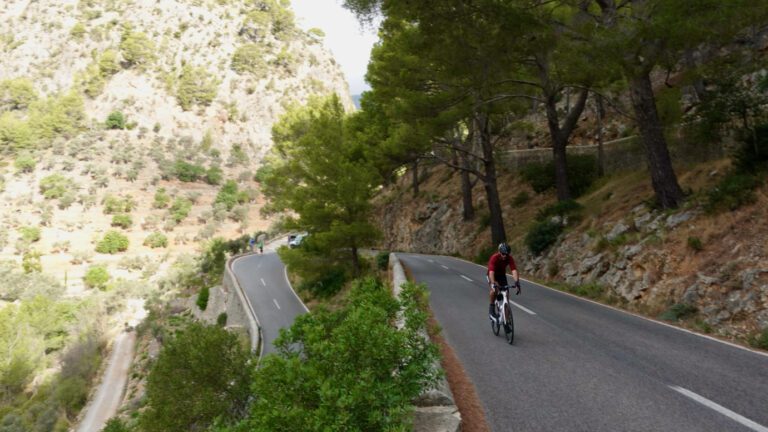
Mallorca has been Europe’s premier cycling island for decades. In February and March, there are more cyclists than cars on the roads of the Serra de Tramuntana; professional teams hold their training camps there, and the entire infrastructure is geared towards cyclists: from cycle-friendly hotels and bike hire companies to cafés with bike racks outside. And yet you can still find quiet roads there, if you know where to go. We’ve been there several times, including a week-long trip from Pollença and a trip with Ruben in February 2023.
Why ride on Mallorca?
- The Season From February to May and from September to mid-November, the weather there is lovely: around 20 degrees, dry roads and sunshine.
- Everything is arranged. Bike hire, cycle-friendly hotels with repair and washing facilities, and motorists who are used to cyclists and give them space.
- Variety. The mountains of the Tramuntana, the rolling inland, the coastal roads and dead-end climbs to watchtowers and monasteries.
- Close by. From Schiphol, Rotterdam and Eindhoven, you can fly to Palma in just over two hours.
Serra de Tramuntana
The mountain range along the north-west coast, a UNESCO World Heritage Site, is the heart of cycling in Mallorca. The MA-10 runs right through it from Pollença to Andratx, with one climb after another.
Sa Calobra
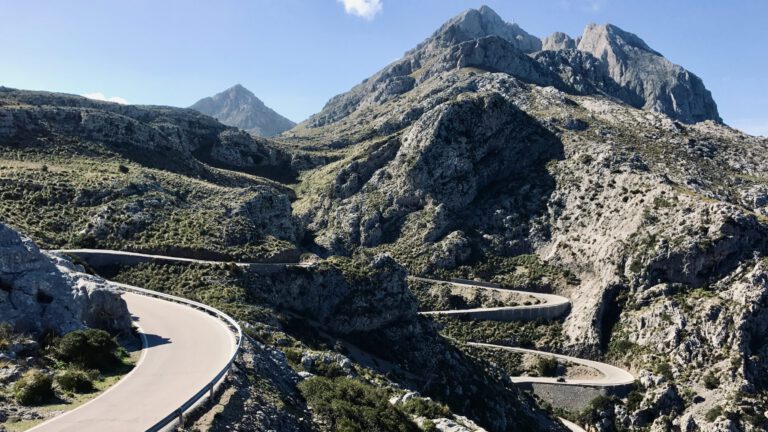
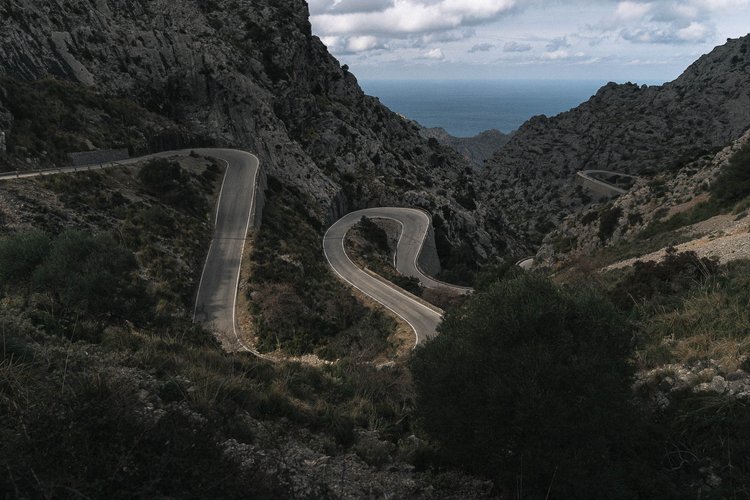
The island’s most famous climb, and a rather unusual one: you have to go downhill first. From the T-junction by the aqueduct, you descend via the famous knot-shaped hairpin bend (a 270-degree bend) down to the bay, and then you have to head back up. The climb is 9.5 kilometres long with an average gradient of 7 per cent and 26 hairpin bends, leading up to the Coll dels Reis at 682 metres. To get there, you first have to tackle another climb, such as the Puig Major, the Coll de Femenia or Sa Batalla. Go early or late in the day: buses run in the middle of the day, and they take the full time to complete the journey. Read about this Classic Ride - Sa Calobra.
Coll de Femenia, Sa Batalla and Puig Major
Starting from Pollença, the Coll de Femenia is a brilliant training climb: 7.7 kilometres at a 5.5 per cent gradient on perfect tarmac. Via the monastery of Lluc, you join the Sa Batalla route, which you ride from Caimari with gradients of between 5 and 7 per cent and a descent full of hairpin bends. Puig Major is the island’s highest mountain; the road running beneath it is a long, steady climb ending in a tunnel. The descent to Sóller is one to attack.
Coll de Sóller and Sobremunt
The Coll de Sóller is 7.4 kilometres long with 417 metres of elevation gain (an average gradient of 5.7 per cent) and is virtually car-free, as cars use the tunnel whilst cyclists do not. Cycle there and back, and round off the day with some fish in the harbour at Sóller. For those looking for a steeper climb: Sobremunt, west of Palma, is 6.6 kilometres long with 585 metres of elevation gain, an average gradient of 9.8 per cent and peaks of up to 18 per cent. It’s tougher than Sa Calobra, and much quieter.
Cap de Formentor
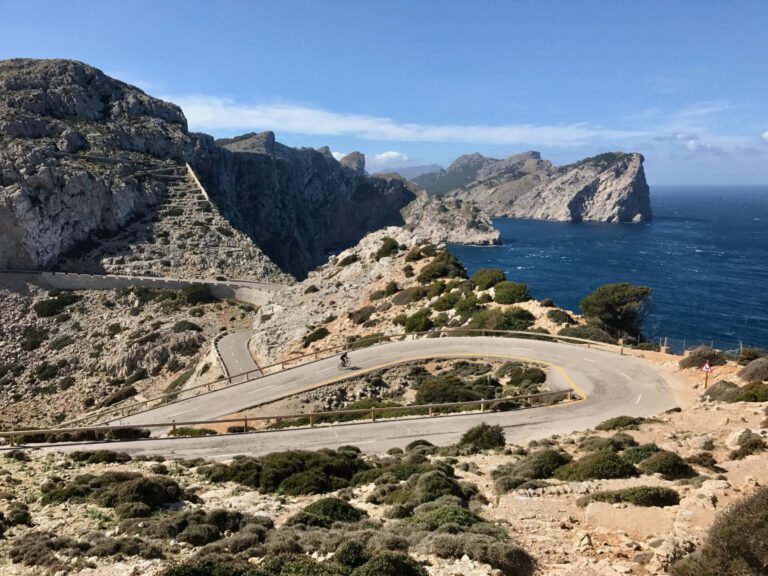
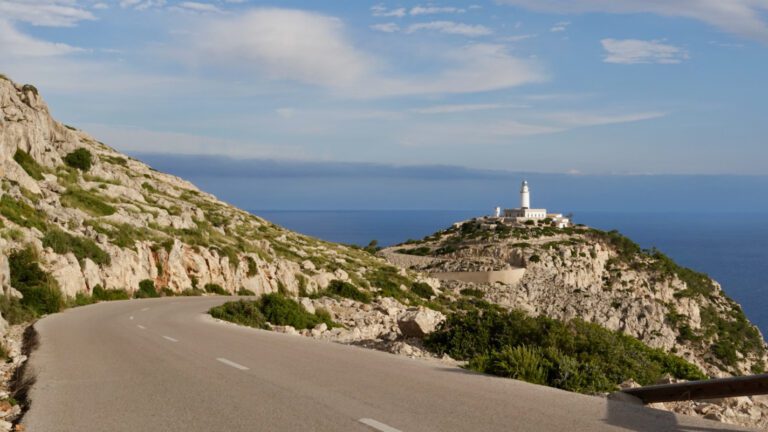
For us, this is the most beautiful ride on the island. Starting from Port de Pollença, you first climb up to the Coll de sa Creueta, with hairpin bends straight away and views across the bay. The road then winds its way across a narrow peninsula to the lighthouse, with the sea alternating between left and right. It’s never really steep (maximum 9 per cent), but the undulating terrain means you’ll clock up plenty of altitude. Watch out for goats on the road. Set off early: the road to the lighthouse gets busy during the day. Read about Formentor here.
The quiet part of Mallorca
Those who want to escape the busy MA-10 cycling highway, have plenty of choice:
- Col de la Victoria. A dead-end climb on the peninsula behind Alcúdia, with beautiful bays and almost no one.
- Puig Santa Maria. In Pollença: 1.4 kilometers with 142 meters of elevation gain and stretches of up to 20 percent. Short, but tough.
- Artà and Bethlehem. In the northeast, the Coll des Pescadors (2.5 kilometers at 6.7 percent) climbs to the Ermita de Betlem, over a narrow path with hairpin bends. Quiet and beautiful.
- The interior. Ruben recommends a round from Sineu, passing by the monastery of Sant Salvador and through Manacor. Stop at the bike café Sa Mola in Sineu.
- The South Around Castell de Santueri you can find smaller roads and a few punchy climbs
Our mountain bike routes in Mallorca
Seven routes that we drove ourselves: from a recovery round along the bay of Pollença to the Queen's Route through Lluc, Sa Calobra and Puig Major. Download them individually or all at once.
Route collection · Race bike
Road Cycling on Mallorca
- 7routes
- 53–137km per ride
- 2.644max. altitude meters
- 598km in total
- 1
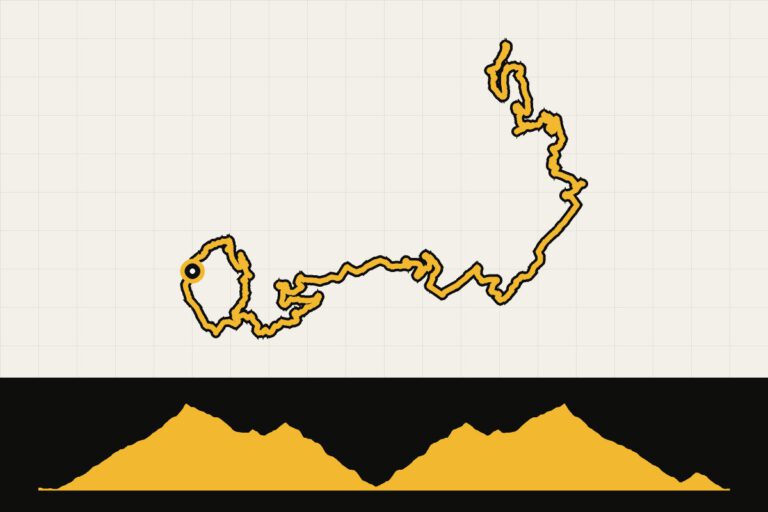 Route 1 · 77.2 km · 2.381 hmMallorca: Sa Calobra from Port de SóllerThe classic route: via Puig Major to Sa Calobra and back up again. 77 km, almost 2,400 meters of elevation gain.Map, profile & GPX of route 1 →
 - 2
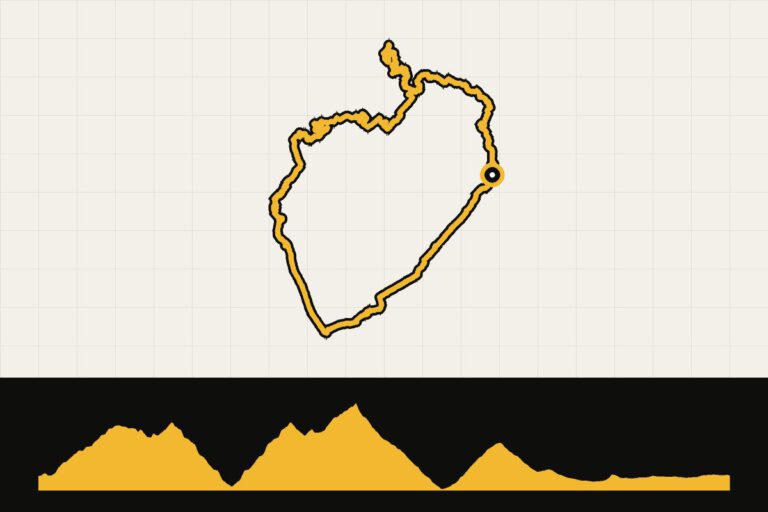 Route 2 · 116.6 km · 2,644 hmMallorca: Lluc, Sa Calobra and Puig MajorQueen's Day Race: Lluc, Sa Calobra, the Puig Major and the Coll de Sóller in one day. 117 km, 2,600 meters of elevation gain.Map, profile & GPX of route 2 →
 - 3
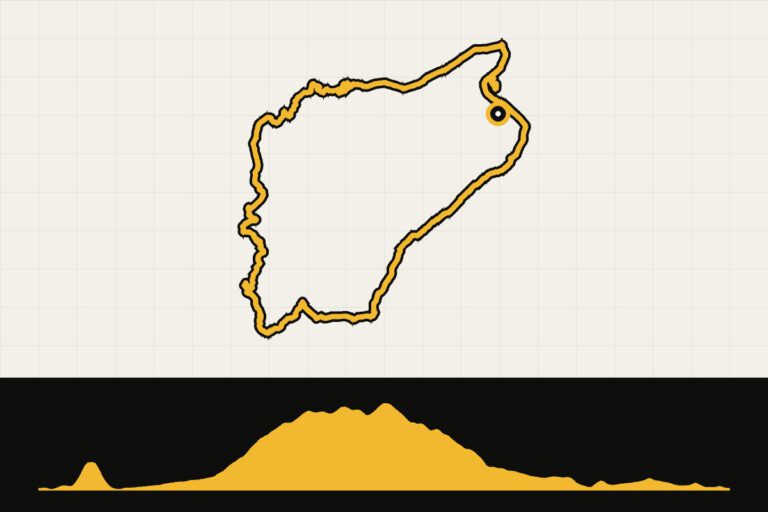 Route 3 · 55.2 km · 996 hmMallorca: Pollença, Coll de Femenia and LlucShort mountain ride: over the Coll de Femenia to Lluc and back via Sa Batalla. 55 km, 1,000 meters of elevation gain.Map, profile & GPX of route 3 →
 - 4
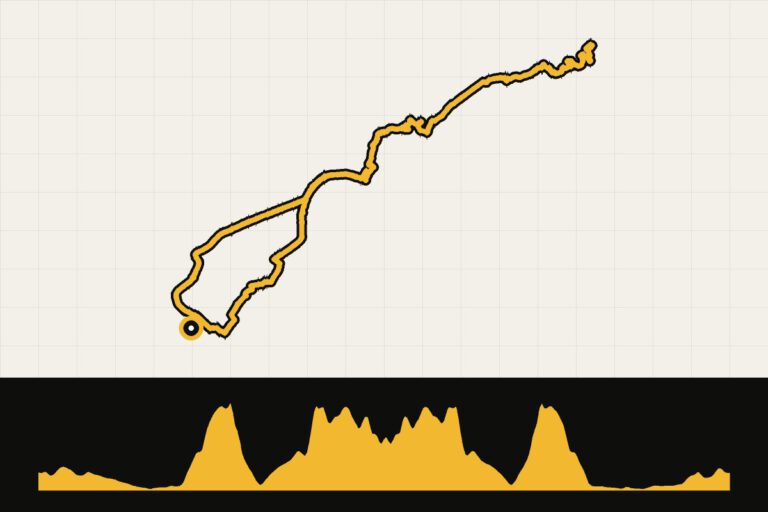 Route 4 · 59.6 km · 1,147 hmMallorca: Cap de FormentorTo the lighthouse at the tip of Formentor, overlooking the sea on both sides. 60 km, 1,150 meters high.Map, profile & GPX of route 4 →
 - 5
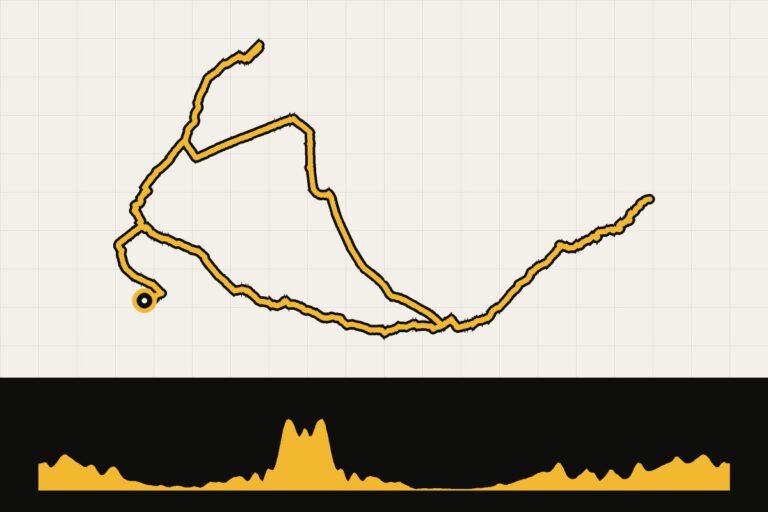 Route 5 · 53.4 km · 496 hmMallorca: Cala Molins and Cala Sant VicençRestoration route along the bay of Pollença to the coves of Cala Sant Vicenç. 53 km, 500 meters of elevation gain.Map, profile & GPX of route 5 →
 - 6
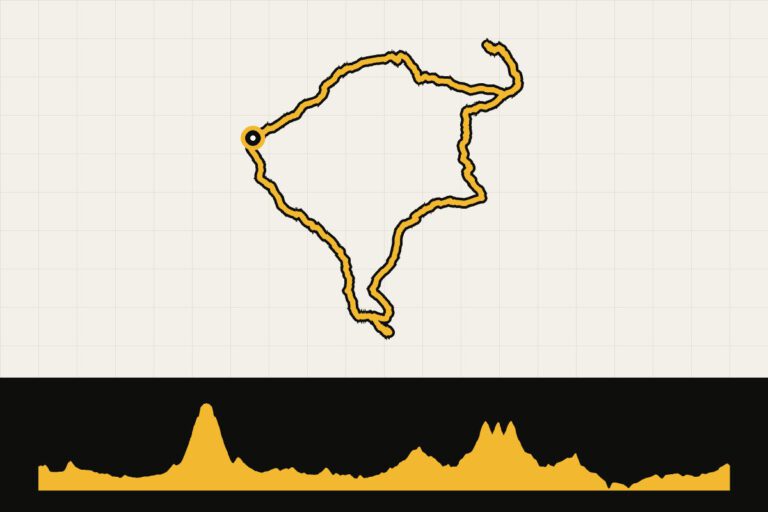 Route 6 · 136.9 km · 1,670 hmMallorca: Sineu, Sant Salvador and BethlehemLong ride through the quiet east: two monasteries on a mountain and the Ermita de Betlem. 137 km, 1,670 meters of elevation gain.Map, profile & GPX of route 6 →
 - 7
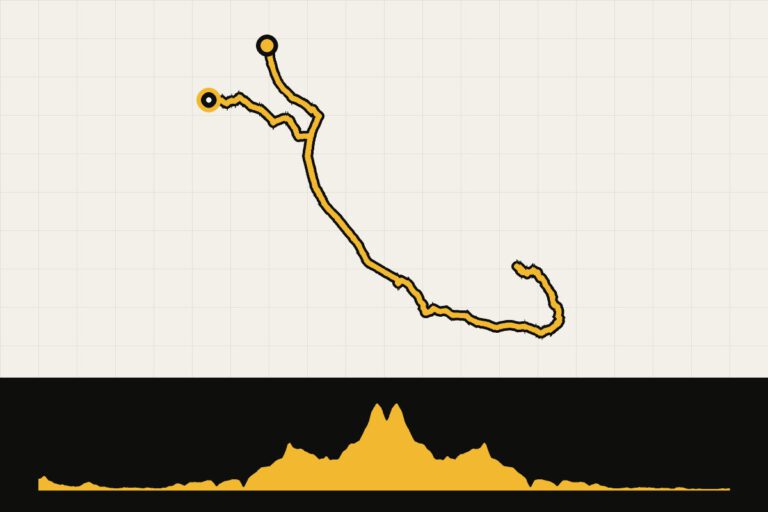 Route 7 · 99.1 km · 912 hmMallorca: to Artà and the Ermita de BetlemOn to Artà and the hermit's house of Betlem, and back along the bay of Alcúdia. 99 km, 900 altitude meters.Map, profile & GPX of route 7 →
Your Cycling base
- Pollença in Port de Pollença. Our favorite: a charming town, bike rental in the harbor, and you can easily ride to Tramuntana or Formentor.
- Alcúdia and Playa de Muro. There are plenty of cycle-friendly hotels, just before the entrance to the route and close to the north coast.
- Sóller. In the middle of the mountains, with the harbor just around the corner. Every ride starts or ends with a climb.
- Palma. City, culture and the airport are just around the corner. Drive straight along the coast, and Sobremunt is nearby.
Overnight stays and bike rental
You’ll find bike hotels mainly in the north: El Vicenç de la Mar at Cala Sant Vicenç, PortBlue Club Pollentia Resort & Spa and Hotel Hoposa Villaconcha in Port de Pollença, and Aparthotel VIVA Blue & Spa in Playa de Muro. There are plenty of rental providers; we rented several times from Pro Cycle Hire in Port de Pollença. A tip: many of the rental providers are British, so check that the brakes are ‘European’ adjusted. Book in the spring in time.
Mallorca in Winter
From December through to February, daytime temperatures in Mallorca are usually between 14 and 17 degrees. It’s not the height of summer, but with arm warmers and a windbreaker you can cycle here just fine whilst it’s freezing back home. You won’t be the only one: in January, many professional teams train here, and you might just bump into them on the Coll de Sóller or heading towards Sa Calobra. The advantage of winter is that the road to Sa Calobra is quiet, without the queues of buses you get in summer. From late January, the almond trees come into bloom and the inland areas around Sineu and Petra turn white and pink. Do bear in mind the rain, though: November and December are the wettest months, and it can be cold and wet around Puig Major.
What to bring?
- Layers. Arm- and legwarmers and a rainjacket for the Tramuntana mountains
- Lighting. For the Puig Major tunnel and the road to Cap de Formentor
- Light resistance. A compact front chainring if you want to cycle Sa Calobra and Puig Major in a single day.
When are you leaving?
February to May and September to mid-November. It is hot and busy in July and August.
February to May and September to mid-November. In February and March, the pros are there and the famous climbs are busy, but it’s also a lively time. It’s best to avoid July and August: it’s hot then and crowded with tourists. In winter, it can be chilly in the mountains and it sometimes rains.
How do you get there?
- Aircraft: There are direct flights all year round from major airports and smaller holiday airports to Palma, taking just over two hours. Bring your own bike or hire one when you get there.
- Car and boat: Drive to Barcelona and take the ferry to Palma. A beautiful road trip, but especially useful if you stay for a long time.
This is how we calculate: We calculate distances and travel times starting from Utrecht. Our flights always depart from Schiphol, Rotterdam The Hague Airport or Eindhoven Airport. Want to know how to travel from your place of residence the best way? Let us know, We are happy to help you. After all, we built this site together.
Are you flying? Read our guide Flying with your bike: Which airline, what the cost is and how to pack your bike.
From our stories
- Cycling Mallorca: the Ultimate Guide
- Diary Mallorca and Day IV: Femenia and Sa Batalla
- Ruben’s routes in Mallorca and part 2
- Diary Mallorca: the final in Artà