

The days are getting shorter, and if you keep riding in autumn and winter, sooner or later you will ride in the dark. Whether you train on the road bike before work, head into the woods on your gravel bike or ride through an Alpine tunnel on a cycling trip: with the right lights you see more and are seen better. In this buying guide you will read how much light you need, what to look for in battery and mounting, what the rules are in the Netherlands, Belgium and Germany, and which light suits which rider.

Short answer: how much light do you need?
| Situation | Front light | Rear light |
|---|---|---|
| Being seen in town or in a tunnel by day | 100 to 400 lumens | 20 to 50 lumens |
| Road bike on dark roads outside town | 400 to 800 lumens | 50 to 100 lumens |
| Gravel and off-road in the dark | 800 to 1,500 lumens or more | 50 to 100 lumens |
| Bikepacking and multi-day trips | 400 to 800 lumens, long run time | 30 to 100 lumens |
These are guideline figures from our own experience. Look above all at the mode you will actually use: a 1,000-lumen light that only lasts an hour at that level will in practice be ridden on a lower setting.
Lumens, lux and StVZO: what do the numbers mean?
- Lumens: the total amount of light a lamp emits. Manufacturers almost always quote the highest mode.
- Lux: how much light actually arrives at a given spot. German StVZO lights are measured in lux at 10 metres. A light with a well-shaped beam and fewer lumens can therefore light the road better than a high-lumen light that shines in all directions.
- Beam: a StVZO light has a cut-off beam, like a car headlight. You light the road without dazzling oncoming traffic. Round beams are great off-road, but on the road they quickly dazzle others.

Battery, dynamo or power bank
Most sporty riders choose a light with a built-in battery that charges via USB-C. When buying, pay attention to three things:
- Run time per mode: do not just look at the highest mode. How long does the light last on the mode you will really use?
- Cold: batteries last less long in winter. Expect a noticeably shorter run time at temperatures around freezing.
- Charging on the go: can the light run while connected to a power bank? That is handy on long rides and when travelling.
For bikepacking and long trips, a hub dynamo with a USB charger is worth considering. You always have light, and during the day you top up your phone or bike computer. The downside: it costs more, and you need a different front wheel.
Mounting: on your handlebar, under your bike computer or on your helmet
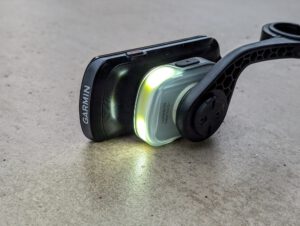
A light with an elastic or rubber strap fits any bike quickly, but it can twist on rough roads. Neater is a light that clicks under your Garmin or Wahoo. In our test of the Fabric Lumaray V3 we saw how pleasant that is: a tidy cockpit, and the light is always there when you ride into a tunnel.
An extra light on your helmet is handy off-road: you shine where you look, including in corners. Use it as an addition, not as your only front light.
What does the law say?
- Netherlands: in the dark and in poor visibility, white or yellow light at the front and red at the back. The light must not flash and the front light must not dazzle. You can be fined for flashing lights or the wrong colour.
- Belgium: also white or yellow at the front and red at the back, but flashing lights are allowed here. A steady light is easier for other road users to judge, though.
- Germany: lights must be approved, recognisable by a K with a wavy line and a number. Flashing is forbidden. Detachable battery lights are allowed, provided they are approved.
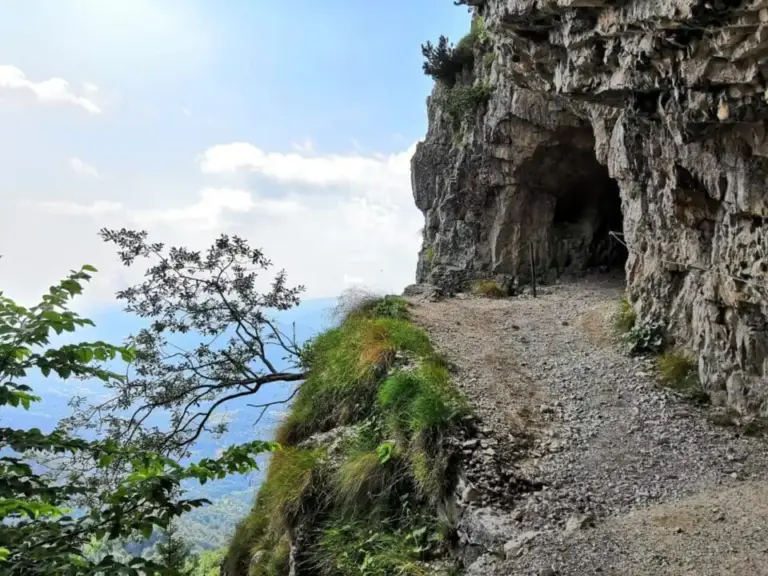
- Tunnels: in the mountains you regularly ride into a tunnel, even by day. Always switch on your front and rear lights before you enter the tunnel.
Which light suits you?
Road bike: training in winter
Choose a front light of 400 to 800 lumens with a cut-off beam, so you do not dazzle oncoming traffic, and a bright rear light. An example is the Sigma Aura 100, a StVZO-approved lamp with a neat beam.
Gravel and off-road in the dark
Off-road you want to see wide and far. Choose at least 800 lumens, preferably more, and possibly a helmet light as well. A set such as the Sigma Buster 800 gives enough light for forest tracks. Dim it on public roads so you do not dazzle others.
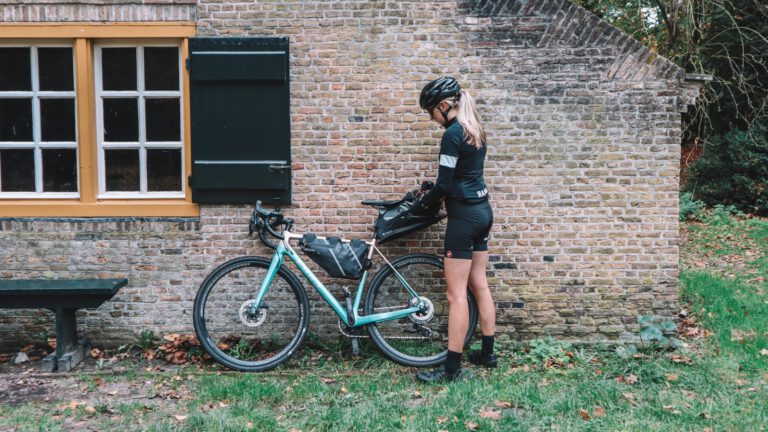
Bikepacking and cycling trips
Here run time beats power: a light that lasts a long time on a low setting, that you can recharge on the way and that is always with you. Think of a hub dynamo, or a compact light under your bike computer such as the Fabric Lumaray V3, which lasts 170 hours at the lowest setting.
Commuting and being seen
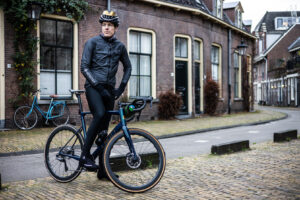
In town it is mainly about visibility: a light that can also be seen from the side, and a rear light bright enough for daytime. In the Netherlands and Germany use a steady mode, because flashing is not allowed there.
Tips for riding in the dark
- Aim your front light slightly downwards, so you do not dazzle oncoming traffic.
- Wear reflective clothing or reflective details on your shoes and ankles. Moving reflection stands out most.
- Know your route, or load it onto your bike computer. In the dark it is easy to miss a turn.
- Charge your lights after every ride and take a small power bank on long rides.
- Ride defensively: assume drivers do not see you.
Questions about bike lights
How many lumens do I need on a road bike?
To be seen, 100 to 200 lumens is enough. If you also want to see well yourself on dark roads, choose 400 to 800 lumens with a cut-off beam.
Can my bike light flash?
Not in the Netherlands or Germany: flashing bike lights are forbidden there. In Belgium it is allowed.
What is a StVZO light?
A light approved under German rules, with a K number on the housing and a cut-off beam that does not dazzle oncoming traffic. Great on the road, also outside Germany.
Do I need lights during the day too?
It is not compulsory, but a bright rear light during the day makes you more visible, especially on busy roads and in tunnels.
Read also: Safe cycling: 6 tips to get home safely and our test of the Fabric Lumaray V3.
Updated in October 2026. Sources for the rules: Dutch government, Stiftung Warentest, Test purchase. Links to bol.com are affiliate links.
0 responses
Also, take a good look at how you can attach the lamp to your bike. I use the gopro mount under my garmin holder and keep the place on my handlebar as free as possible.