
Every summer, when the road racing season is in full swing, many riders and riders dream of climbing the Alpe d’Huez, Galibier of Mont Ventoux.The Alps are, in this regard, the most captivating mountain region for the Dutch cyclist. But despite the Tour de France adding a different climb every year, there are still many unknown but stunning climbs to be found. We give you 5 climbs in the (French and Swiss) Alps that you probably don’t know about, to add to your new bucket list. That will be a real treat on your bike!
More about cycling in France? https://cyclingdestination.cc/fietsen-in-de-franse-alpen
Col de Parquetout
The association with a green bird is quick and easy, but this climb near Grenoble will make many people whistle. ‘Slecht 1424m’ in altitude, but with a difference of 686m in 7.1km, that’s sure to hurt. On a warm summer day, you sometimes have some help from the trees, which protect you from the sun. The road also curves nicely and from the southern direction you can always see one of the (snow-covered) Alpine peaks passing by in the distance. However, the most difficult variant is the one from the north, from Les Angelas. The trees somewhat obstruct the view, but with a challenge like this you’re probably happy to be able to look straight ahead.
This climb has never been part of a big round, we wonder why…
Col de Parquetout, Valbonnais, France
• Distance: 6.8 km, Elevation difference: 661 m, Average gradient: 9.5 %
Col du Parpaillon
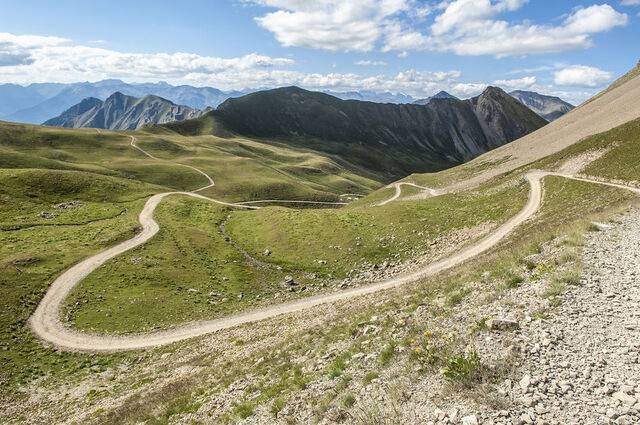
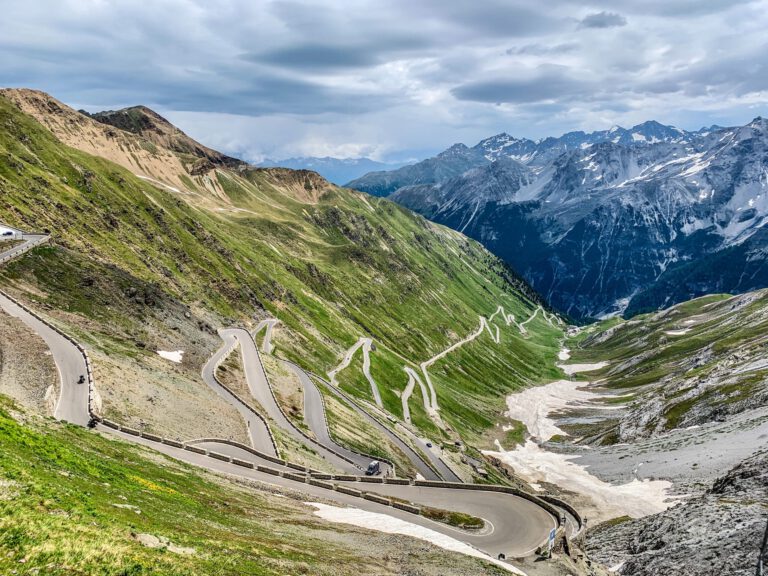
This is truly a monster climb. Just Google Col du Parpaillon and you’ll understand what we mean. Average elevation gain of only 6.8%, but that’s mostly due to the last 10km, when the percentages don’t get below 8%. In total, you’ll climb 26.7km, starting from Le Pont Neuf. You’ll cover almost 1850 meters of elevation gain, if you drive all the way to the top at 2637 meters. The view is breathtaking. With a picturesque pattern of mountain paths. Be careful though, the climb includes stretches of unpaved road! Probably also the reason why it hasn’t yet been raced in the Tour de France (although they’re trying to ‘cycle’ more and more ‘strade bianche’ into it).
Col du Mont-Cenis
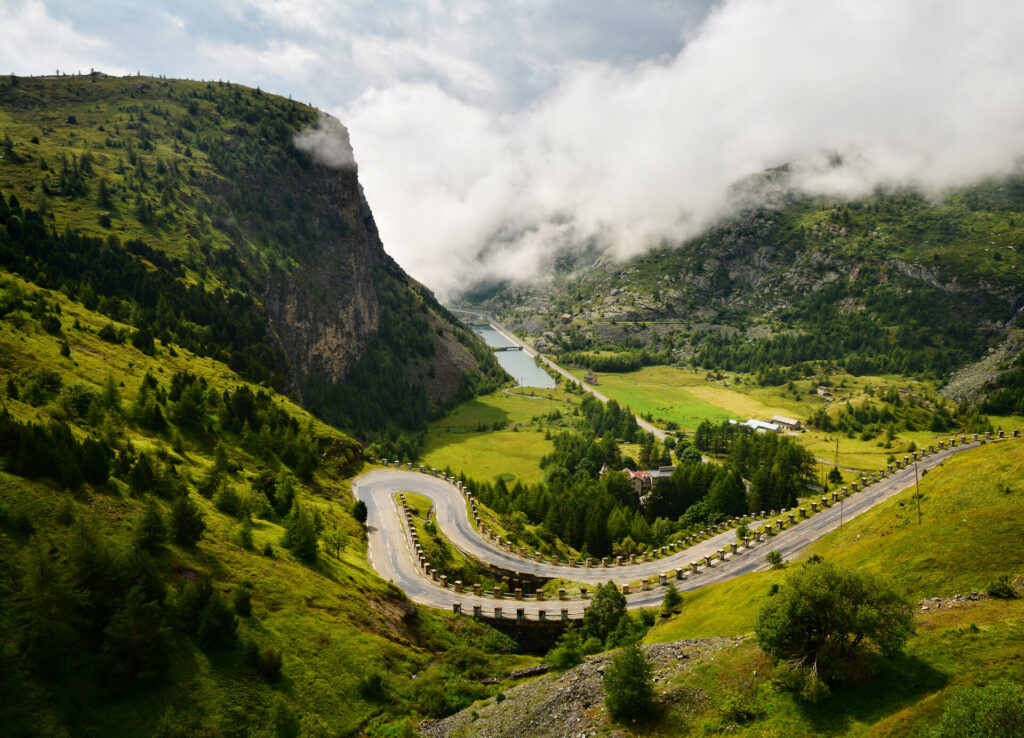
Technically speaking, the most beautiful variant of this climb is the one that starts in Susa, just across the border with Italy. But ahead of time, the Agnello/Col d’Agnell is also located in France. This breathtaking climb is measured to be almost 30km long from the start. And for the most part it is quite gradual, but still at 7 to 8%. After you pass the border with France, the climb flattens out and you drive along the lake for a while, almost flat up to the top. Quite nice to have some relaxation after more than 20km and to also be able to enjoy a beautiful view. The lake of Mont Cenis is truly brilliant blue. As if from a magazine.
Millefonts
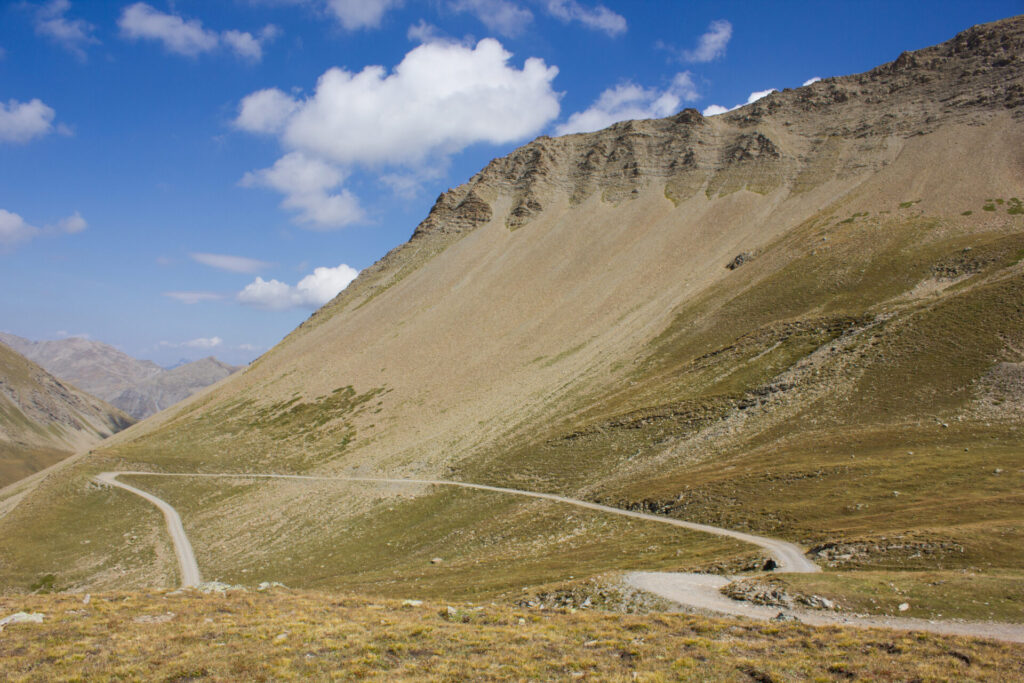
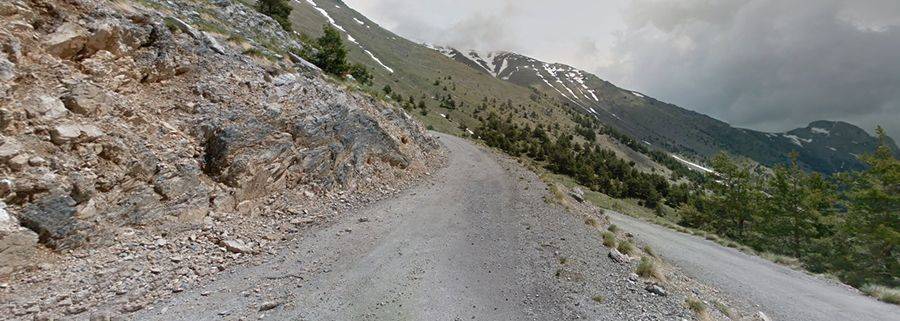
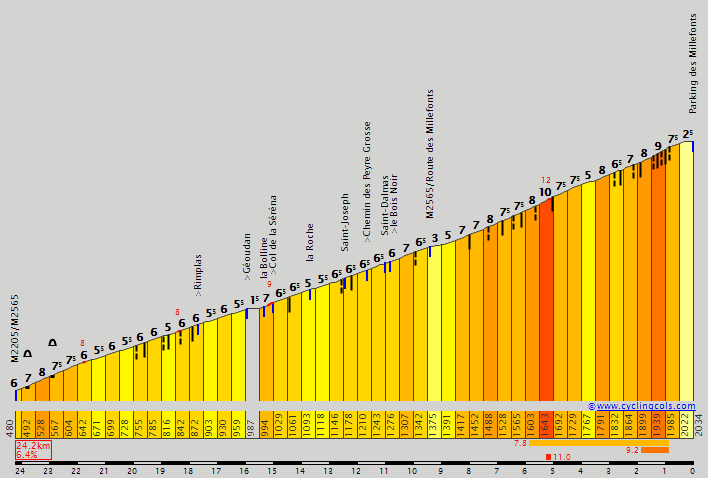
This unknown giant is located in the Alpes-Maritimes, Right above Monaco. The younger brother of Isola 2000 starts at the intersection of the M2205 and the M2565. From there, it’s a real climb. Very gradually, with only one single climb, at 5km before the top. Then the climb goes up a little above 10%, but it quickly picks up again afterwards. Make no mistake, it’s an average of 6.4%km and that over 24km. You pass through all sorts of nice villages and the route is well maintained for the first part. As soon as you turn left towards the Route de Millefonds near Saint Dalmas, it seems as if the French tax authorities have gone bust. The road surface is getting worse, but you can still take a nice walk around and enjoy the surroundings. There are also some hairpin bends to negotiate. You end up at the ‘parking lot’. The view is a bit lunar landscape, but it’s worth climbing up. Tip: Go up again in a car and hiking shoes and walk to Lac de Millefonts.
Col de la Croisette
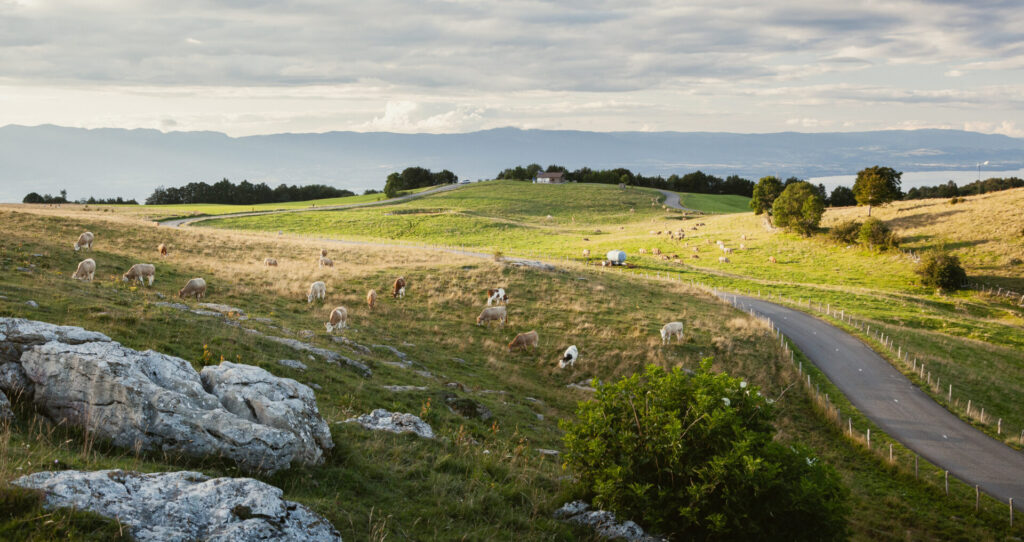
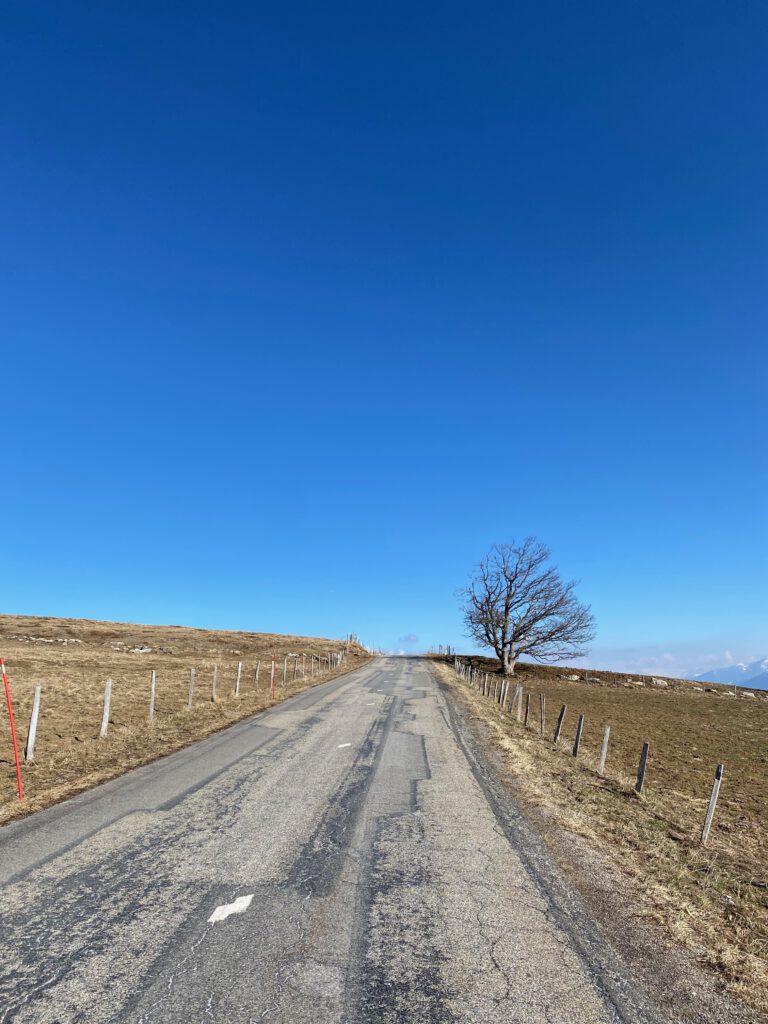
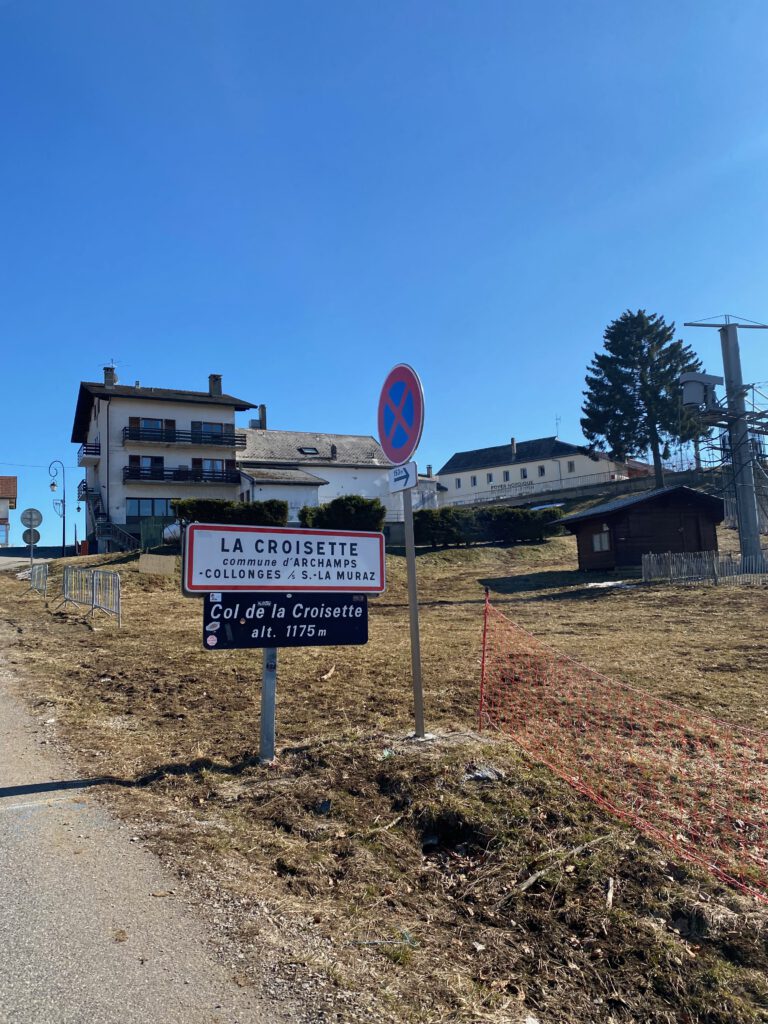
Think of pain, the most painful, the most painful. Then you get to the Col de la Croisette. Savoie Mont Blanc It’s just a 6600-meter climb. But the fact that you’ll also climb 698 meters in those 6600 meters will certainly make you think about it. From the Salève, it’s a bit of an Angliru-lite version. It’s a bit shorter and less steep at some points, but definitely not for the ‘faint hearted’. This climber last competed in the Tour in 1992, and many will hope that 2022 won’t be taken as a ‘jubilee year’ to bring it back again.
Read also the article about this house of Geneva.
Any more tips?
These were our tips for 5 climbs in the (French and Swiss) Alps that you might not be familiar with. Do you know of any other gems that we absolutely should have tried? Let us know in the comments!
Looking for a place to sleep in the region? Below you’ll find a selection of accommodations that are bike-friendly for cycling in the French and Swiss Alps.
Questions & tips
Do you have any questions about this route, or have you been there yourself? Share them here. We read everything and usually respond within a few days.