
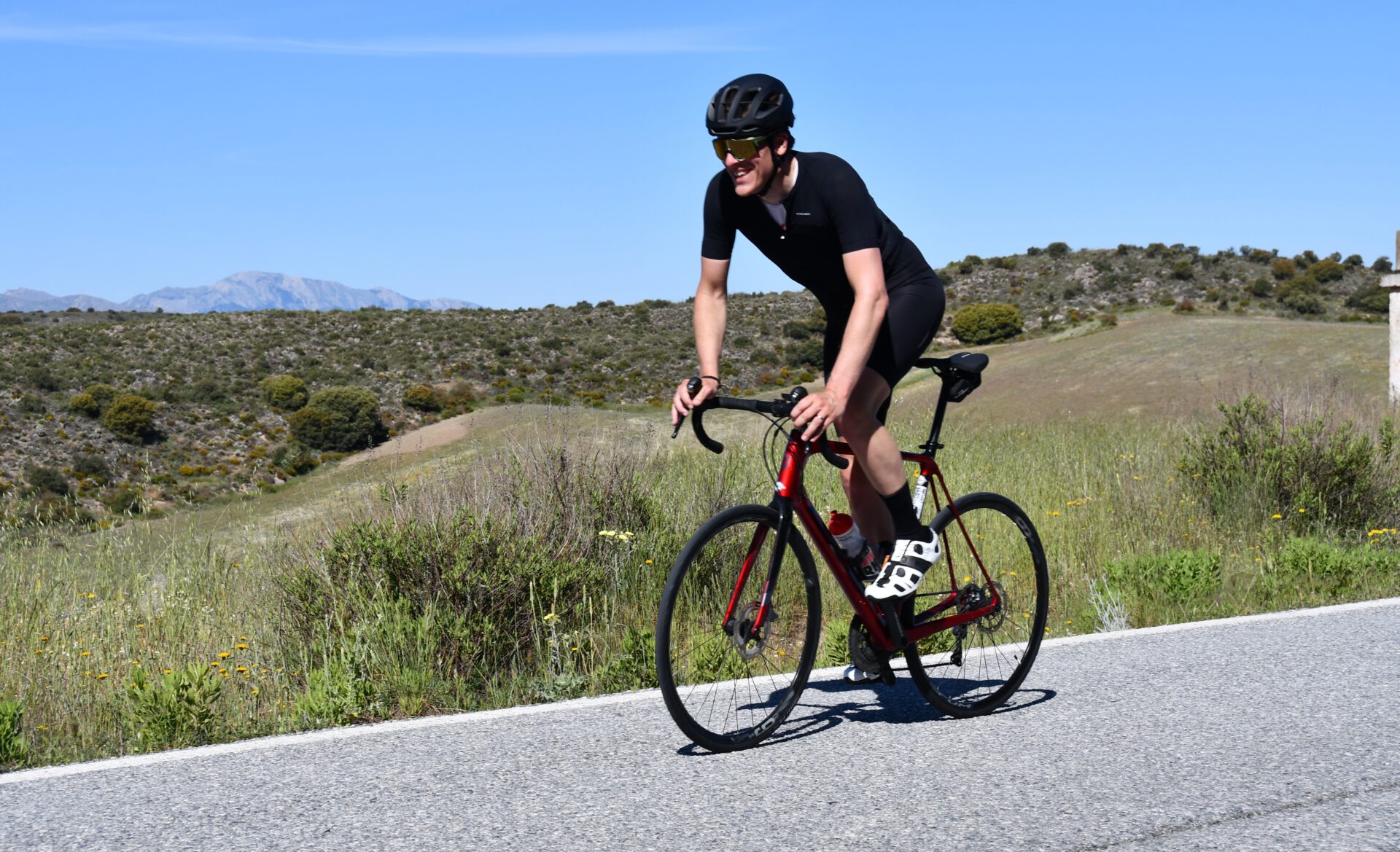
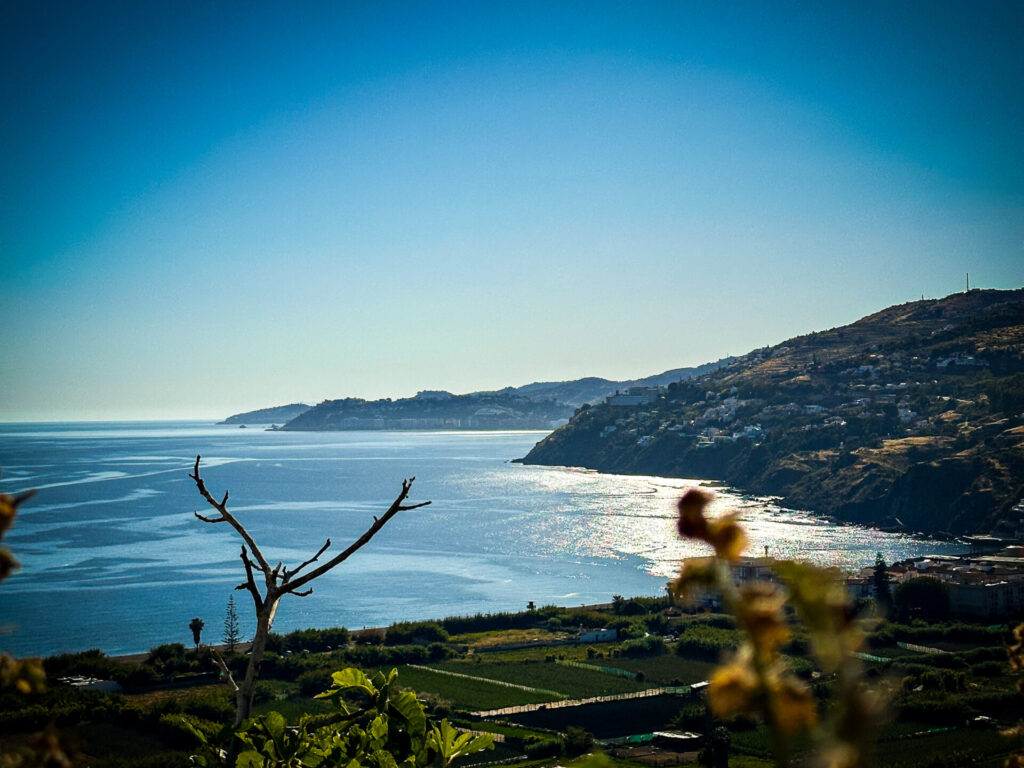
One thing is certain: Granada is more than just the Alhambra and the nearby Sierra Nevada. If you want to explore the city and its surroundings on a race bike, we have a very special tip for you: head south, towards the Costa Tropical. There you will not only find beautiful routes, but you can also enjoy the view while soaking your feet in the water after a long ride. And with a little luck, you might even see Morocco across the road. In May 2025, we will cycle from Granada to the Costa Tropical, spend one night at the coast, and return. Was it beautiful? Absolutely!
Granada is a big city
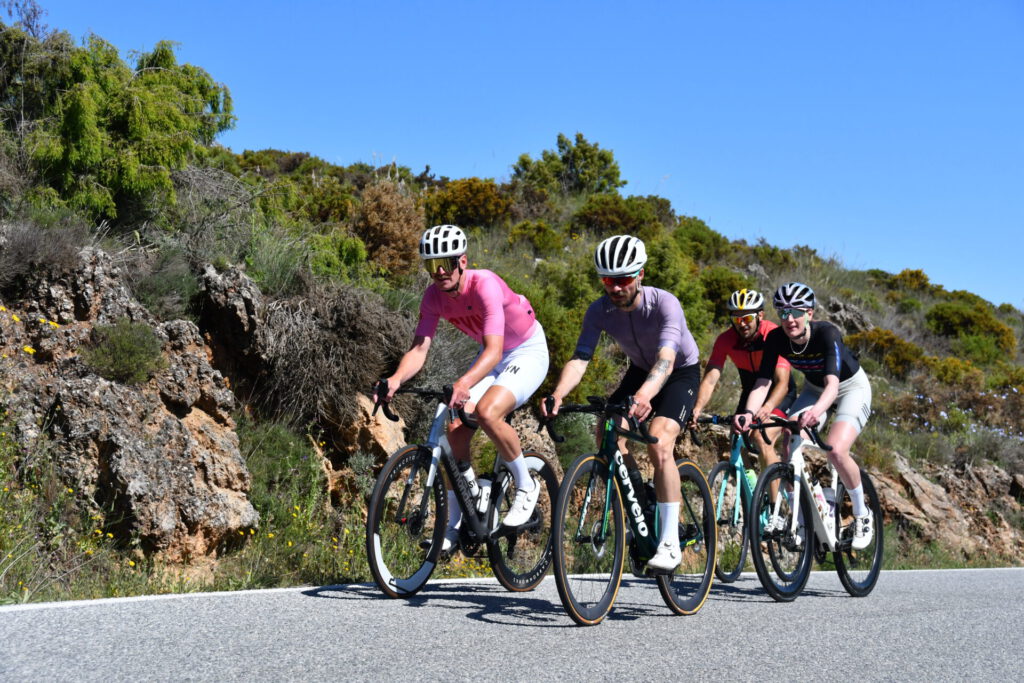
We are in Andalusia for a total of 6 days. We spend one day camping with our friends from Visma-Lease-a-Bike in and around the Sierra Nevada, and we go gravel biking for a day in the Geopark of Granada And of course we visit the Alhambra. But for a nice long trip, with quite a few elevation changes, we have to go to the Costa Tropical. This coastline is still unknown to many. Because in Europe, where cycling is very popular, people head to Calpe or Girona. If you’re really adventurous, you might go to the Basque Country or a part of the Pyrenees, but the southern part of Andalusia is often left aside. That’s not entirely unfair, if you ask me.
Via the Carretera de la Cabra to Salobreña
If we are getting ready to go cycling today, we just need to plot the route towards Salobreña, our final destination. This friendly town, located on a hill by the coast, is a perfect spot to end the day. To get there, we still have to conquer some mountains. We are at 600 meters above sea level in Granada, but we still manage to climb a good 1000 meters. That means a longer descent to sea level. Along the way, we actually ride one long climb. It’s funny enough called ‘The goat road‘In other words, ‘goat trail’. Could it be more like Spain/Vuelta than this?
Infrastructure in order?
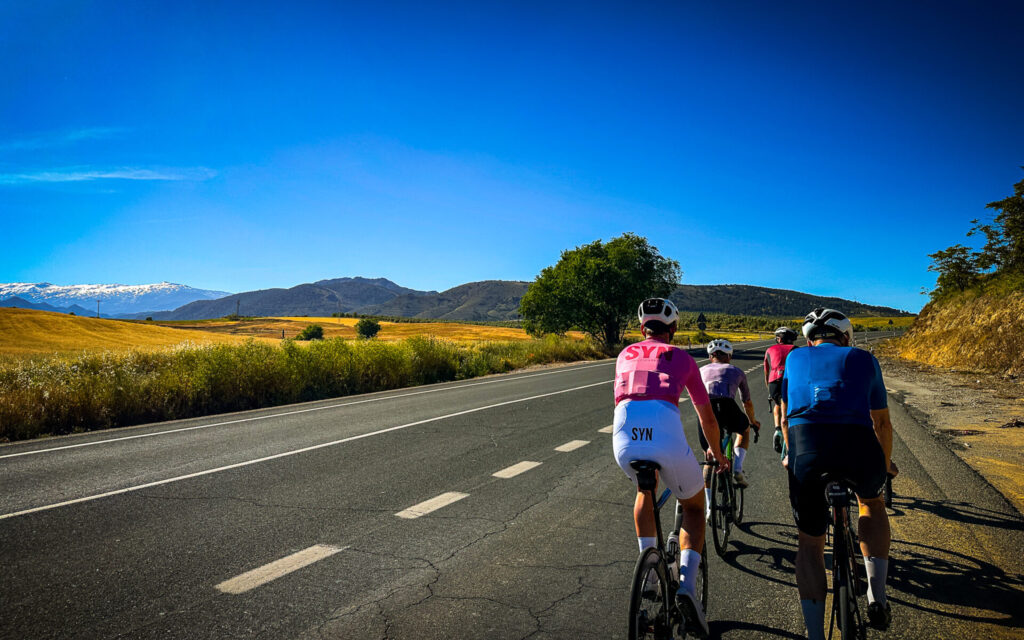
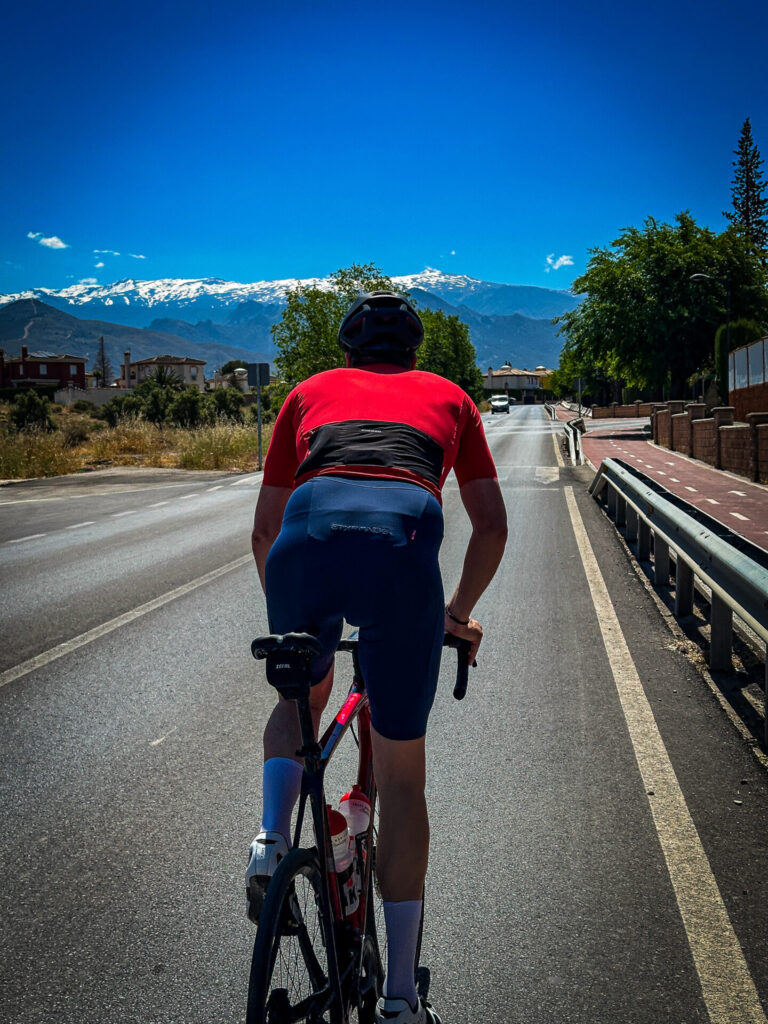
If you want to drive out of the city in Granada That is certainly a survival mission. The traffic is relatively busy and although in Spain you are required to keep a 1.5-meter distance from cyclists, cars zoom by at a furious pace. In the middle of the city, it is sometimes difficult to find a suitable bike path. Once we have left the city, there is one to be found, but it is made of such slippery asphalt that you wouldn’t want to drive on it with a sprinkle of rain. Another disadvantage: in many places on the bike path, you don’t have priority over cars. At roundabouts, for example, or at a driveway to a gas station. Then you are better off (especially in a group) riding two by two on the road.
The mountains are calling
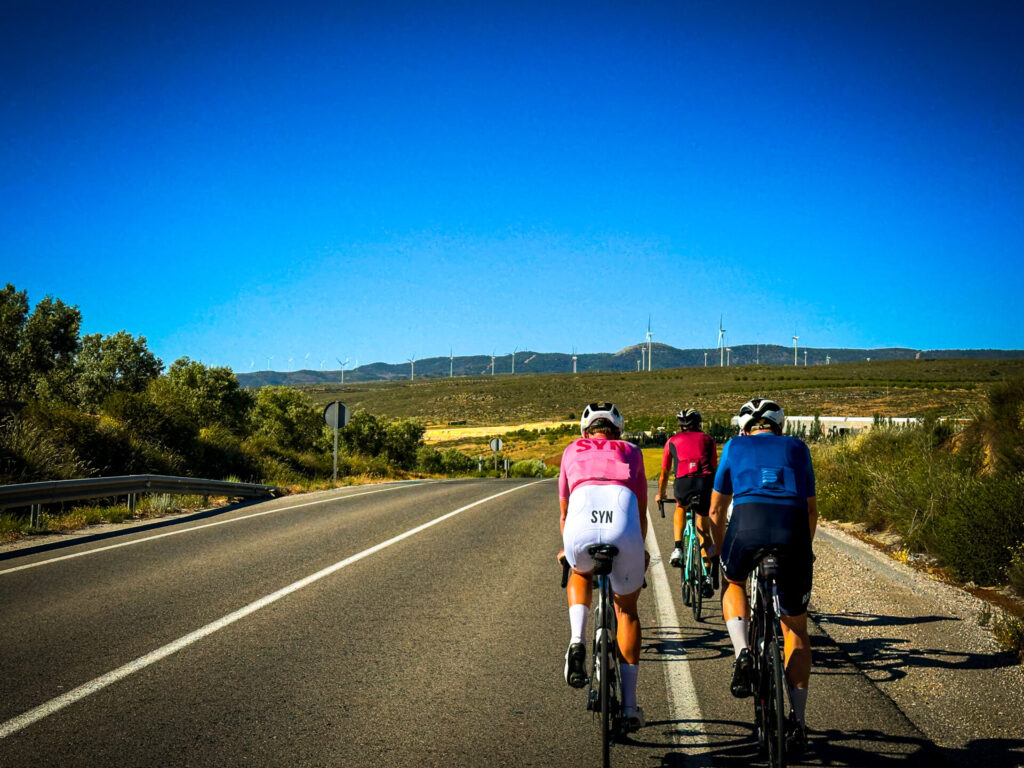
It takes a dozen kilometers along typical straight Spanish roads, with every now and then a roundabout before we cross a larger road and start climbing. We actually drive the goat path from the other side. The official route is therefore starting at the coast (to be exact at Almuñecar) and then up. It’s not super warm in May, but with 20 degrees plus and climbing, you quickly get sweaty. The climb is a total of about 14 kilometers to the first peak, but then you drive for a while on a kind of plateau that goes up and down. That also takes another 15 kilometers and only then does the long, narrow, winding descent begin.
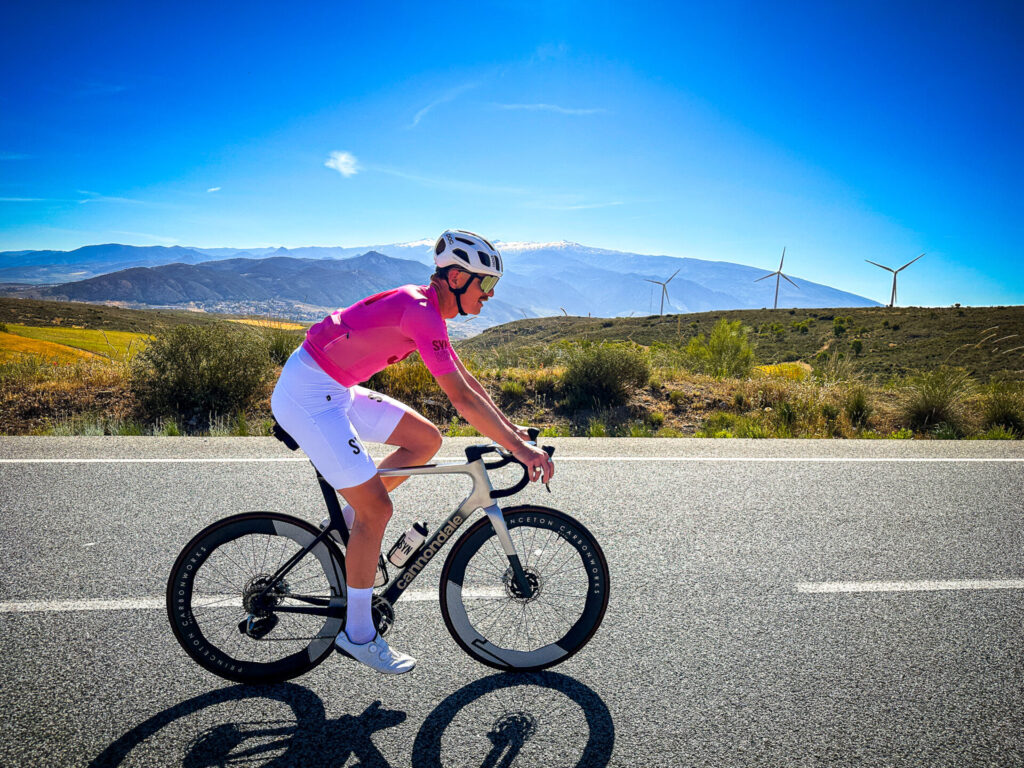
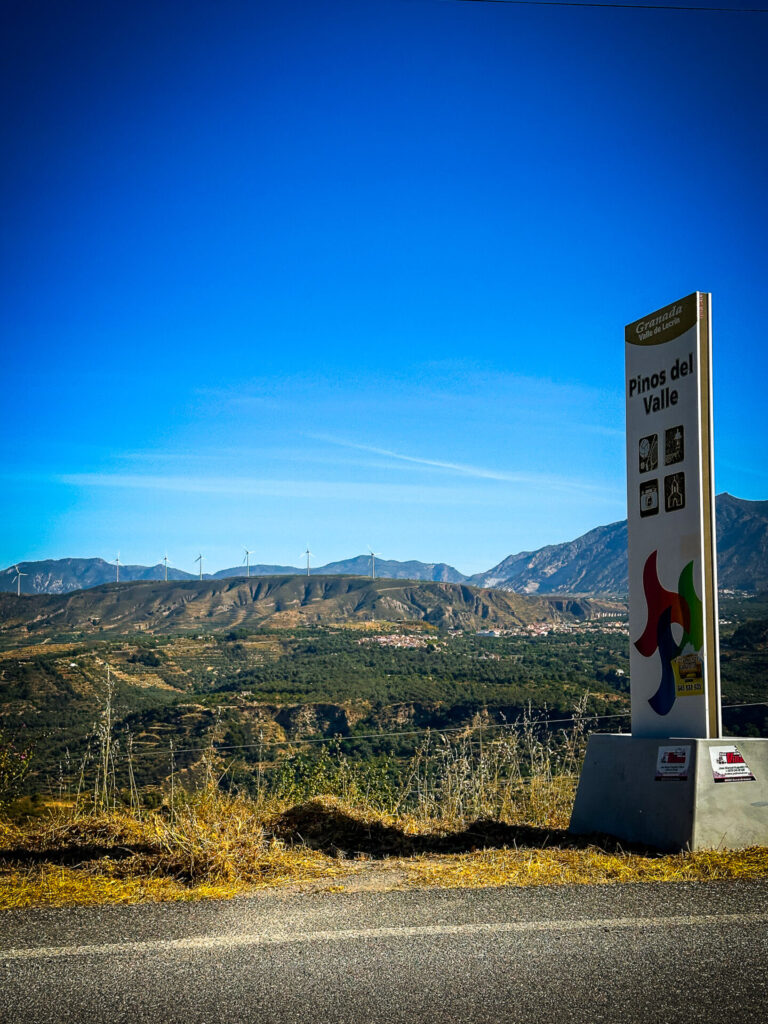
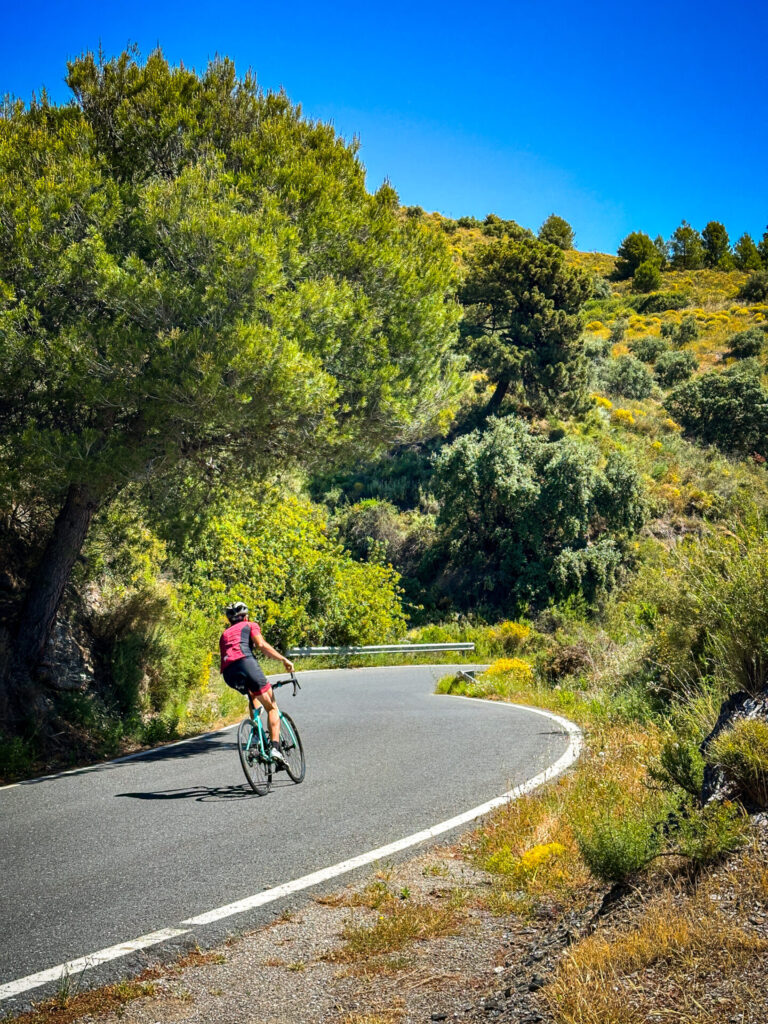
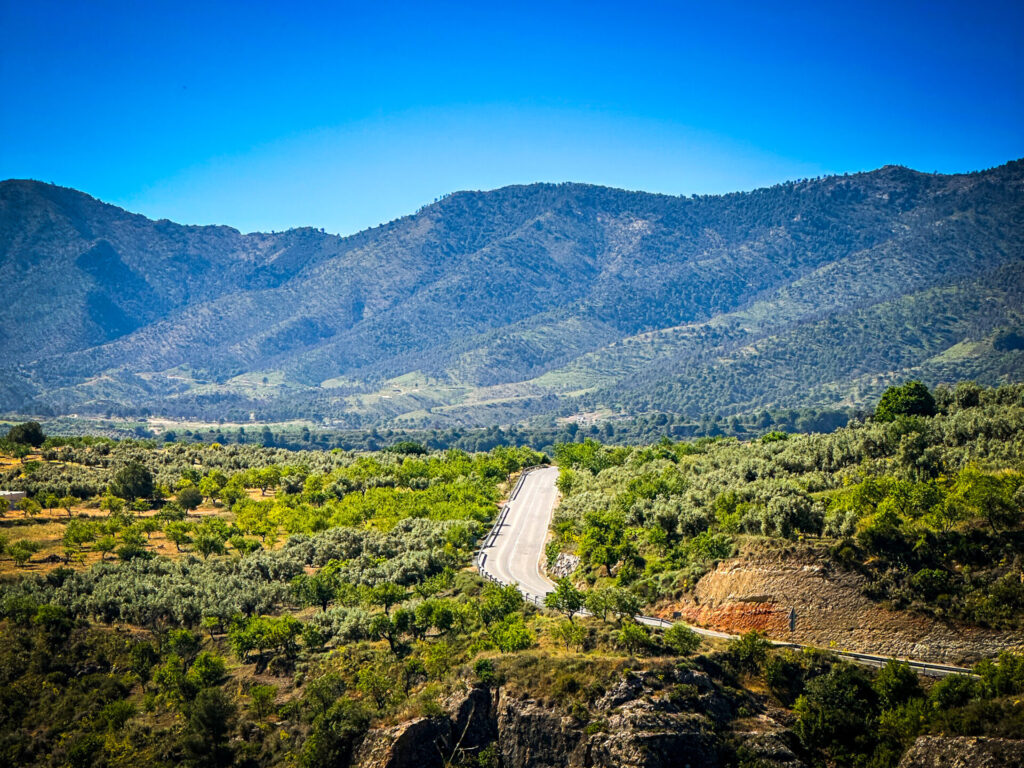
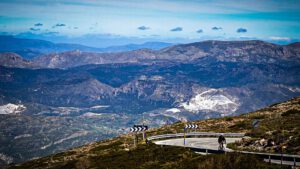
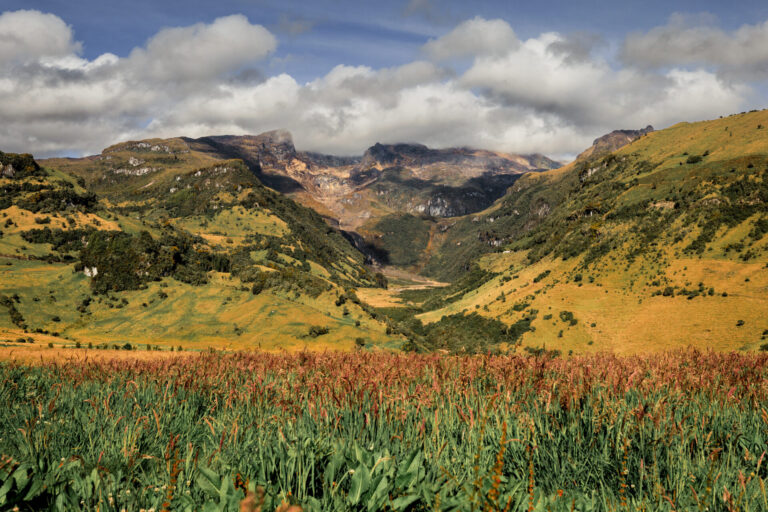
Upwards, you mostly see beautiful nature. It also gets quieter as we go higher. We drive through the Parque eólico Loma de Capón. On the left you can see the wind turbines, and straight ahead you see the specific Spanish vegetation of this region. There are some trees, and some stones that seem to be covered in green. I must say that for a goat trail, the road surface is quite good up this way. No big holes or cracks in the road, just fine asphalt and fun to drive on!
We brought a support car on this trip (Toni van TunTunTrip) And that will turn out well, because the water supply is a bit less good on this route. You’ll come across one restaurant where you can fill up the water bottles, but make sure you have enough water with you anyway. Better to be prepared than unprepared.
Above the plateau
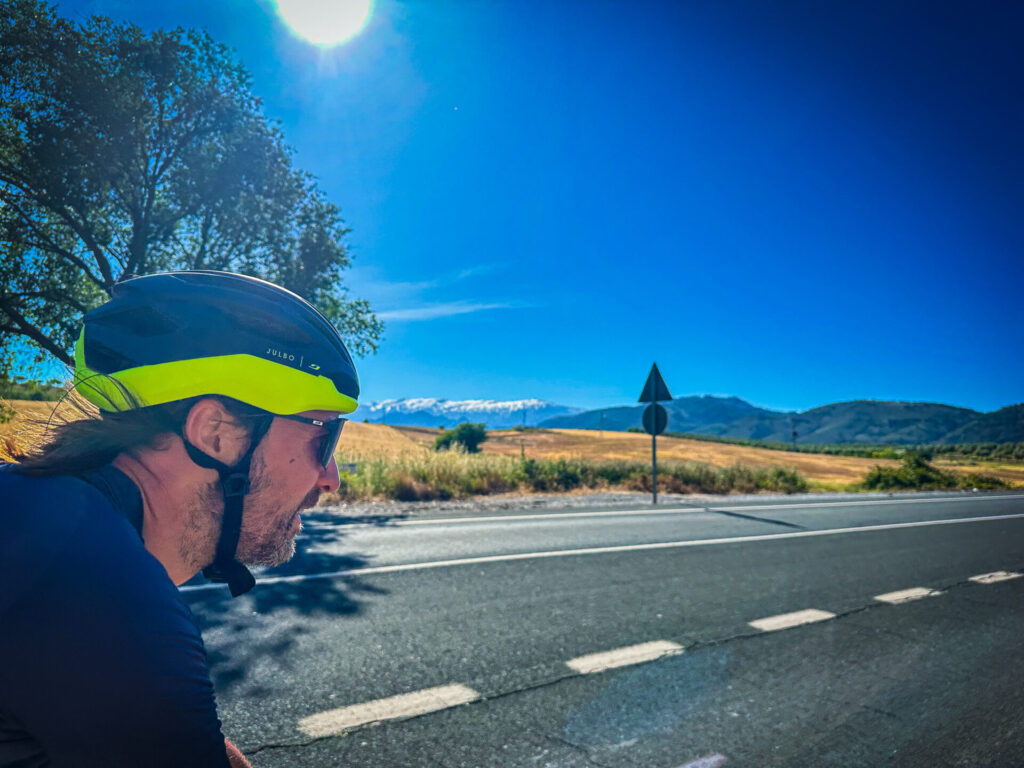
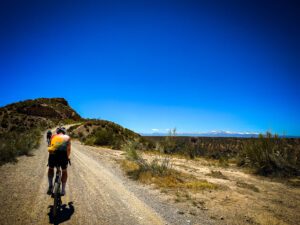
Once you reach the top, you’ll find yourself at that plateau. It’s beautiful and you really feel like you’re in the middle of a mountainous area. You’re at an altitude of about 1350 meters here and you can actually see all sorts of mountain peaks. On the Komoot map, you’ll also see a lot of ‘cerros’, or mini-peaks. However, you can only cycle on one of them, at least on a mountain bike. With the MTB, there will probably be more possibilities, although there doesn’t seem to be any MTB trails here.
The goat trail lives up to its name
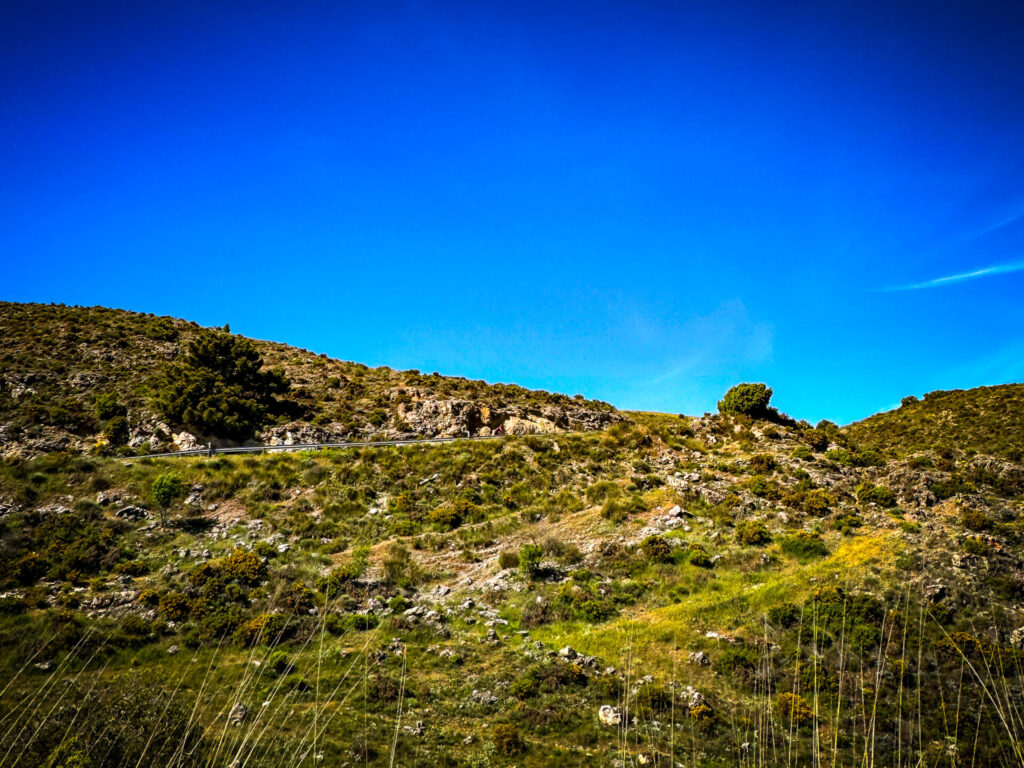
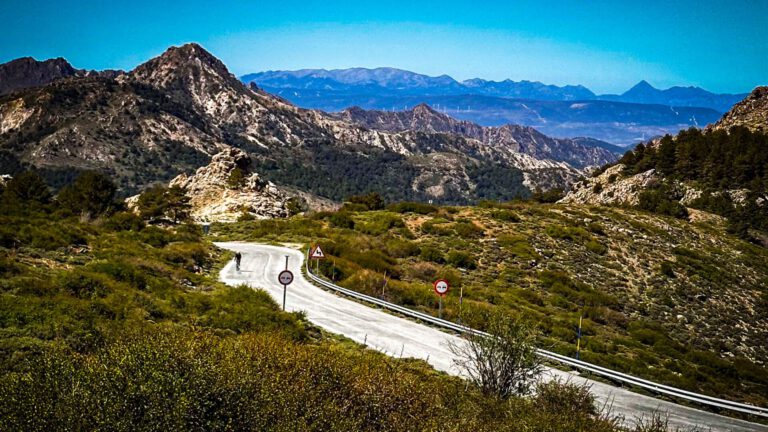
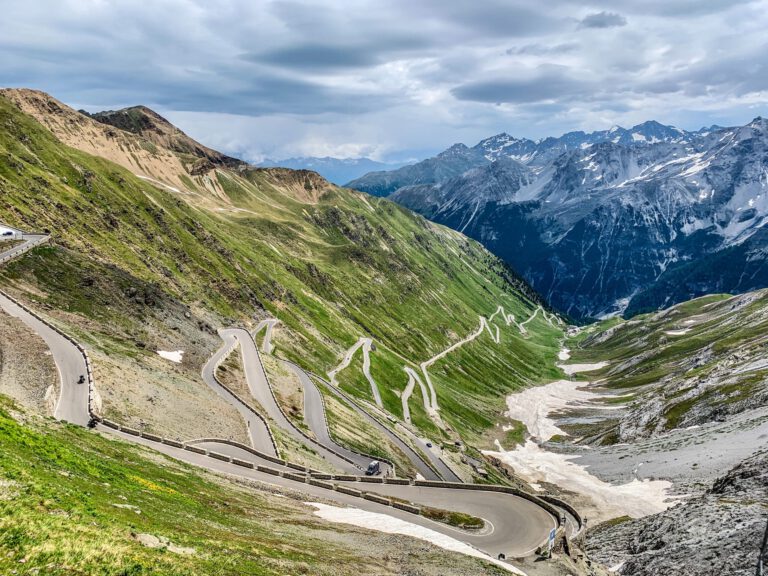
One of the things that make this climb and descent beautiful is the winding nature. You get some great photo opportunities. It’s a road that looks more like a snake tied to the mountain than a goat path. However, what makes it a goat path is the width of the road. Coupled with the fact that the first few kilometers of the descent are well worn, I’m constantly having to use my hands on the brake levers. I’m used to it, but I notice that I’d rather just come down. The fact that the Dutch Porsche club also likes to race here ensures extra caution. Men with a lust for speed in a Porsche Cabrio…
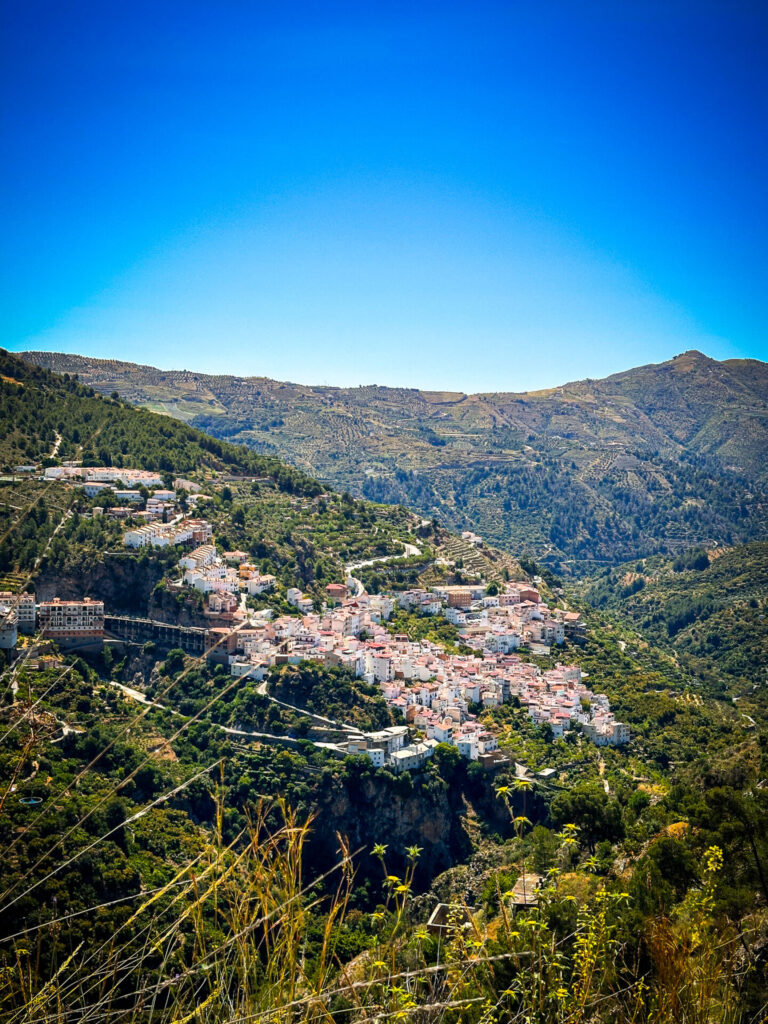
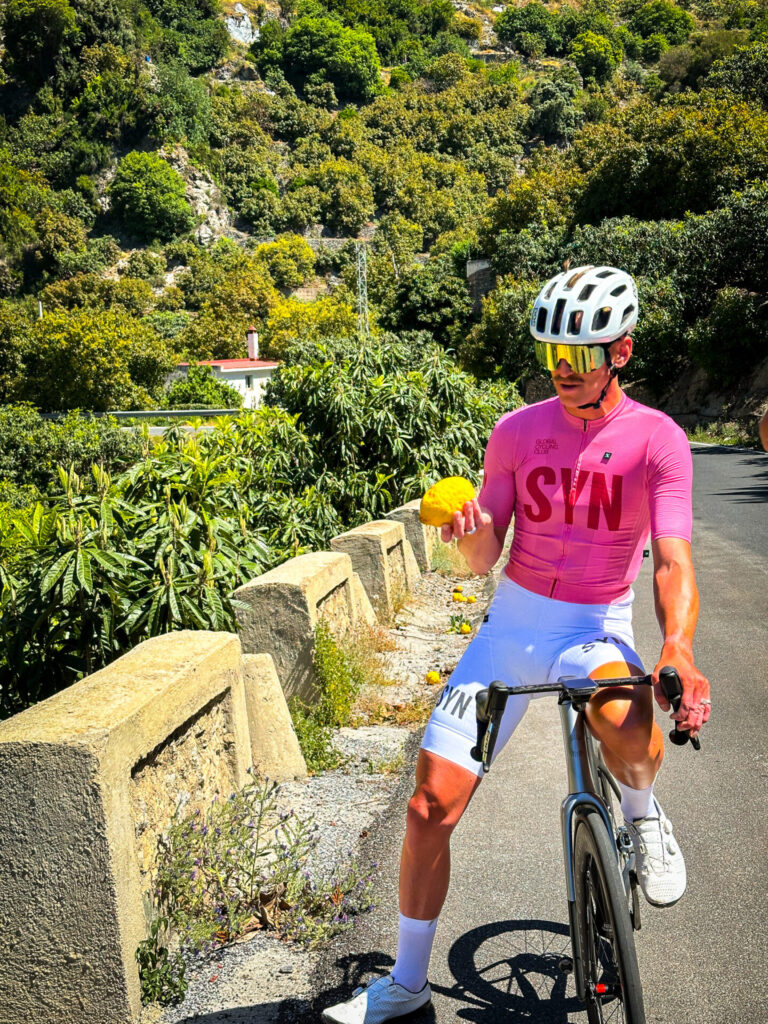
Once we get down there, the road gets increasingly busy and we see more buildings again. At 62 kilometers from our route (a total of 78km), we enter the first village in Otivar. If you were to drive around (about 160 kilometers), you could stop here for a quick snack and refilling the canisters. In the village there is a beautiful stone pillar that asks us to come back to the ‘balcon of the rio verde’ again. We do.
Continuing traffic
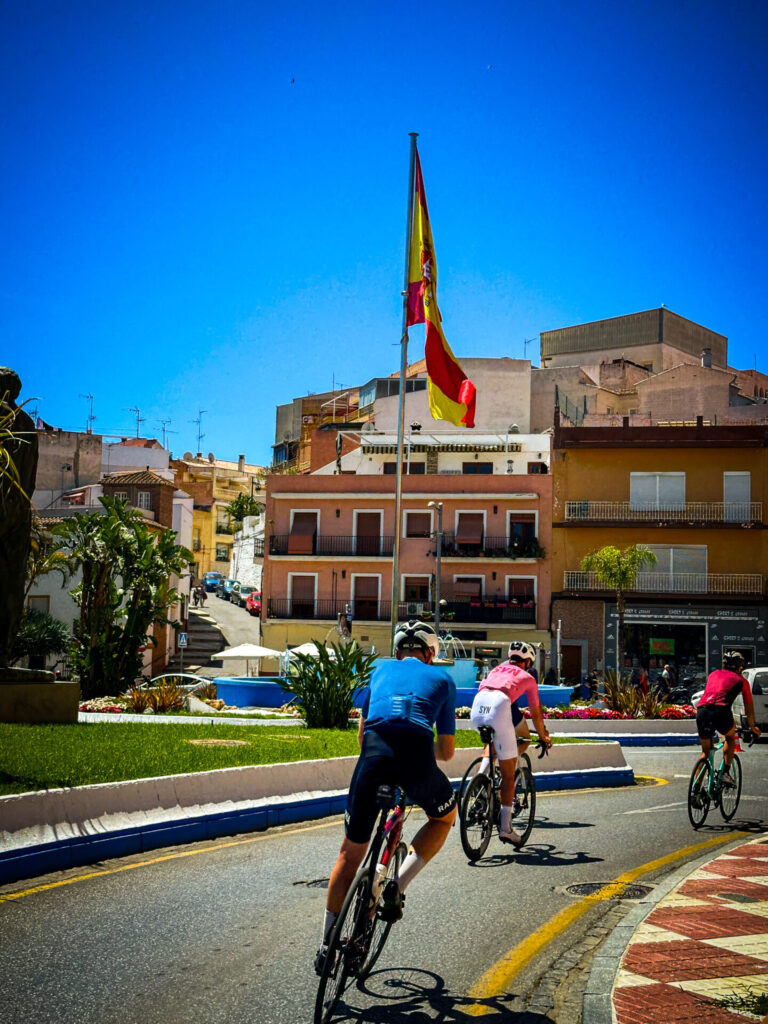
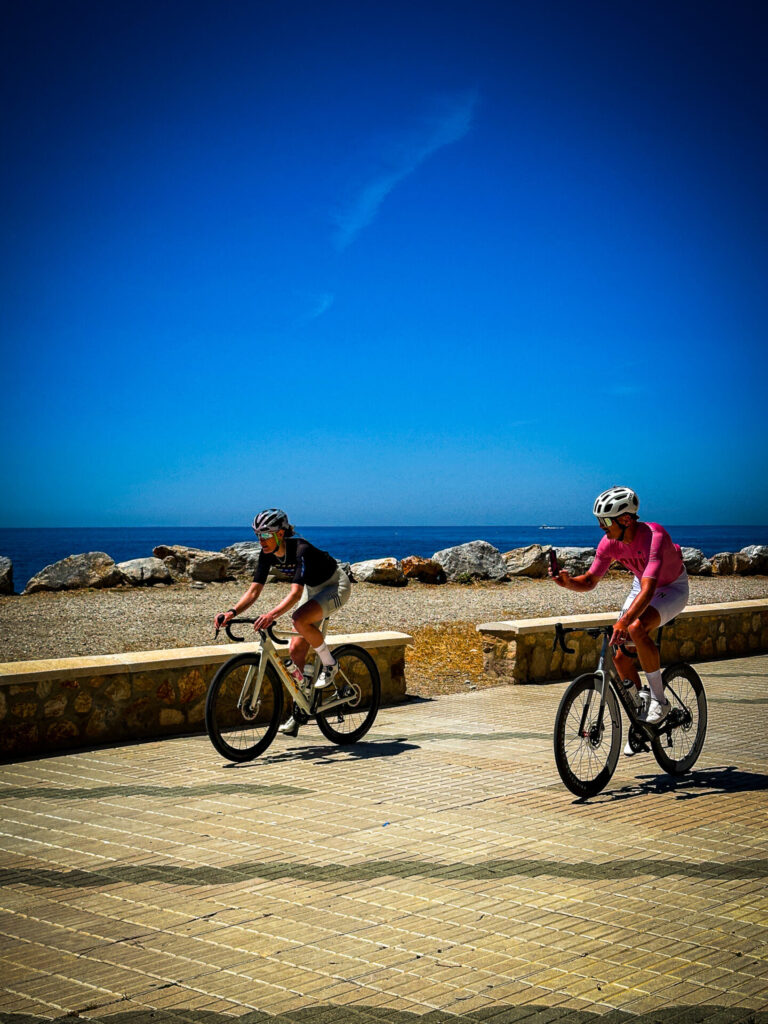
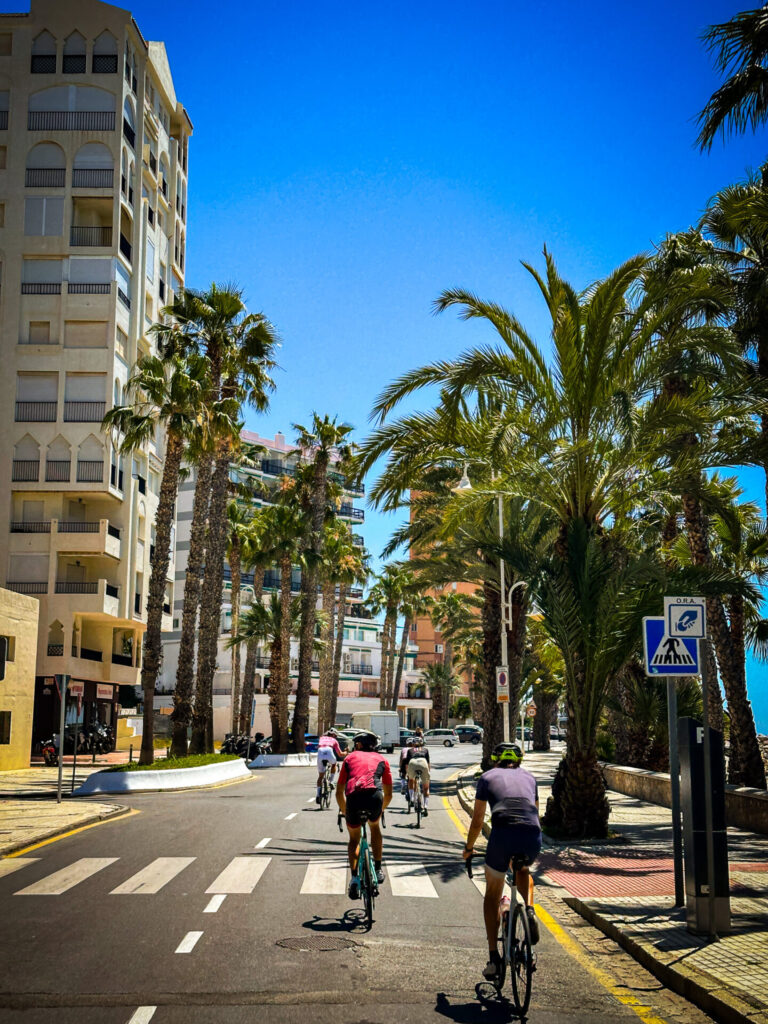
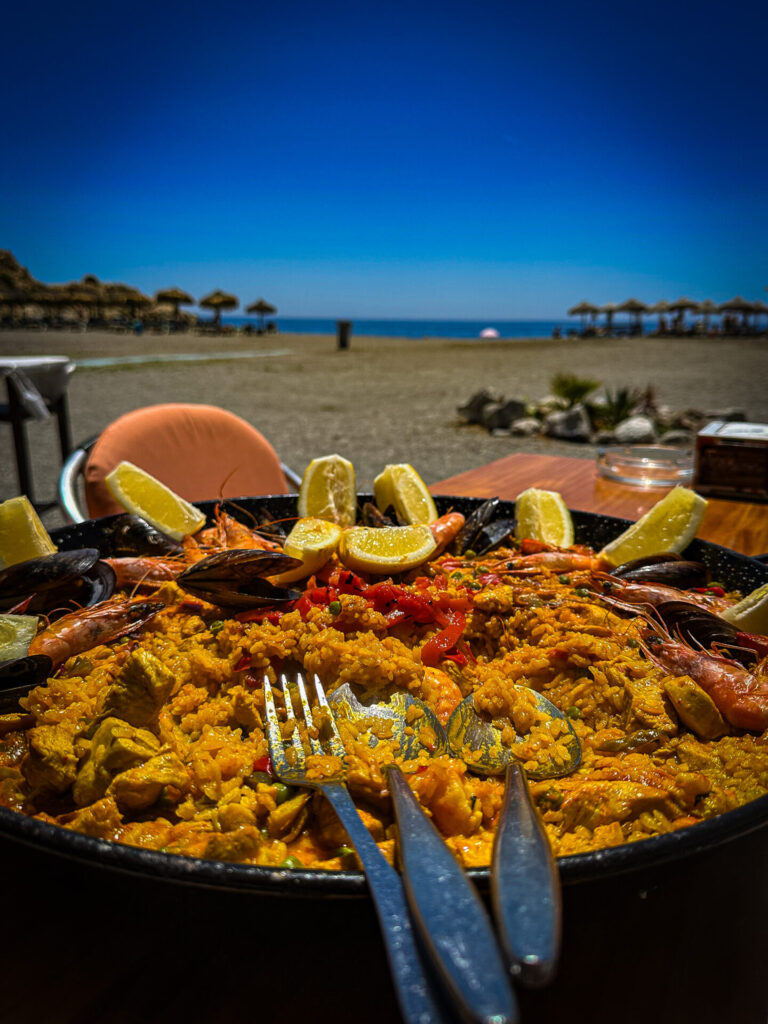
The last stretch to Almuñecar is really a busy route. You just have to get used to the flow of traffic. Once we reach the coast, we can really take our time to take pictures of the classic sights along the promenade, where the sun is still shining brightly in the sky and the sea provides the perfect backdrop. We really enjoy taking advantage of this. Our ride ends at Chiringuito el Tesorillo, a top restaurant located on a kind of bay in Almuñecar. The paella lunch is really delicious. Whether it’s the sea roaring in the distance or just the relaxed atmosphere, it makes the food extra delicious. The last few kilometers to Salobreña are still treacherous. Because to get there you really have to overcome a steep climb. If you continue following the coastline, you'll find 500 meters of more than 12% in average. That's right. If you navigate well, you'll take the main road and everything will be a bit friendlier.
Salobreña forms the heart of the Costa Tropical
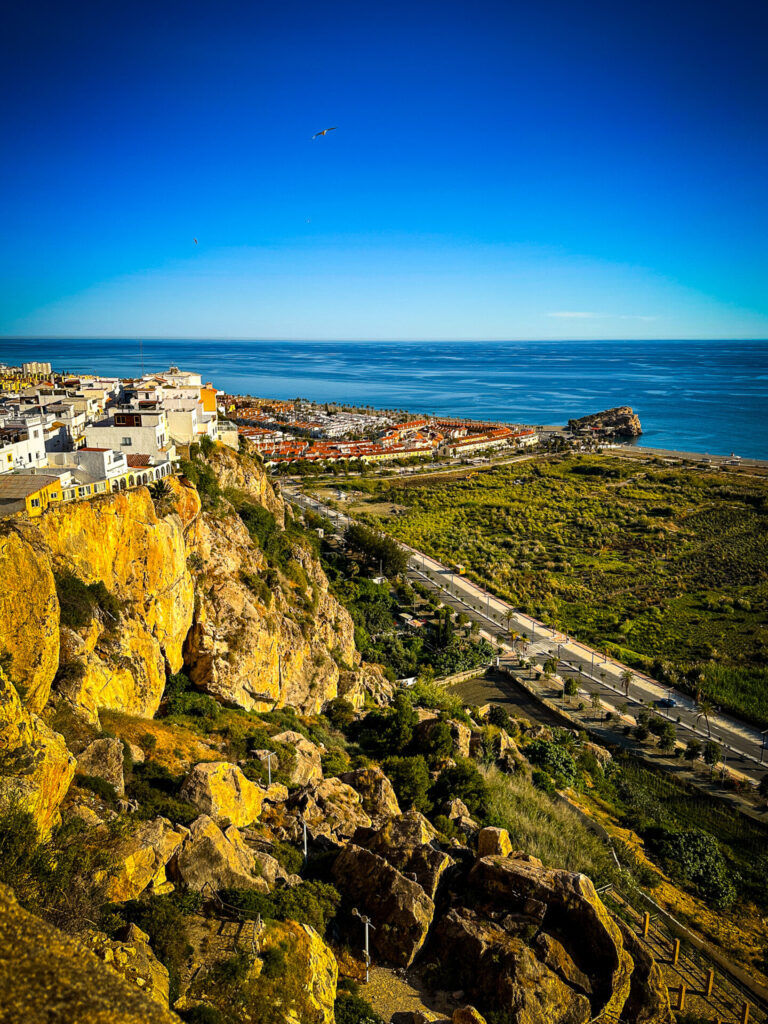
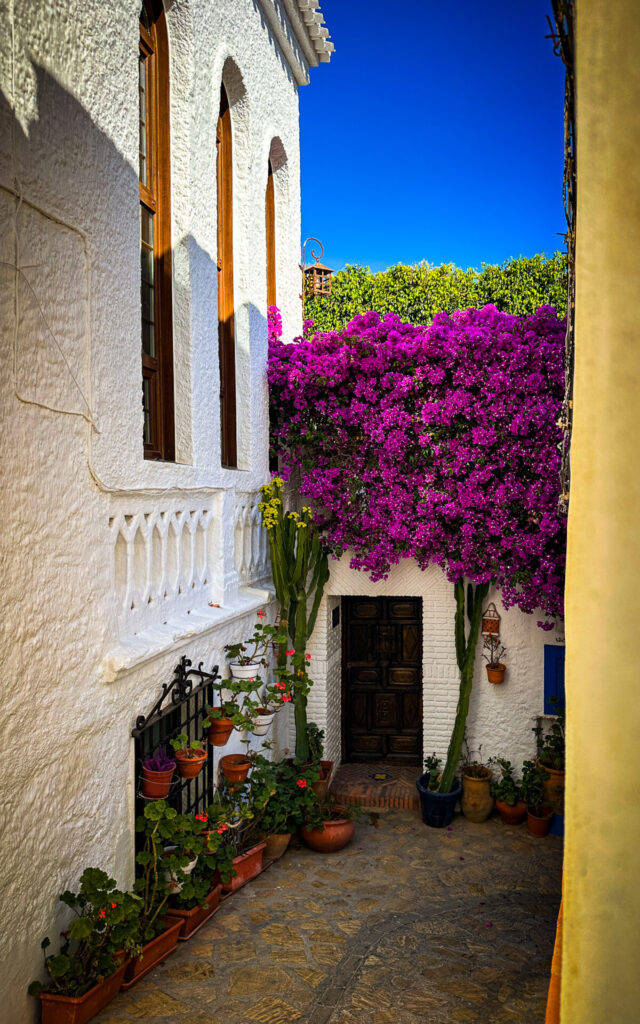
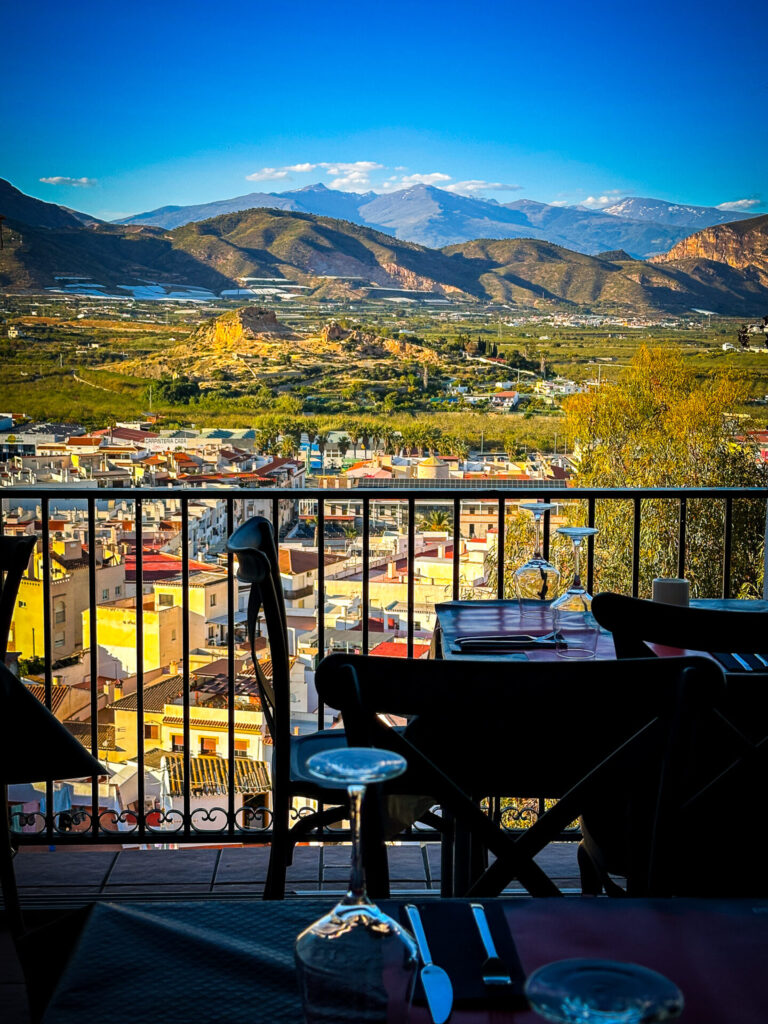
As mentioned earlier, the town of Salobreña is located on a hill. It is a strategically located location, where the Castillo de Salobreña can also be found. Or at least, the ruins of it. This centuries-old castle dates back to the Middle Ages and was used as both a summer residence and a prison by various kings and dynasties. It is located at the highest point, and to get there you walk through the narrow, steep streets, past the town’s beautiful white houses. Very atmospheric, but after a long bike ride it’s also painful for the feet and legs. But the view from the top makes up for a lot of that. The dinner a little further along at La Traviesa is therefore extra delicious. A really good tip is to also eat at the waterfront at one of the fish restaurants; especially Restaurant Pil Pil makes super delicious fish, both fried or as a starter or just grilled.
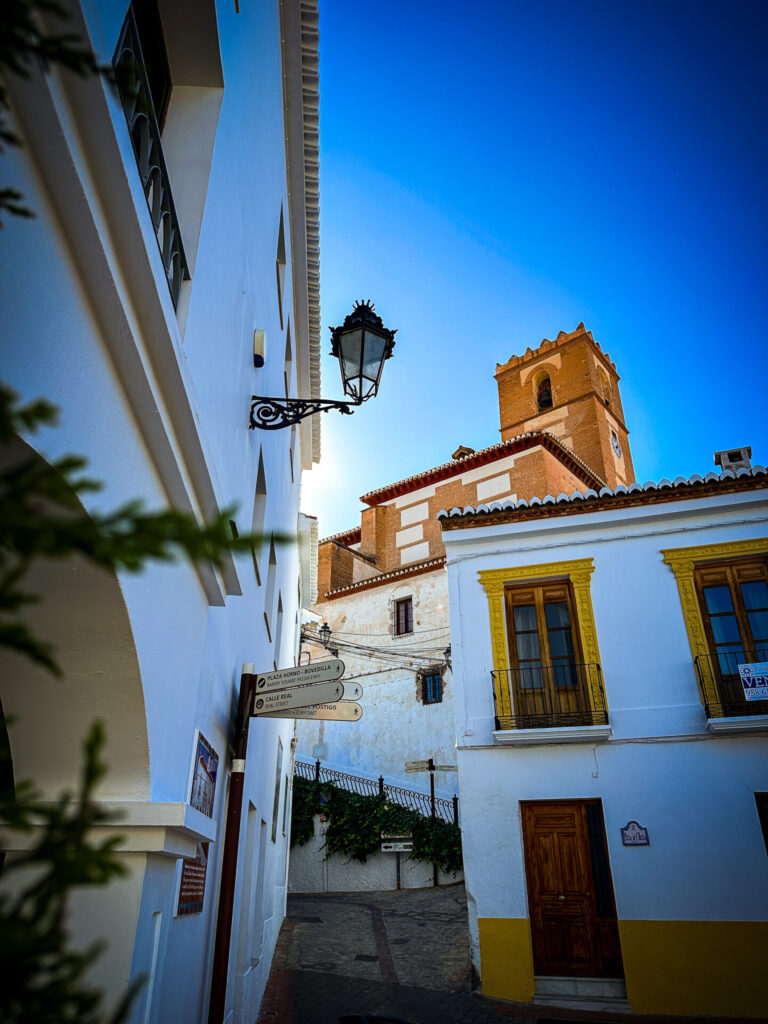
We sleep in a decent place Spanish hotel, Hotel Avenida Tropical, With its typical antique wooden interior, doors and a bed that fits the tall Dutchman just right. It is clean, everything is there and the air conditioning works. Then I am quickly happy. There is no bike storage nor a place to clean your bike. That is an improvement.
Waterworks in the region
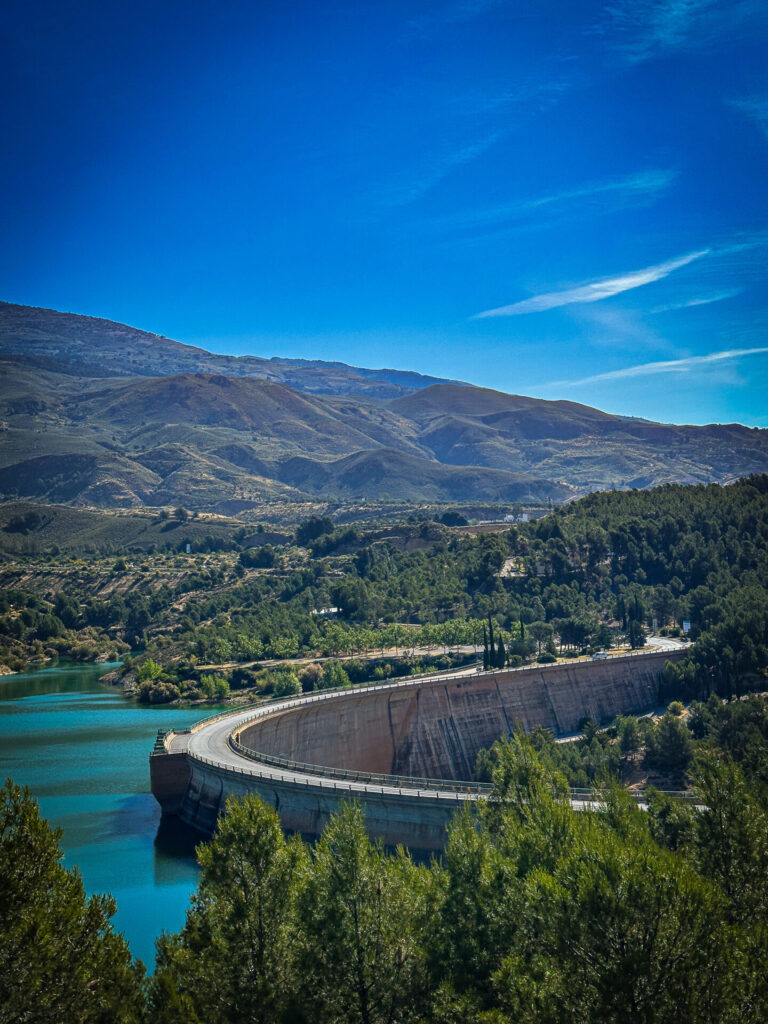
Our two days on the Costa Tropical take us back to Granada. Some of our group started the return journey early in the morning and made the climb up the dam of Beznar from the coast, near the Beznar reservoir. I myself will be travelling by bus with our guide and another journalist.
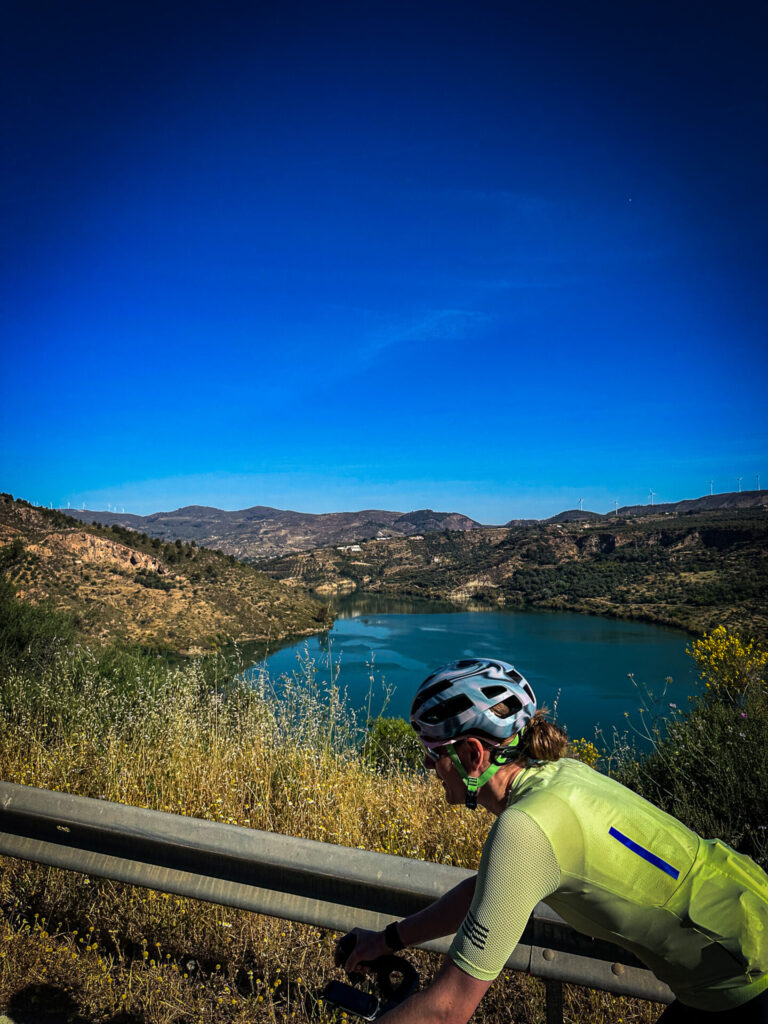
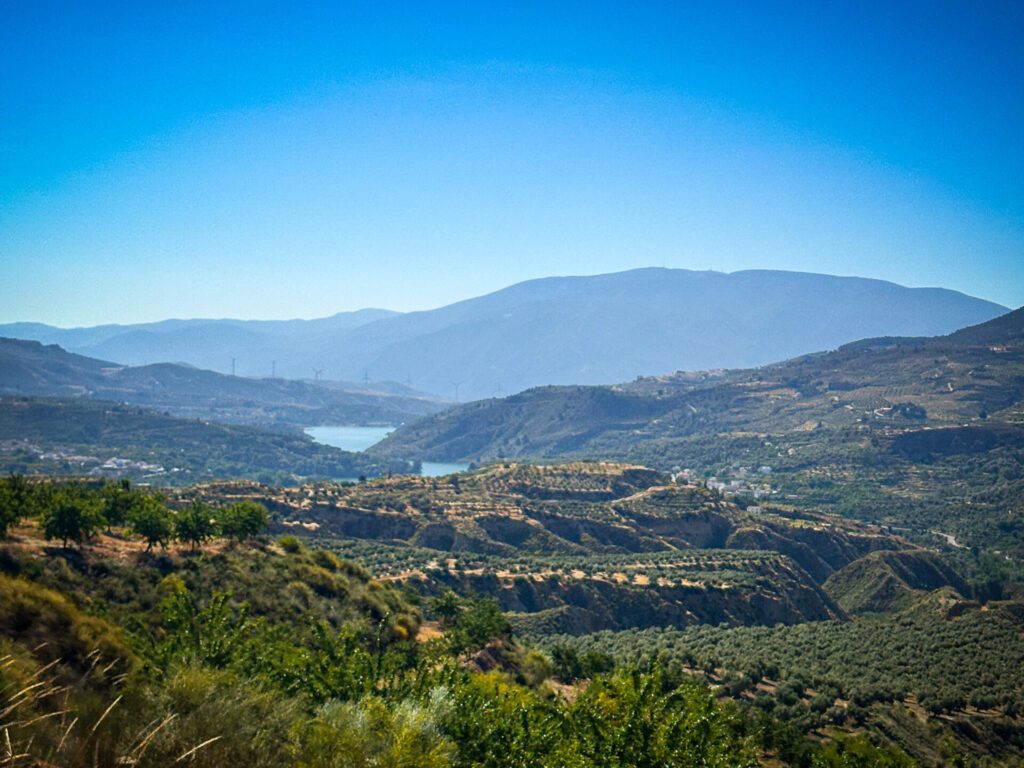
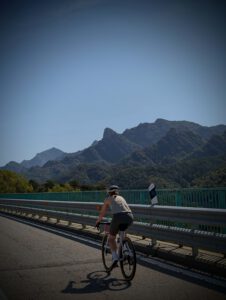
Near the Costa Tropical there are two large reservoirs. The one reservoir, of Rules, is larger and has several (beautiful) viewpoints. Unfortunately, you can’t do a round trip on the reservoir, but you could make a round trip along the lake from Salobreña or Motril. We start at the top of the Beznar dam, where we meet the others. The ride up there is quite steep, and when we unload the bikes on the dam the view is already impressive. I am a huge fan of water. Sea, river, lake. I think mountain lakes are the most beautiful, but a reservoir is always impressive too.
And up again
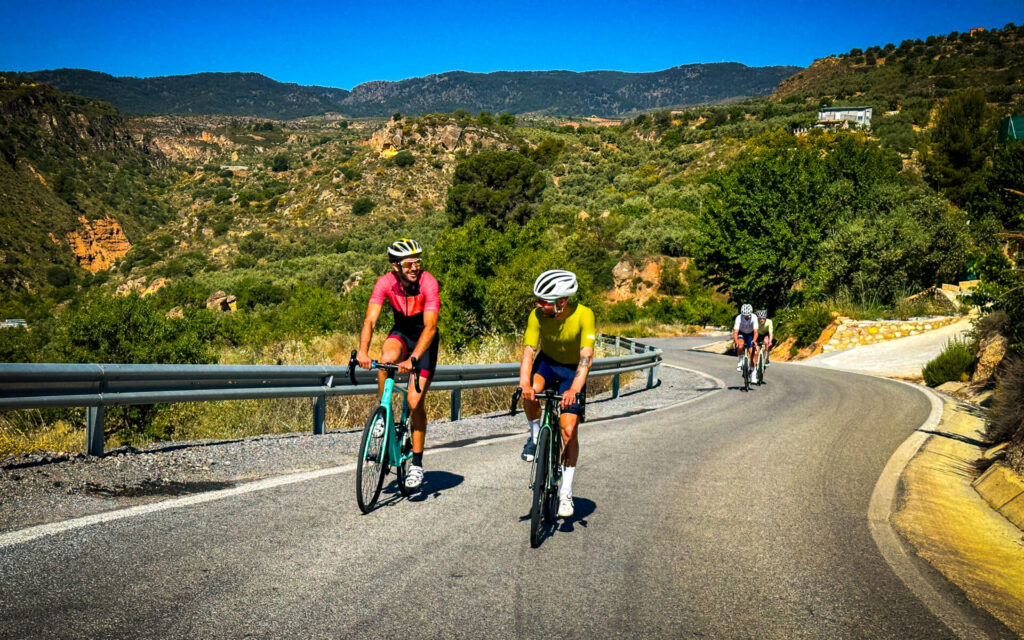
With our drive to the dam in the car, we have already covered quite a few elevation meters, but there is still a whole load of elevation meters waiting for us behind that. From the Dam, it’s straight up. Once we’re up, in Pinos del Valle, we take a breath for a moment, but then it’s straight on again. Guide Toni has included a few tricky climbs in the course. As I ride up with Marcus, a Danish fellow traveler, we both look in slight panic at our GPS. Fifteen, sixteen, seventeen. No, those aren’t the meters, but the percentages. It’s uphill, and behind us, a touring car is eager to pass. You better hit it.
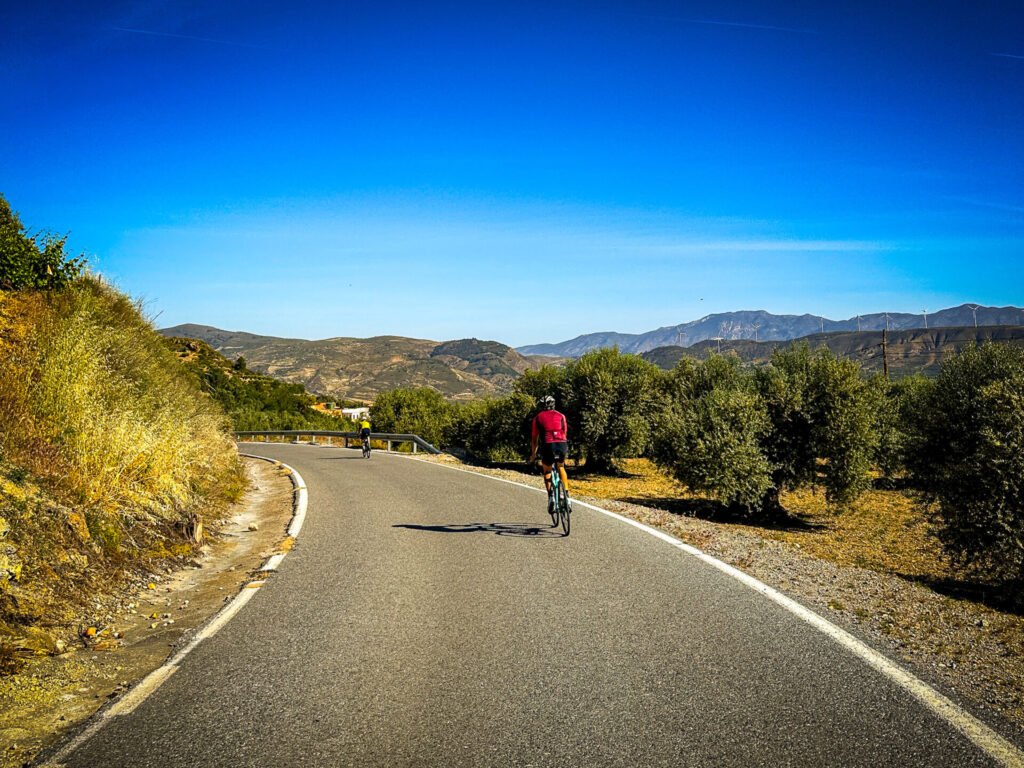
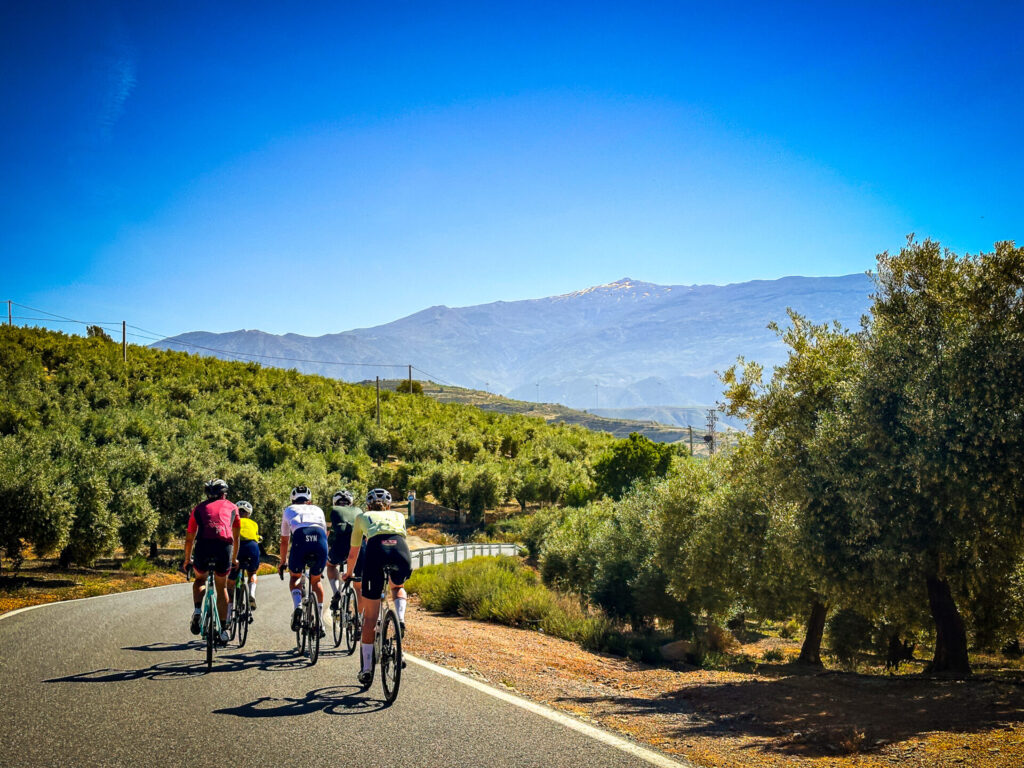
Once we reach the top, we see the typical hilly landscape again, with green vegetation and sometimes endless roads. It is quite quiet here with no traffic. We don’t really encounter other cyclists. Sometimes we come across a village, where you can stop for a drink or a tapa. With names like Albuñelas, Conchar and Padul, we are presented with a nice list of Spanish villages. Soon the points of the Sierra Nevada appear in the distance again. That is still a wonderful sight.
Back to the beginning
The last part of the journey we take the same route as when we left the city. We drive back on the main road, avoiding the bike paths and the precarious traffic situations. The traffic is designed to be expected, but you have to switch gears mentally first. Once back at our hotel, a nice shower and a good lunch await. Life in Spain is good.
Tips & Tricks
- Bring plenty of water, especially in the months of June to August. Also avoid driving between 11 and 15 hours in the day. It’s then too hot and you’re in too much of an open space.
- On the tropical coast you have several hotels that are suitable as bike hotels. Look at, for example:. Helios Hotel Costa Tropical
- In Granada we stayed in Eurostars Hotel San Anton. A lovely hotel with good facilities and close to the city center. You only have to park your bike behind the reception. It’s still difficult to find bike hotels in Granada.
- Along the Costa Tropical you will find beautiful routes. Also take a look at this article What we wrote earlier.
- Nowadays, you can fly directly to Granada with Transavia.
Costa Tropical routes
Tropical Costa Cycling Hotels
Below you will find a selection of bike hotels on the Costa Tropical in Andalusia.
Questions & tips
Do you have any questions about this route, or have you been there yourself? Share them here. We read everything and usually respond within a few days.