
A dirty chain costs you more than you think. Sand and old grease together form a grinding paste that makes your chain, cassette and chain plates wear out faster. A clean, well-lubricated chain operates more smoothly, makes no noise and lasts thousands of kilometers longer. The good news: with ten minutes a week you’re there.
What do you need?
- A degreaser (water-based or biodegradable)
- A chain brush or a chain cleaner (a container with brushes that you attach to the chain)
- An old toothbrush or a narrow brush for cassettes and derailleur wheels
- A bucket of lukewarm water with a splash of detergent
- A few clean, lint-free cloths
- Chain oil or chain wax
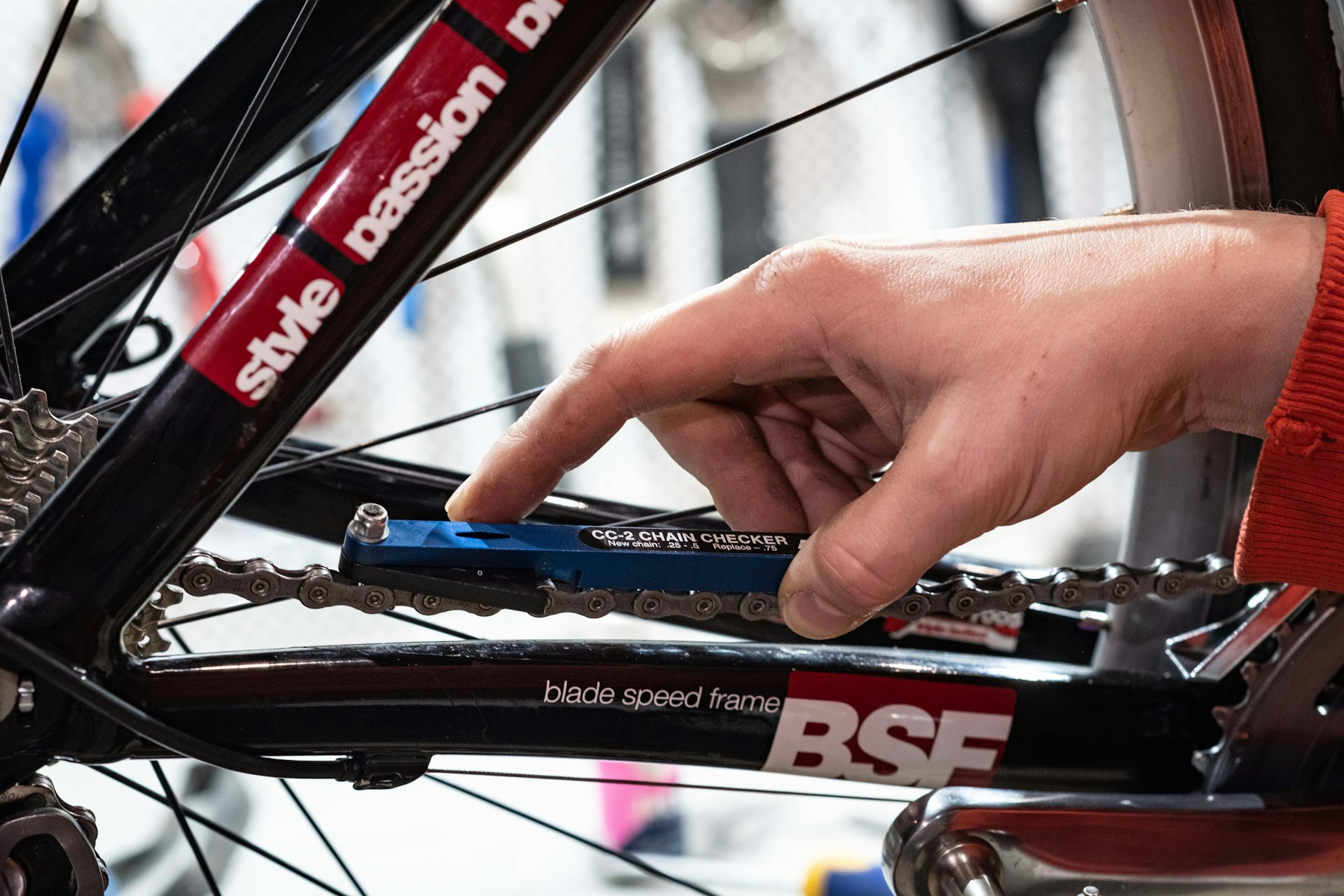
- Convenient: a mounting standard and a chain wear gauge
Quickly keeping track: after every few rides
Turn the sprockets backwards and hold a dry cloth over the chain. Do this for a minute, until there is almost no black on the cloth. Then apply a drop of oil to each sprocket, let it soak in for a moment and wipe the outside again dry. Oil belongs inside the chain, not on it: anything that remains on the outside attracts dirt.
Big change in six steps
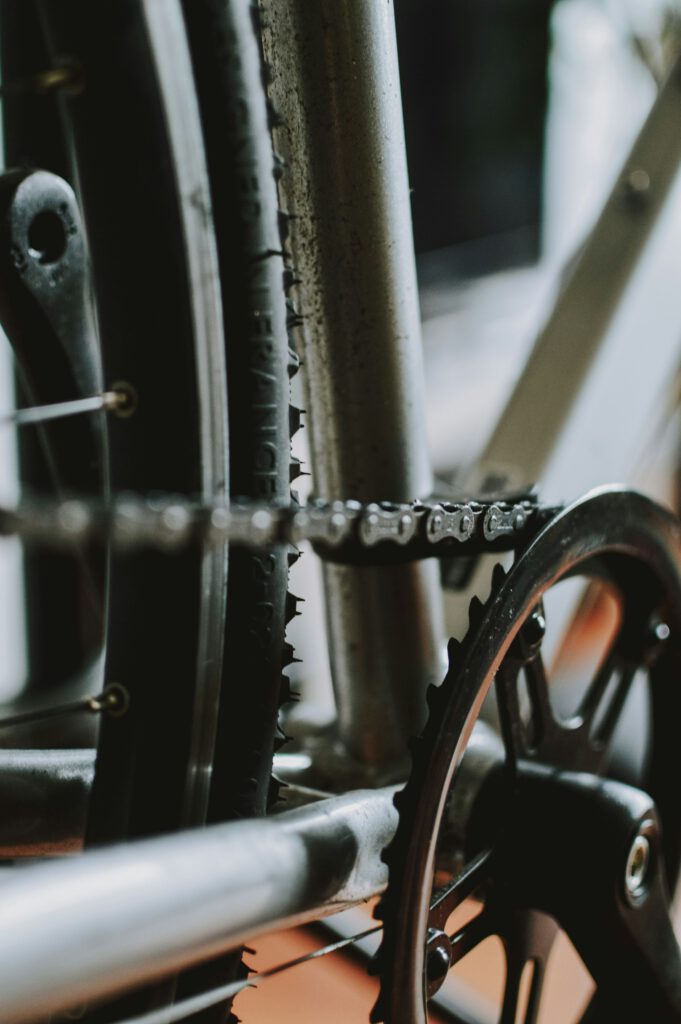
- Degreasing. Apply degreaser to the chain, cassette and chain plates. Let it work for a few minutes.
- Brushing. Turn the sprockets backwards by using a chain cleaner or brush the chain on all sides. Don't forget the derailleur wheels: they often have a thick crust on them.
- Cassette. Insert a cloth or narrow brush between the gears.
- Rinse. Rinse with lukewarm water (using a garden hose on a gentle setting, not with a high-pressure cleaner: that presses water into the bearings).
- Drugs. Dry the chain with a cloth and then leave it to air dry for another quarter of an hour. Any water that remains will rust.
- Smear. One drop per switch, letting the stepping motors spin, wiping away any excess oil.
Do you want to do the whole bike at once? Then read this as well Cleaning your bike in six steps.
Oil or wax?
| Lubricant | Good for | Attention |
|---|---|---|
| Dry lube | Dry weather, dusty roads, gravel in the summer | Washes off quickly in the rain, needs to be applied more often |
| Wet lube | Rain, autumn and winter, wet mud | Attracts more dirt, so wipe it more often |
| Droplet wax | All-round, clean and quiet | Works best on a fully degreased chain |
| Hot wax (immersion) | Those who want the maximum: cleanest, least wear | Takes time; chain needs to be removed every 300 to 500 km |
If you’re switching to wax, first degrease the chain thoroughly, preferably with a new chain. Old oil and wax don’t mix well.
How often?
- Race bike, rainy weatherWipe and lubricate every 200 to 300 kilometers, major overhaul once a month.
- Gravel, mud or rainAfter every wet or muddy ride, rinse, dry and lubricate.
- WinterSalt is the worst. After every ride, rinse the drive with lukewarm water and lubricate it again.
When should you replace your chain?
A chain wears out over time. Measure that with a chain wear gauge. For 11- and 12-speed chains, replace it at 0.5% wear; for 10-speed or less, at 0.75%. If you wait too long, your cassette will also wear out and will need to be replaced. A new chain is much cheaper if you replace it in time.
On a bike trip
On a cycling holiday or training camp in the sun, like on Mallorca or to the Costa Blanca, When biking, it is usually dry and dusty. Take a small bottle of dry oil and a cloth with you. If you are going mountain biking, a small bottle of oil is enough; a full cleaning kit is not necessary on the road.




Questions & tips
Do you have any questions about this route, or have you been there yourself? Share them here. We read everything and usually respond within a few days.