
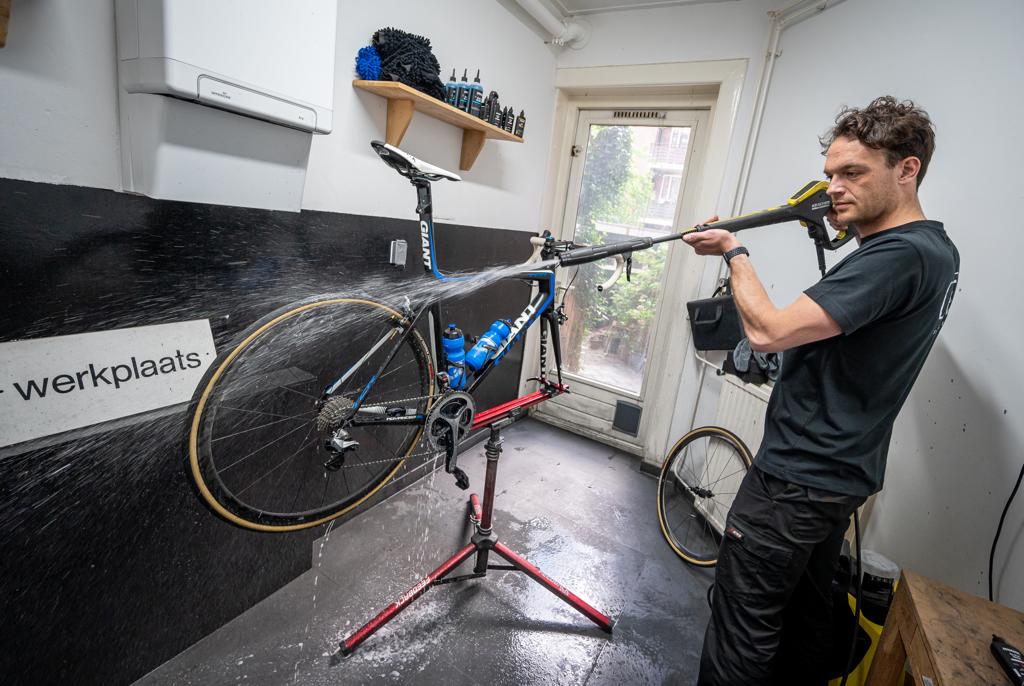
One of the things that most cyclists and gravel riders hate: cleaning your race bike or gravel bike. Especially when it’s cold outside, or when it’s raining outside, cleaning your bike sometimes gets in the way. In the winter And in the autumn, when it’s wet or there’s a lot of dirt or grit on the road, that’s disastrous for your bike. Dirt on (especially) the rotating parts wears out your bike faster than necessary. That’s why it’s important to clean your bike properly. You can do this in six steps:
READ ALSO: Handy cycling tips for when you go cycling in winter
Cleaning your bike at a glance
- What you need: degreaser for the chain and cassette, bike cleaner for the frame and wheels, brushes, a dry cloth and chain oil or wax.
- The six steps: prepare, rinse, apply cleaner, scrub, rinse and dry, lubricate.
- No pressure washer on bearings, hubs or bottom bracket: it blasts the grease out.
- How often: after every wet or muddy ride, and more often in winter because of road salt.
Updated in October 2026.
1. Preparation
Good preparation is half the work. This also applies to cleaning and washing your bike. Make sure you have a good towel or dry cloth at hand. It is also helpful to have the right cleaning products in your home. This means the following for cleaning your bike:
- specific degreaser for the chain and the cassette
- cleaning agent for your frame and your wheels
- chain wax or chain oil for lubrication
- Preferably a garden hose and (possibly) a high-pressure cleaner
If your bike is very dirty, make sure you remove the large lumps or pieces beforehand. Otherwise, you’ll be constantly dealing with dirt and mold in the dirt. Especially if you’ve gotten into the mud on your gravel bike and it’s just been left to dry out for a while, this is quite handy.
Another tip is cleaning on a bike stand, where you also remove your wheel for a moment. This way you can keep your cassette and chain cleaner. For this you will need a bike stand and a chain tensioner again.
2. Sparging
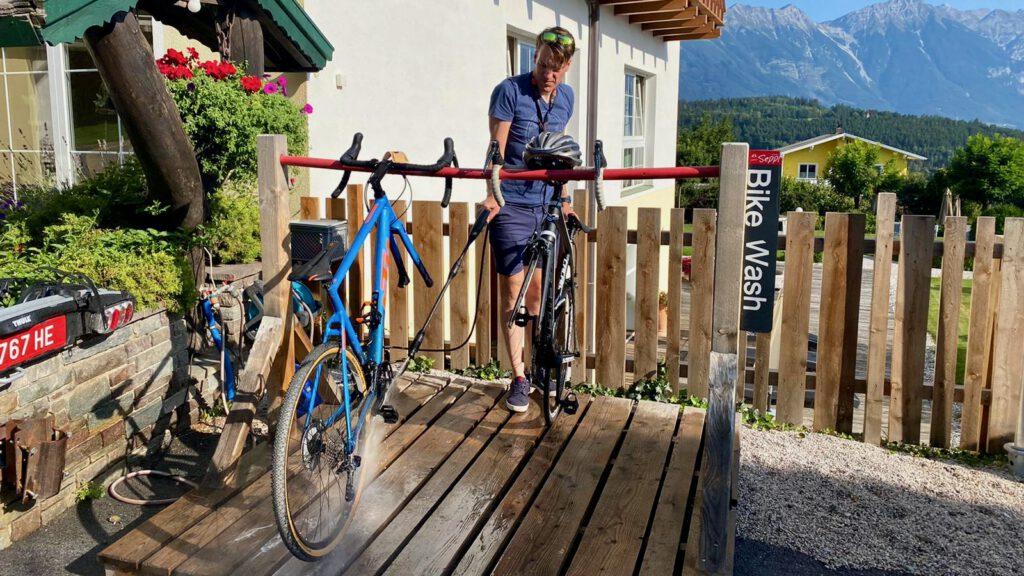
When you’re ready to clean your bike, start by rinsing it off. Simply use a garden hose to clean it. That’s the most important dirt you’ll remove. Note: When you start using the pressure washer, avoid the areas where your bearings are located. Like on the head tube, on your bottom bracket (near the pedals) and on the wheels. The pressure washer will remove grease and that grease is exactly what’s needed to keep those parts running smoothly. So keep a little distance and spray slowly, and definitely not too long in one spot.
3. Apply cleaning agent
When you are going to clean your bike, the right cleaning product is of great importance. There are many brands on the market that almost all offer a separate bike cleaning product and a separate ‘drivetrain cleaner’. The precise difference is that the drivetrain cleaner, i.e. for the chain and cassette, is more aggressive with dirt and grease. It is a real degreaser that ensures that your chain and cassette can be made shine again. When cleaning your chain, be careful. Do not apply the chain cleaner to the rest of the frame.
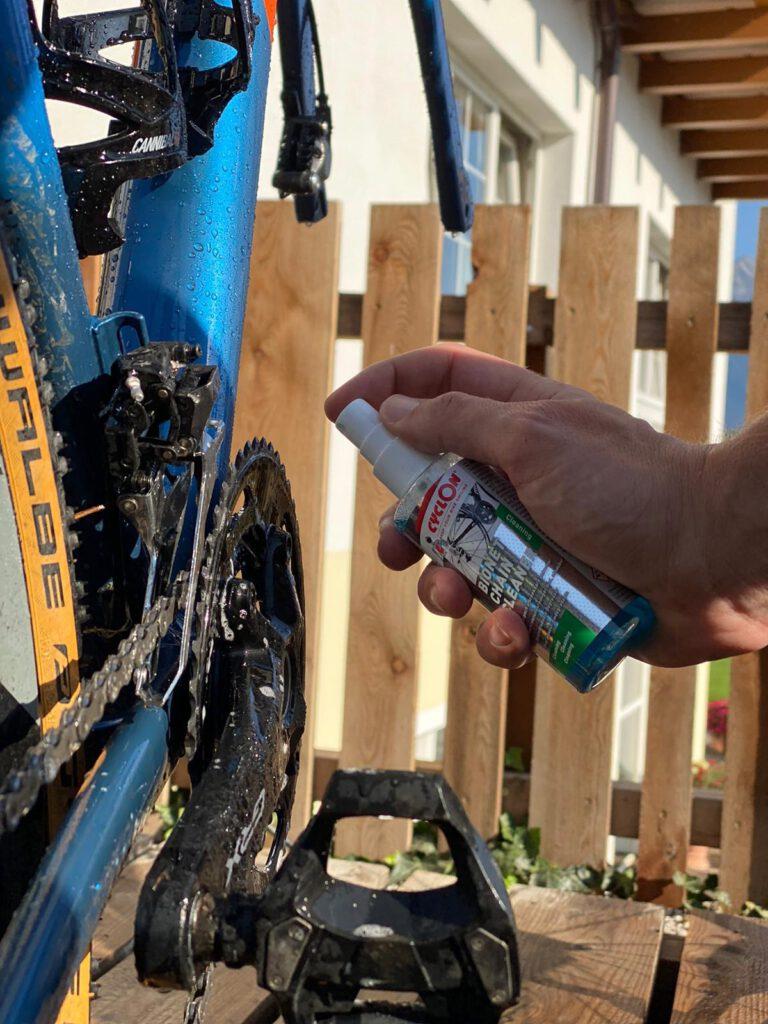
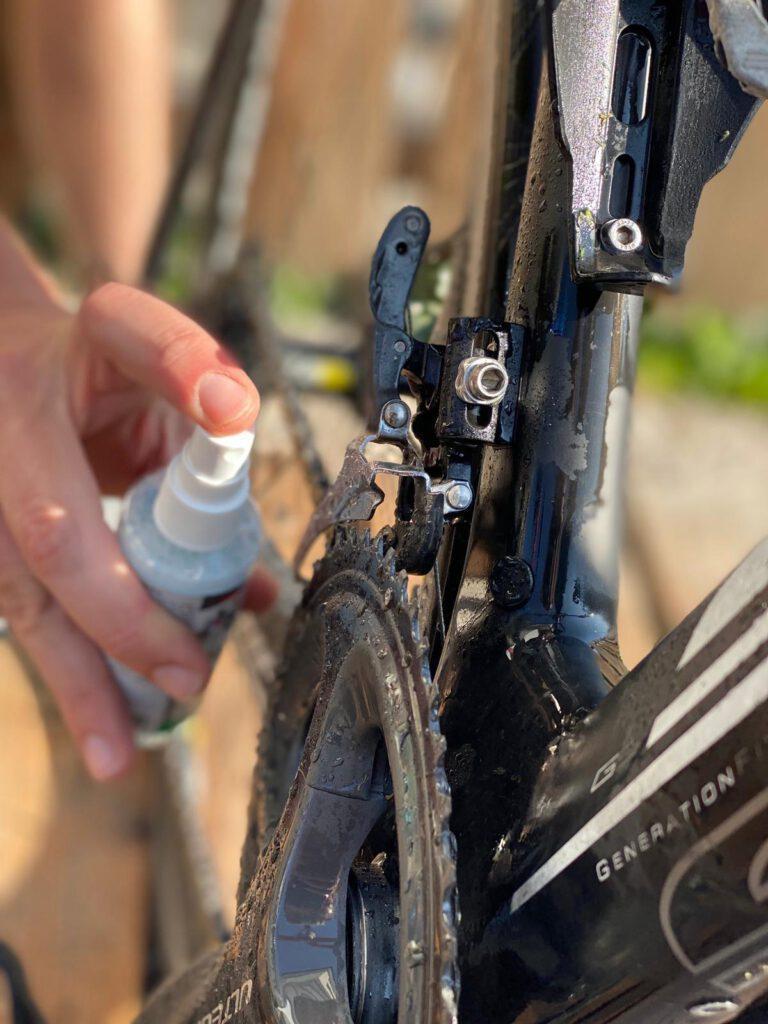
Nowadays, the general cleaning product almost always comes in a pre-mixed bottle that you can spray on your frame right away. Very convenient and that way you don’t have to mess around with ‘so much water and a cup of the product’ either. When you’re going to clean your bike, spray the cleaning product on the frame and, if necessary, on the rims of your wheels. That way your bike will be very clean.
4. Cleaning
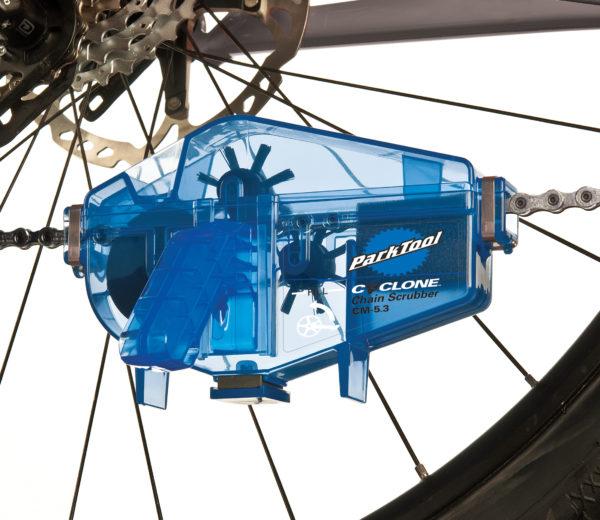
Now comes the real work: cleaning your bike. Start with the chain and cassette. To clean your chain and cassette, a number of handy tools are available to make cleaning them easy. First of all, you need the specific chain cleaner ‘boxes’. You put the cleaning agent in there, you attach it around the chain and then you can use a few turns to clean your chain almost completely. These chain cleaners are available to order at any major bike shop.
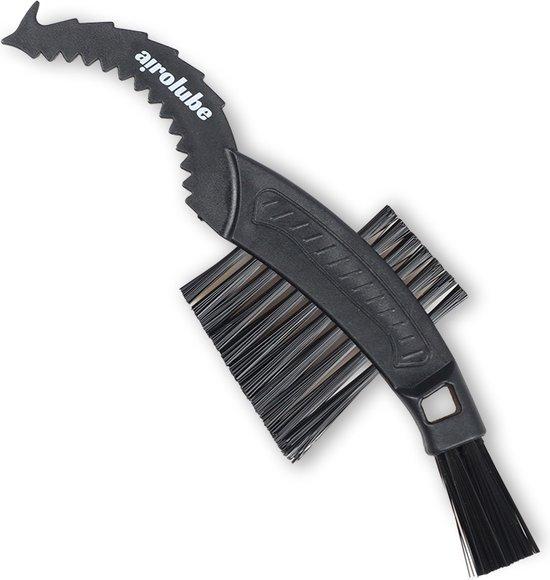
In addition, you have the specific chain brushes. They look a bit weird, but they are super handy. With long brushes to get to the hard-to-reach places and the curved hook with teeth on the other hand to remove dirt between your cassette as well as the dirt that has gotten on your small derailleur wheels.
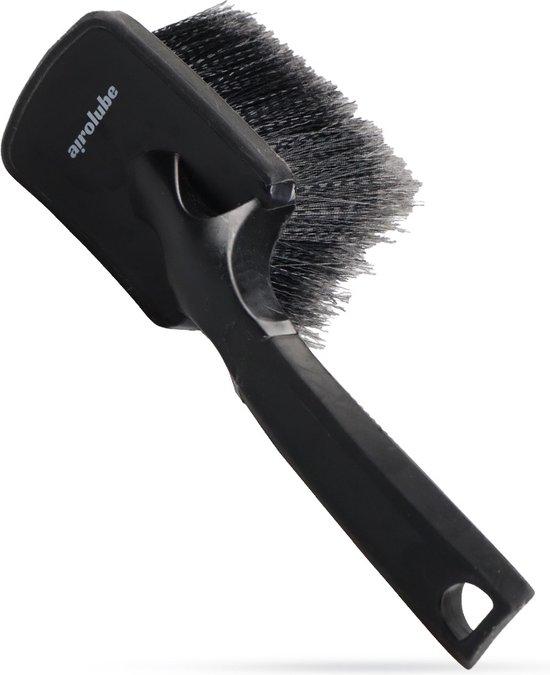
For your frame, you have larger, softer brushes in different types and sizes. Make sure you have a separate brush for your frame and one for your chain. When you clean your bike, the chain brush gets dirty and black. Then when you clean your frame, you get black streaks. That’s not only unsightly, but also bad for your frame. So clean with a separate brush or just with a soft sponge. That’s what the professionals do too.
It is important to thoroughly clean all the crevices of your bike. A tip from a friend who is a mechanic: spray some more with a compressor afterwards.
Rinsing and drying
Have you completely stripped the bike down and cleaned the chain and cassette as well? Then make sure to rinse the bike thoroughly. Preferably with a garden hose or a bucket of water that you slowly pour over it. If you have a pressure washer, be sure not to spray too long in one spot. After you have removed all the cleaning agent and dirt from the entire bike, the chain and cassette should then be washed. This is really important because there is still moisture left everywhere and as everyone knows: moisture -> rust. It is definitely worth taking the chain and cassette off ten times though. It is better to take the cassette off the bike for a moment and dry it in sections. That will also make it cleaner.
TIP FROM THE BIKE MANUFACTURER:
Put your bike inside overnight, especially if it’s wet and cold outside. Not dripping with moisture, but completely drained.
Invetten
After cleaning and drying, you still need to apply some oil to the chain. You can choose between wax or oil, whichever you prefer. Nowadays, it is more common to use oil. wax Used, but an oil for dry or wet weather can work just as well. The only real disadvantage of oil is that it attracts dirt. The advantage of oil, on the other hand, is that you can still lubricate the chain with a little dirt. When using Wax, the chain must be completely clean.
How much oil or wax should you use? A simple rule of thumb: one drop per chain link and then you make a circle around your chain. Then leave the bike standing for a while (preferably 24 hours) and then remove the excess wax or oil with a polishing cloth.
Top tip:
If you are going to clean your bike in these six steps, do it as soon as possible after your bike ride. In the summer you can probably get away with just wiping a cloth over your chain, but especially in autumn and winter cleaning is important.
Questions about cleaning your bike
Can you use washing-up liquid?
Better not: it can contain salt and washes the grease out of bearings and the chain. A dedicated bike cleaner is gentler on paint and rubber.
Oil or wax on the chain?
Oil is easy and works well in wet weather. Wax stays cleaner and lasts longer, but requires a thoroughly degreased chain to start with.
More practical tips are in our section: Tips.






Questions & tips
Do you have any questions about this route, or have you been there yourself? Share them here. We read everything and usually respond within a few days.