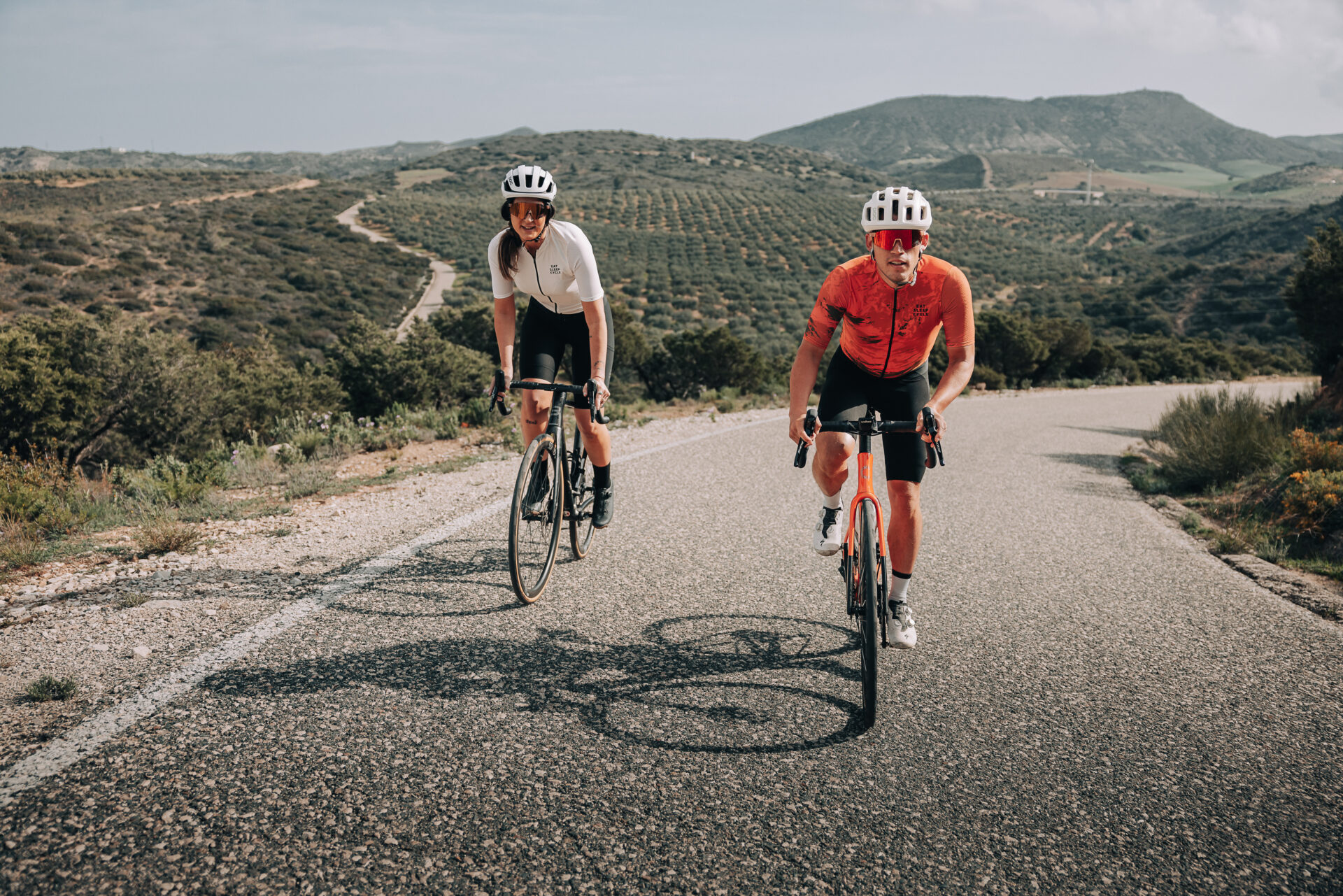
Andalusia is Spain's southernmost region. This region offers a mix of beautiful landscapes, challenging climbs and routes that take you through Spain's rich culture and history. Whether you want to head into the mountains or along the coast, explore the quiet of the interior or go down pretty villages, Andalusia has it all. Add to that the fact that with more than 300 days of sunshine per year is almost always great cycling weather! On this page you will find all kinds of tips and information so that you are prepared for cycling in Andalusia.
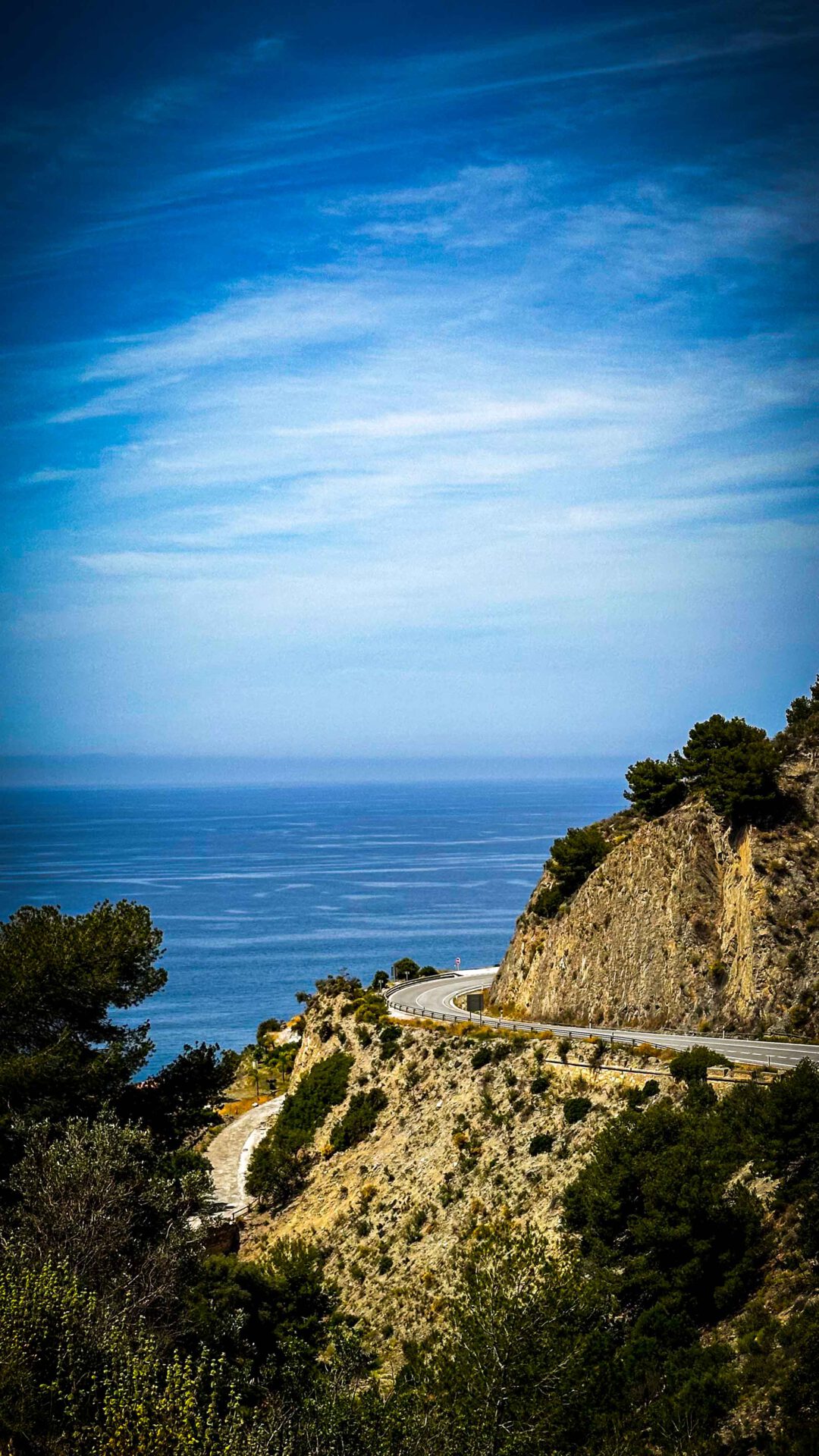
So where exactly should you be? The Sierra Nevada - in the Province of Granada - is an absolute must for climbers. Here you will find the Pico del Veleta, one of the highest climbable roads in Europe. For gravel lovers, the Alpujarras region amazing, with gravel routes taking you past beautiful white villages and through rugged nature. Don't forget the coastal areas too, such as the Costa de la Luz and Costa del Sol. Here you will again enjoy a totally different landscape with slightly flatter routes and sea views.
Historically and culturally, this region also has a lot to offer. In Andalusia you will find many historic sights. This region was once one of Europe's most developed areas. You can imagine yourself being transported through history as you cycle past small villages and Roman ruins such as Italica, just outside capital Seville. Or visit, for example, the Alhambra in Granada or the Mezquita in Cordoba. As you ride through picturesque streets, chances are you will hear the sounds of flamenco you encounter, a music and dance form inextricably linked to this region. In Granada, you can attend a flamenco performance on a free evening. A great experience.
Not to mention; there is nothing quite like settling down at a local tapas bar. There is no better and tasty way to replenish energy on the go!
Why do you want to go on a cycling holiday in Andalusia?
It hardly gets more Spanish than Andalusia. You can go on cycling holidays anywhere, but the amount of history and culture combined with insane landscapes; that is what makes Andalusia a special destination.
One of the reasons this region is so popular among cyclists is that the roads are very well paved and maintained. As a result, there are plenty of beautiful longer or shorter routes to be made. You can literally go in all directions.
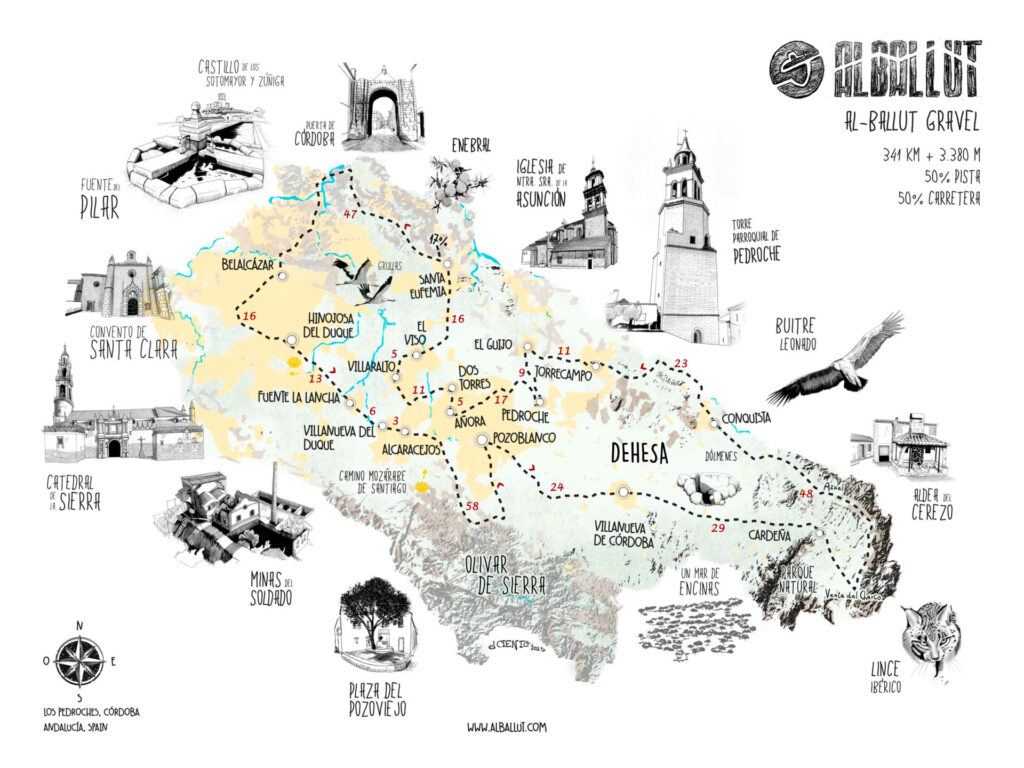
Besides the beautiful roads, you'll also find great gravel paths here. Badlands, the well-known event, starts and ends in Andalusia. Geoparque de Granada is a gravel mecca in that regard. The north of the province, near the border with Castilla-La Mancha, also hosts a beautiful route, Al Ballut-Gravel. A circuit of over 300 kilometres.
Beautiful undiscovered gravel routes can also be found near Malaga & the Costa del Sol.
Andalusia offers diverse mountain landscapes. In the north lies the Sierra Morena, with rolling hills and quiet roads, perfect for leisurely rides. Further south you come across the impressive Sierra de Grazalema encounter, known for its rugged limestone formations. For adventurous cyclists, the Sierra de Alhamilla ideal, with its desert-like views and challenging trails. The Sierra Nevada is Spain's highest mountain range, with the impressive Pico del Veleta. In the Alpujarras cycle through picturesque villages and green valleys, while the Sierra de Aracena in the north-west offers peace and quiet, with dense forests and charming villages. Further east lies the Sierra de Cazorla, a vast natural area with deep valleys and untouched forests. And around the town Ronda find the Serranía de Ronda, with dramatic cliffs and deep ravines. Between the mountainous areas, the landscape is flat to rolling.
Andalusia has a suitable area for every cyclist, whether you like long and steep climbs or prefer to cycle along rolling roads.
Want to find out more about cycling in Andalusia's Granada province? Here you'll find desert terrain as well as the Sierra Nevada. You will discover all about it on this page.
There is a suitable place to cycle all year round in Andalusia. In winter, many professional teams head to the coastal region to train. Further inland and in mountain areas such as the Sierra Nevada there is then snow. In summer, temperatures can soar to well over 30 degrees, with outliers to over 40 degrees around cities like Seville and Cordoba. During this period, it is better to head inland, into the mountains or highlands.
The best time to explore Andalusia by bike is in spring or autumn when you really want to see a lot of the region, such as the higher mountain areas. In winter, Andalusia is perfect for training.
Andalusia has several bike-friendly hotels. As many cyclists come to train in this region, many hotels are set up for cyclists and in many cases bringing your bike in the room is no problem. Contact the hotel in advance to make sure.
Looking for accommodation near Sierra Nevada, Granada and La Alpujarra? Then Hotel Impressive Playa Granada Golf Motril a good choice. This Bike Friendly hotel not only offers a nice and safe place to store bikes, but also has a workshop with spare parts and a washing area. This hotel is a perfect base to cycle beautiful routes, both road and off-road.
Length: 42 kilometres
Altimeters: 2772 metres
Average gradient: 6,5%.
Starting point: Granada
Description: The climb to Pico del Veleta is a tough one! This is the highest paved road in Europe. The road passes through beautiful mountain scenery. The last 24 kilometres have an average gradient of 7%. As you get higher, the landscape becomes increasingly rugged. The view from the summit offers panoramic views of the surrounding mountain ranges, on a clear day you can even see Africa. Note; the last kilometre to the summit has deteriorated tarmac, but you can still ride the climb on a road bike.
Length: 13.4 kilometres
Altimeters: 847 metres
Average gradient: 6,3%
Starting point: La Calahorra
Description: The climb to Puerto de la Ragua starts with a gradual ascent through pine forests and rural landscapes. The steepest section is halfway up, with a gradient that rises to 10% for several kilometres. In the colder months, this is one of the climbs where snowfall is less likely.
Length12.7 kilometres (from Valdepeñas de Jaén)
Altimeters: 966 metres
Average gradient: 7,3%
Starting pointValdepeñas de Jaén
DescriptionThe climb to Sierra de la Pander has several variants. This is the most well-known, starting in Valdepeñas de Jaén. It starts quite steeply with gradients averaging 8-9 percent. 4.5 kilometres from the summit, you'll find the toughest kilometres, with two kilometres averaging above twelve and thirteen percent. The summit is at 1832 metres, so there's a risk of snow in winter.
DescriptionGravel enthusiasts who haven't heard of the “Badlands” event may have lived outside the social media bubble. That's not a problem. Badlands is a beautiful, ultra gravel race event. There's an audience for that. But Badlands takes place in the Geopark of Granada, where you can also go gravel riding on your own. If you're in Granada anyway, this is a trip and a day or two or three on the gravel bike more than worth it.
DescriptionThis is a relatively unknown, but very well-documented route north of Cordoba, which takes you through the 17 villages of the Pedroches region in 350 kilometres. The landscape is very diverse, and as you cross the different areas, from imposing castles, such as the one in Belalcázar, to winding paths with stone walls, you'll be riding through the largest contiguous oak grassland in all of Europe. It is also the place where the Iberian acorn-fed pig is bred.
DescriptionThe region north and north-east of Malaga is beautiful for gravel biking. Especially the Sierra de Tejada, which is also part of the larger Sierras de Tejeda, Almijara and Alhama Natural Park, where you can also ride beautiful routes from the Costa Tropical, including the Goat's Path. In this environment, you'll find magnificent, remote gravel routes where you'll definitely need to bring plenty of water. Because apart from a stray animal, you won't see a soul here.
Description: You can find pilgrimage routes all over Spain. The most famous is, of course, the Camino de Santiago, but in Andalusia you'll finde Paths of Passion. It is a beautiful, culture-rich pilgrimage route in Andalusia that connects 10 magnificent cities. For gravel enthusiasts, there is a special 339-kilometre-long gravel variant of the GR 341 route, which runs from Alcalá la Real to Utrera and goes right through the heart of the provinces of Jaén, Córdoba and Seville. A picture!
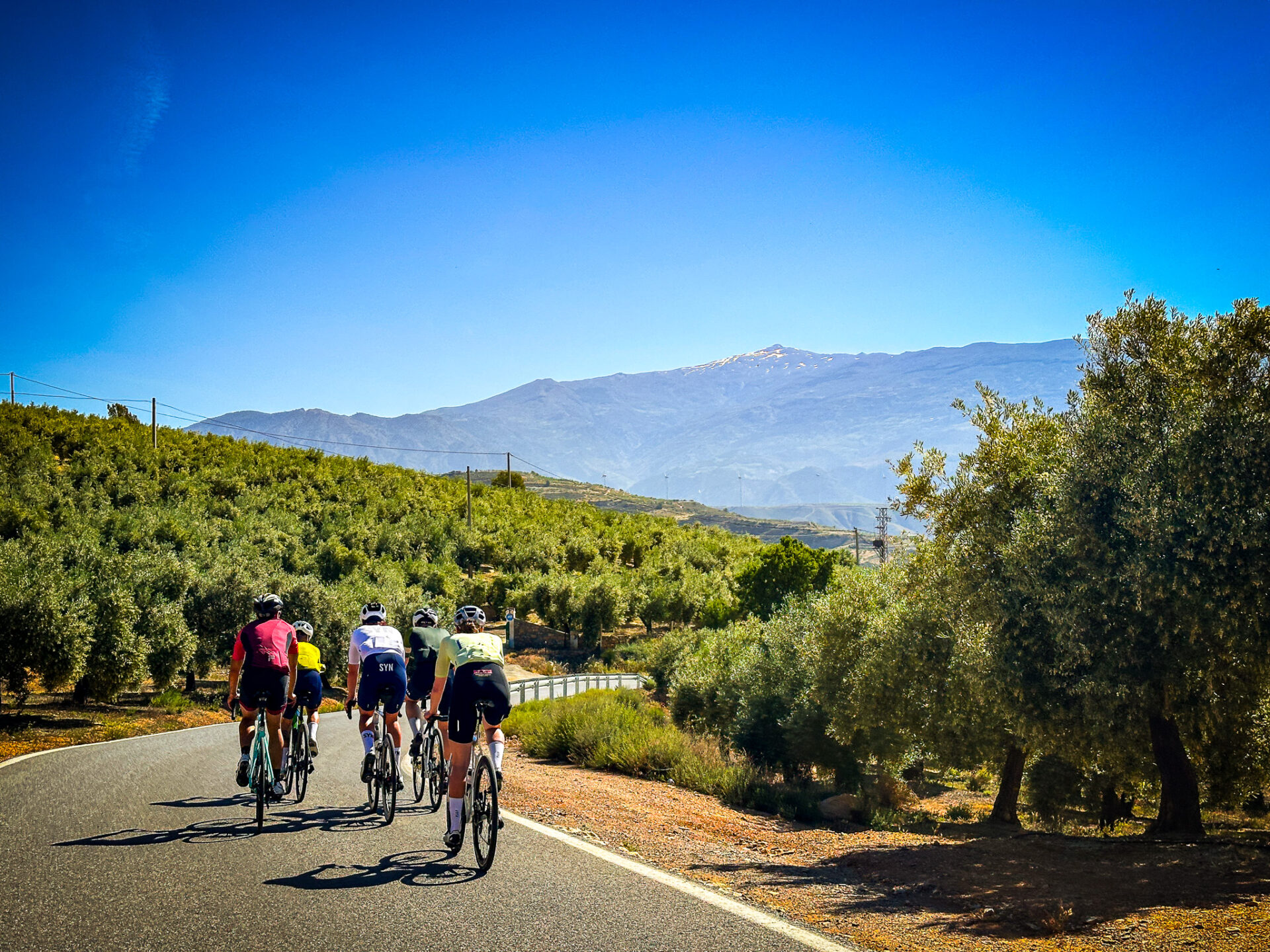
Naturally, Andalusia has a number of unmissable cycling routes. We have placed a few on our Komoot page (see below). Both gravel and road bike routes. But Andalusia is so vast, there is so much more to discover!