
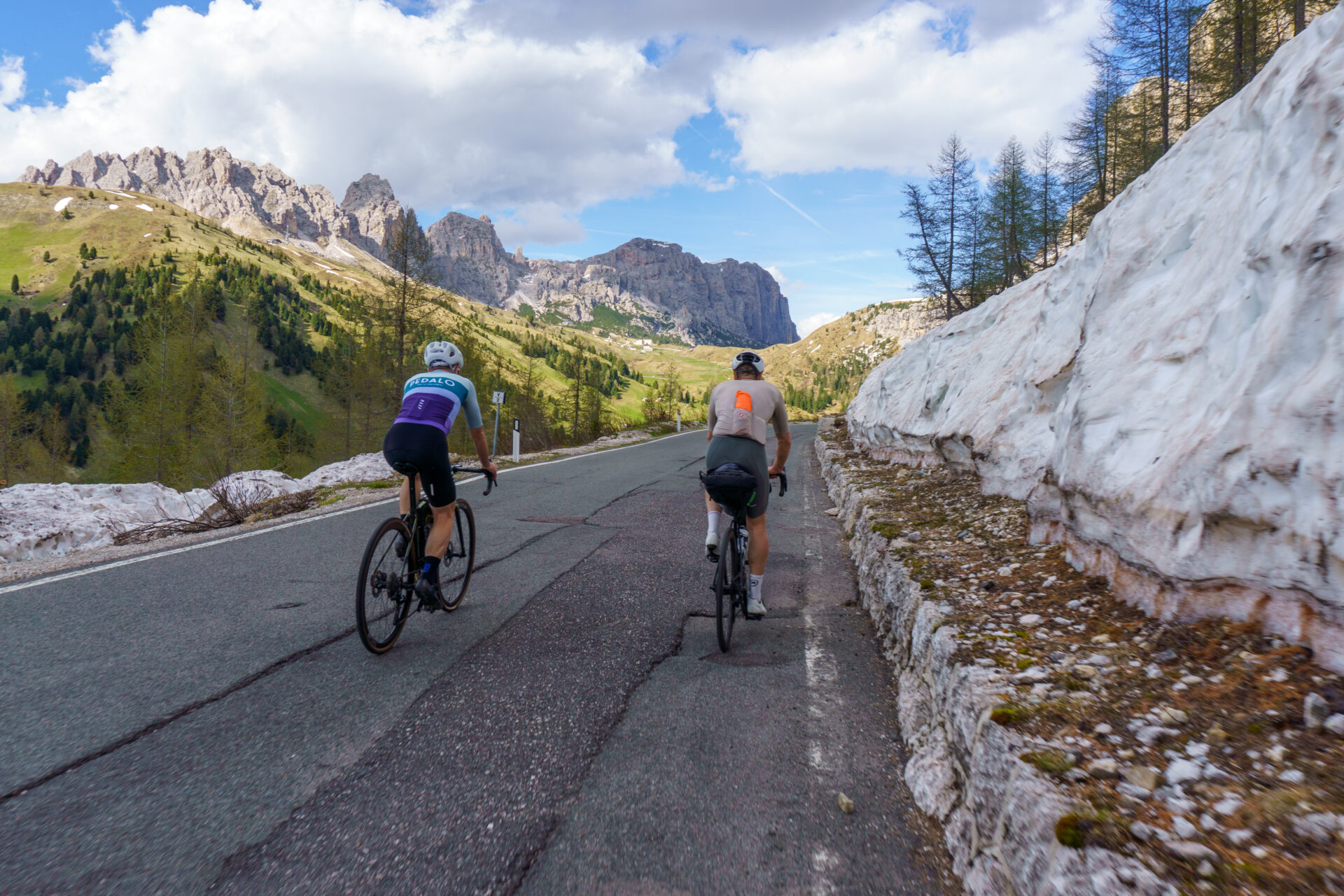
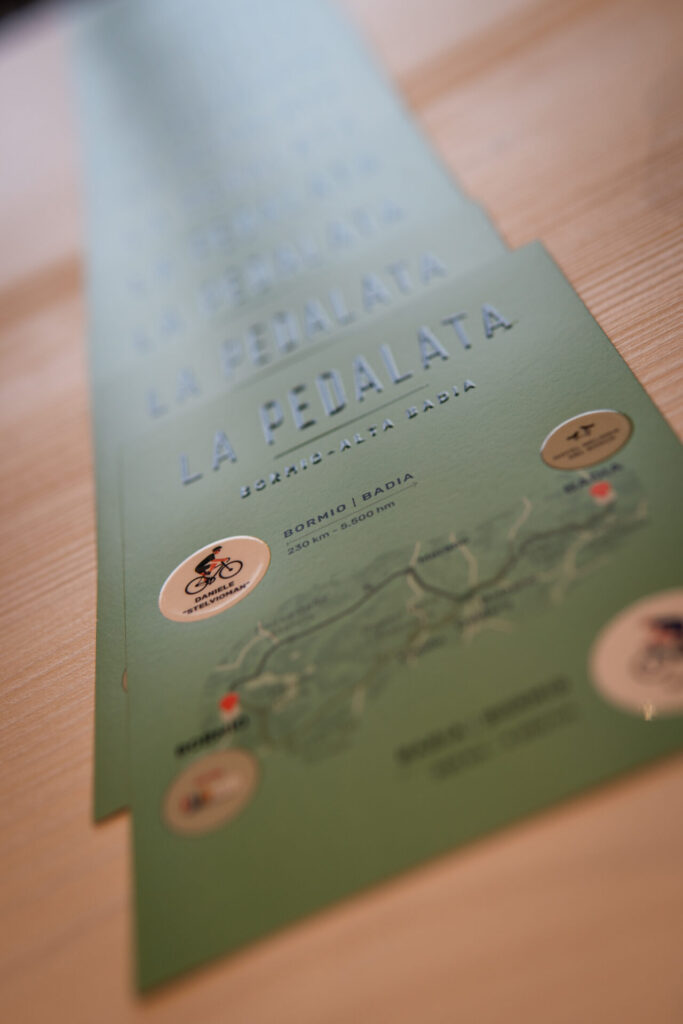
It’s the end of May and we’re ready to head to Bormio. We’ve been watching the weather reports with great anxiety over the past few days from the Netherlands. The program includes a four-day bikepacking trip from Bormio, over the Giro trails, to Alta Badia in the Dolomites and back again. La Pedalata Lieve. Where Lieve stands for lightweight. That means: all the gear in a saddle bag, a frame bag and a top tube for some extra gear, a power bank and finally a handlebar bag for other things like a camera and a charger. That’s it.
The puzzle starts at home: what do I take with me and what do I leave at home? The mountain weather is unpredictable at this time of year. Cold and heat alternate rapidly. In the end, I don’t take too much with me. But is it enough?
Text: Erik Doorenspleet / Amateurfietser.nl – photos: Adam Kolarski/Erik Doorenspleet
Saving weight is the golden tip
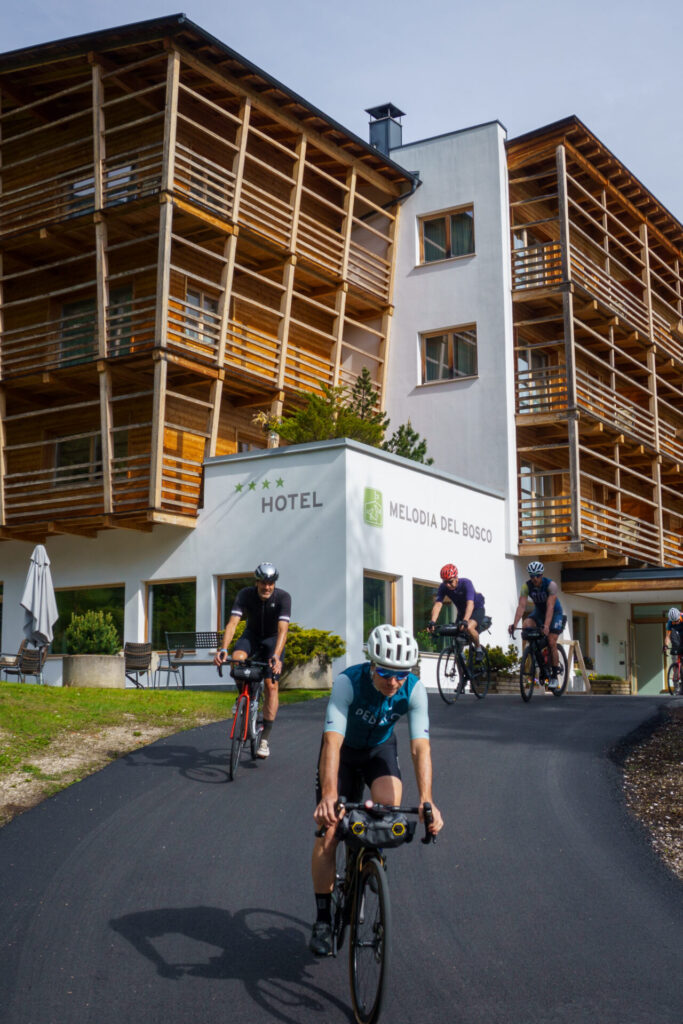
In Bormio, Daniel Schena (aka Stelvioman) from bikehotel Funivia Bormio and Klaus Isara from bikehotel Melodia del Bosco in Alta Badia are ready to warmly welcome us. These men exude passion for cycling, the area, and hospitality. They are our tour guides for the coming days. The evening before departure we receive the briefing. What we already suspected turns out to be true: the Gavia and the Stelvio are missing from the routes. Last week there was still a meter of snow and these peaks are impassable. The fun is not diminished. We receive our bags and the packing begins. The gentlemen advise us to save weight. I go through my belongings again and decide that I can leave behind a T-shirt, some toiletries, and my flip-flops. Time for a good night's sleep.
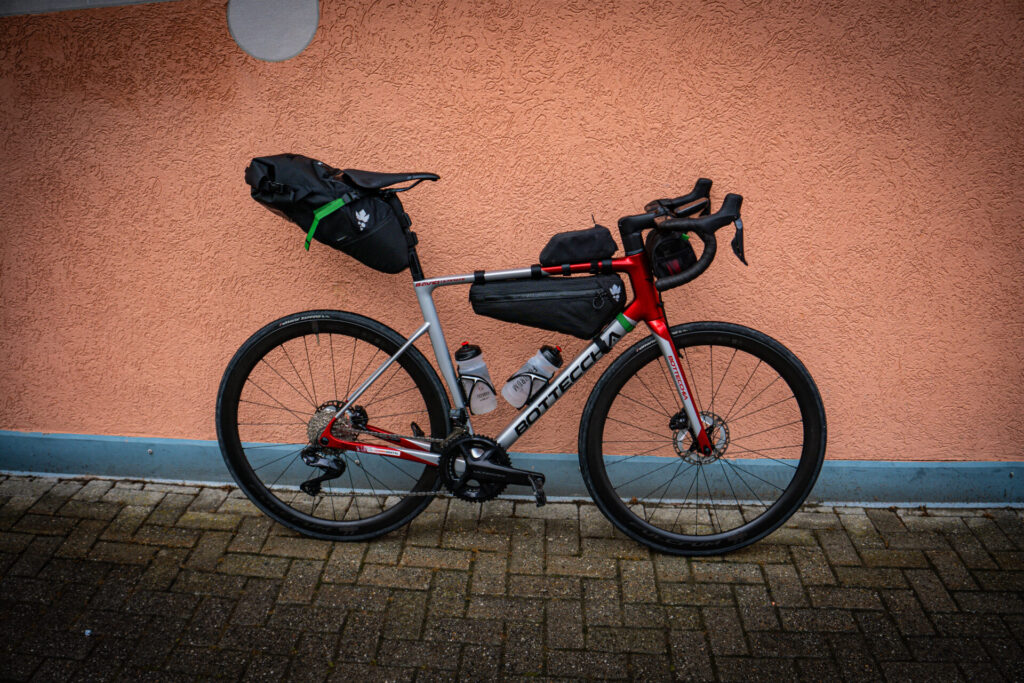
Rain with buckets from the sky
Day 1: Bormio – Malosco 137 km 2868 meters elevation gain
The next morning I wake up a bit nervous, open the curtains and see a dark sky with buckets of rain falling. After a good and hearty breakfast and one last espresso, we set off around 10 a.m. in a colorful company of Italians, Swedes and Danes for our first leg of this four-day trip: from Bormio to Malosco. A 137 km long stage with 2868 meters of elevation gain. A solid start for a first day, especially given that there are actually too few spring kilometers in the legs.
Go go
“Vai vai” is the starting signal for this cycling adventure. We make our way around in a leisurely manner towards Grossio for the first climb of the day: the Mortirolo. Mythical and terrifying at the same time. Fortunately, we take the “gentle” route, but the gradient of between 7 and 12 percent immediately makes it clear that this is serious mountain work. There is no waiting for each other; everyone rides at their own pace up the stream of rain. As a fervent rain rider, I enjoy it: the temperature is good and my investment in “expensive” rain gear pays off immediately. Riding in the low-hanging clouds also gives the climb a mystical feel. It’s as if you are alone in the world. I digest the first climb well and descend with good morale for the climb from Ponte di Legno to Passo Tonale.
Cold at the top of the Passo Tonale
We are practically alone on the road at this time of year. Despite the pouring rain, I enjoy the nature and the mountains. On the left and right, the last remnants of snow from the winter sports season lie scattered, and wild animals graze on the forest edges. It is cold above at Passo Tonale. We are shivering to find warmth at the local inn. The homemade lasagna tastes excellent and helps to warm us up again. After this well-deserved break, we descend. We see the first sunrays peeking through the cloud cover; will it still be okay today? One last gentle climb to Malosco, our overnight stop today. These kilometers are also beautiful, along endless rows of fruit trees against the backdrop of snow-capped peaks. Tired, exhausted but satisfied, we settle down for a well-deserved dinner according to a traditional (but secret) Italian recipe.
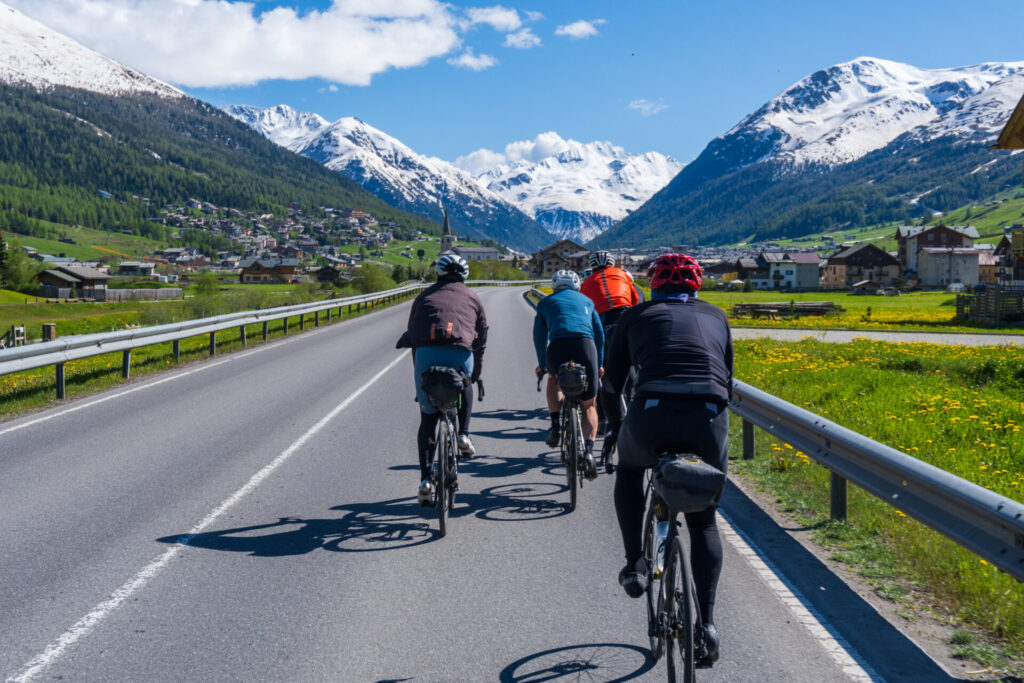
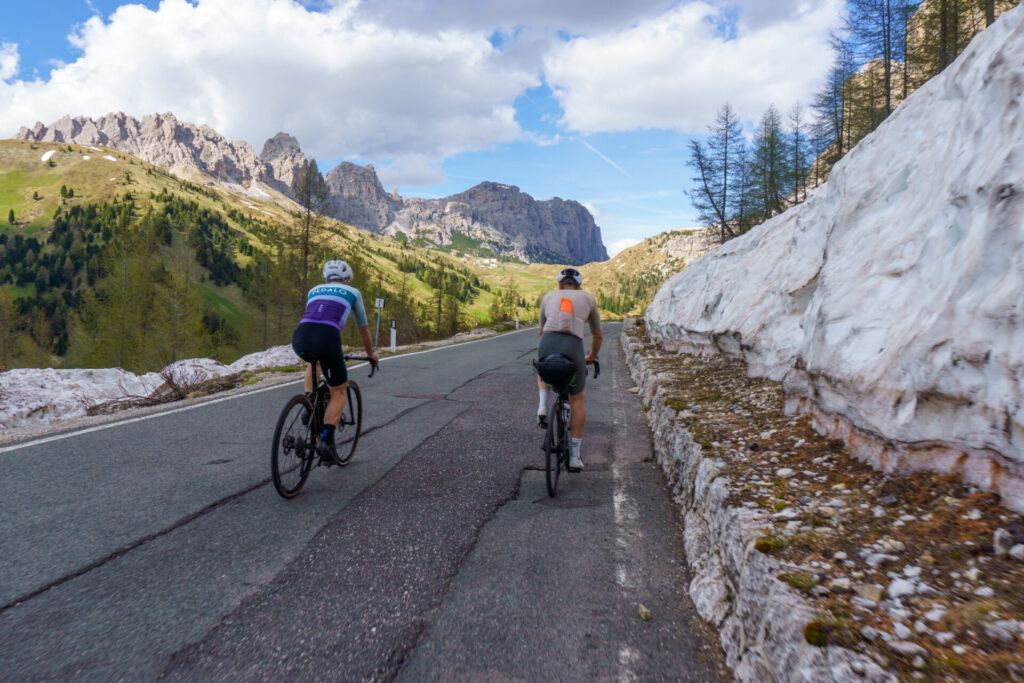
The Italian hinterland
Day 2 – Malosco to Alta Badia – 111 km, 2260 meters of elevation gain
A greater contrast with yesterday is almost impossible. A clear blue sky and a pleasant morning sun immediately warm the muscles. The first climb is the Passo Mendola from Fondo. From this side it gradually rises and is not difficult. In the descent to Caldaro I see how passionate Italian cyclists are. Apparently this is an ideal Sunday climb for the Italians who live in the region. Gazeable and tight in the massage oil, a stream of cycling enthusiasts steadily climbs up. Sometimes on a classic Bianchi but mostly on beautiful Italian Carbon. Style and design are appreciated.
Through a network of bike paths, we glide between the grape vines and fruit trees to Bolzano. It is warm here, almost summerlike. The ideal place for a welcome coffee break with homemade tiramisu on the terrace overlooking the Duomo. La dolce vita This certainly applies here.
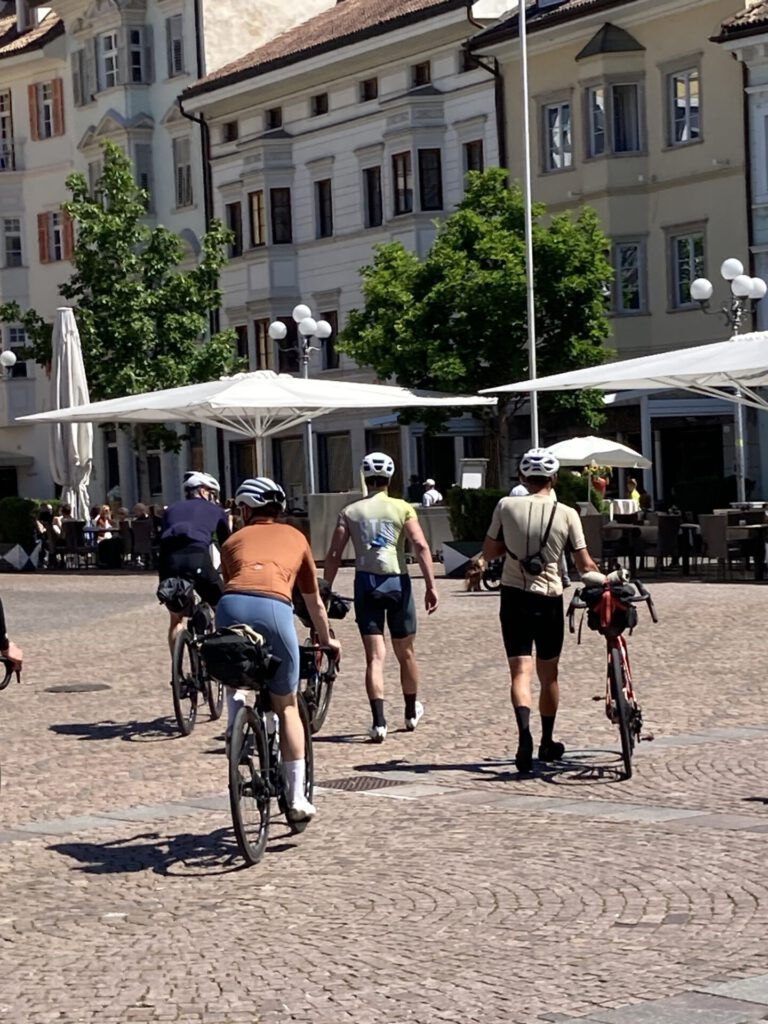
Energy boost in Bolzano
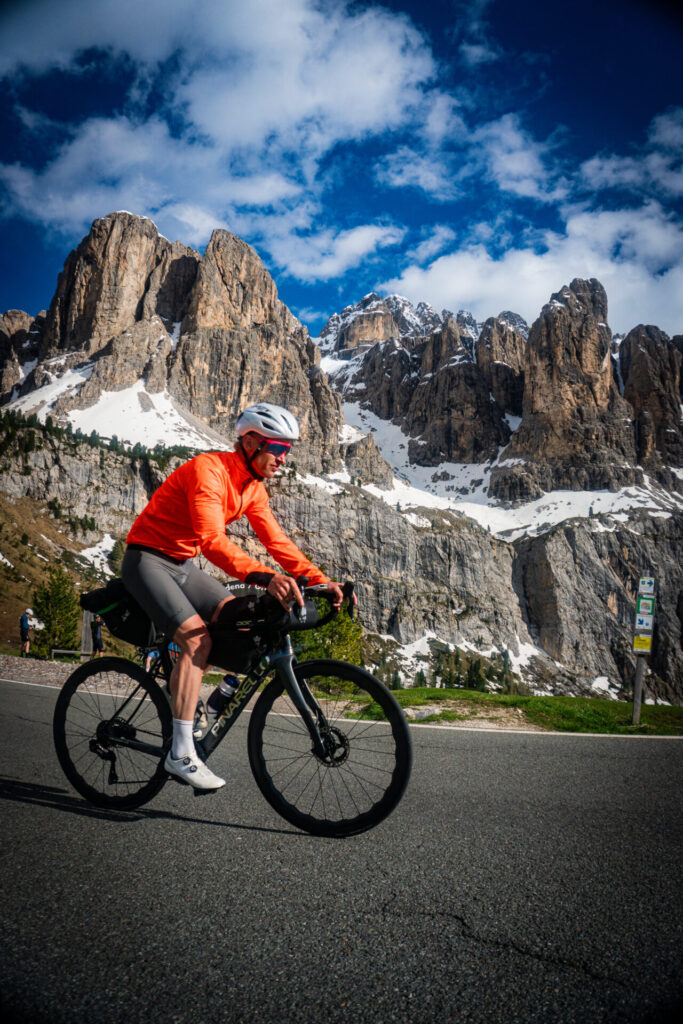
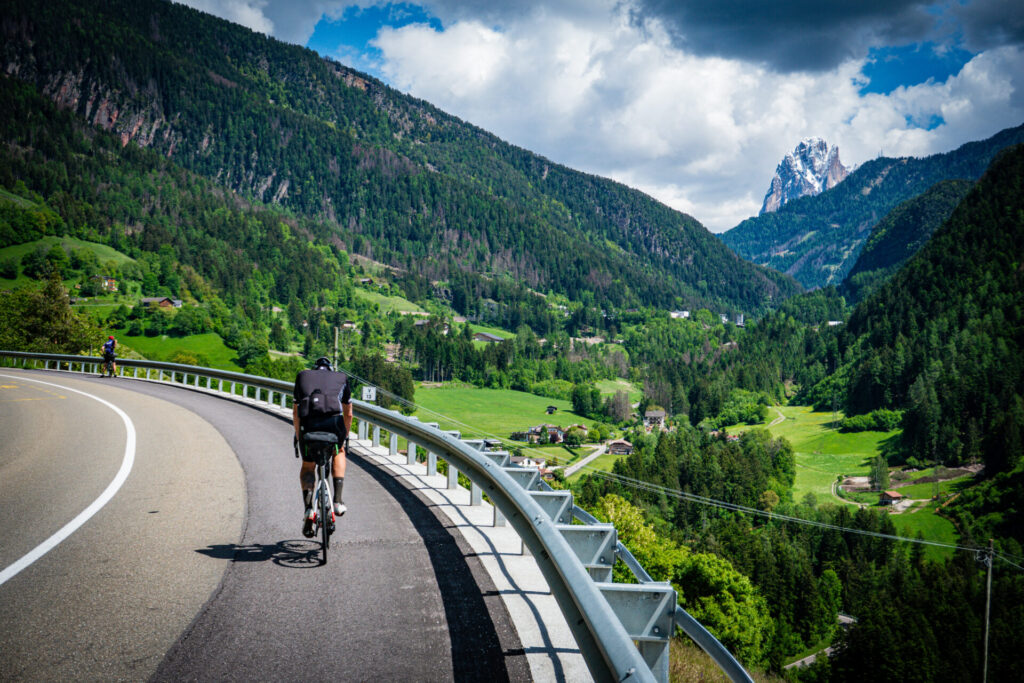
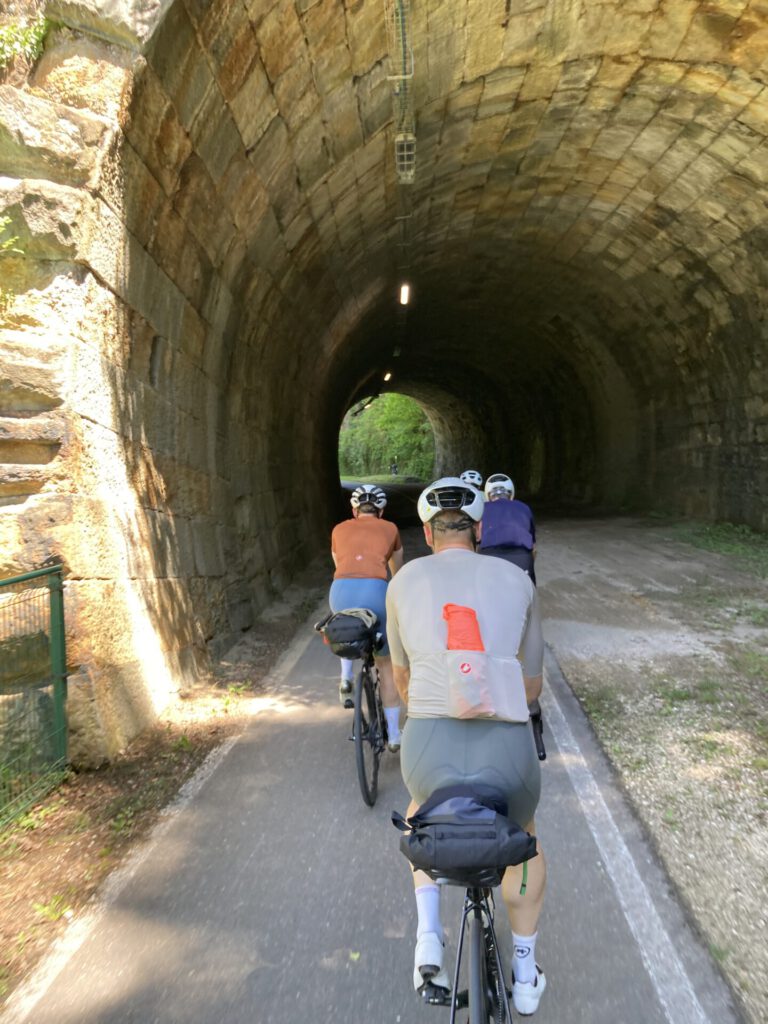
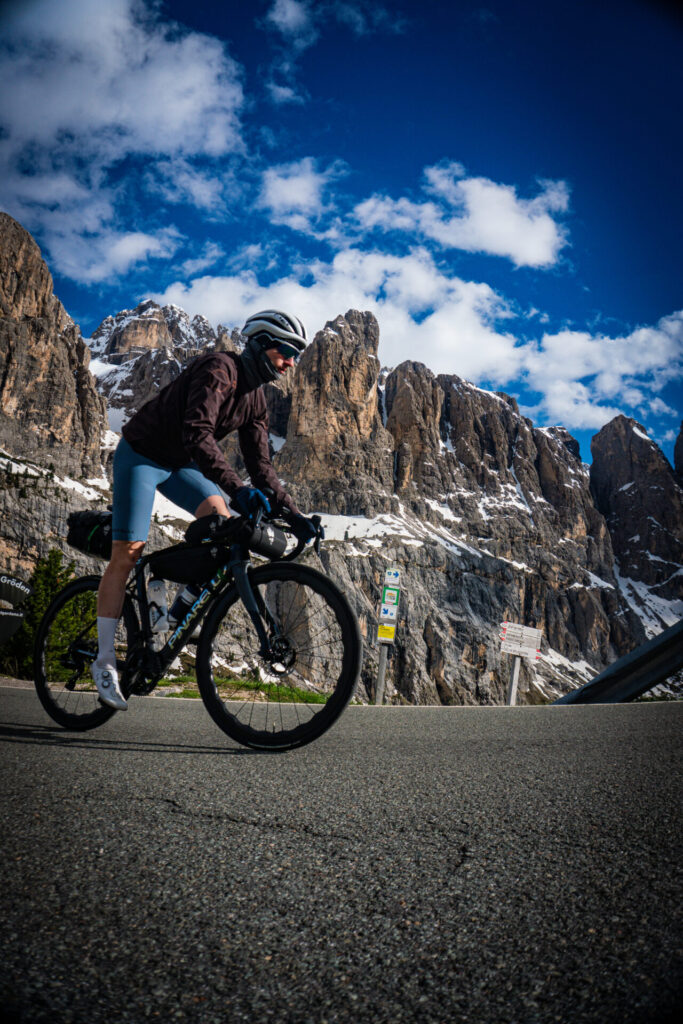
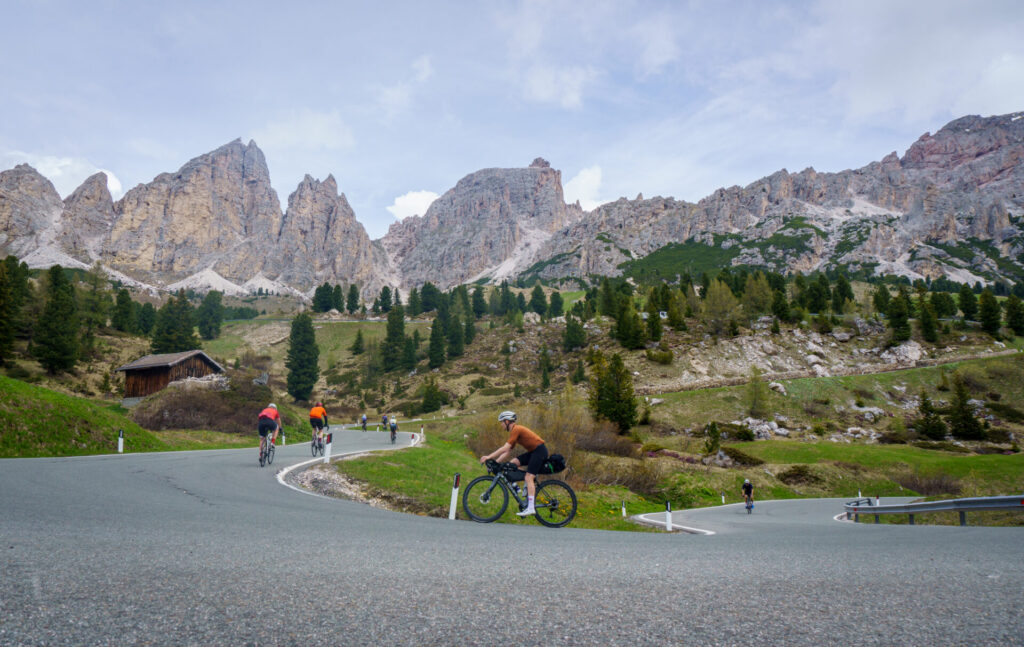
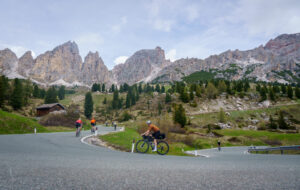
With this energy boost, we drive via an old but now paved railway towards the Dolomites. I calculate that we have to climb at least 65 kilometers. From flat ground to a maximum of 9 to 10%. It’s not a punishment. Slowly, the unique mountain landscape of the Dolomites unfolds. After every bend, the Sassolungo gets bigger and bigger. This majestic mountain peaks everywhere. In Ortisei, I fill my water bottle at the village fountain for the final kilometers of today’s climb. On to the top of the Passo di Gardena. It’s my first time in the Dolomites and I enjoy the breathtaking scenery to the fullest. Steep rock walls between which the road slowly winds up. I get completely still.
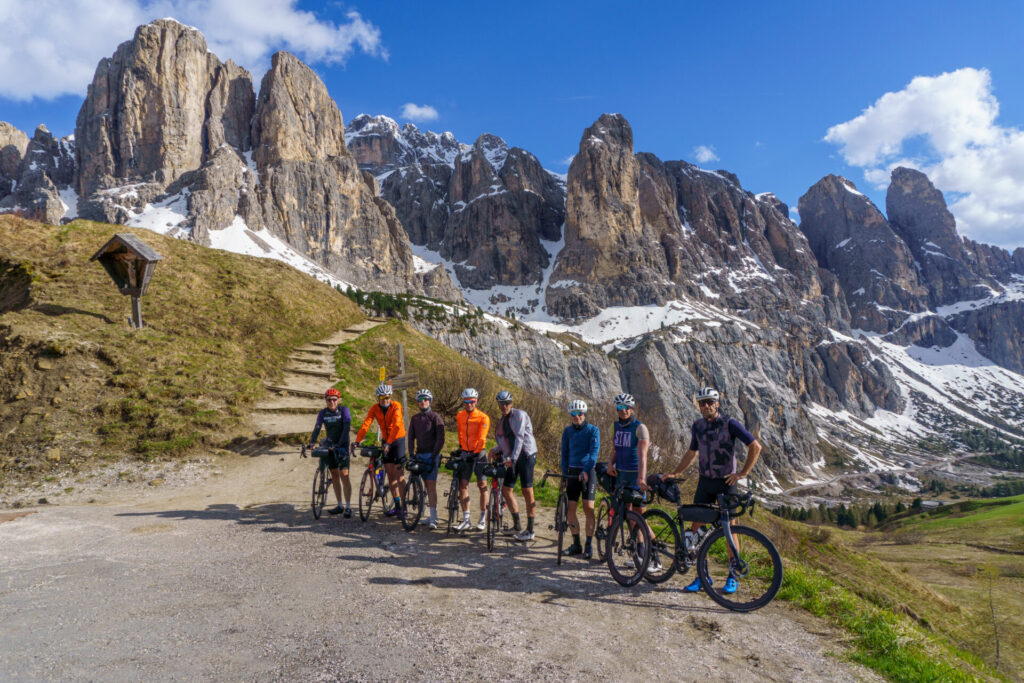
At the summit, I take a moment to absorb the landscape and am sure this is not the last time I will cycle here. After a wonderful descent to Alta Badia, we welcome bikehotel Melodia del Bosco owner and tour guide Klaus. From my super deluxe room, I enjoy a well-deserved warm bath while the setting sun casts a characteristic orange-red glow over the Dolomites. What more could you want?
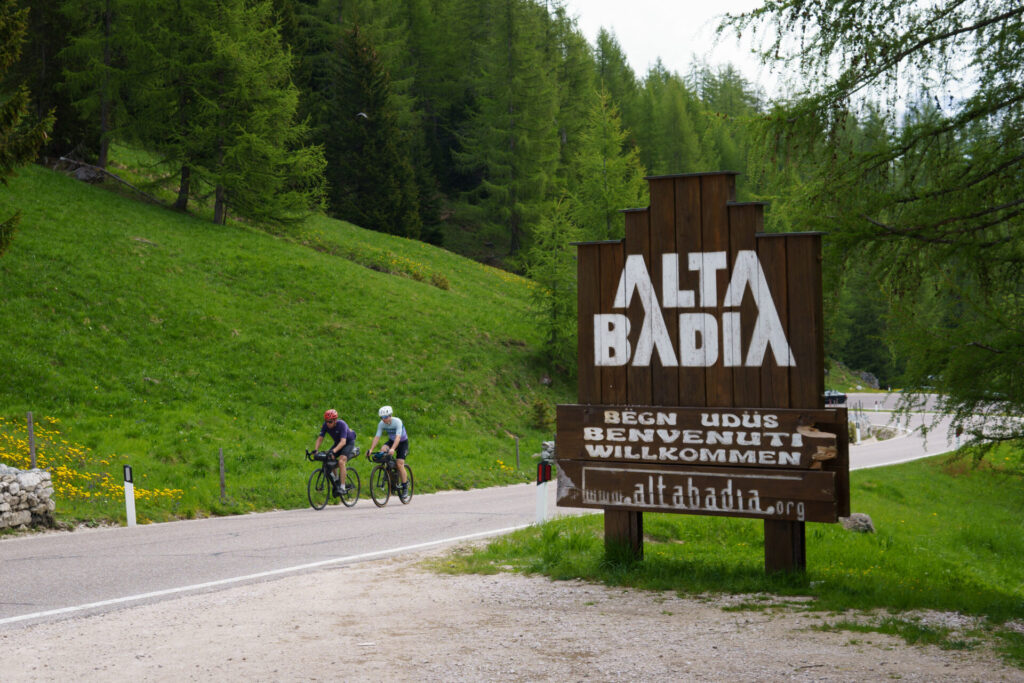
Through the Middle Ages
Day 3 – Alta Badia to Merano – 103 km, 1240 meters of elevation gain
After the delicious cycling breakfast, I put the bags back on the bike. That’s getting easier and easier for me. I realize that with very little luggage – I think a total of no more than 6 kilograms – you can cycle La Pedalata under almost any weather conditions. Provided you have the luxury of staying overnight in hotels. The laundry service in the bike hotels also helps in this, of course. That way you can wear a freshly washed set of cycling clothes every day.
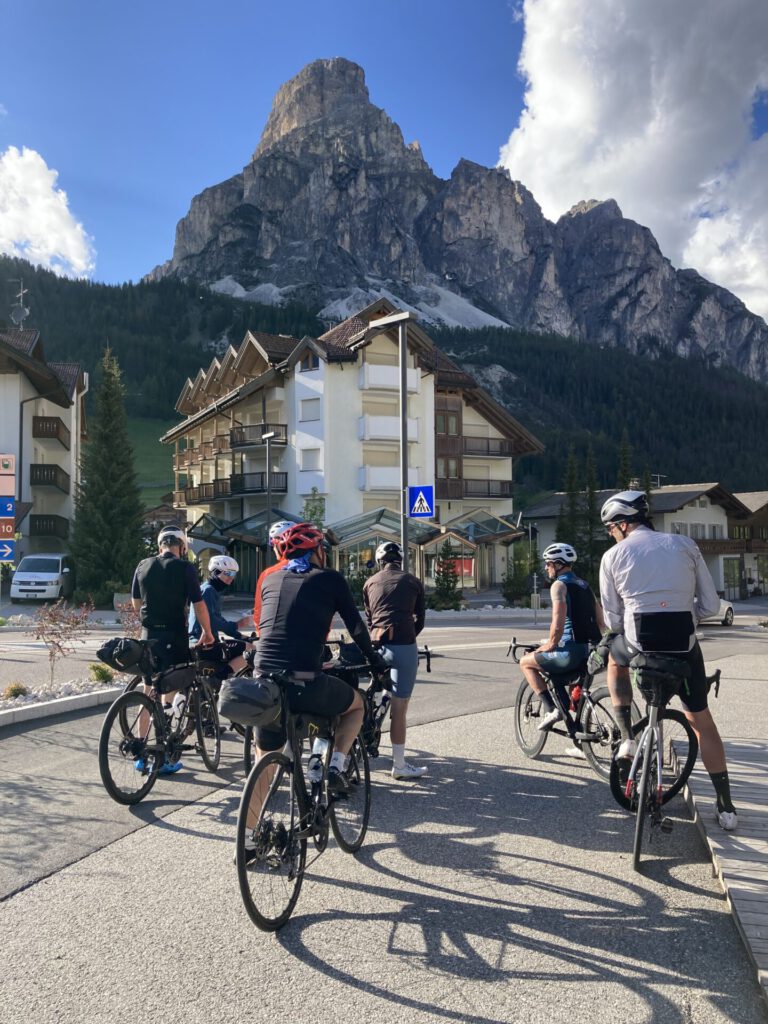
Once again the Passo Gardena
“Fresh and fruity” we climb the Passo di Gardena again, but now from Corvara. Right away the hardest climb: 8.8 kilometers long at an average of 6.7%. That hurts a bit at the beginning of the day. It’s wonderfully quiet in early June. In the summer months it seems to be crawling with motorcycles, oldtimers and other holidaymakers who pollute the air. I enjoy the rapidly following hairpin bends of this mountain pass and slowly see the valley of Alta Badia and Corvara disappear below me. The descent to Selva di Val Gardena lends itself to a lightning-fast descent. I choose to squeeze the brakes regularly and slow down for a moment to enjoy the Sella Massif even more.
Passo pinei
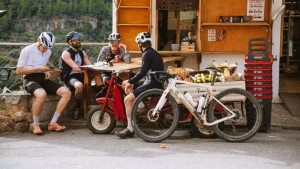
From Ortisei we climb the Passo Pinei. Short but powerful, I might add. From kilometer two on, my Garmin’s percentage increases regularly above 10%. Fortunately, this is pretty much the last tough part of the day. Kastelruth – or Castelrotto in Italian – cannot be missed. This medieval village is beautifully situated on the slope of the Seismer Alm. We park our bikes as knights against a castle wall and enjoy a well-deserved espresso in the sun.
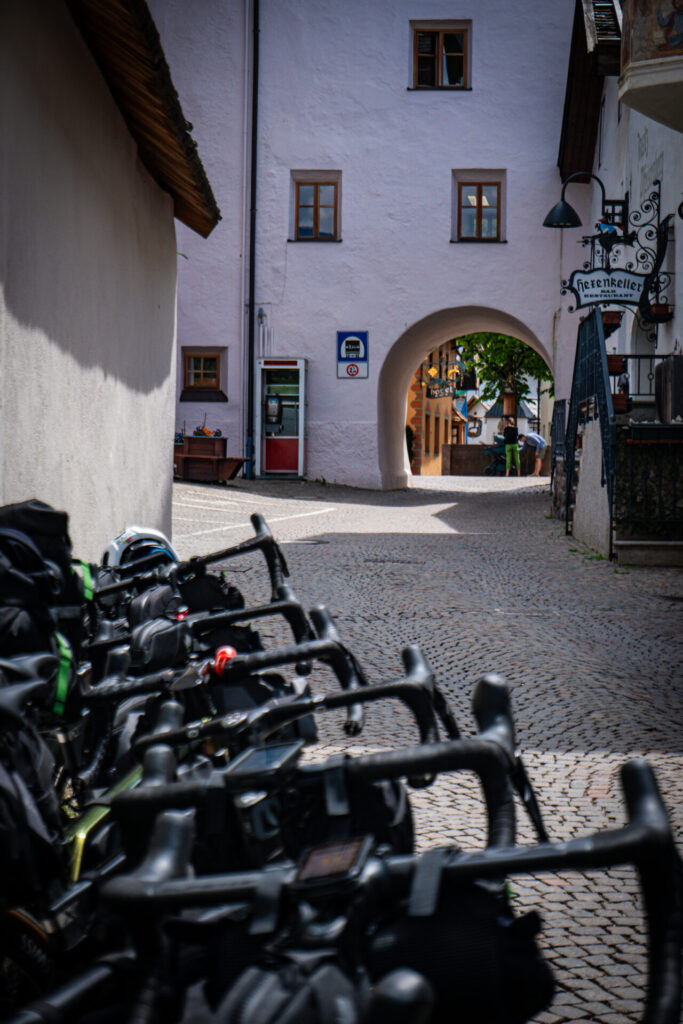
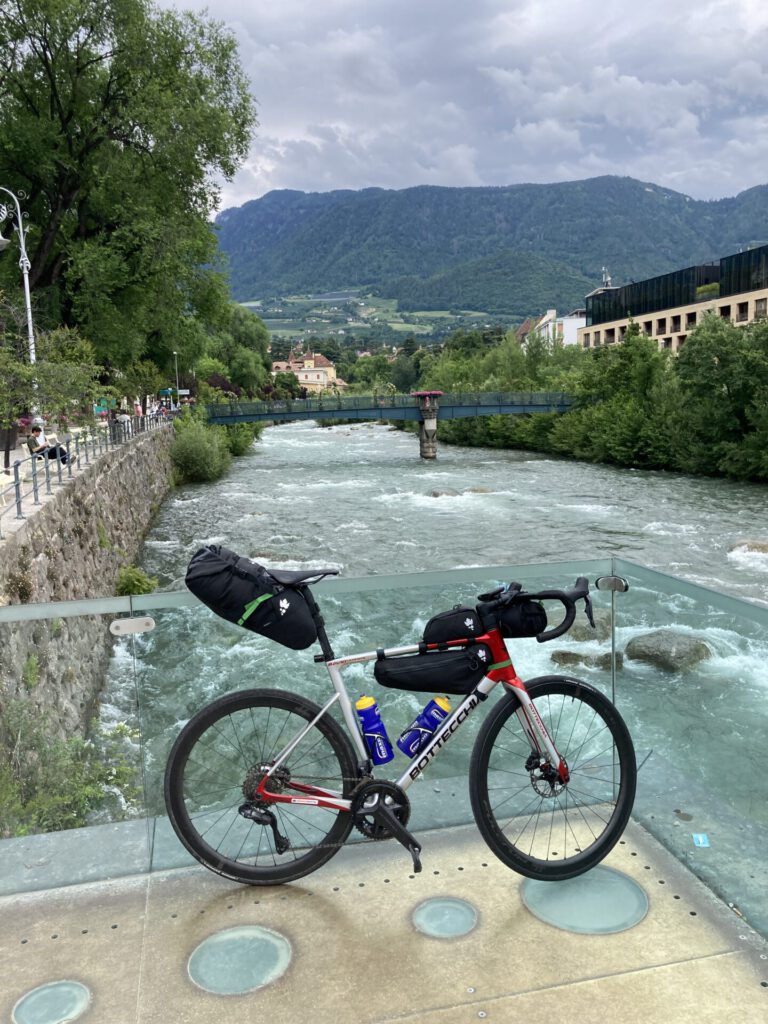
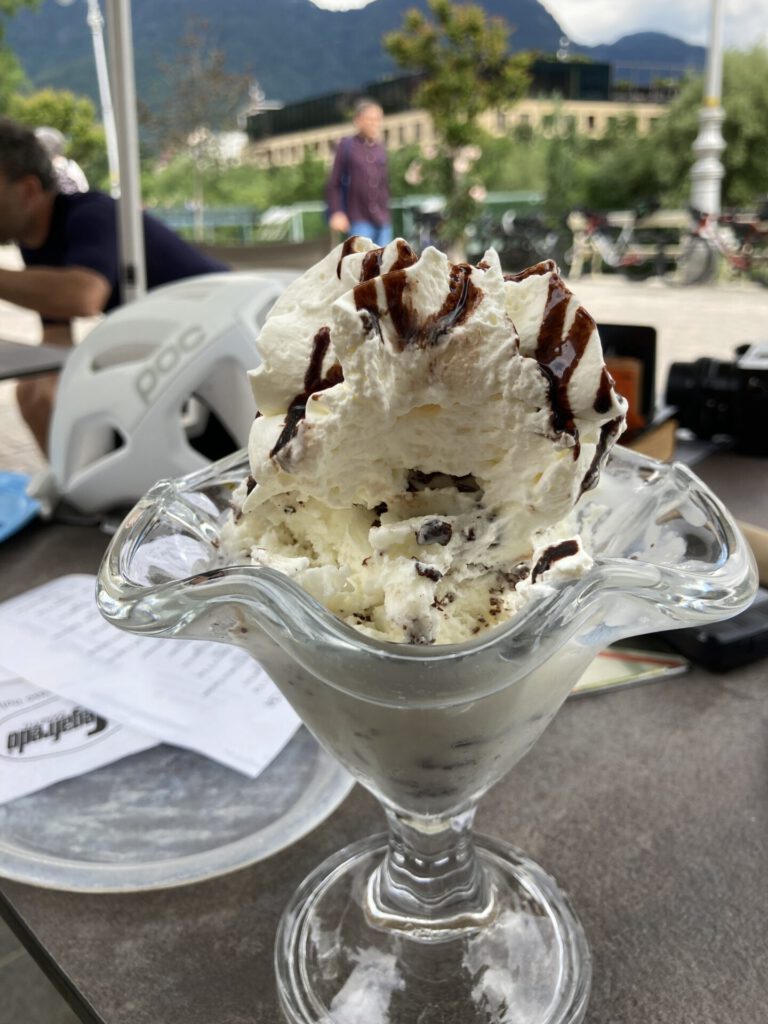
From Kastelruth it is mainly downhill to Merano. After all that wind and rain over the past few days, it certainly wasn’t a bad thing. I am also surprised by the network of cycling paths in this stage. Almost everywhere there are good cycling paths through the valleys and the ancient villages are connected to each other by paved, quiet country roads. Via a beautiful path along the Adige river we reach Merano. Just like in Bolzano, you can also see the Southern Tyrolean and Italian influences here. On the river that runs through the city, I enjoy a well-deserved ice cream.
Queen interior
Day 4 – The Queen of Merano to Bormio – 148 km, 2947 meters of elevation gain
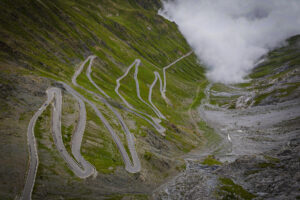
Unfortunately, the Stelvio Pass is still closed from Prato due to abundant snowfall and avalanche danger. Normally, this is the highlight of the bike tour. Fortunately, I have already cycled the Stelvio several times before. I actually find the “bypass” just as good an idea. It gives you a different perspective. Incidentally, there are 120 kilometers of climbing on the program today… and although not always quite steep, it is serious legwork on day four..
By Switzerland to Livigno
From Prato we take the road to Mustair, the Swiss part of the route. The Val di Mustair is beautiful. Now that the snow has disappeared, spring has sprung. Fragrant flower fields on both sides of the road stimulate the senses in a way other than the delicious Italian dishes that we were able to taste everywhere. With a five percent increase, the Ofenpas is surprisingly good for me at the beginning. I forget for a moment the many altitude meters I already have on my feet. Until kilometer eight, the percentages rise again to 7 to 8%. I decide to drive at my own pace and enjoy once again a beautiful landscape. That at least somewhat eases the pain.
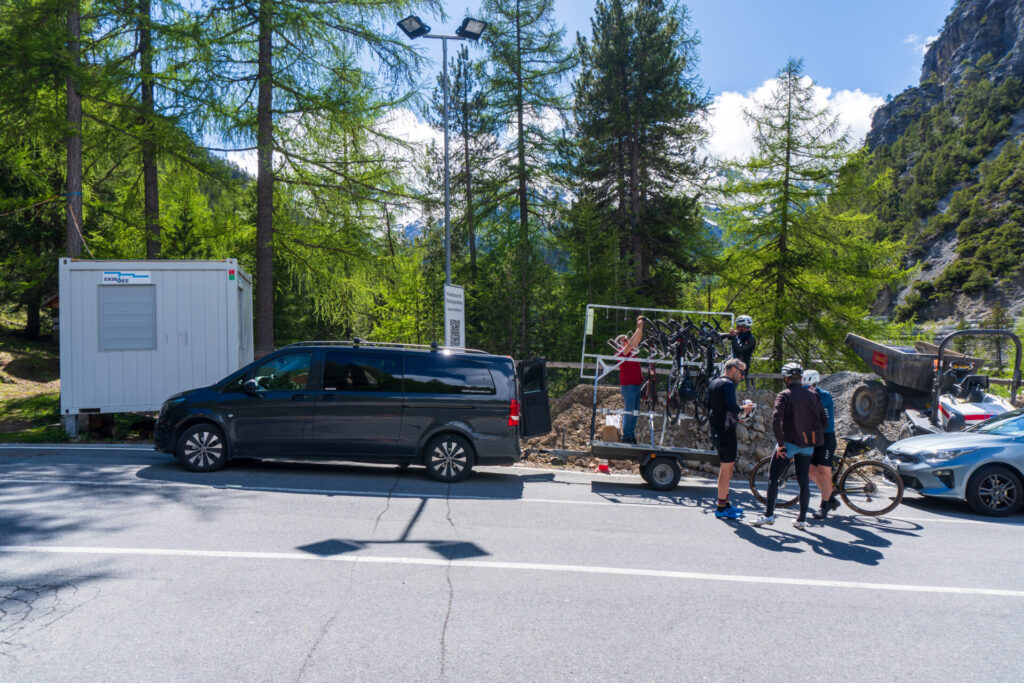
Once we are above the pass, we follow a wonderfully straightforward descent over billiard-mat-like asphalt towards the tunnel towards Livigno. The Munt la Schera tunnel is a one-way tunnel between Switzerland and Italy. Cycling through the tunnel is not allowed, but fortunately there is transport arranged. The bikes are on a special bike trailer; I myself get into the van and after almost four kilometers we are back in Italy.
Head over Head
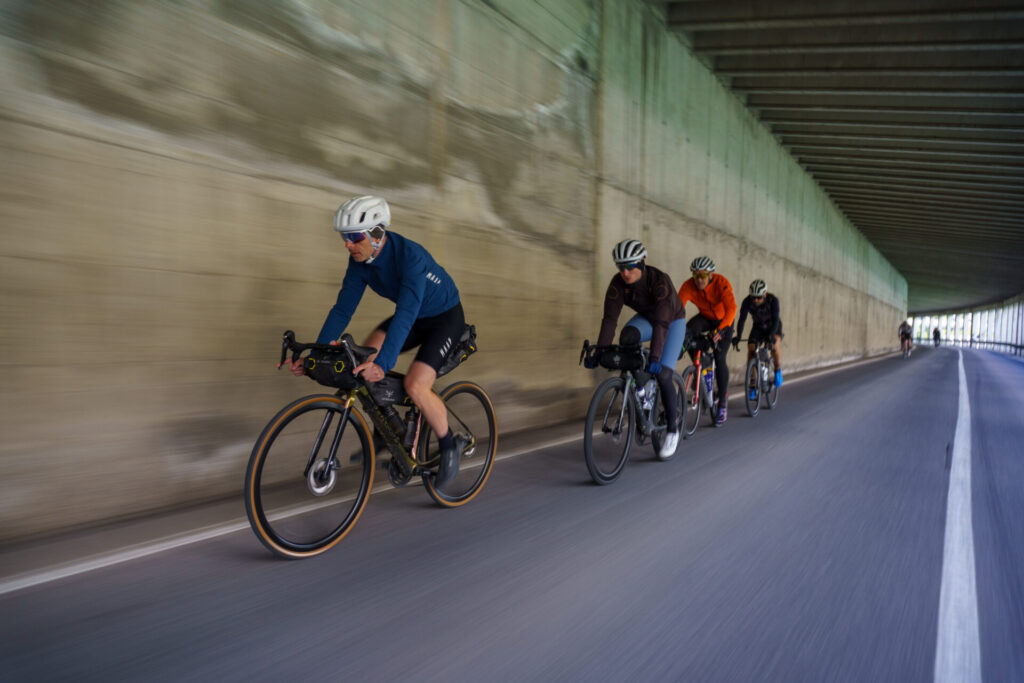
We then drive head-on through the semi-open tunnel along the lake of Livigno. On to the final climbs of the day: Passo d’Eira and Passo Foscagno. The view of the still snow-covered mountain peaks and glaciers never gets boring. And when I also see marmots darting along the final climb, my La Pedalata Lieve experience is complete.
One last descent. I catch a glimpse of the hotel where Annemiek van Vleuten laid the foundation for her many victories. On to Bormio. We finish at the rustic and medieval market square of Bormio and toast with a glass of beer on our four-day luxury bike tour. La Pedalata Lieve? La dolce vita!
Practical
La Pedalata is an initiative by Daniel Schena from Bikehotel Funivia in Bormio and Klaus Isara from Bikehotel Melodia del Bosco in Alta Badia. Although this is a four-day trip, an extension of the number of days is definitely recommended. One or two extra days in Bormio and Alta Badia bookings are very worthwhile. This allows you to incorporate a possible rest day or do the other beautiful climbs from both starting points. Shorter stages and an extra stop make it accessible to a wider cycling audience. Excellent bicycles can be rented on site. On request, there are also Miss Grape bikepack bags available. In the Netherlands offers Amateur cyclist.nl We tailor this trip to individual and group needs.
Questions & tips
Do you have any questions about this route, or have you been there yourself? Share them here. We read everything and usually respond within a few days.