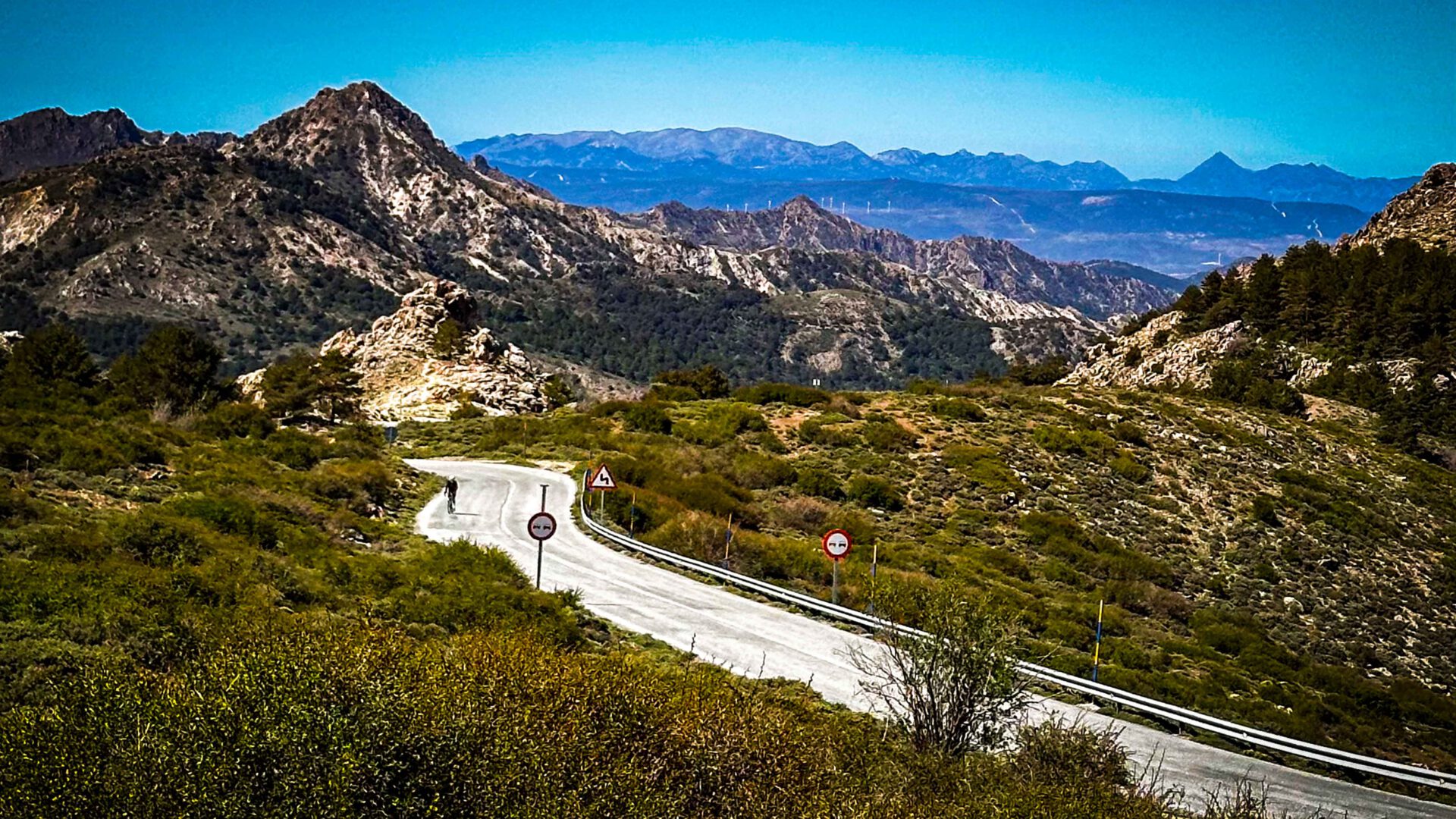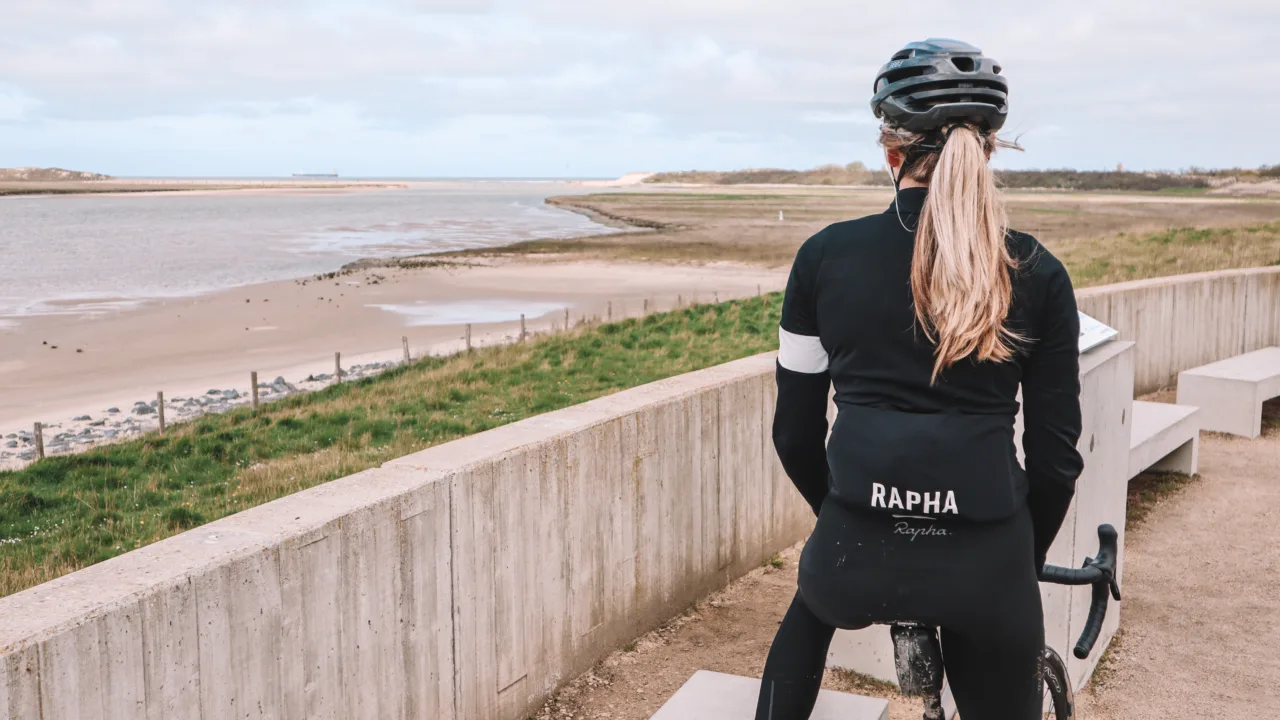
Forget the busy coastlines; you'll find the real, authentic Spain inland. In terms of landscape, Spain is one of the most diverse countries in Europe. One moment you find yourself in flat steppe landscape, only to be in green hills a dozen kilometres further on. And it's not just the landscape that's diverse; the rich history and clearly visible Christian, Islamic, and Jewish influences have shaped cities and villages you can wander around in endlessly. You'll find most of the culture, varied landscapes, and best gravel paths in Castile-La Mancha.; gravel paradise From Spain.
Castile-La Mancha, the authentic interior of Spain
There's a good chance that the region of Castile-La Mancha doesn't mean much to you yet. Yet, you probably know the medieval city of Toledo and the world-famous white windmills from the novel Don Quixote. Both are located in this region. An area that is twice the size of the Netherlands, but has only as many inhabitants as the Dutch province of Gelderland.
Castile-La Mancha occupies the southeastern part of the interior of Spain. The region lies directly to the southeast of Madrid and extends to the regions of Valencia and Andalusia. The landscape is mostly flat to rolling, so you hardly realize you are on a huge high plain, between 600 and 1000 metres above sea level.
Step into the story of Don Quixote in Ciudad Real
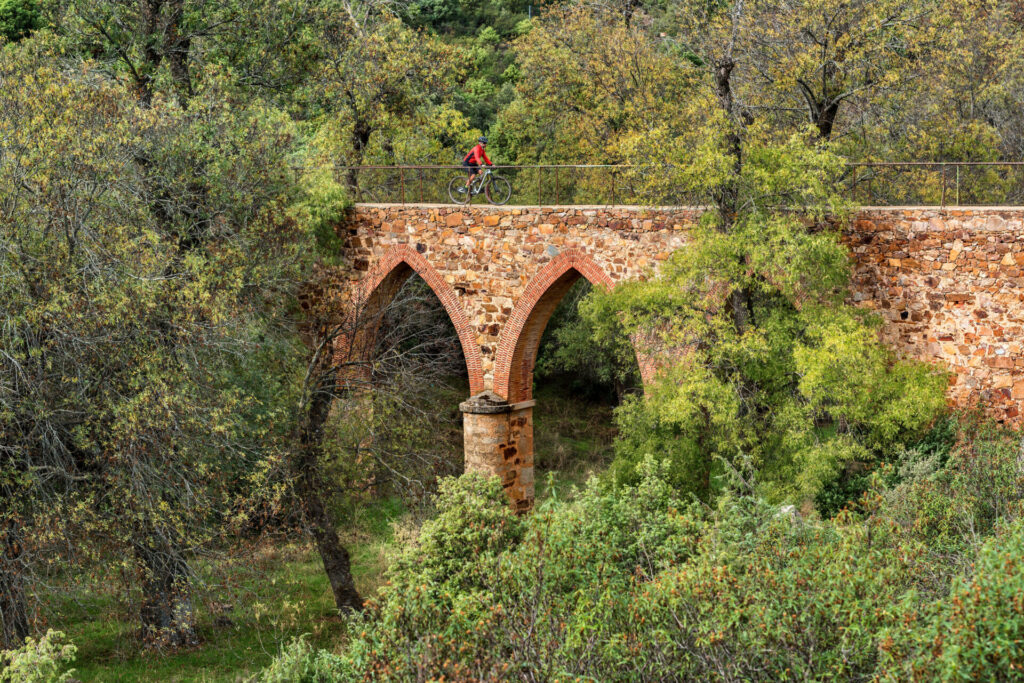
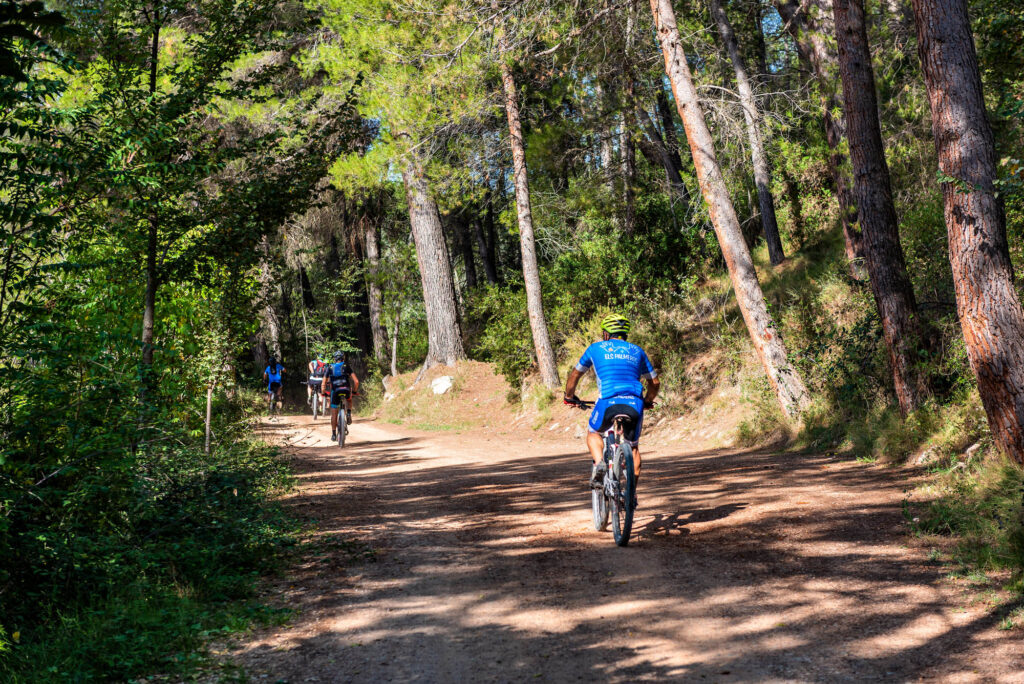
Hop on your gravel bike in Castile-La Mancha and literally follow in the footsteps of the knight-errant Don Quixote. The author of the world-famous novel, Cervantes, based the story on existing locations from the region that you can still visit today. For example, the legendary confrontation with the ‘giants’ took place in Campo de Criptana. The white windmills are still standing there on the hill, three of them dating back to the 16th century. One hundred kilometres further on, in the city of Ciudad Real, you'll see various statues and a museum dedicated to the iconic duo, Don Quixote and his squire Sancho Panza.
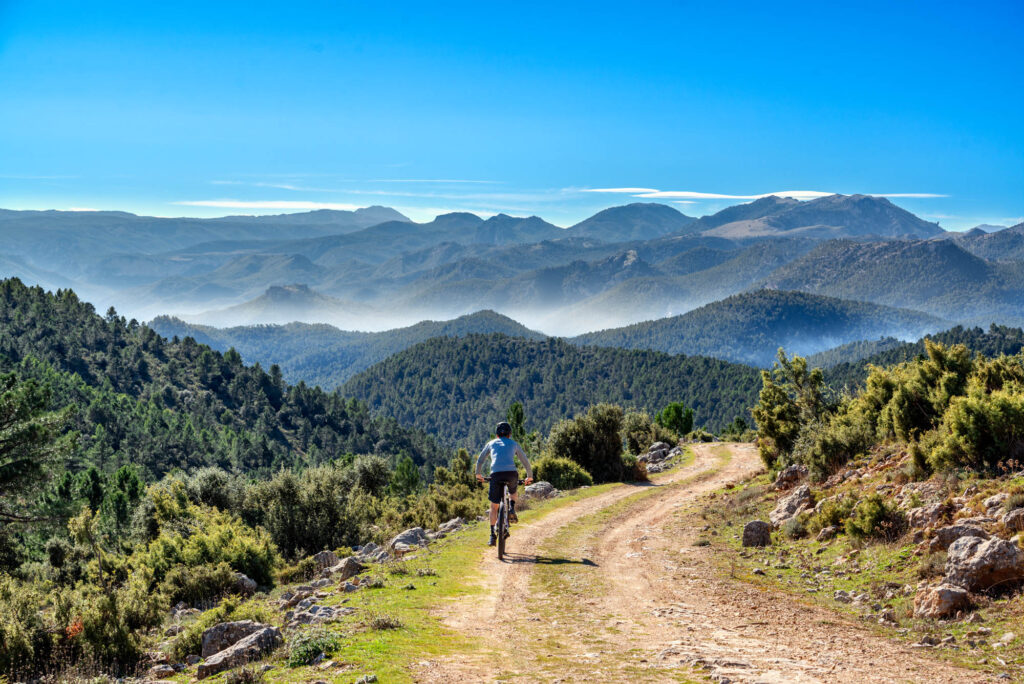
Gravel biking in this area is fantastic; the network of unpaved roads is enormous. The Spanish call this clues (wide gravel tracks for agricultural vehicles) and Livestock droving routes (historic shepherd's trails). The landscape in the provinces of Ciudad Real and Albacete – the setting for the novel – is relatively flat, with straight, dusty paths. You’ll cycle right through olive and vineyards here, passing beautiful castles, such as Castillo de Calatrava la Nueva.
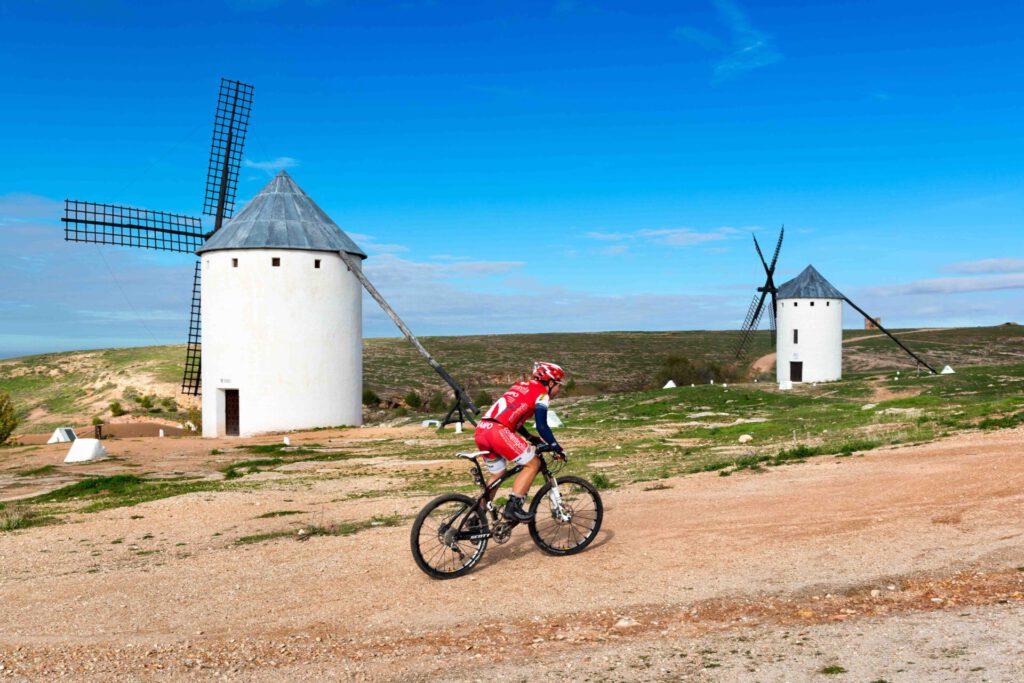
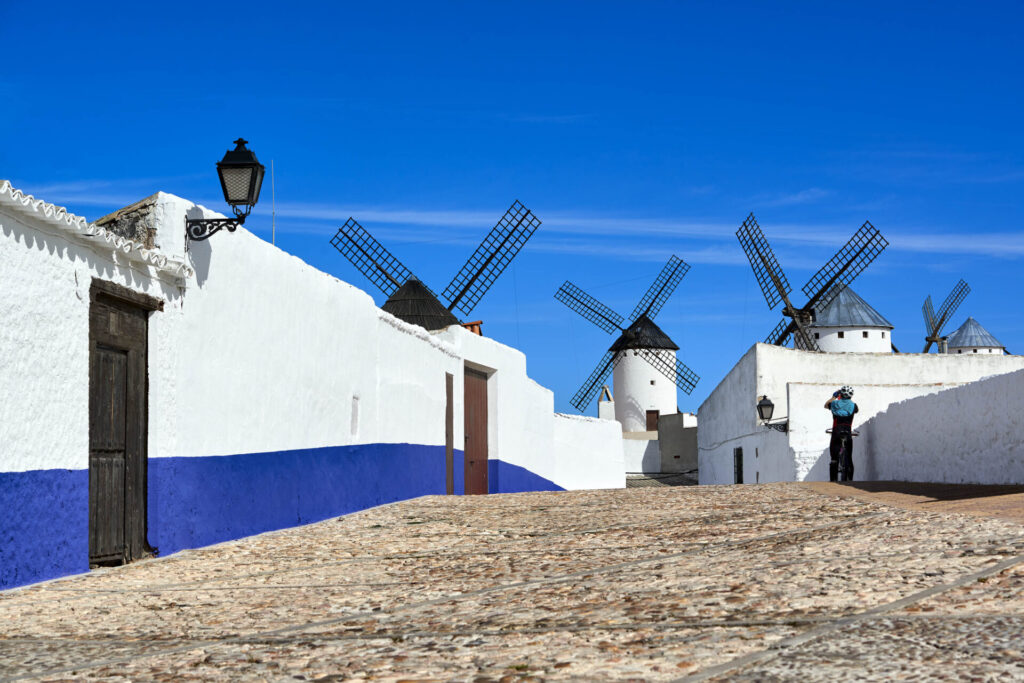
Explore the rugged gravel roads of Cuenca and Guadalajara
We've already described it; Castile-La Mancha is incredibly diverse. In the southern provinces, the landscape is flatter and drier, but in the north, you'll find truly green countryside. Plan a gravel ride in Serranía de Cuenca for beautiful, clean gravel sections. The closer you get to the Toba Reservoir nearby, the greener the surroundings become. The Júcar valley is a real pleasure for cyclists; both road cyclists and gravel enthusiasts can enjoy wonderful rides here along the gorge.
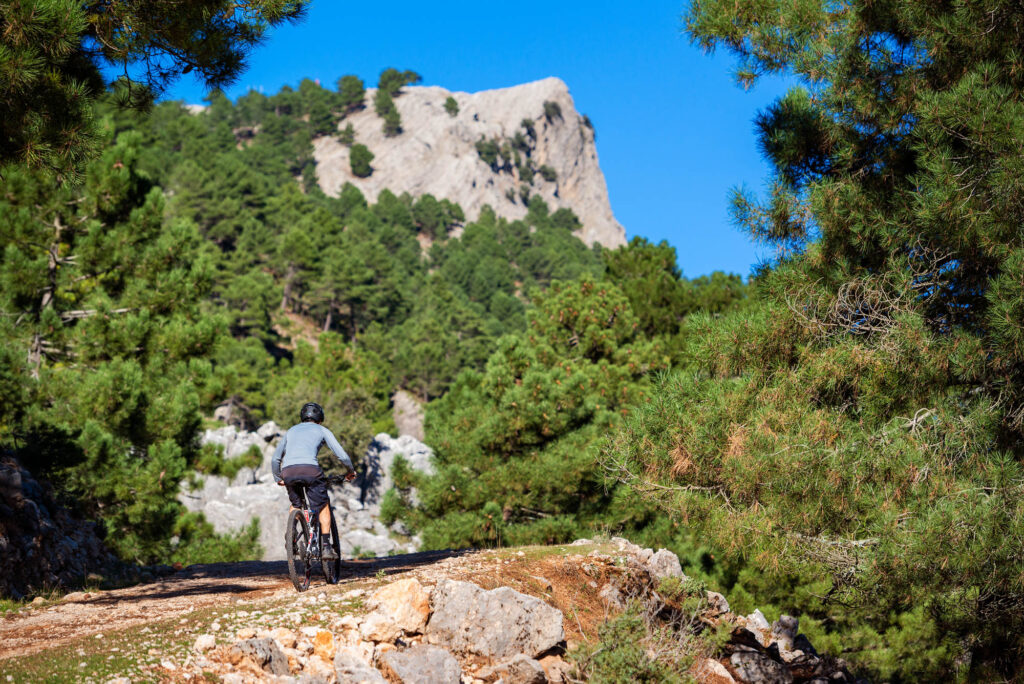
For truly rugged nature, visit Alto Tajo National Park, located in the province of Guadalajara. The Tagus River (Tajo) is still narrow and crystal clear blue here, carving its way through ravines. As a result, the surroundings are green but wild, full of rocky outcrops and gorges. There are hardly any tarmac roads through the area, so a gravel bike or mountain bike is a must to explore the region. The long, wide gravel path along the Tagus is beautiful and you absolutely must not miss it during your visit to this region.
Castile-La Mancha; region of castles and ancient cities
Many cyclists choose to focus on routes in nature. However, in Castile-La Mancha, you mustn't skip the cities. Take a break in one of the region's many historic towns, and enjoy a cold cola with views of a magnificent castle or cathedral.
Toledo – In Toledo, also known as the ‘City of Three Cultures’, Christian, Islamic and Jewish influences peacefully merged for centuries. This unique past can still be seen everywhere today: the narrow streets truly breathe history on every corner, with impressive mosques, synagogues and cathedrals standing shoulder to shoulder.
Sigüenza – In Sigüenza (province of Guadalajara) you also take a step back in time. From afar, you can see the Moorish castle perched atop the hill. This lively episcopal town is steeped in history and well worth a visit.
Cuenca – Cuenca also has a medieval centre and a beautiful, authentic Spanish square. From the San Pablo bridge, you have a great view of the world-famous Hanging Houses, the hanging houses.
The best time to cycle in Castile-La Mancha
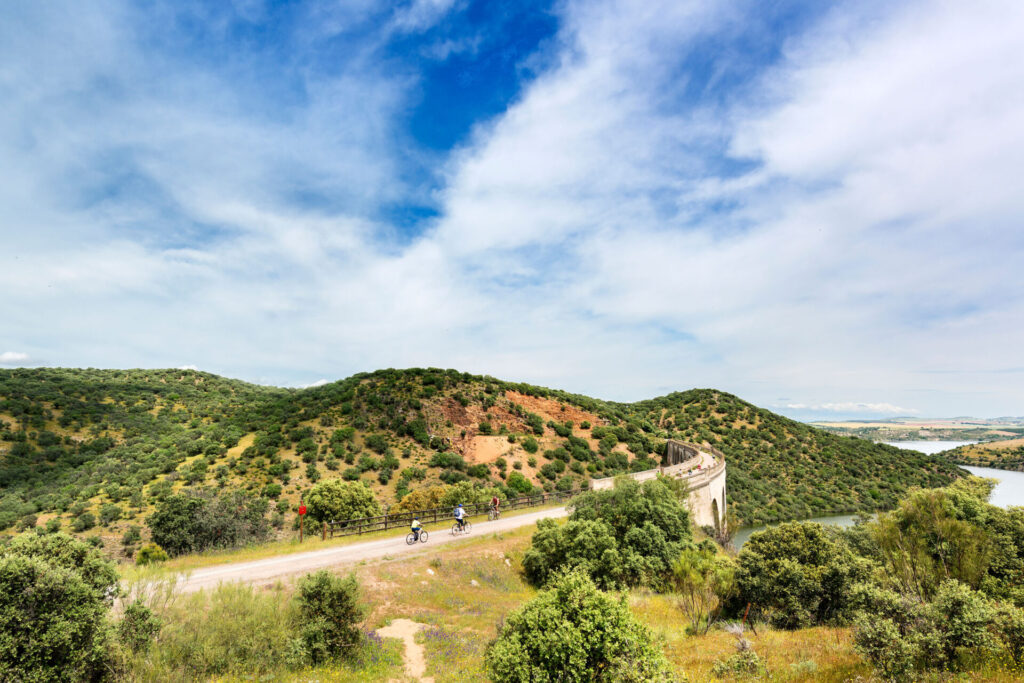
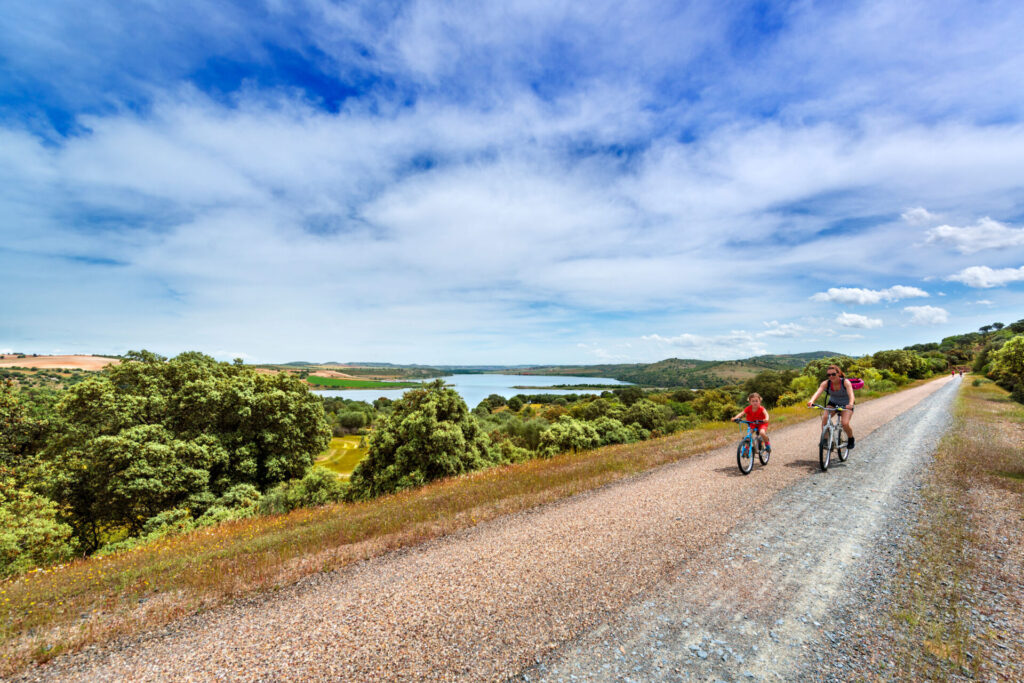
The best times to cycle in Castile-La Mancha are spring and autumn. Due to the extreme continental climate on the plateau, summers are incredibly hot and winters are freezing. In April and May, nature is beautifully in bloom and the fields are green. The weather is then lovely for cycling, with temperatures averaging between 18 and 25 degrees Celsius. In autumn, the landscape of Castile-La Mancha is completely different again, with the forests in Cuenca and Guadalajara a beautiful orange. Saffron, for which the region is famous, is also harvested during this period, creating beautiful purple fields.
Accessibility
Madrid is the ideal central gateway to Castile-La Mancha. From here, you can easily travel by train to cities such as Toledo, Ciudad Real, Cuenca, or Guadalajara. The province of Albacete is also easily accessible from Alicante airport, and for a visit to the province of Cuenca, you can fly into Valencia.
The ultimate gravel route in Castile-La Mancha
Castilla-La Mancha has beautiful routes for every cyclist. Whether you use your gravel bike to discover cultural sites in a sporty way, or to really push yourself and tackle plenty of elevation gains. Wherever you are in this region, the network of unpaved roads is vast, meaning you can plan endless routes.
Under the banner ‘Castilla-La Mancha by bike’, the official tourism board has mapped out a gigantic network of over 2,000 kilometres of cycling routes. Don't worry, you don't have to cover this enormous distance all at once. The network is made up of various smaller routes and regions, making it very easy to pick a single stage for a few days. Thanks to Spain's excellent train network, you can travel to and from your starting or finishing point effortlessly with your bike.
Curious about the routes and ready to plan your own gravel adventure? Check out all cycling routes on the official website of the tourist board of Castile-La Mancha.
This article was written in collaboration with the Spanish Tourist Board - Spain as a Tourist Destination in Castilla-La Mancha