
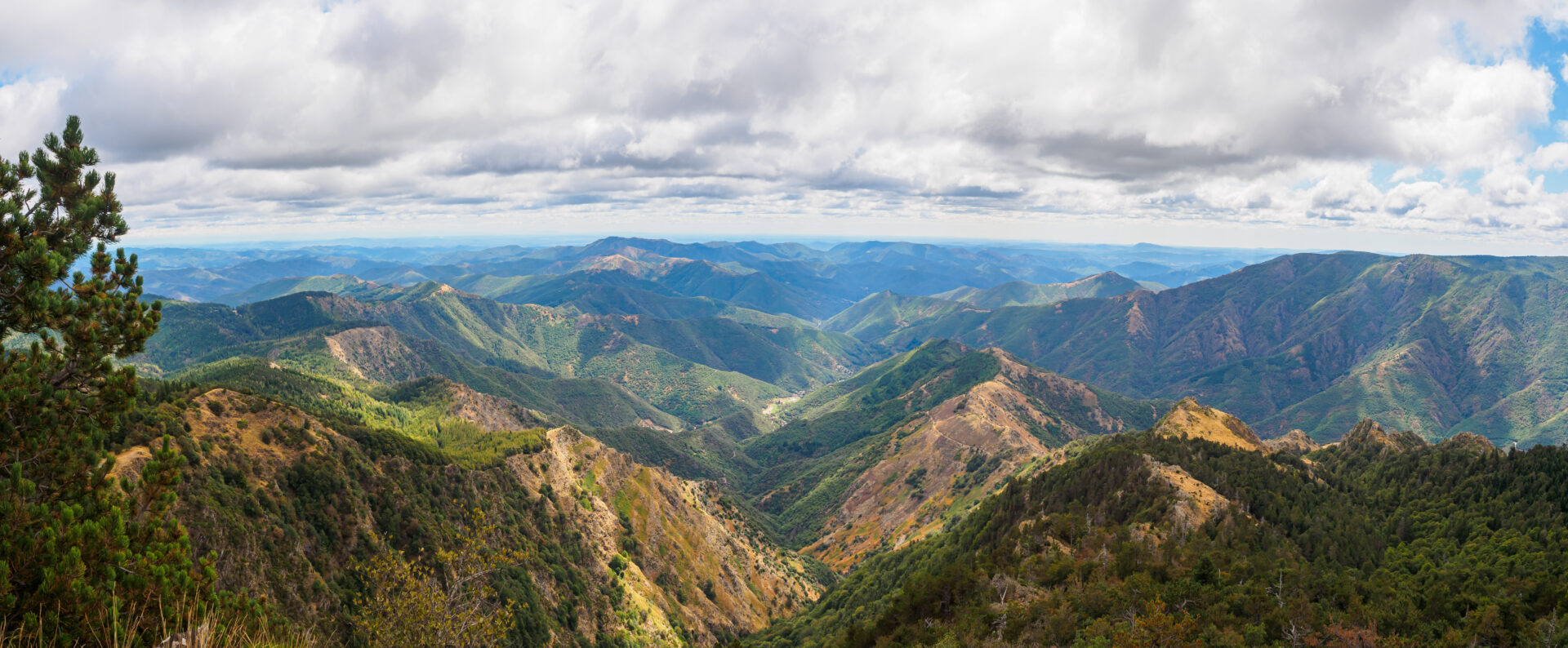
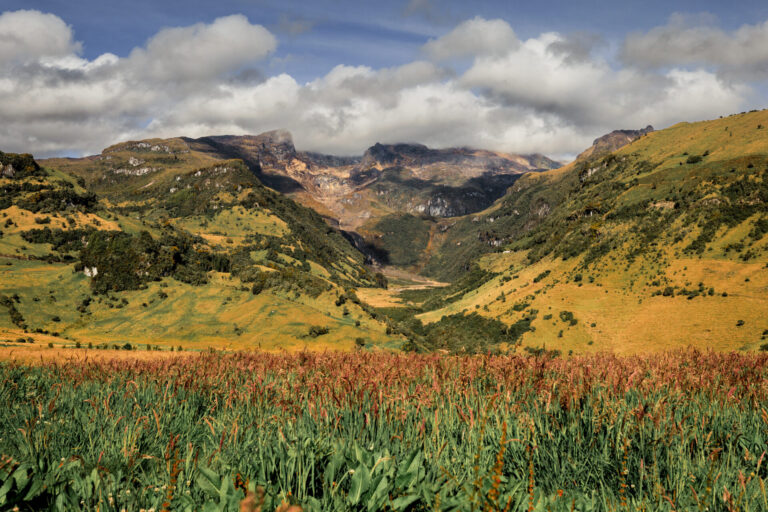
The Cévennes. The forgotten mountain region in the Central Massif. Where you encounter more deer than cars, where the roads are slick like a billiard cloth and where the climbs are at least as tough as in the Alps. Only: without the traffic jams of campers, motorcycles and loads of cycling tourists who jostle each other for the best photo or try to imitate the pros.
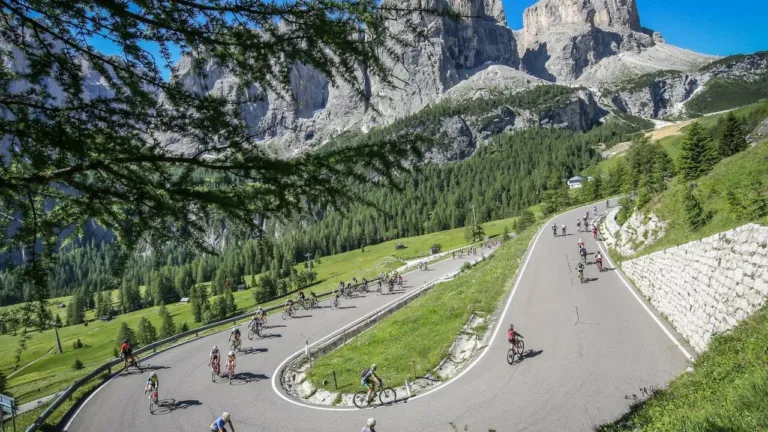
We understand. You think of cycling in France and your mind goes to Alpe d'Huez, The Tourmalet, perhaps the Ballon d’Alsace. It makes sense. But if you really want to climb abandoned roads this summer, with steep slopes and villages where time seems to stand still, then you should head to Cévennes. Located between Lozère and Gard, Right in the middle of the National Park (UNESCO World Heritage Site), there is a network of D-roads that seem to have been specially built for cyclists. Spoiler: it’s not that, but it does feel that way.
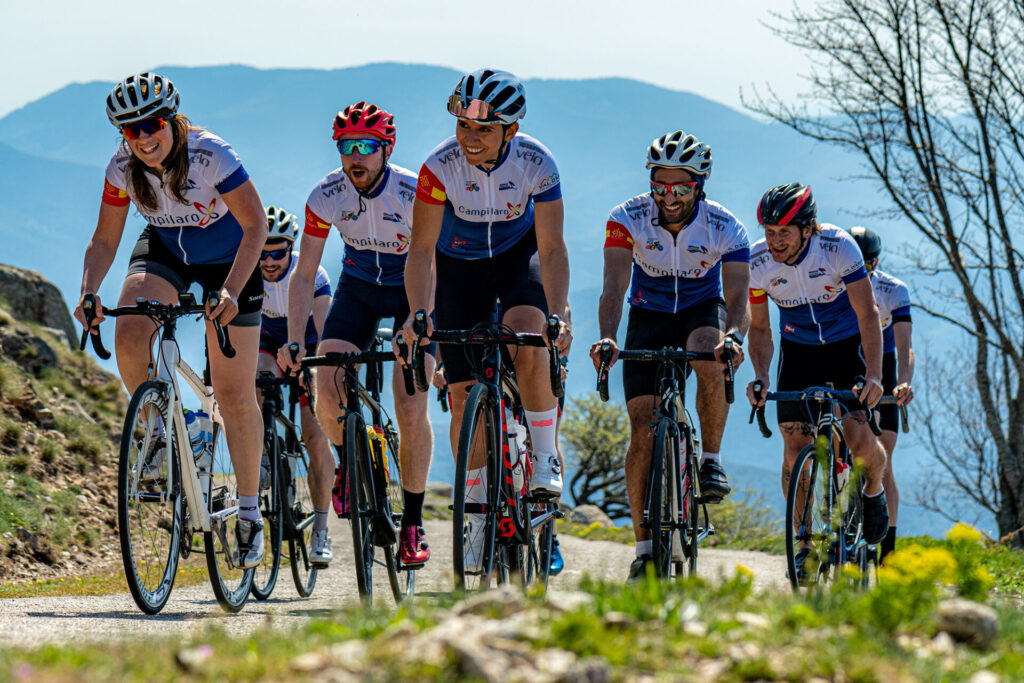
Why Cévennes and not the Alps or the Pyrenees?
A fair comparison. The Alps are iconic, the Pyrenees are epic. But the Cévennes has something that these two don't have anymore: peace and quiet. We'll take a moment to explain what that is.
| Cévennes | Alps/Pyrenees | |
|---|---|---|
| Traffic | Almost none. Secondary roads have disappeared. | Traffic is heavy in the summer, especially on well-known mountain passes. |
| Poor quality | Surprisingly good, even on the narrowest roads. | Variable, wear from heavy traffic. |
| Season | Lower elevation = cols open earlier, often already from April. | High passes close from October to June. |
| Character climbing | Steep, irregular, rhythm breakers. | Long, constant gradients. |
And then there’s this: the Vosges and Jura are beautiful, but the climbs there are more manageable. In the Cévennes you ride cols of 20+ kilometers with stretches of 15 to 20%. That’s a different story.
The most beautiful climbs in the Cevennes
For anyone who ever read the book ‘The Runner‘van Tim Krabbé has read it and can fully empathize with the Cevennes region. The book is set there, and with that book in mind, you can discover the region even better.
Mont Aigoual: the climb you have to cycle in the Cevennes
The Mont Aigoual is a climb you can't avoid if you go cycling in the Cevennes. With its 1,567 meters, it is, after Mont Lozère, the highest mountain in the region and the highest point you can reach by bike. The road to the characteristic observatory on the top is literally and figuratively the highlight of the Cevennes. You can’t get any higher than here.
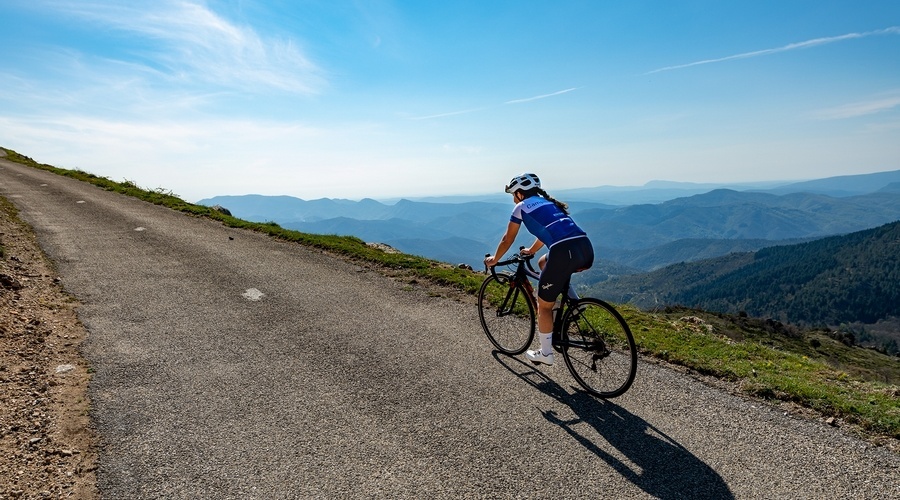
What makes Mont Aigoual unique is the number of ways you can climb it. There are no fewer than eight different routes leading to the summit: four via wider main roads and another four via smaller, quieter mountain paths. That makes Mont Aigoual not only one of the most famous climbs in the Cevennes, but also one of the most versatile. Each side has its own character, its own rhythm and its own view.
Of climb from Trèves, deep in the Gorges du Trévezel, speaks to the imagination. This side was immortalized in the work of Tim Krabbé and takes you slowly up from a rugged ravine towards the bare, open top. The variant from Rousses is considered the toughest of all, with steeper passages and a more irregular course that forces you to find your pace again and again.
It is precisely this variety that makes Mont Aigoual an essential climb for anyone who wants to do it seriously. climbing and cycling in the Cevennes. It’s a mountain that you don’t climb just once, but several times, each time through a different route, each time with a different experience.
You can Mont Aigoual Climb via at least eight routes. The most popular ones:
- From Meyrueis via Col de Perjuret26km, average 3.3%. Wrong flat, false peaks, and then suddenly that last wall towards the observatory.
- From Valleraugue26.7km, average 4.5%. Regular course with a nice layout.
Do you know The Renner From Tim Krabbé? This is the setting. That makes the climb not easier, but more beautiful.
Mont Aigoual, Trèves, France
• Distance: 27.5 km, Elevation difference: 974 m, Average gradient: 3.5 %
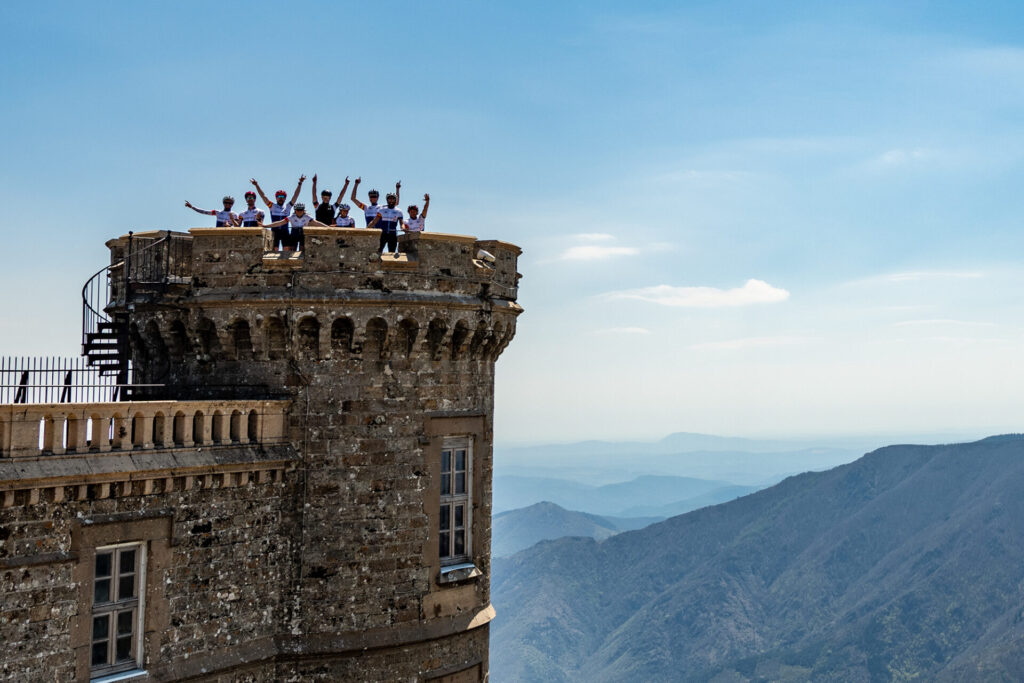
Col de la Lusette (1,351 m): the toughest climb of the Cevennes
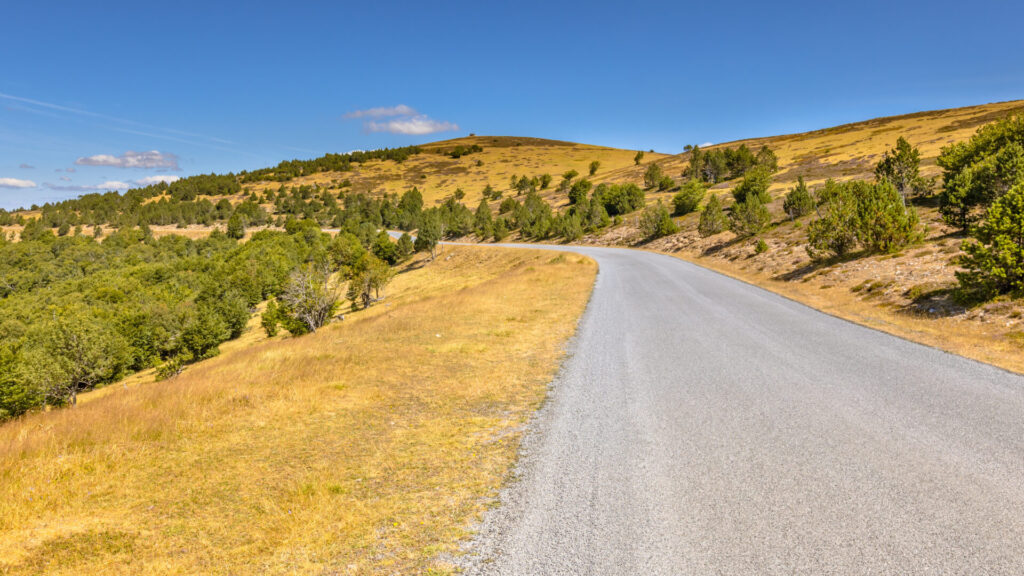
Of Col de la Lusette is one of the most feared and at the same time most impressive climbs for those who go cycling in the Cevennes. On paper, this climb seems manageable: 18 kilometers long with an average slope of 6.4%. But anyone who starts here soon realizes that this average doesn’t mean much. The Col de la Lusette is not a pleasant climb. It’s a constant shift in gears.
The middle part of the climb, between kilometers 11 and 16, in particular, is notorious. Here, the gradient steadily rises to above 11%, with peaks of up to 20%. These are not short sprints, but serious stretches that continue on. A slight effort here is not a luxury, but a necessity. It is precisely this unpredictable nature that makes the Lusette one of the toughest climbs in the Cevennes.
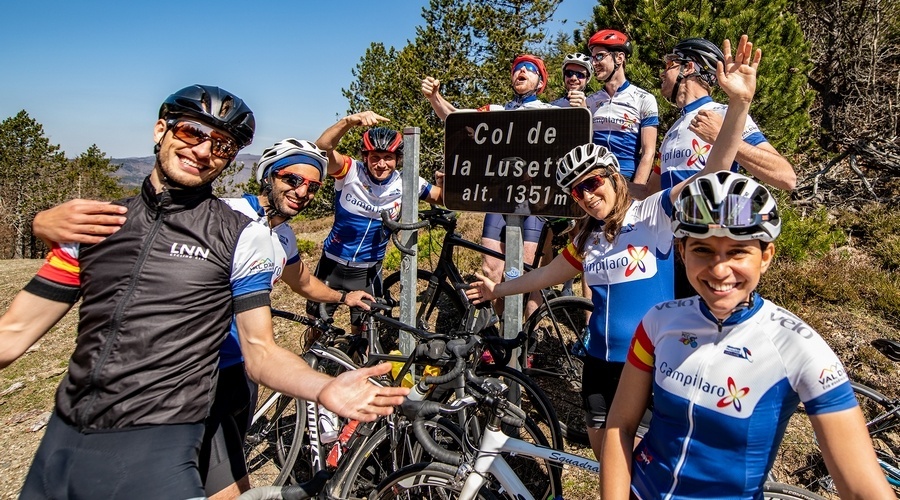
The climb takes you through dense forest, over narrow roads that seem specially designed for cyclists. The silence is complete. No traffic, no distractions. Only you, your breathing, and the road that slowly curves upwards. As you get higher, the landscape opens up and the top becomes tangible, even before you see it.
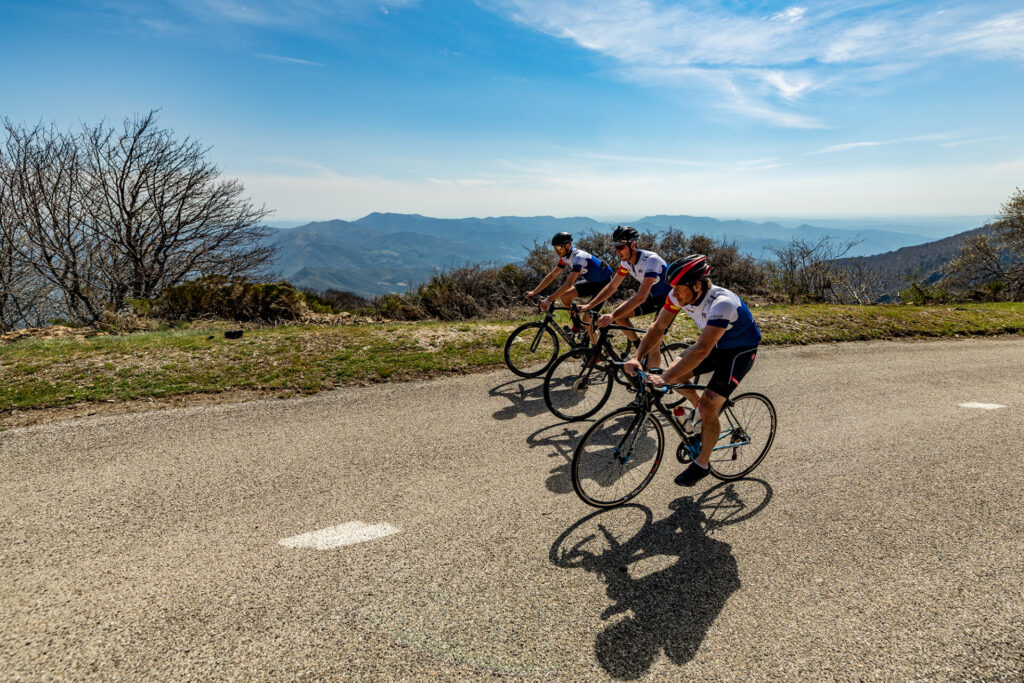
The descent also requires full attention. The asphalt is rough and technically challenging in some places, with curves that can be sharp and irregular. Caution is especially required in wet weather. The Col de la Lusette is often compared to Mont Ventoux not for its altitude, but for the intensity and character of the effort.
For those who really want to experience the Cevennes, this climb is a must.
Corniche des Cévennes (1,026 m): the most beautiful cycling route in the Cevennes
Of Corniche des Cévennes is not a classic climb, but a route that brings together everything cycling in the Cevennes What makes it so special is that it’s not an endless, straight climb; it’s a series of climbs and descents over a mountain valley, with constantly changing views and a rhythm that never becomes completely stable.
The climb starts in Saint-Jean-du-Gard, a typical Cevennes village where the road begins to climb almost immediately. The first serious section leads to the Col de Saint-Pierre At an altitude of 597 meters. The asphalt is excellent and the road winds up through long, flowing curves through the forest and along open slopes. It is a climb that invites you to find your own pace, without ever getting extreme.
From there the road continues uphill towards the Col de l’Exil at 704 meters. The gradient remains gentle, but the profile remains treacherous. Just when you think you’ve got the hardest part behind you, a descent immediately follows, which immediately transforms into another climb. This is the nature of the Corniche des Cévennes: a constant alternation of effort and recovery.
After Le Pompidou, the final part begins, towards the Col des Solpérière and finally the Col des Faïsses, The highest point of this route at 1,026 meters. It is rightly considered a mid-mountain area, with peaks that cannot compete with the alpine beauty, but in the Cevennes it feels different. What sets this route apart from other climbs in the Cevennes is its location on the mountain ridge. For kilometers you cycle along the edge of the massif, overlooking deep valleys and endless mountain ridges. A climb that revolves around rhythm, views, and the feeling that you are truly on the move.
For anyone visiting the Cevennes, the Corniche des Cévennes is a must-do route. Not because it is the most difficult, but because it perhaps best shows why cycling in the Cevennes so special is it.
Sommet de Finiels (1,699 m): paper-tallest point in the Cevennes
Of Sommet de Finiels It is the absolute peak of the Cevennes. At 1,699 meters, this is the highest point you can reach by bike in this rugged massif. You will have to go off-road for that, though. The highest trail you can cycle on with a road bike only goes up to 1543m. For those who really want to experience what cycling in the Cevennes That means, this climb undoubtedly belongs on the list.
The climb connects Le Pont-de-Montvert met Le Bleymard And it runs along the flanks of Mont Lozère, the highest mountain in the region. From the first kilometers you gradually climb up, under a canopy of plane trees and other trees that provide shelter from the sun. The gradient remains relatively constant, allowing you to quickly reach a steady rhythm. It’s not a climb that requires brute strength, but one that you can conquer with patience and regularity.
What immediately stands out is the tranquility. Regular traffic almost always chooses other routes, so you often find yourself cycling alone here. Only the sound of your tires on the asphalt and the wind that blows through the grass and the trees. This is one of the most pure climbs in the Cevennes: quiet, remote, and completely at the pace of the cyclist.
As you climb higher, the landscape changes. The trees disappear and give way to open highlands. Here, above the tree line, a vast panorama unfolds. On the west side lies the Sommet de Finiels Alone, with its bare summit at 1,699 meters. To the east you can see Mont Lozère, which at 1,674 meters is slightly lower, but looks at least as impressive.
The Sommet de Finiels is not only geographically special, but also hydrologically so. Here the watershed between two of Europe’s major river systems is located. Rain that falls on the northern flank flows via the Rhone to the Mediterranean Sea. Water on the southern side finds its way to the Atlantic Ocean via the Tarn and the Garonne. Cycling over this terrain you literally move between two worlds.
Col du Pré de la Dame – one of the most difficult with a view of the Ventoux
Of Col du Pré de la Dame It is one of the most beautiful and least-appreciated climbs in the Cevennes. From Génolhac, you climb 15 kilometers at an average of 6.4%, with long, regular stretches.
The other side is shorter, but steeper. Above, the landscape opens up and on clear days you can even see the Mont Ventoux in the distance.
It is a climb without a course history, without crowds, but with everything you need cycling in the Cevennes What makes it so special: peace and quiet, nature and endless paths up.
Col de Perjuret (1,031 m): the gateway between the gorges and the peaks of the Cevennes
Of Col de Perjuret feels a bit like a kind of transition. Not only in height, but also in landscape. This pass forms the natural connection between the deep gorges of the Gorges de la Jonte and the higher, open peaks of the Cevennes massif. For those who go cycling in the Cevennes, This is a climb that literally takes you from one world to another.
The climb begins in a rugged landscape of cliff walls and narrow valleys. The road cuts through the rock, winds past rock formations, and gradually climbs out of the gorge. The asphalt is narrow and quiet, with hardly any traffic. Here you cycle in complete silence, surrounded by nature.
What makes the Col de Perjuret special is the feeling of escape. Beneath you lie deep gorges, above you the landscape opens up towards the higher plateaus of the Cevennes. The vegetation changes, the view becomes more expansive and the air feels cooler. The climb itself is not extremely steep, but it is one with ‘character’. This is one of those typical Climbs in the Cevennes where it comes to the beautiful surroundings
Choosing a basecamp – where would you ideally start your adventure?
At CyclingDestination we like to work with Basecamps, places that are strategically located in relation to the surrounding area.
Florac
Headquarters of the National Park, located at the intersection of the Tarn, Tarnon and Mimente rivers. From here, you can get off the road within five minutes.
- Grand Hôtel du Parc: Home Bike-certified, closed bike garage with charging points, swimming pool, large garden. Since 1903 in the same family.
- Le RochefortLogis de France, just outside the village, 24 rooms, easy access to the Gorges du Tarn.
Meyrueis – the picture
Stone bridges, a bell tower, and the perfect base for Mont Aigoual and the Gorges de la Jonte. The village has several terraces.
Logis Hotel – neat and organized
Sainte-Énimie – for direct access to the Gorges du Tarn
Nestled in the Gorges du Tarn, one of the most beautiful villages in France, it is an ideal getaway spot
- Château de la Caze15th-century castle hotel, 4 stars, private beach on the Tarn, ideal for a nice swim after a round in the area.
- Logis Hôtel Auberge de la CascadeA more sober option, secure bike storage, and a host who can tell you exactly which route to take.
Looking for chestnuts, trout and a burger at the top
The Cévennes revolves around the culinary aspect chataignier, The tame chestnut. For centuries the staple food here, now processed into bread, flour and desserts. Also: fresh trout from the rivers and Aubrac lamb of the causses.
At the summit Mont Aigoual There is a snack bar where you can get a burger and a beer. Soon the question arises: “Can we sit inside?” The wind at 1,567 meters can be strong.
In villages like Vebron and Meyrueis You’ll find boulangeries for a croissant halfway through the trip. Not everywhere, and not always open. Plan your stops.
Practical – what you need to know
- WaterThe villages are further apart than you think. Always bring an extra bottle of water with you.
- WeatherIn the valley it is warm, at the top it is cold and windy. Always have a rain jacket or windstopper in your back pocket.
- NavigationSignposts are scarce on the smaller roads. GPS is necessary. You can easily pass the turnoff to the Lusette from Le Vigan.
- Best periodJune to September. October brings beautiful autumn colors, but also the chance of heavy rain (the notorious Episodes in Cévenol).
- DescendingThe descent of the Lusette is technically demanding. Varied terrain, sharp turns, steep. Take your time.
Bike rental
Don’t have your own bike? Or don’t have room to bring your bike? Then rent one! Through Cigale Aventure you can get a beautiful race bike or mountain bike. They also have guided tours. What more do you want?
For more info and bookings, visit their website: Cigale Aventure
Do you have any Cévennes climbs that we should bring along? Or a bakery that is open early? We would love to hear from you!
Questions & tips
Do you have any questions about this route, or have you been there yourself? Share them here. We read everything and usually respond within a few days.