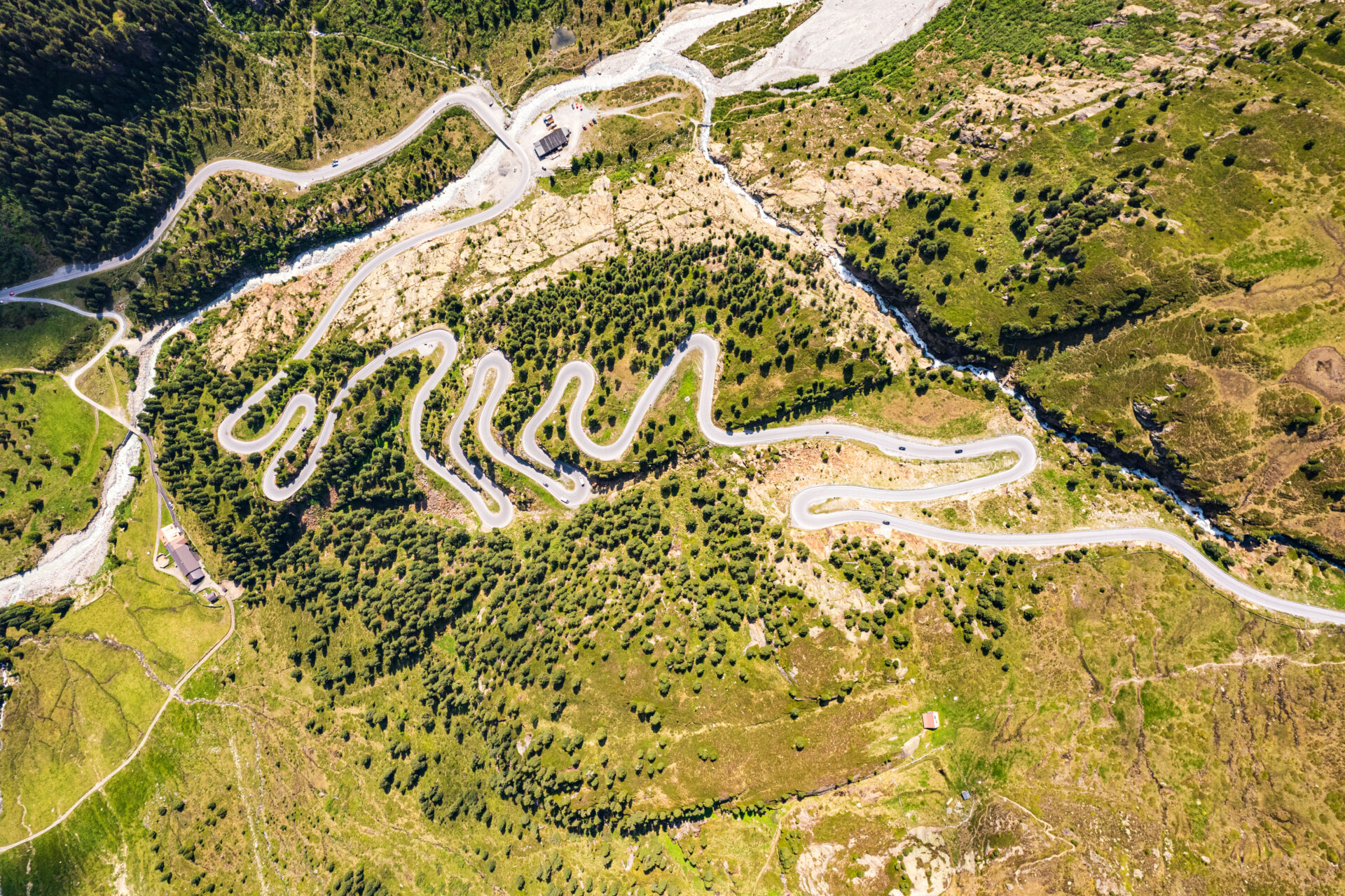
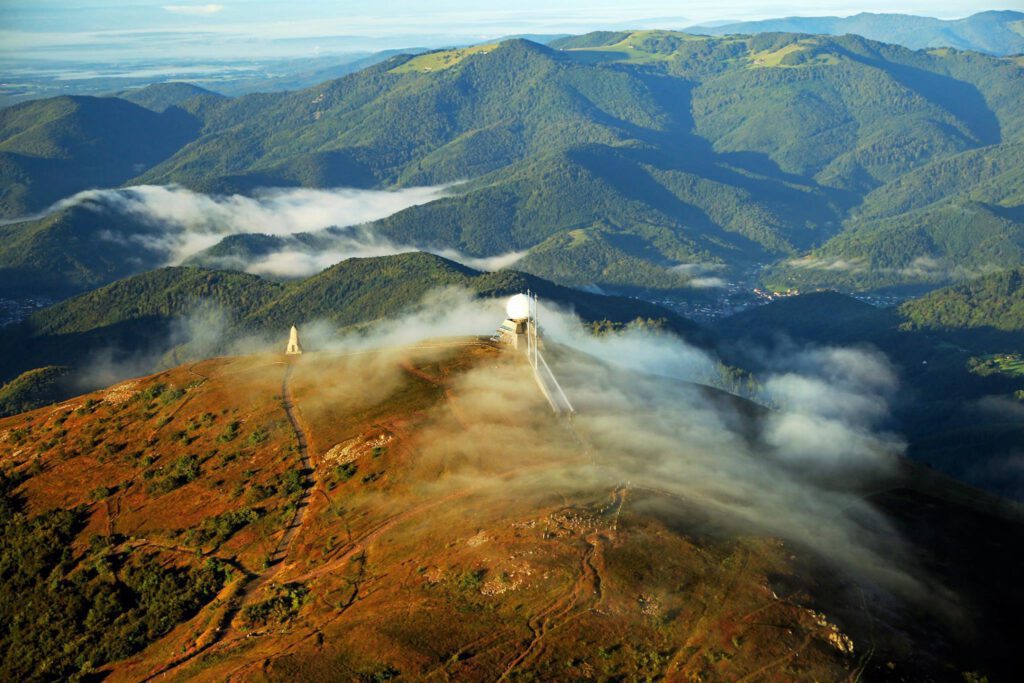
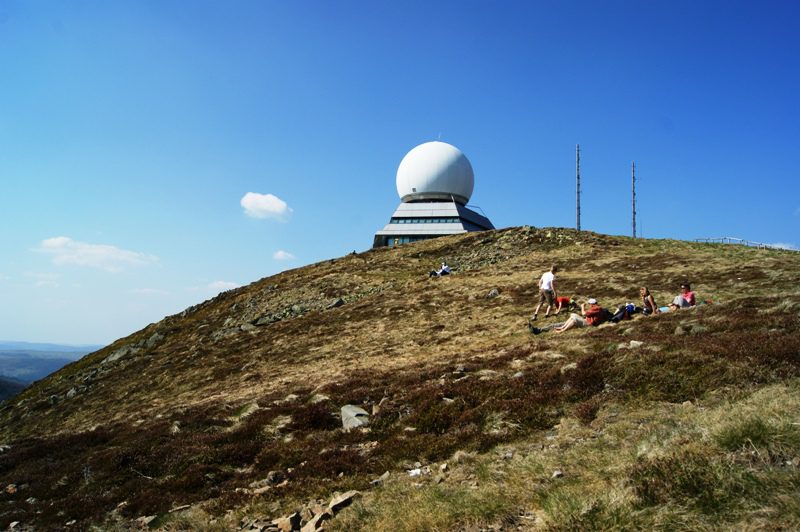
In fact, the name for a climb couldn't be more beautiful than this: Col du Grand Ballon. A large balloon, which you can cycle up on from multiple sides. On top of the Grand Ballon You'll also find a large balloon. This is a radar used for all sorts of (unknown) purposes. In winter, you can ski here, as evidenced by the lift constructions that are set up (and which have little custom in the summer). It's an interesting view after a climb of almost 25 kilometres (from Bühl). It makes cycling in the Vosges a real challenge for many. In fact, the Haag Pass, a new climb also part of the Grand Ballon variations.
The Grand Ballon is also a regular feature in the Tour de France, providing a good challenge for the male and female cyclists. This climb is also in the Three Balloons Granfondo, one of Europe's most famous cycle routes.
Superb location
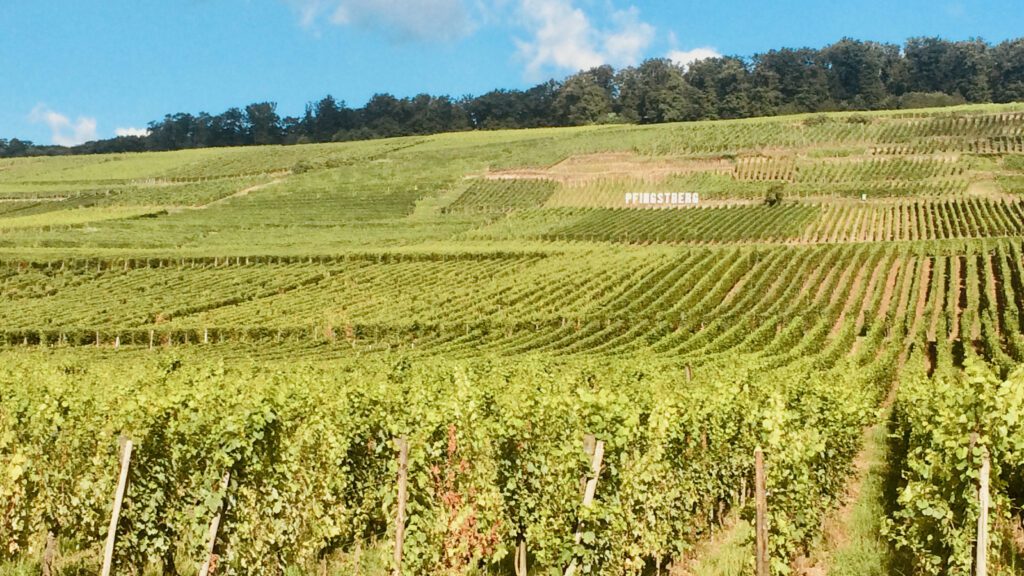
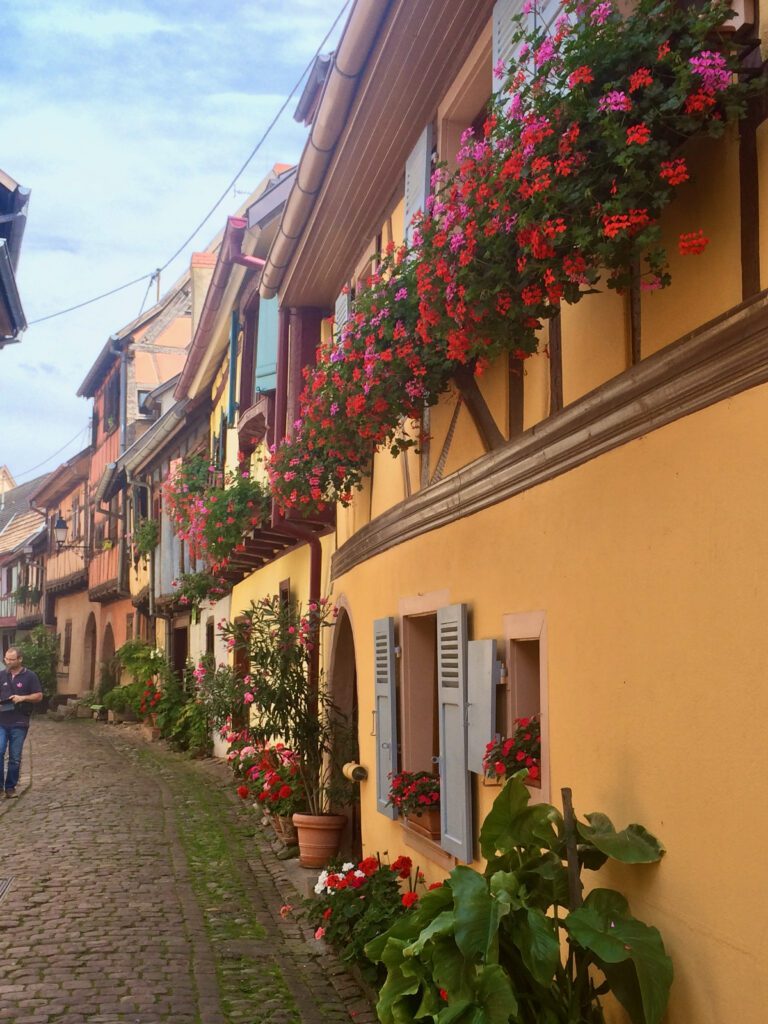
The mountainous region of the Vosges concentrates in the Ballons des Vosges National Park. This beautiful area, in the ‘armpit’ of France, just below Luxembourg and west of the Black Forest, is loved by many cyclists. Not only because of the variety of routes, but also because of its location in the Alsace wine region. If you have your accommodation east of the park, you can ride beautifully between the vineyards. There you will also find the characteristic villages such as Eguisheim or Pfaffenheim with colourful half-timbered houses.
Long work
While from my stay in Rouffach taking the bike I look at the sky with a slanted eye. It is not good. It is mid-summer and there are dark clouds hanging over the area where I want to cycle. Naja, it's about 22 degrees so it won't be too bad. With fresh courage I start my still 65 kilometres towards the roof of Alsace and the Vosges: the Grand Ballon. As a route, I have chosen the long version via Buhl. That climb is almost 25 kilometres in total. Then you ride up via Le Markstein and finally to the top of Grand Ballon. I planned the route a bit offhand. I didn't fancy Komoot and I really just want to cycle in the Vosges. The first part I ride somewhat uninspired along the D road towards Issenheim. There I turn right onto the D430, which will take me from Bühl to an altitude of 1325 metres.
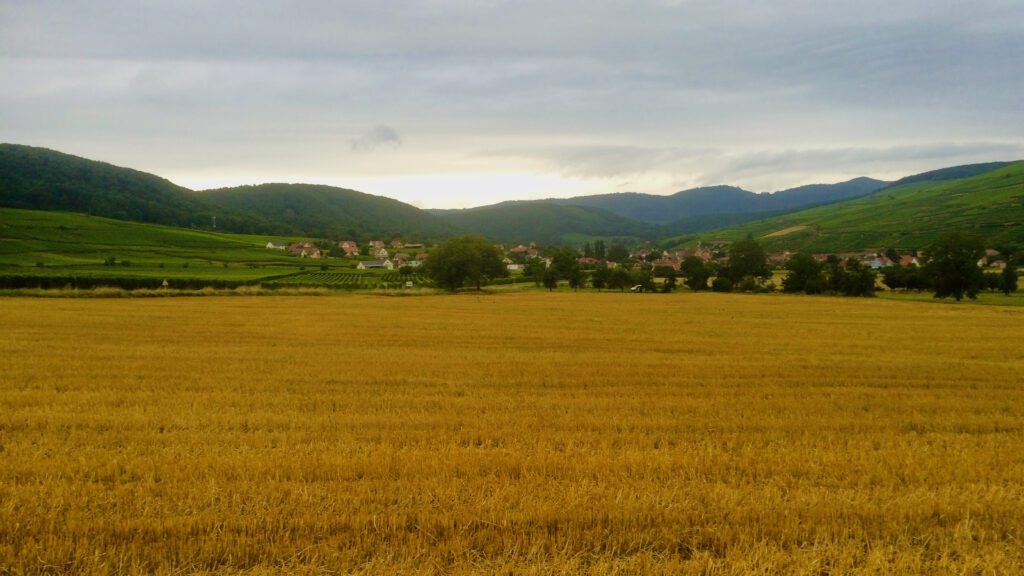
In total, it is more than 1,000 altitude metres. The percentage is not too bad, as it averages 3.8%, but there are a few kilometres in it that average 7%. That is a bit spicy. As the road from Guebwiller slowly starts to climb I get a nice rhythm. After a few kilometres, I come across a group of walkers on the right-hand side of the road. They clap their way down and encourage me as if I were riding a tour stage. Separate, I think then. Understandable I later understand. Because I have not even gone a kilometre when from upstairs the shower tap opens. It can rightly be called a rain shower.
Col du Grand Ballon, Soultz-Haut-Rhin, France
- Distance: 18.2 km, Elevation difference: 1068 m, Average slope: 5.9 %
Wet mess
I'm dressed for it, but it's still a hefty shower. In my head I keep saying: I'll keep pedalling, then I'll stay warm. And that is exactly what I do. It goes very nicely through the forest and so I am somewhat sheltered. My feet get soaked, but that shouldn't spoil the fun. The posts along the side of the road indicate the altimeters and kilometres. This gives you a good idea of the gradient per kilometre. The sections of 7% average do hurt for a while, but no problem in itself. I take the long route via Le Markstein and I am eventually happy to get this ski village in sight. By then, I am climbing for 18 kilometres. Just below the summit is another bit of downhill, which is also followed by a stretch at 7%.
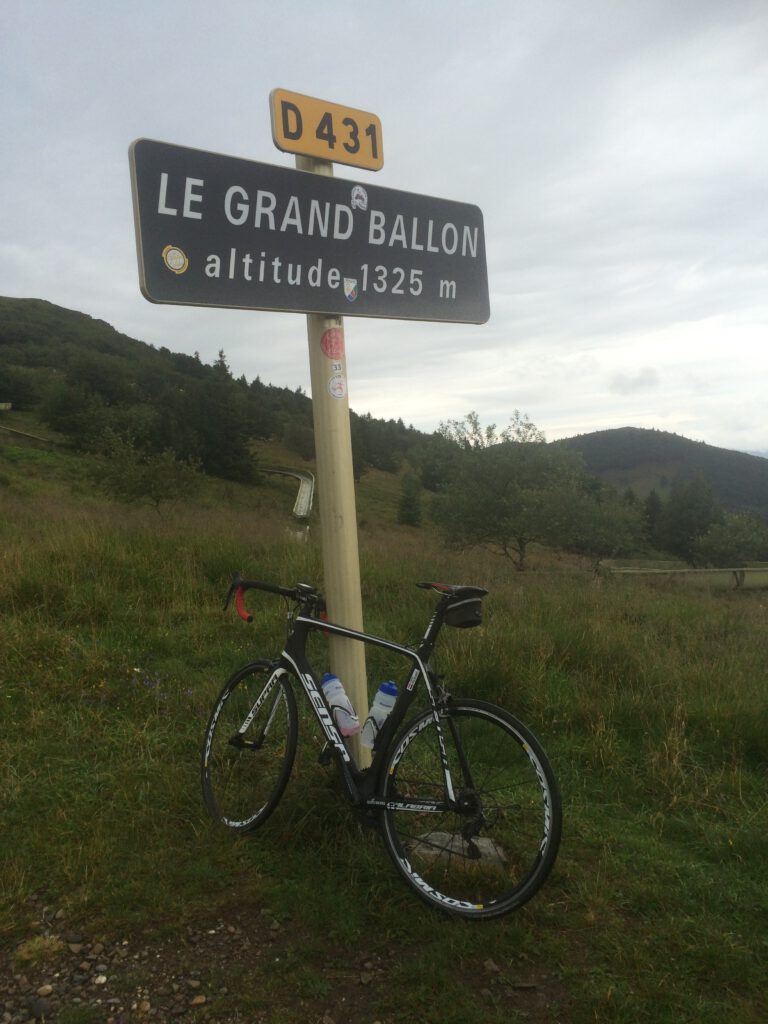
Along the way, you get some nice hairpin turns. The point of Le Markstein is at 1183 metres, so we have to go a bit further. This actually slopes more than it really climbs. Meanwhile, you have the Grand Ballon well in sight. At the Grand Ballon sign (it has stopped raining by now) I put the bike down for a while. Mission accomplished. I also climbed for 1.5 hours at my snail's pace. That's pretty long for a climb of only 1300 metres and a bit.
Trembling legs
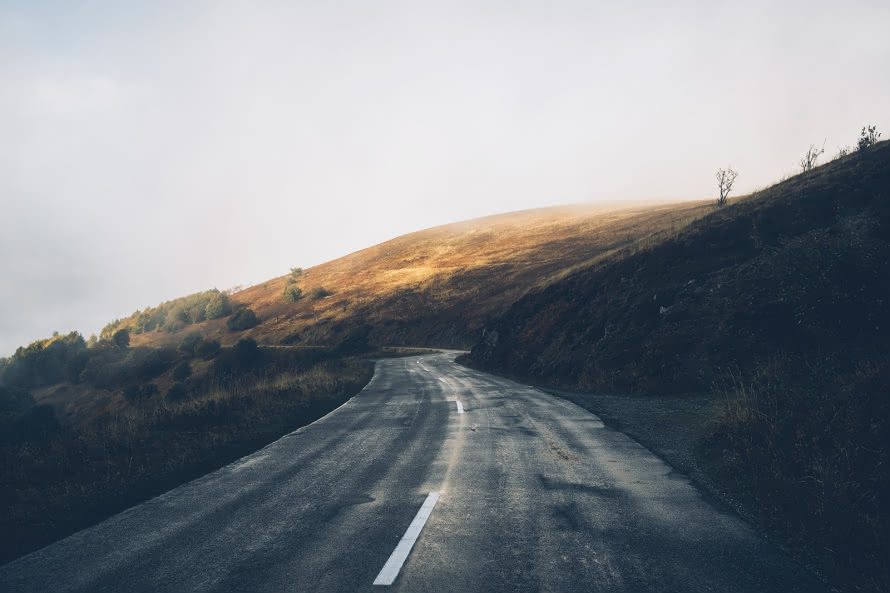
What follows next I can safely describe as one of the more dangerous descents I have ever done. Because it is soaking wet, the road is slippery. Now I am no Paolo Salvoldelli or Julian Alaphlippe, so I get a little nervous. Additional issue: it has cooled down to 9 degrees at the top of the Grand Ballon. In itself, I have a warm jacket on, but because my feet are soaking wet, they almost freeze on the descent. With fear and trembling I ride the descent towards Wattwiller. I miss the turn-off (and the short route) towards Soultz. This is a minus because this means I take a route of 85 kilometres in total. I had counted on 65 and those last 20 kilometres are more hanging and wriggling. When I get my hotel in sight I breathe a sigh of relief. The 20 minutes in the shower do me a lot of good.
Variations on a theme
You can ride up the Grand Ballon in different ways. Even from Buhl you have several variants, with the shortest variant, almost 10 kilometres, being a real gravel route. The well-known other variant is the one from the direction from Moosch (west side) or 'my descent' from Uffoltz back up. So you can have quite a long weekend there with just this climb. That's great, because usually a climb only has two or at most three variants.
Beauty in the neighbourhood
It’s no coincidence that the national park is called ‘balloons’. So there are more of them. Where there’s a big balloon, there’s bound to be a small one too. The Petit Ballon is perhaps even more enjoyable in terms of the challenge it presents. The name is a bit misleading, as the route from Munster (the French route) averages 7.1% over 11 kilometres. The summit is ultimately at 1163 metres. Don’t forget that you’ll encounter a maximum gradient of 15% here. That’s no walk in the park! It makes for a great challenge. Further on, there’s also the Hundsruck Pass, which also averages 7% over 7 kilometres. That’s a nice challenge too if you’re going cycling in the Vosges.
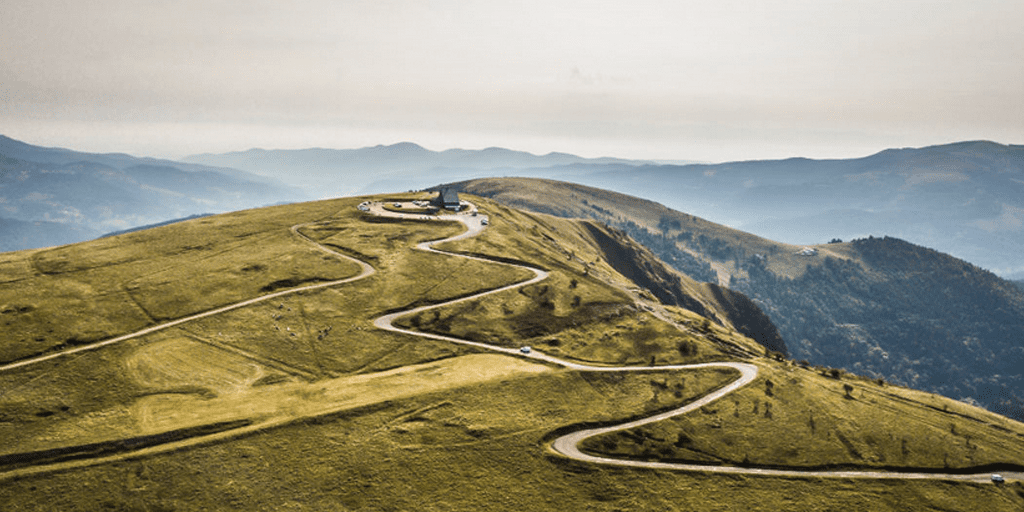
Planche des Belles Filles
Of course, this should not be missing in a piece about cycling in the Vosges. In recent years, this climb has been included in the Tour de France several times and in 2020 in particular it was decisive. How one Tadej Pogacar rode up there will be remembered by many. The myth surrounding this climb is growing fast. In 7 kilometres, this little friendly giant climbs at 8.8% with a maximum of 20(!)%.
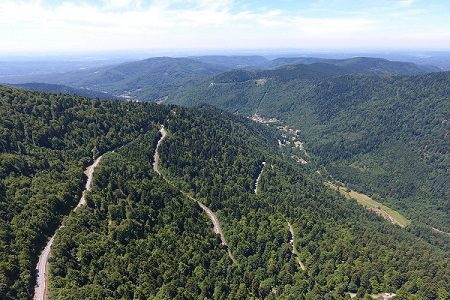
Route from Rouffach (near the castle)
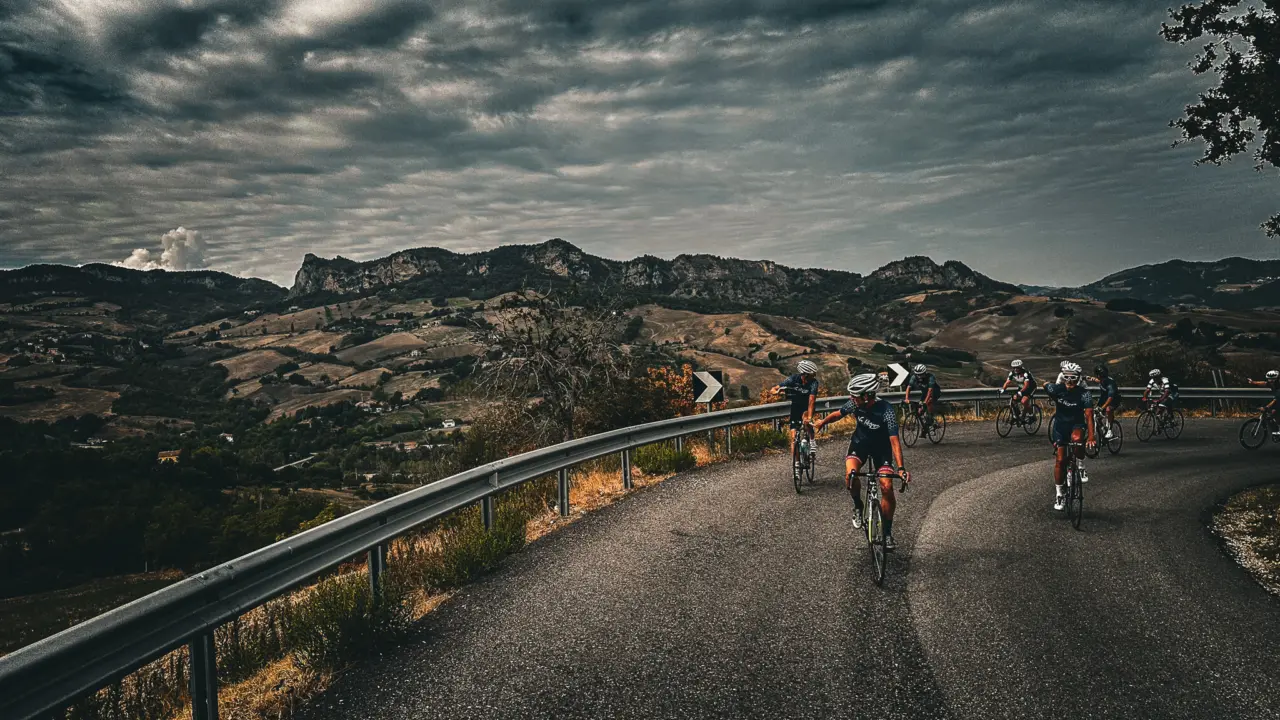
If you go cycling in the Vosges, you have to ride the Grand Ballon at least once. The route below is a nice one, with the long version starting from Buhl. You can also ride it the other way round.
Hotel tips in the Vosges.
There are a number of good sports/cycling hotels in the Vosges. Below on the map you will find our favourites ticked, you will also find the location of the Grand Ballon and Ballon d'Alsace, so you can make the right choice for your stay.
Want to know more? Then also check out this story series: