With its long route above the Bay of Biscay, Jaizkibel has been a defining feature of the Clásica San Sebastián since its very first edition. Anyone cycling up from Hondarribia will discover why the average gradient of 5.9 % tells only part of the story. And why you absolutely want to cycle the climb. Jaizkibel is the climb of the Basque Country and San Sebastian
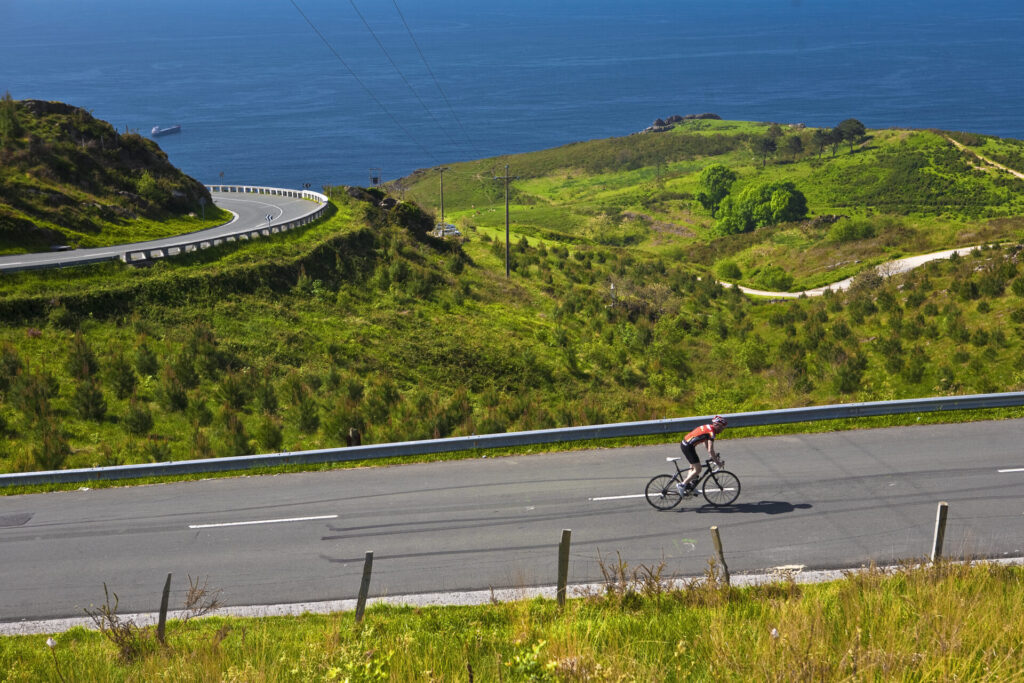
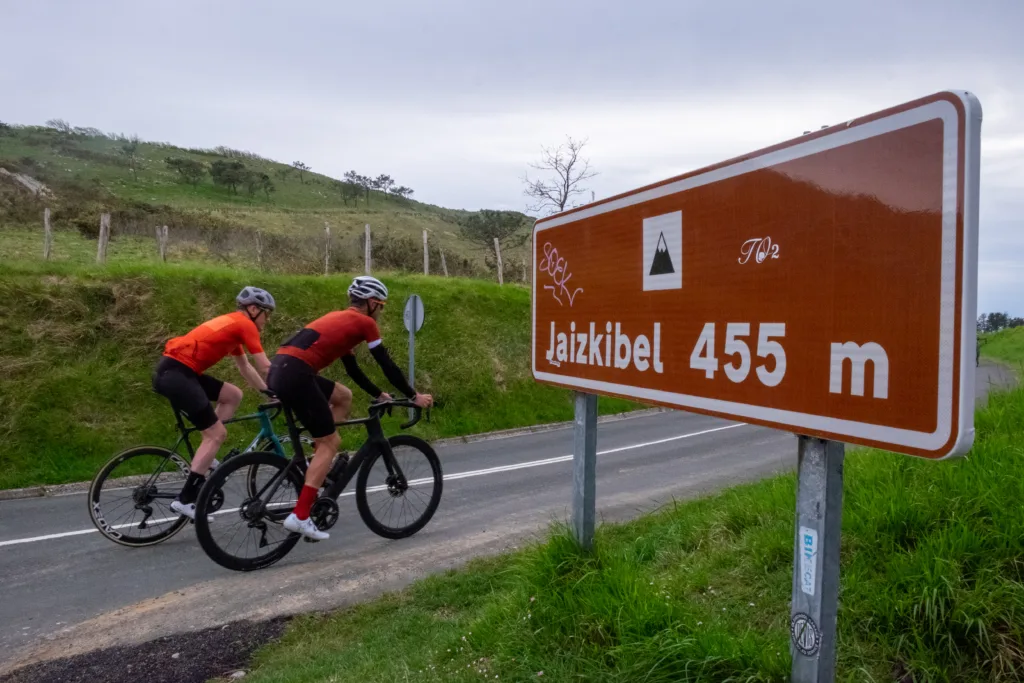
On paper, Jaizkibel almost seems straightforward. A walking climb which, at 9.1 km and 533 metres of elevation gain, covers an average of 6%. A summit at 455 metres – what could possibly go wrong? The fact that the elevation gain is greater than the summit height is mainly down to the short descent included in the route. Measurements of the climb vary slightly. Some put it at 9.1 km and 533 metres (5.9%), others at 8.1 km and 437 metres (6%). One thing is certain: it’s a real grueller.
For anyone who has never been to the Basque Country, it's actually impossible to skip the Jaizkibel. Precisely because the climb forms the heart of the Clásica San Sebastián, you really must have done it. Because those 10 km uphill also give you a super technical descent towards the city. At that moment, you realise why this is the decisive factor in the race and where the riders can make the difference.
The climb itself: Jaizkibel
Jaizkibel is the longest of the five known Basque climbs you can find in the region. The other well-known climbs are:
- Oiz with an average of 11%
- Urkiola 9.2%
- Arrate 8.3%
- Orduña 7.5%.
- Jaizkibel with 6%
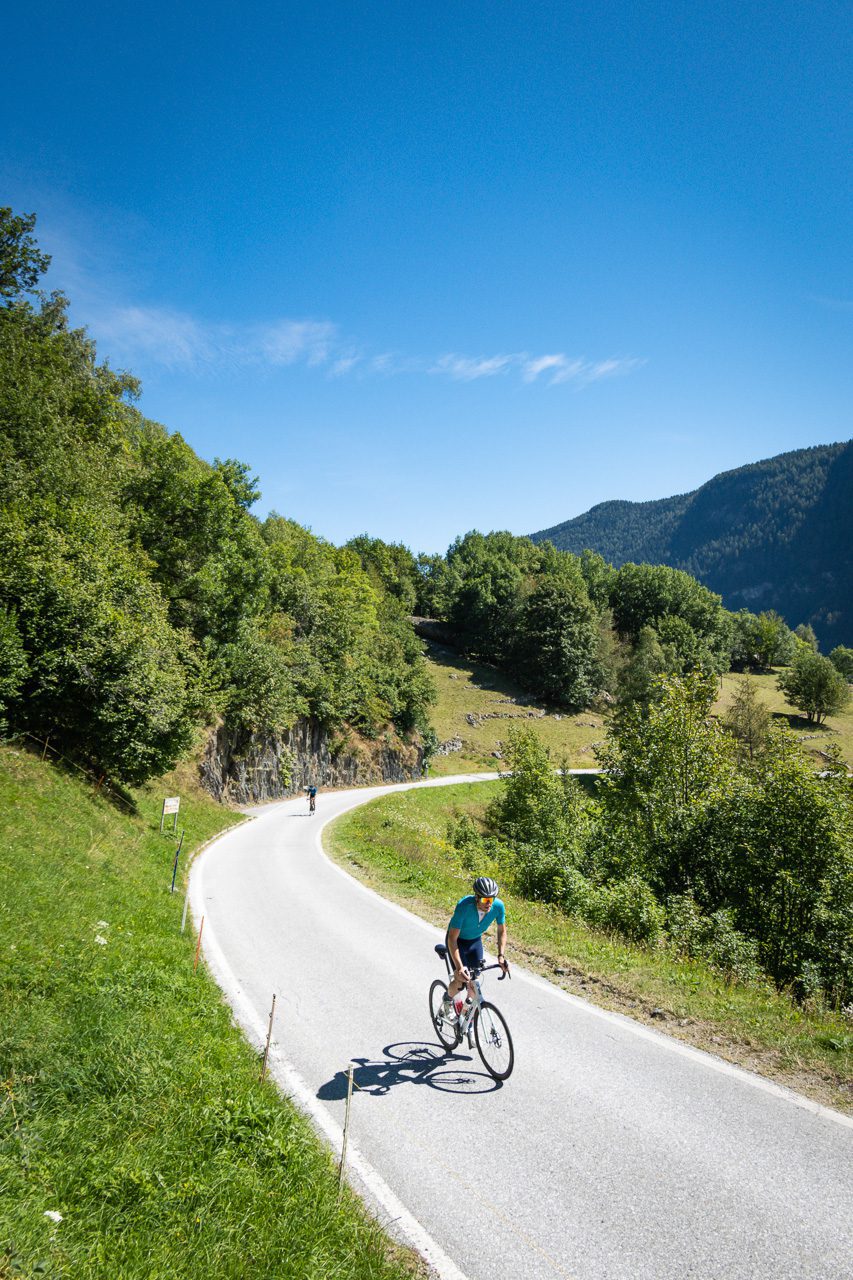
Jaizkibel is distinguished by its length and location. The GI-3440 runs from Hondarribia over the mountain towards Lezo and Pasai Donibane. You first climb to Guadelupeko. This is still through the forest. While climbing, the landscape opens up to the coast, with the Txingudi bay and the French border coming into view below. You can look back towards France and sideways to the Bay of Biscay.
Moreover, the average of 5.9% masks an irregular profile. The first few kilometres are gentle and even include a short descent. Higher up, you’ll encounter longer stretches at around 6 to 7%, with a section averaging 9%, including a spike into double figures. Anyone who starts off too enthusiastically at the bottom will feel the effects in the second half. It’s therefore rightly described as a real grueller.
This makes Jaizkibel suitable for different types of cyclists. You can cycle up at a leisurely pace to take in the views, or you can try to understand how a professional team puts pressure on here. If you opt for the latter, you'll need to have energy left for the final kilometres after a controlled start.
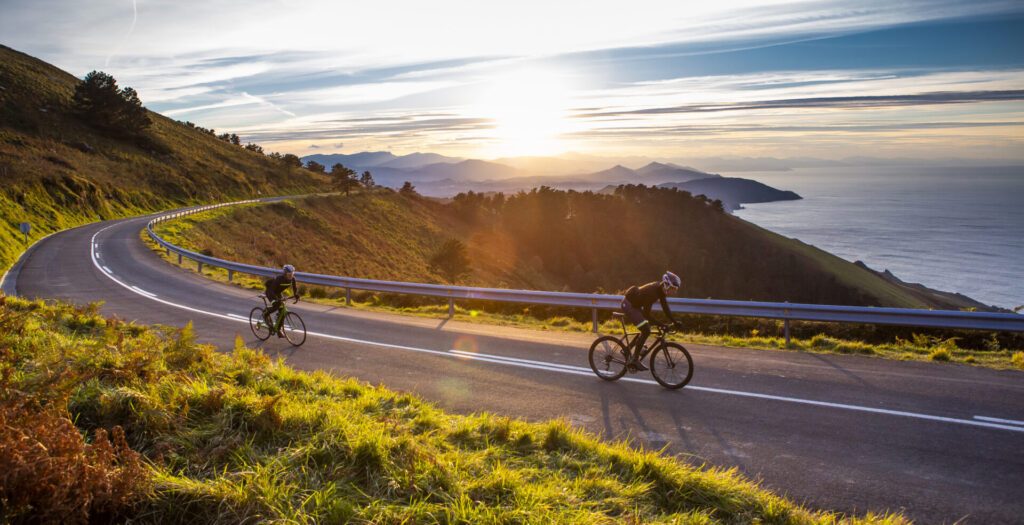
The Clásica was built around Jaizkibel
The Clásica San Sebastián has existed since 1981. In the preparation stages, a race between San Sebastián and Bilbao was initially considered. The organisation ultimately opted for a route within Gipuzkoa, with Jaizkibel, the province's most important mountain pass, forming the centrepiece.
During the first edition over 229 km, 71 riders started and only 30 reached the finish. Marino Lejarreta attacked on Jaizkibel and won solo. A year later, he again made a decisive acceleration there. In 1987, his third victory followed.
The location of Jaizkibel changed regularly thereafter. In the early editions, the summit was around 15 km from the finish line from the Hondarribia side. Other approaches and extra climbs later moved the mountain further from San Sebastián. In 2014, the last passage was even almost 54 km before the finish.
This meant Jaizkibel was less often the site of the final attack, but remained the climb on which teams could break open the race. Its length makes a high pace costly. Riders who are poorly positioned or having a bad day already start the subsequent Erlaitz at a disadvantage.
Jaizkibel as the decisive factor in the final
In the 2026 Clasica (or Klasikoa) too, the Jaizkibel will once again prove to be the decisive climb on the route. But this time, this classic climb lies 60 km from the finish, at the 160-kilometre mark of the 220-kilometre marked route. The final climb this time is the short ‘Murgil’ hill on the western side of Donostia (as San Sebastián is known in the Basque language).
In the 2023 Tour de France as well
The 2023 Tour de France started in the Basque Country. The first stage started in Bilbao along the coast and then a loop back to Bilbao. The highlights there were San Juan de Gaztelugatxe, the stretch past Gernika and, along the way, the climbs up Laugiz, Morga, Vivero and the Pike.
Stage 2 took us over the Jaizkibel. The start was in the regional capital, Vitoria-Gasteiz, and the finish was in San Sebastián. The Jaizkibel proved to be the deciding factor in that stage too. Cycling that route again is also a great challenge. Bear in mind: 210 km and a lot of elevation gain. Plus, you’ve still got to cycle back afterwards.
Stage 3 was along the coast, past Zarautz and San Sebastian towards France.
A loop starting from Hondarribia
Hondarribia is the logical base from which to experience the cycling side of Jaizkibel. For a feasible loop, enter the following points into your route planner:
- Start in Hondarribia and look up the GI-3440 from the town.
- Climb from the Hondarribia side to the summit of Jaizkibel.
- Head down the same GI-3440 towards Lezo and Pasai Donibane.
- Plan a shorter return route in advance via the corridor towards Irun Vast.
- End up back in Hondarribia, near the old town or La Marina.
A typical distance for the climb is around 8 kilometres, with the occasional short stretch leading up to it. We’ve mapped out a wonderful route for you, put together by Basquetour. It starts in Zarautz (right on Haimar Zubeldia’s doorstep) and takes you up a lovely climb, with views of the Bay of Biscay, to the climb in Hondarribia. It shows why Jaizkibel is the climb of the Basque Country and San Sebastián.
You can, of course, choose to do a loop starting from San Sebastián (you can simply follow the route described above) or you can tackle the climb straight from the city, then descend to Hondarribia and turn back. That way, you’ll have ticked it off completely.
Bends and current conditions
The descent towards Lezo has lots of bends. Be aware of oncoming traffic and do not cut the bends. The road is also used by cars and motorbikes, so this is not a closed training circuit.
There have previously been temporary road closures on the GI-3440 due to roadworks, including Conversation between Lezo and Donibane. Before setting off, check local traffic updates, the weather and any events. Fog and rain can quickly obscure the view and make the descent a lot more difficult.
Climb first, then see how the race unfolds
On the day of the Clásica, this route requires extra planning. The safest setup is to cycle Jaizkibel early and be well clear of the course before the race caravan. Afterwards, you can head towards San Sebastián for the later passages or the finish on the Boulevard, depending on that year's route.
Don't expect clear passage once the road closures are in effect. The route, arrival times, and traffic measures may change with each edition. Therefore, check the official race information and decide in advance whether you want to experience Jaizkibel from the roadside or the finale in San Sebastián. Combining both requires sufficient time between the passage and the finish.
Back in Hondarribia, La Marina is ready for the recovery lap. Whoever wants to see the climb back on the board will find at Gran Sol Bar even a pintxo named Jaizkibel. First, tick off those 9.8 km, then order. Then you can see again why the Jaizkibel is the climb of the Basque Country and San Sebastian
This article was written in collaboration with Turespana – Spanish National Tourism Board in the Netherlands