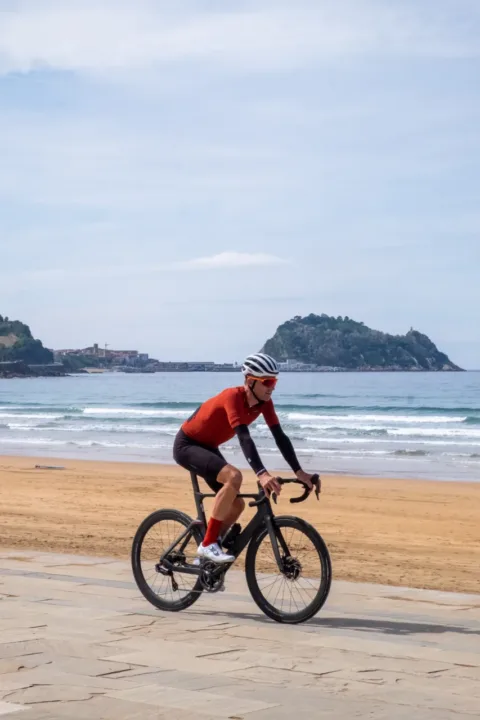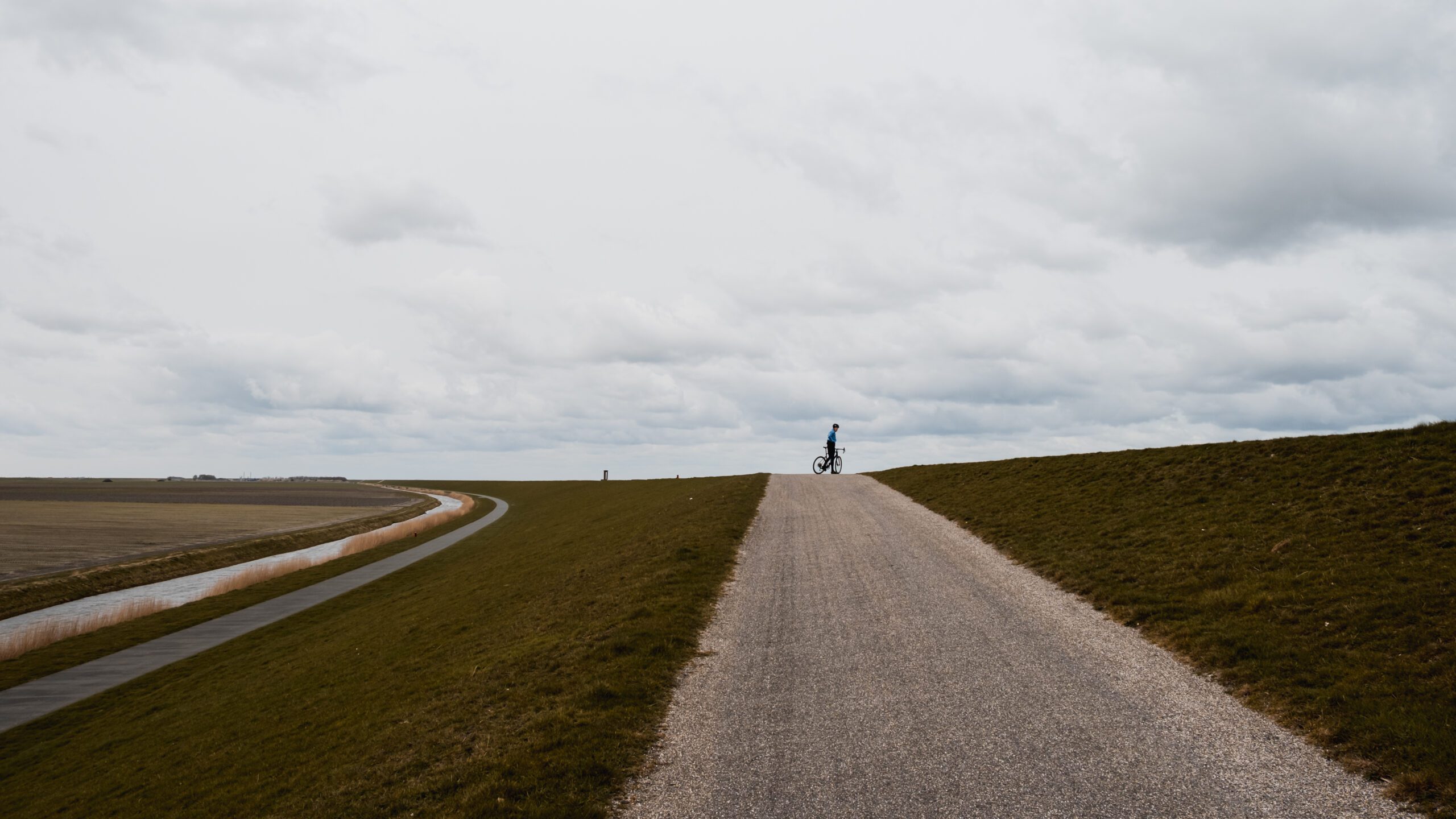
Denmark has coined a new word: Danish Wheelness. The idea? Combine hygge with six kilometres of cycling a day and you have the recipe for happiness. That claims VisitDenmark ahead of World Happiness Day on 20 March. “Danes don't cycle because they are happy. They are happy because they cycle,” says Meik Wiking, CEO of the Happiness Research Institute.
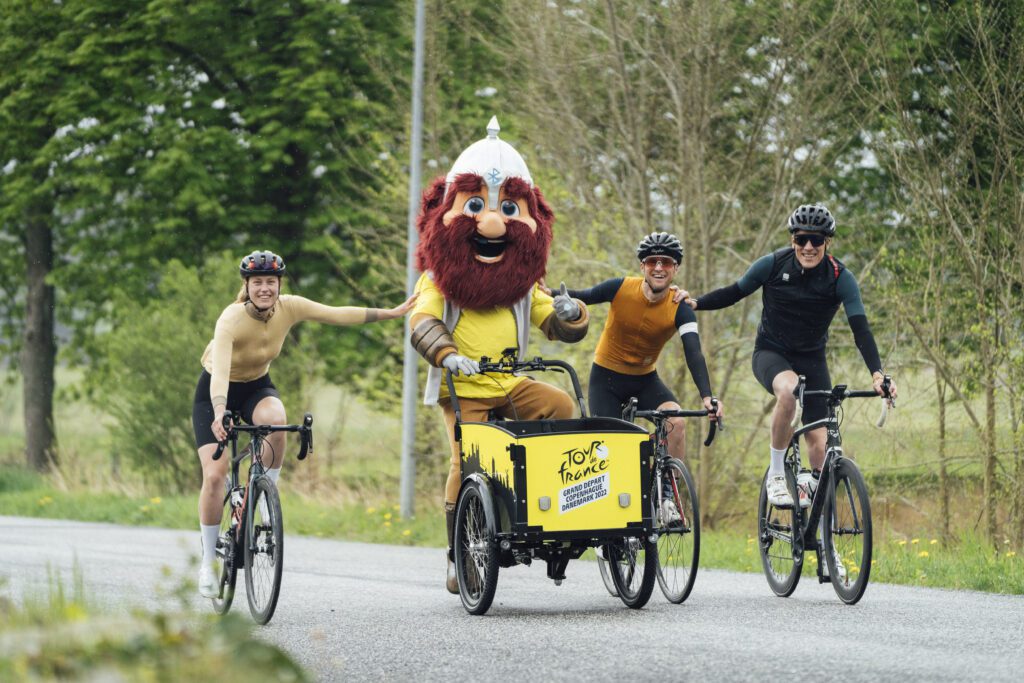
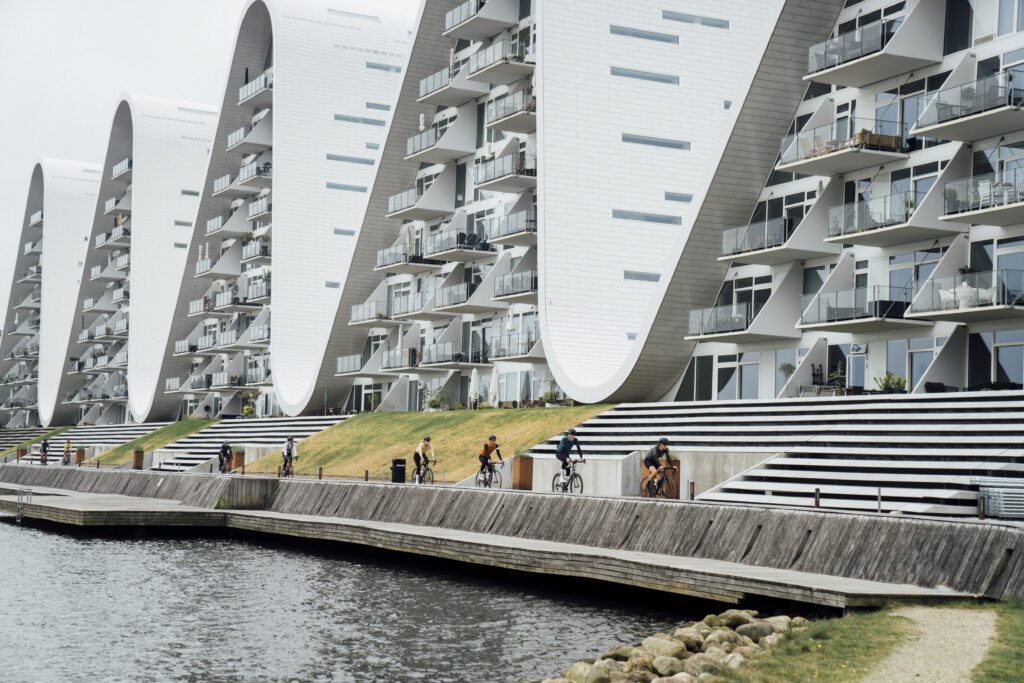
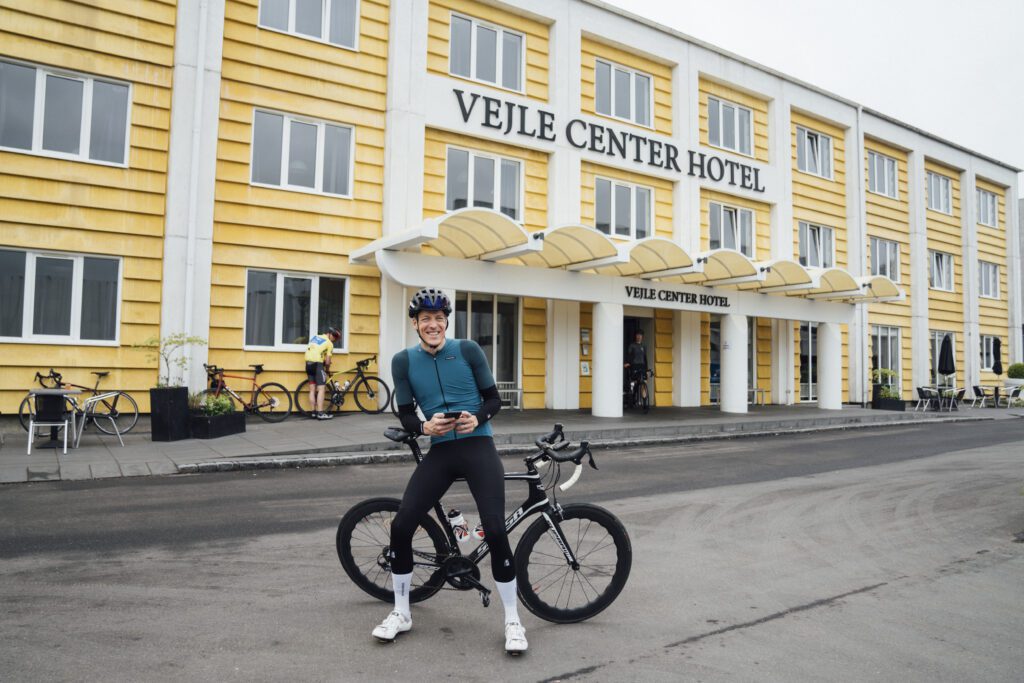
Six kilometres a day. Sympathetic. But let's be honest: if you are reading this, you are more likely to think of 120 km with a crosswind over a Danish bridge than of a diversion to the bakery. And this is where it gets interesting. Because behind the marketing flag of Danish Wheelness lies a cycling country that has been seriously building its sporting profile in recent years. With more than 16,000 km of marked cycling routes, a brand new WorldTour race (Copenhagen Sprint) and islands, such as Funen, where gravel and asphalt constantly alternate.
The figures back it up. Danes make some 2.2 million bicycle trips every day, accounting for 8 million kilometres a day. That's almost 200 laps around the earth. Doctor and professor Bente Klarlund Pedersen puts it this way: “When you cycle and pedal, your muscles convert stress-related substances into a harmless form. Cycling acts as a natural antidepressant.”
The Ice Age Route - 400 km across Sjælland
Those looking for a multi-day challenge soon end up at the Ice Age Route. This route stretches over 390 kilometres through Sjælland (Zealand), through landscapes formed by glaciers more than 20,000 years ago. Think of the UNESCO Geopark Odsherred, the Skjoldungernes Land National Park and the valley at Elverdamsdalen with the region's last working water mill.
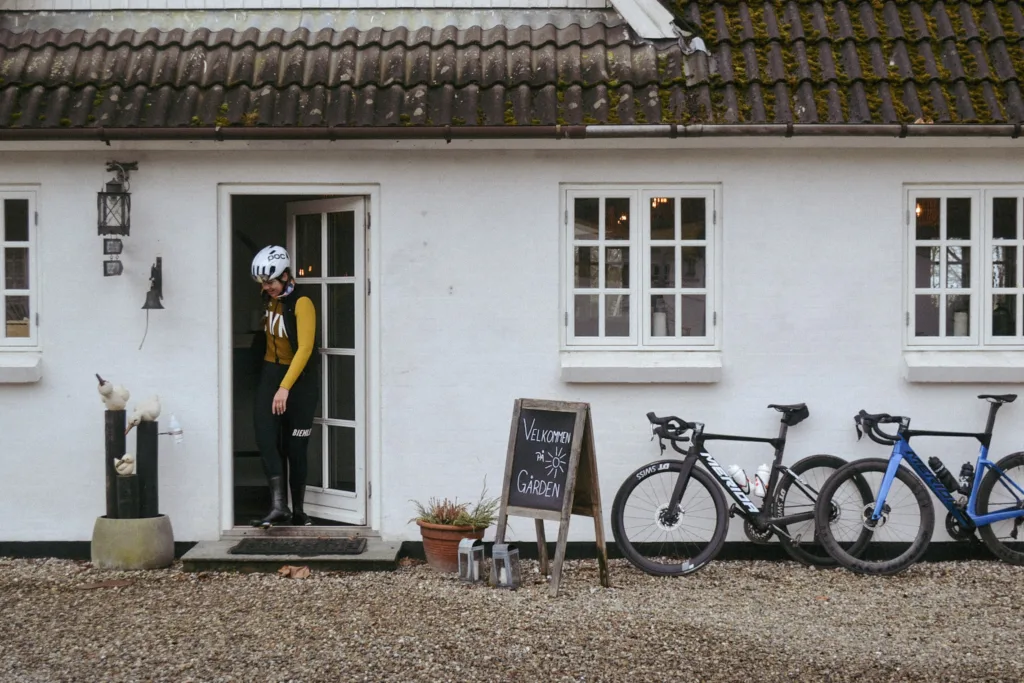
Four, five days, depending on your pace and how many stops you put in. Along the way, you will pass Hegnsholt Farm Shop at Lejre for organic coffee and sandwiches, right on the route. You pass details like that along the way.
Copenhagen Sprint - the Tour legacy lives on
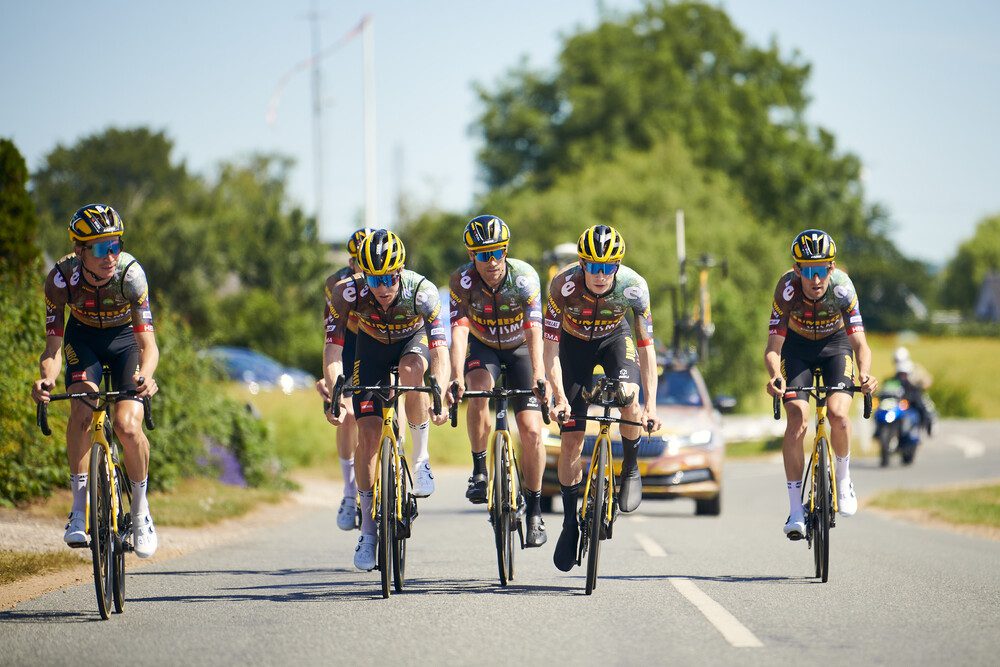
Those who read our stories about the Tour start of 2022 has read, knows how Denmark sold itself to the cycling world at the time. The chaos on the Storebæltbrug, the crosswind, Fabio Jakobsen winning the sprint in Nyborg. That was not a one-off celebration.
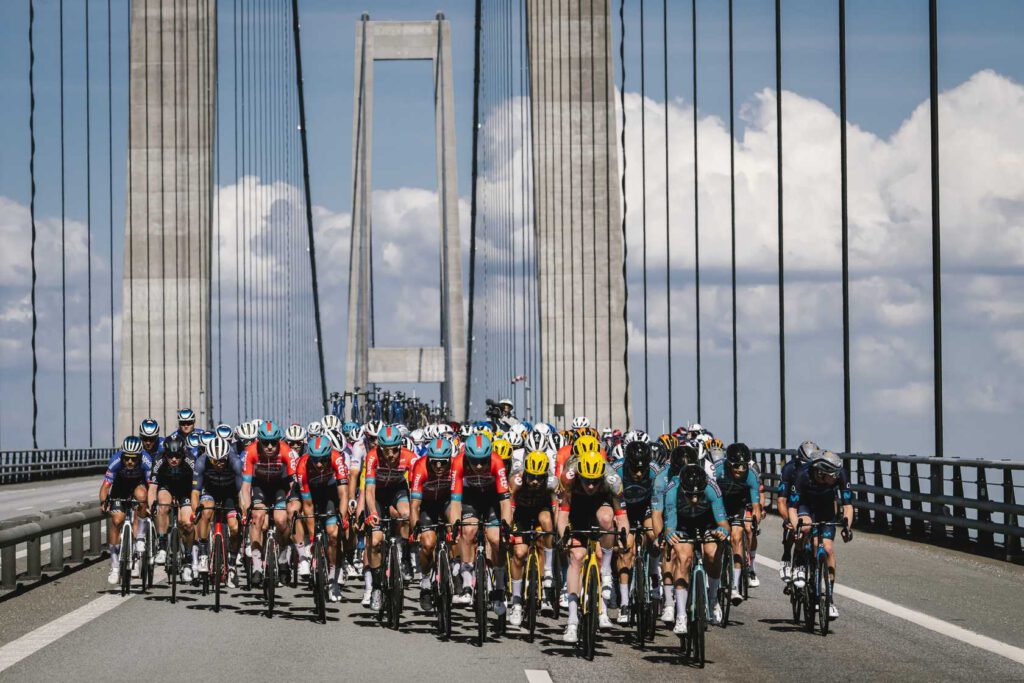
The sequel is called Copenhagen Sprint, an international one-day race with UCI WorldTour status for both men and women. In the inaugural 2025 edition, the route started at the Viking Ship Museum in Roskilde, pulled this through North Sealand via Hillerød and Humlebæk, and ended with five technical rounds of 10 km through the centre of Copenhagen. In the inaugural 2025 edition, Jordi Meeus won after a chaotic sprint in which Dylan Groenewegen attacked too early.
The race hands out equal prize money to the women's and men's race. And for those who want to cycle there themselves: the course through North Zealand partly overlaps with Castle Route 48, which Kronborg Castle (yes, Hamlet) connects with Frederiksborg Castle through the UNESCO-protected hunting landscape Par Force. That just drives nicely.
Fyn - castles, gravel and smørrebrød
And then Fyn. The island that made itself Bike Island which in 2017 was one of the first regions to call the UCI Bike Region-labelled. Those who have read our previous stories on Bike Island Fyn knows that Denmark looks flatter than it drives.
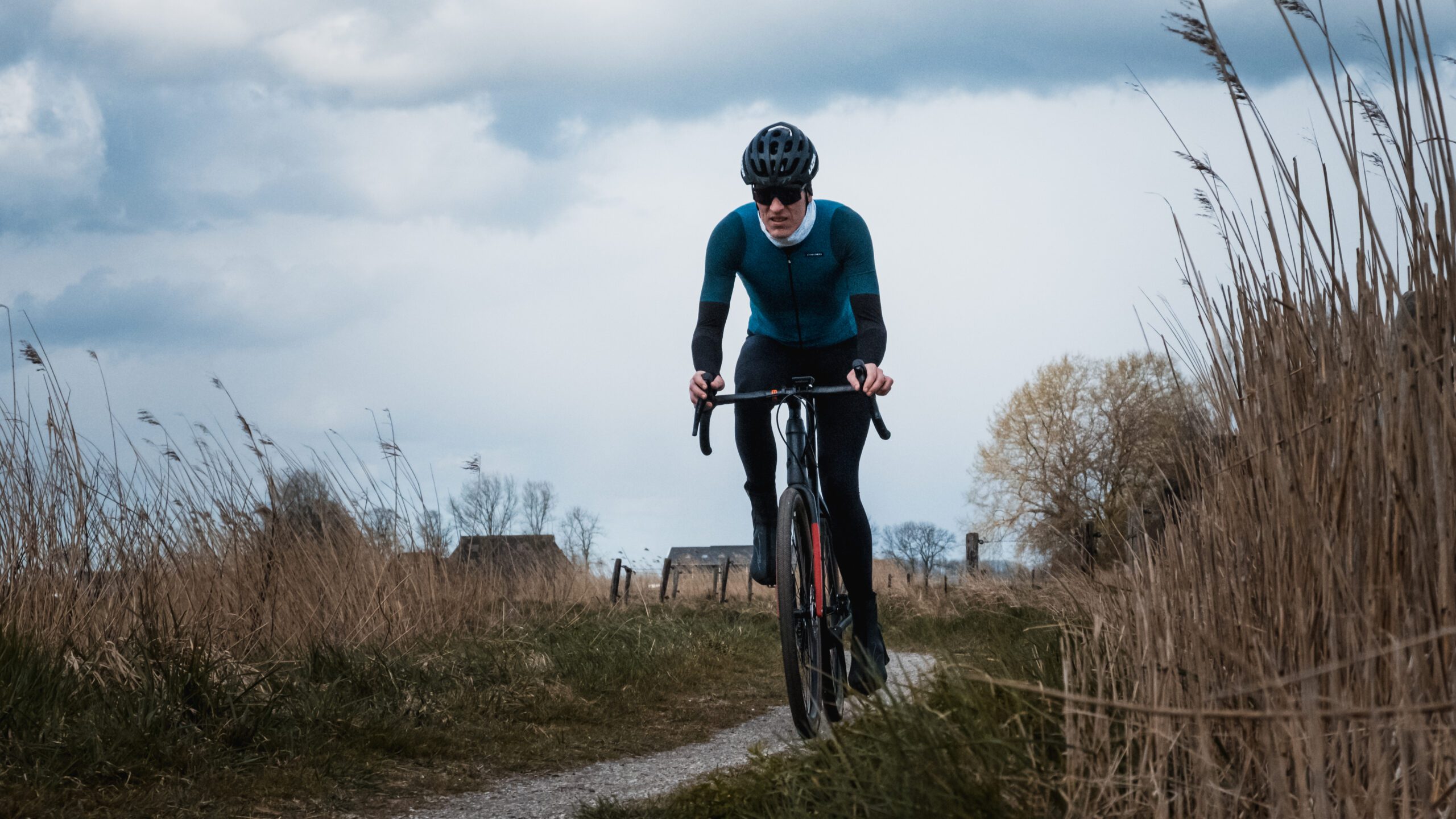
The Castle route (Herregårdsruten) is the flavour maker: a mix of asphalt and solid gravel past 123 castles and manor houses, with farm stalls along the way. The Svanninge Bakker, by locals the Alps of Fyn called, delivers slopes up to 5%. Not spectacularly steep. But enough to feel the legs after a day in the wind.
The peninsula Helnæs deserves a diversion. An undulating road of one and a half kilometres, surrounded on both sides by the sea, leads you to an islet of just 19 km². As we wrote in our story about the rides with Andrea and Maks: moments like that you remember.
Fyn has more than 200 Bike Friends, local stations with repair kits, pumps and water. Handy if you find yourself halfway along the Castle Route with an empty water bottle.
Basecamps and the art of the after-ride
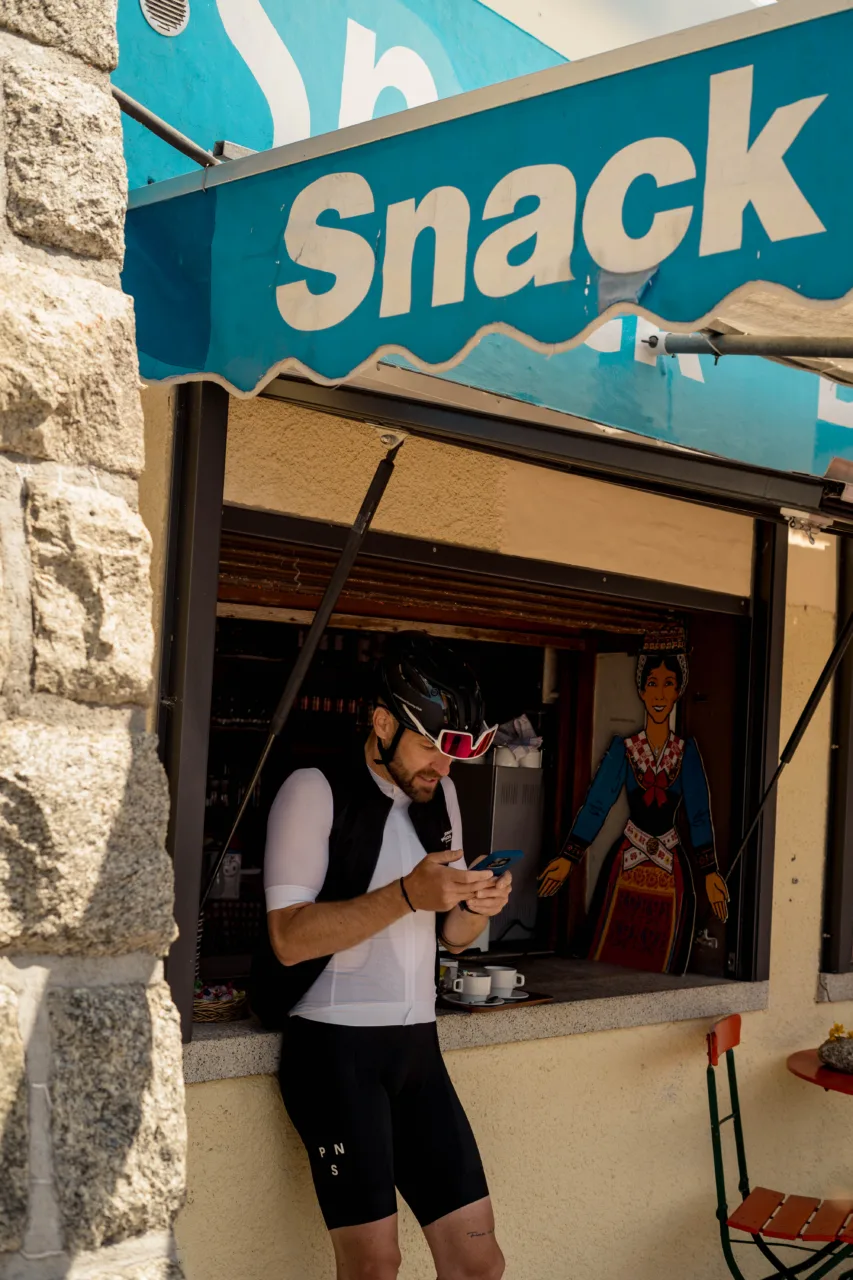
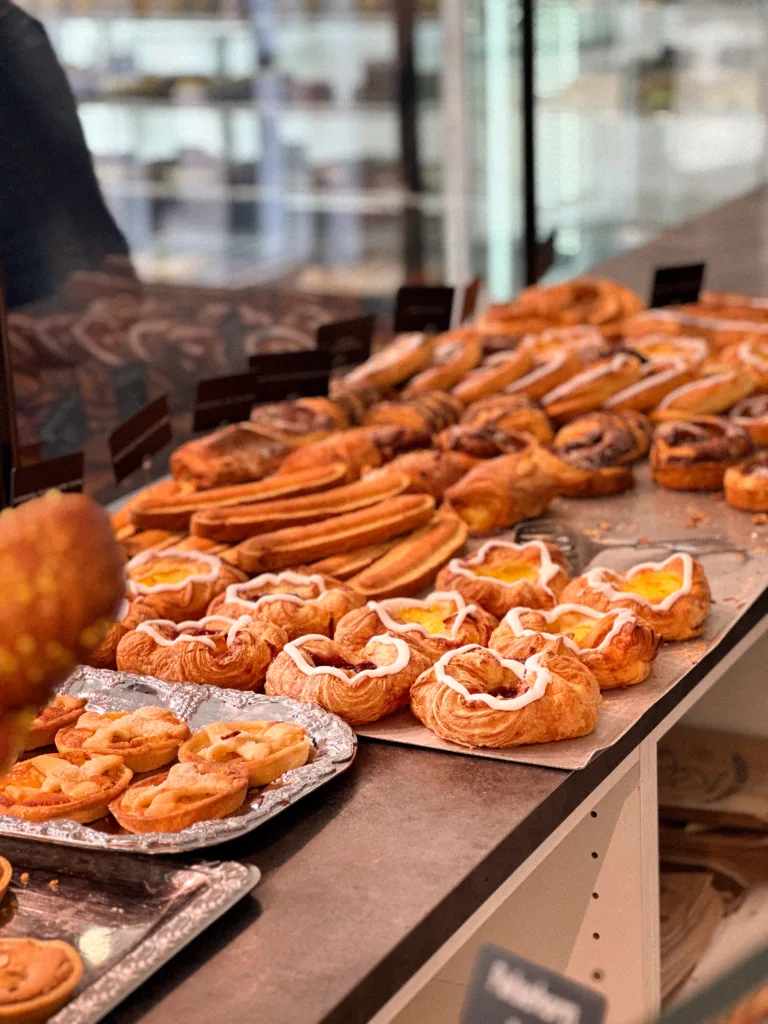
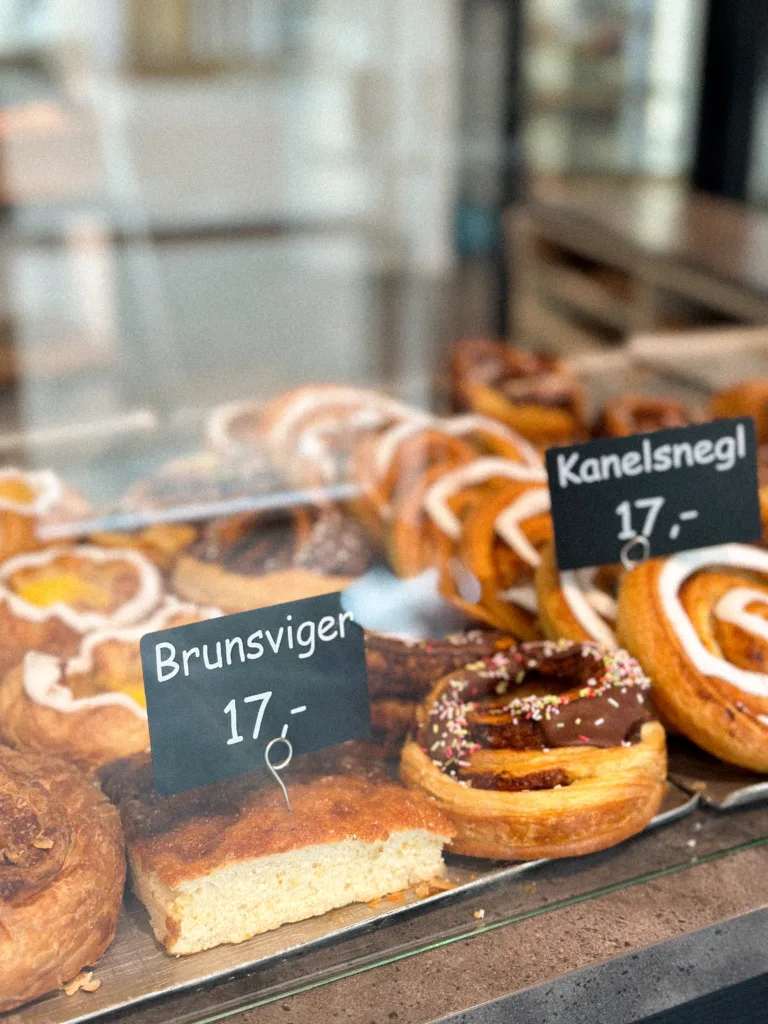
The Danish after-ride is all about smørrebrød and good coffee. In Odense is Kong Volmer the place for hearty open sandwiches in a historic building. On the coast, it has Faaborg the Røgeri Café in the harbour, perfect for fish after a hilly ride. And those who want it bigger: Stella Maris at Svendborg serves ten-course menus overlooking the Svendborgersund.
For overnight stays: Hotel Knudsens Gaard in Odense lets you take your bike to the room. In Nyborg offers Hotel Hesselet view of that same Storebælt Bridge over which the peloton flew in 2022. And in Middelfart you look from the Comwell Kongebrogaarden out over the Lillebælt Bridge, bike next to your bed.
Practical: direct trains run from Hamburg to Odense and Copenhagen. Those going by car will pay around €37 toll for crossing the Great Belt Bridge between Jutland and Sjælland.
More routes to keep an eye on
Besides the Ice Age Route and Fyn, VisitDenmark lists a handful of routes worth checking out:
- Panoramic Route 421 at Møn, through UNESCO biosphere landscape to the white cliffs
- Big Five on Fanø, 37 km along the island's five highest dunes
- Best of the West in Jutland, past wide beaches and the Rubjerg Knude lighthouse
- Baltic Sea Cycle Route N8, 820 km in an eight-shape through southern Denmark and the UNESCO town of Christiansfeld
VisitDenmark promotes this concept as Danish wheelness. Do you know any Danish routes we have yet to ride, or do you have a favourite smørrebrød stop? We'd love to hear about it!