
Alpe d'Huez is on every cyclist's list. But the question is really not whether you do those 21 turns once, but where you go to sleep if you want to get more out of it than one climb and a selfie at turn 7. The answer is in the region that lies below those turns: Oisans. And if you peruse Oisans Tourisme's official cycling guide, you'll quickly understand why.
Oisans carries the label Territoire Vélo, awarded by the French Cycling Tourism Federation. That sounds like marketing, but in practice it means: 20 elaborate cycling routes, labelled accommodation, bicycle-friendly shuttles, free charging points and repair tools at tourist offices. This is a region fully geared to cyclists.
Le Bourg-d'Oisans - the logical starting point
Le Bourg-d'Oisans lies at 720m altitude in the Romanche plain, right at the intersection of several valleys. The classic climb to Alpe d'Huez literally starts at the edge of the village. But from that same spot you also roll towards the Col du Galibier, the Croix de Fer, Les 2 Alpes and the cul-de-sac to La Bérarde in the heart of the Écrins.
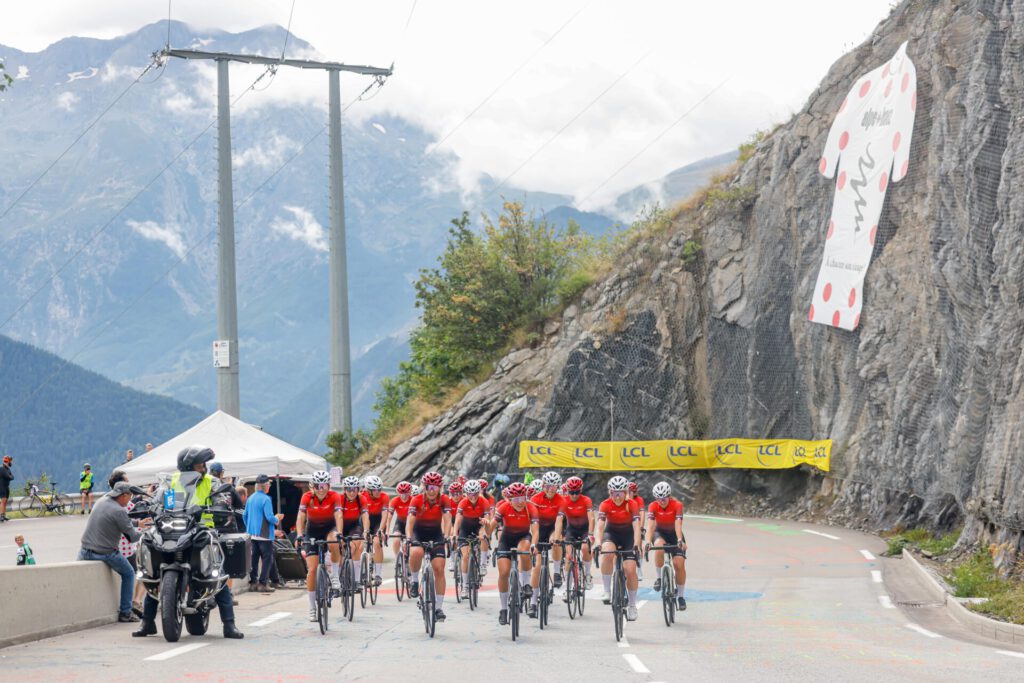
That makes Le Bourg-d'Oisans as a base so strong: you don't need to touch the car. Each morning you choose a direction, and each direction offers something different.
Lovely cycling
The legendary climb to Alpe d'Huez is obviously the first which you do. 13.8km at 7.9% average, 1,266 altimeters, numbered turns. Marco Pantani's record (37’35”) still stands. But Oisans offers more after that.
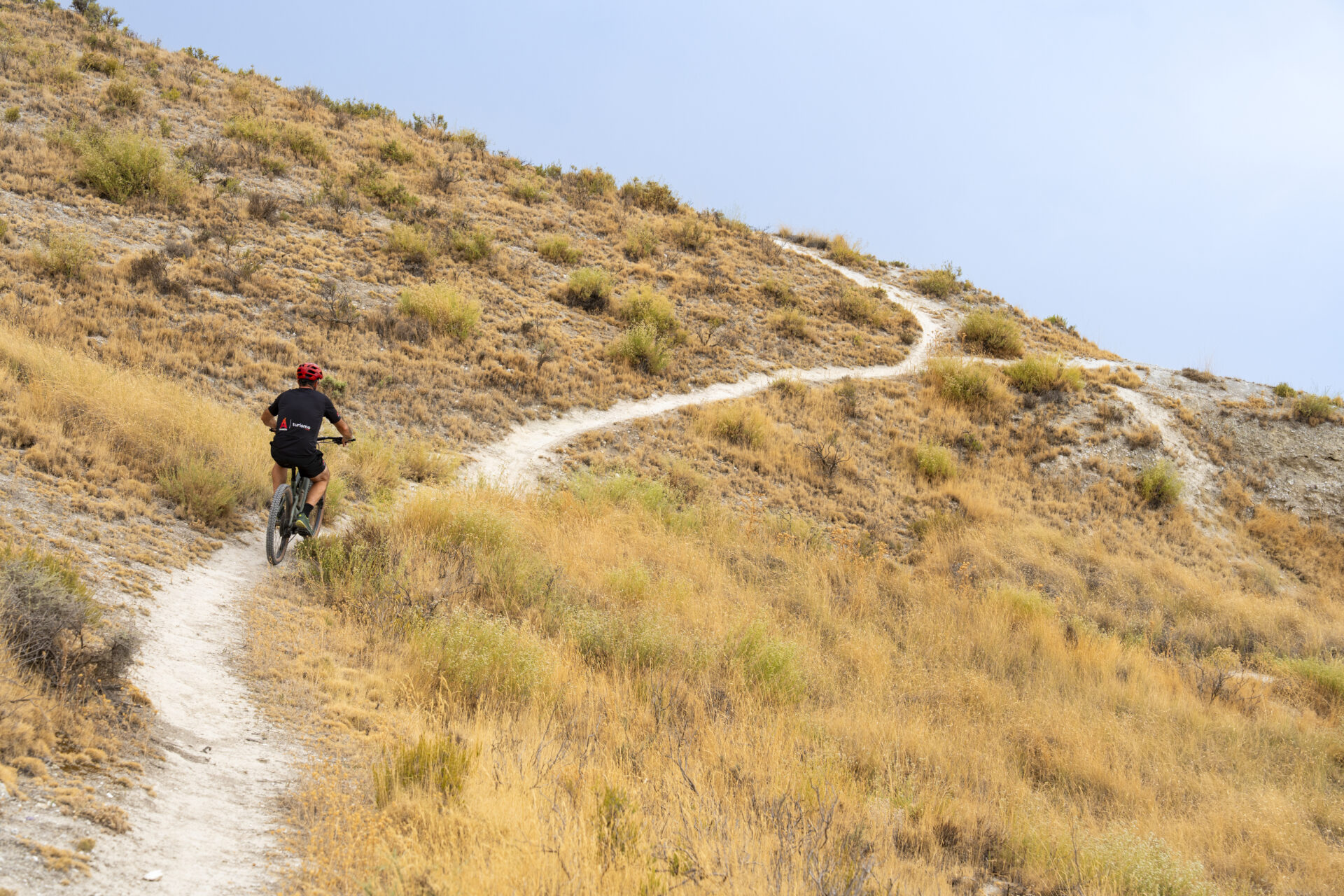
Want to experience the same mountain in a totally different way? Then take the “wild” variant via the Col de Sarenne. That route (52km, 1,705hm) first takes you through the Ferrand valley, where you'll encounter more sheep than cars, and takes you through the back to Alpe d'Huez. Very different atmosphere, very different legs.
Col de Sarenne, Alpe d'Huez, France
- Distance: 2.9 km, Height difference: 255 m, Average slope: 8.7 %
Before the big day, there is the Col de la Croix de Fer and the Col du Glandon: 80km, 2,086 altimeters, and a climb that takes you through the Eau d'Olle valley to the Savoie border. Arriving at Lake Grand'Maison, the rocky valley gives way to open alpine meadows. At the top, there is a view of the Aiguilles d'Arves.
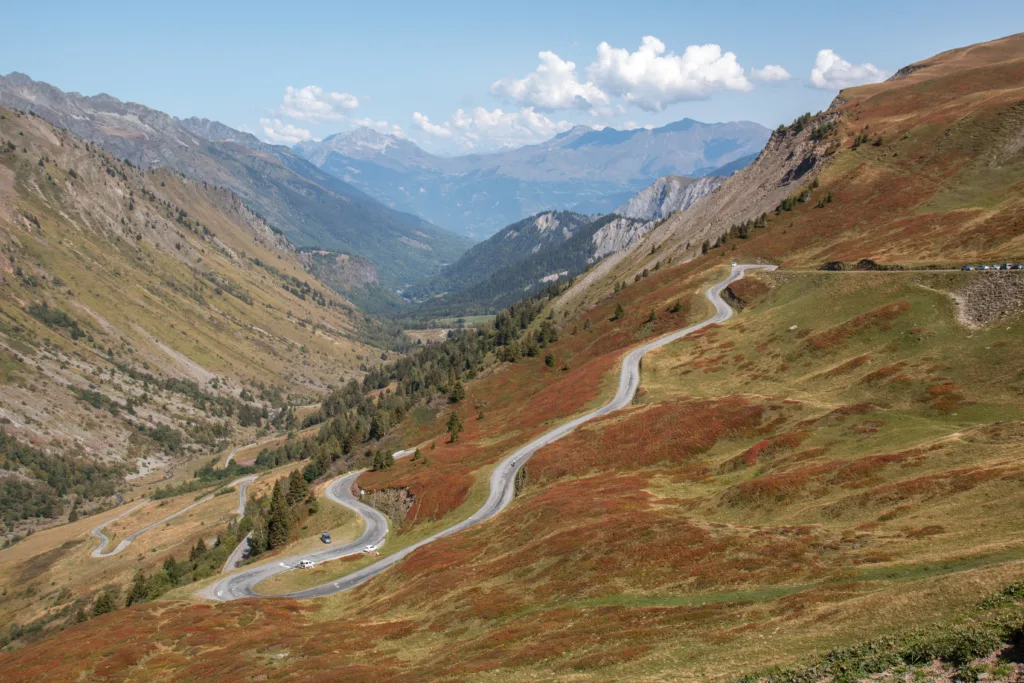
And then there is the route to La Bérarde (66km, 1,250hm), a dead-end road that ends at the foot of the Barre des Écrins at 4,102m. Two tough sections of 11% along the way, but the rest climbs gradually along the turquoise waters of the Vénéon. The focus of this climb is not on records, but on the natural environment.
Balcony routes and hidden gems
What sets Oisans apart from other Alpine cycling destinations are its so-called balcony routes. Routes carved out of the rock face, high above the valley, with views of everything below you. The Balcons de l'Oisans (93km, 3,266hm) strings together a whole series of them: Auris-en-Oisans, Mont-de-Lans, Mizoën, Col de Sarenne, Villard-Reculas. If you like aerial routes and panoramas, put this one at the top of your list.
The smaller routes also deserve attention. The climb to Oulles, the Isère's smallest village, is only 7km long but winds through hairpin bends on a south-facing slope full of pine trees. And the road to Villard-Notre-Dame is so narrow and adventurous, with three unlit tunnels, that you really shouldn't leave without lights.
Infrastructure and logistics
A good destination has climbing. A good basecamp has logistics. Both in order.
The Voie Verte, a car-free route from Venosc to Allemond via Le Bourg-d'Oisans, connects three valleys and gets you to the foot of the major cols without stress. From the end of June to the end of August, a free shuttle service with bike trailer runs on that same route, seven days a week.
Accommodations and accommodation
Accommodations with the Accueil Cyclo Oisans-label offer specific cycling facilities, from secure storage to laundry service, rated on a scale of one to three bikes. Handy to filter by when booking. In the village itself, you'll find bike shops for rental and repair, and repair tools are available at the tourist offices for emergencies.
And then the Oisans Col Series: every Tuesday morning in July and August, one col or route is closed to car traffic. Then you have the road all to yourself. Alpe d'Huez, Croix de Fer, Sarenne, they all pass by. You can't do that in such a structured way anywhere else. Check the current programme at oisans-col-series.com, as dates and routes can change seasonally.
When to go and what to look out for
The higher cols (Galibier, Croix de Fer, Sarenne) are seasonal. Opening dates vary from year to year and depend on snowfall. Always check bike-oisans.com for up-to-date information on col openings, lift operations and shuttle times.
Further: bring lights. Several routes contain tunnels, some of which are not lit. The descent after a mountain pass deserves attention: narrow roads, sharp turns, and the occasional oncoming car on a road that is actually just wide enough for one vehicle.
After day one in Oisans, the question of which climb is up tomorrow, not whether there is anything left to ride, quickly falls to the wayside. Alpe d'Huez is the decoy. Oisans is the reason you stay.
One Response
Chantal Gosewehr – Wolf