
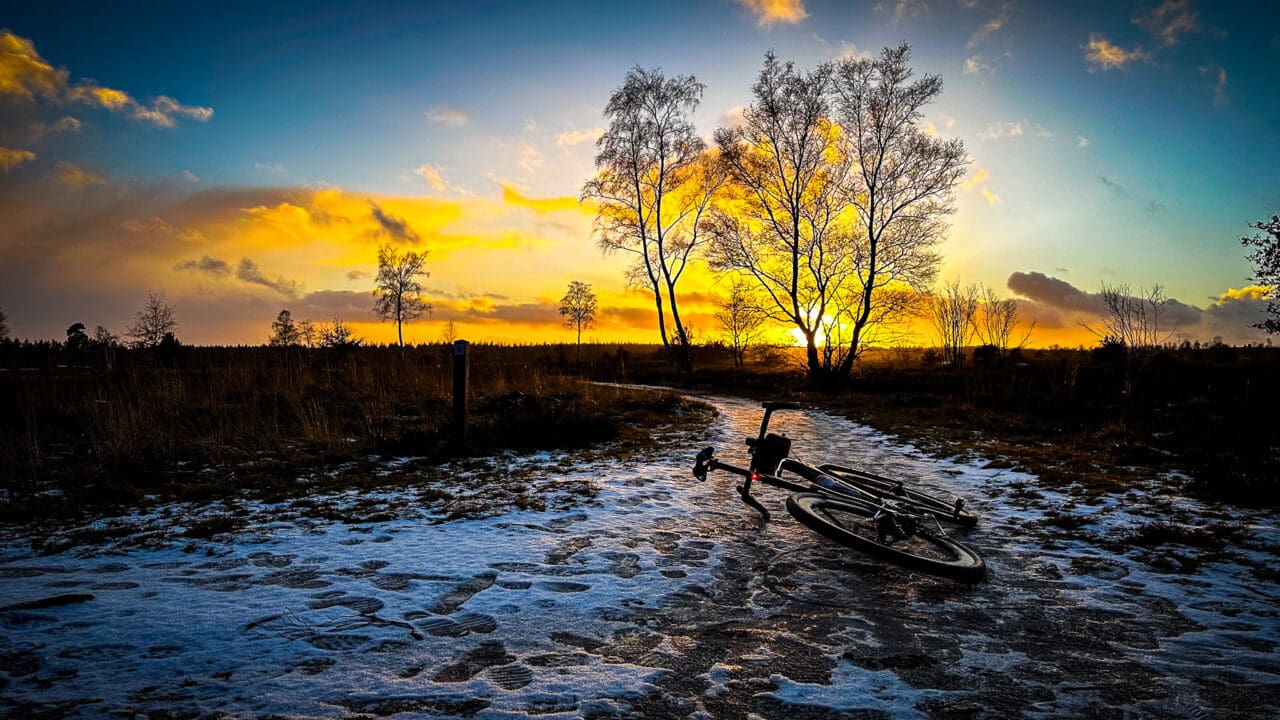
You look outside and you see a thick white pack of snow lying there. While the white flakes are falling out of the sky in steady quantities, a beautiful white blanket forms over the roads and in the forest. You want to go cycling today. Cycling in the snow—that’s what it’s going to be. You now have two choices:
- You curl up under the covers, go to the pain cave in the afternoon, and let yourself go on an online platform like Rouvy or Zwift.
- You are getting ready for a great adventure and you are going for it. Cycling in the snow!
That’s easier said than done. After all, snow isn’t just soft sand or gravel. No, it’s snow. Sometimes unpredictable, sometimes a bit powdery. Just like snow should be. That doesn’t mean you can’t ride in it, quite the opposite! It could be great fun. But how do you go about it? We’ve put together a list of some tips.
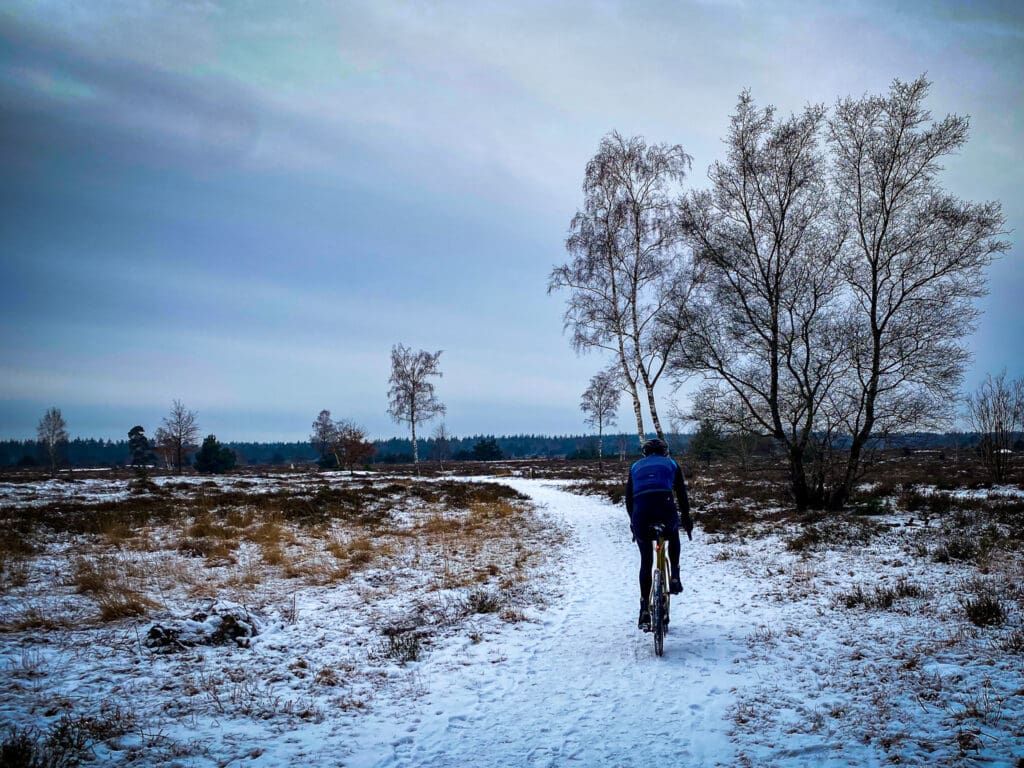
1. Choose the right tires
Captain obvious here! It should be clear that you need tires with a good profile. 40mm+ is definitely the minimum and look for a nice rough profile. You need that to maintain sufficient grip on the snow. Thicker tires with studs or spikes are the way to go. Also, keep the pressure in the tires low; otherwise you’ll still slide off.
2. Drive more calmly
This may sound like a no-brainer, but nevertheless it is important to adjust your speed to the conditions of the snow. Do not drive too fast and adjust your speed if you find that you are having difficulty maintaining grip. But it is nevertheless important to keep moving forward. Otherwise, of course, you will just fall over. With deep snow, it is of course important to keep delivering power, but again: everything in moderation. Unless of course you would like to create a snow angel.
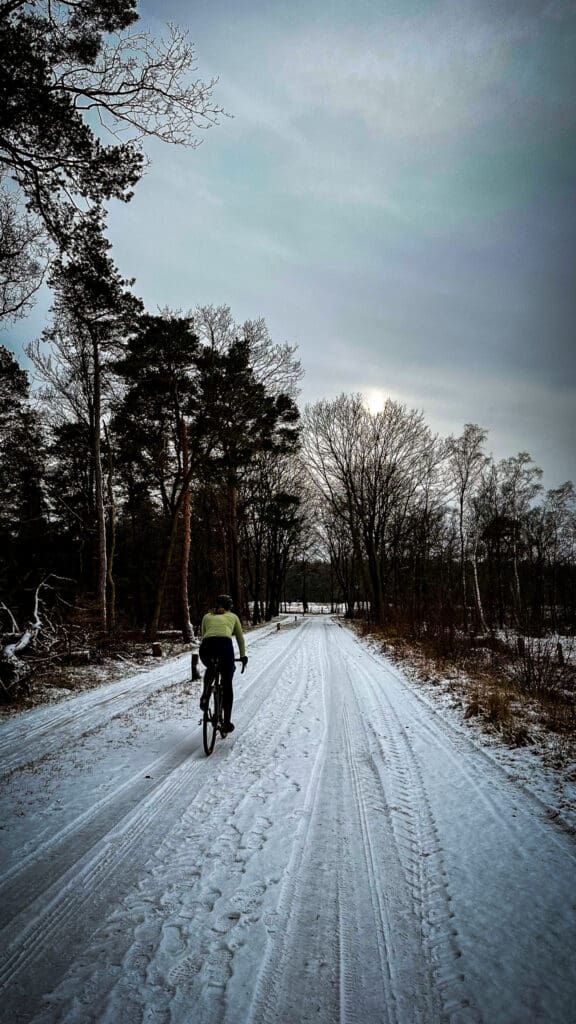
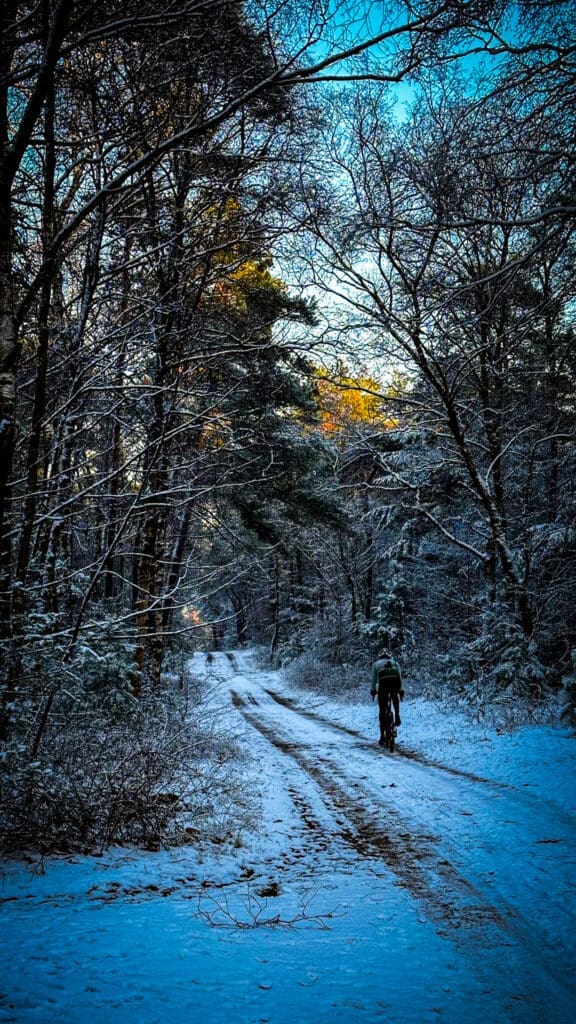
3. Stay focused
Stay alert: Keep your eyes open for slippery spots and other obstacles such as branches and stones that may be hidden under the snow. Be extra careful when taking turns and braking, because before you know it you’ll be on your sled. Also, trust your instincts. If you come to a slippery spot, it’s very important to brake as little as possible. Because just when you’re about to brake, you’ll start to slide and once you’re sliding….
4. Preparing for the cold
Use bike bags or a backpack: Make sure you have enough water and food to hydrate and eat during the ride. One of the things you forget when it’s cold (snow is almost automatic cold) is having enough food and drink. Additionally, it’s also important to bring warm clothing and other equipment if it’s very cold, to protect yourself from the cold.
For good clothing tips, also check our Winter clothing guide.
5. Warming-up
Because you need to be very focused and also get into the cold, a good warm-up is really recommended. In any case, it’s not a bad idea to do a warm-up and stretch before you start cycling. As with any sport or hobby, it’s important to warm up your muscles before you start cycling in the snow. Do some light stretches and a short warm-up before you set off to activate your muscles and help prevent injuries.
Want to see what we really do in the snow? Then check out our cool adventure Landal Sallandse Heuvelrug!

Questions & tips
Do you have any questions about this route, or have you been there yourself? Share them here. We read everything and usually respond within a few days.